USD
EUR
USD
English
Latviešu
Francais
English
Русский
Sign Up
Login
Auction
Best sellers
Upcomming auctions
Archive
Shop
Sell
Evaluation
Services
Expertise
Restoration
Antiq selection
Delivery
Contacts
Home
Shop
Show sold items
Show auction items
Available right now
Price
-
USD
New items
Gifts
EXCLUSIVE
Catalogue categories
ALL ITEMS
Russian art
Objects of Vertu (13)
+
Objects of Vertu (13)
Paintings (632)
+
Paintings (598)
Watercolor (19)
Miniature (3)
Other (12)
Graphic arts (47)
+
Graphic arts (47)
Icons (32)
+
Icons (28)
Church utensils (4)
Frames and easels (43)
+
Frames (28)
Easels (3)
Photo frames (12)
Sculpture (57)
+
Bronze sculptures (31)
Stone sculptures (8)
Stone carving miniature (6)
Other (12)
Silver and metal (233)
+
Russian silver (93)
European silver (69)
Other (71)
Porcelain and ceramics (336)
+
Russian porcelain (20)
European porcelain (106)
Other (210)
Glass (50)
+
Crystal (5)
Glass (45)
Clocks and watches (22)
+
Mantel clocks (7)
Wall clocks (3)
Wrist watches (7)
Pocket watches (2)
Grandfather floor clocks (1)
Other (2)
Furniture (136)
+
Furniture sets (8)
Showcases (21)
Dressers (9)
Tables (28)
Sofas (3)
Armchairs and chairs (15)
Columns (5)
Mirrors (8)
Consoles (8)
Other (31)
Lighting (50)
+
Chandeliers (9)
Sconce (8)
Floor lamps (4)
Lamps (16)
Candlesticks and candelabra (12)
Other (1)
Interior objects (33)
+
Interior objects (33)
Fireplaces and stoves (14)
+
Fireplaces and stoves (6)
Accessories (7)
Other (1)
Carpets and tapestries (2)
+
Carpets (1)
Tapestries (1)
Jewelry (121)
+
Diamonds and precious stones (0)
Rings (48)
Bracelets (7)
Brooches and pendants (2)
Earrings (10)
Jewelry sets (4)
Chains and necklaces (11)
Amber (0)
Bijoux (1)
Other (38)
Weapons and мilitary (16)
+
Weapon (9)
Military (4)
Other (2)
Armour (1)
Orders and medals (4)
+
Orders and medals (3)
Signs and Tokens (0)
Other (1)
Coins and banknotes (16)
+
Coins (16)
Banknotes and Bonds (0)
Other (0)
Mechanics (14)
+
Music boxes (8)
Mechanisms and tools (4)
Models (0)
Other (2)
Print, postcards and other antique paper production (8)
+
Posters (3)
Maps (2)
Postcards (0)
Photos (0)
Other (3)
Books (5)
+
Literature (1)
History (1)
Military (0)
Science (1)
Children`s literature (0)
Other (2)
Garden and architecture (2)
+
Garden sculpture (0)
Fountain (0)
Garden furniture (0)
Architectural elements (2)
Other (0)
Modern Art (72)
+
Paintings (10)
Sculpture (18)
Objects (29)
Other (15)
Collectibles (14)
+
Collectibles (14)
Vintage and fashion (1)
+
Accessories (1)
Clothing (0)
Footwear (0)
Other (0)
Other (10)
+
Other (10)
Asian art
Styles
Louis-Philippe Carl X (11)
Academic art (3)
Antiquity (9)
Art Deco (61)
Art Nouveau (27)
Asian Art (11)
Baroque (24)
Biedermeier (8)
Boulle (5)
Chinoiserie (5)
Classicism (25)
Design of 50-60’s (10)
Design of 70’s (5)
Eclecticism (50)
Empire (28)
Empire - Consulate (1)
Gothic Revival (3)
Impressionism (20)
Judaica (2)
Jugendstil (8)
Louis XIII - Renaissance (2)
Louis XIV - Regency (1)
Louis XV (31)
Louis XVI (32)
Modern (105)
Modern Art (97)
Napoleon III (40)
Neo-Baroque (8)
Neo-baroque (5)
Neo-Russian (45)
Neoclassicism (34)
Neorenaissance (13)
Neorococo (35)
Oriental Art (5)
Other style (62)
Realism (44)
Renaissance (7)
Rococo (34)
Romanticism (27)
Vanguard (20)
Victorian Style (4)
Epoques
16th century (2)
17th century (4)
18th century (28)
19th century (310)
20th century (319)
21th century (265)
At the turn of 17th-18th century (1)
At the turn of 19th -20th century (184)
At the turn of the 15th - 16th century (3)
At the turn of the 18th -19th century (11)
Early 17th century (1)
Early 18th century (1)
Early 19th century (18)
Early 20th century (392)
Late 18th century (3)
Late 19th century (88)
Mid-17th century (14)
Mid-18th century (1)
Mid-19th century (32)
Mid-20th century (267)
The end of the 17th century (1)
The end of the 20th century (45)
Price (descending)
Price (ascending)
Date (ascending)
Date (descending)
1
2
3
4
5
6
...
72
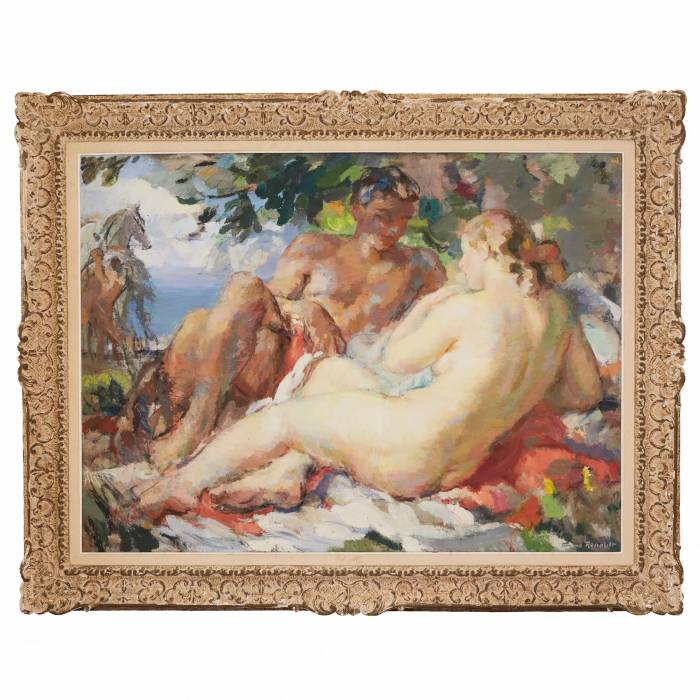
FERNAND RENAULT (1887 - 1939). “THE LOVING COUPLE” FRANCE, 1930S
A large-scale work by Fernand Albert Renault that reveals the key artistic principles of the master during his mature period. The painting demonstrates the characteristic synthesis in Renault’s oeuvre of classical compositional structure and a free, vigorous painterly manner shaped by the influence of Fauvism and the Paris School of the interwar years.At the center of the composition lies a nude couple placed within a natural coastal landscape. Renault constructs the scene according to a balanced diagonal rhythm: the luminous female figure, rendered in broad, vibrating strokes of ochre and rose tones, forms the principal plastic accent of the foreground. The male figure, treated in denser, more saturated brown and olive hues, establishes a tonal contrast and intensifies the dramatic interplay of light and shadow.For Renault, color functions as an independent expressive force. In this composition, the scarlet, emerald, and lemon accents of the draped fabrics do not merely describe objects, but rather create the emotional atmosphere of the painting. The foliage and openings of sky are resolved in free patches of pigment that evoke moving air and the pulsation of sunlight.The background scene, depicting figures subduing horses, carries particular significance. This motif recurs in Renault’s work as a symbol of vital energy and masculine initiative. Within the context of this painting, it enters into a meaningful dialogue with the intimate foreground scene, reinforcing the themes of attraction, strength, and inner impulse.Unlike academic treatments of the nude, Renault avoids cold idealization. His figures exist within the realm of color and light rather than anatomical display. Corporality is conveyed through the plastic mass of the brushstroke, where color replaces line. This characteristic allows the work to be situated within French Neotraditionalism of the 1930s, which sought to preserve figuration while rejecting excessive academic rigidity.The artist’s signature appears in the lower right corner.Dimensions: Canvas 99 x 132 centimeters. Frame 128 x 163 centimeters.Material: Oil on canvas.Condition: Good. The paint layer is stable and without significant losses. The frame shows natural signs of age.Provenance: Private collection.
13303 USD
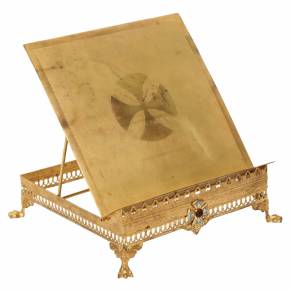
Gilded brass pulpit. 19th century
1736 USD
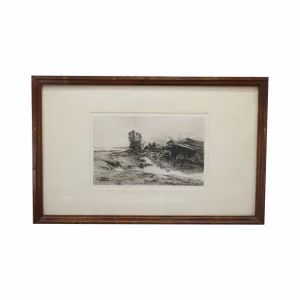
Engraving
99 USD
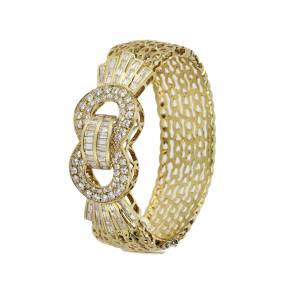
Gold bracelet with diamonds in the form of a belt.
10989 USD
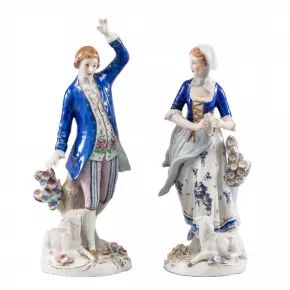
Romantic Couple. Sitzendorf.
486 USD
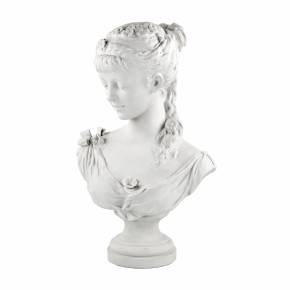
BISCUIT PORCELAIN BUST OF A YOUNG GIRL CHARLES LEVY & CO, FRANCE, CIRCA 1876-1881
2892 USD
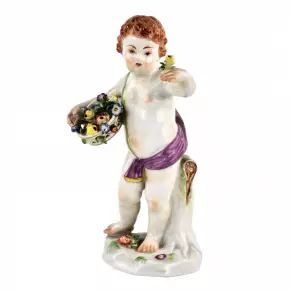
Porcelain figurine allegory Spring. Meissen.
579 USD
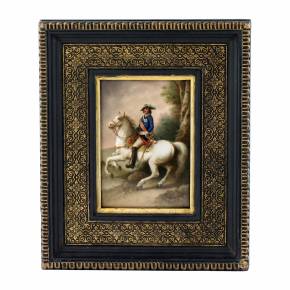
Porcelain plaque. Portrait of the equestrian monarch Peter the Great. 19th century.
2661 USD
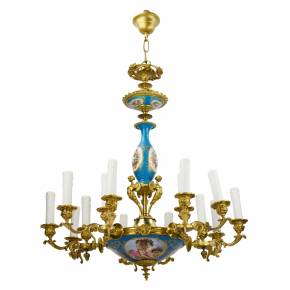
A 15-candle chandelier in the Louis XVI style. Sevres.
2083 USD
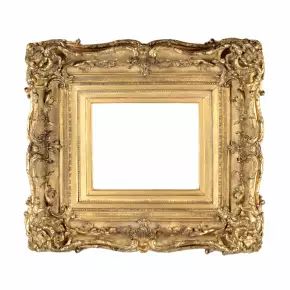
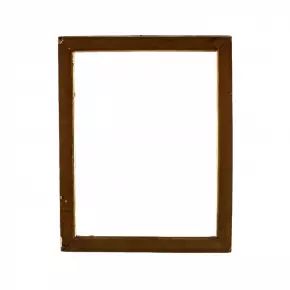
Wooden frame in Louis XV style.
1736 USD
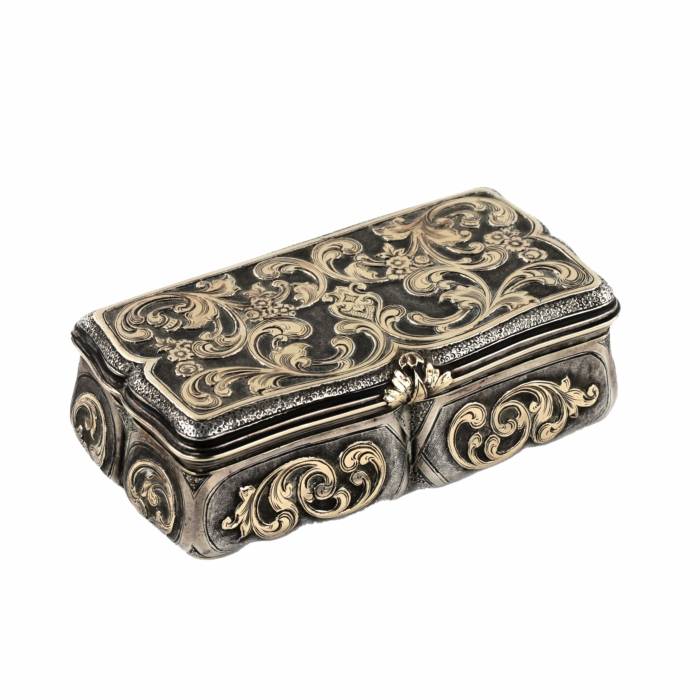
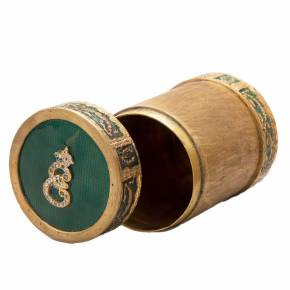
Russian silver snuffbox with gold decor. Mid 19th century.
Silver snuffbox with applied gold, Baroque style. Personalized image of luxury and nobility. Observes baroque proportions, canons and forms. Fits perfectly into the anatomy of the hand. The mysterious shimmer of silver pleasantly sets off the festive and sublime sparkle of golden curls and shoots that adorned the snuffbox from all sides. St. Petersburg 185? 84 standard silver, gilding. Assay master Branderburg Eduard Fedorovich 1850-1866 Author`s initials: SE. Ernst Karl. (Ernst Car). Known as a goldsmith since 1800. He had a workshop in 1849. There are works of the 1850s. Weight: 129 gr.
2430 USD
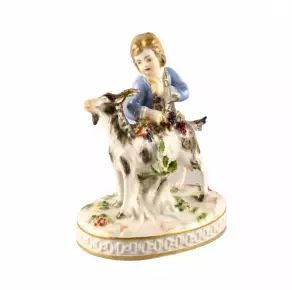
Porcelain figure Boy with a goat. Meissen
926 USD
Gilded wood frame.
35 USD
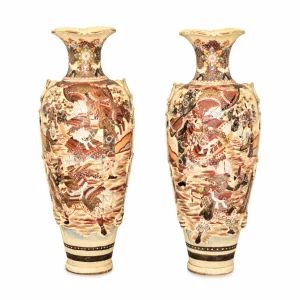
Pair of Japanese Satsuma floor vases.
3124 USD
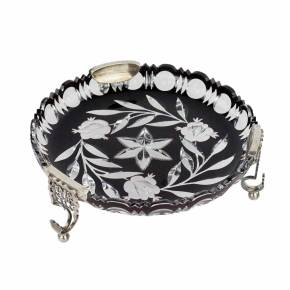
An original crystal dish on silver legs. Latvian version of Art Deco from the 1930s.
2198 USD
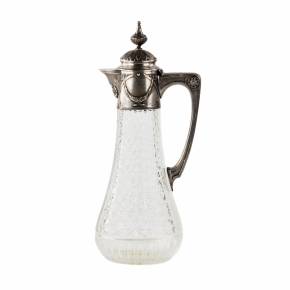
Crystal jug with silver. Early 20th century.
1504 USD
Picture frame
405 USD
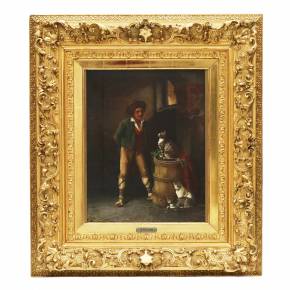
PLAYING WITH CATS. ALEXANDER RIZZONI (1836 - 1902) RUSSIA - ITALY, SECOND HALF OF THE 19TH CENTURY
17351 USD
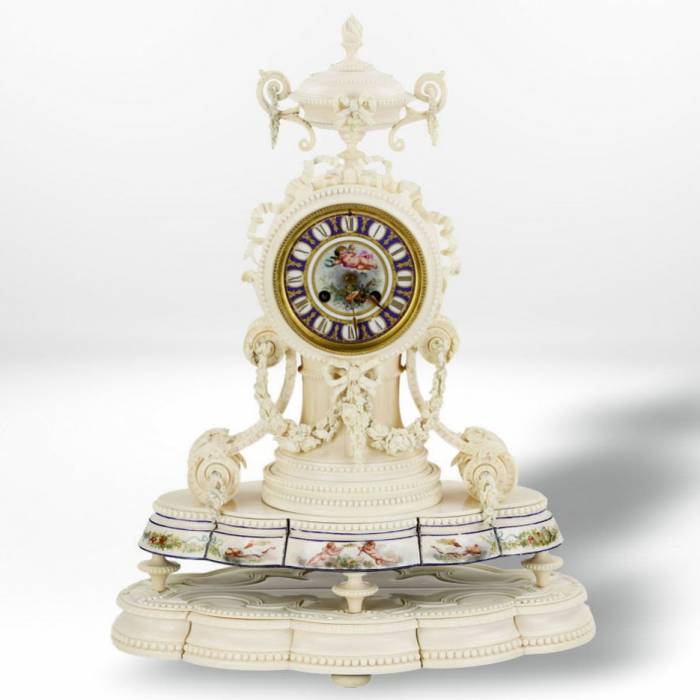
IVORY MANTEL CLOCK OF THE NAPOLEON III PERIOD FRANCE, PARIS, SECOND HALF OF THE 19TH CENTURY
An exceptional mantel clock from the Napoleon III period, executed in the Neoclassical style and distinguished by a rare degree of artistic and technical refinement. The case is entirely carved from ivory, featuring a finely articulated architectural silhouette with columnar supports, volutes, garlands, rosettes, and a krater-shaped vase crowning the composition. The overall design demonstrates symmetry and ceremonial grandeur characteristic of Parisian decorative arts of the 1860–1880s.The porcelain dial, presumably produced by the Royal Sèvres Manufactory, is decorated with a painted composition depicting a flying Cupid holding a wreath, accompanied by musical instruments and floral motifs. The Roman numeral chapter ring is set against a deep cobalt-blue ground with gilded ornamentation and enclosed within a gilt brass bezel. The original pierced gilt hands enhance the refined appearance of the dial.The lower frieze of the case is painted in oils with scenes of playing putti, musical attributes, and floral garlands, emphasizing the allegorical themes of love, harmony, and the arts. The clock rests on a complex, multi-tiered ivory base with profiled relief and decorative feet.The French movement features an anchor escapement and striking mechanism, signed “S. Marti & Cie – Médaille de Bronze” and additionally numbered “Chameroy – 178”. The movement has undergone professional servicing and is in working order. During inspection, a historical presentation inscription was discovered on the interior of the base beneath a brass cover: “Wedding gift to Marie Dessarps …”, adding notable memorial and provenance value.Marks: Movement signed “S. Marti & Cie – Médaille de Bronze”; numbered “Chameroy – 178”.Dimensions: 50 × 37.5 × 23.5 cm.Weight: Approx. 6,900 g.Condition: Good, with natural traces of age and use.Provenance: France, Paris; private European collection. Accompanied by a CITES certificate permitting circulation within the EU.
32966 USD
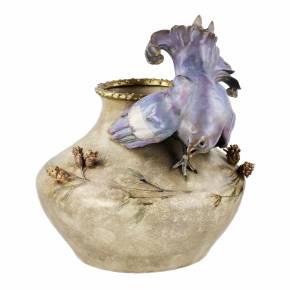
Ceramic cache-pot. Eduard STELLMACHER. 1905
2892 USD
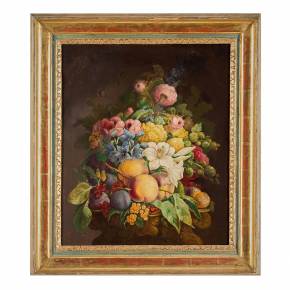
Still life Bouquet of flowers.
2083 USD
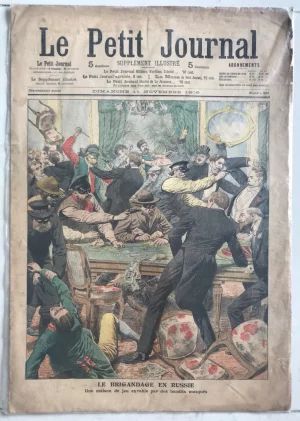
"Le Petit Journal 1906"
93 USD
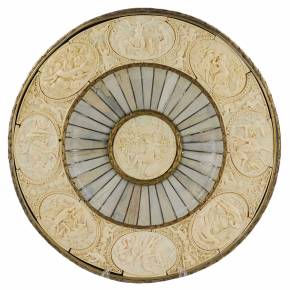
DISH “BACCHUS”. NEO-RENAISSANCE, IN THE MANNER OF JOHANN MICHAEL MAUCHER (1645–1701) GERMANY, 19TH CENTURY
21399 USD
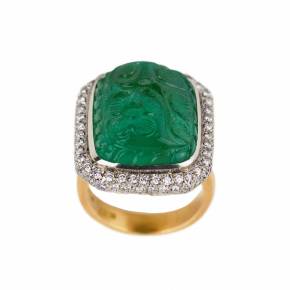
Impressive 18K gold ring with emerald and diamonds.
12435 USD
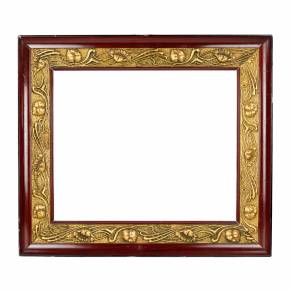
Modern era frame. Early 20th century.
984 USD
D. Sannikov. Abstract composition. Russia 1920s.
1851 USD
RARE SILVER EROTIC MUSICAL BOX ITALY, 1930s
9832 USD
1
2
3
4
5
6
...
72
Subscribe to our newsletter
Never miss new auctions
You have subscribed to our newsletter.
Subscribe
Your latest views
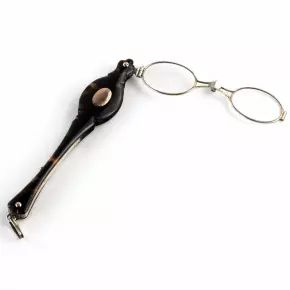
Silver French tortoiseshell lorgnette.
521 USD
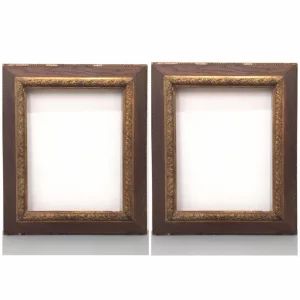
Twin frames
521 USD
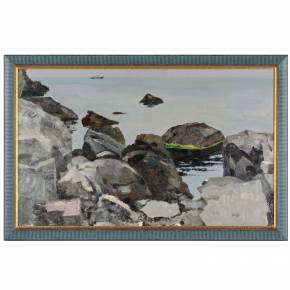
V.A.Polyakov "Crimea. Rocky shore .
1620 USD
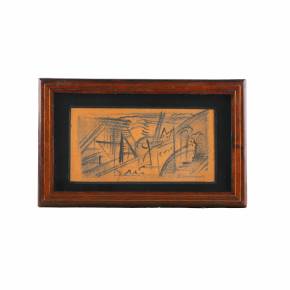
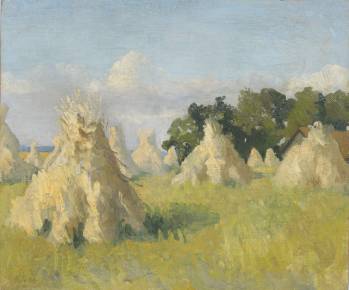
Landscape with wall posts
394 USD
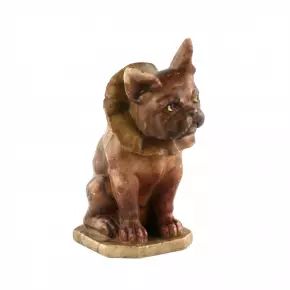
Circus Dog
255 USD
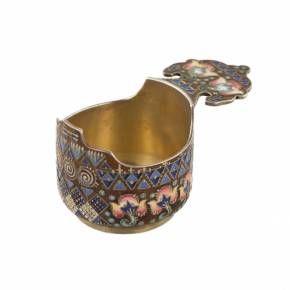
RUSSIAN ART NOUVEAU KOVSH WITH CLOISONNÉ ENAMELS. FYODOR RUCKERT RUSSIA, MOSCOW, 1908–1917
21399 USD
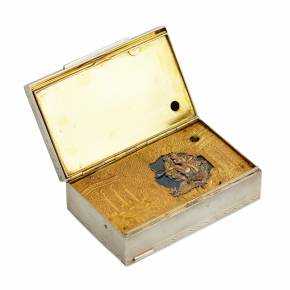
Snuffbox
348 USD
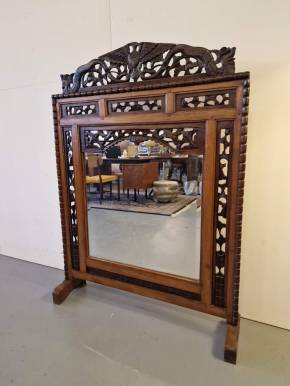
Mirror - screen
614 USD
Ceramic vase
394 USD
Neo-Pop Art object. HARD AND HEAVY. MAREK BRAUN.
521 USD
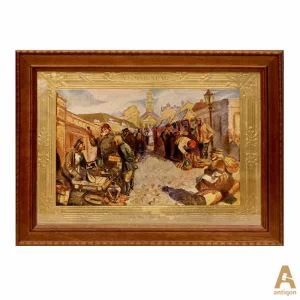
Old Riga - Flea Market
197 USD
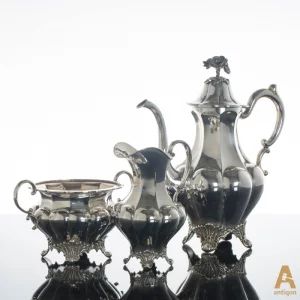
Coffee service
301 USD
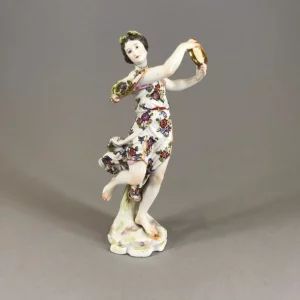
Girl with a tambourine. OSWALD LORENZ
267 USD
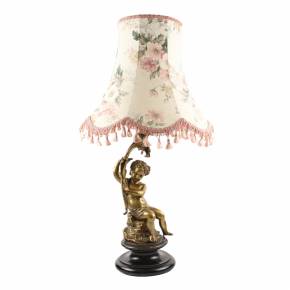
Table lamp Putti.
637 USD
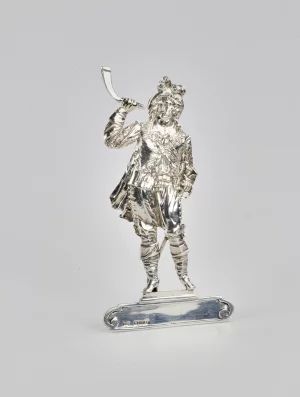
Silver card holder
521 USD
Large chest of drawers
1481 USD
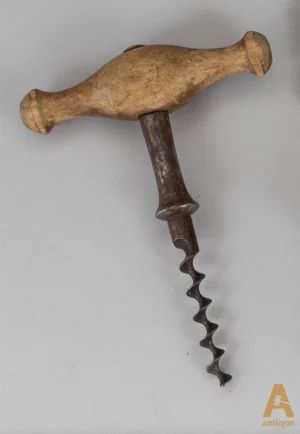
Corkscrew T-shaped
81 USD
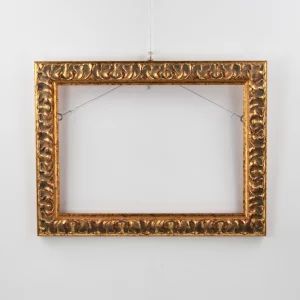
Picture frame
93 USD
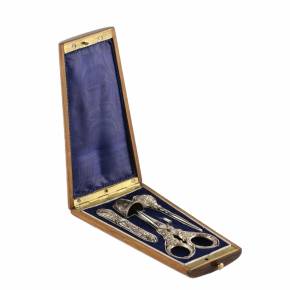
Sewing kit
290 USD
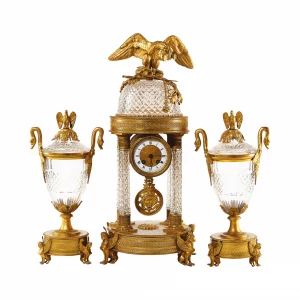
Fireplace clock set
Bidding is completed
Start hunt for treasures!
Individual
Legal entity
Enter a name (min 3 characters)
Enter a Last name (min 3 characters)
Enter the email
User already exist
Algeria (+213)
Andorra (+376)
Angola (+244)
Anguilla (+1264)
Antigua & Barbuda (+1268)
Argentina (+54)
Armenia (+374)
Aruba (+297)
Australia (+61)
Austria (+43)
Azerbaijan (+994)
Bahamas (+1242)
Bahrain (+973)
Bangladesh (+880)
Barbados (+1246)
Belarus (+375)
Belgium (+32)
Belize (+501)
Benin (+229)
Bermuda (+1441)
Bhutan (+975)
Bolivia (+591)
Bosnia Herzegovina (+387)
Botswana (+267)
Brazil (+55)
Brunei (+673)
Bulgaria (+359)
Burkina Faso (+226)
Burundi (+257)
Cambodia (+855)
Cameroon (+237)
Canada (+1)
Cape Verde Islands (+238)
Cayman Islands (+1345)
Central African Republic (+236)
Chile (+56)
China (+86)
Colombia (+57)
Comoros (+269)
Congo (+242)
Cook Islands (+682)
Costa Rica (+506)
Croatia (+385)
Cuba (+53)
Cyprus North (+90392)
Cyprus South (+357)
Czech Republic (+42)
Denmark (+45)
Djibouti (+253)
Dominica (+1809)
Dominican Republic (+1809)
Ecuador (+593)
Egypt (+20)
El Salvador (+503)
Equatorial Guinea (+240)
Eritrea (+291)
Estonia (+372)
Ethiopia (+251)
Falkland Islands (+500)
Faroe Islands (+298)
Fiji (+679)
Finland (+358)
France (+33)
French Guiana (+594)
French Polynesia (+689)
Gabon (+241)
Gambia (+220)
Georgia (+7880)
Germany (+49)
Ghana (+233)
Gibraltar (+350)
Greece (+30)
Greenland (+299)
Grenada (+1473)
Guadeloupe (+590)
Guam (+671)
Guatemala (+502)
Guinea (+224)
Guinea - Bissau (+245)
Guyana (+592)
Haiti (+509)
Honduras (+504)
Hong Kong (+852)
Hungary (+36)
Iceland (+354)
India (+91)
Indonesia (+62)
Iran (+98)
Iraq (+964)
Ireland (+353)
Israel (+972)
Italy (+39)
Jamaica (+1876)
Japan (+81)
Jordan (+962)
Kazakhstan (+7)
Kenya (+254)
Kiribati (+686)
Korea North (+850)
Korea South (+82)
Kuwait (+965)
Kyrgyzstan (+996)
Laos (+856)
Latvia (+371)
Lebanon (+961)
Lesotho (+266)
Liberia (+231)
Libya (+218)
Liechtenstein (+417)
Lithuania (+370)
Luxembourg (+352)
Macao (+853)
Macedonia (+389)
Madagascar (+261)
Malawi (+265)
Malaysia (+60)
Maldives (+960)
Mali (+223)
Malta (+356)
Marshall Islands (+692)
Martinique (+596)
Mauritania (+222)
Mayotte (+269)
Mexico (+52)
Micronesia (+691)
Moldova (+373)
Monaco (+377)
Mongolia (+976)
Montserrat (+1664)
Morocco (+212)
Mozambique (+258)
Myanmar (+95)
Namibia (+264)
Nauru (+674)
Nepal (+977)
Netherlands (+31)
New Caledonia (+687)
New Zealand (+64)
Nicaragua (+505)
Niger (+227)
Nigeria (+234)
Niue (+683)
Norfolk Islands (+672)
Northern Marianas (+670)
Norway (+47)
Oman (+968)
Palau (+680)
Panama (+507)
Papua New Guinea (+675)
Paraguay (+595)
Peru (+51)
Philippines (+63)
Poland (+48)
Portugal (+351)
Puerto Rico (+1787)
Qatar (+974)
Reunion (+262)
Romania (+40)
Russia (+7)
Rwanda (+250)
San Marino (+378)
Sao Tome & Principe (+239)
Saudi Arabia (+966)
Senegal (+221)
Serbia (+381)
Seychelles (+248)
Sierra Leone (+232)
Singapore (+65)
Slovak Republic (+421)
Slovenia (+386)
Solomon Islands (+677)
Somalia (+252)
South Africa (+27)
Spain (+34)
Sri Lanka (+94)
St. Helena (+290)
St. Kitts (+1869)
St. Lucia (+1758)
Sudan (+249)
Suriname (+597)
Swaziland (+268)
Sweden (+46)
Switzerland (+41)
Syria (+963)
Taiwan (+886)
Tajikstan (+7)
Thailand (+66)
Togo (+228)
Tonga (+676)
Trinidad & Tobago (+1868)
Tunisia (+216)
Turkey (+90)
Turkmenistan (+7)
Turkmenistan (+993)
Turks & Caicos Islands (+1649)
Tuvalu (+688)
Uganda (+256)
UK (+44)
Ukraine (+380)
United Arab Emirates (+971)
Uruguay (+598)
USA (+1)
Uzbekistan (+7)
Vanuatu (+678)
Vatican City (+379)
Venezuela (+58)
Vietnam (+84)
Virgin Islands - British (+1284)
Virgin Islands - US (+1340)
Wallis & Futuna (+681)
Yemen (North)(+969)
Yemen (South)(+967)
Zambia (+260)
Zimbabwe (+263)
Enter the phone number
Minimum password length must be at least 6 characters
Enter a name of your company (min 3 characters)
Enter registration number (min 3 characters)
Enter the email
User already exist
Enter the phone number
Minimum password length must be at least 6 characters
I am a buyer
I am a seller
or log in with
Sign up for our weekly newsletter
I reviewed and agree
user agreement
,
«Privacy Policy»
i agree with Antiqon Terms and conditions
Register
Already have an account?
Log In
Enter your email and password for authorization
Enter the email
The number of attempts has been used uo, repeat after 2 hours
Minimum password length must be at least 6 characters
Invalid email or password
or log in with
Login
Forgot password?
Don't have an account?
register