×
Create account and receive
15% DISCOUNT
your first acquisition
or
Silver occupies a distinguished place in the history of jewellery and the decorative arts. For centuries it has been used to create objects for ceremonial and everyday use, table silver, decorative objects for interiors, and commemorative and presentation pieces. In the finest examples, function is combined with artistic expression, technical sophistication, and the individual character of a maker, firm or workshop.
Antique silver differs from modern production not simply by age. Its art-historical and collecting significance is shaped by its date and place of manufacture, artistic tradition, maker or manufacturer, techniques of manufacture and decoration, hallmarking, condition, and provenance. Taken together, these characteristics place a historical object within the broader history of silverwork and jewellery.
The ANTIQON antique silver collection brings together works from Russia, Western Europe, the United States, China and Japan. Particular emphasis is placed on Russian silver of the 19th and early 20th centuries, a period of exceptional achievement in Russian jewellery and the decorative arts.
The collection includes works by leading Russian jewellery firms and workshops, many of which held the title of Purveyor to the Russian Imperial Court. Among them are the House of Carl Fabergé, the firms of Pavel Ovchinnikov, Ivan Khlebnikov, the Grachev Brothers, Sazikov and Nemirov-Kolodkin, alongside works by makers from Moscow jewellery artels. A distinct place is occupied by the celebrated enameller Feodor Rückert. Russian silver of this period is distinguished by a broad range of techniques, including casting, chasing, engraving, gilding, niello, filigree and various forms of enamel decoration.
Alongside Russian silver, Maison ANTIQON presents Western European, American and Asian silver and jewellery. The collection encompasses English, French, German and Austro-Hungarian traditions, including works associated with London workshops and the important German silver centre of Hanau; American silver, including Tiffany & Co.; Chinese silverwork; and Japanese silver and metalwork of the Meiji period.
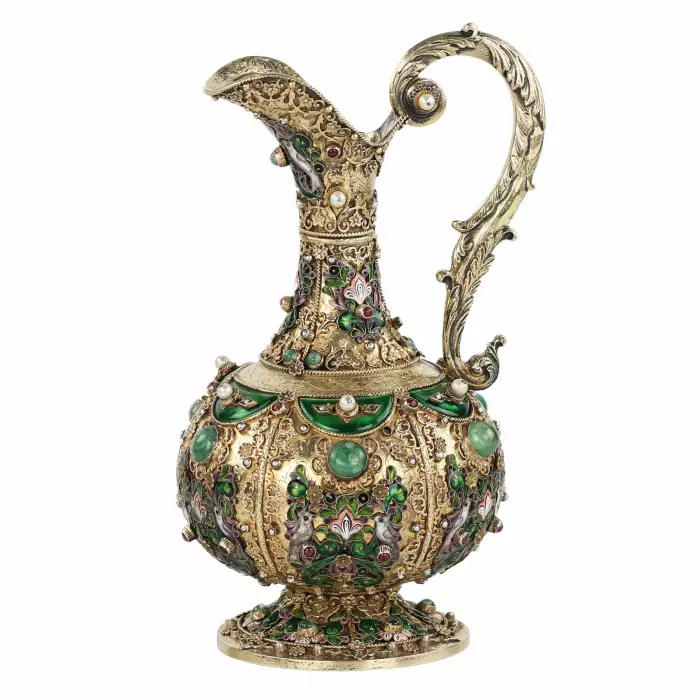
Collectible Silver
Collectible Silver brings together works whose significance derives from their maker or firm, rarity, artistic quality, provenance, typology or historical context. Explore the section to discover objects from different periods and artistic traditions.
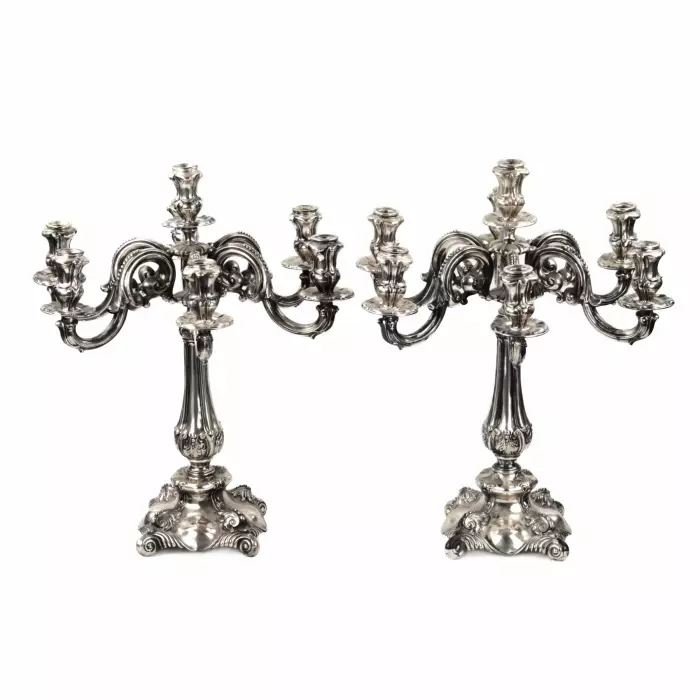
Table Silver
Table Silver reflects the history of dining, hospitality and domestic culture across different periods. Its forms and decoration are closely connected with etiquette, contemporary taste and regional traditions. Browse the section to view available examples of historical table silver.
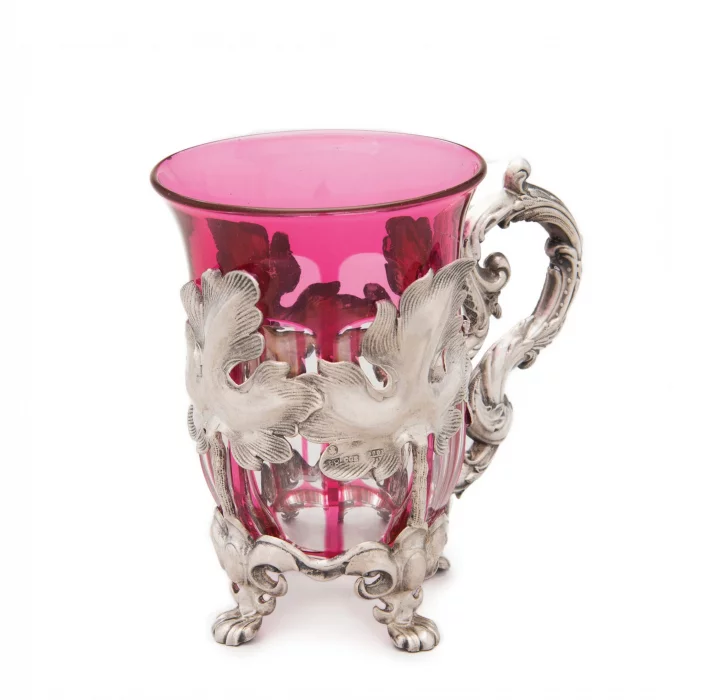
Silverware
Silverware comprises antique silver items of varied function and origin. These works demonstrate the technical possibilities of the material and the individual approach of their makers. Explore the section to view the available pieces.
Interior Silver
Interior Silver includes works intended for the cabinet, salon and private collection. Their form, scale, surface treatment and decorative presence are particularly important. Browse the section to discover interior silver at ANTIQON.
The works presented online are suitable both for established collectors and for those beginning to explore historical silver and develop their own collecting interests.
The value of a historical silver object depends on a combination of factors: date and place of manufacture, maker, firm or workshop, rarity, quality and technique of execution, condition, hallmarks, signatures and other marks, as well as its historical and collecting significance.
The price of antique silver is not determined solely by the weight of the precious metal. For works of high quality, a recognised maker or firm, rarity of form, workmanship, preservation of original elements and documented provenance may be considerably more important.
Attribution and the assessment of authenticity are based on close examination of the object. Specialists consider the material and fineness, construction, methods of manufacture and decoration, hallmarks, signatures and other marks, the presumed place and date of manufacture, and available provenance.
Hallmarks may provide information about the maker or firm, the silver standard, assay office and other characteristics of an object. They are interpreted within the hallmarking system of the relevant country and historical period and considered alongside the technical and stylistic features of the work. Documented provenance may provide further evidence when establishing the history of an object.
At ANTIQON, collectors can buy antique silver by browsing works according to origin, period, maker or firm, artistic tradition and function. Object pages include high-quality photography and key cataloguing information.
Clients can view antique silver online through the ANTIQON website and in ANTIQON exhibition spaces. Before purchase, Maison ANTIQON specialists can provide further information on condition, provenance, attribution and the individual characteristics of a selected work. Browse the antique silver for sale and select a piece for your collection.
It refers to historical objects made of silver or silver alloys that possess artistic, historical or collecting significance.
The price depends on the period and place of manufacture, maker or firm, rarity, technique of execution, condition, marks and provenance.
Key factors include quality of workmanship, rarity, association with a recognised maker or firm, condition, art-historical significance and documented provenance.
Assessment involves examining the material, construction, methods of manufacture and decoration, hallmarks and other marks, stylistic characteristics and provenance.
Hallmarks may identify a maker or firm, indicate the silver standard or assay office, and provide other information. Their meaning depends on the country and historical period.
It can be purchased through the ANTIQON website or in ANTIQON exhibition spaces.
Yes. A work can be selected and purchased online. Before acquisition, Maison ANTIQON specialists can provide further information on condition, provenance, attribution and the characteristics of the selected object.