EUR
EUR
USD
English
Latviešu
Francais
English
Русский
Sign Up
Login
Auction
Best sellers
Upcomming auctions
Archive
Shop
Sell
Evaluation
Services
Expertise
Restoration
Antiq selection
Delivery
Contacts
Home
Shop
Show sold items
Show auction items
Available right now
Price
-
EUR
New items
Gifts
EXCLUSIVE
Catalogue categories
ALL ITEMS
Russian art
Objects of Vertu (19)
+
Objects of Vertu (19)
Paintings (640)
+
Paintings (605)
Watercolor (20)
Miniature (3)
Other (12)
Graphic arts (47)
+
Graphic arts (47)
Icons (38)
+
Icons (34)
Church utensils (4)
Frames and easels (43)
+
Frames (28)
Easels (3)
Photo frames (12)
Sculpture (60)
+
Bronze sculptures (33)
Stone sculptures (9)
Stone carving miniature (6)
Other (12)
Silver and metal (253)
+
Russian silver (103)
European silver (74)
Other (76)
Porcelain and ceramics (348)
+
Russian porcelain (22)
European porcelain (114)
Other (212)
Glass (52)
+
Crystal (5)
Glass (47)
Clocks and watches (25)
+
Mantel clocks (7)
Wall clocks (3)
Wrist watches (7)
Pocket watches (5)
Grandfather floor clocks (1)
Other (2)
Furniture (146)
+
Furniture sets (8)
Showcases (25)
Dressers (10)
Tables (30)
Sofas (3)
Armchairs and chairs (16)
Columns (5)
Mirrors (8)
Consoles (10)
Other (31)
Lighting (52)
+
Chandeliers (11)
Sconce (8)
Floor lamps (4)
Lamps (16)
Candlesticks and candelabra (12)
Other (1)
Interior objects (34)
+
Interior objects (34)
Fireplaces and stoves (14)
+
Fireplaces and stoves (6)
Accessories (7)
Other (1)
Carpets and tapestries (2)
+
Carpets (1)
Tapestries (1)
Jewelry (124)
+
Diamonds and precious stones (0)
Rings (50)
Bracelets (7)
Brooches and pendants (2)
Earrings (10)
Jewelry sets (4)
Chains and necklaces (11)
Amber (0)
Bijoux (1)
Other (39)
Weapons and мilitary (20)
+
Weapon (12)
Military (5)
Other (2)
Armour (1)
Orders and medals (4)
+
Orders and medals (3)
Signs and Tokens (0)
Other (1)
Coins and banknotes (17)
+
Coins (17)
Banknotes and Bonds (0)
Other (0)
Mechanics (15)
+
Music boxes (9)
Mechanisms and tools (4)
Models (0)
Other (2)
Print, postcards and other antique paper production (9)
+
Posters (3)
Maps (2)
Postcards (0)
Photos (0)
Other (4)
Books (5)
+
Literature (1)
History (1)
Military (0)
Science (1)
Children`s literature (0)
Other (2)
Garden and architecture (2)
+
Garden sculpture (0)
Fountain (0)
Garden furniture (0)
Architectural elements (2)
Other (0)
Modern Art (72)
+
Paintings (10)
Sculpture (18)
Objects (29)
Other (15)
Collectibles (14)
+
Collectibles (14)
Vintage and fashion (2)
+
Accessories (2)
Clothing (0)
Footwear (0)
Other (0)
Other (10)
+
Other (10)
Asian art
Styles
Louis-Philippe Carl X (11)
Academic art (3)
Antiquity (9)
Art Deco (61)
Art Nouveau (27)
Asian Art (12)
Baroque (25)
Biedermeier (10)
Boulle (4)
Chinoiserie (6)
Classicism (31)
Design of 50-60’s (10)
Design of 70’s (5)
Eclecticism (55)
Empire (29)
Empire - Consulate (1)
Gothic Revival (3)
Impressionism (22)
Judaica (2)
Jugendstil (10)
Louis XIII - Renaissance (2)
Louis XIV - Regency (1)
Louis XV (31)
Louis XVI (37)
Modern (108)
Modern Art (98)
Napoleon III (40)
Neo-baroque (5)
Neo-Baroque (9)
Neo-Russian (53)
Neoclassicism (37)
Neorenaissance (13)
Neorococo (36)
Oriental Art (5)
Other style (62)
Realism (50)
Renaissance (7)
Rococo (36)
Romanticism (30)
Vanguard (20)
Victorian Style (4)
Epoques
16th century (2)
17th century (4)
18th century (28)
19th century (325)
20th century (332)
21th century (269)
At the turn of 16th -17th century (1)
At the turn of 17th-18th century (1)
At the turn of 19th -20th century (199)
At the turn of the 15th - 16th century (4)
At the turn of the 18th -19th century (12)
Early 17th century (1)
Early 18th century (1)
Early 19th century (20)
Early 20th century (404)
Late 18th century (3)
Late 19th century (99)
Mid-17th century (14)
Mid-18th century (1)
Mid-19th century (38)
Mid-20th century (268)
The end of the 17th century (1)
The end of the 20th century (45)
Russian art
Price (descending)
Price (ascending)
Date (ascending)
Date (descending)
...
5
6
7
8
9
10
11
...
13
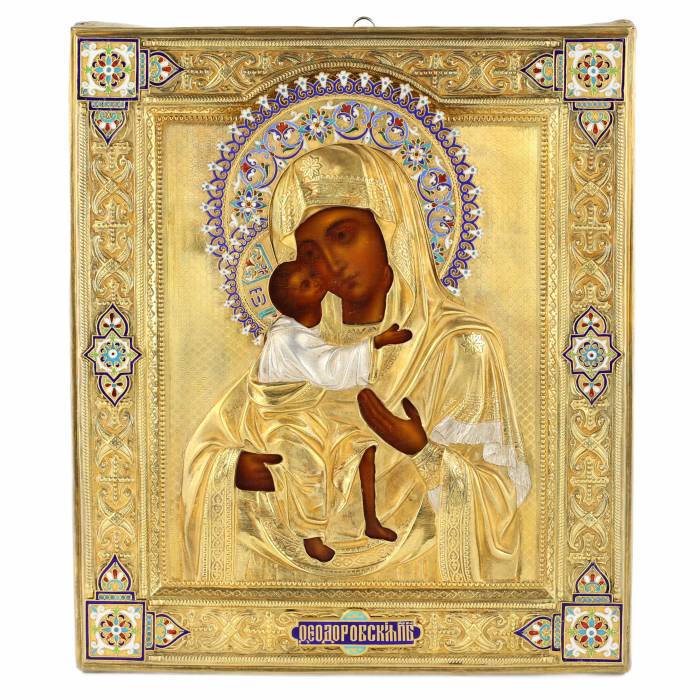
THE FEODOROVSKAYA MOTHER OF GOD ICON IN A GILT SILVER MOUNT WITH ENAMELS. WORKSHOP OF VASILY SEMYONOV RUSSIA, MOSCOW, 1890
A solemn analogion icon of the Feodorovskaya Mother of God, created in Moscow in 1890. The image belongs to the most venerated Marian shrines traditionally associated with the protection of the family and dynastic continuity. The Virgin is depicted with the Christ Child in the iconographic type known as “Eleusa,” where the gentle touching of their faces emphasizes intimacy and prayerful contemplation. The faces are executed in a warm ochre-brown palette with subtle modeling of light and shadow characteristic of Moscow icon painting of the late nineteenth century.The icon is encased in a gilt silver mount executed at the factory of Vasily Semyonov in Moscow. The mount represents a highly refined example of Moscow silversmithing of the late nineteenth century. The repoussé work on silver forms a sculptural pattern of the folds of the maphorion and chiton, creating a striking interplay of light across the metal surface. The crowns, borders, and corner elements are decorated with polychrome enamels featuring delicate vegetal and geometric ornamentation, rendered in the characteristic decorative manner of the Moscow school.Marks: Maker’s mark “VS” in Cyrillic for Vasily Semyonov; Moscow silver hallmarks of 84 standard; Assay mark with the initials “L.O” beneath a dividing line and the date “1890” for Olex Lev Fyodorovich, assay master of Moscow; State assay mark with the coat of arms of the city of Moscow.Dimensions: 31 x 27 centimeters.Material: Wood, tempera painting; gilt silver, enamel.Condition: Good.Provenance: Private collection.
Bidding is completed
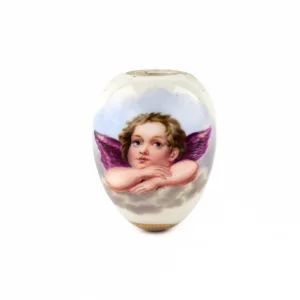
Porcelain Easter egg.
Bidding is completed
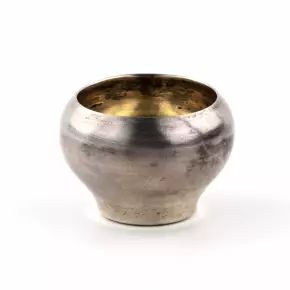
Russian silver salt shaker in the form of a cast-iron.
Bidding is completed
Russian silver candy bowl. St. Petersburg 1837
Bidding is completed
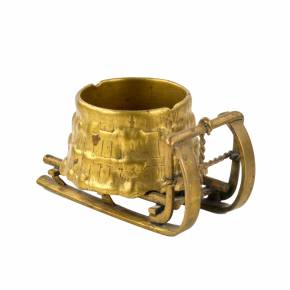
Brass ashtray Water sleigh. Late 19th century
Bidding is completed
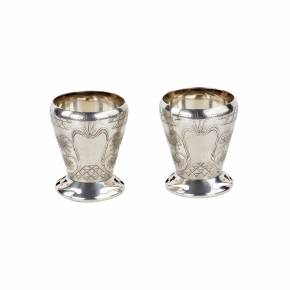
A pair of Russian silver vases in the Art Nouveau style.
Bidding is completed
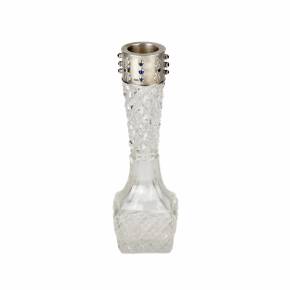
Russian, crystal vase with a silver frame. St. Petersburg. The turn of the 19th-20th centuries.
Bidding is completed
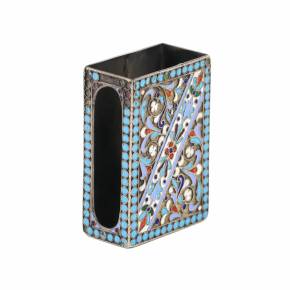
Silver matchbox with polychrome filigree enamel. Moscow. Workshop Shaposhnikov.
Bidding is completed
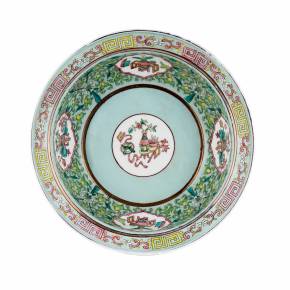
Chinese dish from the Gardner factory.
Bidding is completed
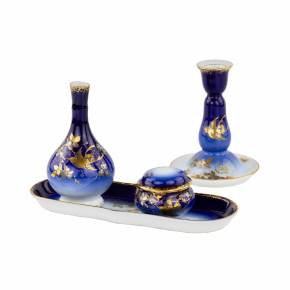
Four-piece set, Gardner Porcelain Factory.
Bidding is completed
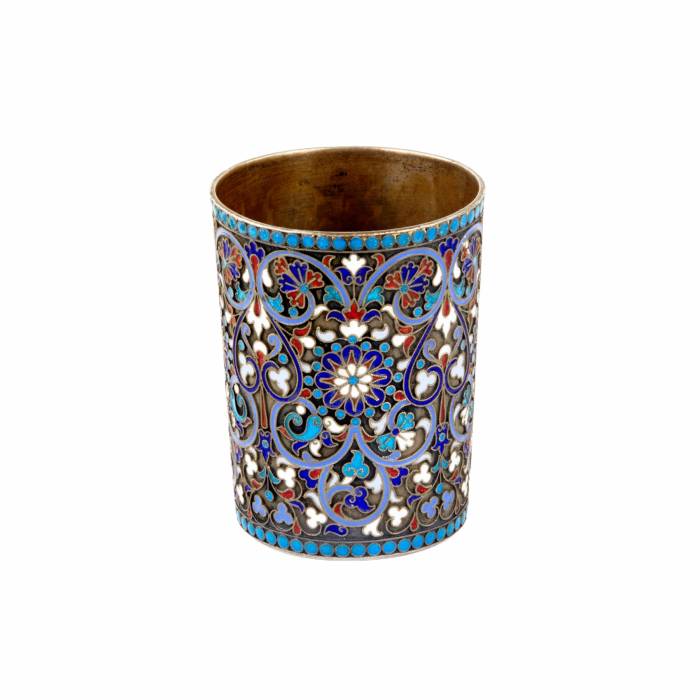
RUSSIAN SILVER CLOISONNÉ SHOT CUP. GUSTAV KLINGERT RUSSIA, MOSCOW, 1893
A Russian silver cylindrical shot cup crafted in 84 silver and richly decorated with polychrome cloisonné enamel. The exterior surface is entirely covered with an elaborate ornamental composition built on symmetrical floral and foliate motifs, incorporating stylized blossoms and scrolling elements characteristic of the Moscow silversmithing tradition of the late nineteenth century. The enamel palette features deep cobalt blue, turquoise, white and red tones, emphasized by the precise rhythm of silver cloisons. The interior surface is smooth, with a natural silver patina, creating a refined contrast with the vivid enamel decoration of the exterior. The object exemplifies a high level of craftsmanship and masterful command of the cloisonné enamel technique.Hallmarks: Maker’s mark “KLINGERT” – Gustav Gustavovich Klingert; Moscow assay mark with silver standard “84”; Assay master’s mark “A.S” – Alexander Alexeyevich Smirnov, dated 1893.Dimensions: Height 6.7 cm; Diameter 5 cm.Weight: 82 g.Condition: Good. Enamel well preserved without losses or chips; silver with a noble patina; minor signs of wear consistent with age.Provenance: Private collection.
Bidding is completed
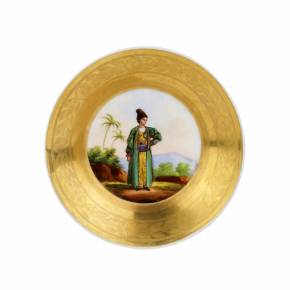
Russian porcelain saucer from private factories of the 1820s. Persan (Persian).
Bidding is completed
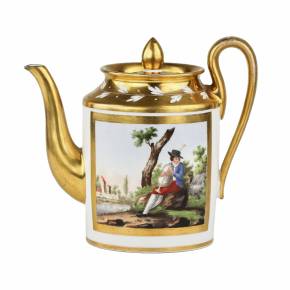
Gardner porcelain teapot. Russia, 1820-1830s
Bidding is completed
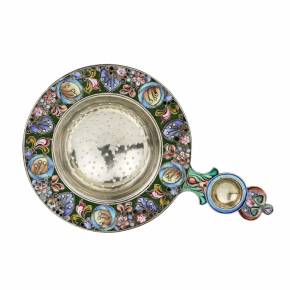
Russian silver tea strainer, with enamel decor, in the spirit of Russian Art Nouveau.
Bidding is completed
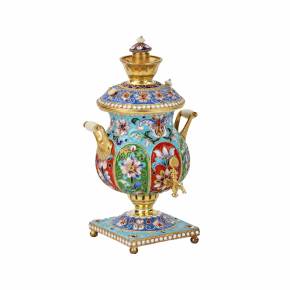
Silver, gilded, with painted enamels samovar.
Bidding is completed
Large candy bowl 15 Moscow artel of jewelers. Russia. 1908-1917
Bidding is completed
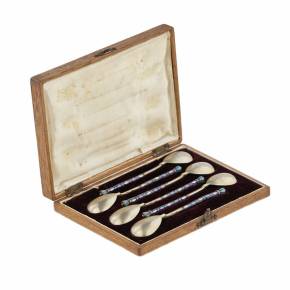
A set of teaspoons decorated with enamel in the original case. Moscow 1908-1917.
Bidding is completed
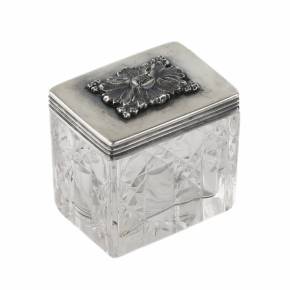
Russian crystal box with a silver lid. St. Petersburg. 1837.
Bidding is completed
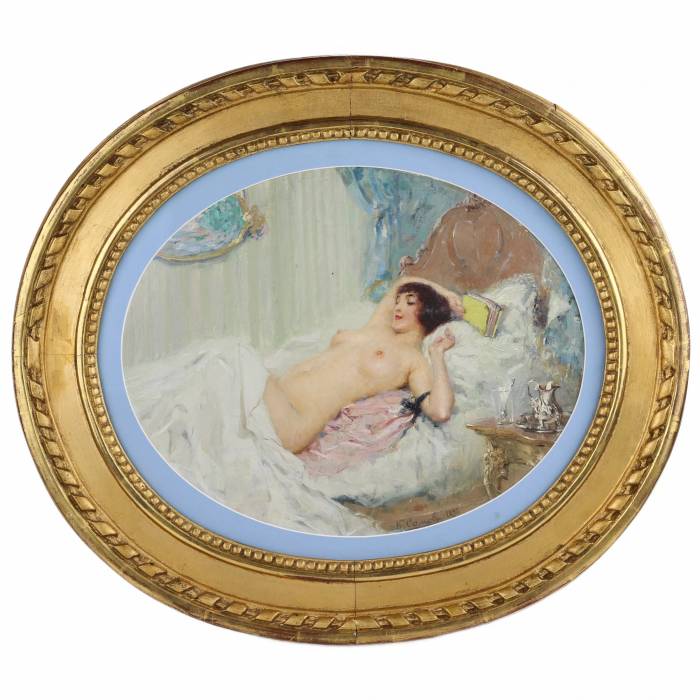
NUDE RECLINING WOMAN, RUSSIA, LATE 19TH CENTURY
An oval oil painting on cardboard, executed in the style of Russian Art Nouveau and the “World of Art” circle. The composition features a nude woman reclining in a relaxed pose on a bed, holding a book, her head resting on a pink pillow. The setting, with its delicate drapery, carved headboard, and silver tea service, evokes the refined domestic interiors of the Rococo era. The brushwork is soft and pastose, emphasizing the sensuality of the figure and the decorative richness of the surroundings. In the lower right corner appears the signature “K. Somov” and the date “1897.” The painting is presented in a gilt oval frame with a light blue museum-quality mat. On the reverse is an old collector’s label inscribed in ink: “K. Somov, 1869–1939,” framed by a decorative blue border.Dimensions: Painting: 30 × 37 cm. Frame: approximately 50 × 60 cmMaterial: Oil on cardboardCondition: Good condition. The surface is clean, and the paint layer is stable. Minor signs of age on the reverse and frame.Provenance: Private European collection. Contents of a 19th-century Baltic villa
Bidding is completed
Caviar bowl, Moscow, 1892
Bidding is completed
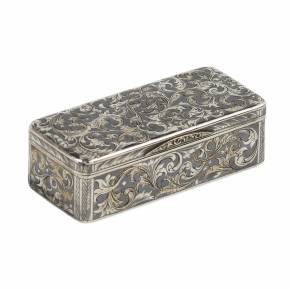
Russian silver snuffbox with niello. Russia, 19th century.
Bidding is completed
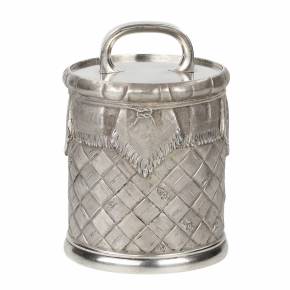
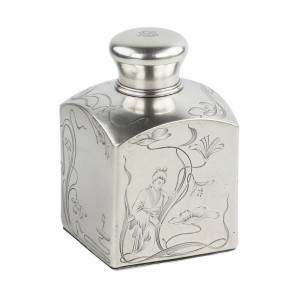
Russian Silver Tea Caddy. Moscow 1896-1908
Bidding is completed
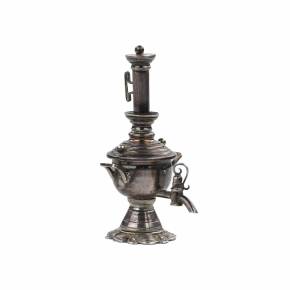
Miniature silver samovar. Early 20th century.
Bidding is completed
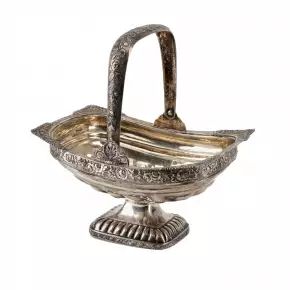
SILVER-GILT SUGAR BASKET. MATVEY NIKIFOROV. MOSCOW, 1875
Bidding is completed
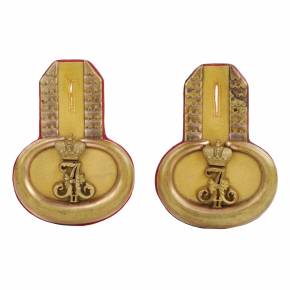
A PAIR OF EPAULETTES WITH THE CIPHER OF EMPEROR ALEXANDER II RUSSIA, SECOND HALF OF THE 19TH CENTURY
Bidding is completed
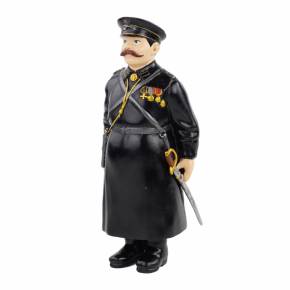
BRONZE FIGURINE OF A POLICEMAN, PAINTED WITH COLD ENAMELS AFTER A FABERGÉ MODEL RUSSIA, SAINT PETERSBURG, 1911
Bidding is completed
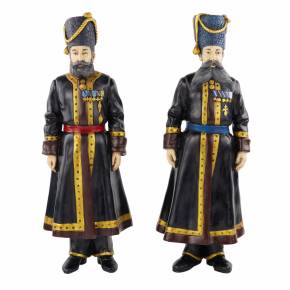
PAIR OF BRONZE FIGURES OF THE IMPERIAL FAMILY’S COSSACK GUARDS RUSSIA, ST PETERSBURG, 1912
Bidding is completed
...
5
6
7
8
9
10
11
...
13
Subscribe to our newsletter
Never miss new auctions
You have subscribed to our newsletter.
Subscribe
Your latest views
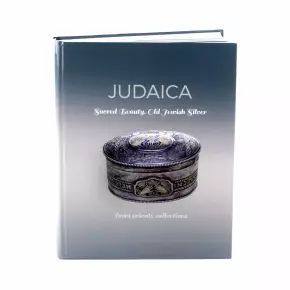
Book JUDAICA M. Itkin.
150 EUR
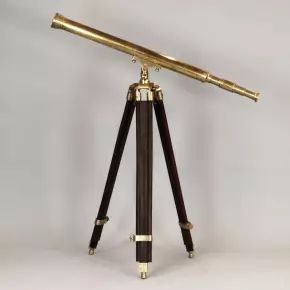
Telescope W & J. George Ltd, London
Bidding is completed
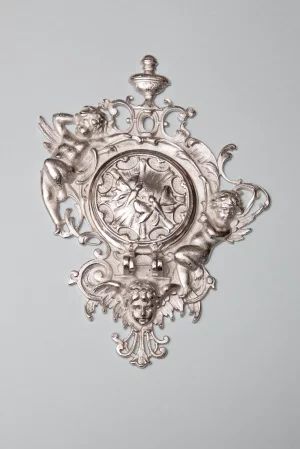
Molded shelf with angels
Bidding is completed
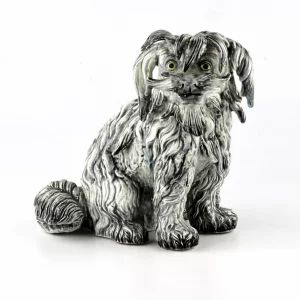
Porcelain Bolonka based on Kuznetsovs model.
Bidding is completed
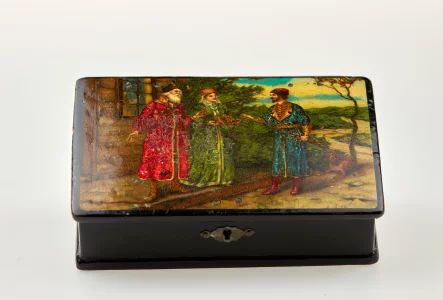
Antique Russian box Kissing Rite.
Bidding is completed
A Mirror
470 EUR
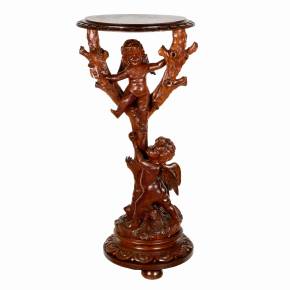
Wooden console with carved cupids.
Bidding is completed
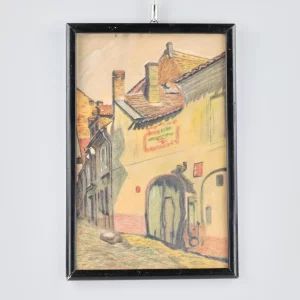
Drawing Old Riga. 1936 year. Signature Frid.
110 EUR
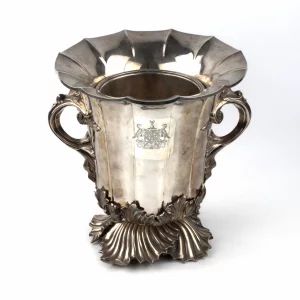
Wine cooler
Bidding is completed
A girl from Karelia
800 EUR
Ceramic figure ``Motherhood``
470 EUR
Figural composition
2110 EUR
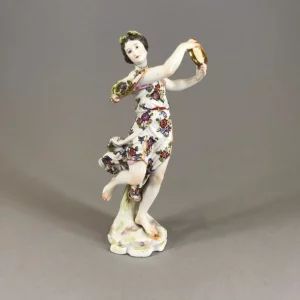
Girl with a tambourine. OSWALD LORENZ
Bidding is completed
Crystal fruit utensil
540 EUR
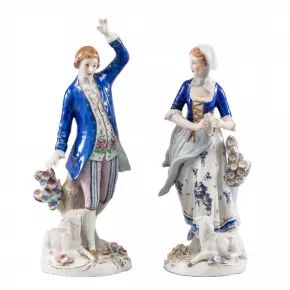
Romantic Couple. Sitzendorf.
Bidding is completed
An elegant figure on a stone base
450 EUR
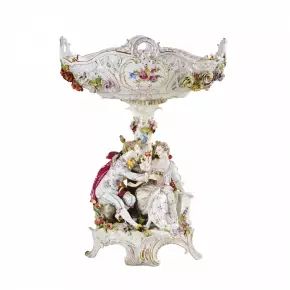
Fruit vase. Carl Thieme.
Bidding is completed
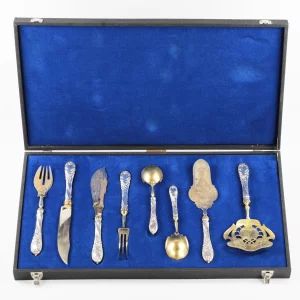
Silver serving set. 19-20th centuries. Germany.
Bidding is completed
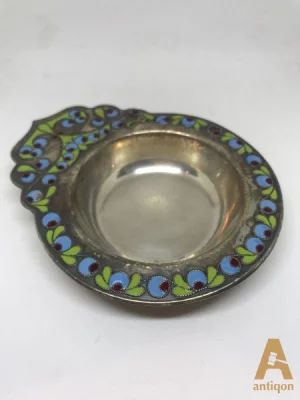
Wine Tasting Cup/ Tastevin
Bidding is completed
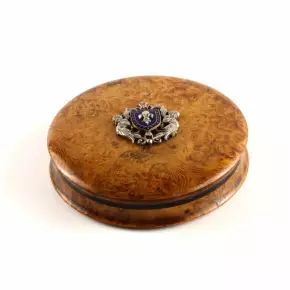
Round wooden box.
Bidding is completed
Start hunt for treasures!
Individual
Legal entity
Enter a name (min 3 characters)
Enter a Last name (min 3 characters)
Enter the email
User already exist
Algeria (+213)
Andorra (+376)
Angola (+244)
Anguilla (+1264)
Antigua & Barbuda (+1268)
Argentina (+54)
Armenia (+374)
Aruba (+297)
Australia (+61)
Austria (+43)
Azerbaijan (+994)
Bahamas (+1242)
Bahrain (+973)
Bangladesh (+880)
Barbados (+1246)
Belarus (+375)
Belgium (+32)
Belize (+501)
Benin (+229)
Bermuda (+1441)
Bhutan (+975)
Bolivia (+591)
Bosnia Herzegovina (+387)
Botswana (+267)
Brazil (+55)
Brunei (+673)
Bulgaria (+359)
Burkina Faso (+226)
Burundi (+257)
Cambodia (+855)
Cameroon (+237)
Canada (+1)
Cape Verde Islands (+238)
Cayman Islands (+1345)
Central African Republic (+236)
Chile (+56)
China (+86)
Colombia (+57)
Comoros (+269)
Congo (+242)
Cook Islands (+682)
Costa Rica (+506)
Croatia (+385)
Cuba (+53)
Cyprus North (+90392)
Cyprus South (+357)
Czech Republic (+42)
Denmark (+45)
Djibouti (+253)
Dominica (+1809)
Dominican Republic (+1809)
Ecuador (+593)
Egypt (+20)
El Salvador (+503)
Equatorial Guinea (+240)
Eritrea (+291)
Estonia (+372)
Ethiopia (+251)
Falkland Islands (+500)
Faroe Islands (+298)
Fiji (+679)
Finland (+358)
France (+33)
French Guiana (+594)
French Polynesia (+689)
Gabon (+241)
Gambia (+220)
Georgia (+7880)
Germany (+49)
Ghana (+233)
Gibraltar (+350)
Greece (+30)
Greenland (+299)
Grenada (+1473)
Guadeloupe (+590)
Guam (+671)
Guatemala (+502)
Guinea (+224)
Guinea - Bissau (+245)
Guyana (+592)
Haiti (+509)
Honduras (+504)
Hong Kong (+852)
Hungary (+36)
Iceland (+354)
India (+91)
Indonesia (+62)
Iran (+98)
Iraq (+964)
Ireland (+353)
Israel (+972)
Italy (+39)
Jamaica (+1876)
Japan (+81)
Jordan (+962)
Kazakhstan (+7)
Kenya (+254)
Kiribati (+686)
Korea North (+850)
Korea South (+82)
Kuwait (+965)
Kyrgyzstan (+996)
Laos (+856)
Latvia (+371)
Lebanon (+961)
Lesotho (+266)
Liberia (+231)
Libya (+218)
Liechtenstein (+417)
Lithuania (+370)
Luxembourg (+352)
Macao (+853)
Macedonia (+389)
Madagascar (+261)
Malawi (+265)
Malaysia (+60)
Maldives (+960)
Mali (+223)
Malta (+356)
Marshall Islands (+692)
Martinique (+596)
Mauritania (+222)
Mayotte (+269)
Mexico (+52)
Micronesia (+691)
Moldova (+373)
Monaco (+377)
Mongolia (+976)
Montserrat (+1664)
Morocco (+212)
Mozambique (+258)
Myanmar (+95)
Namibia (+264)
Nauru (+674)
Nepal (+977)
Netherlands (+31)
New Caledonia (+687)
New Zealand (+64)
Nicaragua (+505)
Niger (+227)
Nigeria (+234)
Niue (+683)
Norfolk Islands (+672)
Northern Marianas (+670)
Norway (+47)
Oman (+968)
Palau (+680)
Panama (+507)
Papua New Guinea (+675)
Paraguay (+595)
Peru (+51)
Philippines (+63)
Poland (+48)
Portugal (+351)
Puerto Rico (+1787)
Qatar (+974)
Reunion (+262)
Romania (+40)
Russia (+7)
Rwanda (+250)
San Marino (+378)
Sao Tome & Principe (+239)
Saudi Arabia (+966)
Senegal (+221)
Serbia (+381)
Seychelles (+248)
Sierra Leone (+232)
Singapore (+65)
Slovak Republic (+421)
Slovenia (+386)
Solomon Islands (+677)
Somalia (+252)
South Africa (+27)
Spain (+34)
Sri Lanka (+94)
St. Helena (+290)
St. Kitts (+1869)
St. Lucia (+1758)
Sudan (+249)
Suriname (+597)
Swaziland (+268)
Sweden (+46)
Switzerland (+41)
Syria (+963)
Taiwan (+886)
Tajikstan (+7)
Thailand (+66)
Togo (+228)
Tonga (+676)
Trinidad & Tobago (+1868)
Tunisia (+216)
Turkey (+90)
Turkmenistan (+7)
Turkmenistan (+993)
Turks & Caicos Islands (+1649)
Tuvalu (+688)
Uganda (+256)
UK (+44)
Ukraine (+380)
United Arab Emirates (+971)
Uruguay (+598)
USA (+1)
Uzbekistan (+7)
Vanuatu (+678)
Vatican City (+379)
Venezuela (+58)
Vietnam (+84)
Virgin Islands - British (+1284)
Virgin Islands - US (+1340)
Wallis & Futuna (+681)
Yemen (North)(+969)
Yemen (South)(+967)
Zambia (+260)
Zimbabwe (+263)
Enter the phone number
Minimum password length must be at least 6 characters
Enter a name of your company (min 3 characters)
Enter registration number (min 3 characters)
Enter the email
User already exist
Enter the phone number
Minimum password length must be at least 6 characters
I am a buyer
I am a seller
or log in with
Sign up for our weekly newsletter
I reviewed and agree
user agreement
,
«Privacy Policy»
i agree with Antiqon Terms and conditions
Register
Already have an account?
Log In
Enter your email and password for authorization
Enter the email
The number of attempts has been used uo, repeat after 2 hours
Minimum password length must be at least 6 characters
Invalid email or password
or log in with
Login
Forgot password?
Don't have an account?
register