USD
EUR
USD
English
Latviešu
Francais
English
Русский
Sign Up
Login
Auction
Best sellers
Upcomming auctions
Archive
Shop
Sell
Evaluation
Services
Expertise
Restoration
Antiq selection
Delivery
Contacts
Home
Shop
Show sold items
Show auction items
Available right now
Price
-
USD
New items
Gifts
EXCLUSIVE
Catalogue categories
ALL ITEMS
Russian art
Objects of Vertu (19)
+
Objects of Vertu (19)
Paintings (640)
+
Paintings (605)
Watercolor (20)
Miniature (3)
Other (12)
Graphic arts (49)
+
Graphic arts (49)
Icons (38)
+
Icons (34)
Church utensils (4)
Frames and easels (43)
+
Frames (28)
Easels (3)
Photo frames (12)
Sculpture (60)
+
Bronze sculptures (33)
Stone sculptures (9)
Stone carving miniature (6)
Other (12)
Silver and metal (253)
+
Russian silver (103)
European silver (74)
Other (76)
Porcelain and ceramics (349)
+
Russian porcelain (23)
European porcelain (114)
Other (212)
Glass (52)
+
Crystal (5)
Glass (47)
Clocks and watches (25)
+
Mantel clocks (7)
Wall clocks (3)
Wrist watches (7)
Pocket watches (5)
Grandfather floor clocks (1)
Other (2)
Furniture (147)
+
Furniture sets (8)
Showcases (25)
Dressers (10)
Tables (30)
Sofas (3)
Armchairs and chairs (17)
Columns (5)
Mirrors (8)
Consoles (10)
Other (31)
Lighting (52)
+
Chandeliers (11)
Sconce (8)
Floor lamps (4)
Lamps (16)
Candlesticks and candelabra (12)
Other (1)
Interior objects (34)
+
Interior objects (34)
Fireplaces and stoves (14)
+
Fireplaces and stoves (6)
Accessories (7)
Other (1)
Carpets and tapestries (2)
+
Carpets (1)
Tapestries (1)
Jewelry (124)
+
Diamonds and precious stones (0)
Rings (50)
Bracelets (7)
Brooches and pendants (2)
Earrings (10)
Jewelry sets (4)
Chains and necklaces (11)
Amber (0)
Bijoux (1)
Other (39)
Weapons and мilitary (20)
+
Weapon (12)
Military (5)
Other (2)
Armour (1)
Orders and medals (4)
+
Orders and medals (3)
Signs and Tokens (0)
Other (1)
Coins and banknotes (17)
+
Coins (17)
Banknotes and Bonds (0)
Other (0)
Mechanics (15)
+
Music boxes (9)
Mechanisms and tools (4)
Models (0)
Other (2)
Print, postcards and other antique paper production (9)
+
Posters (3)
Maps (2)
Postcards (0)
Photos (0)
Other (4)
Books (5)
+
Literature (1)
History (1)
Military (0)
Science (1)
Children`s literature (0)
Other (2)
Garden and architecture (2)
+
Garden sculpture (0)
Fountain (0)
Garden furniture (0)
Architectural elements (2)
Other (0)
Modern Art (72)
+
Paintings (10)
Sculpture (18)
Objects (29)
Other (15)
Collectibles (14)
+
Collectibles (14)
Vintage and fashion (2)
+
Accessories (2)
Clothing (0)
Footwear (0)
Other (0)
Other (10)
+
Other (10)
Asian art
Styles
Louis-Philippe Carl X (11)
Academic art (3)
Antiquity (9)
Art Deco (62)
Art Nouveau (27)
Asian Art (12)
Baroque (25)
Biedermeier (10)
Boulle (4)
Chinoiserie (6)
Classicism (31)
Design of 50-60’s (10)
Design of 70’s (5)
Eclecticism (55)
Empire (29)
Empire - Consulate (1)
Gothic Revival (3)
Impressionism (22)
Judaica (2)
Jugendstil (10)
Louis XIII - Renaissance (2)
Louis XIV - Regency (1)
Louis XV (31)
Louis XVI (37)
Modern (108)
Modern Art (98)
Napoleon III (40)
Neo-Baroque (9)
Neo-baroque (5)
Neo-Russian (53)
Neoclassicism (37)
Neorenaissance (13)
Neorococo (37)
Oriental Art (5)
Other style (62)
Realism (50)
Renaissance (7)
Rococo (36)
Romanticism (30)
Vanguard (20)
Victorian Style (4)
Epoques
16th century (2)
17th century (4)
18th century (28)
19th century (326)
20th century (334)
21th century (269)
At the turn of 16th -17th century (1)
At the turn of 17th-18th century (1)
At the turn of 19th -20th century (199)
At the turn of the 15th - 16th century (4)
At the turn of the 18th -19th century (12)
Early 17th century (1)
Early 18th century (1)
Early 19th century (20)
Early 20th century (404)
Late 18th century (3)
Late 19th century (100)
Mid-17th century (14)
Mid-18th century (1)
Mid-19th century (38)
Mid-20th century (268)
The end of the 17th century (1)
The end of the 20th century (45)
Russian art
Price (descending)
Price (ascending)
Date (ascending)
Date (descending)
...
9
10
11
12
13
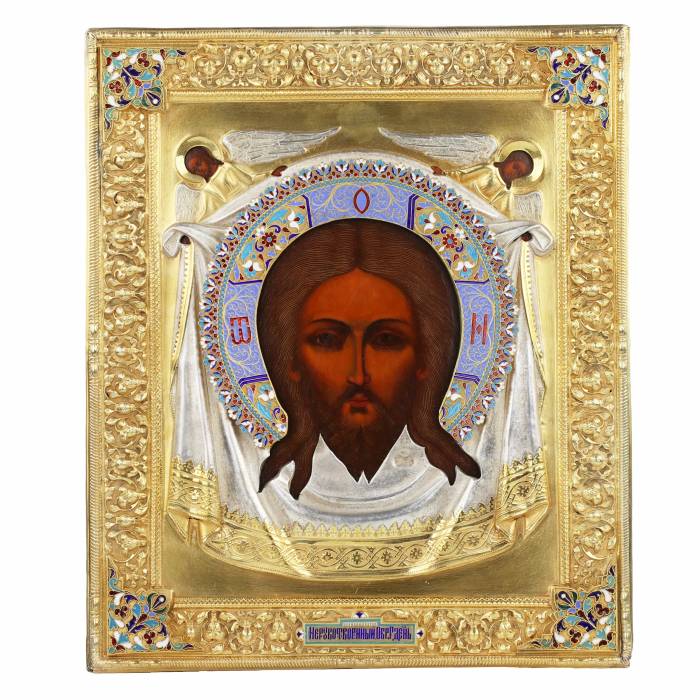
THE HOLY MANDYLION (SPAS NERUKOTVORNY) IN A SILVER-GILT ENAMELLED OKLAD BY IVAN TARABROV MOSCOW, RUSSIA, 1894
The Holy Mandylion (Spas Nerukotvorny) is an outstanding example of late 19th-century Russian Orthodox art, in which strict canonical tradition is harmoniously combined with the virtuoso craftsmanship of the Moscow silversmithing school. The image of Christ, executed in tempera on wood, is distinguished by the soft modelling of the features, profound inner concentration, and a penetrating, contemplative gaze. The composition is complemented by two angels holding the cloth bearing the miraculous image, reinforcing the theological meaning and emphasising the idea of divine revelation and heavenly protection.The icon is set within a sumptuous silver-gilt oklad created in 1894 in the renowned Moscow workshop of Ivan Filippovich Tarabrov. The oklad is richly adorned with cloisonné and champlevé enamels. The halo surrounding the face of Christ is decorated with an intricate ornamental design featuring deep blue, red, and white tones set against a gilt and blue ground. A distinctive characteristic of Tarabrov’s workshop is the use of gold foil beneath the red enamel, producing a luminous depth of colour and an inner radiance.The cloth (ubrus) bearing the image of Christ is embellished with finely chased decoration on a silver ground, its edges framed by raised ornamental patterns on gilt surfaces. The corner plaques are adorned with vegetal motifs executed in filigree with enamel infill. The fields of the oklad are further enriched with elegant high-relief vegetal ornamentation and bordered by engraved bands, lending the composition harmony and refinement. Every detail of the oklad testifies to exceptional precision of execution and refined artistic taste, enhancing the sacred and solemn character of the image.Marks: Cyrillic letters “IT” – maker’s mark of the silversmith Ivan Filippovich Tarabrov; Assay mark with the initials of the assay master “L•O” (Oleks Lev Fyodorovich) positioned above the date “1894”; Moscow city mark depicting Saint George slaying the dragon.Technique and materials: Wood, tempera; silver, gilding; cloisonné and champlevé enamels; chasing, engraving, filigree.Dimensions: 31.5 × 28 cm.
Bidding is completed
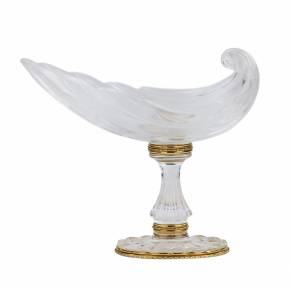
MOUNTAIN CRYSTAL BOWL WITH GOLD MOUNT BY FABERGÉ SAINT PETERSBURG, 1880–1890
Bidding is completed
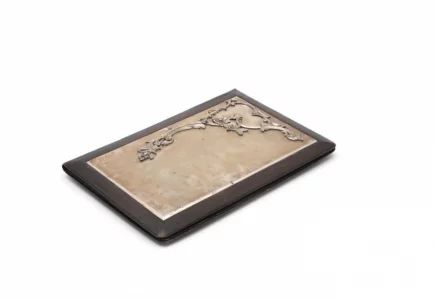
Leather portfolio with silver overlay. Russia, 1908-1917.
Bidding is completed
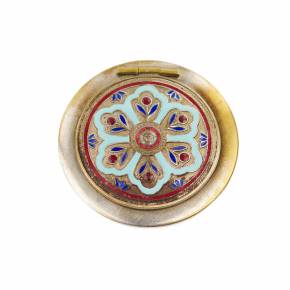
A lady`s mirror, decorated with an enamel pattern. 20th century.
Bidding is completed
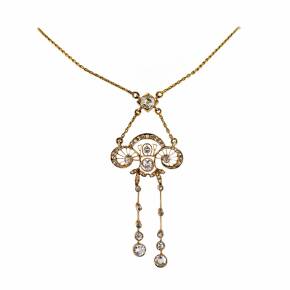
A delightful gold pendant with diamonds in Art Nouveau style. Russia. The turn of the 19th-20th century.
Bidding is completed
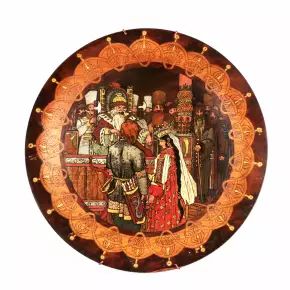
Decorative dish Ivan Tsarevich and the Gray Wolf.
Bidding is completed
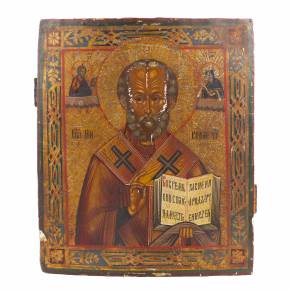
ICON “SAINT NICHOLAS THE MIRACLE WORKER” RUSSIA, SECOND HALF OF THE 19TH CENTURY
Bidding is completed
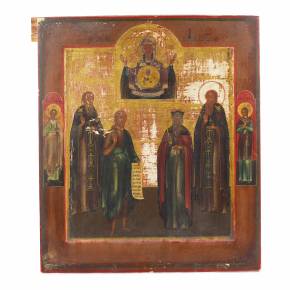
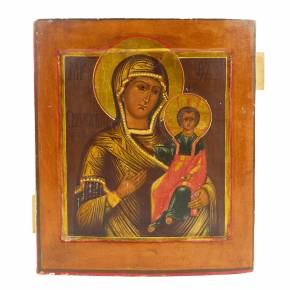
ICON OF THE MOTHER OF GOD “THE SIGN” WITH SELECTED SAINTS RUSSIA, SECOND HALF OF THE 19TH CENTURY
Bidding is completed
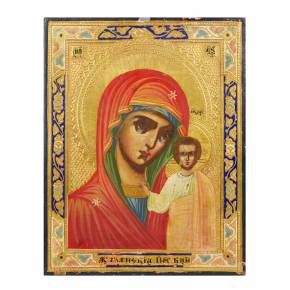
KAZAN ICON OF THE MOTHER OF GOD WITH THE CHRIST CHILD RUSSIAN EMPIRE, SECOND HALF OF THE 19TH CENTURY
Bidding is completed
KAZAN ICON OF THE MOTHER OF GOD RUSSIAN EMPIRE, 19TH CENTURY
Bidding is completed
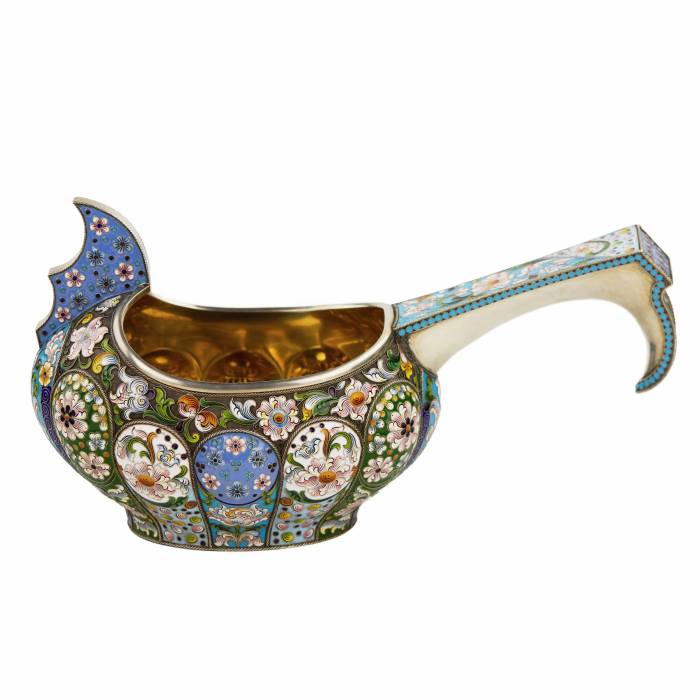
SILVER-GILT KOVSH WITH POLYCHROME ENAMELS. PAVEL OVTCHINNIKOV FIRM RUSSIA, MOSCOW, 1908–1917
A large ceremonial kovsh executed in silver with gilding and cloisonné polychrome enamels. The body is formed with pronounced gadrooning, each facet adorned with elaborate floral compositions of flowers and scrolling foliage. The enamels are applied on alternating grounds of green, white, and blue, creating a richly rhythmic decorative surface. The upper section is encircled by a continuous frieze of leafy and floral arabesques in cloisonné enamels set against a matte gilt ground. The interior is fully gilt, emphasizing the ceremonial character of the object. The handle and front panel are similarly decorated with floral motifs in cloisonné polychrome enamels on a sky-blue ground. The form and ornamentation reflect the Neo-Russian style combined with elements of Art Nouveau, characteristic of the Moscow school in the early 20th century.Marks: Complete maker’s mark «P. Ovtchinnikoff» with the double-headed eagle – insignia of Purveyor to the Imperial Court; State assay mark of the Moscow Assay District, 1908–1917, depicting a woman’s head in a kokoshnik facing right within an oval cartouche, accompanied by the silver standard mark “84” and the Greek letter delta (Δ), identifying the Moscow Assay District.Dimensions: Height – 13.5 cm; Length – 29.5 cm; Width – 15.5 cm.Weight: 895 g.Condition: Good. Minor wear consistent with age and use. The enamels are well preserved, without evident losses. Light surface wear to the gilding consistent with age and handling.Provenance: Private European collection.
Bidding is completed
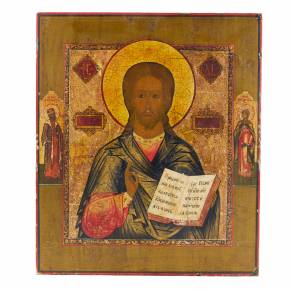
Russian icon of the Pantocrator on a thick cypress board from the mid-19th century.
Bidding is completed
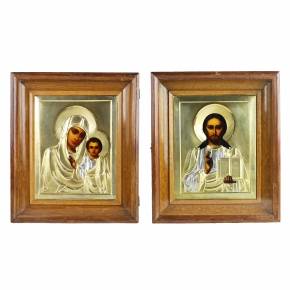
A wedding pair of icons in silver frames in the Art Nouveau style. Moscow, early 20th century
Bidding is completed
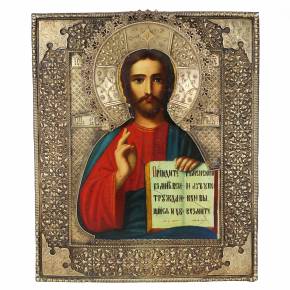
ICON OF CHRIST PANTOCRATOR WITH A SILVER OKLAD BY THE FACTORY OF IVAN SEMYONOVICH GUBKIN RUSSIA, MOSCOW, 1865
Bidding is completed
Icon of Saint Alexander Nevsky. Russia 1920
Bidding is completed
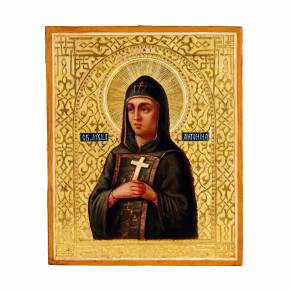
Russian icon of the Holy Martyr Antonina, turn of the 19th-20th centuries.
Bidding is completed
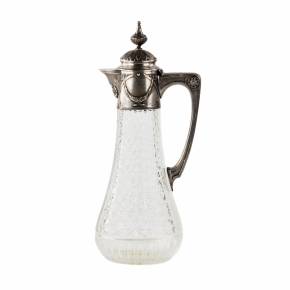
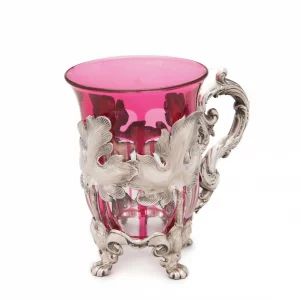
Crystal jug with silver. Early 20th century.
Bidding is completed
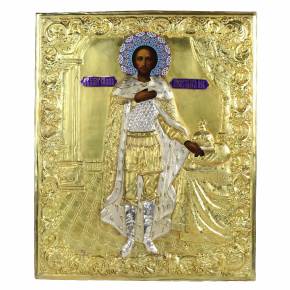
ICON OF SAINT BLESSED PRINCE ALEXANDER NEVSKY IN A SILVER OKLAD WITH ENAMELS. RUSSIA, 1895
Bidding is completed
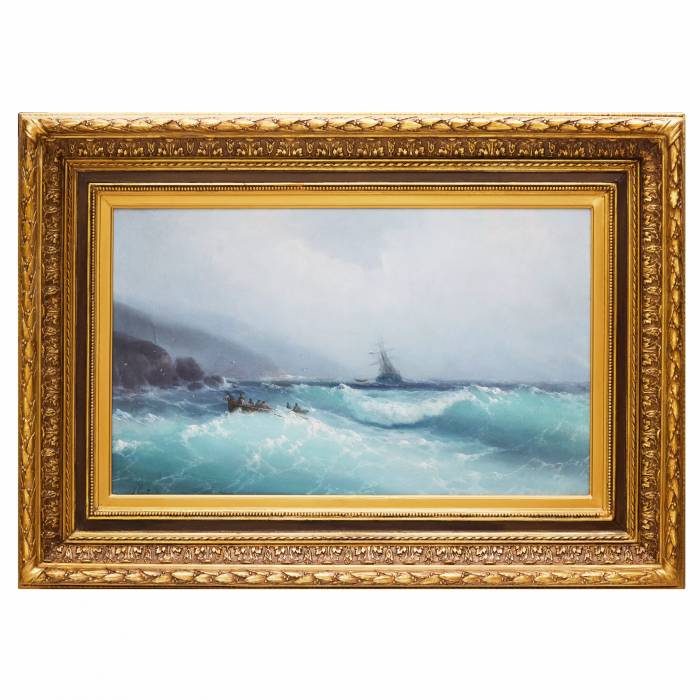
KHARLAMPY DMITRIEVICH KOSTANDI (SECOND HALF OF THE 1860s – AFTER 1917). STORMY SEA RUSSIA, EARLY 20TH CENTURY
An outstanding example of late Russian Marinism, Stormy Sea, created by Kharlampiy Dmitrievich Kostandi in the early 20th century, stands among the artist’s most expressive works devoted to the theme of the sea.With remarkable mastery, the artist conveys the raw energy of the raging waters. Foaming waves surge toward a fragile boat, filled with tension, movement, and a sense of inevitability. The sea surface is rendered with striking expressiveness, allowing the viewer to sense the motion of water, gusts of wind, and the charged atmosphere of an approaching storm.At the center of the composition is a small boat with sailors struggling fiercely against the waves. Their tense, determined figures become a powerful symbol of courage, the fight for survival, and hope for salvation. In the distance, along the horizon line, the faint silhouette of a sailing vessel enhances the vastness of space and underscores human vulnerability in the face of nature’s overwhelming force. The contrast between the immensity of the sea and human presence lends the work its dramatic intensity.The color palette is built upon subtle transitions of cool tones, ranging from translucent blues and turquoises to silvery greys. Luminous reflections give the water depth and vibrant movement, while the soft yet energetic brushwork creates a sense of breathing space. This atmospheric treatment aligns Kostandi with the finest masters of the Russian Marinist tradition, while highlighting his individual, restrained, and realist approach in contrast to the Romantic expressiveness of Aivazovsky.Dimensions: 49 × 80 cm (framed 78 × 110 cm)Medium: Oil on canvasSignature: “X. Kostandi”, lower left, consistent with the artist’s known autographsCondition: Good overall condition, with natural age patina and an even craquelure patternProvenance: Private collection. Authenticity confirmed by expert examinations
Bidding is completed
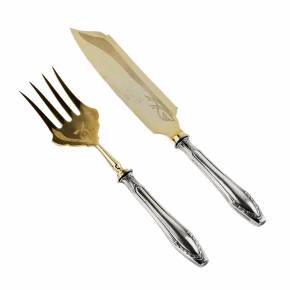
Silver serving set: fork and knife in their own case. Riga 1908-1917.
Bidding is completed
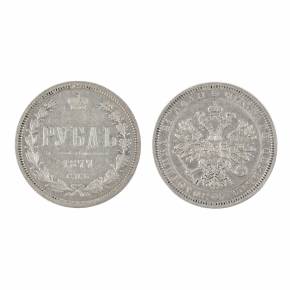
Silver Ruble 1877. Russia - Alexander II.
Bidding is completed
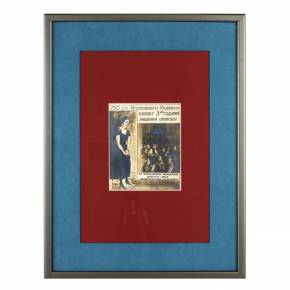
Sketch for a propaganda poster from the 1920s. Tamara Kofengauz.
269 USD
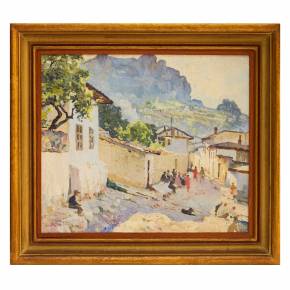
VLADIMIR KONSTANTINOVICH YANOVSKY (1876–1966). CRIMEAN LANDSCAPE RUSSIA, EARLY 20TH CENTURY
Bidding is completed
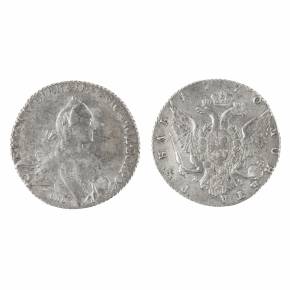
Silver Ruble of Catherine II, 1770.
Bidding is completed
SILVER LADLE IN THE STYLE OF RUSSIAN MODERN, 5TH ARTEL OF JEWELERS, RUSSIA, EARLY 20TH CENTURY
Bidding is completed
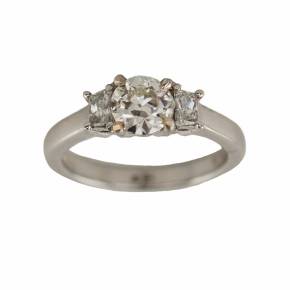
750 gold ring in Art Deco style with three diamonds.
Bidding is completed
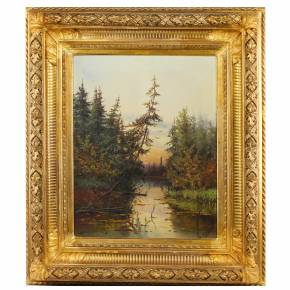
LANDSCAPE WITH A POND IN EVENING LIGHT. A. KONSTANTINOVA RUSSIA, SECOND HALF OF THE 19TH CENTURY
Bidding is completed
...
9
10
11
12
13
Subscribe to our newsletter
Never miss new auctions
You have subscribed to our newsletter.
Subscribe
Your latest views
Silver cup holder. Imperial Russia
Bidding is completed
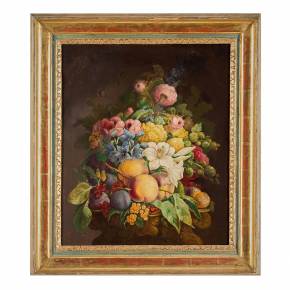
Still life Bouquet of flowers.
Bidding is completed
Landscape with a lake
456 USD
Landscape with a mill
526 USD
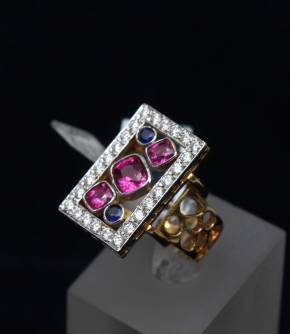
Gold ring with diamonds, rubies, sapphire
4488 USD
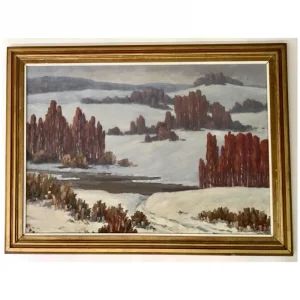
Painting "Winter"
94 USD
Sea and pine trees
456 USD
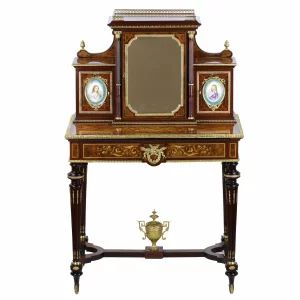
Ladies cabinet Bonheur du jour
Bidding is completed
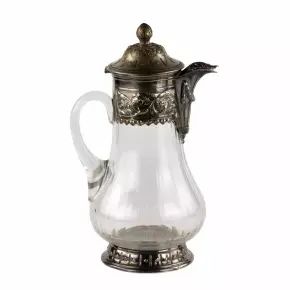
Wine jug, glass in silver.
994 USD
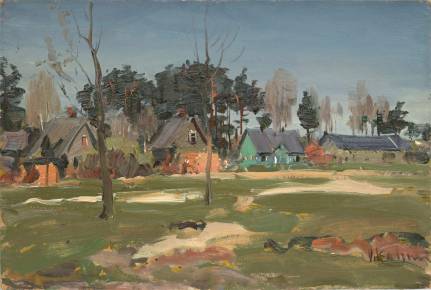
Fisherman`s house
468 USD
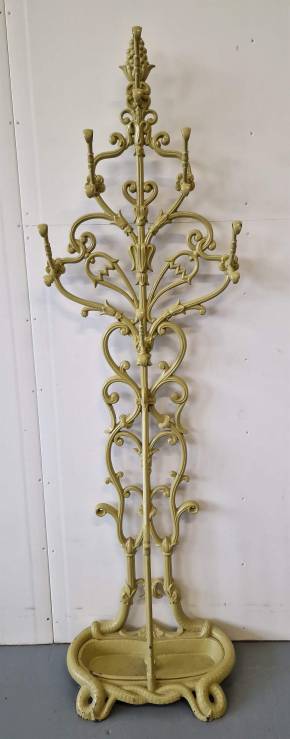
Antique cast iron coat rack.
877 USD
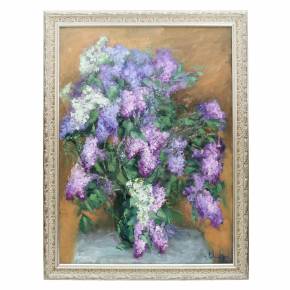
Janis Kalnmalis. Lilac. 2011.
Bidding is completed
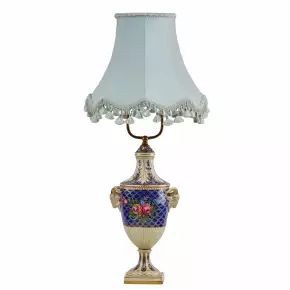
Table lamp with porcelain.
Bidding is completed
Ceramic deep plate
433 USD
Trumpet-shaped glass vases on a marble base with gilded bronze (pair)
468 USD
Vase Golden ruby with gold ornament. Imperial Glass Factory, Russia, 1830-1840s
Bidding is completed
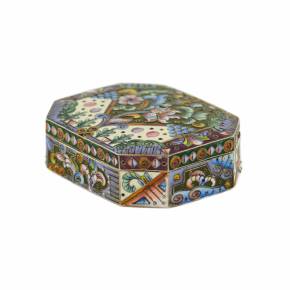
RUSSIAN ART NOUVEAU SILVER SNUFFBOX WITH CLOISONNÉ ENAMEL. 6TH MOSCOW JEWELLERS’ ARTEL RUSSIA, MOSCOW, 1908–1917
Bidding is completed
KOSHARY. PAVEL KUZNETSOV (1878 - 1968) RUSSIA, 1912
Bidding is completed
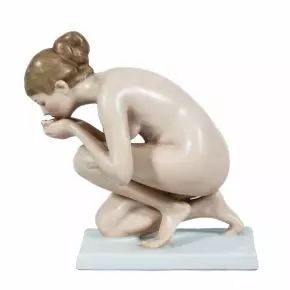
Girl drinking water, Rosenthal
Bidding is completed
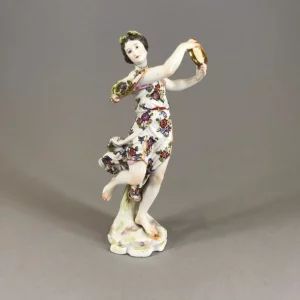
Girl with a tambourine. OSWALD LORENZ
Bidding is completed
Start hunt for treasures!
Individual
Legal entity
Enter a name (min 3 characters)
Enter a Last name (min 3 characters)
Enter the email
User already exist
Algeria (+213)
Andorra (+376)
Angola (+244)
Anguilla (+1264)
Antigua & Barbuda (+1268)
Argentina (+54)
Armenia (+374)
Aruba (+297)
Australia (+61)
Austria (+43)
Azerbaijan (+994)
Bahamas (+1242)
Bahrain (+973)
Bangladesh (+880)
Barbados (+1246)
Belarus (+375)
Belgium (+32)
Belize (+501)
Benin (+229)
Bermuda (+1441)
Bhutan (+975)
Bolivia (+591)
Bosnia Herzegovina (+387)
Botswana (+267)
Brazil (+55)
Brunei (+673)
Bulgaria (+359)
Burkina Faso (+226)
Burundi (+257)
Cambodia (+855)
Cameroon (+237)
Canada (+1)
Cape Verde Islands (+238)
Cayman Islands (+1345)
Central African Republic (+236)
Chile (+56)
China (+86)
Colombia (+57)
Comoros (+269)
Congo (+242)
Cook Islands (+682)
Costa Rica (+506)
Croatia (+385)
Cuba (+53)
Cyprus North (+90392)
Cyprus South (+357)
Czech Republic (+42)
Denmark (+45)
Djibouti (+253)
Dominica (+1809)
Dominican Republic (+1809)
Ecuador (+593)
Egypt (+20)
El Salvador (+503)
Equatorial Guinea (+240)
Eritrea (+291)
Estonia (+372)
Ethiopia (+251)
Falkland Islands (+500)
Faroe Islands (+298)
Fiji (+679)
Finland (+358)
France (+33)
French Guiana (+594)
French Polynesia (+689)
Gabon (+241)
Gambia (+220)
Georgia (+7880)
Germany (+49)
Ghana (+233)
Gibraltar (+350)
Greece (+30)
Greenland (+299)
Grenada (+1473)
Guadeloupe (+590)
Guam (+671)
Guatemala (+502)
Guinea (+224)
Guinea - Bissau (+245)
Guyana (+592)
Haiti (+509)
Honduras (+504)
Hong Kong (+852)
Hungary (+36)
Iceland (+354)
India (+91)
Indonesia (+62)
Iran (+98)
Iraq (+964)
Ireland (+353)
Israel (+972)
Italy (+39)
Jamaica (+1876)
Japan (+81)
Jordan (+962)
Kazakhstan (+7)
Kenya (+254)
Kiribati (+686)
Korea North (+850)
Korea South (+82)
Kuwait (+965)
Kyrgyzstan (+996)
Laos (+856)
Latvia (+371)
Lebanon (+961)
Lesotho (+266)
Liberia (+231)
Libya (+218)
Liechtenstein (+417)
Lithuania (+370)
Luxembourg (+352)
Macao (+853)
Macedonia (+389)
Madagascar (+261)
Malawi (+265)
Malaysia (+60)
Maldives (+960)
Mali (+223)
Malta (+356)
Marshall Islands (+692)
Martinique (+596)
Mauritania (+222)
Mayotte (+269)
Mexico (+52)
Micronesia (+691)
Moldova (+373)
Monaco (+377)
Mongolia (+976)
Montserrat (+1664)
Morocco (+212)
Mozambique (+258)
Myanmar (+95)
Namibia (+264)
Nauru (+674)
Nepal (+977)
Netherlands (+31)
New Caledonia (+687)
New Zealand (+64)
Nicaragua (+505)
Niger (+227)
Nigeria (+234)
Niue (+683)
Norfolk Islands (+672)
Northern Marianas (+670)
Norway (+47)
Oman (+968)
Palau (+680)
Panama (+507)
Papua New Guinea (+675)
Paraguay (+595)
Peru (+51)
Philippines (+63)
Poland (+48)
Portugal (+351)
Puerto Rico (+1787)
Qatar (+974)
Reunion (+262)
Romania (+40)
Russia (+7)
Rwanda (+250)
San Marino (+378)
Sao Tome & Principe (+239)
Saudi Arabia (+966)
Senegal (+221)
Serbia (+381)
Seychelles (+248)
Sierra Leone (+232)
Singapore (+65)
Slovak Republic (+421)
Slovenia (+386)
Solomon Islands (+677)
Somalia (+252)
South Africa (+27)
Spain (+34)
Sri Lanka (+94)
St. Helena (+290)
St. Kitts (+1869)
St. Lucia (+1758)
Sudan (+249)
Suriname (+597)
Swaziland (+268)
Sweden (+46)
Switzerland (+41)
Syria (+963)
Taiwan (+886)
Tajikstan (+7)
Thailand (+66)
Togo (+228)
Tonga (+676)
Trinidad & Tobago (+1868)
Tunisia (+216)
Turkey (+90)
Turkmenistan (+7)
Turkmenistan (+993)
Turks & Caicos Islands (+1649)
Tuvalu (+688)
Uganda (+256)
UK (+44)
Ukraine (+380)
United Arab Emirates (+971)
Uruguay (+598)
USA (+1)
Uzbekistan (+7)
Vanuatu (+678)
Vatican City (+379)
Venezuela (+58)
Vietnam (+84)
Virgin Islands - British (+1284)
Virgin Islands - US (+1340)
Wallis & Futuna (+681)
Yemen (North)(+969)
Yemen (South)(+967)
Zambia (+260)
Zimbabwe (+263)
Enter the phone number
Minimum password length must be at least 6 characters
Enter a name of your company (min 3 characters)
Enter registration number (min 3 characters)
Enter the email
User already exist
Enter the phone number
Minimum password length must be at least 6 characters
I am a buyer
I am a seller
or log in with
Sign up for our weekly newsletter
I reviewed and agree
user agreement
,
«Privacy Policy»
i agree with Antiqon Terms and conditions
Register
Already have an account?
Log In
Enter your email and password for authorization
Enter the email
The number of attempts has been used uo, repeat after 2 hours
Minimum password length must be at least 6 characters
Invalid email or password
or log in with
Login
Forgot password?
Don't have an account?
register