USD
EUR
USD
English
Latviešu
Francais
English
Русский
Sign Up
Login
Auction
Best sellers
Upcomming auctions
Archive
Shop
Sell
Evaluation
Services
Expertise
Restoration
Antiq selection
Delivery
Contacts
Home
Shop
Show sold items
Show auction items
Available right now
Price
-
USD
New items
Gifts
EXCLUSIVE
Catalogue categories
ALL ITEMS
Russian art
Objects of Vertu (19)
+
Objects of Vertu (19)
Paintings (640)
+
Paintings (605)
Watercolor (20)
Miniature (3)
Other (12)
Graphic arts (50)
+
Graphic arts (50)
Icons (38)
+
Icons (34)
Church utensils (4)
Frames and easels (43)
+
Frames (28)
Easels (3)
Photo frames (12)
Sculpture (61)
+
Bronze sculptures (33)
Stone sculptures (9)
Stone carving miniature (6)
Other (13)
Silver and metal (255)
-
Russian silver (105)
European silver (74)
Other (76)
Porcelain and ceramics (349)
+
Russian porcelain (23)
European porcelain (114)
Other (212)
Glass (51)
+
Crystal (5)
Glass (46)
Clocks and watches (25)
+
Mantel clocks (7)
Wall clocks (3)
Wrist watches (7)
Pocket watches (5)
Grandfather floor clocks (1)
Other (2)
Furniture (147)
+
Furniture sets (8)
Showcases (25)
Dressers (10)
Tables (30)
Sofas (3)
Armchairs and chairs (17)
Columns (5)
Mirrors (8)
Consoles (10)
Other (31)
Lighting (52)
+
Chandeliers (11)
Sconce (8)
Floor lamps (4)
Lamps (16)
Candlesticks and candelabra (12)
Other (1)
Interior objects (35)
+
Interior objects (35)
Fireplaces and stoves (14)
+
Fireplaces and stoves (6)
Accessories (7)
Other (1)
Carpets and tapestries (2)
+
Carpets (1)
Tapestries (1)
Jewelry (124)
+
Diamonds and precious stones (0)
Rings (50)
Bracelets (7)
Brooches and pendants (2)
Earrings (10)
Jewelry sets (4)
Chains and necklaces (11)
Amber (0)
Bijoux (1)
Other (39)
Weapons and мilitary (20)
+
Weapon (12)
Military (5)
Other (2)
Armour (1)
Orders and medals (4)
+
Orders and medals (3)
Signs and Tokens (0)
Other (1)
Coins and banknotes (17)
+
Coins (17)
Banknotes and Bonds (0)
Other (0)
Mechanics (15)
+
Music boxes (9)
Mechanisms and tools (4)
Models (0)
Other (2)
Print, postcards and other antique paper production (9)
+
Posters (3)
Maps (2)
Postcards (0)
Photos (0)
Other (4)
Books (5)
+
Literature (1)
History (1)
Military (0)
Science (1)
Children`s literature (0)
Other (2)
Garden and architecture (2)
+
Garden sculpture (0)
Fountain (0)
Garden furniture (0)
Architectural elements (2)
Other (0)
Modern Art (72)
+
Paintings (10)
Sculpture (18)
Objects (29)
Other (15)
Collectibles (15)
+
Collectibles (15)
Vintage and fashion (2)
+
Accessories (2)
Clothing (0)
Footwear (0)
Other (0)
Other (10)
+
Other (10)
Asian art
Styles
Louis-Philippe Carl X (11)
Academic art (3)
Antiquity (9)
Art Deco (63)
Art Nouveau (27)
Asian Art (12)
Baroque (26)
Biedermeier (10)
Boulle (4)
Chinoiserie (6)
Classicism (31)
Design of 50-60’s (10)
Design of 70’s (5)
Eclecticism (55)
Empire (29)
Empire - Consulate (1)
Gothic Revival (3)
Impressionism (22)
Judaica (3)
Jugendstil (10)
Louis XIII - Renaissance (2)
Louis XIV - Regency (1)
Louis XV (31)
Louis XVI (38)
Modern (108)
Modern Art (98)
Napoleon III (40)
Neo-Baroque (9)
Neo-baroque (5)
Neo-Russian (54)
Neoclassicism (37)
Neorenaissance (13)
Neorococo (37)
Oriental Art (5)
Other style (62)
Realism (51)
Renaissance (7)
Rococo (36)
Romanticism (30)
Vanguard (20)
Victorian Style (4)
Epoques
16th century (2)
17th century (4)
18th century (28)
19th century (328)
20th century (334)
21th century (269)
At the turn of 16th -17th century (1)
At the turn of 17th-18th century (1)
At the turn of 19th -20th century (200)
At the turn of the 15th - 16th century (4)
At the turn of the 18th -19th century (12)
Early 17th century (1)
Early 18th century (1)
Early 19th century (20)
Early 20th century (404)
Late 18th century (3)
Late 19th century (101)
Mid-17th century (14)
Mid-18th century (1)
Mid-19th century (38)
Mid-20th century (269)
The end of the 17th century (1)
The end of the 20th century (45)
Silver and metal
Price (descending)
Price (ascending)
Date (ascending)
Date (descending)
...
5
6
7
8
9
10
11
SILVER CABINET FIGURE OF ELISABETH OF BURGUNDY, KURZ J. & CO GERMANY, HANAU, TURN OF THE 19TH AND 20TH CENTURIES
An elegant cabinet figure executed by the German silversmithing firm Kurz J. & Co in Hanau at the turn of the 19th and 20th centuries, representing a characteristic example of historicist silverwork of this period.The figure depicts Elisabeth of Burgundy in ceremonial court attire with a crown and sceptre, symbols of her dynastic status. The sculpture is distinguished by the carefully modeled drapery of the garments and a complex system of ornamental decoration executed in chased and finely engraved techniques. The silver surface is treated with particular attention to the texture of fabrics and decorative borders, typical of high-quality productions of the Hanau silversmith workshops. The face and hands are carved in ivory, creating a striking contrast of materials and enhancing the sculptural expressiveness of the figure.The work reflects a well-established tradition among the silversmiths of Hanau at the end of the 19th and the beginning of the 20th century of drawing upon the iconography of European monumental sculpture and historical prototypes of the Gothic and Renaissance periods. Monumental memorial figures were thus translated into the format of cabinet-scale decorative sculpture intended for collectors’ interiors and cabinets of curiosities. In such works the monumental programs of historic monuments are reinterpreted through the medium of artistic silverwork, with particular attention devoted to the detailed rendering of historical costume, elaborate ornamental decoration and the architectural composition of the base, giving the sculpture the character of a miniature memorial monument.Marks: Maker’s mark of the workshop Kurz J. & Co, Hanau; German national silver hallmarks - crescent and crown, introduced after the establishment of the imperial hallmarking system in 1884; fineness mark “800”, indicating standard German silver of 800/1000 purity.Dimensions: Height 41.5 cm.Weight: 2041 g.Condition: Good collector’s condition.Provenance: Private collection, Hesse.Expert Report: Dr Daniel Suebsman, 2025. CITES certificate.
Begins 03.05.2026
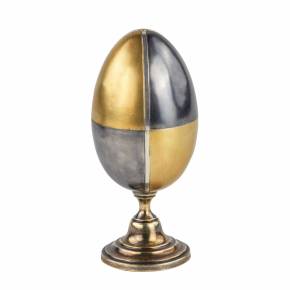
SILVER EASTER EGG. ERIK KOLLIN. FABERGÉ FIRM RUSSIA, SAINT PETERSBURG, LATE 19TH CENTURY
Begins 02.05.2026 12:00:00
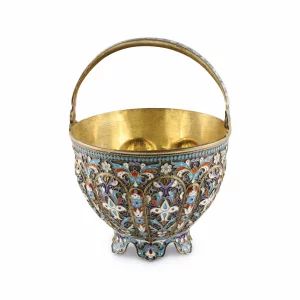
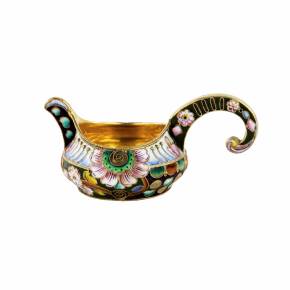
RUSSIAN SILVER SUGAR BOWL IN CLOISONNÉ ENAMEL RUSSIA, MOSCOW, 1896-1908
Begins 02.05.2026 12:00:00
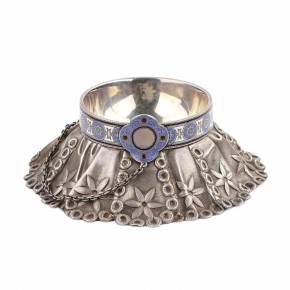
WEDDING SALT CELLAR FOR THE KARAVAI BY THE FIRM OF P.A. OVCHINNIKOV RUSSIA, MOSCOW, 1874
Begins 02.05.2026 12:00:00
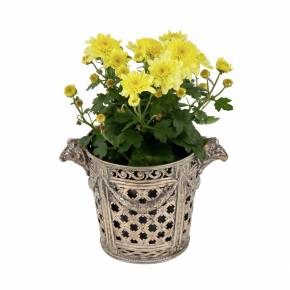
Silver flower pot. Schwarz & Steiner. Vienna, 1902-1918
Begins 03.05.2026 10:00:00
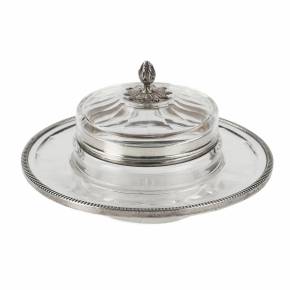
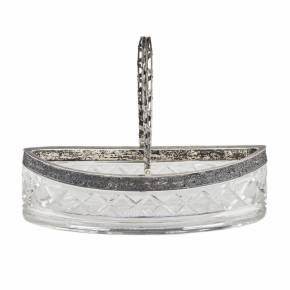
Caviar bowl made of crystal and silver. Louis XVI style.
Begins 03.05.2026 10:00:00
SILVER KOVSH WITH PAINTED ENAMEL OVER FILIGREE. 20 ARTEL RUSSIA, MOSCOW, 1908-1917
Begins 02.05.2026 12:00:00
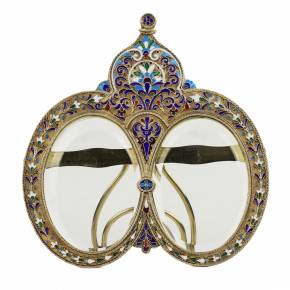
SILVER PHOTO FRAME WITH POLYCHROME CLOISONNÉ ENAMEL. ANTIP KUZMICHEV FACTORY RUSSIA, MOSCOW, 1899–1908
Begins 02.05.2026 12:00:00
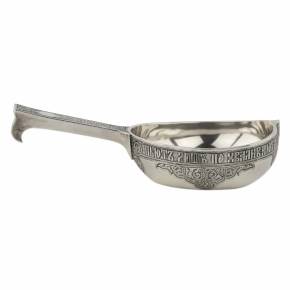
RUSSIAN PRESENTATION SILVER KOVSH RUSSIA, MOSCOW, 1883
Begins 02.05.2026 12:00:00
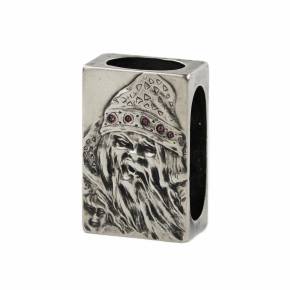
SILVER MATCH SAFE WITH THE IMAGE OF A LESHY IN THE STYLE OF RUSSIAN ART NOUVEAU RUSSIA, CIRCA 1900
Begins 02.05.2026 12:00:00
SILVER CABINET FIGURE OF A KNIGHT GERMANY, HANAU, LATE 19TH - EARLY 20TH CENTURY
A silver cabinet figure of a knight in full armour, executed in the tradition of German Historicism. The sculpture depicts an armed warrior holding a sword and shield, standing on a polygonal decorative base. The figure is distinguished by the meticulous modelling of the armour, richly adorned with relief ornament, engraved elements and heraldic motifs. Parts of the armour are highlighted with light gilding, creating a refined play of light and shadow and enhancing the sculptural articulation of the composition.Particular expressiveness is given to the figure by the knight’s face carved from ivory. This technique is characteristic of German cabinet sculpture of the late 19th and early 20th centuries and creates a subtle polychrome effect that animates the sculptural image. The helmet is crowned with a decorative plume, the shield is decorated with heraldic fleurs-de-lis, and the posture of the figure follows a calm ceremonial stance typical of historic interpretations of the knightly theme in decorative arts.The base is conceived as an architectural plinth with relief ornamental panels and cartouches. At the corners of the base are small figures of fantastic animals that reinforce the Neo-Renaissance character of the composition. In its stylistic conception and iconography, the figure refers to the celebrated bronze sculptures surrounding the cenotaph of Emperor Maximilian I in the Hofkirche in Innsbruck, which became an important source of inspiration for decorative sculpture and silverwork at the turn of the 20th century.Hallmarks: Maker’s monogram “EFES”; German national silver hallmarks – crescent moon and crown; standard mark “800”.Dimensions: Height 30 cm.Weight: 903 g.Condition: Good. Minor traces of age and use.Provenance: Private collection, Hesse.Expertise: Expert report by Dr Daniel Suebsman, 2025. CITES certificate available.
Begins 03.05.2026
DESK SILVER NOTEPAD IN OLD RUSSIAN STYLE PETR MILYUKOV, RUSSIA, EARLY 20TH CENTURY
Begins 02.05.2026 12:00:00
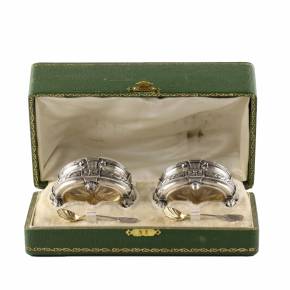
A pair of salt cellars in a gift case.
Begins 03.05.2026 10:00:00
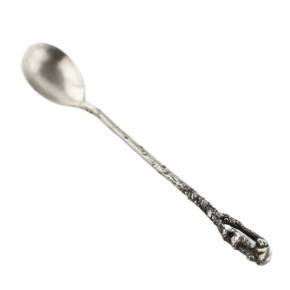
Russian, silver spoon Little bears, object illustration “Mornings in a pine forest.” Early 20th century.
234 USD
Rococo style candlesticks 2 pcs.
2804 USD
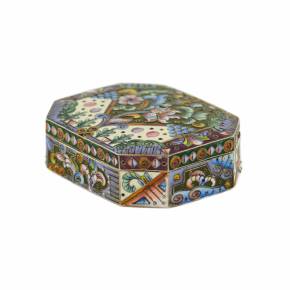
RUSSIAN ART NOUVEAU SILVER SNUFFBOX WITH CLOISONNÉ ENAMEL. 6TH MOSCOW JEWELLERS’ ARTEL RUSSIA, MOSCOW, 1908–1917
Begins 02.05.2026 12:00:00
Colored crystal fruit bowl with silver finish
3434 USD
Bronze figure of Bodhidharma
6366 USD
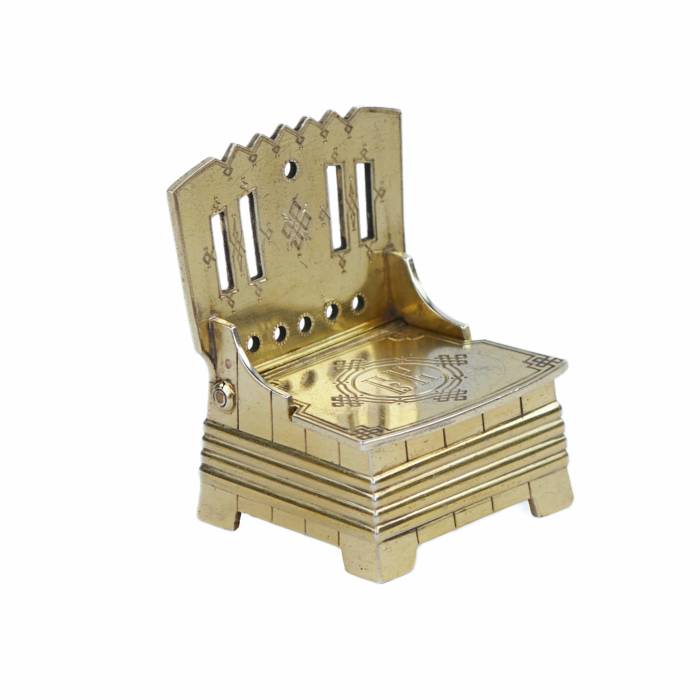
SALT CELLAR IN THE FORM OF A THRONE BY THE SAZIKOV FIRM RUSSIA, SAINT PETERSBURG, SECOND HALF OF THE 19TH CENTURY
An elegant silver salt cellar executed by the renowned Saint Petersburg firm Sazikov represents a characteristic example of Russian artistic silver of the Historicism period. The object is conceived in the form of a miniature throne with a high shaped back, a stepped base, and a hinged front panel opening to reveal the inner compartment for salt. Such interpretation of a utilitarian object as a throne-like architectural form imparts a ceremonial, almost reliquary character and reflects the стремление of Russian silversmiths of the second half of the 19th century to create works imbued with a pronounced national-historical imagery.The surface is decorated with fine engraving and chased geometric and cross-shaped ornaments associated with the decorative system of the Russian style. The upper section of the back features vertical openwork apertures framed by строгие ornamental motifs.The combination of architectural composition, archaizing ornament and expressive plasticity makes this salt cellar a vivid example of the Russian national-romantic line in decorative arts. Such objects were created not only as tableware but also as камерные artistic images intended for a cultivated collector and for an environment receptive to ideas of historical memory and the aesthetics of Old Russia.Marks: Under the double-headed eagle - “Sazikov”; assay mark “84”; Saint Petersburg city mark - anchor.Dimensions: Height: 5 cm.Weight: 81 g.Condition: Good. Gilding even. Minor surface wear and light traces of use consistent with age. Structure preserved.Provenance: Private collection.
Begins 02.05.2026
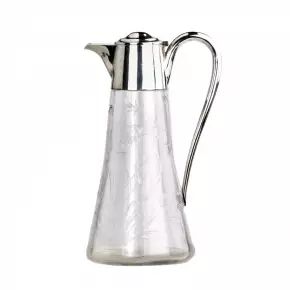
NICOLS & PLINKE. A SILVER WINE JUG WITH CUT-GLASS BODY ST PETERSBURG, RUSSIA, LATE 19TH CENTURY
Begins 02.05.2026 12:00:00
SILVER KOVSH WITH ENAMELS AND GARNETS BY THE FIRM OF PAVEL OVCHINNIKOV RUSSIA, MOSCOW, TURN OF THE 19TH–20TH CENTURIES
Begins 02.05.2026 12:00:00
SILVER TEA SET WITH CLOISONNÉ ENAMEL AND THE INSCRIPTION “PRIYATNOGO APPETITA” RUSSIA, MOSCOW, 1891
Begins 02.05.2026 12:00:00
Jug in Art Nouveau style. Norton & White, Birmingham 1902.
Begins 03.05.2026 10:00:00
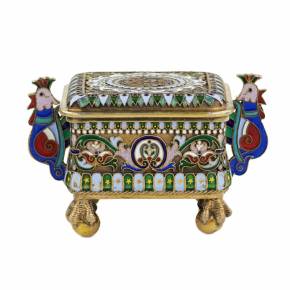
RUSSIAN SILVER BOX WITH CLOISONNÉ ENAMEL IN THE FORM OF ROOSTERS PAVEL OVCHINNIKOV FIRM, MOSCOW, 1882
Begins 02.05.2026 12:00:00
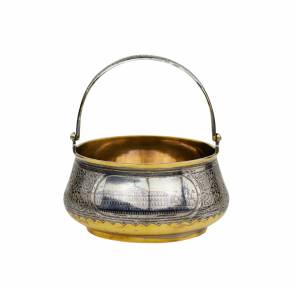
SWEETMEAT BASKET WITH VIEWS OF MOSCOW PAVEL OVCHINNIKOV FIRM, MOSCOW, RUSSIA, 1875
Begins 02.05.2026 12:00:00
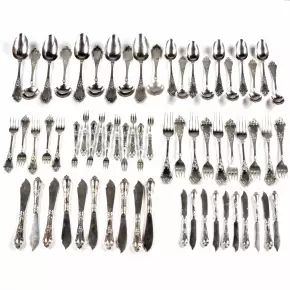
SILVER TABLE SERVICE BY G. KLINGERT RUSSIA, MOSCOW, 1908–1917
Begins 02.05.2026 12:00:00
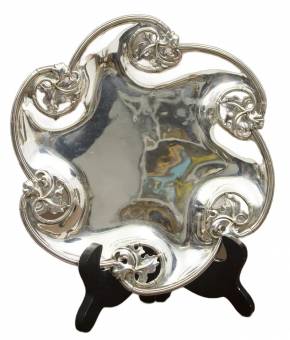
Silver plate
409 USD
...
5
6
7
8
9
10
11
Subscribe to our newsletter
Never miss new auctions
You have subscribed to our newsletter.
Subscribe
Your latest views
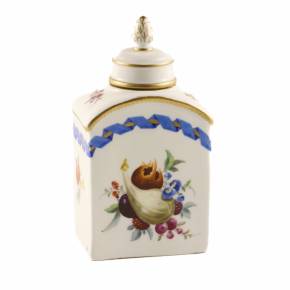
Tea caddy. Meissen.
Begins 03.05.2026 10:00:00
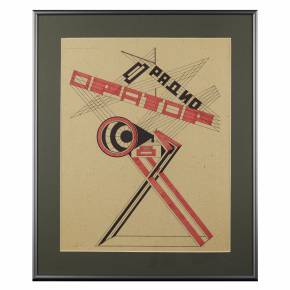
Drawing from the series Proletariat
Bidding is completed
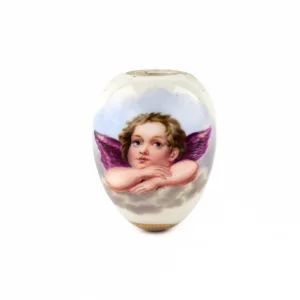
Porcelain Easter egg.
Begins 02.05.2026 12:00:00
Snuffbox
Begins 03.05.2026 10:00:00
Sea
2477 USD
Ceramic vase
398 USD
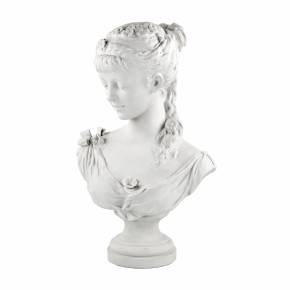
BISCUIT PORCELAIN BUST OF A YOUNG GIRL CHARLES LEVY & CO, FRANCE, CIRCA 1876-1881
Begins 03.05.2026 10:00:00
Val St. Lambert Crystal fruit bowl
631 USD
Old Riga
199 USD
Engraving
Begins 03.05.2026 10:00:00
Peonies
398 USD
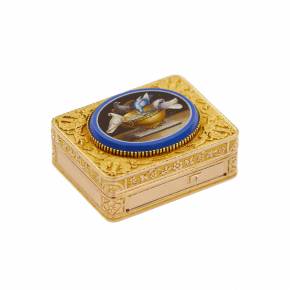
MUSICAL SNUFFBOX WITH MICROMOSAIC PLINY`S DOVES FRANCE, 1819–1838
26280 USD
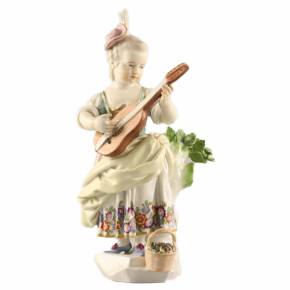
Girl with a lute. 19th century.
Begins 03.05.2026 10:00:00
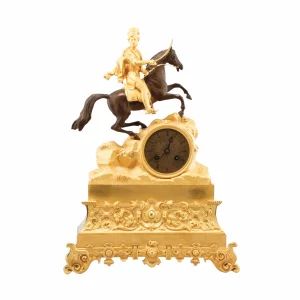
Mantel clock Cavalryman
Begins 03.05.2026 10:00:00
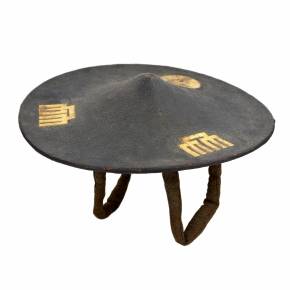
ICHIMONJI JINGASA. Samurai hat. Periodo Edo (1603-1867)
Begins 03.05.2026 10:00:00
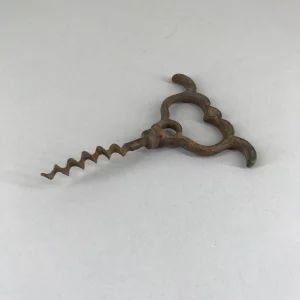
Corkscrew Four Finger Pull
117 USD
Large candy bowl 15 Moscow artel of jewelers. Russia. 1908-1917
Begins 02.05.2026 12:00:00
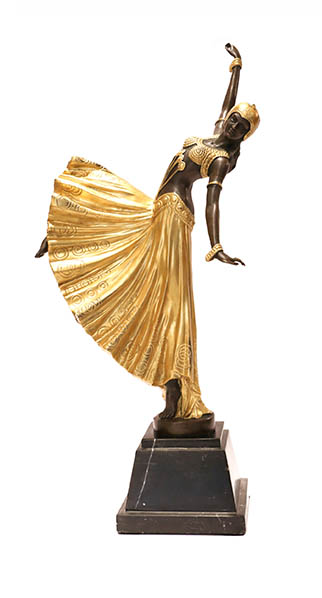
A beautiful figure
386 USD
Costume sketches
444 USD
Abstraction
2336 USD
Start hunt for treasures!
Individual
Legal entity
Enter a name (min 3 characters)
Enter a Last name (min 3 characters)
Enter the email
User already exist
Algeria (+213)
Andorra (+376)
Angola (+244)
Anguilla (+1264)
Antigua & Barbuda (+1268)
Argentina (+54)
Armenia (+374)
Aruba (+297)
Australia (+61)
Austria (+43)
Azerbaijan (+994)
Bahamas (+1242)
Bahrain (+973)
Bangladesh (+880)
Barbados (+1246)
Belarus (+375)
Belgium (+32)
Belize (+501)
Benin (+229)
Bermuda (+1441)
Bhutan (+975)
Bolivia (+591)
Bosnia Herzegovina (+387)
Botswana (+267)
Brazil (+55)
Brunei (+673)
Bulgaria (+359)
Burkina Faso (+226)
Burundi (+257)
Cambodia (+855)
Cameroon (+237)
Canada (+1)
Cape Verde Islands (+238)
Cayman Islands (+1345)
Central African Republic (+236)
Chile (+56)
China (+86)
Colombia (+57)
Comoros (+269)
Congo (+242)
Cook Islands (+682)
Costa Rica (+506)
Croatia (+385)
Cuba (+53)
Cyprus North (+90392)
Cyprus South (+357)
Czech Republic (+42)
Denmark (+45)
Djibouti (+253)
Dominica (+1809)
Dominican Republic (+1809)
Ecuador (+593)
Egypt (+20)
El Salvador (+503)
Equatorial Guinea (+240)
Eritrea (+291)
Estonia (+372)
Ethiopia (+251)
Falkland Islands (+500)
Faroe Islands (+298)
Fiji (+679)
Finland (+358)
France (+33)
French Guiana (+594)
French Polynesia (+689)
Gabon (+241)
Gambia (+220)
Georgia (+7880)
Germany (+49)
Ghana (+233)
Gibraltar (+350)
Greece (+30)
Greenland (+299)
Grenada (+1473)
Guadeloupe (+590)
Guam (+671)
Guatemala (+502)
Guinea (+224)
Guinea - Bissau (+245)
Guyana (+592)
Haiti (+509)
Honduras (+504)
Hong Kong (+852)
Hungary (+36)
Iceland (+354)
India (+91)
Indonesia (+62)
Iran (+98)
Iraq (+964)
Ireland (+353)
Israel (+972)
Italy (+39)
Jamaica (+1876)
Japan (+81)
Jordan (+962)
Kazakhstan (+7)
Kenya (+254)
Kiribati (+686)
Korea North (+850)
Korea South (+82)
Kuwait (+965)
Kyrgyzstan (+996)
Laos (+856)
Latvia (+371)
Lebanon (+961)
Lesotho (+266)
Liberia (+231)
Libya (+218)
Liechtenstein (+417)
Lithuania (+370)
Luxembourg (+352)
Macao (+853)
Macedonia (+389)
Madagascar (+261)
Malawi (+265)
Malaysia (+60)
Maldives (+960)
Mali (+223)
Malta (+356)
Marshall Islands (+692)
Martinique (+596)
Mauritania (+222)
Mayotte (+269)
Mexico (+52)
Micronesia (+691)
Moldova (+373)
Monaco (+377)
Mongolia (+976)
Montserrat (+1664)
Morocco (+212)
Mozambique (+258)
Myanmar (+95)
Namibia (+264)
Nauru (+674)
Nepal (+977)
Netherlands (+31)
New Caledonia (+687)
New Zealand (+64)
Nicaragua (+505)
Niger (+227)
Nigeria (+234)
Niue (+683)
Norfolk Islands (+672)
Northern Marianas (+670)
Norway (+47)
Oman (+968)
Palau (+680)
Panama (+507)
Papua New Guinea (+675)
Paraguay (+595)
Peru (+51)
Philippines (+63)
Poland (+48)
Portugal (+351)
Puerto Rico (+1787)
Qatar (+974)
Reunion (+262)
Romania (+40)
Russia (+7)
Rwanda (+250)
San Marino (+378)
Sao Tome & Principe (+239)
Saudi Arabia (+966)
Senegal (+221)
Serbia (+381)
Seychelles (+248)
Sierra Leone (+232)
Singapore (+65)
Slovak Republic (+421)
Slovenia (+386)
Solomon Islands (+677)
Somalia (+252)
South Africa (+27)
Spain (+34)
Sri Lanka (+94)
St. Helena (+290)
St. Kitts (+1869)
St. Lucia (+1758)
Sudan (+249)
Suriname (+597)
Swaziland (+268)
Sweden (+46)
Switzerland (+41)
Syria (+963)
Taiwan (+886)
Tajikstan (+7)
Thailand (+66)
Togo (+228)
Tonga (+676)
Trinidad & Tobago (+1868)
Tunisia (+216)
Turkey (+90)
Turkmenistan (+7)
Turkmenistan (+993)
Turks & Caicos Islands (+1649)
Tuvalu (+688)
Uganda (+256)
UK (+44)
Ukraine (+380)
United Arab Emirates (+971)
Uruguay (+598)
USA (+1)
Uzbekistan (+7)
Vanuatu (+678)
Vatican City (+379)
Venezuela (+58)
Vietnam (+84)
Virgin Islands - British (+1284)
Virgin Islands - US (+1340)
Wallis & Futuna (+681)
Yemen (North)(+969)
Yemen (South)(+967)
Zambia (+260)
Zimbabwe (+263)
Enter the phone number
Minimum password length must be at least 6 characters
Enter a name of your company (min 3 characters)
Enter registration number (min 3 characters)
Enter the email
User already exist
Enter the phone number
Minimum password length must be at least 6 characters
I am a buyer
I am a seller
or log in with
Sign up for our weekly newsletter
I reviewed and agree
user agreement
,
«Privacy Policy»
i agree with Antiqon Terms and conditions
Register
Already have an account?
Log In
Enter your email and password for authorization
Enter the email
The number of attempts has been used uo, repeat after 2 hours
Minimum password length must be at least 6 characters
Invalid email or password
or log in with
Login
Forgot password?
Don't have an account?
register