EUR
EUR
USD
English
Latviešu
Francais
English
Русский
Sign Up
Login
Auction
Best sellers
Upcomming auctions
Archive
Shop
Sell
Evaluation
Services
Expertise
Restoration
Antiq selection
Delivery
Contacts
Home
Shop
Modern Art
Sculpture
Show sold items
Show auction items
Available right now
Price
-
EUR
New items
Gifts
EXCLUSIVE
Catalogue categories
ALL ITEMS
Russian art
Objects of Vertu (19)
+
Objects of Vertu (19)
Paintings (640)
+
Paintings (605)
Watercolor (20)
Miniature (3)
Other (12)
Graphic arts (50)
+
Graphic arts (50)
Icons (38)
+
Icons (34)
Church utensils (4)
Frames and easels (43)
+
Frames (28)
Easels (3)
Photo frames (12)
Sculpture (61)
-
Bronze sculptures (33)
Stone sculptures (9)
Stone carving miniature (6)
Other (13)
Silver and metal (255)
+
Russian silver (105)
European silver (74)
Other (76)
Porcelain and ceramics (349)
+
Russian porcelain (23)
European porcelain (114)
Other (212)
Glass (51)
+
Crystal (5)
Glass (46)
Clocks and watches (25)
+
Mantel clocks (7)
Wall clocks (3)
Wrist watches (7)
Pocket watches (5)
Grandfather floor clocks (1)
Other (2)
Furniture (147)
+
Furniture sets (8)
Showcases (25)
Dressers (10)
Tables (30)
Sofas (3)
Armchairs and chairs (17)
Columns (5)
Mirrors (8)
Consoles (10)
Other (31)
Lighting (52)
+
Chandeliers (11)
Sconce (8)
Floor lamps (4)
Lamps (16)
Candlesticks and candelabra (12)
Other (1)
Interior objects (35)
+
Interior objects (35)
Fireplaces and stoves (14)
+
Fireplaces and stoves (6)
Accessories (7)
Other (1)
Carpets and tapestries (2)
+
Carpets (1)
Tapestries (1)
Jewelry (124)
+
Diamonds and precious stones (0)
Rings (50)
Bracelets (7)
Brooches and pendants (2)
Earrings (10)
Jewelry sets (4)
Chains and necklaces (11)
Amber (0)
Bijoux (1)
Other (39)
Weapons and мilitary (20)
+
Weapon (12)
Military (5)
Other (2)
Armour (1)
Orders and medals (4)
+
Orders and medals (3)
Signs and Tokens (0)
Other (1)
Coins and banknotes (17)
+
Coins (17)
Banknotes and Bonds (0)
Other (0)
Mechanics (15)
+
Music boxes (9)
Mechanisms and tools (4)
Models (0)
Other (2)
Print, postcards and other antique paper production (9)
+
Posters (3)
Maps (2)
Postcards (0)
Photos (0)
Other (4)
Books (5)
+
Literature (1)
History (1)
Military (0)
Science (1)
Children`s literature (0)
Other (2)
Garden and architecture (2)
+
Garden sculpture (0)
Fountain (0)
Garden furniture (0)
Architectural elements (2)
Other (0)
Modern Art (72)
+
Paintings (10)
Sculpture (18)
Objects (29)
Other (15)
Collectibles (15)
+
Collectibles (15)
Vintage and fashion (2)
+
Accessories (2)
Clothing (0)
Footwear (0)
Other (0)
Other (10)
+
Other (10)
Asian art
Styles
Louis-Philippe Carl X (11)
Academic art (3)
Antiquity (9)
Art Deco (63)
Art Nouveau (27)
Asian Art (12)
Baroque (26)
Biedermeier (10)
Boulle (4)
Chinoiserie (6)
Classicism (31)
Design of 50-60’s (10)
Design of 70’s (5)
Eclecticism (55)
Empire (29)
Empire - Consulate (1)
Gothic Revival (3)
Impressionism (22)
Judaica (3)
Jugendstil (10)
Louis XIII - Renaissance (2)
Louis XIV - Regency (1)
Louis XV (31)
Louis XVI (38)
Modern (108)
Modern Art (98)
Napoleon III (40)
Neo-Baroque (9)
Neo-baroque (5)
Neo-Russian (54)
Neoclassicism (37)
Neorenaissance (13)
Neorococo (37)
Oriental Art (5)
Other style (62)
Realism (51)
Renaissance (7)
Rococo (36)
Romanticism (30)
Vanguard (20)
Victorian Style (4)
Epoques
16th century (2)
17th century (4)
18th century (28)
19th century (328)
20th century (334)
21th century (269)
At the turn of 16th -17th century (1)
At the turn of 17th-18th century (1)
At the turn of 19th -20th century (200)
At the turn of the 15th - 16th century (4)
At the turn of the 18th -19th century (12)
Early 17th century (1)
Early 18th century (1)
Early 19th century (20)
Early 20th century (404)
Late 18th century (3)
Late 19th century (101)
Mid-17th century (14)
Mid-18th century (1)
Mid-19th century (38)
Mid-20th century (269)
The end of the 17th century (1)
The end of the 20th century (45)
Sculpture
Price (descending)
Price (ascending)
Date (ascending)
Date (descending)
1
2
3
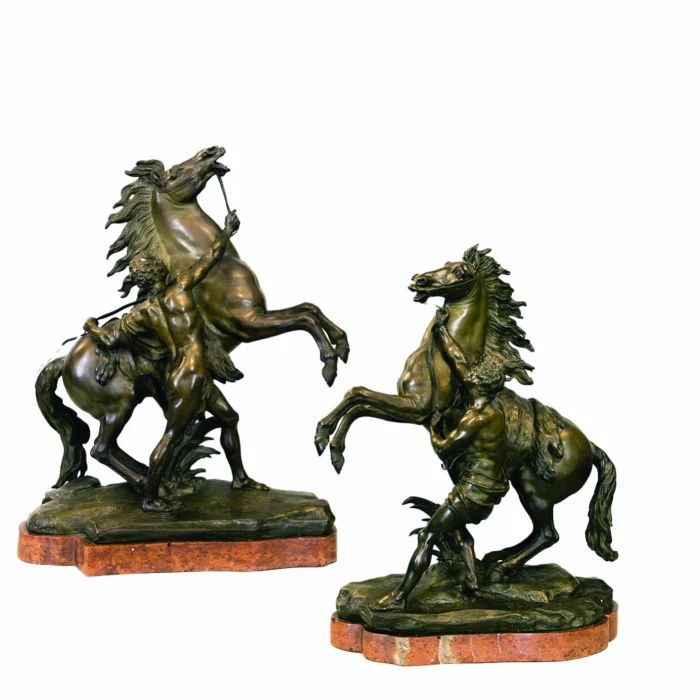
PAIR OF SCULPTURES “THE MARLY HORSES”, AFTER GUILLAUME COUSTOU THE ELDER (1677–1746) FRANCE, 19TH CENTURY
The pair of sculptural compositions known as “The Marly Horses”, also referred to as “The Horse Tamers”, represents a highly accomplished bronze interpretation of one of the most celebrated works of French court sculpture of the 18th century. The compositions derive from the original marble group created by Guillaume Coustou the Elder for the terrace of the royal château of Marly-le-Roi during the reign of Louis XV.The sculptures depict nude youths exerting great effort to restrain rearing horses. The dramatic tension of the scene is conveyed through the powerful contrast between the untamed energy of the animals and the academically precise treatment of human anatomy. The figures are conceived in complex spatial movement, creating a strong sense of continuous action and internal dynamism characteristic of the finest examples of French monumental sculpture.The bronzes are cast with exceptional attention to detail. The musculature of the human figures, the animated manes and strained necks of the horses, as well as the expressive gestures and corporeal plasticity, are all rendered with remarkable clarity. The surfaces retain a deep, even patina of a warm tone, enhancing the sculptural relief and the play of light and shadow. Each figure is mounted on a shaped marble base of harmonious coloration, lending the ensemble a distinctly ceremonial and interior-oriented presence.Material: Bronze; marble.Dimensions: Height – 66 cm; Width – 53 cm; Depth – 48 cm (each sculpture).Condition: Good.Provenance: Photo archive of a private collection. Formerly part of a private collection displayed in the Liechtenstein palaces, Stadtpalais Vienna and Schloss Vaduz, Liechtenstein, 1945.
Begins 03.05.2026
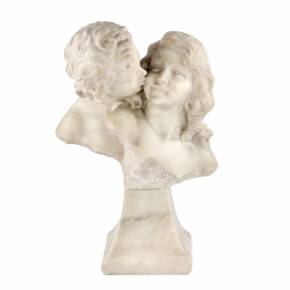
Stone composition Lovers. 20th century.
1300 EUR
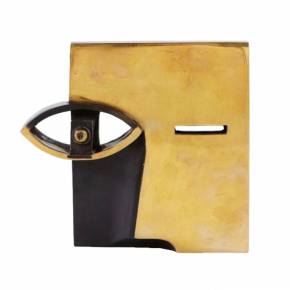
The Eye J. Jeschke
Begins 03.05.2026 10:00:00
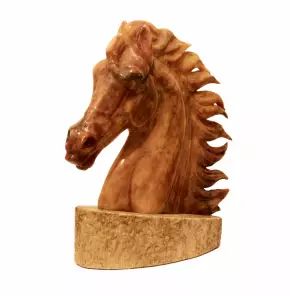
Horse head on a pedestal.
Begins 03.05.2026 10:00:00
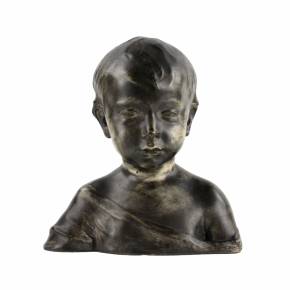
Bust of a Boy in a Tunic. Konstantin Ignatievich Ronchevsky
750 EUR
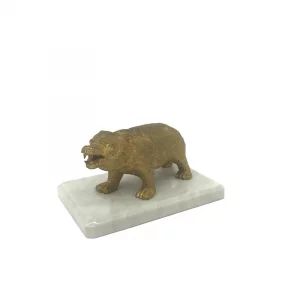
Russian paperweight Bear.
Begins 02.05.2026 12:00:00
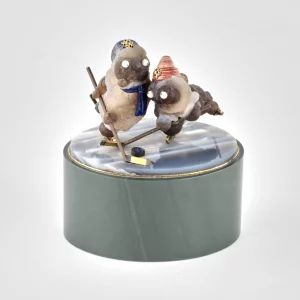
Miniature stone cutting Hockey players
Begins 02.05.2026 12:00:00
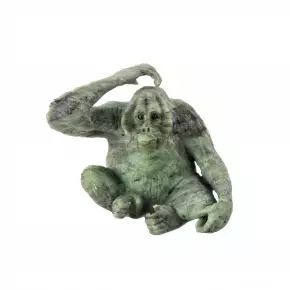
Stone-cut miniature Orangutan in Faberge style
Begins 02.05.2026 12:00:00
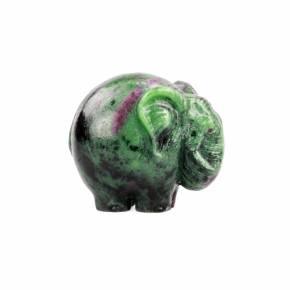
Carved figurine of an elephant in Faberge style. 20th century
Begins 02.05.2026 12:00:00
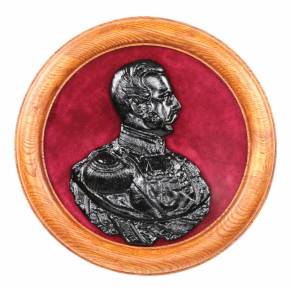
Panel with a cast-iron bas-relief of Emperor Alexander II.
Begins 02.05.2026 12:00:00
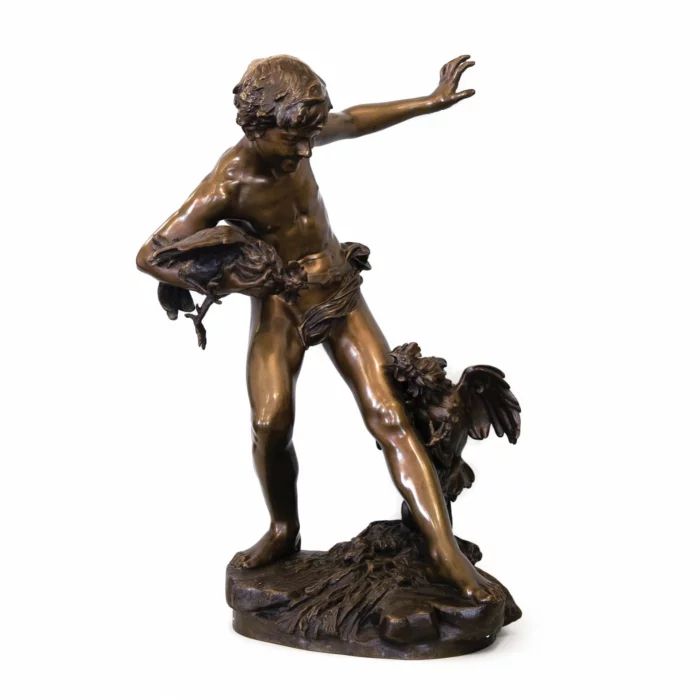
PAUL CHEVRE. BOY SEPARATING FIGHTING COCKS FRANCE / CANADA, LATE 19TH - EARLY 20TH CENTURY
A monumental author’s bronze sculpture executed by Paul Chevré, an eminent French-Canadian master of the academic school at the turn of the nineteenth and twentieth centuries. The composition depicts a nude youth in a moment of intense movement, striving to separate two fighting cocks engaged in a furious struggle.The figure of the boy is conceived in an antiquizing manner. The modelling of the torso reveals precise anatomical structure and a refined treatment of surface. The contrapposto enhances the sensation of a fleeting gesture captured in bronze. The diagonal formed by the outstretched wings and extended necks of the cocks cuts across the line of the body and the drapery around the hips, creating a powerful dramatic rhythm within the composition.The contrast between the smooth surface of the youthful body and the textured rendering of the feathers produces an expressive interplay of light across the noble dark patina. The base is treated in a naturalistic manner and reinforces the dynamic tension of the sculptural group. The work demonstrates the maturity of the artist’s language and corresponds to the aesthetic ideals of the Belle Époque.Marks: Signed “Paul Chevré” on the base; foundry mark.Dimensions: Height 75 centimetres; width 52 centimetres.Condition: Good. Even dark patina. Minor surface wear consistent with age.Provenance: Private European collection.
Begins 03.05.2026
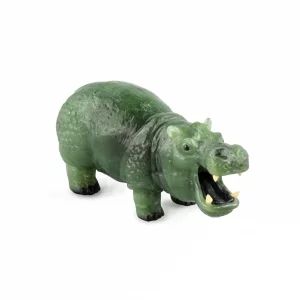
Stone-cut miniature Behemoth, Faberge style.
Begins 02.05.2026 12:00:00
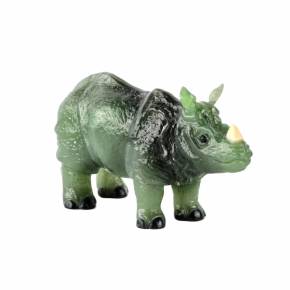
Stone-cutting miniature Jade rhinoceros in the style of products from the Faberge firm
Begins 02.05.2026 12:00:00
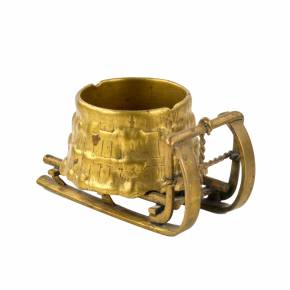
Brass ashtray Water sleigh. Late 19th century
Begins 02.05.2026 12:00:00
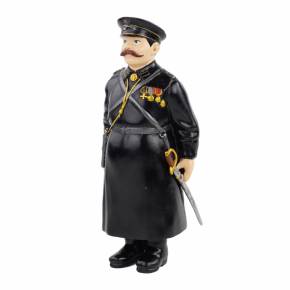
BRONZE FIGURINE OF A POLICEMAN, PAINTED WITH COLD ENAMELS AFTER A FABERGÉ MODEL RUSSIA, SAINT PETERSBURG, 1911
Begins 02.05.2026 12:00:00
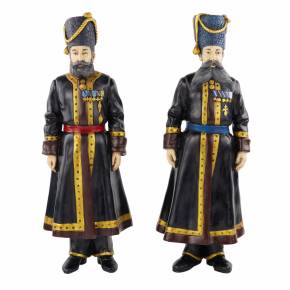
PAIR OF BRONZE FIGURES OF THE IMPERIAL FAMILY’S COSSACK GUARDS RUSSIA, ST PETERSBURG, 1912
Begins 02.05.2026 12:00:00
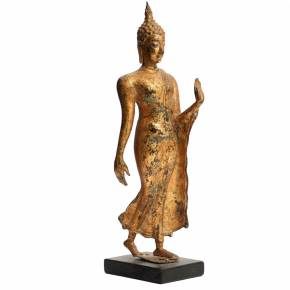
Figure of the Walking Buddha. 19th century
Begins 03.05.2026 10:00:00
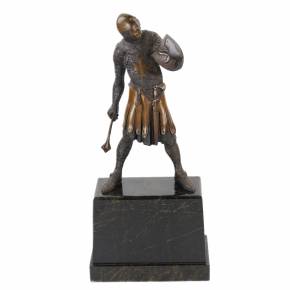
Bronze sculpture of the Knight of Malta. Turn of the 19th and 20th centuries
Begins 03.05.2026 10:00:00
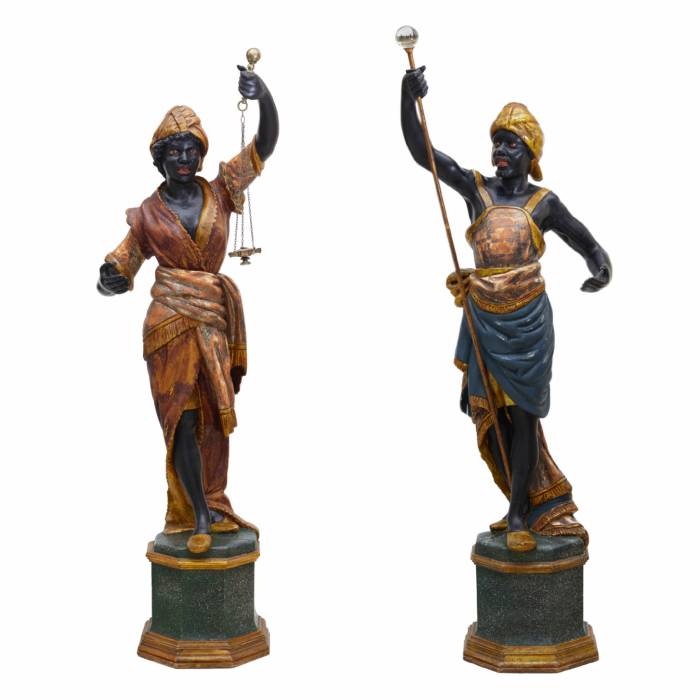
PAIR OF SCULPTURES “MOORISH PORTERS” FRANCE, 19TH CENTURY
An elegant pair of life-size figures executed in polychrome painted wood, representing a striking example of French decorative salon sculpture of the 19th century. The sculptures depict two Moors dressed in richly interpreted Oriental attire, with carefully rendered details of fabrics, headdresses and accessories.The figures are conceived in dynamic poses: one holds a tall staff topped with a spherical finial, while the other raises a chain with a pendant, lending the composition a ceremonial and stately character. The contrast between the dark polished surface and the vibrant polychromy of the garments enhances the decorative effect and emphasizes the theatrical quality of the imagery. Gilded accents on the footwear, belts and draperies create an impression of opulence consistent with the taste of the Historicism period.Such sculptures served as impressive interior accents in grand salons and entrance halls of mansions. In addition to their representational function, these figures were often used as incense burners or holders for accessories, acting as a decorative substitute for servants within the interior setting. The bases are formed as multi-faceted pedestals imitating marble, enriched with gilded moulded bands.Dimensions: Height approx. 150 cm; width approx. 100 cm each.Condition: Good. Polychromy and gilding with natural age-related wear. Minor traces of time on the bases. Structurally stable, without visible losses.Provenance: Private collection.
Begins 03.05.2026
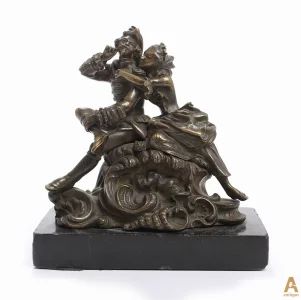
Bronze sculpture Romantic couple.
Begins 03.05.2026 10:00:00
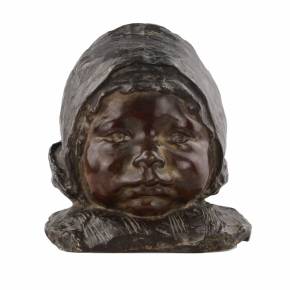
Bronze bust of a girl. Italy. The turn of the 19th-20th centuries.
Begins 03.05.2026 10:00:00
Sculpture Romantic couple
Begins 03.05.2026 10:00:00
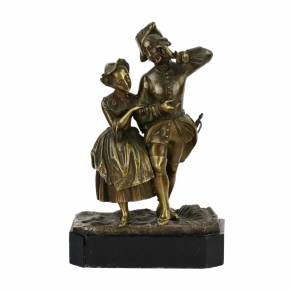
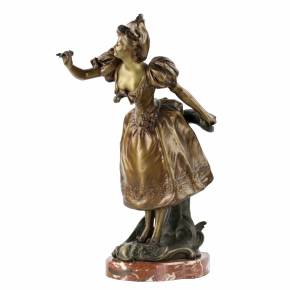
French, bronzed metal figure on a marble base. Happy holiday.
Begins 03.05.2026 10:00:00
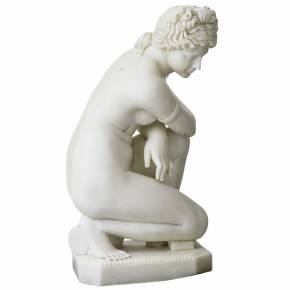
MARBLE SCULPTURE “THE BATHING VENUS” EUROPE, 19TH - EARLY 20TH CENTURY
Begins 03.05.2026 10:00:00
Chamotte sculpture `Fighters`
2670 EUR
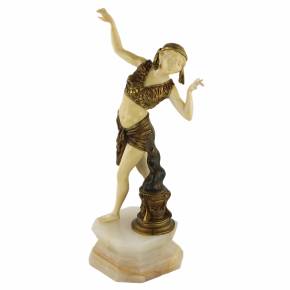
Chryselephantine figurine. Bronze and ivory. Salammbô, circa 1920
Begins 03.05.2026 10:00:00
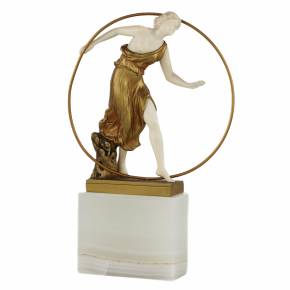
Bronze figure of a Woman with a Hoop, 1920. Georges MORIN (1874-1950)
Begins 03.05.2026 10:00:00
1
2
3
Subscribe to our newsletter
Never miss new auctions
You have subscribed to our newsletter.
Subscribe
Your latest views
Forest edge
430 EUR
Picture frame
450 EUR
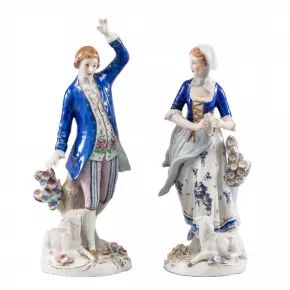
Romantic Couple. Sitzendorf.
Begins 03.05.2026 10:00:00
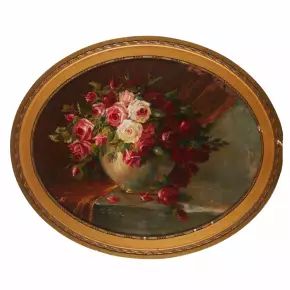
Still life Roses by T. Franz
Begins 03.05.2026 10:00:00
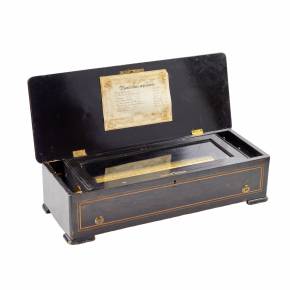
Music Box.
Begins 03.05.2026 10:00:00
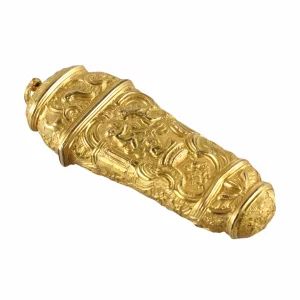
Necessaire. France 19th century.
Begins 03.05.2026 10:00:00
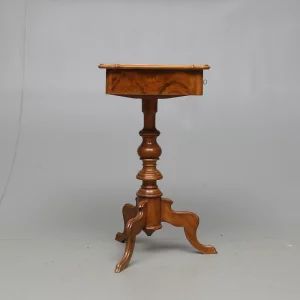
Small table with drawer
Begins 03.05.2026 10:00:00
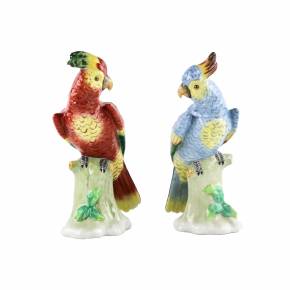
Two Sitzendorf Parrots.
Begins 03.05.2026 10:00:00
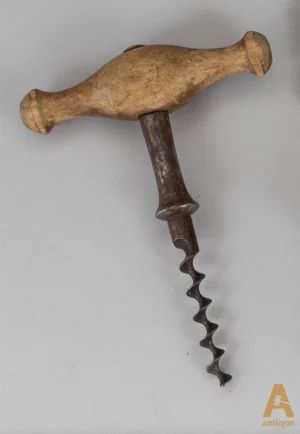
Corkscrew T-shaped
70 EUR
Costume sketches
380 EUR
Door
2940 EUR
Set of glasses 12 pcs
400 EUR
Porcelain vase
1200 EUR
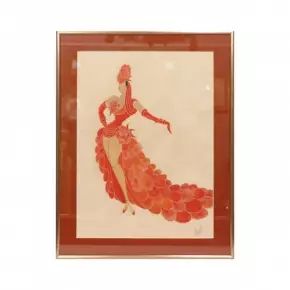
Drawing from the series Stage costumes Erte
Begins 02.05.2026 12:00:00
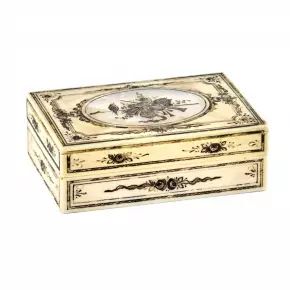
Ivory box with mother-of-pearl inlay.
Begins 03.05.2026 10:00:00
Porcelain plaque. Russia.
Begins 02.05.2026 12:00:00
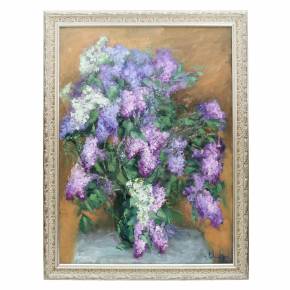
Janis Kalnmalis. Lilac. 2011.
Begins 03.05.2026 10:00:00
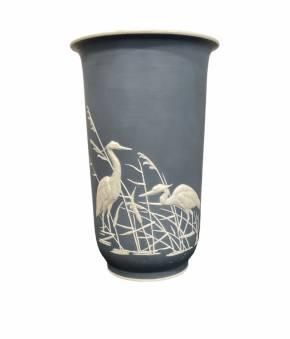
Rosenthal Vase, Kunstabteilung Selb
1000 EUR
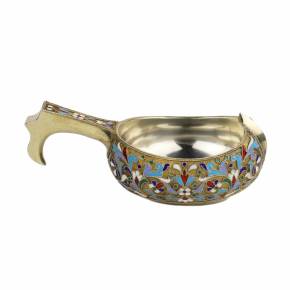
Russian silver kovsh. Strulev N.F. 1896
Begins 02.05.2026 12:00:00
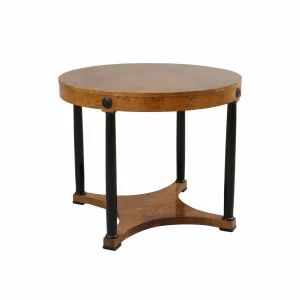
Empire style table
Begins 03.05.2026 10:00:00
Start hunt for treasures!
Individual
Legal entity
Enter a name (min 3 characters)
Enter a Last name (min 3 characters)
Enter the email
User already exist
Algeria (+213)
Andorra (+376)
Angola (+244)
Anguilla (+1264)
Antigua & Barbuda (+1268)
Argentina (+54)
Armenia (+374)
Aruba (+297)
Australia (+61)
Austria (+43)
Azerbaijan (+994)
Bahamas (+1242)
Bahrain (+973)
Bangladesh (+880)
Barbados (+1246)
Belarus (+375)
Belgium (+32)
Belize (+501)
Benin (+229)
Bermuda (+1441)
Bhutan (+975)
Bolivia (+591)
Bosnia Herzegovina (+387)
Botswana (+267)
Brazil (+55)
Brunei (+673)
Bulgaria (+359)
Burkina Faso (+226)
Burundi (+257)
Cambodia (+855)
Cameroon (+237)
Canada (+1)
Cape Verde Islands (+238)
Cayman Islands (+1345)
Central African Republic (+236)
Chile (+56)
China (+86)
Colombia (+57)
Comoros (+269)
Congo (+242)
Cook Islands (+682)
Costa Rica (+506)
Croatia (+385)
Cuba (+53)
Cyprus North (+90392)
Cyprus South (+357)
Czech Republic (+42)
Denmark (+45)
Djibouti (+253)
Dominica (+1809)
Dominican Republic (+1809)
Ecuador (+593)
Egypt (+20)
El Salvador (+503)
Equatorial Guinea (+240)
Eritrea (+291)
Estonia (+372)
Ethiopia (+251)
Falkland Islands (+500)
Faroe Islands (+298)
Fiji (+679)
Finland (+358)
France (+33)
French Guiana (+594)
French Polynesia (+689)
Gabon (+241)
Gambia (+220)
Georgia (+7880)
Germany (+49)
Ghana (+233)
Gibraltar (+350)
Greece (+30)
Greenland (+299)
Grenada (+1473)
Guadeloupe (+590)
Guam (+671)
Guatemala (+502)
Guinea (+224)
Guinea - Bissau (+245)
Guyana (+592)
Haiti (+509)
Honduras (+504)
Hong Kong (+852)
Hungary (+36)
Iceland (+354)
India (+91)
Indonesia (+62)
Iran (+98)
Iraq (+964)
Ireland (+353)
Israel (+972)
Italy (+39)
Jamaica (+1876)
Japan (+81)
Jordan (+962)
Kazakhstan (+7)
Kenya (+254)
Kiribati (+686)
Korea North (+850)
Korea South (+82)
Kuwait (+965)
Kyrgyzstan (+996)
Laos (+856)
Latvia (+371)
Lebanon (+961)
Lesotho (+266)
Liberia (+231)
Libya (+218)
Liechtenstein (+417)
Lithuania (+370)
Luxembourg (+352)
Macao (+853)
Macedonia (+389)
Madagascar (+261)
Malawi (+265)
Malaysia (+60)
Maldives (+960)
Mali (+223)
Malta (+356)
Marshall Islands (+692)
Martinique (+596)
Mauritania (+222)
Mayotte (+269)
Mexico (+52)
Micronesia (+691)
Moldova (+373)
Monaco (+377)
Mongolia (+976)
Montserrat (+1664)
Morocco (+212)
Mozambique (+258)
Myanmar (+95)
Namibia (+264)
Nauru (+674)
Nepal (+977)
Netherlands (+31)
New Caledonia (+687)
New Zealand (+64)
Nicaragua (+505)
Niger (+227)
Nigeria (+234)
Niue (+683)
Norfolk Islands (+672)
Northern Marianas (+670)
Norway (+47)
Oman (+968)
Palau (+680)
Panama (+507)
Papua New Guinea (+675)
Paraguay (+595)
Peru (+51)
Philippines (+63)
Poland (+48)
Portugal (+351)
Puerto Rico (+1787)
Qatar (+974)
Reunion (+262)
Romania (+40)
Russia (+7)
Rwanda (+250)
San Marino (+378)
Sao Tome & Principe (+239)
Saudi Arabia (+966)
Senegal (+221)
Serbia (+381)
Seychelles (+248)
Sierra Leone (+232)
Singapore (+65)
Slovak Republic (+421)
Slovenia (+386)
Solomon Islands (+677)
Somalia (+252)
South Africa (+27)
Spain (+34)
Sri Lanka (+94)
St. Helena (+290)
St. Kitts (+1869)
St. Lucia (+1758)
Sudan (+249)
Suriname (+597)
Swaziland (+268)
Sweden (+46)
Switzerland (+41)
Syria (+963)
Taiwan (+886)
Tajikstan (+7)
Thailand (+66)
Togo (+228)
Tonga (+676)
Trinidad & Tobago (+1868)
Tunisia (+216)
Turkey (+90)
Turkmenistan (+7)
Turkmenistan (+993)
Turks & Caicos Islands (+1649)
Tuvalu (+688)
Uganda (+256)
UK (+44)
Ukraine (+380)
United Arab Emirates (+971)
Uruguay (+598)
USA (+1)
Uzbekistan (+7)
Vanuatu (+678)
Vatican City (+379)
Venezuela (+58)
Vietnam (+84)
Virgin Islands - British (+1284)
Virgin Islands - US (+1340)
Wallis & Futuna (+681)
Yemen (North)(+969)
Yemen (South)(+967)
Zambia (+260)
Zimbabwe (+263)
Enter the phone number
Minimum password length must be at least 6 characters
Enter a name of your company (min 3 characters)
Enter registration number (min 3 characters)
Enter the email
User already exist
Enter the phone number
Minimum password length must be at least 6 characters
I am a buyer
I am a seller
or log in with
Sign up for our weekly newsletter
I reviewed and agree
user agreement
,
«Privacy Policy»
i agree with Antiqon Terms and conditions
Register
Already have an account?
Log In
Enter your email and password for authorization
Enter the email
The number of attempts has been used uo, repeat after 2 hours
Minimum password length must be at least 6 characters
Invalid email or password
or log in with
Login
Forgot password?
Don't have an account?
register