USD
EUR
USD
English
Latviešu
Francais
English
Русский
Sign Up
Login
Auction
Best sellers
Upcomming auctions
Archive
Shop
Sell
Evaluation
Services
Expertise
Restoration
Antiq selection
Delivery
Contacts
Home
Shop
Show sold items
Show auction items
Available right now
Price
-
USD
New items
Gifts
EXCLUSIVE
Catalogue categories
ALL ITEMS
Russian art
Objects of Vertu (19)
+
Objects of Vertu (19)
Paintings (640)
+
Paintings (605)
Watercolor (20)
Miniature (3)
Other (12)
Graphic arts (50)
+
Graphic arts (50)
Icons (38)
+
Icons (34)
Church utensils (4)
Frames and easels (43)
+
Frames (28)
Easels (3)
Photo frames (12)
Sculpture (60)
+
Bronze sculptures (33)
Stone sculptures (9)
Stone carving miniature (6)
Other (12)
Silver and metal (255)
+
Russian silver (105)
European silver (74)
Other (76)
Porcelain and ceramics (349)
+
Russian porcelain (23)
European porcelain (114)
Other (212)
Glass (52)
+
Crystal (5)
Glass (47)
Clocks and watches (25)
+
Mantel clocks (7)
Wall clocks (3)
Wrist watches (7)
Pocket watches (5)
Grandfather floor clocks (1)
Other (2)
Furniture (147)
+
Furniture sets (8)
Showcases (25)
Dressers (10)
Tables (30)
Sofas (3)
Armchairs and chairs (17)
Columns (5)
Mirrors (8)
Consoles (10)
Other (31)
Lighting (52)
+
Chandeliers (11)
Sconce (8)
Floor lamps (4)
Lamps (16)
Candlesticks and candelabra (12)
Other (1)
Interior objects (34)
+
Interior objects (34)
Fireplaces and stoves (14)
+
Fireplaces and stoves (6)
Accessories (7)
Other (1)
Carpets and tapestries (2)
+
Carpets (1)
Tapestries (1)
Jewelry (124)
+
Diamonds and precious stones (0)
Rings (50)
Bracelets (7)
Brooches and pendants (2)
Earrings (10)
Jewelry sets (4)
Chains and necklaces (11)
Amber (0)
Bijoux (1)
Other (39)
Weapons and мilitary (20)
+
Weapon (12)
Military (5)
Other (2)
Armour (1)
Orders and medals (4)
+
Orders and medals (3)
Signs and Tokens (0)
Other (1)
Coins and banknotes (17)
+
Coins (17)
Banknotes and Bonds (0)
Other (0)
Mechanics (15)
+
Music boxes (9)
Mechanisms and tools (4)
Models (0)
Other (2)
Print, postcards and other antique paper production (9)
+
Posters (3)
Maps (2)
Postcards (0)
Photos (0)
Other (4)
Books (5)
+
Literature (1)
History (1)
Military (0)
Science (1)
Children`s literature (0)
Other (2)
Garden and architecture (2)
+
Garden sculpture (0)
Fountain (0)
Garden furniture (0)
Architectural elements (2)
Other (0)
Modern Art (72)
+
Paintings (10)
Sculpture (18)
Objects (29)
Other (15)
Collectibles (15)
+
Collectibles (15)
Vintage and fashion (2)
+
Accessories (2)
Clothing (0)
Footwear (0)
Other (0)
Other (10)
+
Other (10)
Asian art
Styles
Louis-Philippe Carl X (11)
Academic art (3)
Antiquity (9)
Art Deco (62)
Art Nouveau (27)
Asian Art (12)
Baroque (26)
Biedermeier (10)
Boulle (4)
Chinoiserie (6)
Classicism (31)
Design of 50-60’s (10)
Design of 70’s (5)
Eclecticism (55)
Empire (29)
Empire - Consulate (1)
Gothic Revival (3)
Impressionism (22)
Judaica (3)
Jugendstil (10)
Louis XIII - Renaissance (2)
Louis XIV - Regency (1)
Louis XV (31)
Louis XVI (38)
Modern (108)
Modern Art (98)
Napoleon III (40)
Neo-baroque (5)
Neo-Baroque (9)
Neo-Russian (54)
Neoclassicism (37)
Neorenaissance (13)
Neorococo (37)
Oriental Art (5)
Other style (62)
Realism (50)
Renaissance (7)
Rococo (36)
Romanticism (30)
Vanguard (20)
Victorian Style (4)
Epoques
16th century (2)
17th century (4)
18th century (28)
19th century (328)
20th century (334)
21th century (269)
At the turn of 16th -17th century (1)
At the turn of 17th-18th century (1)
At the turn of 19th -20th century (200)
At the turn of the 15th - 16th century (4)
At the turn of the 18th -19th century (12)
Early 17th century (1)
Early 18th century (1)
Early 19th century (20)
Early 20th century (404)
Late 18th century (3)
Late 19th century (101)
Mid-17th century (14)
Mid-18th century (1)
Mid-19th century (38)
Mid-20th century (268)
The end of the 17th century (1)
The end of the 20th century (45)
Russian art
Price (descending)
Price (ascending)
Date (ascending)
Date (descending)
1
2
3
4
5
6
7
...
13
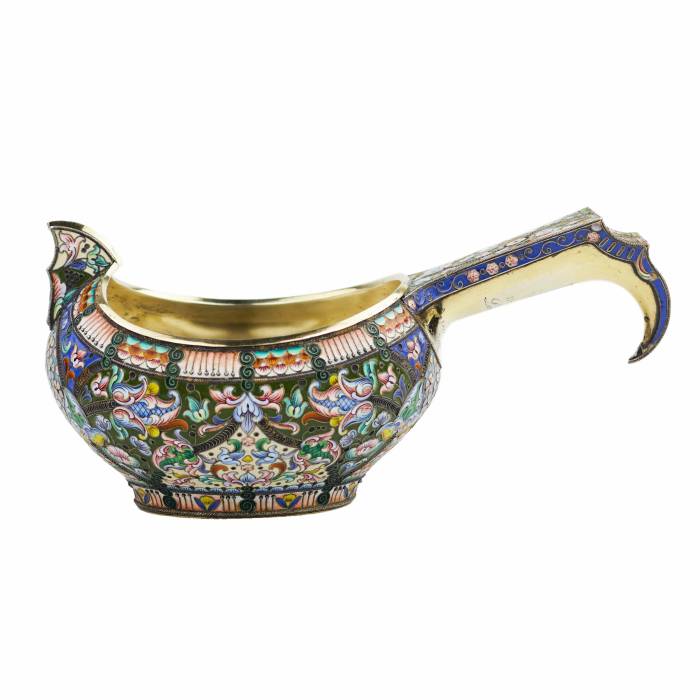
LARGE RUSSIAN SILVER KOVSH WITH CLOISONNÉ ENAMEL BY KONSTANTIN SKVORTSOV RUSSIA, MOSCOW, 1908–1917
A large ceremonial Russian silver kovsh executed in Moscow by the silversmith Konstantin Illarionovich Skvortsov in the early 20th century. The vessel is conceived in the traditional form of a stylized boat, a shape rooted in ancient Russian ceremonial drinking vessels and widely revived in Moscow silver of the late Imperial period. The monumental silhouette provides a framework for an elaborate and richly articulated decorative program.The surface is adorned with high-quality polychrome cloisonné enamel applied to large panels featuring vegetal ornament and stylized floral clusters. Extremely fine silver wire partitions create a precise rhythmic structure, reflecting a high level of technical mastery. The color palette ranges from emerald green and deep cobalt blue to sky blue, coral and white tones, producing a harmonious and vibrant chromatic composition. The interior is finished with fire gilding, enhancing the visual richness of the piece and reinforcing its ceremonial character. The handle is decorated in the same ornamental language and seamlessly continues the overall decorative scheme.Hallmarks: Cyrillic initials “KS” in a rectangular cartouche, corresponding to the silversmith Konstantin Illarionovich Skvortsov; Moscow Assay Office hallmark with a woman’s head in a kokoshnik and silver standard “84”, dated 1908–1917; Additional assay marks; Presentation engraving on the inner side of the handle: letter “L” and date “1927”.Dimensions: Length 23 cm. Height 10 cm. Width 23 cm. Thickness 13 cm.Weight: 510 g.Condition: Good.Provenance: Private collection.
Bidding is completed
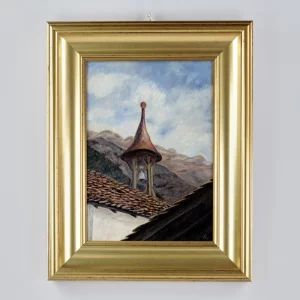
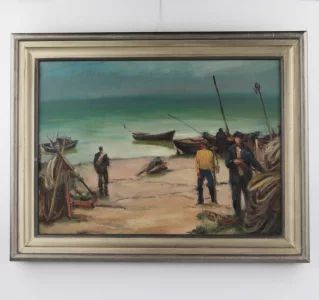
Painting Subcarpathian Rus, Normand Yevgeny Osipovich. 1930.
141 USD
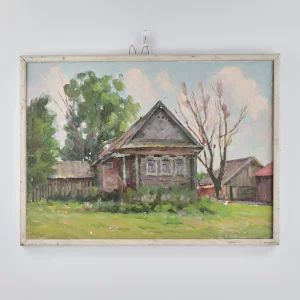
Study Summer Day. Serov Vasily Vasilievich (1911 - 1992). 1973 g.
328 USD
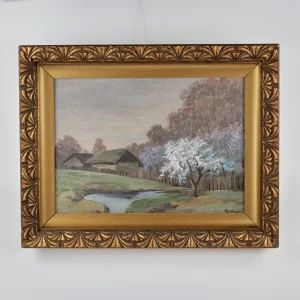
Alfred Alexander Gelhar. Blooming apple tree.
574 USD
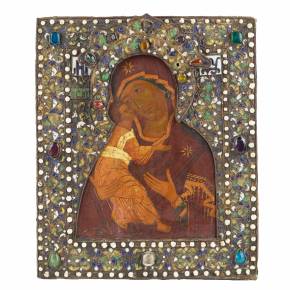
ICON OF THE MOTHER OF GOD OF UMILENIE RUSSIA, MOSCOW, 16TH–17TH CENTURY
Bidding is completed
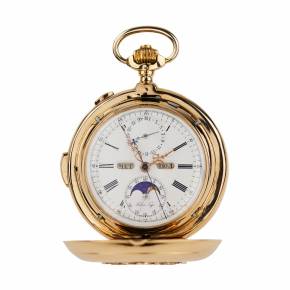
PAUL BUHRÉ / LE PHARE. GOLD POCKET WATCH WITH MINUTE REPEATER, CHRONOGRAPH, MOON PHASES AND CYRILLIC CALENDAR. CIRCA 1903
Bidding is completed
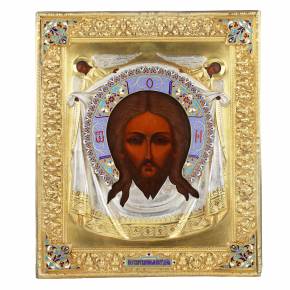
THE HOLY MANDYLION (SPAS NERUKOTVORNY) IN A SILVER-GILT ENAMELLED OKLAD BY IVAN TARABROV MOSCOW, RUSSIA, 1894
Bidding is completed
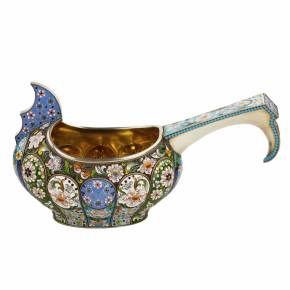
SILVER-GILT KOVSH WITH POLYCHROME ENAMELS. PAVEL OVTCHINNIKOV FIRM RUSSIA, MOSCOW, 1908–1917
Bidding is completed
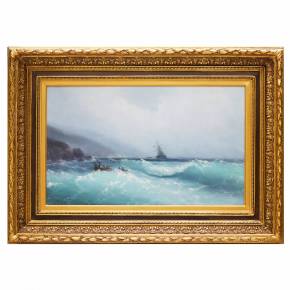
KHARLAMPY DMITRIEVICH KOSTANDI (SECOND HALF OF THE 1860s – AFTER 1917). STORMY SEA RUSSIA, EARLY 20TH CENTURY
Bidding is completed
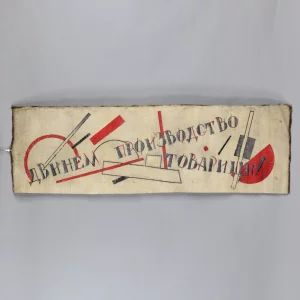
Suprematist slogan. Lets move production comrades.
1112 USD
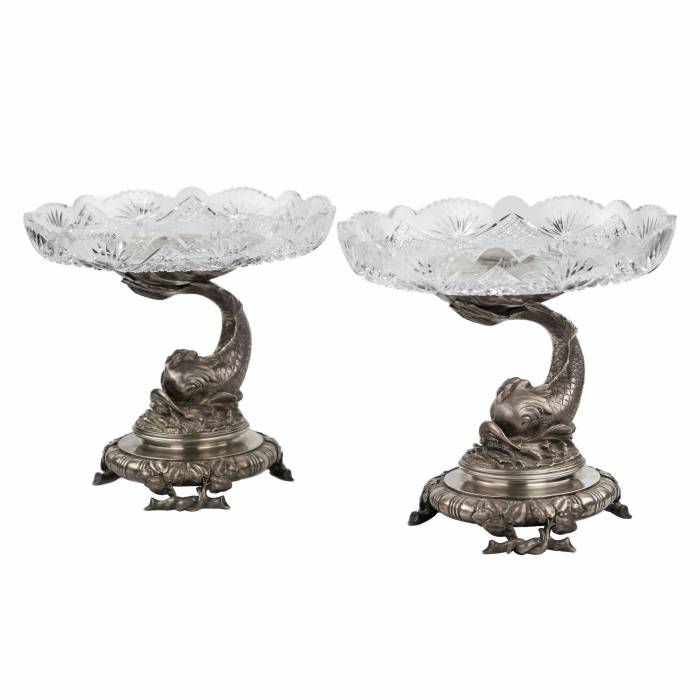
MAGNIFICENT PAIR OF CRYSTAL TAZZAS ON SILVER STANDS. BRATYA GRACHEVY FIRM RUSSIA, SAINT PETERSBURG, LATE 19TH CENTURY
An exceptional museum-quality pair of ceremonial tazzas, created in the workshop of the Bratya Grachevy firm, official Purveyors to the Imperial Court, and reflecting the highest achievements of Russian jewellery and silversmithing art of the late nineteenth century.The composition is built on a striking contrast between the massive cut-crystal bowls and the sculptural silver stands, formed as stylised dolphins. The figures are rendered in dynamic movement, with finely chased scales and expressively modelled heads and fins. The dolphins’ tails support shell-shaped elements that form a refined transition between the stands and the bowls, lending the ensemble a harmonious and sculpturally unified silhouette.Each stand rests on three twisted branches adorned with relief foliage, enhancing the organic quality and decorative richness of the design. The crystal bowls are executed in deep cut techniques, featuring star-shaped rosettes and geometric patterns that create a rich play of light and emphasise the ceremonial character of the objects.Marks: Full maker’s mark “BR. GRACHEVY” with the double-headed eagle, characteristic of the Bratya Grachevy firm, Purveyors to the Imperial Court; state assay mark of the Saint Petersburg Assay Office with the “84” silver standard in an oval cartouche; assay mark with the coat of arms of Saint Petersburg, corresponding to the period of the late 1880s to early 1890s.Dimensions: Height: 23 cm and 25.5 cm (including crystal bowls). Diameter of crystal bowl: 28.8 cm.Weight: Total weight of the silver elements, excluding crystal bowls: 3944 g.Provenance: Private European collection.
Bidding is completed
Painting Seascape, Alexander Lagimov (1903-1990).
235 USD
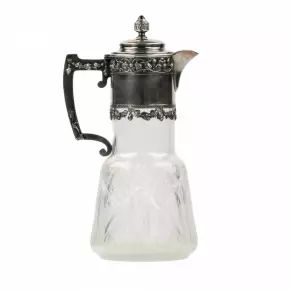
CRYSTAL JUG WITH SILVER, 13TH ARTEL RUSSIA, MOSCOW, EARLY 20TH CENTURY
Bidding is completed
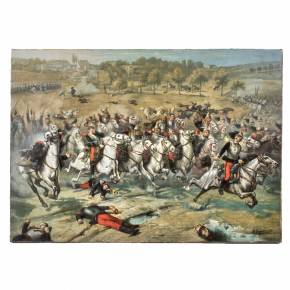
D.Koshutin. The Cuirassier Attack, 1902
5266 USD
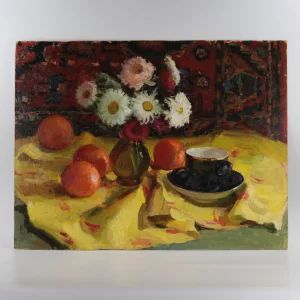
Still life with Cup and Asters.
1147 USD
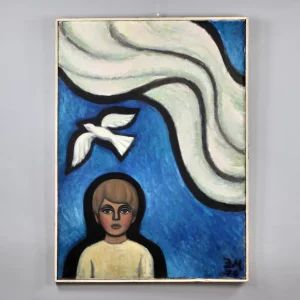
Zenta Muceniece White Bird. 1970 year.
1112 USD
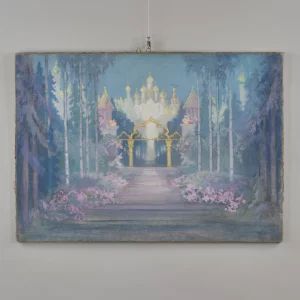
Sketch for scenography The Tale of the Invisible City of Kitezh. Arturs Lapiņš
1639 USD
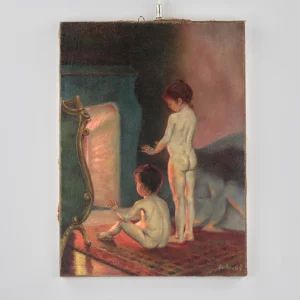
Painting Children by the Fireplace. Copy of 20 years, author Novikov.
820 USD
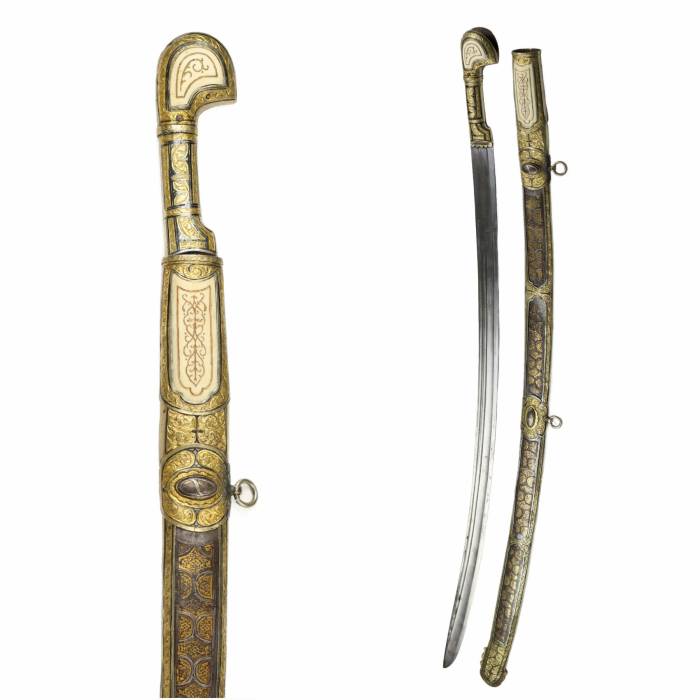
CAUCASIAN SHASHKA WITH GILT SILVER AND BONE DECORATION RUSSIA, 19TH CENTURY
A ceremonial Caucasian shashka executed in the traditions of the North Caucasian arms workshops of the second half of the 19th century. The piece represents a distinguished example of edged weaponry of the Russian Empire, combining martial functionality with refined metal craftsmanship characteristic of Dagestan and related regional centres.The blade is steel, single-edged and moderately curved, with fullers providing both structural strength and lightness. The surface is free of etched ornament, bearing engraving on one side only. Its geometry corresponds to the classical Caucasian shashka type, designed for powerful cutting strokes with extended draw, distinguishing it from European sabres.The hilt is without a guard and features the characteristic “goose-neck” pommel. The grip scales are made of bone and secured with gilt silver mounts. The silver elements are decorated with niello ornament and stylised vegetal motifs, executed in traditional engraving filled with blackened alloy. The contrast between gilt silver, deep niello and light bone creates a striking decorative effect and emphasises the ceremonial nature of the weapon.The scabbard is wooden, leather-covered, and fitted with richly decorated gilt silver mounts. The ornamental system is structured around repeating medallions and stylised vegetal motifs typical of 19th-century Caucasian metalwork. Suspension rings for a sword belt are present. The construction corresponds to the Cossack method of wear adopted after the official inclusion of the shashka into the armament of the Russian Army.The artistic quality of execution, together with the use of gilt silver and bone inlay, suggests a ceremonial or officer’s weapon intended not only for service but also for the display of social rank.Marks: No marks observed on the visible elements.Dimensions: Overall length - 104 cm; Width - 9 cm.Condition: Good. Natural patina to the silver mounts, minor traces of age and light surface scratches to the blade. Decorative elements preserved.Provenance: Private collection.
Bidding is completed
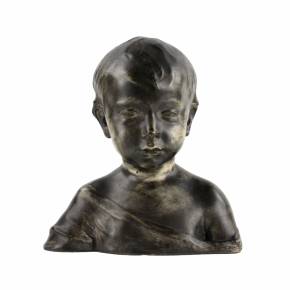
Bust of a Boy in a Tunic. Konstantin Ignatievich Ronchevsky
878 USD
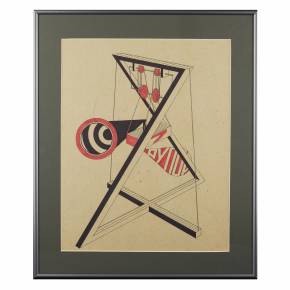
Megaphone of the Revolution
176 USD
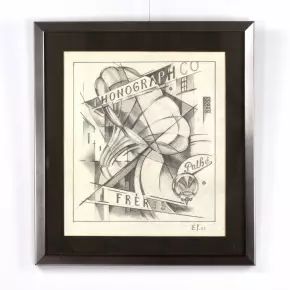
Advertising poster Phonograph Co.. Frères.
527 USD
Melt waters Tolpekin
761 USD
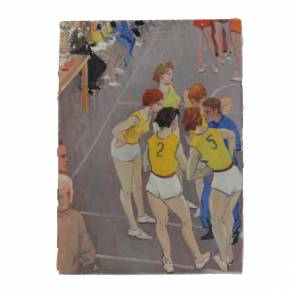
Painting Time-Out. Karjakin Vladimir Vasilievich.
1639 USD
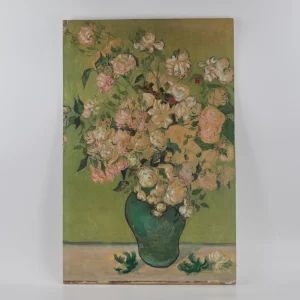
Lithographic illustration of Van Gogh with an addition.
492 USD
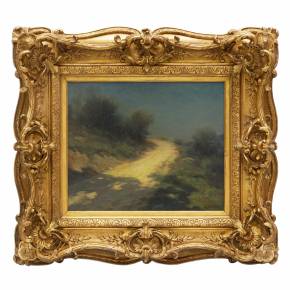
ISAAC ILYICH LEVITAN (1860–1900) COUNTRY ROAD LATE 19TH CENTURY
Bidding is completed
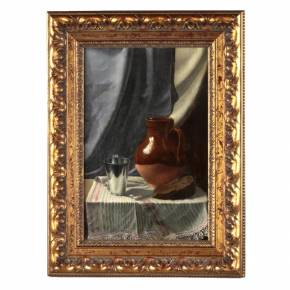
Painting Still life with a jug. Konstantin Ronchevsky.
6437 USD
1
2
3
4
5
6
7
...
13
Subscribe to our newsletter
Never miss new auctions
You have subscribed to our newsletter.
Subscribe
Your latest views
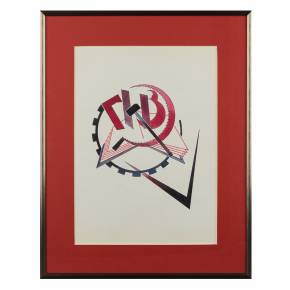
Hammer and Sickle
176 USD
yacht club
398 USD
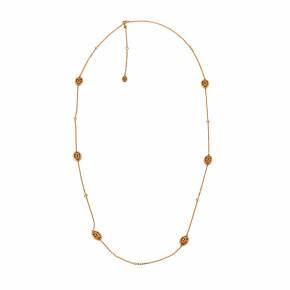
Gold chain with diamonds.
5266 USD
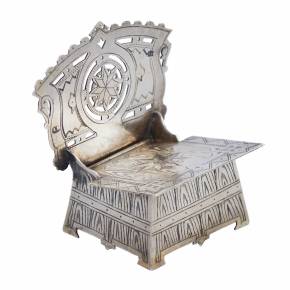
SILVER SALT CELLAR “CHAIR”. ALEXANDER MUKHIN RUSSIA, MOSCOW, 1880
Bidding is completed
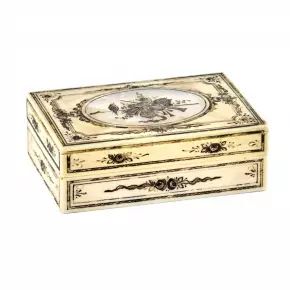
Ivory box with mother-of-pearl inlay.
Bidding is completed
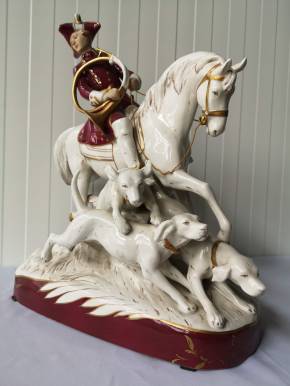
Royal Dux porcelain figure
995 USD
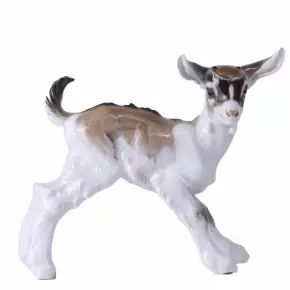
Porcelain Goat. Rosenthal
Bidding is completed
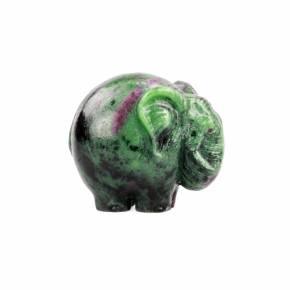
Carved figurine of an elephant in Faberge style. 20th century
Bidding is completed
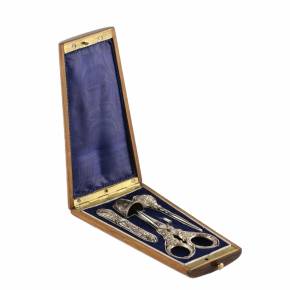
Sewing kit
Bidding is completed
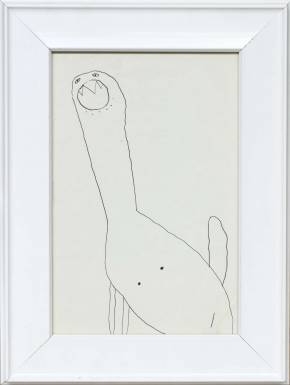
Animal
433 USD
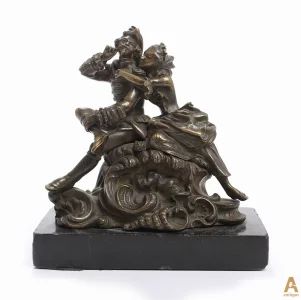
Sculpture Romantic couple
Bidding is completed
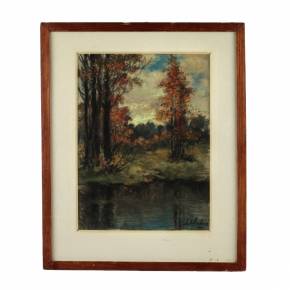
Arthur Duburs. Autumn landscape.
118 USD
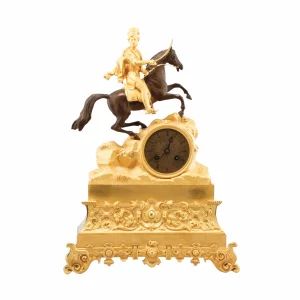
Mantel clock Cavalryman
Bidding is completed
Box style of Napoleon III
Bidding is completed
Forest edge
504 USD
Picture frame
527 USD
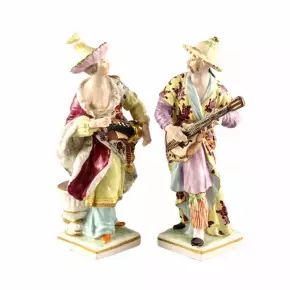
Porcelain pair Chinese Musicians. KPM.
Bidding is completed
The sky
574 USD
Decorative glassware
749 USD
After work
527 USD
Start hunt for treasures!
Individual
Legal entity
Enter a name (min 3 characters)
Enter a Last name (min 3 characters)
Enter the email
User already exist
Algeria (+213)
Andorra (+376)
Angola (+244)
Anguilla (+1264)
Antigua & Barbuda (+1268)
Argentina (+54)
Armenia (+374)
Aruba (+297)
Australia (+61)
Austria (+43)
Azerbaijan (+994)
Bahamas (+1242)
Bahrain (+973)
Bangladesh (+880)
Barbados (+1246)
Belarus (+375)
Belgium (+32)
Belize (+501)
Benin (+229)
Bermuda (+1441)
Bhutan (+975)
Bolivia (+591)
Bosnia Herzegovina (+387)
Botswana (+267)
Brazil (+55)
Brunei (+673)
Bulgaria (+359)
Burkina Faso (+226)
Burundi (+257)
Cambodia (+855)
Cameroon (+237)
Canada (+1)
Cape Verde Islands (+238)
Cayman Islands (+1345)
Central African Republic (+236)
Chile (+56)
China (+86)
Colombia (+57)
Comoros (+269)
Congo (+242)
Cook Islands (+682)
Costa Rica (+506)
Croatia (+385)
Cuba (+53)
Cyprus North (+90392)
Cyprus South (+357)
Czech Republic (+42)
Denmark (+45)
Djibouti (+253)
Dominica (+1809)
Dominican Republic (+1809)
Ecuador (+593)
Egypt (+20)
El Salvador (+503)
Equatorial Guinea (+240)
Eritrea (+291)
Estonia (+372)
Ethiopia (+251)
Falkland Islands (+500)
Faroe Islands (+298)
Fiji (+679)
Finland (+358)
France (+33)
French Guiana (+594)
French Polynesia (+689)
Gabon (+241)
Gambia (+220)
Georgia (+7880)
Germany (+49)
Ghana (+233)
Gibraltar (+350)
Greece (+30)
Greenland (+299)
Grenada (+1473)
Guadeloupe (+590)
Guam (+671)
Guatemala (+502)
Guinea (+224)
Guinea - Bissau (+245)
Guyana (+592)
Haiti (+509)
Honduras (+504)
Hong Kong (+852)
Hungary (+36)
Iceland (+354)
India (+91)
Indonesia (+62)
Iran (+98)
Iraq (+964)
Ireland (+353)
Israel (+972)
Italy (+39)
Jamaica (+1876)
Japan (+81)
Jordan (+962)
Kazakhstan (+7)
Kenya (+254)
Kiribati (+686)
Korea North (+850)
Korea South (+82)
Kuwait (+965)
Kyrgyzstan (+996)
Laos (+856)
Latvia (+371)
Lebanon (+961)
Lesotho (+266)
Liberia (+231)
Libya (+218)
Liechtenstein (+417)
Lithuania (+370)
Luxembourg (+352)
Macao (+853)
Macedonia (+389)
Madagascar (+261)
Malawi (+265)
Malaysia (+60)
Maldives (+960)
Mali (+223)
Malta (+356)
Marshall Islands (+692)
Martinique (+596)
Mauritania (+222)
Mayotte (+269)
Mexico (+52)
Micronesia (+691)
Moldova (+373)
Monaco (+377)
Mongolia (+976)
Montserrat (+1664)
Morocco (+212)
Mozambique (+258)
Myanmar (+95)
Namibia (+264)
Nauru (+674)
Nepal (+977)
Netherlands (+31)
New Caledonia (+687)
New Zealand (+64)
Nicaragua (+505)
Niger (+227)
Nigeria (+234)
Niue (+683)
Norfolk Islands (+672)
Northern Marianas (+670)
Norway (+47)
Oman (+968)
Palau (+680)
Panama (+507)
Papua New Guinea (+675)
Paraguay (+595)
Peru (+51)
Philippines (+63)
Poland (+48)
Portugal (+351)
Puerto Rico (+1787)
Qatar (+974)
Reunion (+262)
Romania (+40)
Russia (+7)
Rwanda (+250)
San Marino (+378)
Sao Tome & Principe (+239)
Saudi Arabia (+966)
Senegal (+221)
Serbia (+381)
Seychelles (+248)
Sierra Leone (+232)
Singapore (+65)
Slovak Republic (+421)
Slovenia (+386)
Solomon Islands (+677)
Somalia (+252)
South Africa (+27)
Spain (+34)
Sri Lanka (+94)
St. Helena (+290)
St. Kitts (+1869)
St. Lucia (+1758)
Sudan (+249)
Suriname (+597)
Swaziland (+268)
Sweden (+46)
Switzerland (+41)
Syria (+963)
Taiwan (+886)
Tajikstan (+7)
Thailand (+66)
Togo (+228)
Tonga (+676)
Trinidad & Tobago (+1868)
Tunisia (+216)
Turkey (+90)
Turkmenistan (+7)
Turkmenistan (+993)
Turks & Caicos Islands (+1649)
Tuvalu (+688)
Uganda (+256)
UK (+44)
Ukraine (+380)
United Arab Emirates (+971)
Uruguay (+598)
USA (+1)
Uzbekistan (+7)
Vanuatu (+678)
Vatican City (+379)
Venezuela (+58)
Vietnam (+84)
Virgin Islands - British (+1284)
Virgin Islands - US (+1340)
Wallis & Futuna (+681)
Yemen (North)(+969)
Yemen (South)(+967)
Zambia (+260)
Zimbabwe (+263)
Enter the phone number
Minimum password length must be at least 6 characters
Enter a name of your company (min 3 characters)
Enter registration number (min 3 characters)
Enter the email
User already exist
Enter the phone number
Minimum password length must be at least 6 characters
I am a buyer
I am a seller
or log in with
Sign up for our weekly newsletter
I reviewed and agree
user agreement
,
«Privacy Policy»
i agree with Antiqon Terms and conditions
Register
Already have an account?
Log In
Enter your email and password for authorization
Enter the email
The number of attempts has been used uo, repeat after 2 hours
Minimum password length must be at least 6 characters
Invalid email or password
or log in with
Login
Forgot password?
Don't have an account?
register