USD
EUR
USD
English
Latviešu
Francais
English
Русский
Sign Up
Login
Auction
Best sellers
Upcomming auctions
Archive
Shop
Sell
Evaluation
Services
Expertise
Restoration
Antiq selection
Delivery
Contacts
Home
Shop
Show sold items
Show auction items
Available right now
Price
-
USD
New items
Gifts
EXCLUSIVE
Catalogue categories
ALL ITEMS
Russian art
Objects of Vertu (19)
+
Objects of Vertu (19)
Paintings (640)
-
Paintings (605)
Watercolor (20)
Miniature (3)
Other (12)
Graphic arts (49)
+
Graphic arts (49)
Icons (38)
+
Icons (34)
Church utensils (4)
Frames and easels (43)
+
Frames (28)
Easels (3)
Photo frames (12)
Sculpture (60)
+
Bronze sculptures (33)
Stone sculptures (9)
Stone carving miniature (6)
Other (12)
Silver and metal (253)
+
Russian silver (103)
European silver (74)
Other (76)
Porcelain and ceramics (349)
+
Russian porcelain (23)
European porcelain (114)
Other (212)
Glass (52)
+
Crystal (5)
Glass (47)
Clocks and watches (25)
+
Mantel clocks (7)
Wall clocks (3)
Wrist watches (7)
Pocket watches (5)
Grandfather floor clocks (1)
Other (2)
Furniture (147)
+
Furniture sets (8)
Showcases (25)
Dressers (10)
Tables (30)
Sofas (3)
Armchairs and chairs (17)
Columns (5)
Mirrors (8)
Consoles (10)
Other (31)
Lighting (52)
+
Chandeliers (11)
Sconce (8)
Floor lamps (4)
Lamps (16)
Candlesticks and candelabra (12)
Other (1)
Interior objects (34)
+
Interior objects (34)
Fireplaces and stoves (14)
+
Fireplaces and stoves (6)
Accessories (7)
Other (1)
Carpets and tapestries (2)
+
Carpets (1)
Tapestries (1)
Jewelry (124)
+
Diamonds and precious stones (0)
Rings (50)
Bracelets (7)
Brooches and pendants (2)
Earrings (10)
Jewelry sets (4)
Chains and necklaces (11)
Amber (0)
Bijoux (1)
Other (39)
Weapons and мilitary (20)
+
Weapon (12)
Military (5)
Other (2)
Armour (1)
Orders and medals (4)
+
Orders and medals (3)
Signs and Tokens (0)
Other (1)
Coins and banknotes (17)
+
Coins (17)
Banknotes and Bonds (0)
Other (0)
Mechanics (15)
+
Music boxes (9)
Mechanisms and tools (4)
Models (0)
Other (2)
Print, postcards and other antique paper production (9)
+
Posters (3)
Maps (2)
Postcards (0)
Photos (0)
Other (4)
Books (5)
+
Literature (1)
History (1)
Military (0)
Science (1)
Children`s literature (0)
Other (2)
Garden and architecture (2)
+
Garden sculpture (0)
Fountain (0)
Garden furniture (0)
Architectural elements (2)
Other (0)
Modern Art (72)
+
Paintings (10)
Sculpture (18)
Objects (29)
Other (15)
Collectibles (14)
+
Collectibles (14)
Vintage and fashion (2)
+
Accessories (2)
Clothing (0)
Footwear (0)
Other (0)
Other (10)
+
Other (10)
Asian art
Styles
Louis-Philippe Carl X (11)
Academic art (3)
Antiquity (9)
Art Deco (62)
Art Nouveau (27)
Asian Art (12)
Baroque (25)
Biedermeier (10)
Boulle (4)
Chinoiserie (6)
Classicism (31)
Design of 50-60’s (10)
Design of 70’s (5)
Eclecticism (55)
Empire (29)
Empire - Consulate (1)
Gothic Revival (3)
Impressionism (22)
Judaica (2)
Jugendstil (10)
Louis XIII - Renaissance (2)
Louis XIV - Regency (1)
Louis XV (31)
Louis XVI (37)
Modern (108)
Modern Art (98)
Napoleon III (40)
Neo-baroque (5)
Neo-Baroque (9)
Neo-Russian (53)
Neoclassicism (37)
Neorenaissance (13)
Neorococo (37)
Oriental Art (5)
Other style (62)
Realism (50)
Renaissance (7)
Rococo (36)
Romanticism (30)
Vanguard (20)
Victorian Style (4)
Epoques
16th century (2)
17th century (4)
18th century (28)
19th century (326)
20th century (334)
21th century (269)
At the turn of 16th -17th century (1)
At the turn of 17th-18th century (1)
At the turn of 19th -20th century (199)
At the turn of the 15th - 16th century (4)
At the turn of the 18th -19th century (12)
Early 17th century (1)
Early 18th century (1)
Early 19th century (20)
Early 20th century (404)
Late 18th century (3)
Late 19th century (100)
Mid-17th century (14)
Mid-18th century (1)
Mid-19th century (38)
Mid-20th century (268)
The end of the 17th century (1)
The end of the 20th century (45)
Paintings
Price (descending)
Price (ascending)
Date (ascending)
Date (descending)
1
2
3
4
5
6
...
27
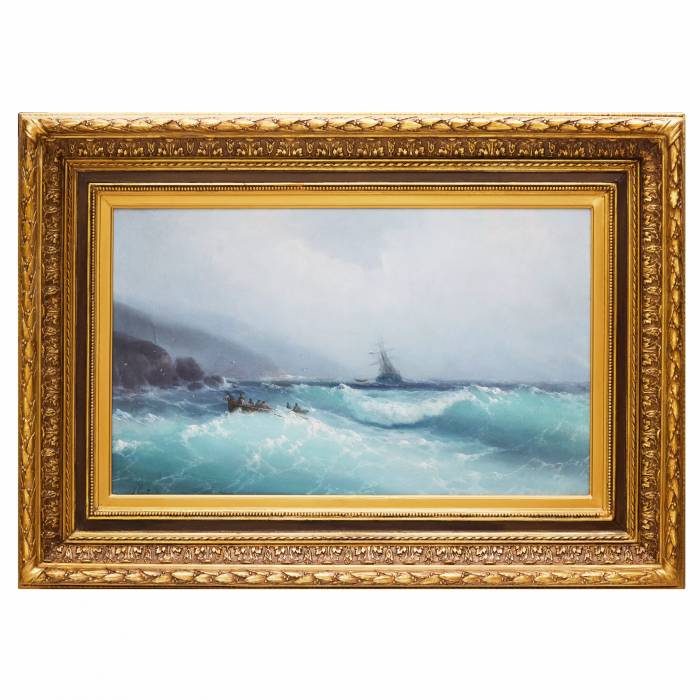
KHARLAMPY DMITRIEVICH KOSTANDI (SECOND HALF OF THE 1860s – AFTER 1917). STORMY SEA RUSSIA, EARLY 20TH CENTURY
An outstanding example of late Russian Marinism, Stormy Sea, created by Kharlampiy Dmitrievich Kostandi in the early 20th century, stands among the artist’s most expressive works devoted to the theme of the sea.With remarkable mastery, the artist conveys the raw energy of the raging waters. Foaming waves surge toward a fragile boat, filled with tension, movement, and a sense of inevitability. The sea surface is rendered with striking expressiveness, allowing the viewer to sense the motion of water, gusts of wind, and the charged atmosphere of an approaching storm.At the center of the composition is a small boat with sailors struggling fiercely against the waves. Their tense, determined figures become a powerful symbol of courage, the fight for survival, and hope for salvation. In the distance, along the horizon line, the faint silhouette of a sailing vessel enhances the vastness of space and underscores human vulnerability in the face of nature’s overwhelming force. The contrast between the immensity of the sea and human presence lends the work its dramatic intensity.The color palette is built upon subtle transitions of cool tones, ranging from translucent blues and turquoises to silvery greys. Luminous reflections give the water depth and vibrant movement, while the soft yet energetic brushwork creates a sense of breathing space. This atmospheric treatment aligns Kostandi with the finest masters of the Russian Marinist tradition, while highlighting his individual, restrained, and realist approach in contrast to the Romantic expressiveness of Aivazovsky.Dimensions: 49 × 80 cm (framed 78 × 110 cm)Medium: Oil on canvasSignature: “X. Kostandi”, lower left, consistent with the artist’s known autographsCondition: Good overall condition, with natural age patina and an even craquelure patternProvenance: Private collection. Authenticity confirmed by expert examinations
Bidding is completed
Painting School of Hate. Igor Corti. 1971
1578 USD
Igor Corti. In Crimea. 1970 g.
1344 USD
I. Ryazhsky. Still life with a mug and flowers.
877 USD
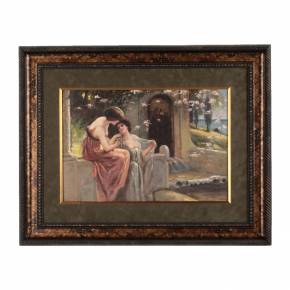
Painting At the Fountain.
819 USD
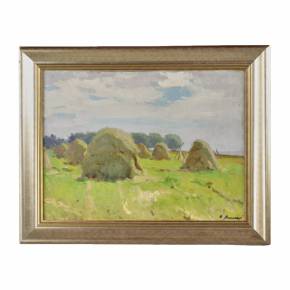
Landscape Haystacks. Raimonds Auniņš (1907-1960).
538 USD
KOSHARY. PAVEL KUZNETSOV (1878 - 1968) RUSSIA, 1912
Bidding is completed
RUSSIAN BEAUTY. T.M. MATVEEV. RUSSIA, LATE 19TH CENTURY
Bidding is completed
MINUETTO. THE ROMANTIC BOUQUET — JOCELYNE SEGUIN (1917/21–1999)
Bidding is completed
Gouache. Riga. V.D. Medvedev.
Bidding is completed
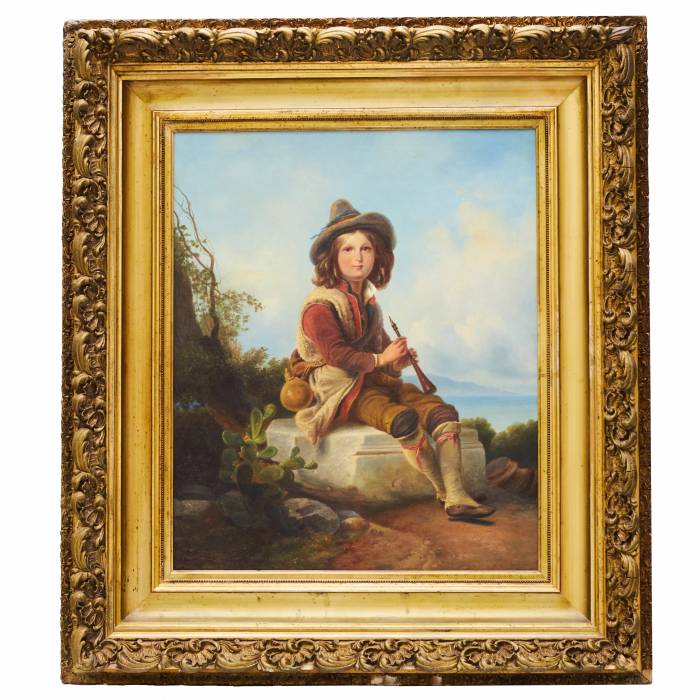
CARL TIMOLEON VON NEFF (1804–1877). BOY WITH A FLUTE RUSSIA / ESTONIA, 1841
The painting Boy with a Flute, dated 1841 and signed “Neff. 1841,” is a characteristic example of the early period of Carl Timoleon von Neff — an eminent representative of the academic school of mid-19th-century painting, whose artistic activity bridged the traditions of St. Petersburg, Dresden, and Paris. In this work, the artist embodies a quintessential Romantic image of a young shepherd, symbolizing simplicity and the inner purity of human nature in harmony with the natural world.The composition is built on a delicate balance between figure and landscape. The luminous distance creates an impression of airy perspective, while soft lighting reveals the velvety surface and warm palette typical of the Baltic-German school of painting. The emotional expression in the boy’s gaze, the gentle modelling of the face, and the meticulous treatment of the attire demonstrate Neff’s mature craftsmanship, shaped under the influence of Western European classicism and the sentimental realism of the Biedermeier period.A graduate of the Dresden Academy and a pupil of Paul Delaroche in Paris, Carl Timoleon von Neff became one of the leading portrait and religious painters of Imperial Russia. His works adorned the interiors of St Isaac’s Cathedral and the palaces of the Imperial family. Yet early genre scenes such as this are extremely rare, reflecting Neff’s personal interest in the human figure outside the ceremonial context — in the poetics of everyday life and the idealized image of childhood.Boy with a Flute occupies a special place in Neff’s oeuvre as a transitional work between his academic formation and the emergence of his distinctive artistic language — marked by refined drawing and transparent coloration. Comparable compositions and figure types are found in Russian and German museum collections, including the State Hermitage, the Art Museum of Estonia, and former Königsberg collections.Hallmarks: Artist’s signature in red paint at lower left: “Neff. 1841.”Dimensions: 90 × 78 cm.Material: Oil on canvas.Condition: Good. Canvas relined and reinforced on stretcher; minor signs of age. Paint surface stable, dense, without losses, with natural patina.Provenance: Private collection.Expertise: Expert opinion by the Art Museum of Estonia (Eesti Kunstimuuseum, 30.11.2016, Sirje Helme, Mai Levin, Alar Nurkse) confirms the attribution and authorship of Carl Timoleon von Neff.
Bidding is completed
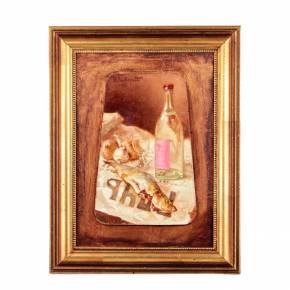
Julius Yulievich Klever (son). (1882-1942) Still life with fish .
Bidding is completed
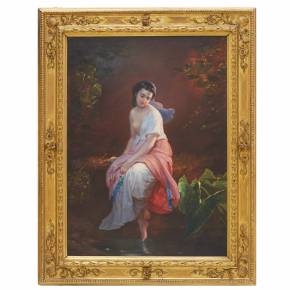
GIUSEPPE MAZZOLINI (1806–1876). VIRGINIA. ITALY, ROME, 1874
Bidding is completed
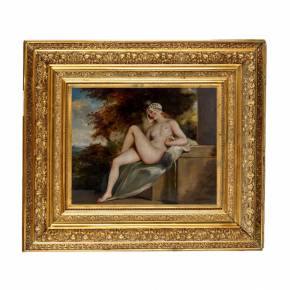
NUDE. WILLIAM ETTY (1787 - 1849) ENGLAND, EARLY 19TH CENTURY
Bidding is completed
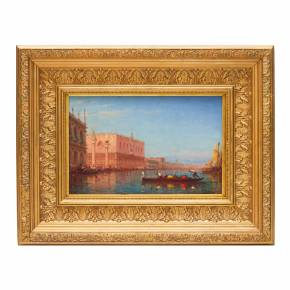
CHARLES-CLÉMENT CALDERON (1870–1906). VIEW OF THE DOGE’S PALACE AND ST MARK’S SQUARE IN VENICE FRANCE / VENICE, TURN OF THE 19TH – 20TH CENTURY
Bidding is completed
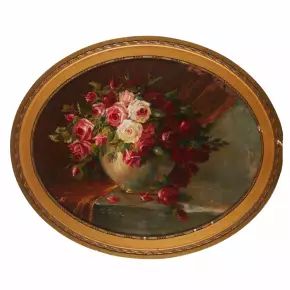
Still life Roses by T. Franz
Bidding is completed
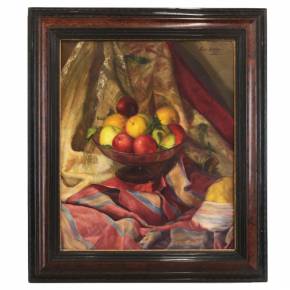
LUIS GARCÍA OLIVER. Still life with apples.
Bidding is completed
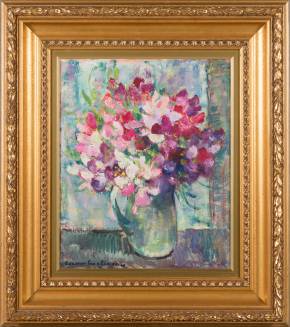
Still life Flowers in a jug. Anna Snellman. Finland, 1884-1962
Bidding is completed
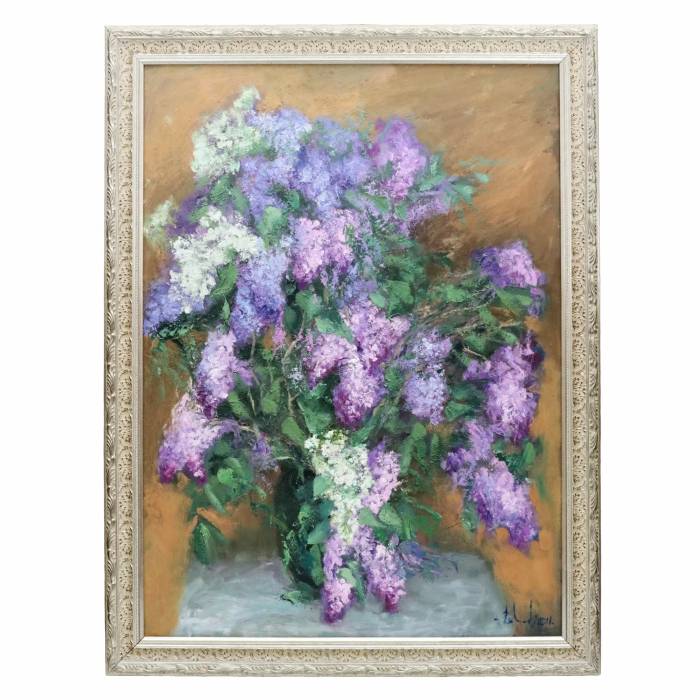
Janis Kalnmalis. Lilac. 2011.
Janis Kalnmailis. (1939-... ). Lilac. Fresh, large and original impressionism of 2011, with a richness of colors, textures and a lively feeling of wet lilac. Dimensions of the painting: 73x100 cm. Author`s signature in the lower right corner. Graduated from the Kalnins class of the Latvian Academy of Arts in 1959. Member of the Union of Artists since 1979.
Bidding is completed
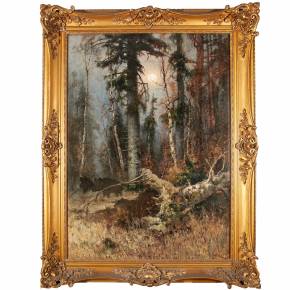
FOREST IN LATE AUTUMN YULIY KLEVER (1850–1924), 1903
Bidding is completed
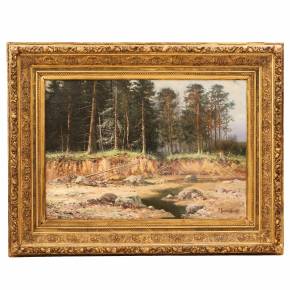
PINE FOREST. GAVRIIL PAVLOVICH KAMENSKY (1853–1912). 1897
Bidding is completed
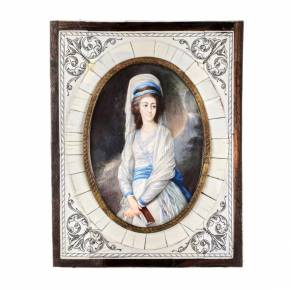
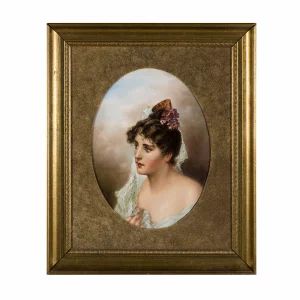
Portrait of a girl.
Bidding is completed
Muse
3121 USD
Still life with watermelon and papaya
29870 USD
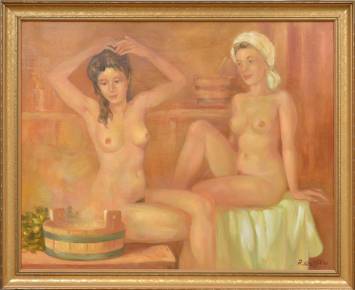
Girls in the sauna
678 USD
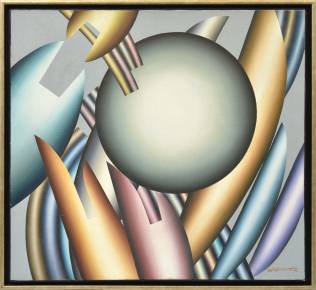
Fantasy with a bullet
1251 USD
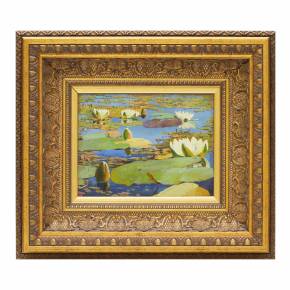
WATER LILIES (NYMPHAEAS) D.A. LISHCHENKO, 1925
Bidding is completed
1
2
3
4
5
6
...
27
Subscribe to our newsletter
Never miss new auctions
You have subscribed to our newsletter.
Subscribe
Your latest views
Crystal fruit utensil
468 USD
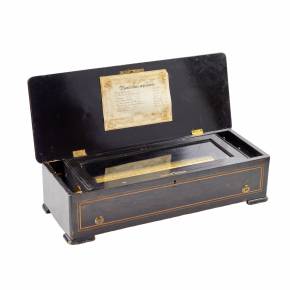
Music Box.
Bidding is completed
Decorative porcelain plate
526 USD
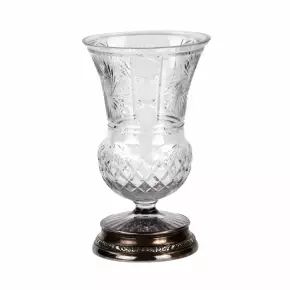
Crystal vase in silver.
1520 USD
Rifle
678 USD
Box style of Napoleon III
Bidding is completed
Restored planer table
1894 USD
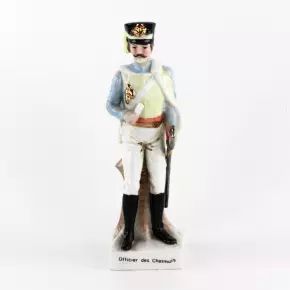
Porcelain hussar during the Napoleonic wars.
Bidding is completed
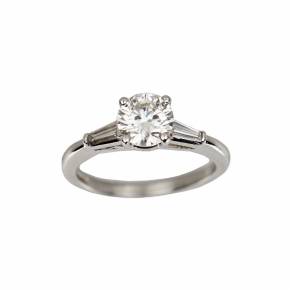
Platinum ring with diamonds
Bidding is completed
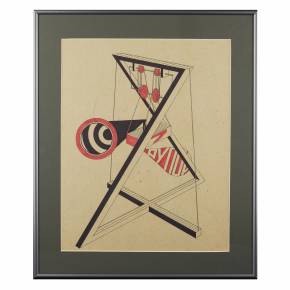
Megaphone of the Revolution
176 USD
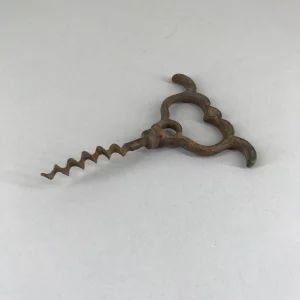
Corkscrew Four Finger Pull
117 USD
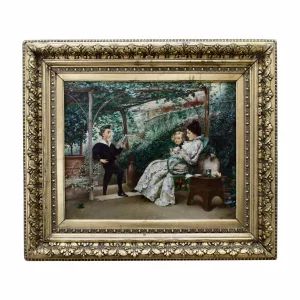
Painting Recital K.Stepanov (1854—1910)
Bidding is completed
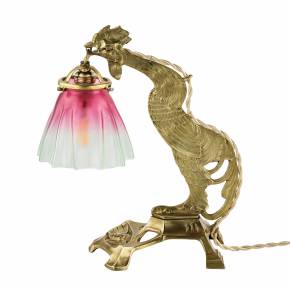
Art Nouveau table lamp, circa 1900
Bidding is completed
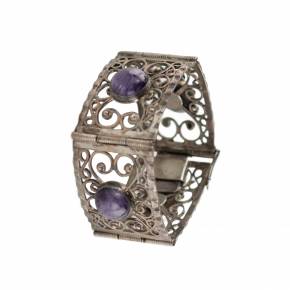
Silver bracelet with Amethysts, cabochon cut.
293 USD
Porcelain plaque. Russia.
Bidding is completed
Latgale landscape
421 USD
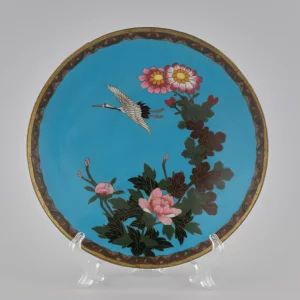
Japanese plate. Cloisonne enamel.
Bidding is completed
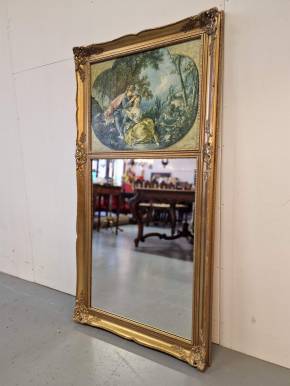
Mirror with painting
585 USD
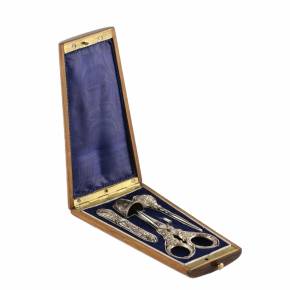
Sewing kit
Bidding is completed
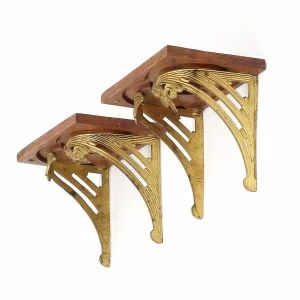
Paired Shelves
Bidding is completed
Start hunt for treasures!
Individual
Legal entity
Enter a name (min 3 characters)
Enter a Last name (min 3 characters)
Enter the email
User already exist
Algeria (+213)
Andorra (+376)
Angola (+244)
Anguilla (+1264)
Antigua & Barbuda (+1268)
Argentina (+54)
Armenia (+374)
Aruba (+297)
Australia (+61)
Austria (+43)
Azerbaijan (+994)
Bahamas (+1242)
Bahrain (+973)
Bangladesh (+880)
Barbados (+1246)
Belarus (+375)
Belgium (+32)
Belize (+501)
Benin (+229)
Bermuda (+1441)
Bhutan (+975)
Bolivia (+591)
Bosnia Herzegovina (+387)
Botswana (+267)
Brazil (+55)
Brunei (+673)
Bulgaria (+359)
Burkina Faso (+226)
Burundi (+257)
Cambodia (+855)
Cameroon (+237)
Canada (+1)
Cape Verde Islands (+238)
Cayman Islands (+1345)
Central African Republic (+236)
Chile (+56)
China (+86)
Colombia (+57)
Comoros (+269)
Congo (+242)
Cook Islands (+682)
Costa Rica (+506)
Croatia (+385)
Cuba (+53)
Cyprus North (+90392)
Cyprus South (+357)
Czech Republic (+42)
Denmark (+45)
Djibouti (+253)
Dominica (+1809)
Dominican Republic (+1809)
Ecuador (+593)
Egypt (+20)
El Salvador (+503)
Equatorial Guinea (+240)
Eritrea (+291)
Estonia (+372)
Ethiopia (+251)
Falkland Islands (+500)
Faroe Islands (+298)
Fiji (+679)
Finland (+358)
France (+33)
French Guiana (+594)
French Polynesia (+689)
Gabon (+241)
Gambia (+220)
Georgia (+7880)
Germany (+49)
Ghana (+233)
Gibraltar (+350)
Greece (+30)
Greenland (+299)
Grenada (+1473)
Guadeloupe (+590)
Guam (+671)
Guatemala (+502)
Guinea (+224)
Guinea - Bissau (+245)
Guyana (+592)
Haiti (+509)
Honduras (+504)
Hong Kong (+852)
Hungary (+36)
Iceland (+354)
India (+91)
Indonesia (+62)
Iran (+98)
Iraq (+964)
Ireland (+353)
Israel (+972)
Italy (+39)
Jamaica (+1876)
Japan (+81)
Jordan (+962)
Kazakhstan (+7)
Kenya (+254)
Kiribati (+686)
Korea North (+850)
Korea South (+82)
Kuwait (+965)
Kyrgyzstan (+996)
Laos (+856)
Latvia (+371)
Lebanon (+961)
Lesotho (+266)
Liberia (+231)
Libya (+218)
Liechtenstein (+417)
Lithuania (+370)
Luxembourg (+352)
Macao (+853)
Macedonia (+389)
Madagascar (+261)
Malawi (+265)
Malaysia (+60)
Maldives (+960)
Mali (+223)
Malta (+356)
Marshall Islands (+692)
Martinique (+596)
Mauritania (+222)
Mayotte (+269)
Mexico (+52)
Micronesia (+691)
Moldova (+373)
Monaco (+377)
Mongolia (+976)
Montserrat (+1664)
Morocco (+212)
Mozambique (+258)
Myanmar (+95)
Namibia (+264)
Nauru (+674)
Nepal (+977)
Netherlands (+31)
New Caledonia (+687)
New Zealand (+64)
Nicaragua (+505)
Niger (+227)
Nigeria (+234)
Niue (+683)
Norfolk Islands (+672)
Northern Marianas (+670)
Norway (+47)
Oman (+968)
Palau (+680)
Panama (+507)
Papua New Guinea (+675)
Paraguay (+595)
Peru (+51)
Philippines (+63)
Poland (+48)
Portugal (+351)
Puerto Rico (+1787)
Qatar (+974)
Reunion (+262)
Romania (+40)
Russia (+7)
Rwanda (+250)
San Marino (+378)
Sao Tome & Principe (+239)
Saudi Arabia (+966)
Senegal (+221)
Serbia (+381)
Seychelles (+248)
Sierra Leone (+232)
Singapore (+65)
Slovak Republic (+421)
Slovenia (+386)
Solomon Islands (+677)
Somalia (+252)
South Africa (+27)
Spain (+34)
Sri Lanka (+94)
St. Helena (+290)
St. Kitts (+1869)
St. Lucia (+1758)
Sudan (+249)
Suriname (+597)
Swaziland (+268)
Sweden (+46)
Switzerland (+41)
Syria (+963)
Taiwan (+886)
Tajikstan (+7)
Thailand (+66)
Togo (+228)
Tonga (+676)
Trinidad & Tobago (+1868)
Tunisia (+216)
Turkey (+90)
Turkmenistan (+7)
Turkmenistan (+993)
Turks & Caicos Islands (+1649)
Tuvalu (+688)
Uganda (+256)
UK (+44)
Ukraine (+380)
United Arab Emirates (+971)
Uruguay (+598)
USA (+1)
Uzbekistan (+7)
Vanuatu (+678)
Vatican City (+379)
Venezuela (+58)
Vietnam (+84)
Virgin Islands - British (+1284)
Virgin Islands - US (+1340)
Wallis & Futuna (+681)
Yemen (North)(+969)
Yemen (South)(+967)
Zambia (+260)
Zimbabwe (+263)
Enter the phone number
Minimum password length must be at least 6 characters
Enter a name of your company (min 3 characters)
Enter registration number (min 3 characters)
Enter the email
User already exist
Enter the phone number
Minimum password length must be at least 6 characters
I am a buyer
I am a seller
or log in with
Sign up for our weekly newsletter
I reviewed and agree
user agreement
,
«Privacy Policy»
i agree with Antiqon Terms and conditions
Register
Already have an account?
Log In
Enter your email and password for authorization
Enter the email
The number of attempts has been used uo, repeat after 2 hours
Minimum password length must be at least 6 characters
Invalid email or password
or log in with
Login
Forgot password?
Don't have an account?
register