USD
EUR
USD
English
Latviešu
Francais
English
Русский
Sign Up
Login
Auction
Best sellers
Upcomming auctions
Archive
Shop
Sell
Evaluation
Services
Expertise
Restoration
Antiq selection
Delivery
Contacts
Home
Shop
Show sold items
Show auction items
Available right now
Price
-
USD
New items
Gifts
EXCLUSIVE
Catalogue categories
ALL ITEMS
Russian art
Objects of Vertu (19)
+
Objects of Vertu (19)
Paintings (640)
+
Paintings (605)
Watercolor (20)
Miniature (3)
Other (12)
Graphic arts (49)
+
Graphic arts (49)
Icons (38)
+
Icons (34)
Church utensils (4)
Frames and easels (43)
+
Frames (28)
Easels (3)
Photo frames (12)
Sculpture (60)
+
Bronze sculptures (33)
Stone sculptures (9)
Stone carving miniature (6)
Other (12)
Silver and metal (253)
+
Russian silver (103)
European silver (74)
Other (76)
Porcelain and ceramics (349)
+
Russian porcelain (23)
European porcelain (114)
Other (212)
Glass (52)
+
Crystal (5)
Glass (47)
Clocks and watches (25)
+
Mantel clocks (7)
Wall clocks (3)
Wrist watches (7)
Pocket watches (5)
Grandfather floor clocks (1)
Other (2)
Furniture (147)
+
Furniture sets (8)
Showcases (25)
Dressers (10)
Tables (30)
Sofas (3)
Armchairs and chairs (17)
Columns (5)
Mirrors (8)
Consoles (10)
Other (31)
Lighting (52)
+
Chandeliers (11)
Sconce (8)
Floor lamps (4)
Lamps (16)
Candlesticks and candelabra (12)
Other (1)
Interior objects (34)
+
Interior objects (34)
Fireplaces and stoves (14)
+
Fireplaces and stoves (6)
Accessories (7)
Other (1)
Carpets and tapestries (2)
+
Carpets (1)
Tapestries (1)
Jewelry (124)
+
Diamonds and precious stones (0)
Rings (50)
Bracelets (7)
Brooches and pendants (2)
Earrings (10)
Jewelry sets (4)
Chains and necklaces (11)
Amber (0)
Bijoux (1)
Other (39)
Weapons and мilitary (20)
+
Weapon (12)
Military (5)
Other (2)
Armour (1)
Orders and medals (4)
+
Orders and medals (3)
Signs and Tokens (0)
Other (1)
Coins and banknotes (17)
+
Coins (17)
Banknotes and Bonds (0)
Other (0)
Mechanics (15)
+
Music boxes (9)
Mechanisms and tools (4)
Models (0)
Other (2)
Print, postcards and other antique paper production (9)
+
Posters (3)
Maps (2)
Postcards (0)
Photos (0)
Other (4)
Books (5)
+
Literature (1)
History (1)
Military (0)
Science (1)
Children`s literature (0)
Other (2)
Garden and architecture (2)
+
Garden sculpture (0)
Fountain (0)
Garden furniture (0)
Architectural elements (2)
Other (0)
Modern Art (72)
+
Paintings (10)
Sculpture (18)
Objects (29)
Other (15)
Collectibles (14)
+
Collectibles (14)
Vintage and fashion (2)
+
Accessories (2)
Clothing (0)
Footwear (0)
Other (0)
Other (10)
+
Other (10)
Asian art
Styles
Louis-Philippe Carl X (11)
Academic art (3)
Antiquity (9)
Art Deco (62)
Art Nouveau (27)
Asian Art (12)
Baroque (25)
Biedermeier (10)
Boulle (4)
Chinoiserie (6)
Classicism (31)
Design of 50-60’s (10)
Design of 70’s (5)
Eclecticism (55)
Empire (29)
Empire - Consulate (1)
Gothic Revival (3)
Impressionism (22)
Judaica (2)
Jugendstil (10)
Louis XIII - Renaissance (2)
Louis XIV - Regency (1)
Louis XV (31)
Louis XVI (37)
Modern (108)
Modern Art (98)
Napoleon III (40)
Neo-Baroque (9)
Neo-baroque (5)
Neo-Russian (53)
Neoclassicism (37)
Neorenaissance (13)
Neorococo (37)
Oriental Art (5)
Other style (62)
Realism (50)
Renaissance (7)
Rococo (36)
Romanticism (30)
Vanguard (20)
Victorian Style (4)
Epoques
16th century (2)
17th century (4)
18th century (28)
19th century (326)
20th century (334)
21th century (269)
At the turn of 16th -17th century (1)
At the turn of 17th-18th century (1)
At the turn of 19th -20th century (199)
At the turn of the 15th - 16th century (4)
At the turn of the 18th -19th century (12)
Early 17th century (1)
Early 18th century (1)
Early 19th century (20)
Early 20th century (404)
Late 18th century (3)
Late 19th century (100)
Mid-17th century (14)
Mid-18th century (1)
Mid-19th century (38)
Mid-20th century (268)
The end of the 17th century (1)
The end of the 20th century (45)
Price (descending)
Price (ascending)
Date (ascending)
Date (descending)
...
38
39
40
41
42
43
44
...
87
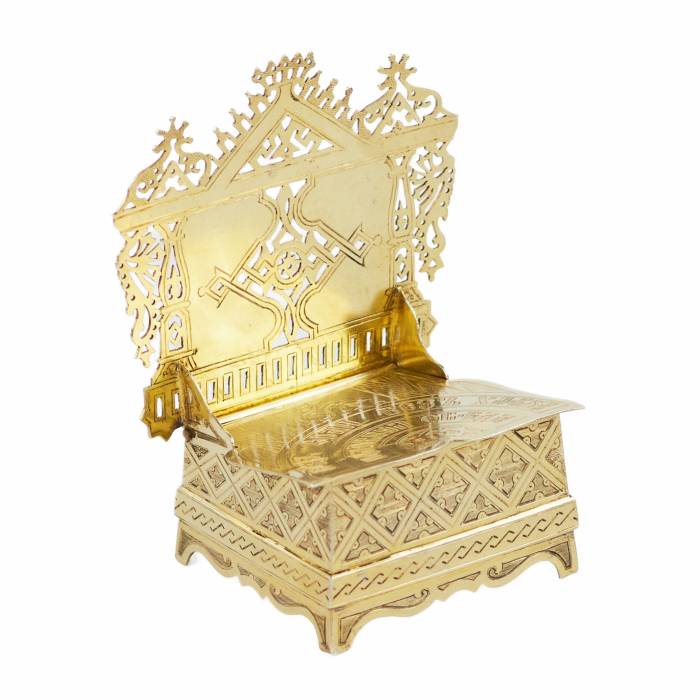
SILVER SALT CELLAR IN THE FORM OF A THRONE RUSSIAN EMPIRE, MOSCOW, 1881
A silver salt cellar executed in the form of a throne with a high openwork back and a hinged lid represents a characteristic example of Moscow artistic silver of the last quarter of the 19th century. The architectural composition follows the concept of a miniature ceremonial throne, emphasizing the symbolic and status-oriented character of the object.The body is decorated with a rhythmic geometric ornament composed of alternating lozenges and stylized motifs, executed using engraving and pierced techniques, further enriched with trompe-l’oeil ornamentation imitating the texture of tree bark. The base is designed as a solid pedestal with profiled feet, enhancing the impression of monumentality despite the compact dimensions of the piece. The back is rendered in openwork technique and adorned with elements referring to architectural finials and crowned motifs characteristic of the Neo-Russian style.The inner side of the lid bears an engraved inscription, “Without salt and bread, half the meal is missing”, executed in a decorative script and enclosed within an ornamental frame.Marks: Maker’s initials “IL”, presumably Iuka Khaimovich Lozinsky, owner of a silverware workshop; State assay mark of the Moscow Assay District depicting the coat of arms of the city of Moscow (Saint George) above the date “1881” and the fineness mark “84” within a shield; Additional Moscow assay marks; Later additional marks indicating the fineness “875”.Dimensions: Height: 10.5 cm. Width: 8.5 cm. Depth: 6 cm.Weight: 139 g.Condition: Good. Gilding to the interior largely preserved. Minor signs of age and use. No deformations, cracks or evidence of restoration.Provenance: Private collection.
Bidding is completed
Small village
608 USD
Summer landscape
935 USD
Christ and the Samaritan
31167 USD
A wedding pair of icons in silver frames in the Art Nouveau style. Moscow, early 20th century
Bidding is completed
Bronze jardiniere with glass. 19-20 century.
Bidding is completed
Chess porcelain figure of the set `Red and White`
725 USD
Set of Art Nouveau style vases (3 pcs.)
1870 USD
Porcelain vase
2805 USD
Biscuit figurine Boy on horse
2338 USD
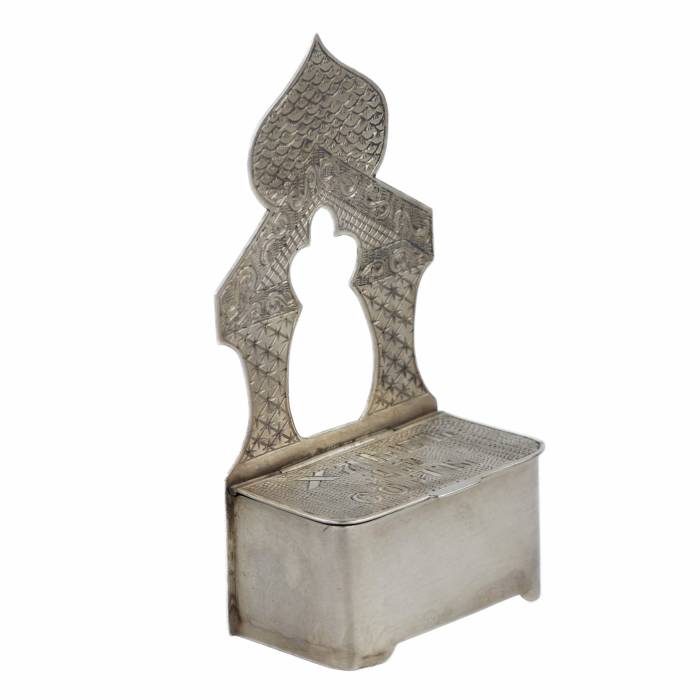
SILVER SALT CELLAR “CHAIR” RUSSIA, MOSCOW, 1896–1908
An elegant silver salt cellar of rare form, executed as a miniature chair with a hinged lid, represents a distinctive example of Moscow artistic silver from the late 19th to early 20th century, created within the aesthetic of National Romanticism. The composition derives from the forms of traditional Russian wooden architecture and reflects the period’s fascination with folk traditions and decorative motifs.The high shaped back with a keel-like finial and openwork aperture is stylised after architectural elements of peasant houses and carved window frames. The sculptural conception combines architectural clarity with rich decorative articulation, characteristic of Moscow workshops of this period.The surface is decorated with fine engraving and chased ornament imitating wood carving. The decorative programme includes geometric and stylised vegetal motifs, as well as a characteristic scale pattern that creates a vivid play of light. The contrast between the richly ornamented back and the more restrained body enhances the artistic unity of the object.The hinged lid is engraved with the inscription: “BREAD AND SALT”, reinforcing the symbolic meaning of the piece associated with Russian traditions of hospitality and ritual culture.Marks: Maker’s mark “A.K” (unidentified master) in a rectangular cartouche; Russian state assay mark with kokoshnik facing right and standard “84”; assay district letter “α” (Moscow assay district), 1896–1908.Dimensions: Height: 10.5 cm; width: 5.5 cm; depth: 3 cm.Weight: 59 g.Condition: Good. Minor signs of use and light surface wear, no deformations or losses.
Bidding is completed
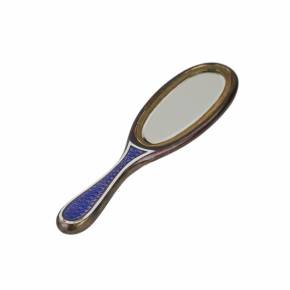
Miniature ladies` mirror with guilloche enamel in blue and white flowers. 20th century.
Bidding is completed
Silver pot
2805 USD
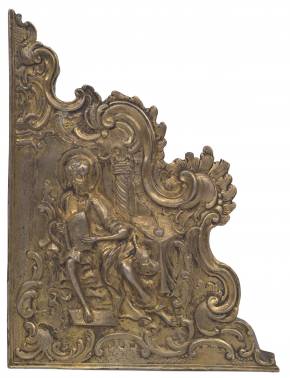
Guilded silver fragment of Bible silver case
1870 USD
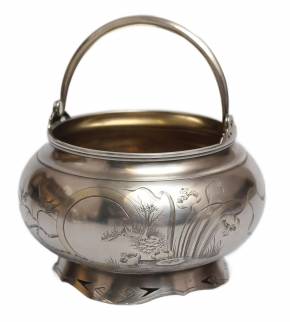
Silver sugar bowl
748 USD
Empire style porcelain vase
2606 USD
Porcelain dish with lid
468 USD
Faience dinner set
573 USD
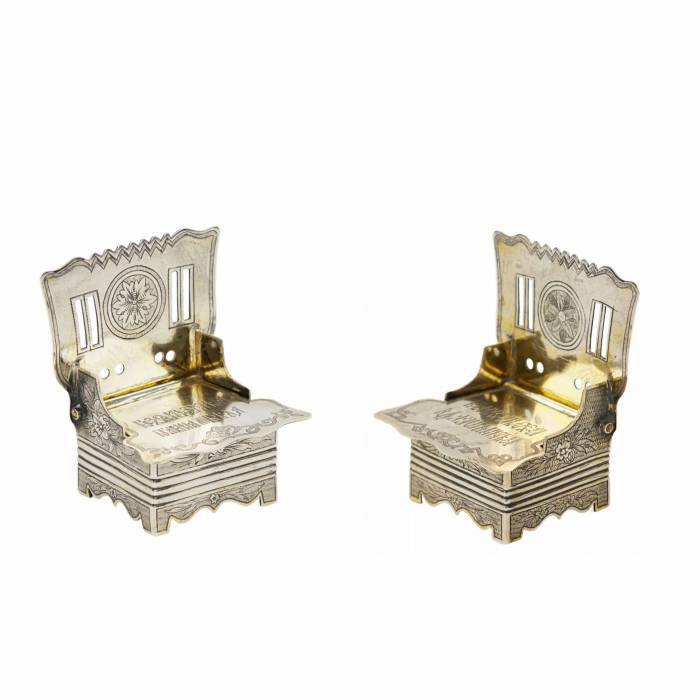
PAIR OF SILVER SALT CELLARS IN THE FORM OF THRONES RUSSIA, MOSCOW, 1869
A pair of silver salt cellars fashioned as miniature thrones represents a characteristic example of Russian decorative silver of the second half of the nineteenth century. The architectural composition is conceived as a reduced ceremonial furniture form in which the utilitarian function is combined with a decorative and symbolic concept.The bodies are set on stepped bases with shaped plinths decorated with engraved vegetal ornament. The salt cellars feature similar decorative engraving, executed with a burin, with slight variations between them. The sides are embellished with fine linear engraving of floral motifs and ornamental bands, forming a clear ornamental structure and emphasizing the architectural plasticity of the form.The backs are designed as decorative panels with openwork cut-outs and central circular medallions with vegetal ornament. On the reverse of each salt cellar is an engraved medallion depicting a rooster.The seat is made as a hinged lid on which the proverb “Without salt and bread, half the dinner is lost” is engraved within an ornamental frame. The interior surfaces of the salt cellars are gilded.Salt cellars in the form of miniature thrones became popular in Russian silver of the nineteenth century as decorative elements of festive table settings. They symbolized the place of honor at the table and reflected the traditions of Russian hospitality, while also serving as elegant ornaments of the ceremonial table.Marks: Moscow assay mark with the image of St. George slaying the dragon; date “1869”; silver standard “84”; maker’s mark “AR” – Alexei Romanov, a Moscow silversmith active in the second half of the nineteenth century.Dimensions: Height: 8 cm; width: 6 cm.Weight: Approx. 78 g each; total weight: 157 g.Condition: Good. Minor traces of age and use, without deformations.
Bidding is completed
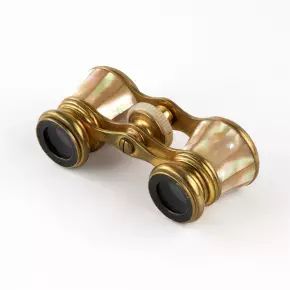
Opera glasses.
Bidding is completed
Porcelain figure `Pantera`
702 USD
Porcelain plates (3 pcs.) - Policeman, Selifan, Box
2338 USD
Painted porcelain vase
421 USD
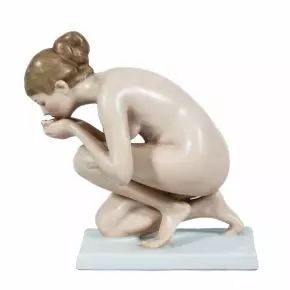
Girl drinking water, Rosenthal
Bidding is completed
Decorative ceramic plate
1017 USD
Porcelain plate with family photo
526 USD
Ceramic vase
526 USD
...
38
39
40
41
42
43
44
...
87
Subscribe to our newsletter
Never miss new auctions
You have subscribed to our newsletter.
Subscribe
Your latest views
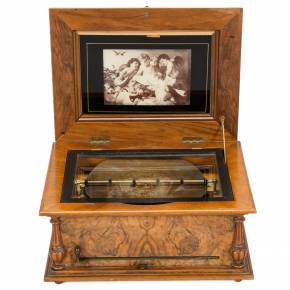
Music box, 19th century.
Bidding is completed
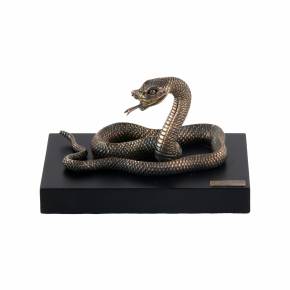
Silver plated figure of a snake. Tsar imperial collection.
Bidding is completed
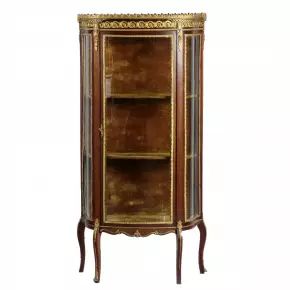
Louis XVI style showcase
Bidding is completed
Crystal fruit utensil
632 USD
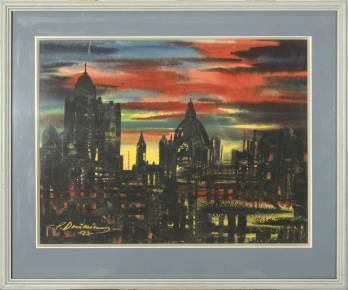
City at night
398 USD
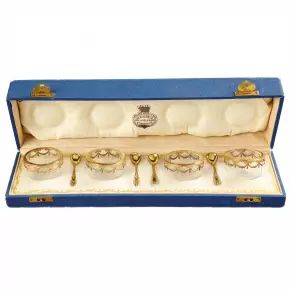
Salt cellars with spoons.
Bidding is completed
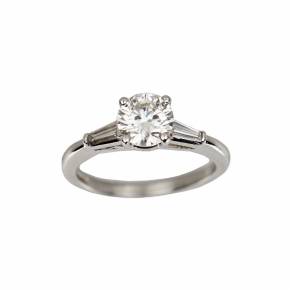
Platinum ring with diamonds
Bidding is completed
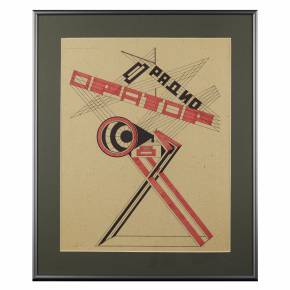
Drawing from the series Proletariat
Bidding is completed
Porcelain vase Landscape with house
526 USD
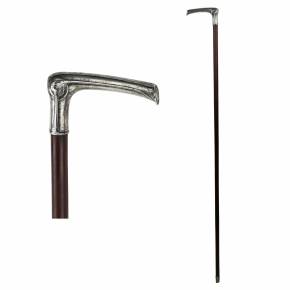
Walking cane with a silver handle.
Bidding is completed
Ceramic vase
398 USD
Still life with fruits
1052 USD
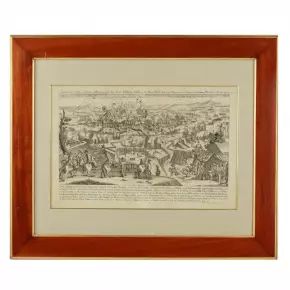
Engraving Siege of Ochakov 1788.
Bidding is completed
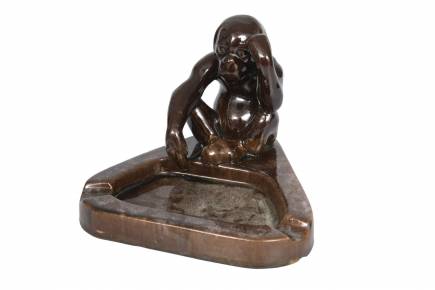
Ceramic ashtray Monkey
865 USD
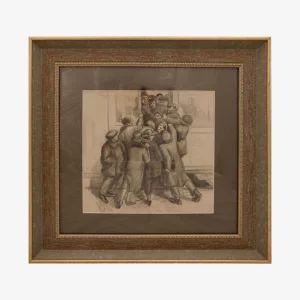
Drawing "Scene by the Tram" 1928
Bidding is completed
Girl drinking water, Rosenthal
Bidding is completed
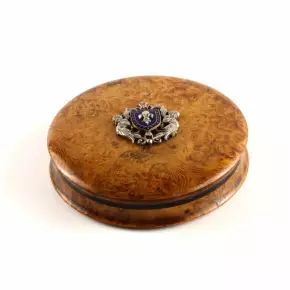
Round wooden box.
Bidding is completed
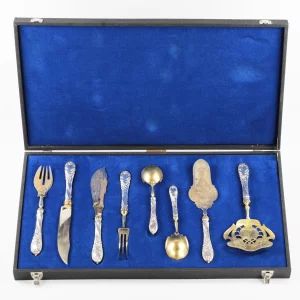
Silver serving set. 19-20th centuries. Germany.
Bidding is completed
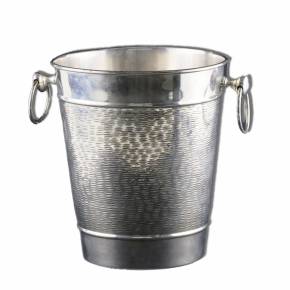
Wine cooler
Bidding is completed
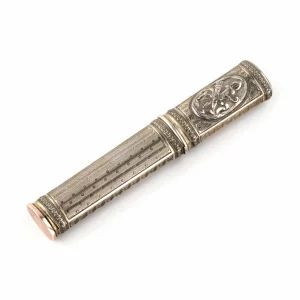
Louis XVI style silver pencil case.
Bidding is completed
Start hunt for treasures!
Individual
Legal entity
Enter a name (min 3 characters)
Enter a Last name (min 3 characters)
Enter the email
User already exist
Algeria (+213)
Andorra (+376)
Angola (+244)
Anguilla (+1264)
Antigua & Barbuda (+1268)
Argentina (+54)
Armenia (+374)
Aruba (+297)
Australia (+61)
Austria (+43)
Azerbaijan (+994)
Bahamas (+1242)
Bahrain (+973)
Bangladesh (+880)
Barbados (+1246)
Belarus (+375)
Belgium (+32)
Belize (+501)
Benin (+229)
Bermuda (+1441)
Bhutan (+975)
Bolivia (+591)
Bosnia Herzegovina (+387)
Botswana (+267)
Brazil (+55)
Brunei (+673)
Bulgaria (+359)
Burkina Faso (+226)
Burundi (+257)
Cambodia (+855)
Cameroon (+237)
Canada (+1)
Cape Verde Islands (+238)
Cayman Islands (+1345)
Central African Republic (+236)
Chile (+56)
China (+86)
Colombia (+57)
Comoros (+269)
Congo (+242)
Cook Islands (+682)
Costa Rica (+506)
Croatia (+385)
Cuba (+53)
Cyprus North (+90392)
Cyprus South (+357)
Czech Republic (+42)
Denmark (+45)
Djibouti (+253)
Dominica (+1809)
Dominican Republic (+1809)
Ecuador (+593)
Egypt (+20)
El Salvador (+503)
Equatorial Guinea (+240)
Eritrea (+291)
Estonia (+372)
Ethiopia (+251)
Falkland Islands (+500)
Faroe Islands (+298)
Fiji (+679)
Finland (+358)
France (+33)
French Guiana (+594)
French Polynesia (+689)
Gabon (+241)
Gambia (+220)
Georgia (+7880)
Germany (+49)
Ghana (+233)
Gibraltar (+350)
Greece (+30)
Greenland (+299)
Grenada (+1473)
Guadeloupe (+590)
Guam (+671)
Guatemala (+502)
Guinea (+224)
Guinea - Bissau (+245)
Guyana (+592)
Haiti (+509)
Honduras (+504)
Hong Kong (+852)
Hungary (+36)
Iceland (+354)
India (+91)
Indonesia (+62)
Iran (+98)
Iraq (+964)
Ireland (+353)
Israel (+972)
Italy (+39)
Jamaica (+1876)
Japan (+81)
Jordan (+962)
Kazakhstan (+7)
Kenya (+254)
Kiribati (+686)
Korea North (+850)
Korea South (+82)
Kuwait (+965)
Kyrgyzstan (+996)
Laos (+856)
Latvia (+371)
Lebanon (+961)
Lesotho (+266)
Liberia (+231)
Libya (+218)
Liechtenstein (+417)
Lithuania (+370)
Luxembourg (+352)
Macao (+853)
Macedonia (+389)
Madagascar (+261)
Malawi (+265)
Malaysia (+60)
Maldives (+960)
Mali (+223)
Malta (+356)
Marshall Islands (+692)
Martinique (+596)
Mauritania (+222)
Mayotte (+269)
Mexico (+52)
Micronesia (+691)
Moldova (+373)
Monaco (+377)
Mongolia (+976)
Montserrat (+1664)
Morocco (+212)
Mozambique (+258)
Myanmar (+95)
Namibia (+264)
Nauru (+674)
Nepal (+977)
Netherlands (+31)
New Caledonia (+687)
New Zealand (+64)
Nicaragua (+505)
Niger (+227)
Nigeria (+234)
Niue (+683)
Norfolk Islands (+672)
Northern Marianas (+670)
Norway (+47)
Oman (+968)
Palau (+680)
Panama (+507)
Papua New Guinea (+675)
Paraguay (+595)
Peru (+51)
Philippines (+63)
Poland (+48)
Portugal (+351)
Puerto Rico (+1787)
Qatar (+974)
Reunion (+262)
Romania (+40)
Russia (+7)
Rwanda (+250)
San Marino (+378)
Sao Tome & Principe (+239)
Saudi Arabia (+966)
Senegal (+221)
Serbia (+381)
Seychelles (+248)
Sierra Leone (+232)
Singapore (+65)
Slovak Republic (+421)
Slovenia (+386)
Solomon Islands (+677)
Somalia (+252)
South Africa (+27)
Spain (+34)
Sri Lanka (+94)
St. Helena (+290)
St. Kitts (+1869)
St. Lucia (+1758)
Sudan (+249)
Suriname (+597)
Swaziland (+268)
Sweden (+46)
Switzerland (+41)
Syria (+963)
Taiwan (+886)
Tajikstan (+7)
Thailand (+66)
Togo (+228)
Tonga (+676)
Trinidad & Tobago (+1868)
Tunisia (+216)
Turkey (+90)
Turkmenistan (+7)
Turkmenistan (+993)
Turks & Caicos Islands (+1649)
Tuvalu (+688)
Uganda (+256)
UK (+44)
Ukraine (+380)
United Arab Emirates (+971)
Uruguay (+598)
USA (+1)
Uzbekistan (+7)
Vanuatu (+678)
Vatican City (+379)
Venezuela (+58)
Vietnam (+84)
Virgin Islands - British (+1284)
Virgin Islands - US (+1340)
Wallis & Futuna (+681)
Yemen (North)(+969)
Yemen (South)(+967)
Zambia (+260)
Zimbabwe (+263)
Enter the phone number
Minimum password length must be at least 6 characters
Enter a name of your company (min 3 characters)
Enter registration number (min 3 characters)
Enter the email
User already exist
Enter the phone number
Minimum password length must be at least 6 characters
I am a buyer
I am a seller
or log in with
Sign up for our weekly newsletter
I reviewed and agree
user agreement
,
«Privacy Policy»
i agree with Antiqon Terms and conditions
Register
Already have an account?
Log In
Enter your email and password for authorization
Enter the email
The number of attempts has been used uo, repeat after 2 hours
Minimum password length must be at least 6 characters
Invalid email or password
or log in with
Login
Forgot password?
Don't have an account?
register