




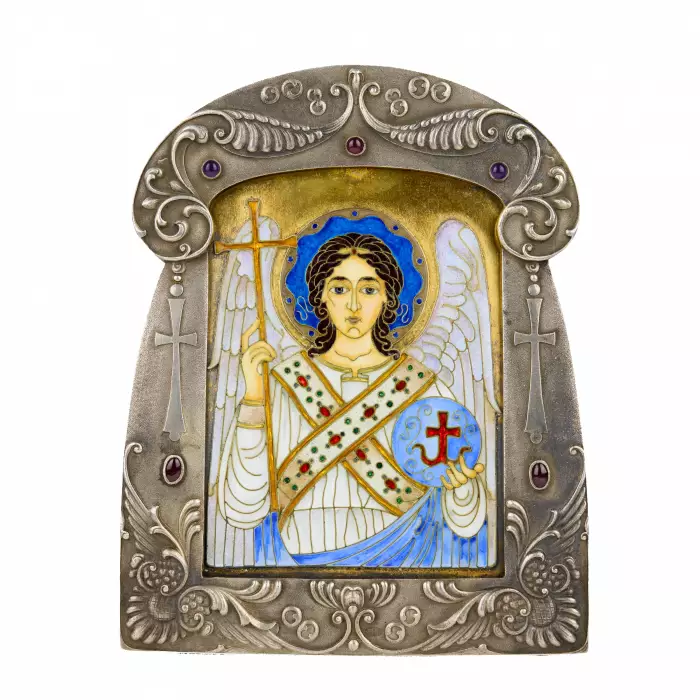
ICON OF THE GUARDIAN ANGEL IN A SILVER OKLAD WITH CLOISONNÉ ENAMEL IN THE ART NOUVEAU STYLE. RUSSIA, MOSCOW, 20TH CENTURY
Antiqon consultant will contact you within one business day after receiving your request.
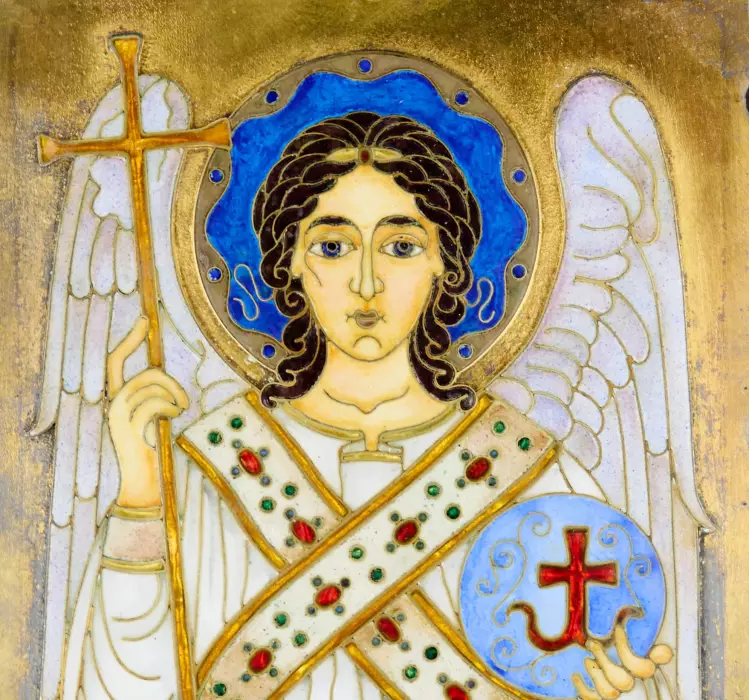
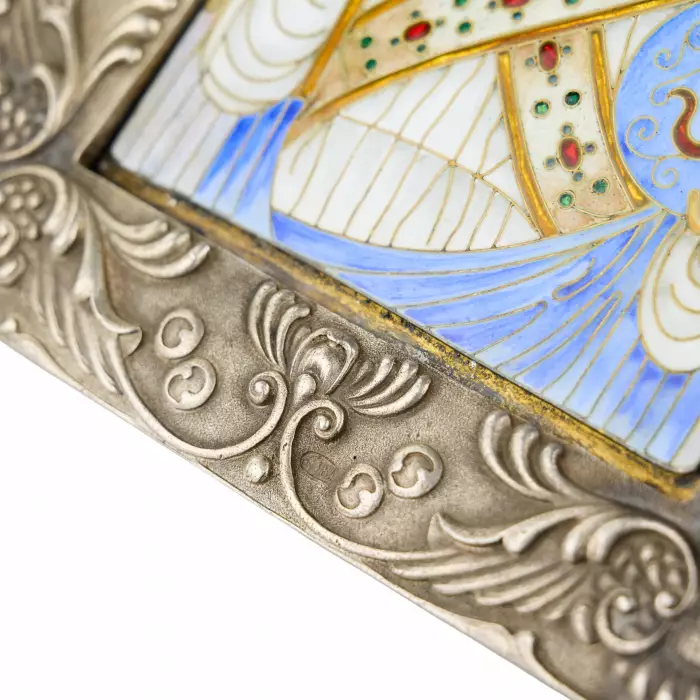
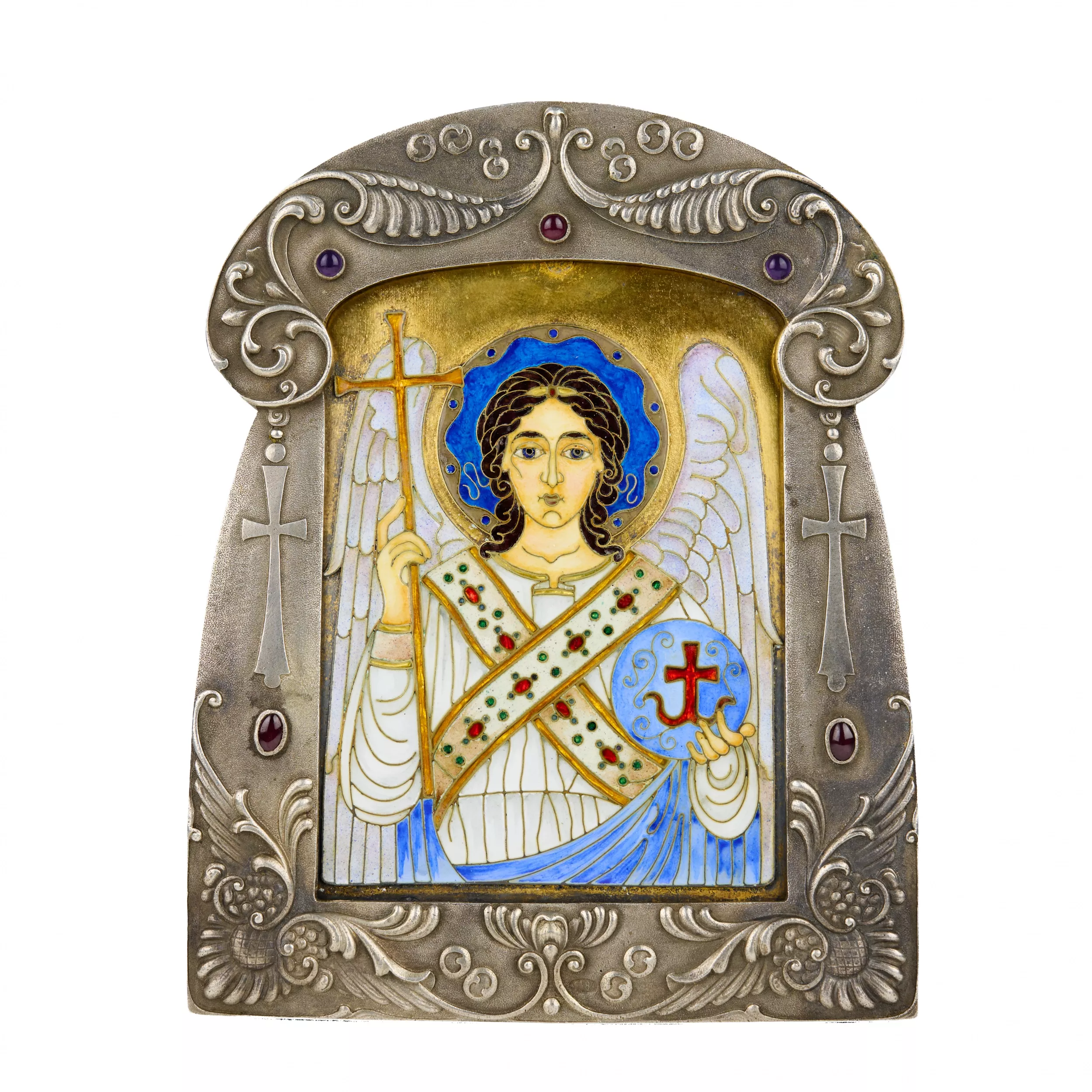
An elegant icon of the Guardian Angel in a silver oklad adorned with polychrome cloisonné enamel, executed in the tradition of 20th-century Moscow silverwork. The piece combines Orthodox iconography with richly coloured enamel decoration characteristic of Russian jewellery and silverwork in the Art Nouveau style, incorporating elements of the Russian Revival.
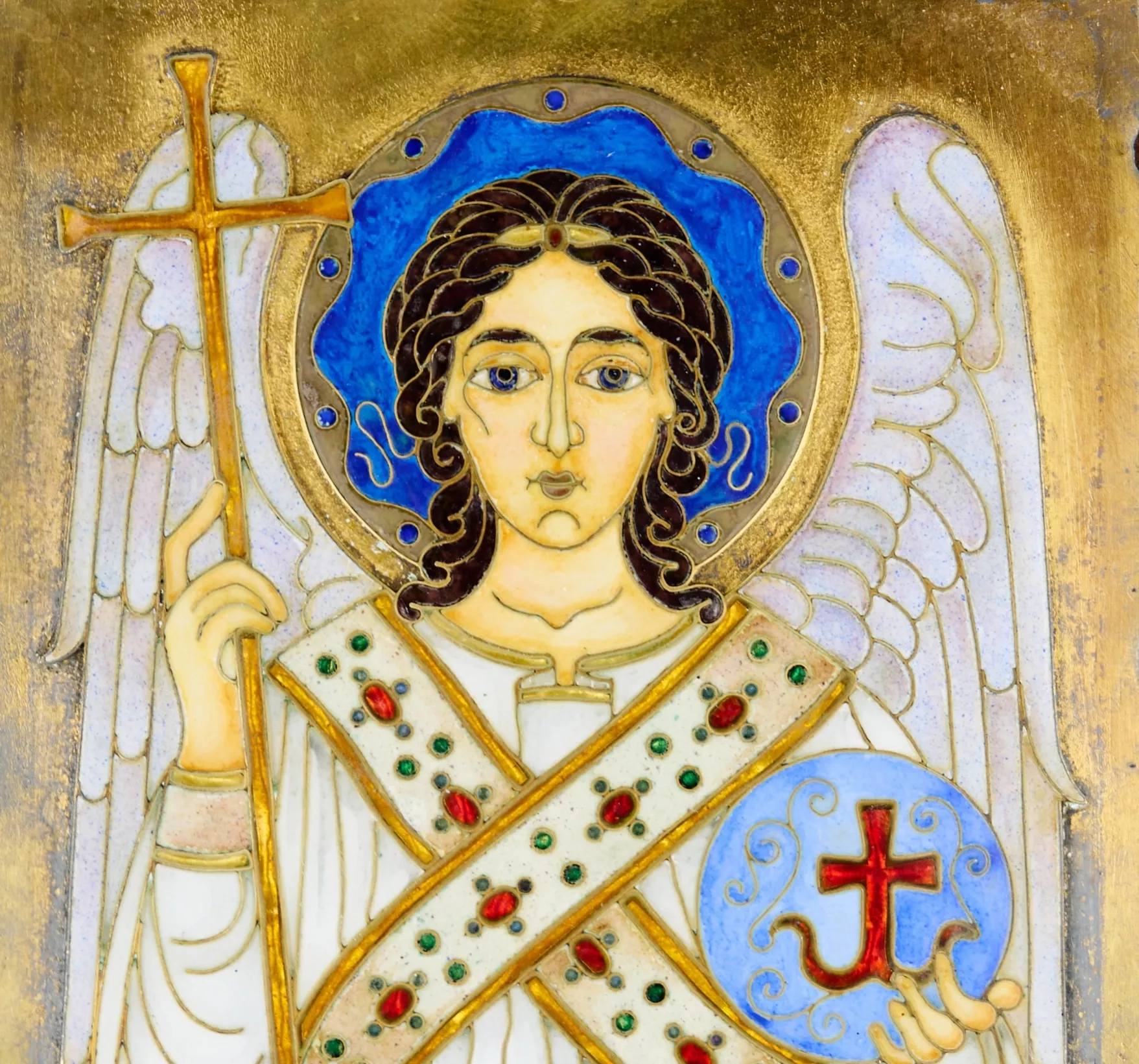
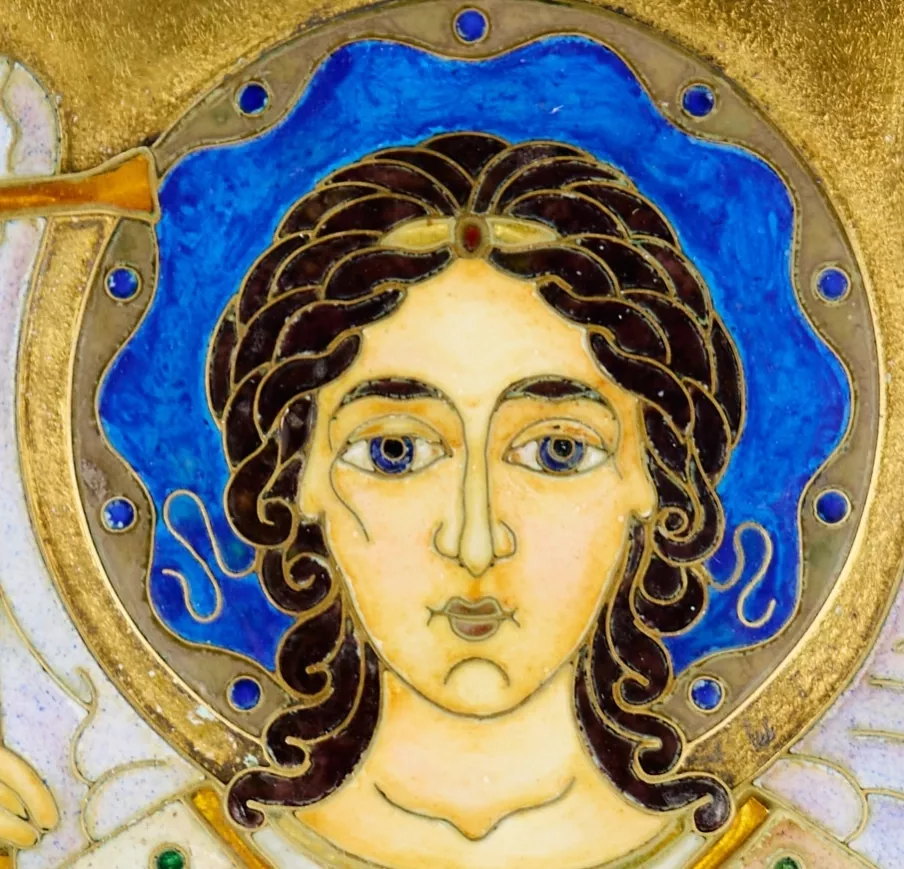
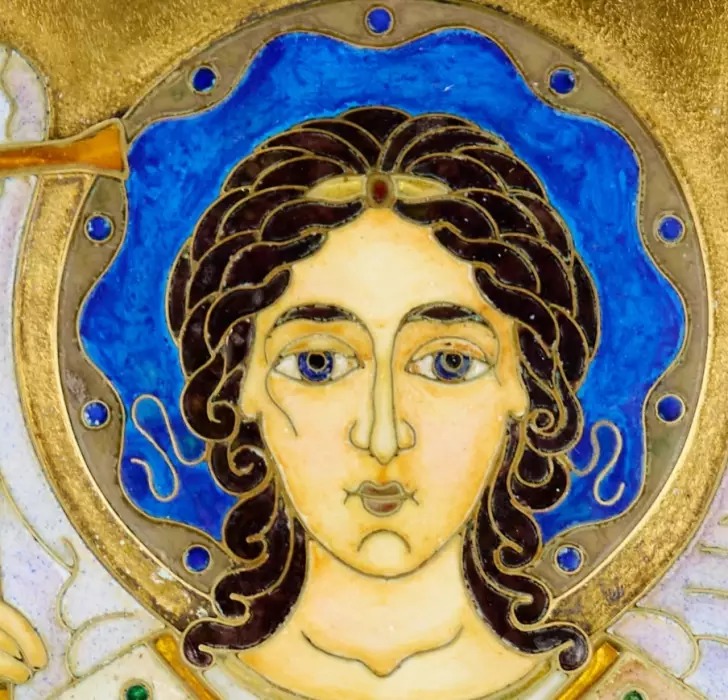
The Guardian Angel is depicted frontally, holding a cross in his right hand and an orb in his left. The figure is dressed in richly ornamented robes decorated with cloisonné enamel in shades of white, blue, red, green and gold. The expressive face, finely delineated details and meticulously executed ornamentation enhance the decorative appeal of the composition.
The silver oklad is designed in the Russian Art Nouveau style with elements of the Russian Revival. The architecturally structured frame is embellished with raised foliate ornamentation and inset coloured stones, providing striking decorative accents. The combination of silver mounting, polychrome enamel and traditional iconography reflects the Moscow school of silversmithing`s characteristic pursuit of artistic harmony between form, material and ornament.
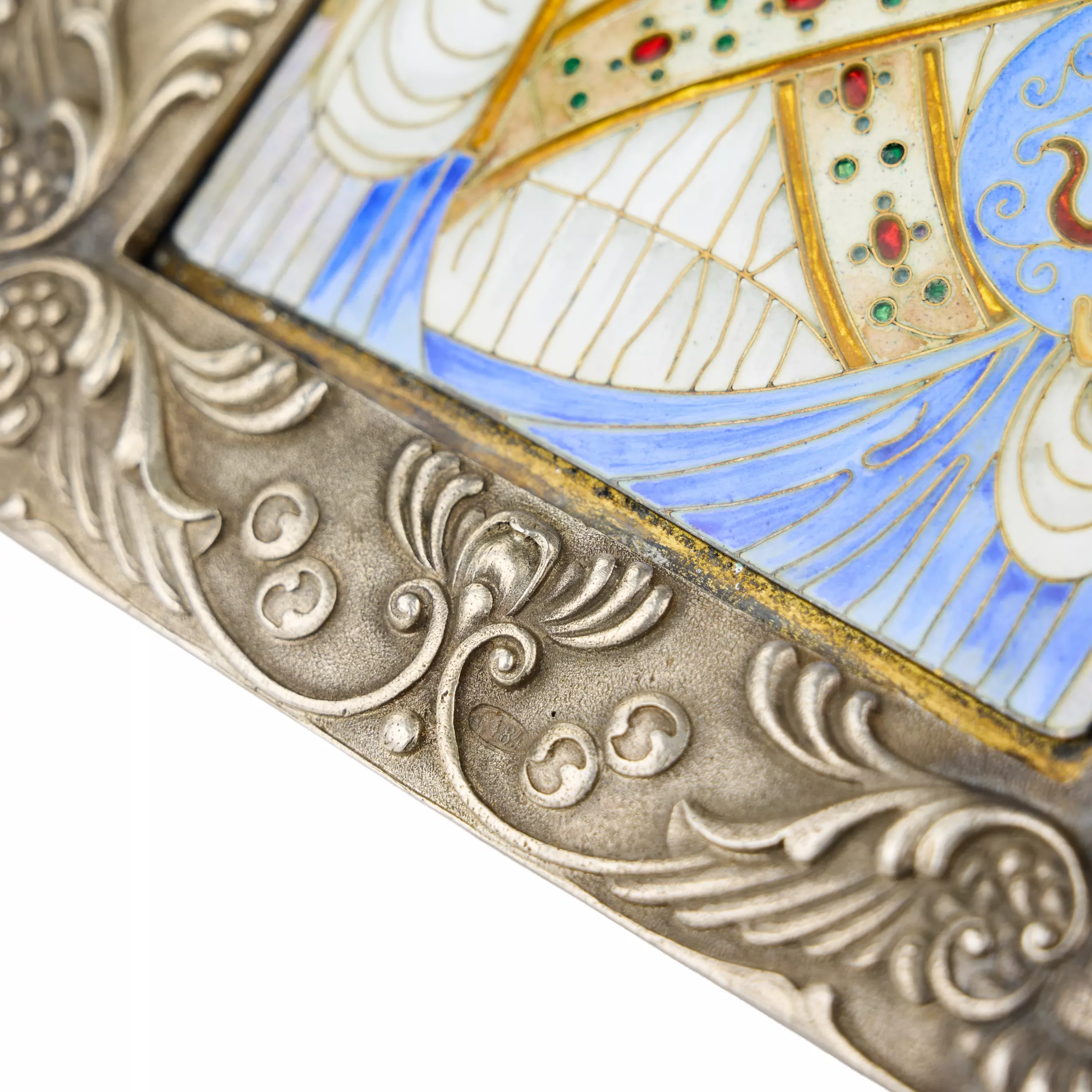
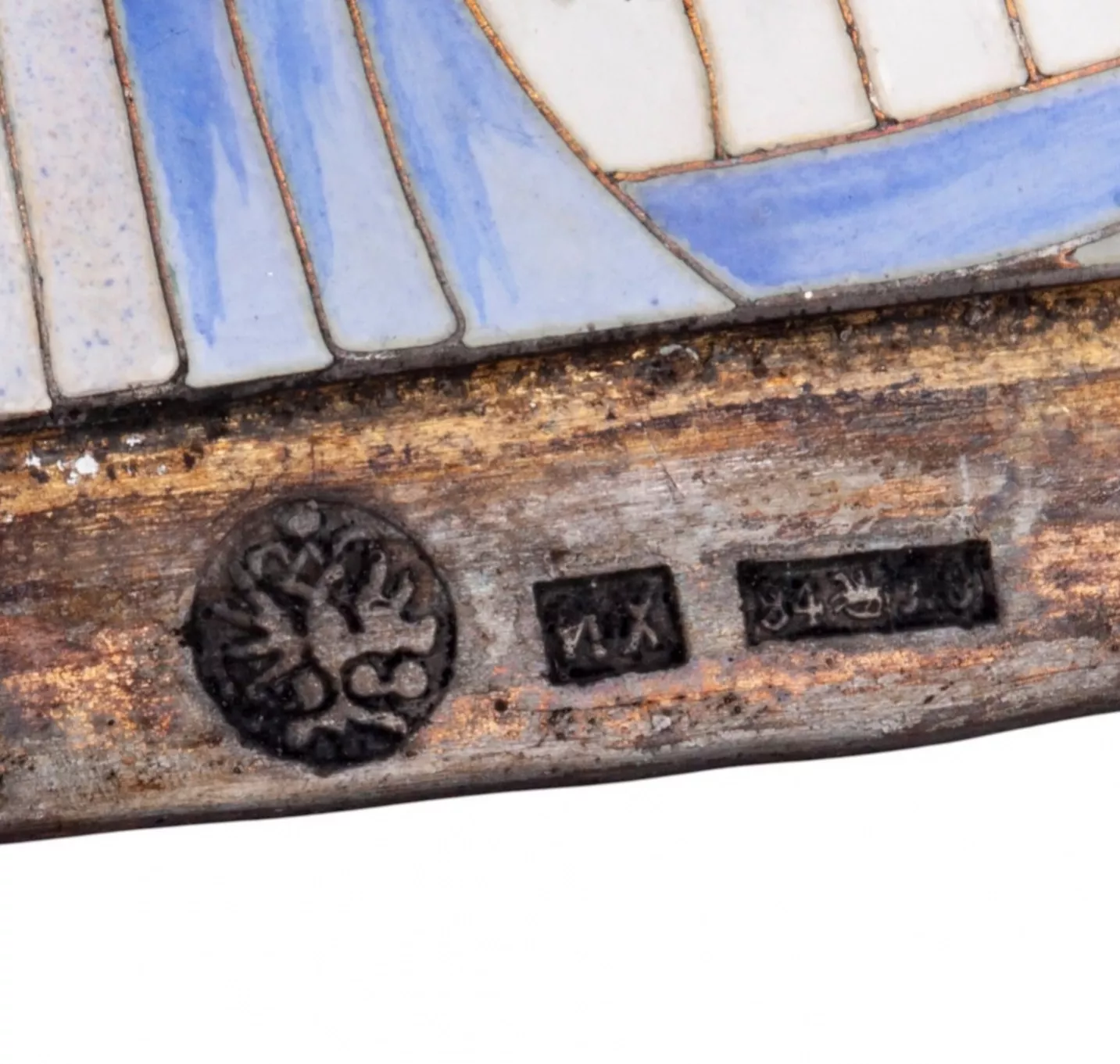
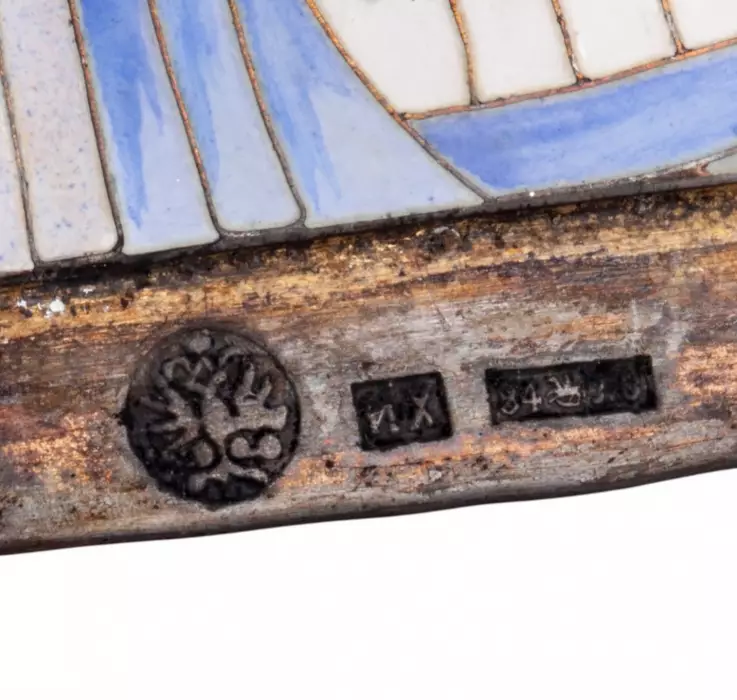
Hallmarks: The icon bears the maker`s mark «И.Х.» accompanied by a double-headed eagle, the emblem denoting the status of Ivan Petrovich Khlebnikov`s firm as Purveyor to the Imperial Court; a Moscow assay mark bearing the silver standard «84» and depicting Saint George the Victorious on horseback, facing left; and the initials «Л.О.». The silver oklad bears a hallmark of the Moscow Assay Office depicting a woman`s head wearing a kokoshnik, facing right, together with the silver standard «84» within an oval cartouche.
Dimensions: Height 12.8 cm, width 10 cm.
Weight: 288 g.
Condition: Good. The silver oklad and enamel decoration are well preserved. Minor signs of age, natural patina and traces of earlier restoration are present. No visible losses to the enamel or significant damage.
The image of the Guardian Angel occupies a significant place in Orthodox iconography, symbolising heavenly intercession, spiritual guidance and the protection of individuals throughout their earthly lives. In Russian ecclesiastical art, representations of the Guardian Angel became widespread in iconostases, domestic icons and small personal devotional images. Miniature icons in precious-metal settings were particularly valued for private worship and were often presented as commemorative family gifts.
At the turn of the 19th and 20th centuries, Russian jewellery and silversmithing experienced a period of remarkable artistic development, marked by a renewed interest in the nation`s historical heritage and the emergence of new decorative movements. Russian Art Nouveau, while retaining an affinity for medieval ornament and traditional craftsmanship, emphasised expressive forms, rhythmic composition and chromatic harmony. These characteristics found expression in the jewellery, ecclesiastical objects and silver icon covers produced by Moscow workshops.
One of the most significant achievements of Russian decorative arts during this period was the development of artistic enamelling. Moscow jewellery firms, including those of Pavel Ovchinnikov, Ivan Khlebnikov and Carl Fabergé, refined the techniques of cloisonné, champlevé and plique-à-jour enamel, employing them to create elaborate polychrome compositions. Works from these workshops preserved in museum collections, including the Moscow Kremlin Museums, demonstrate the diversity of artistic approaches and the exceptional craftsmanship associated with Russian enamelling.
Cloisonné enamel, distinguished by its clearly defined metal partitions and richly saturated colours, enabled craftsmen to create decorative surfaces reminiscent of precious mosaics. In Orthodox icons, the combination of silver, relief ornamentation and coloured enamel emphasised the sacred significance of the image while transforming the oklad into an independent work of jewellery craftsmanship.
Small icons in silver and enamel settings occupy a distinctive position within the artistic heritage of Russian Art Nouveau, combining traditional religious symbolism with the aesthetic innovations of the early 20th century. Such works are of particular interest to collectors as examples of the Moscow school of silverwork, Russian ecclesiastical art and the national decorative tradition.
The condition report is provided for informational purposes only.
It is not comprehensive and may not reflect all defects, restorations, alterations, or adaptations, as Antiqon does not perform professional conservation-level assessments. The information is based on a qualified, yet subjective, evaluation by our specialists.Before purchasing, we recommend consultation with an independent expert.Please also consult our Terms and conditions and Glossary A-Z, which contain important information on lot characteristics and sale conditions.