






A LARGE RUSSIAN SILVER AND CLOISONNÉ ENAMEL KOVSH. VASILY AGAFONOV. MOSCOW, RUSSIA, EARLY 20TH CENTURY
Antiqon consultant will contact you within one business day after receiving your request.
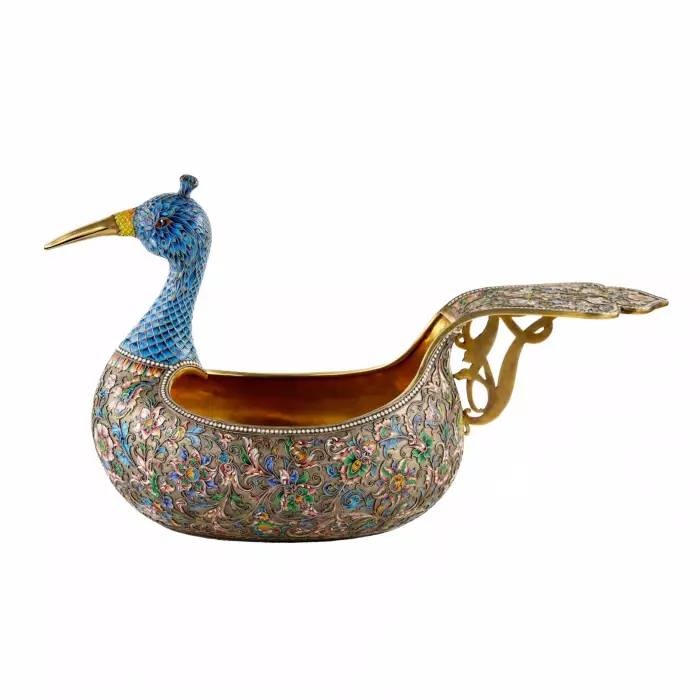
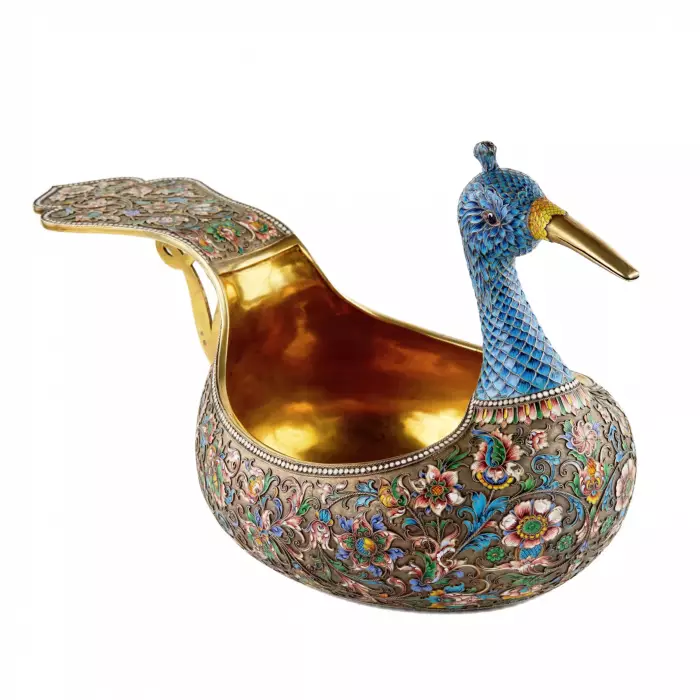
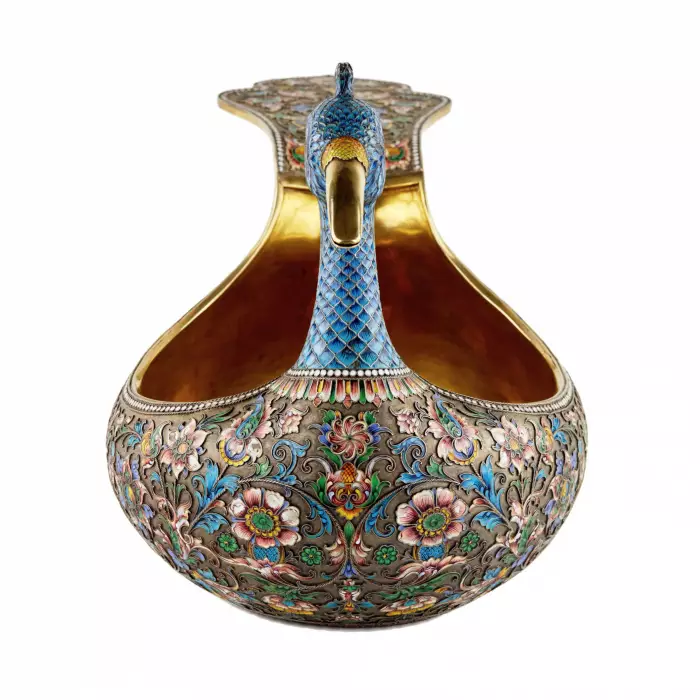
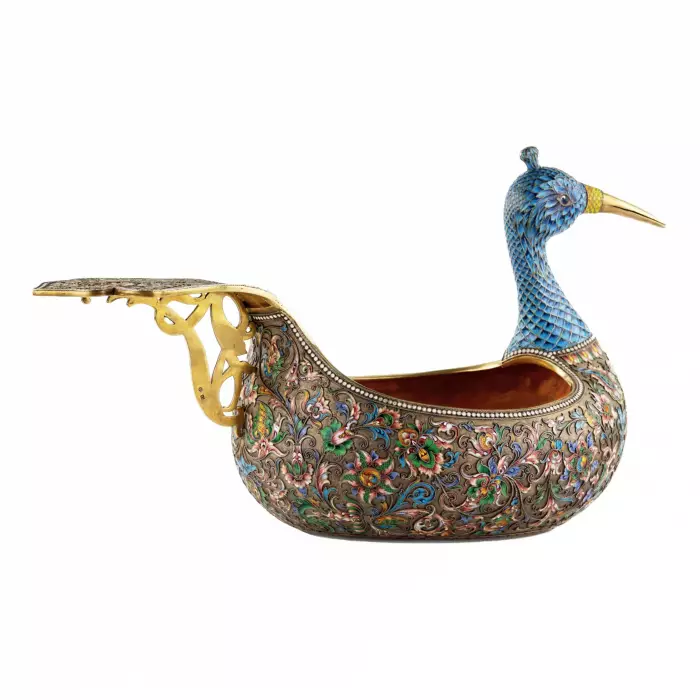
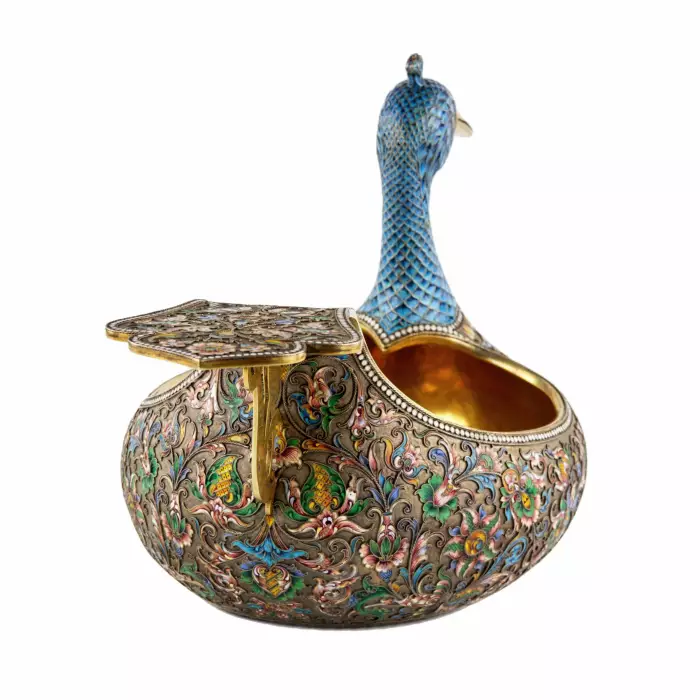
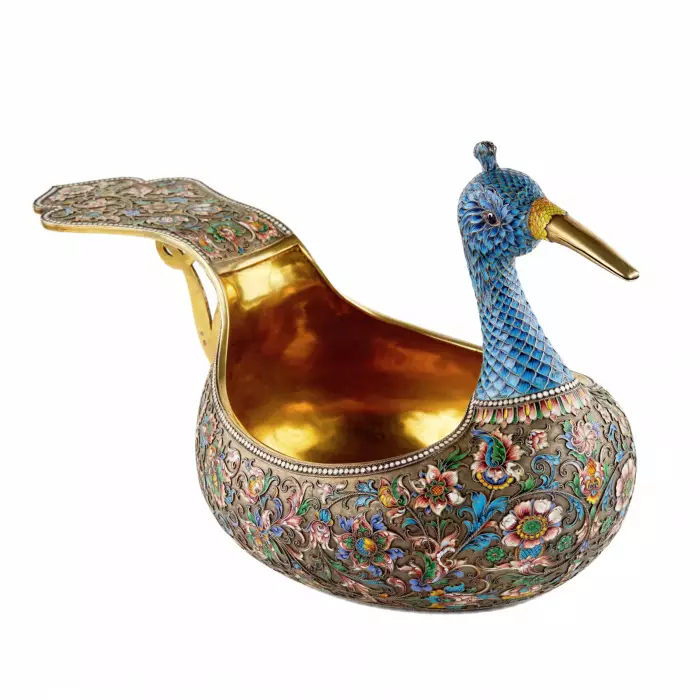
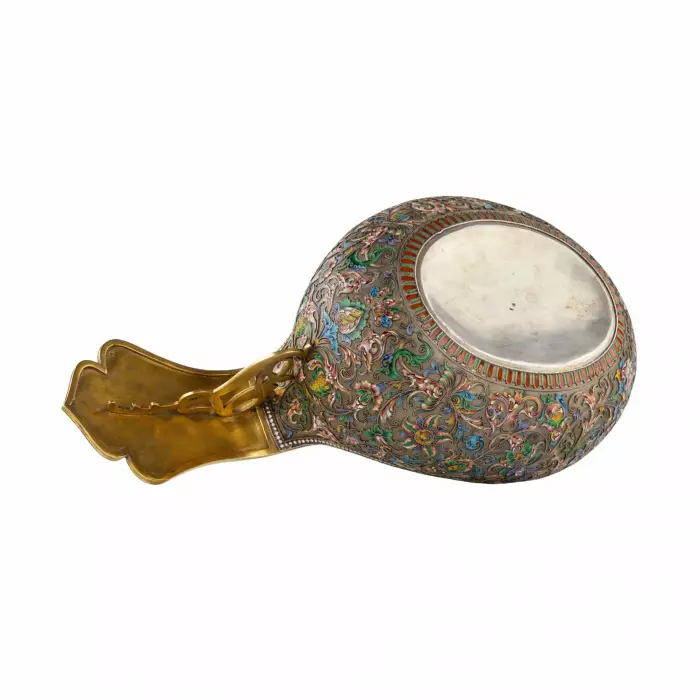
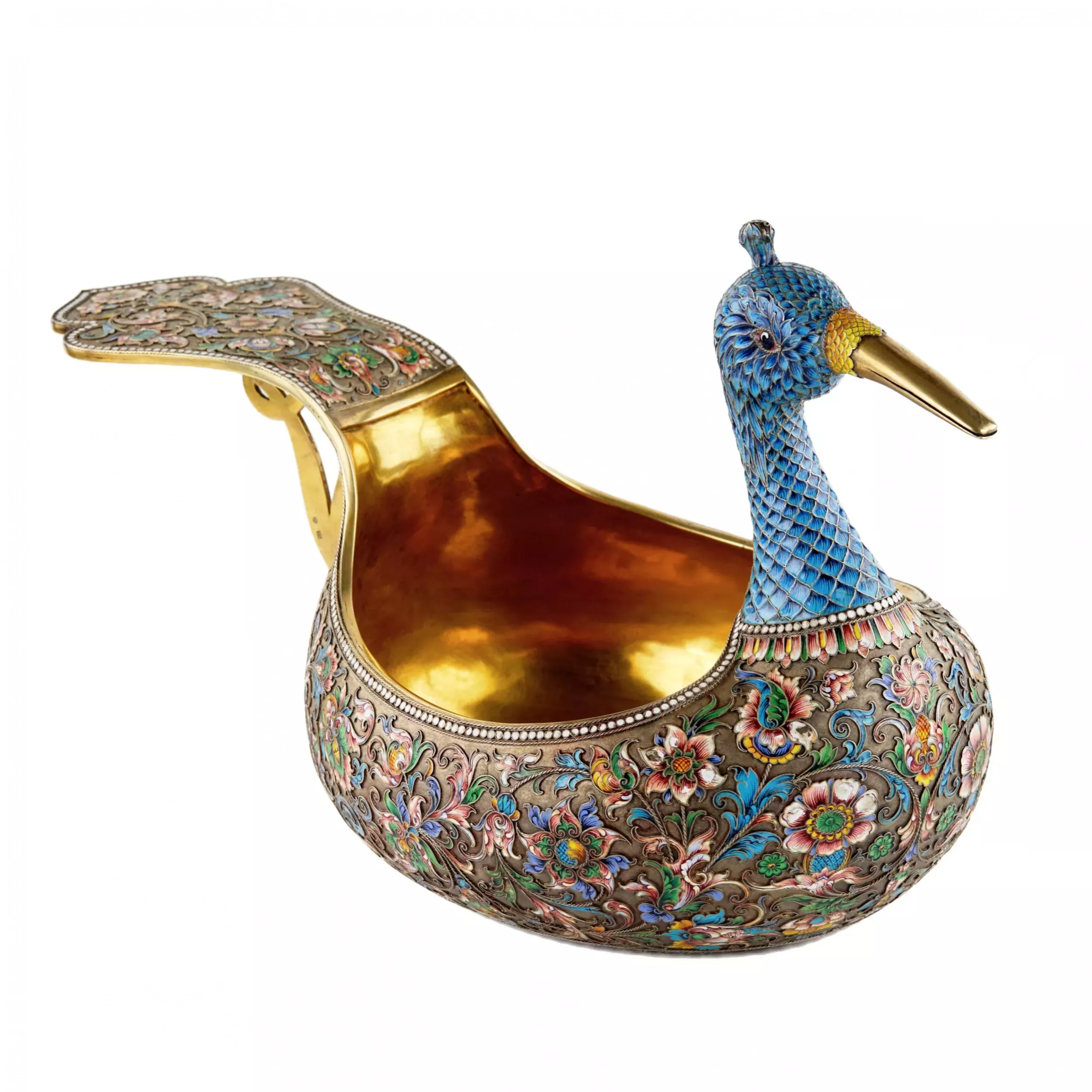
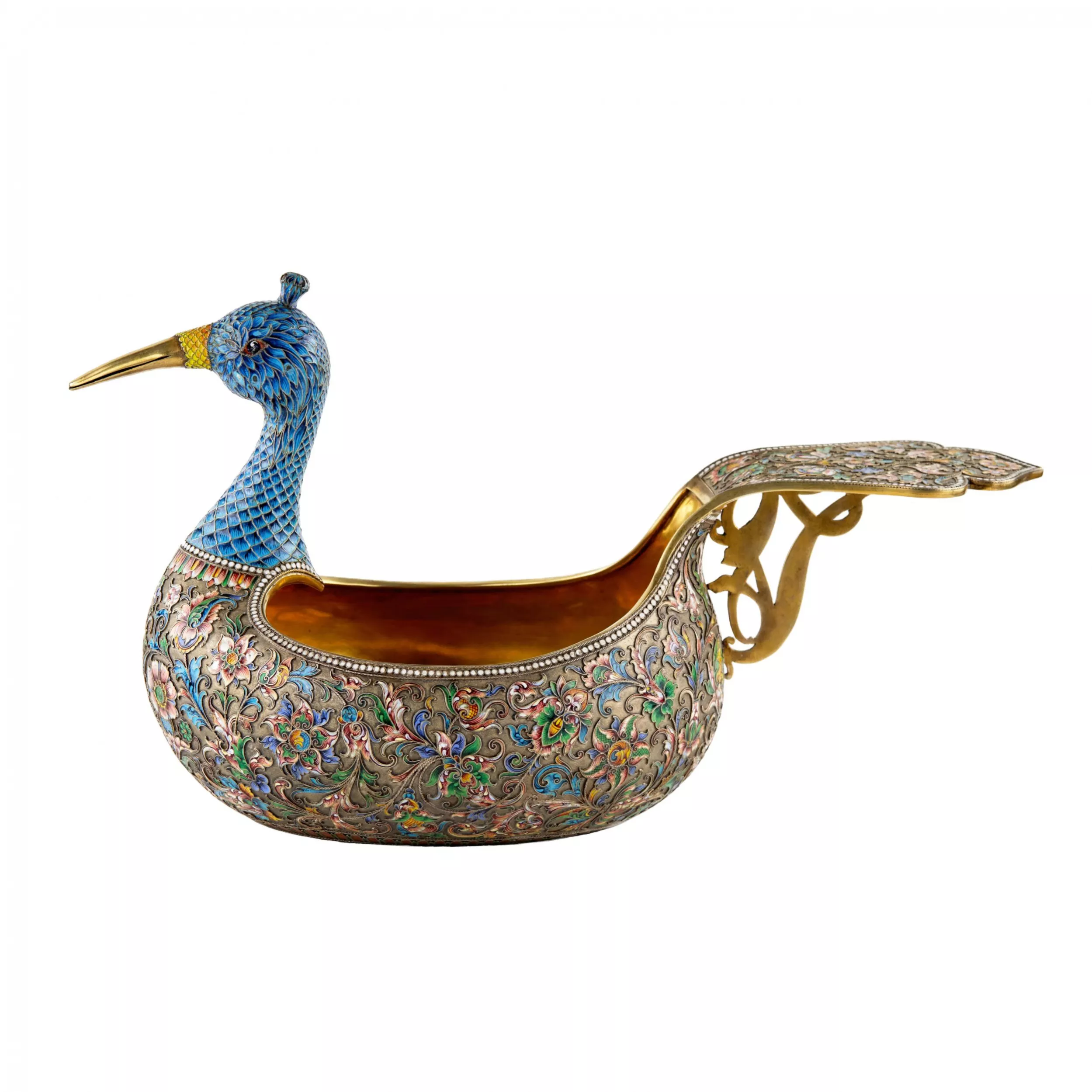
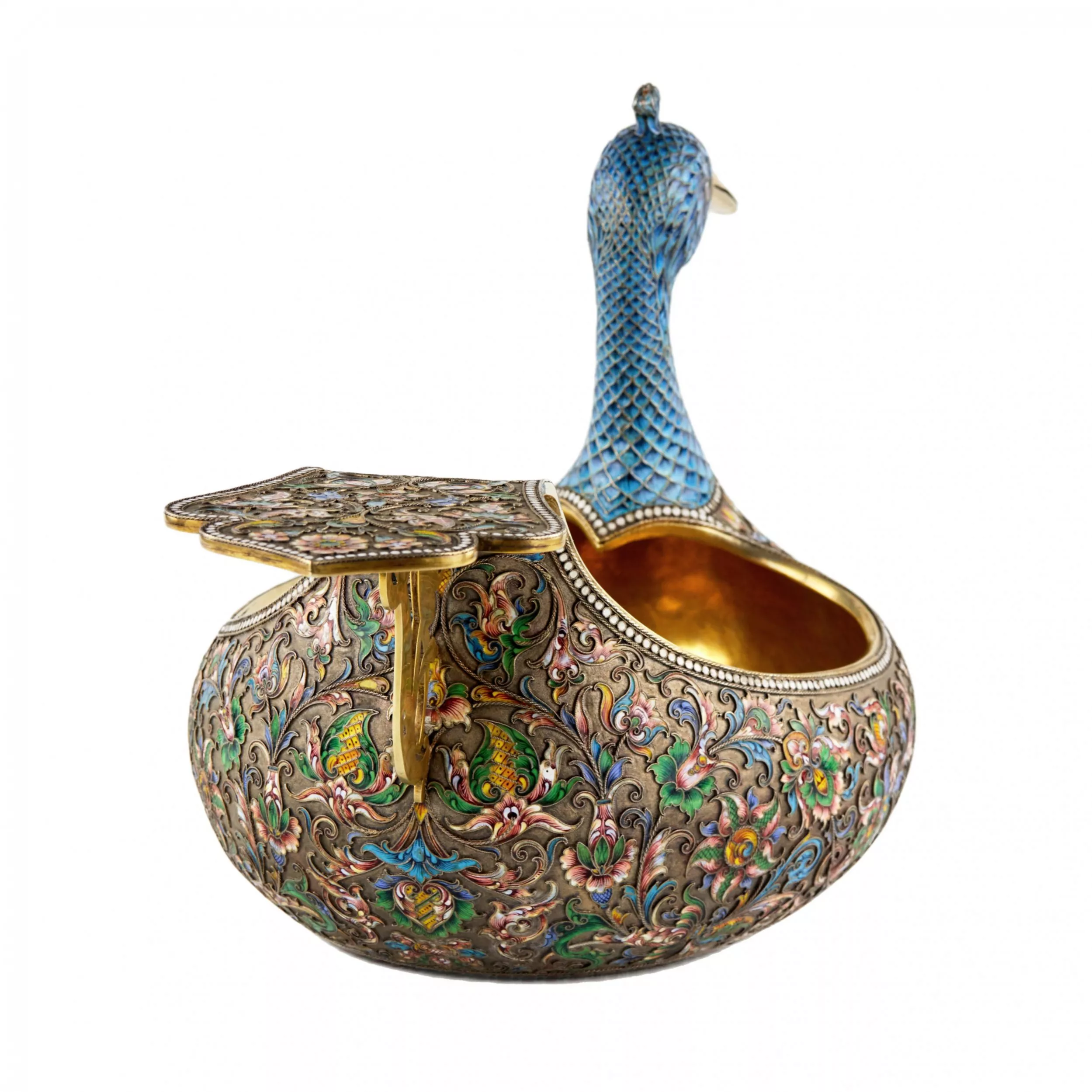
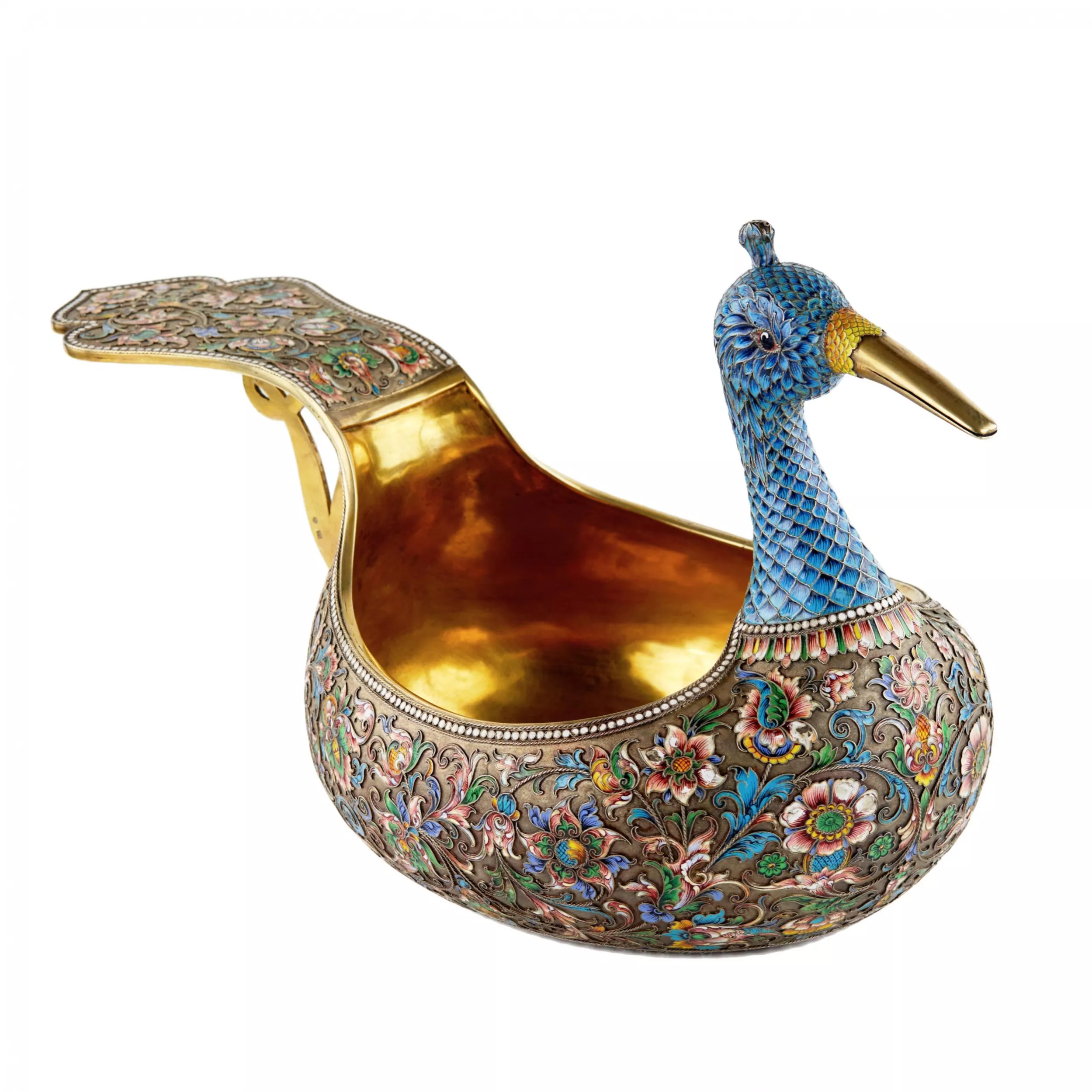
An outstanding example of early 20th-century Russian decorative arts, this monumental silver kovsh by the Moscow silversmith Vasily Agafonov is executed in the Neo-Russian style, incorporating polychrome cloisonné enamel and gilding.
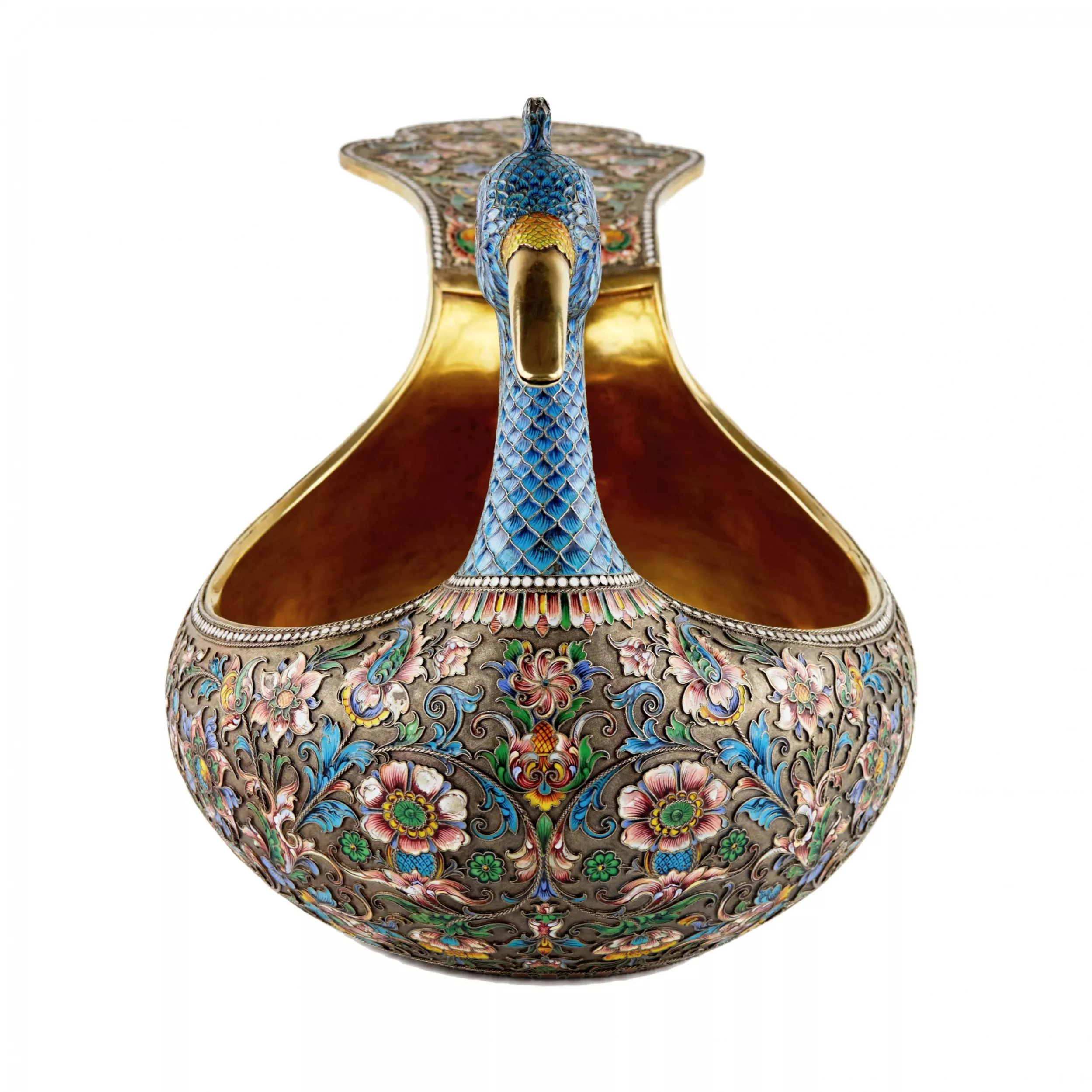
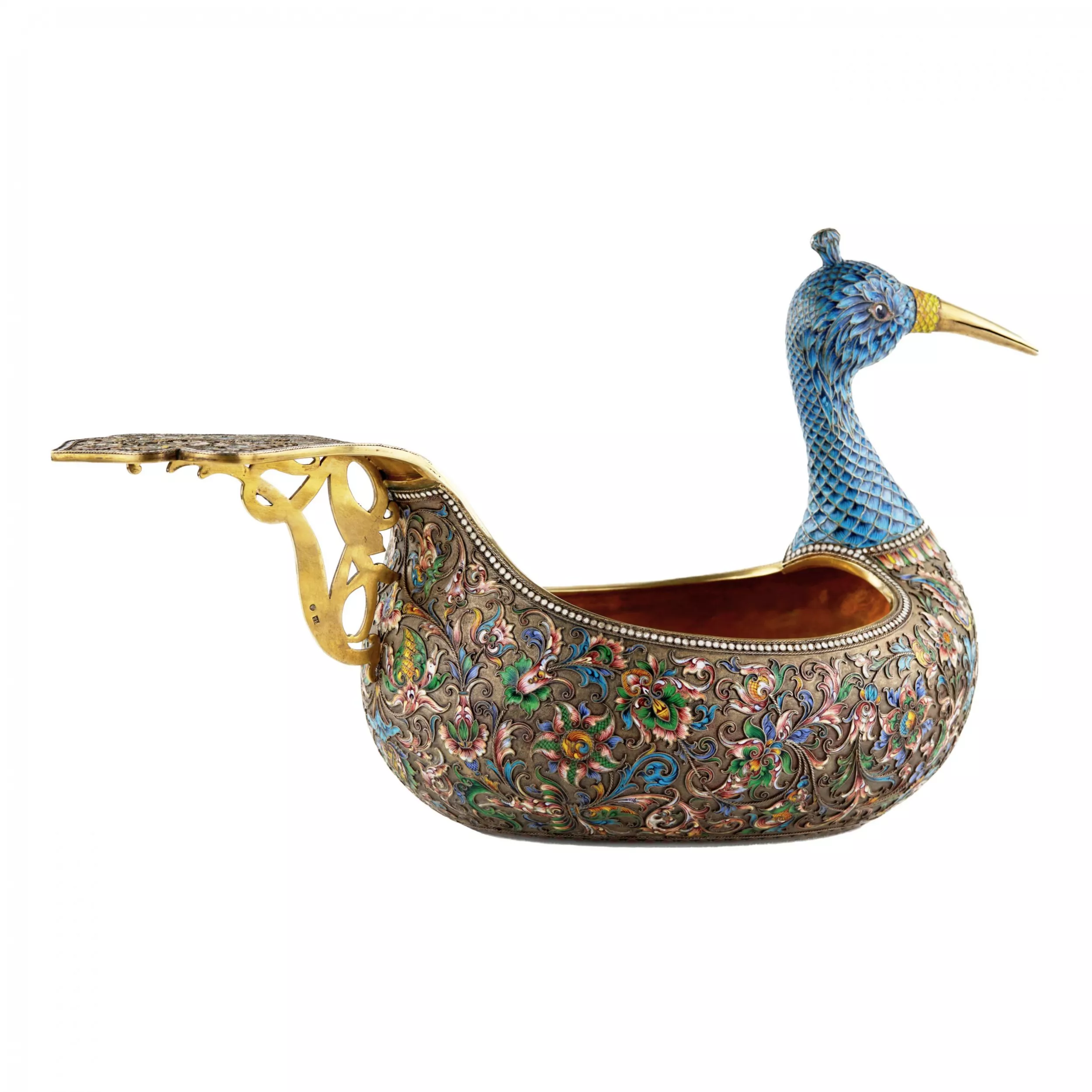
The body is conceived in the form of a stylised boat, its prominent prow terminating in a sculptural representation of a wading bird, identified as a snipe. The elongated beak and distinctive contours of the bird’s head lend a sense of movement to the composition, emphasising the originality of its artistic conception. This ornithomorphic interpretation of a traditional Russian vessel enhances its decorative appeal and ceremonial character.
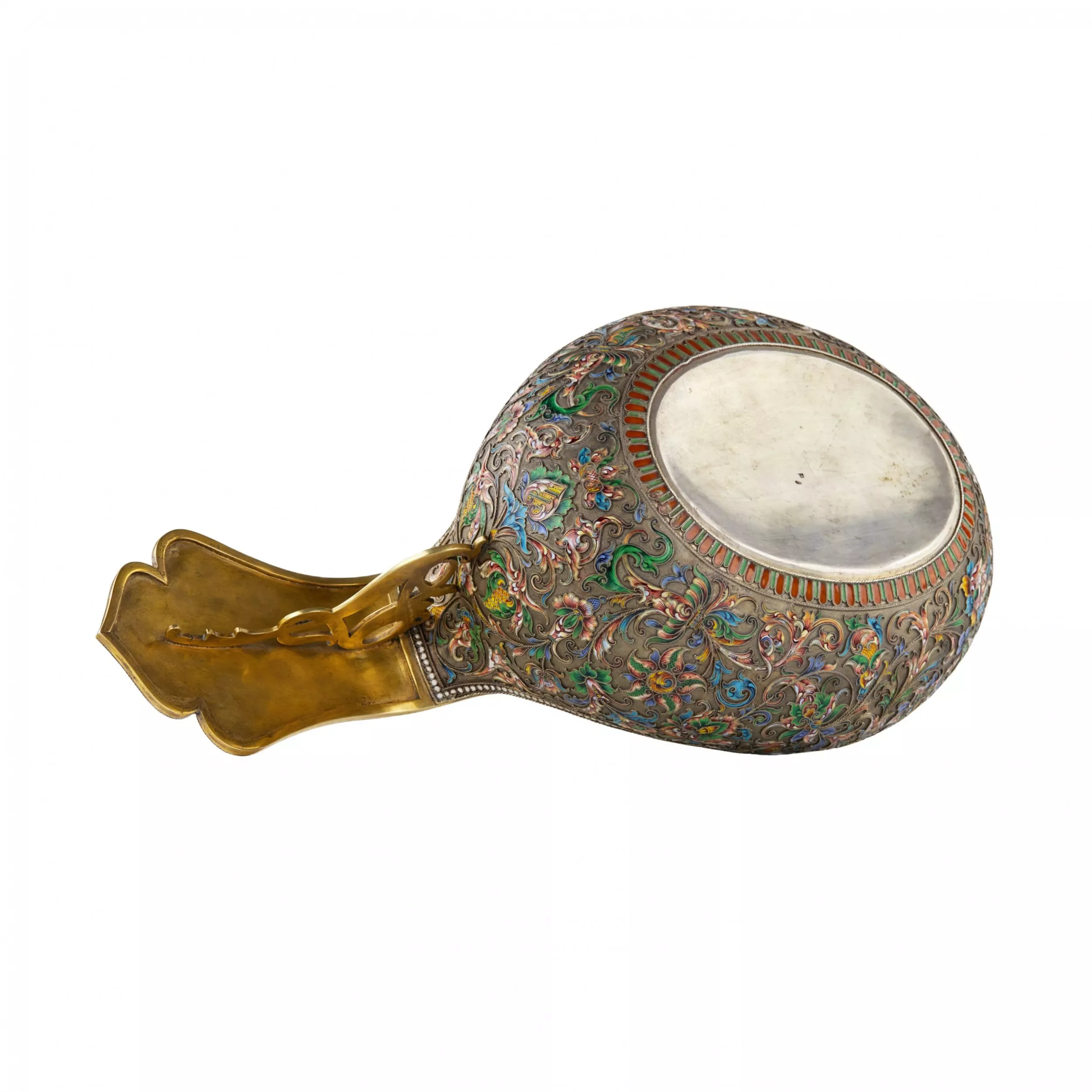
The exterior is almost entirely covered with an elaborate polychrome cloisonné enamel composition. Against a richly coloured ground unfolds an intricate foliate design comprising rose-pink and crimson flower buds, turquoise and emerald-green acanthus scrolls, stylised foliage and geometric motifs. Fine silver cloisons precisely delineate the ornament, creating a striking interplay between colour and metal.
Particular attention has been devoted to the bird’s head, decorated with translucent blue plique-à-jour-style enamel over an openwork lattice. The base of the beak is highlighted with golden-yellow enamel, while the elongated beak itself is highly polished, producing an expressive contrast of textures.
The interior of the kovsh is richly fire-gilt. The upper rim is bordered by a decorative beaded band, accentuating the vessel’s flowing contours. The tall, shaped handle, modelled as the bird’s tail, is supported by an openwork strut ornamented with motifs characteristic of the Neo-Russian style.
Its impressive dimensions, carefully articulated sculptural form, richness of enamel colouring and exceptional quality of workmanship distinguish this kovsh as a representative example of Moscow silverwork from the late Historicist period.
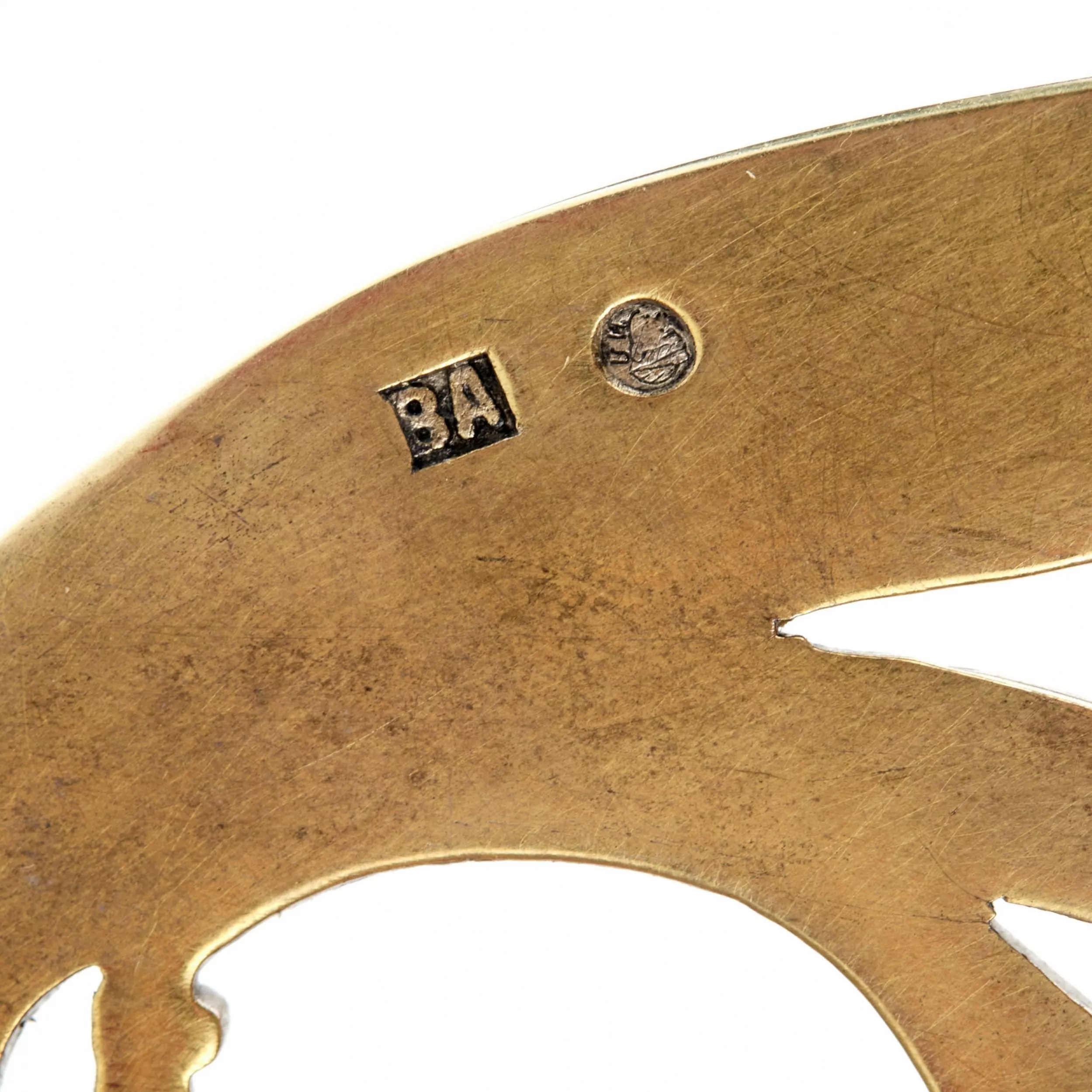
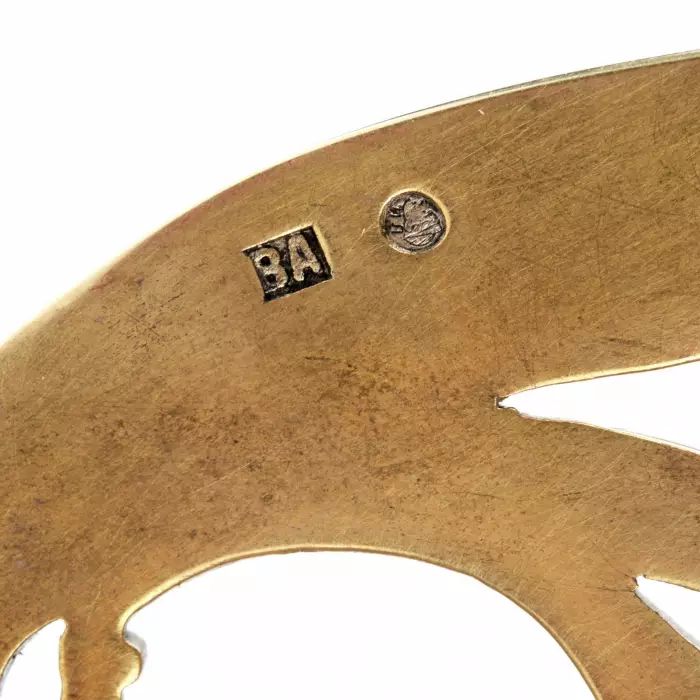
Marks: Maker’s mark «ВА» of the Moscow silversmith Vasily Agafonov; Moscow assay mark for 1899–1908, depicting a female head in a kokoshnik facing right within an oval punch, accompanied by the silver standard mark «84» (875/1000); assay master’s initials «ИЛ» for Ivan Sergeyevich Lebedkin.
Dimensions: Length: 46.5 cm. Height: 27 cm. Width: 23 cm.
Weight: 2,045 g.
Materials: 84 zolotnik silver (875/1000), cloisonné enamel, gilding.
Condition: Very good state of preservation. The enamels retain their brilliance and the richness of their original colour palette. Minor signs of age and use are present, together with occasional small enamel chips consistent with the age of the object. Evidence of an earlier restoration to the gilding is visible on the interior of the kovsh.
Provenance: Private collection.
Expert Opinion: The attribution to Vasily Agafonov is supported by the expert opinion of Maxim Charron.
Silver kovshi decorated with cloisonné enamel occupy a distinguished position in the history of Russian decorative arts of the late 19th and early 20th centuries. Their form derives from traditional Russian drinking vessels, which were widely used within the courtly and ceremonial culture of Muscovite Russia. Originally intended for serving beverages, kovshi had acquired an additional significance as honorary awards and commemorative gifts by the 17th and 18th centuries. Presentation kovshi preserved in museum collections testify to the continuity of this tradition.
During the second half of the 19th century, the revival of historical forms became one of the defining tendencies in Russian decorative and applied arts. Renewed interest in national artistic traditions encouraged the study of early Russian ornament, architecture, folk art and the work of 17th-century Moscow silversmiths. This movement contributed to the emergence of the Neo-Russian style, which combined traditional forms with innovative approaches to decorative design.
These developments were particularly evident in Moscow silver production at the turn of the 20th century. Silversmiths employed silver, gilding and polychrome enamels to create objects intended for ceremonial display. Cloisonné enamelling enabled the production of richly coloured ornamental compositions in which the metal cloisons served both as structural divisions and as integral decorative elements.
Museum collections illustrate the development of this tradition through works produced by leading Moscow workshops. The Hillwood Museum collection includes enamelled kovshi by Maria Semenova, Feodor Rückert and the firm of Pavel Ovchinnikov. These objects demonstrate the diversity of the Neo-Russian decorative vocabulary, including historical vessel forms, polychrome foliate ornament and imaginative zoomorphic motifs.
An important artistic development was the transformation of the traditional kovsh into an autonomous sculptural composition. Birds’ heads, stylised tails and elegantly curved handles imparted a distinctive expressive quality to these vessels while preserving the recognisable silhouette of the traditional Russian boat-shaped form.
The large silver kovsh by Vasily Agafonov belongs to this tradition of Moscow silverwork. Its monumental silhouette, ornithomorphic modelling, richly coloured cloisonné enamel and gilded interior exemplify the period’s ambition to unite historical Russian forms with virtuoso decorative craftsmanship. Such works are of considerable importance for the study of Russian silver, Moscow enamelling traditions and the development of the Neo-Russian style in the early 20th century.
Good condition. The enamels remain bright, with occasional minor chips and age-related wear. The silver shows minimal signs of use. Evidence of earlier restoration to the interior gilding is visible.
The condition report is provided for informational purposes only.
It is not comprehensive and may not reflect all defects, restorations, alterations, or adaptations, as Antiqon does not perform professional conservation-level assessments. The information is based on a qualified, yet subjective, evaluation by our specialists.Before purchasing, we recommend consultation with an independent expert.Please also consult our Terms and conditions and Glossary A-Z, which contain important information on lot characteristics and sale conditions.