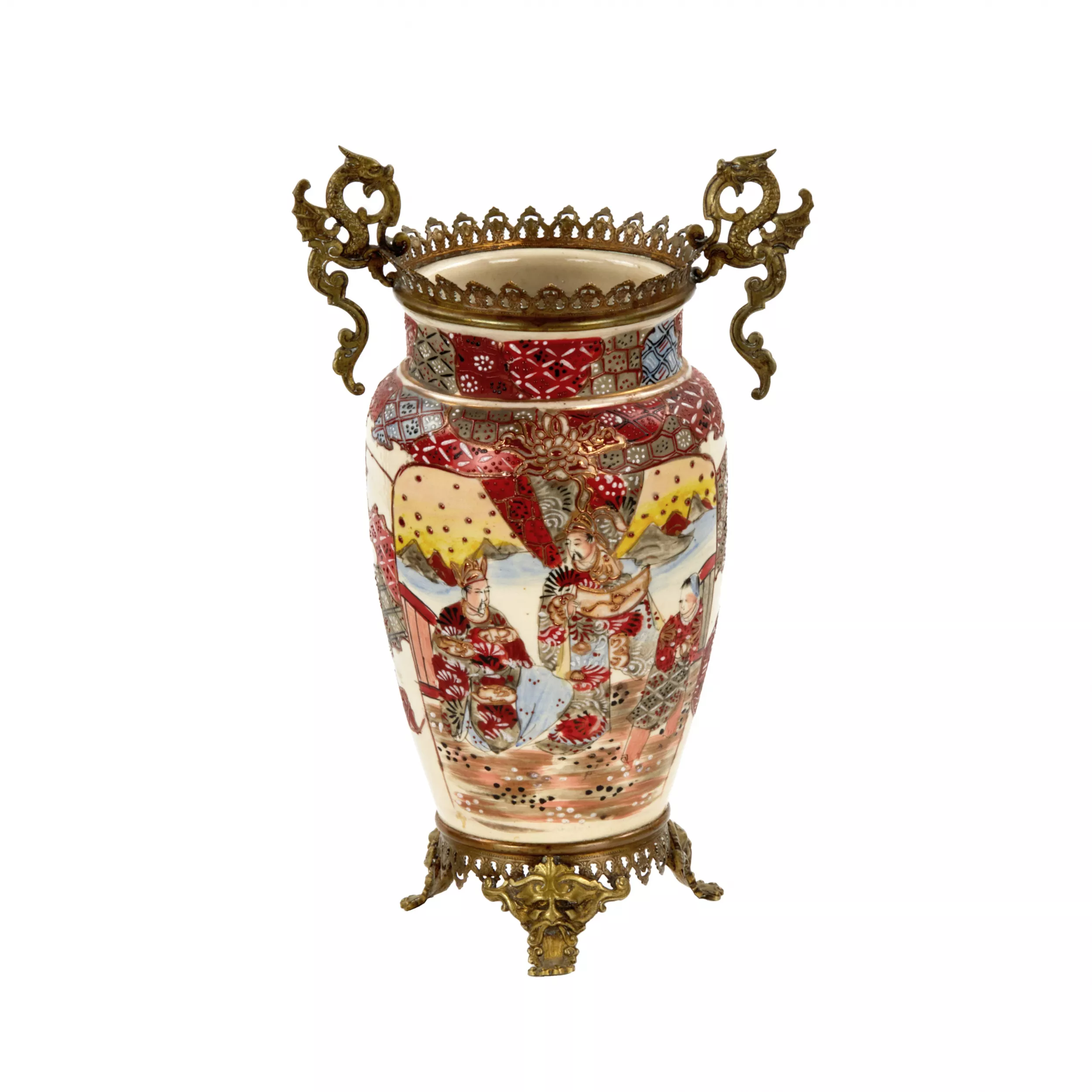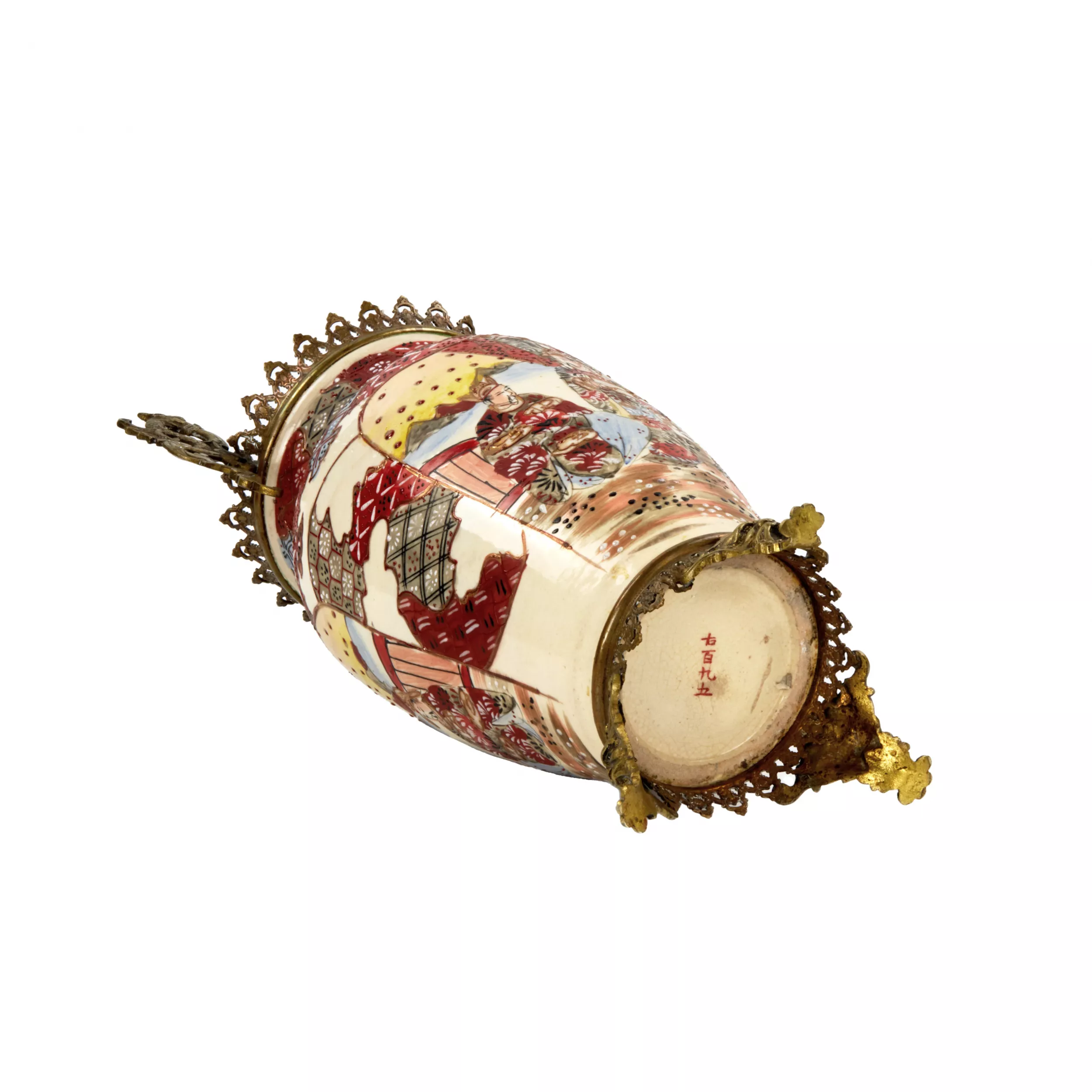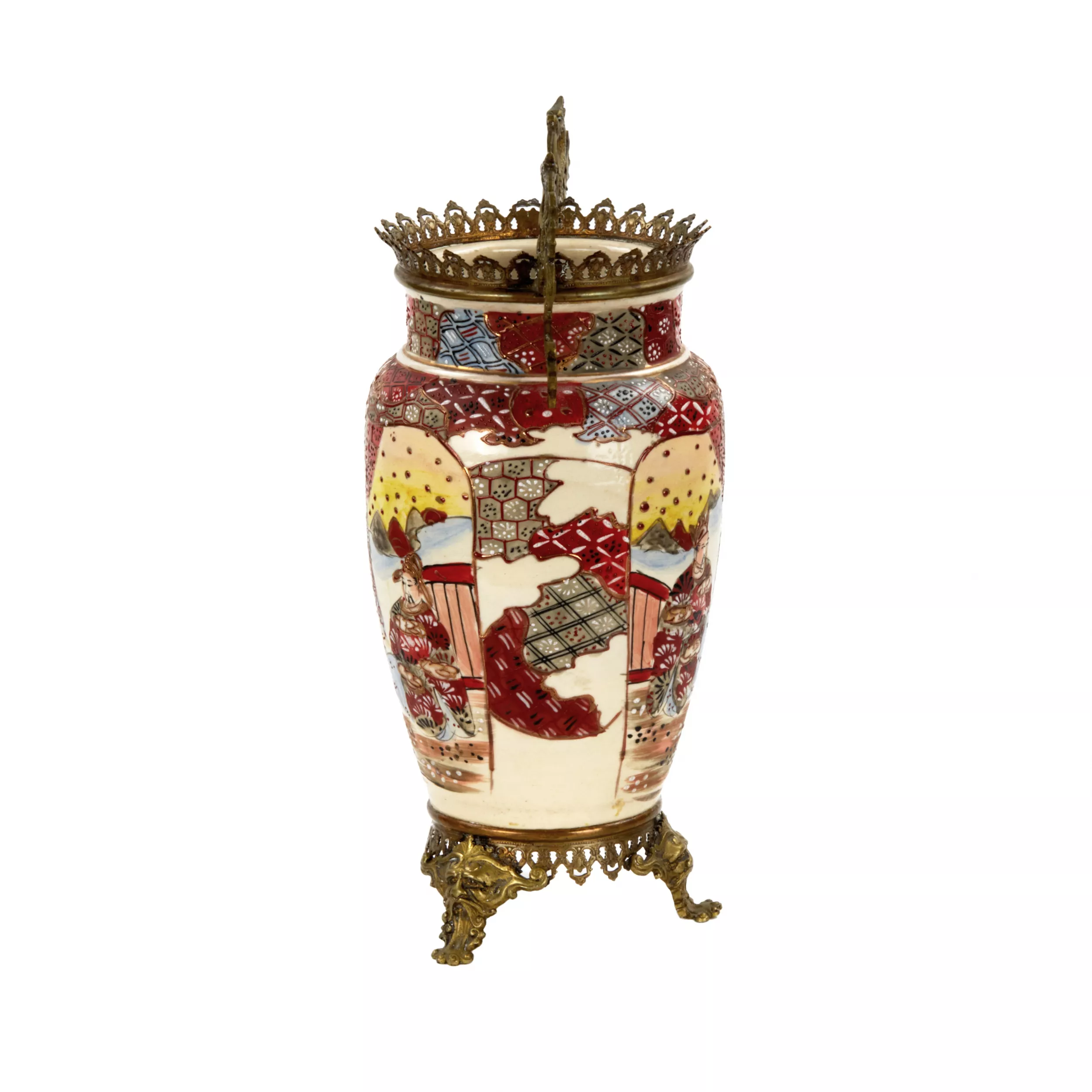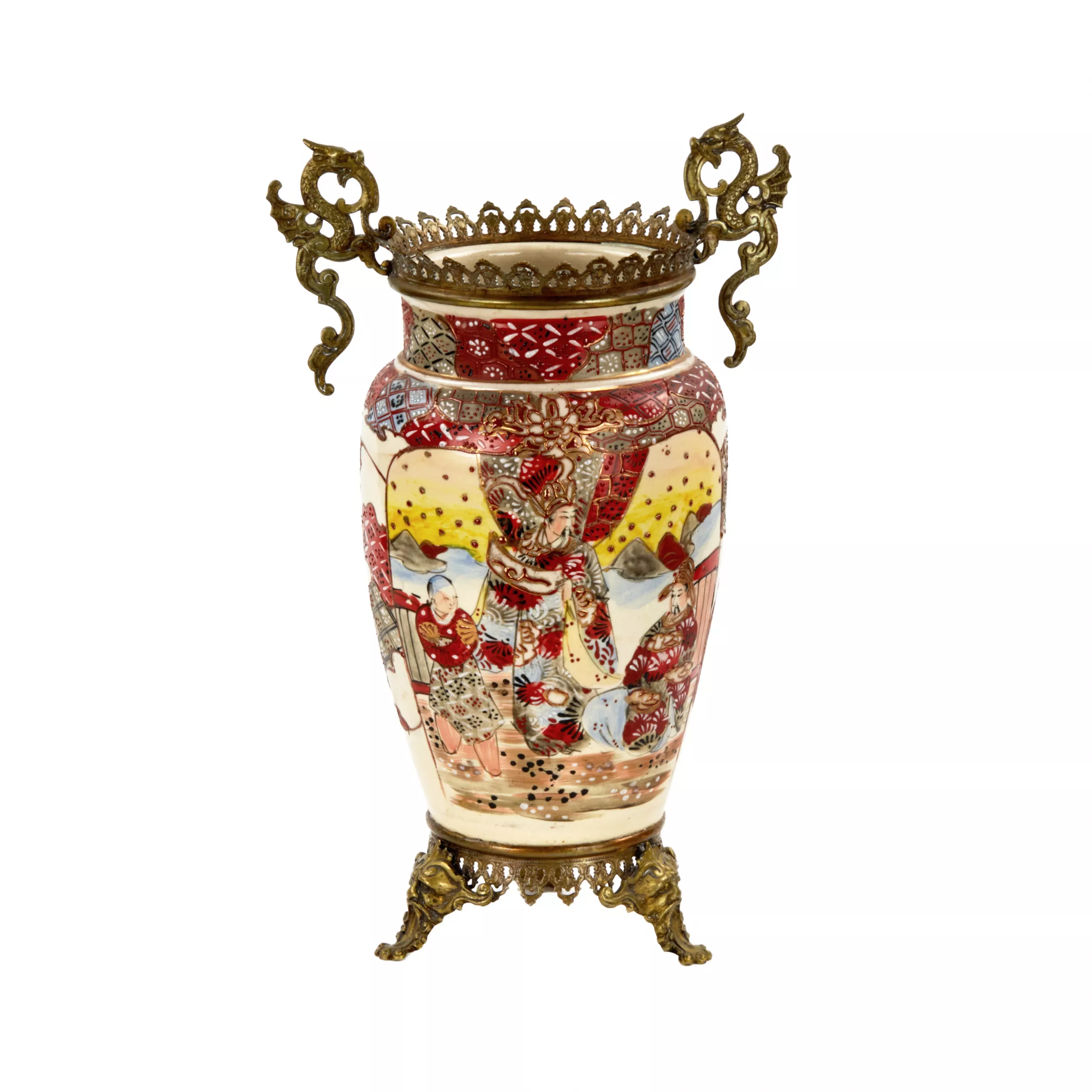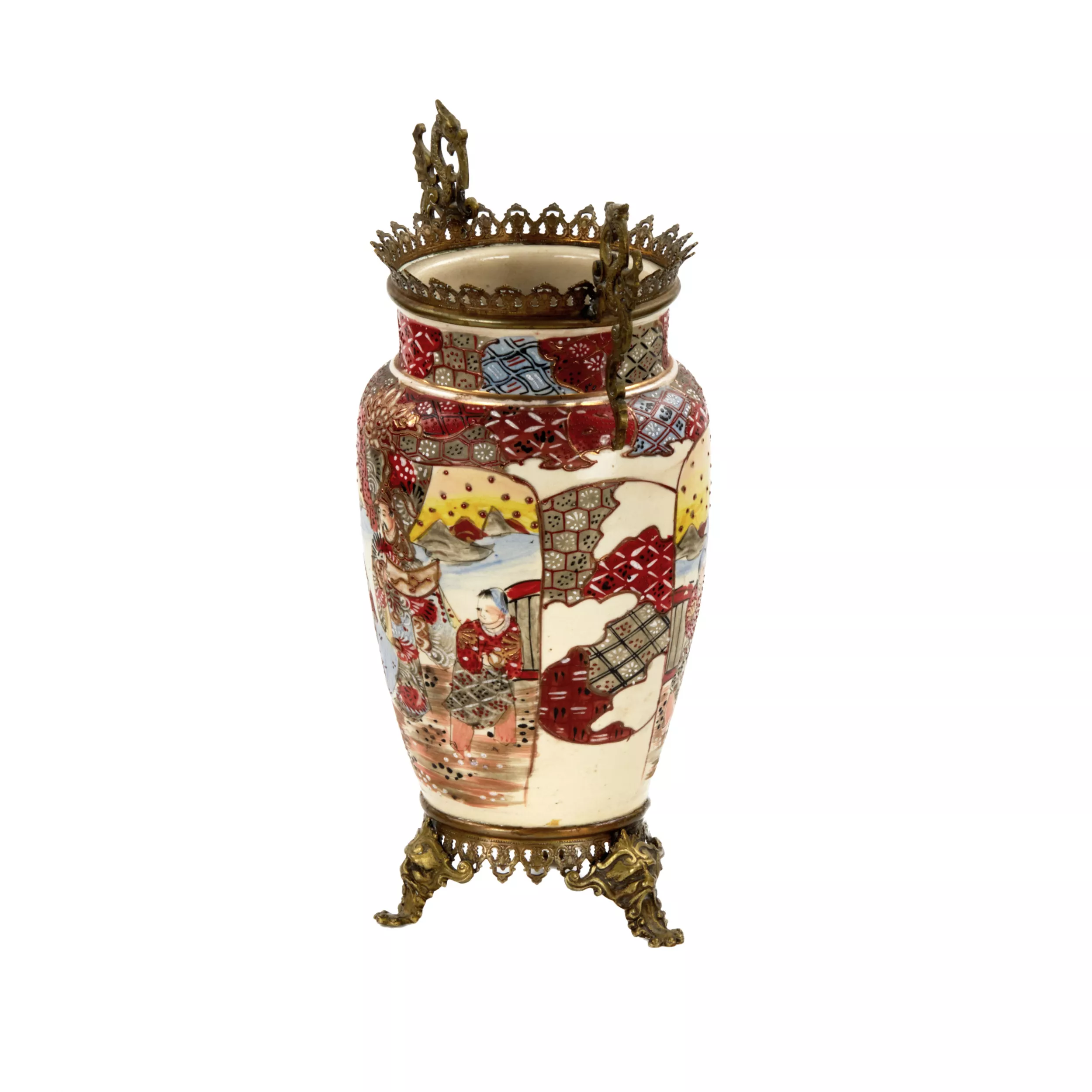
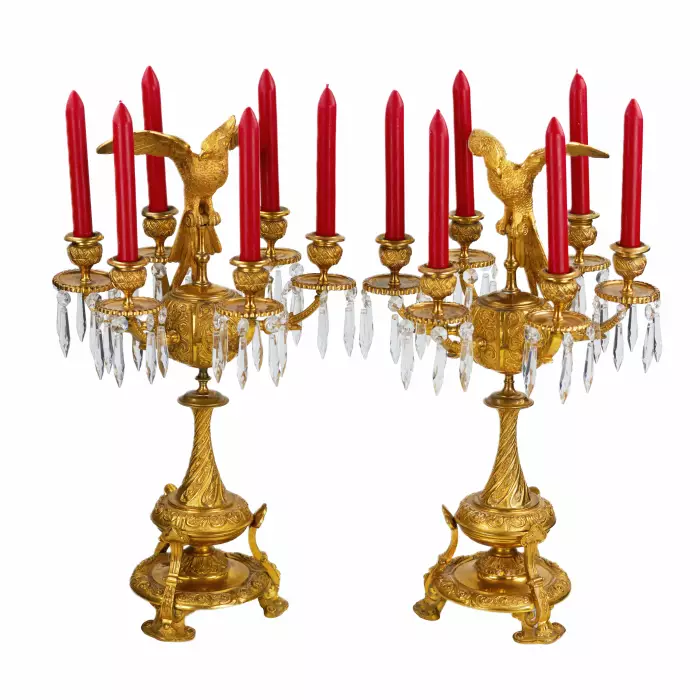


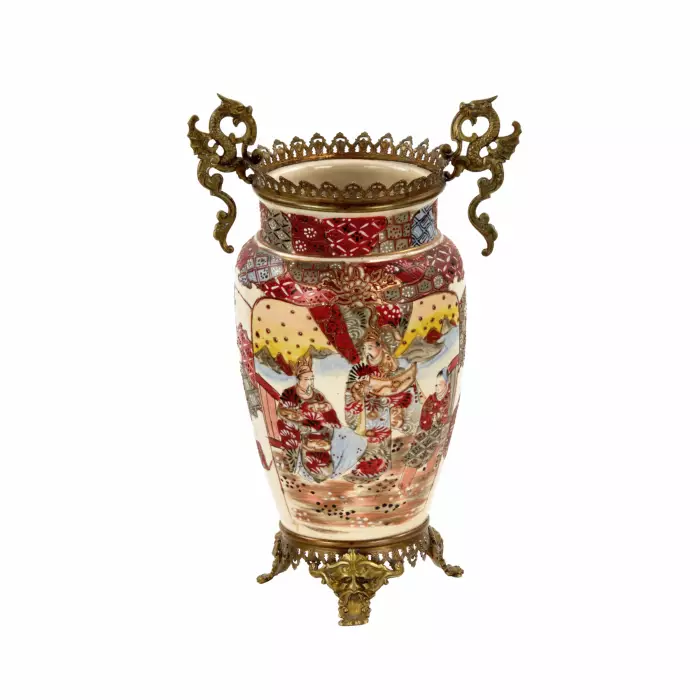
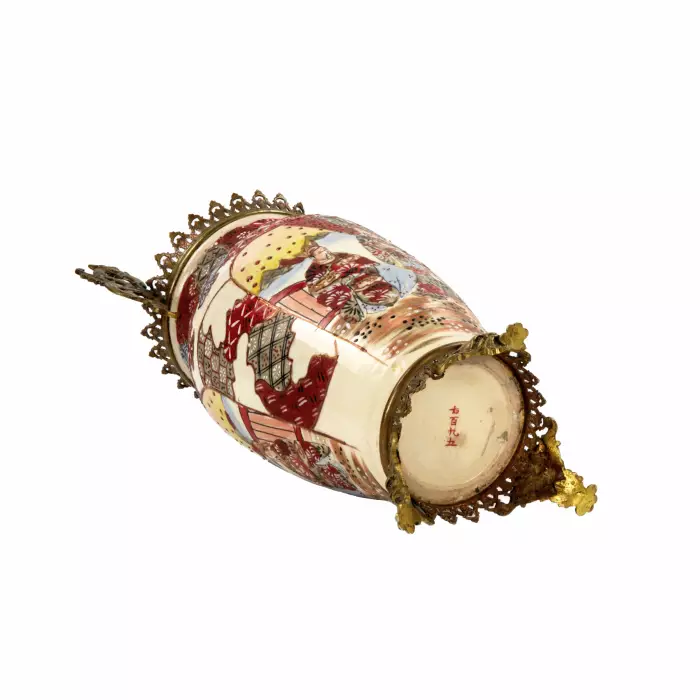
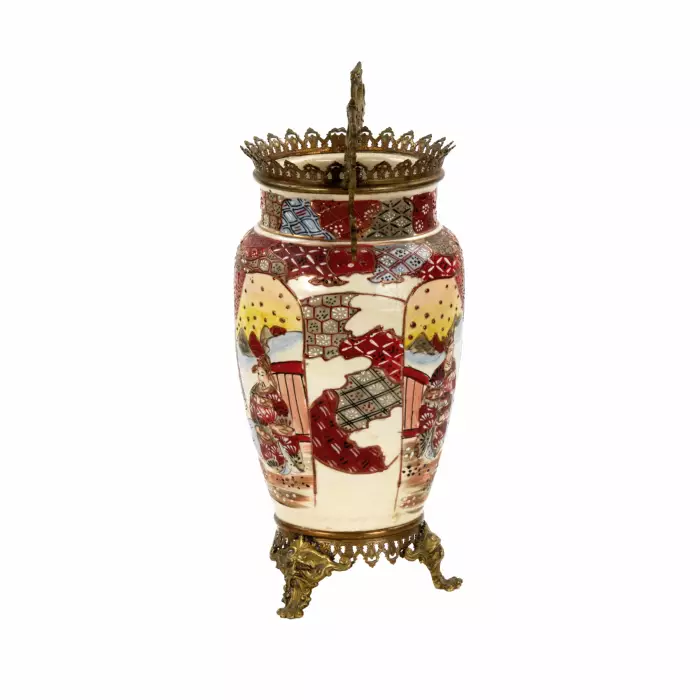
Vase Satsuma
Antiqon consultant will contact you within one business day after receiving your request.
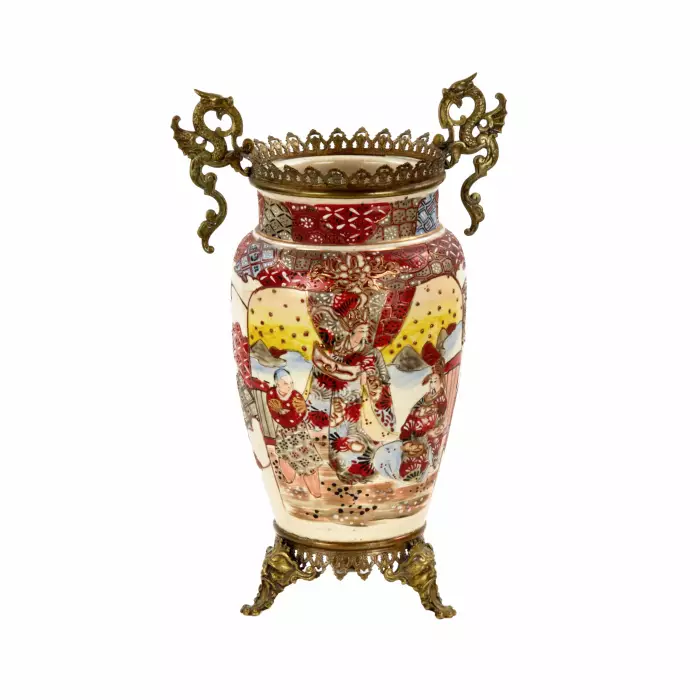
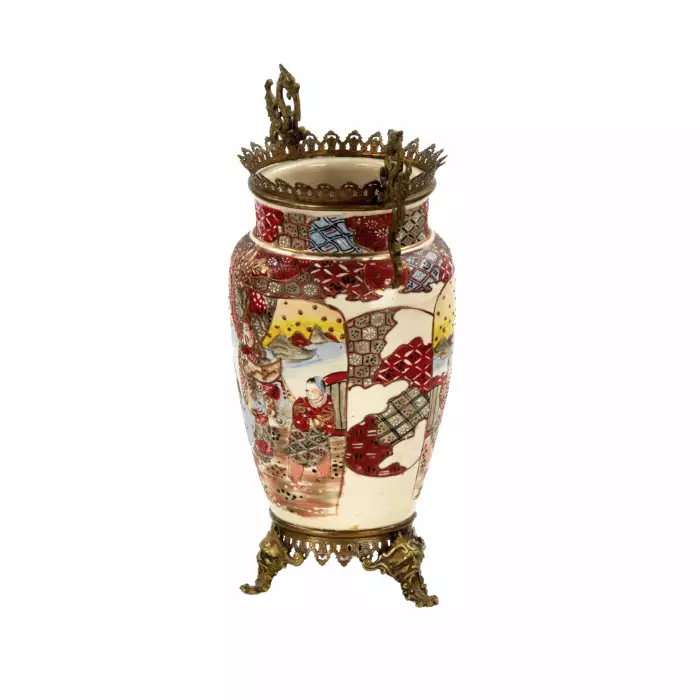
Historical Background: The Satsuma Pottery Workshops (present-day Kagoshima Prefecture) were founded in the early 17th century. As in Arita in Satsuma, this happened after Korean craftsmen appeared in the local pottery workshops in 1598. Initially, it was a simple reddish-brown pottery covered with a translucent colorless glaze with a sparing rectilinear pattern carved on the surface of the vessels in the form of grooves filled with white ceramics. These products are called Kosatsuma - Old Satsuma. Strong and high-quality, they were intended mainly for everyday life. Japanese researchers classify Kosatsuma products as kuromon” - black ceramics”. All Satsuma ceramic products covered with colored glazes belong to kuromon. In contrast to kuromon”, there was also shiromon” - white ceramics, i.e. ceramic products made of white clay and covered with white glaze. The first white ceramics were made in Satsuma by Korean craftsmen from clay, which was specially brought from Korea. With their fragility and grace, they immediately gained popularity among the feudal nobility. However, it turned out that it was impossible to produce such ceramics from known local clays due to their too high content of iron oxide. For many years, these ceramics were made exclusively from imported Korean clay. Naturally, due to shipping costs, the price of white ceramics was very high; only wealthy people could purchase it. In addition, with a constant shortage of white clay, it was impossible to produce the desired amount of such ceramics. Therefore, a local feudal lord issued an order allowing the production of white ceramics only in kilns directly under the jurisdiction of Prince Satsuma. Only the upper class were allowed to use it.
The condition report is provided for informational purposes only.
It is not comprehensive and may not reflect all defects, restorations, alterations, or adaptations, as Antiqon does not perform professional conservation-level assessments. The information is based on a qualified, yet subjective, evaluation by our specialists.Before purchasing, we recommend consultation with an independent expert.Please also consult our Terms and conditions and Glossary A-Z, which contain important information on lot characteristics and sale conditions.