
STERLING SILVER JUG. GEORGE III PERIOD. MASTER JOHN DEACON LONDON, 1772
Antiqon consultant will contact you within one business day after receiving your request.
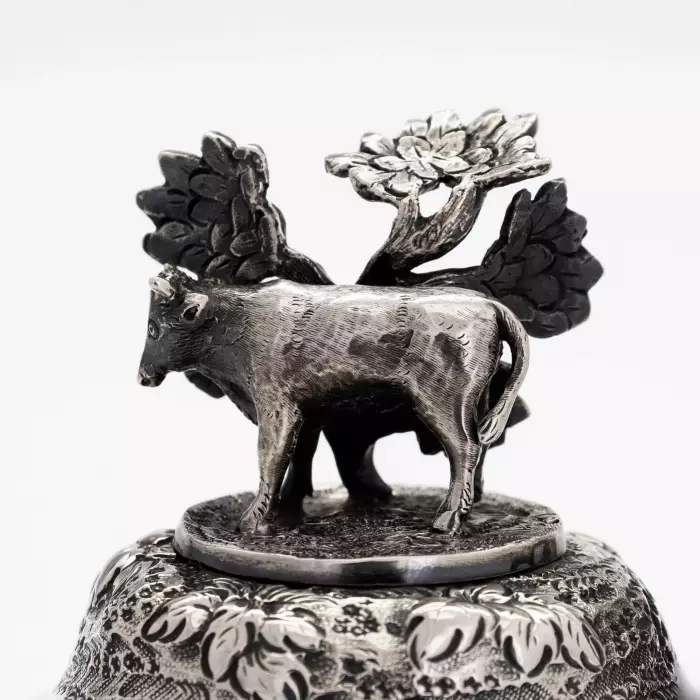
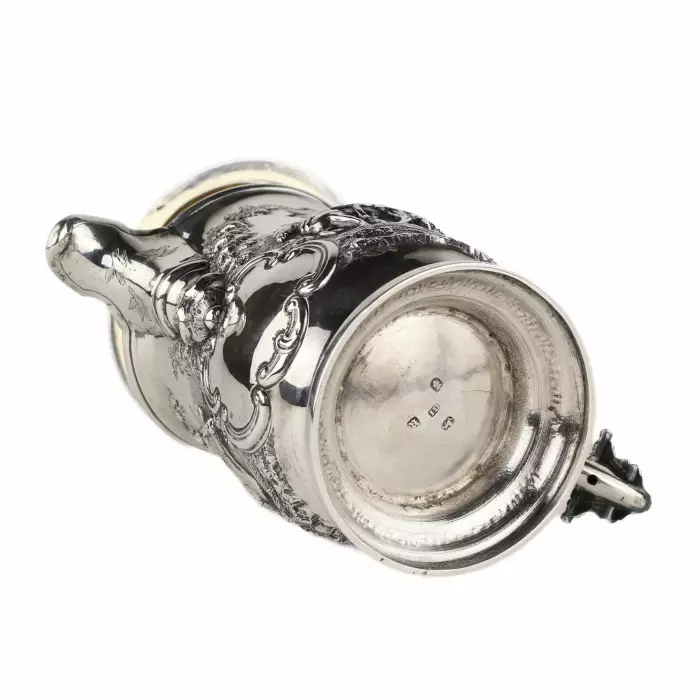
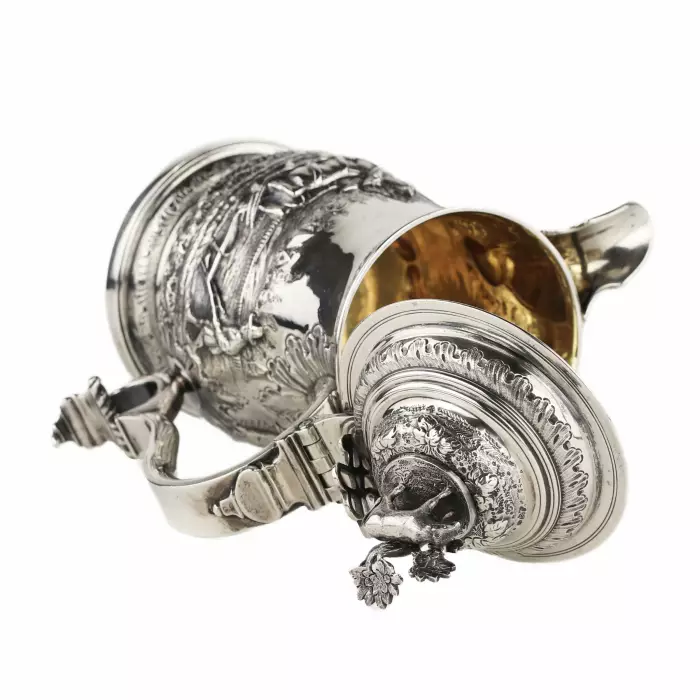
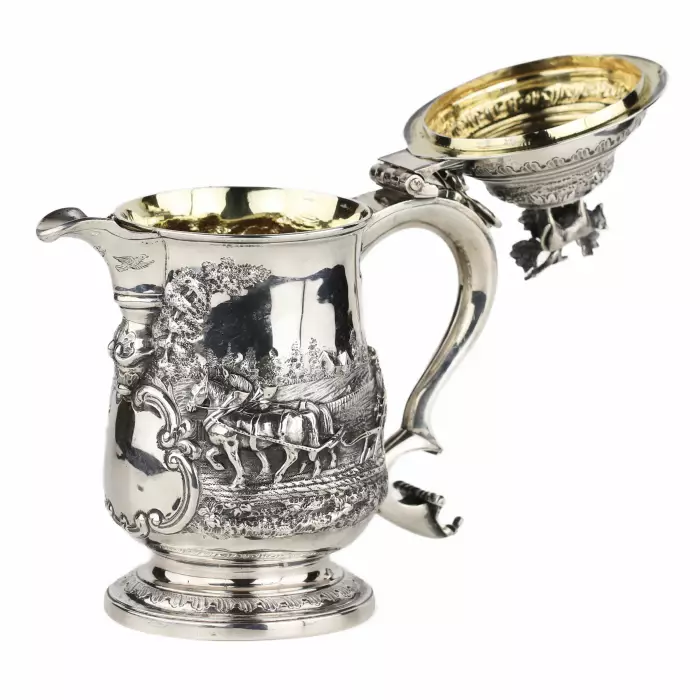
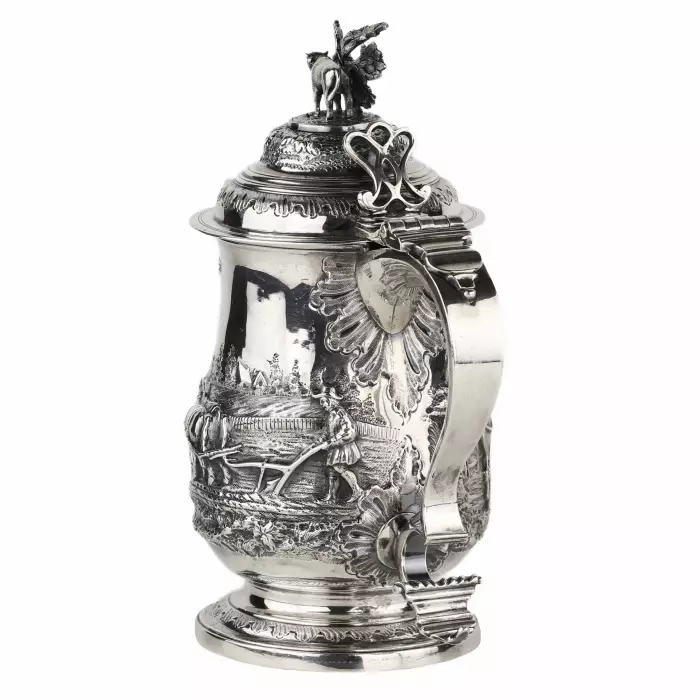
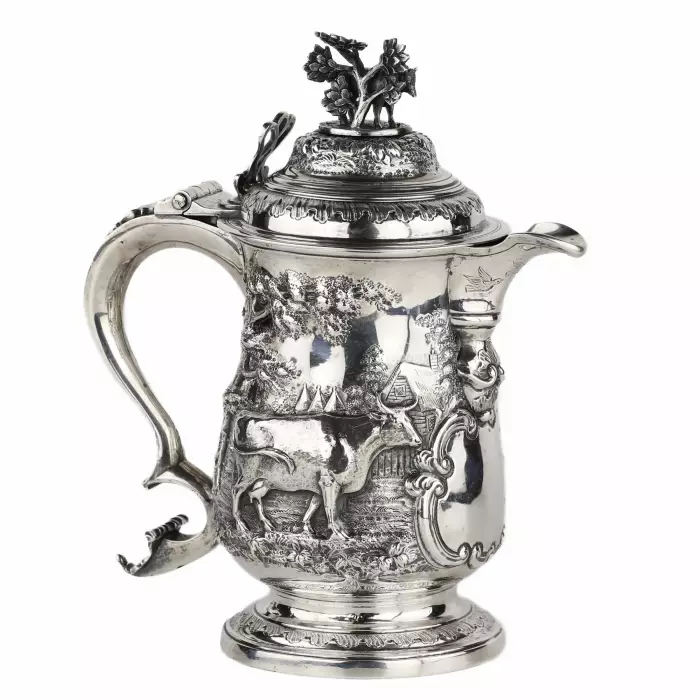
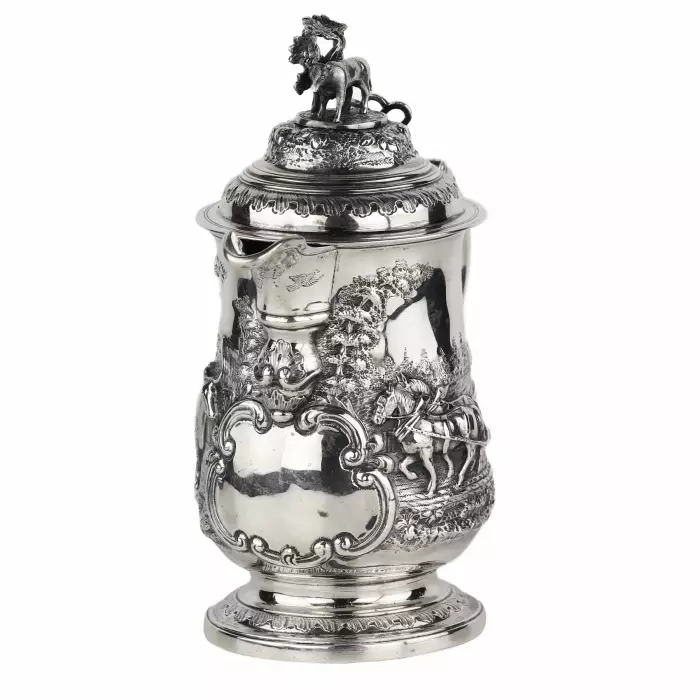
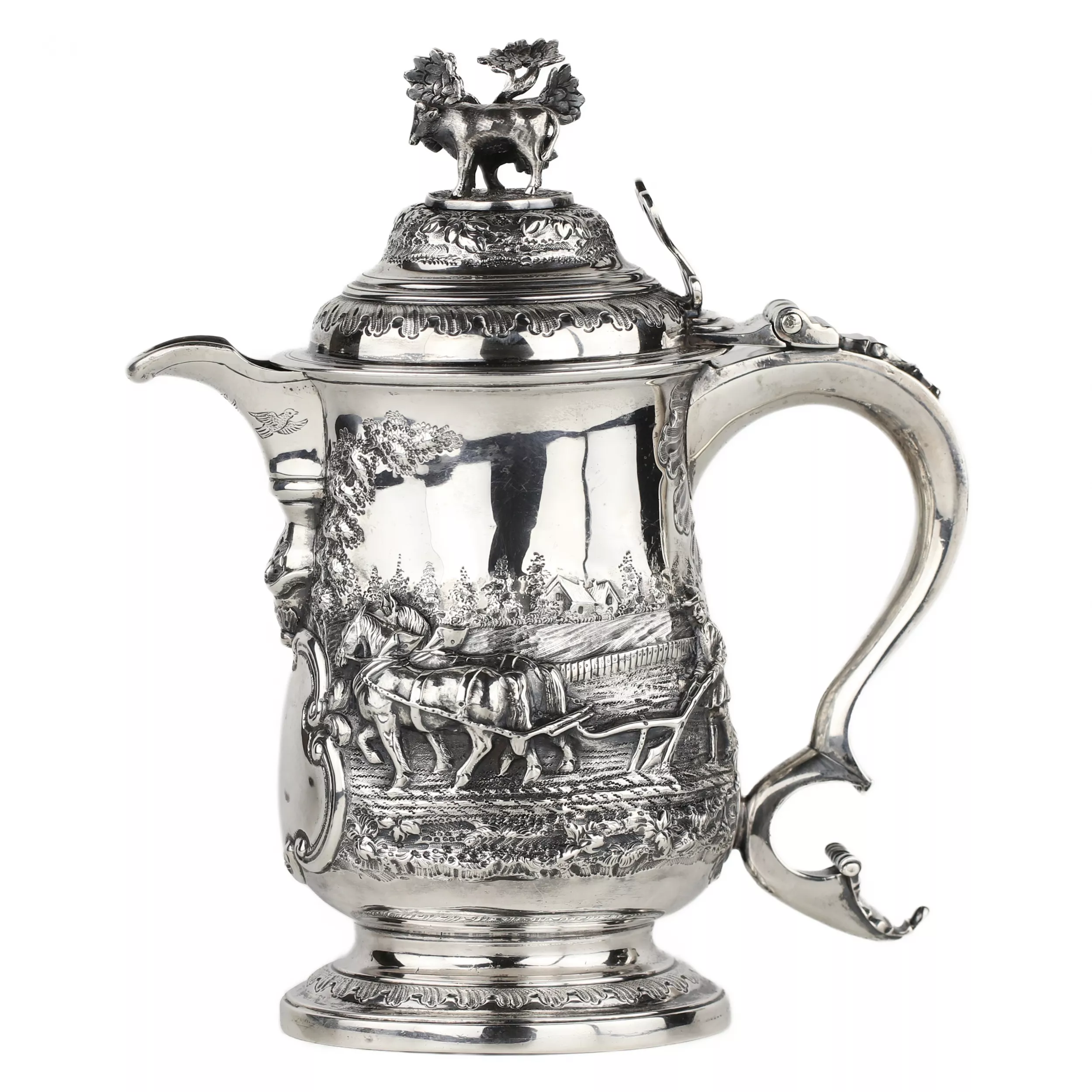
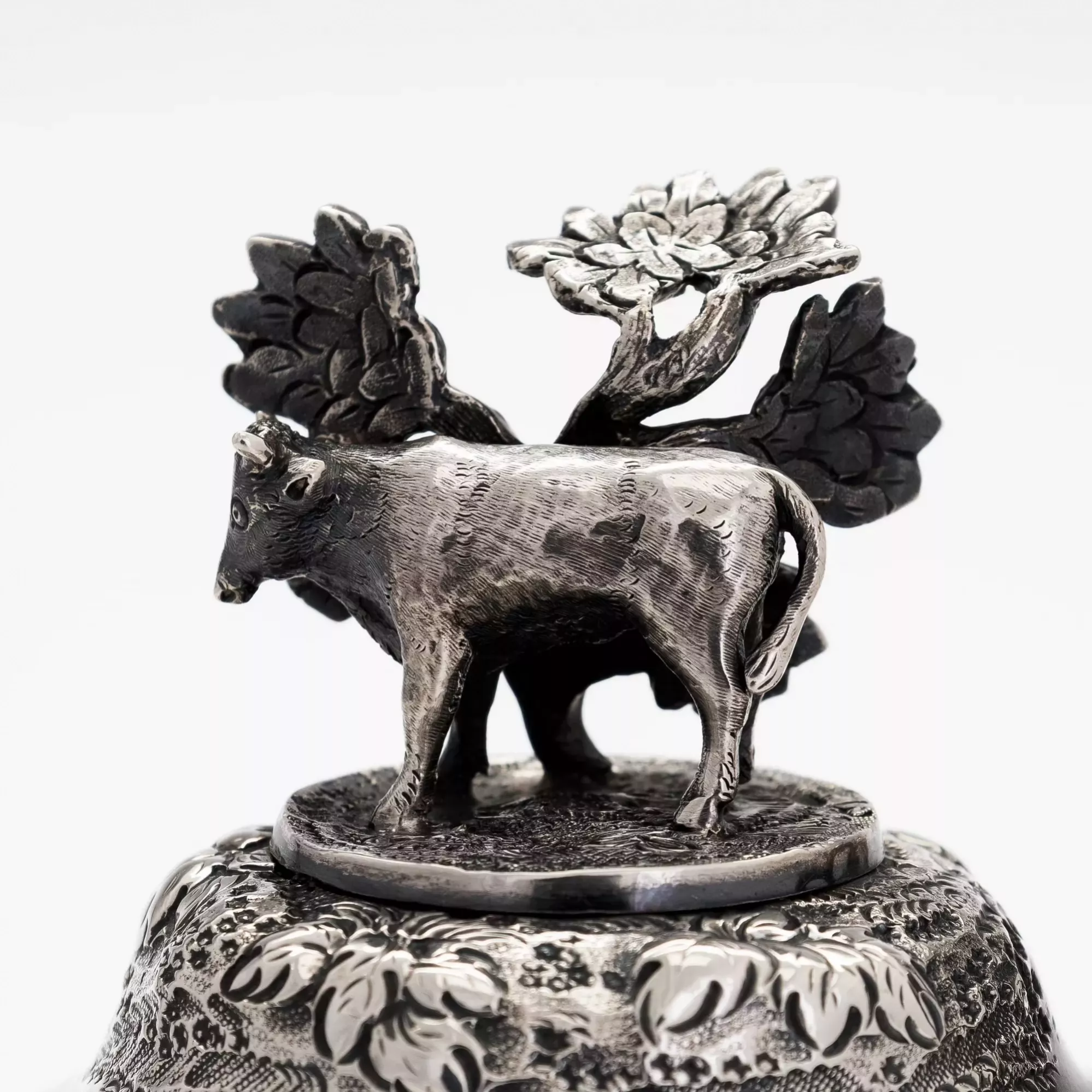
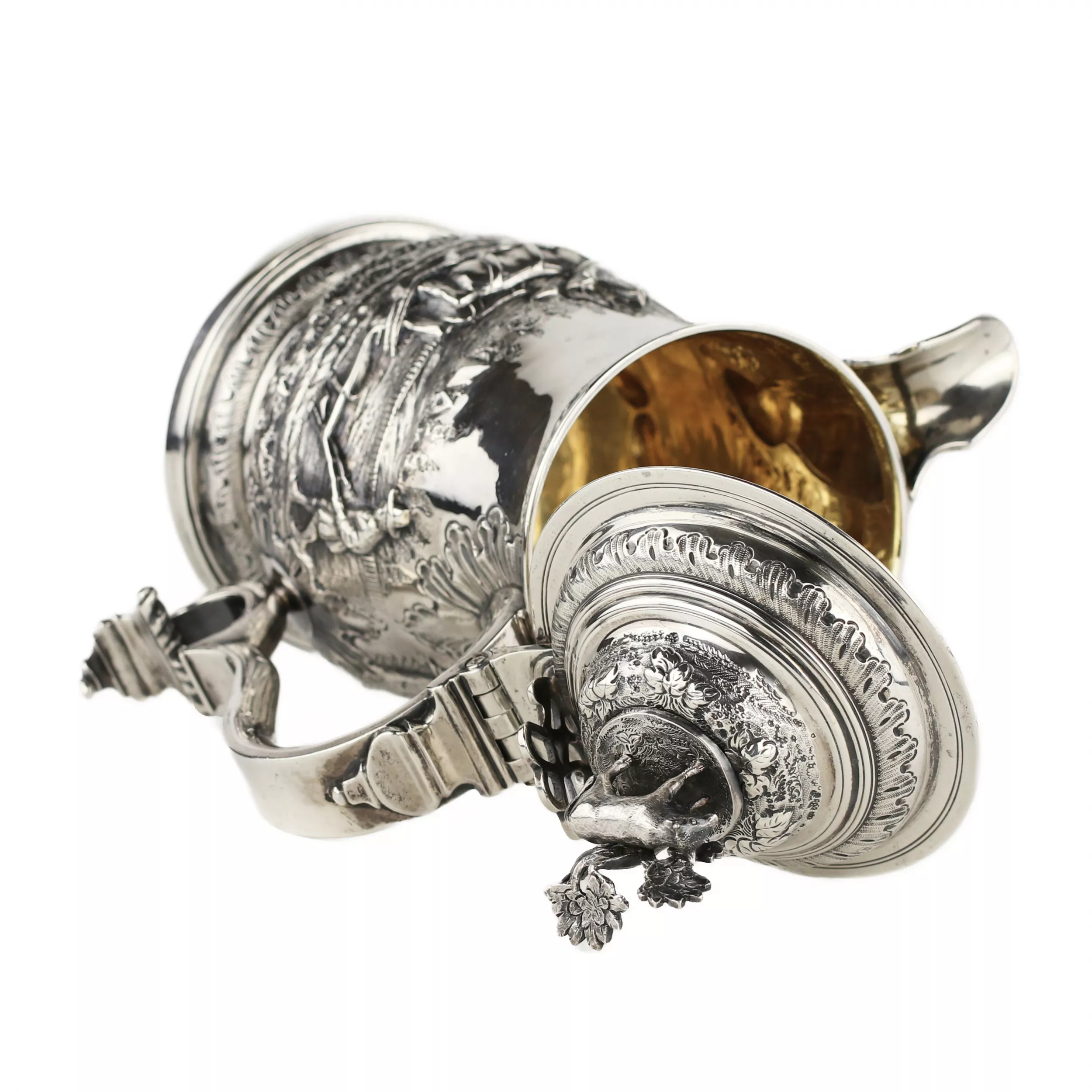
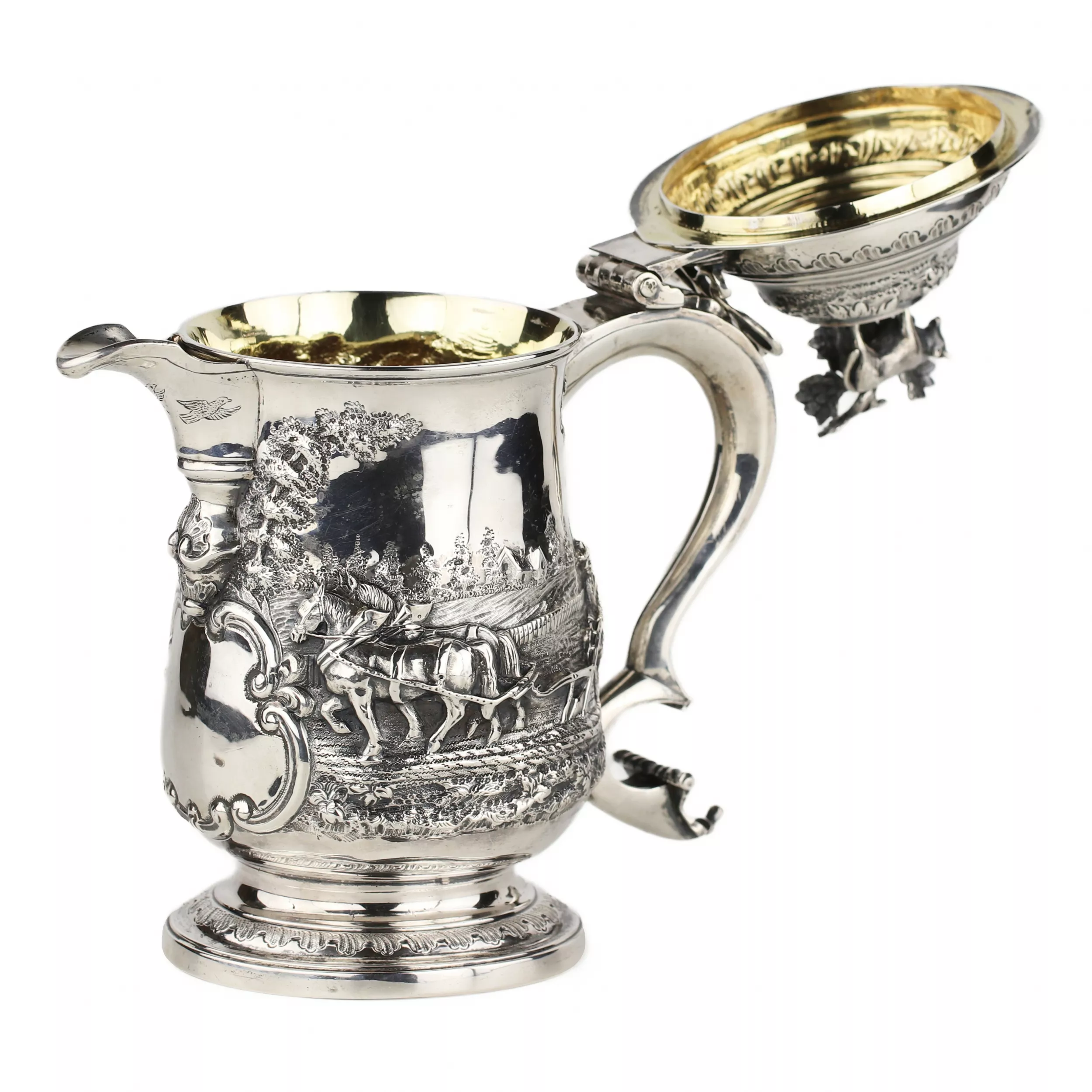
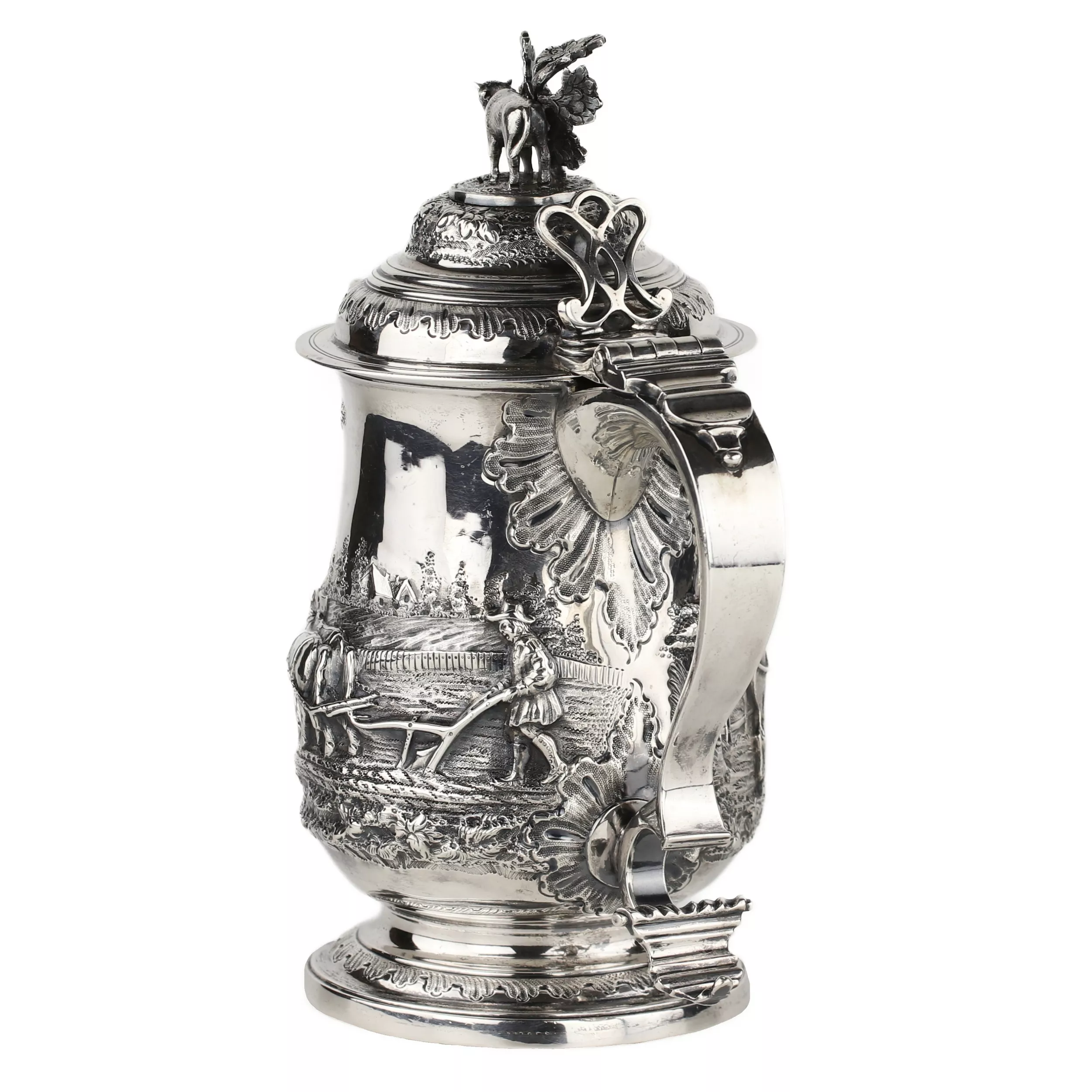
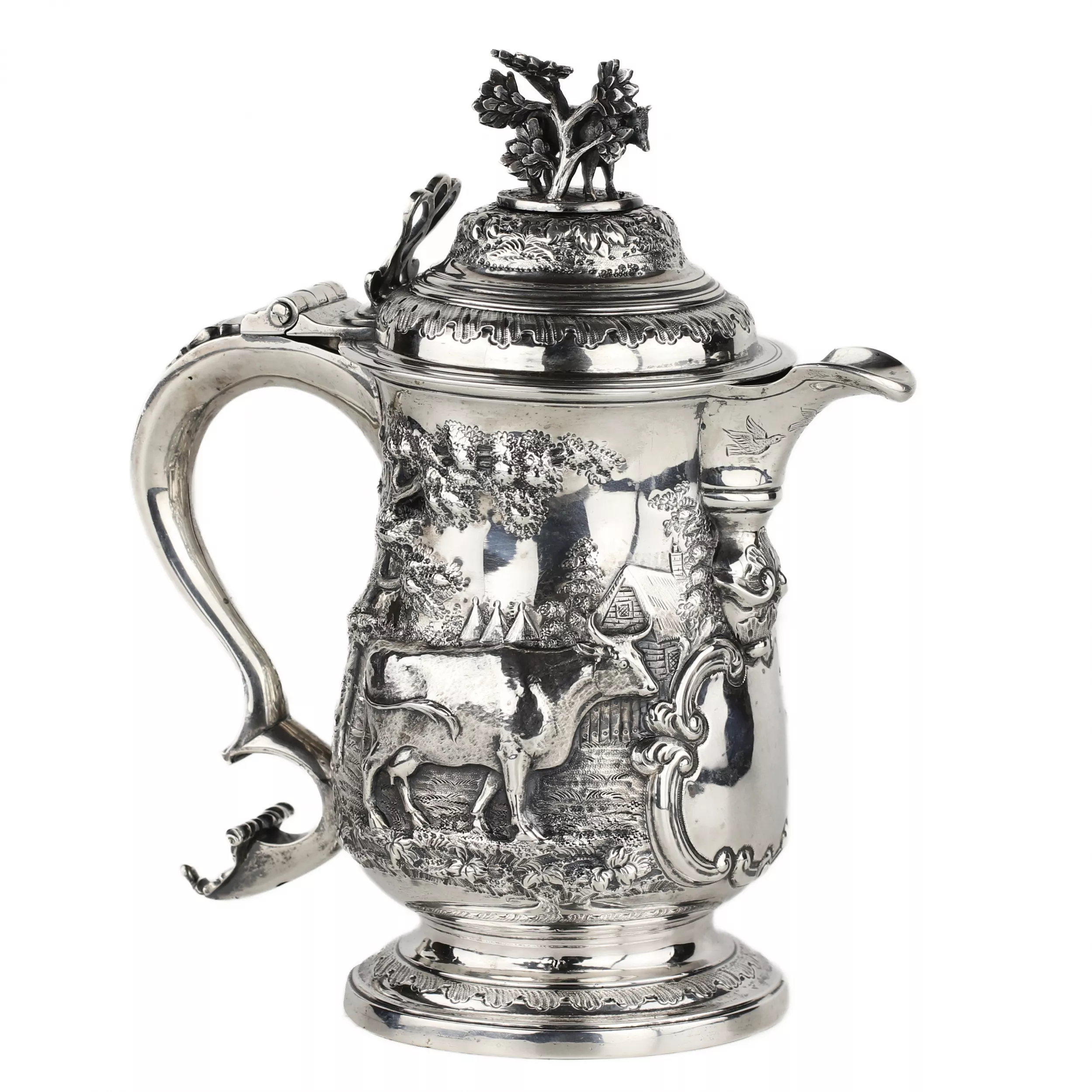
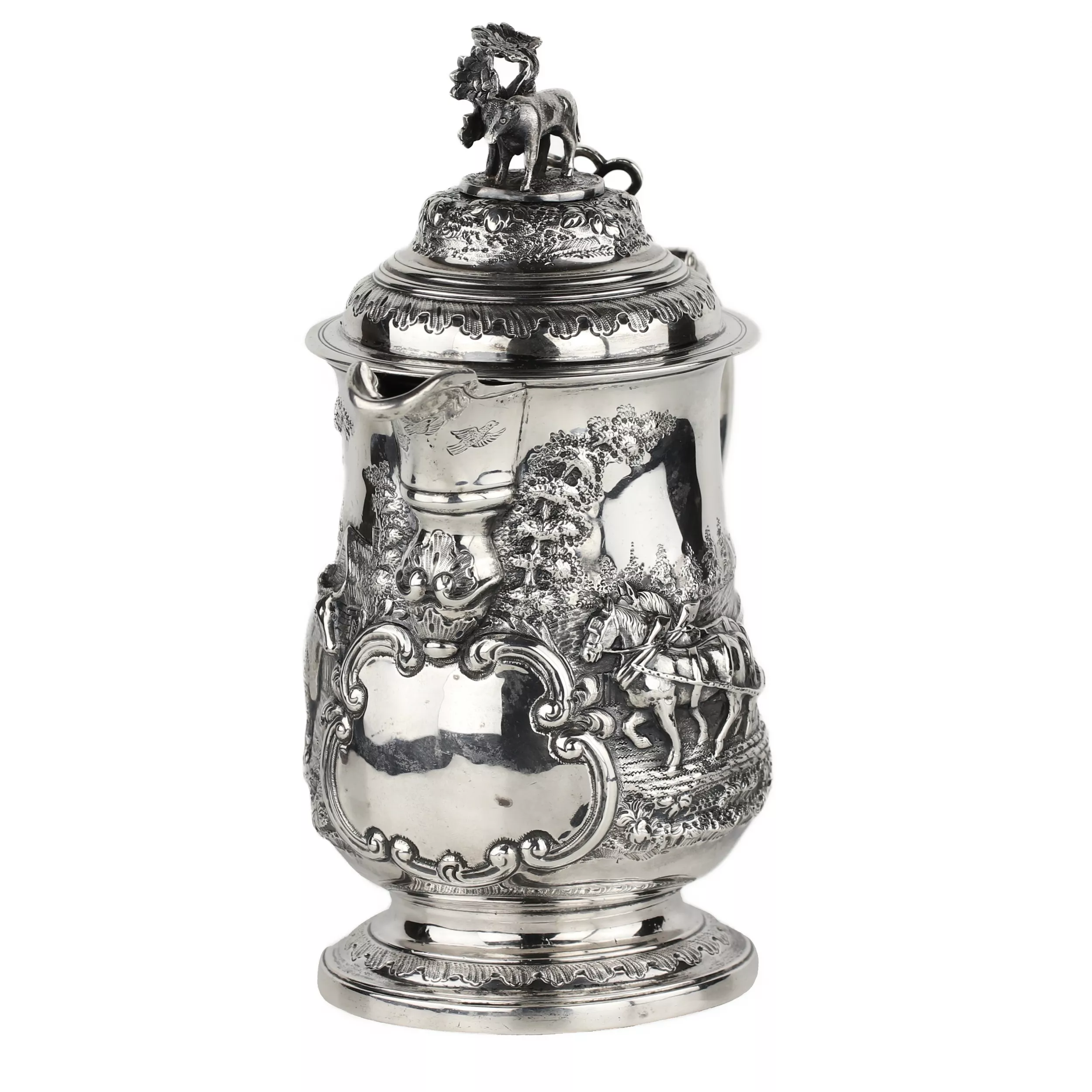
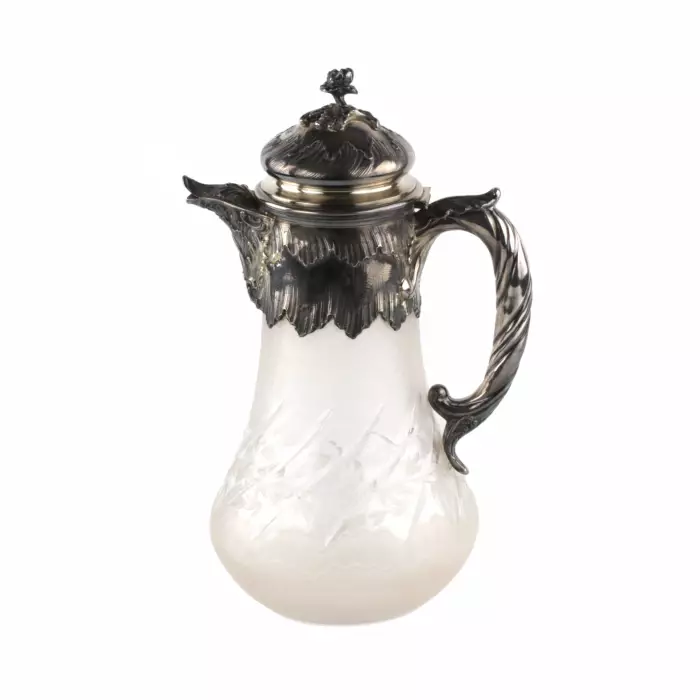
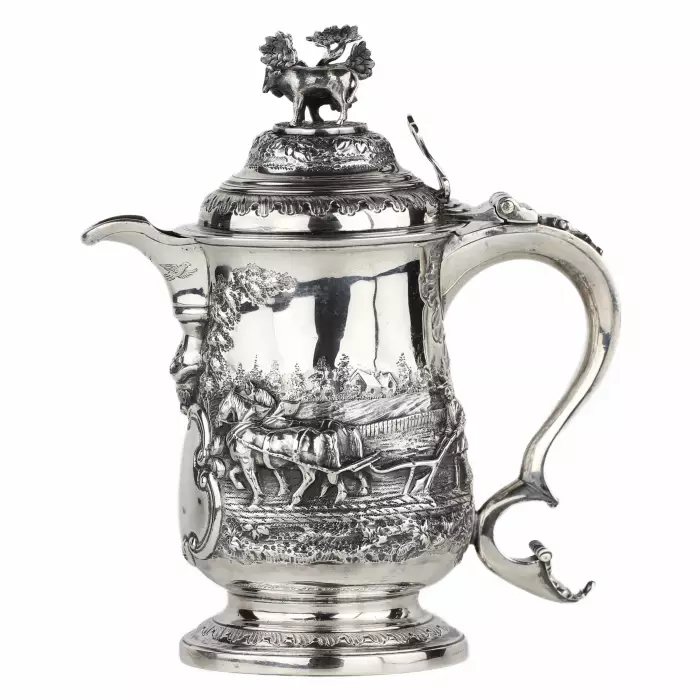
A sterling silver jug, crafted in London in 1772 by silversmith John Deacon, represents an outstanding example of English silverware from the George III period. The body is richly decorated with detailed rural scenes: a farmer ploughing with two horses, a cow grazing in the field, rustic buildings, and flying birds near the spout. On the front, a blank cartouche is reserved for a coat of arms or dedication. The interior is entirely gilt. The lid is surmounted by a finely modelled bull beneath a tree — a symbol of fertility and abundance. The massive handle features an elegant pierced thumbpiece for ease of use.
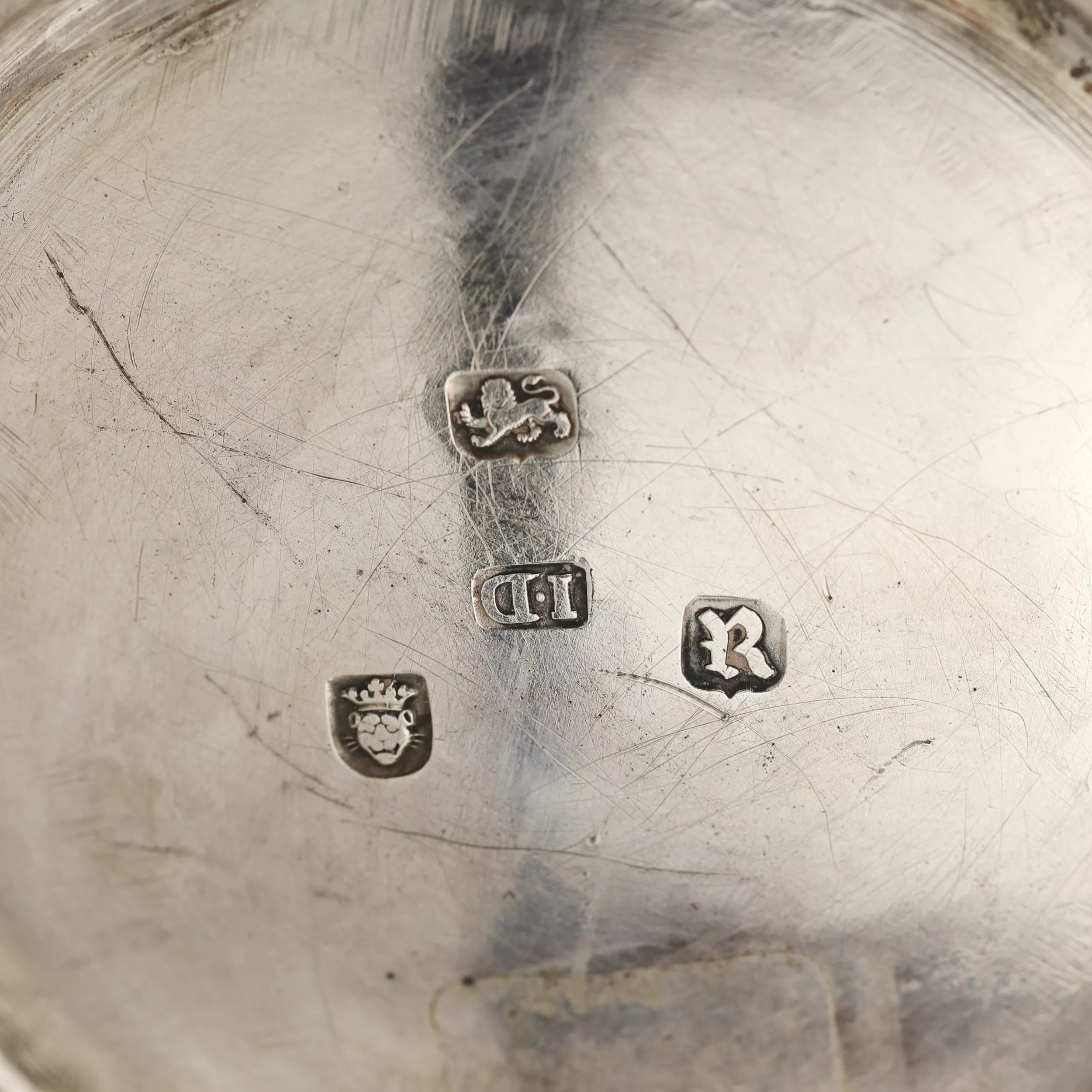
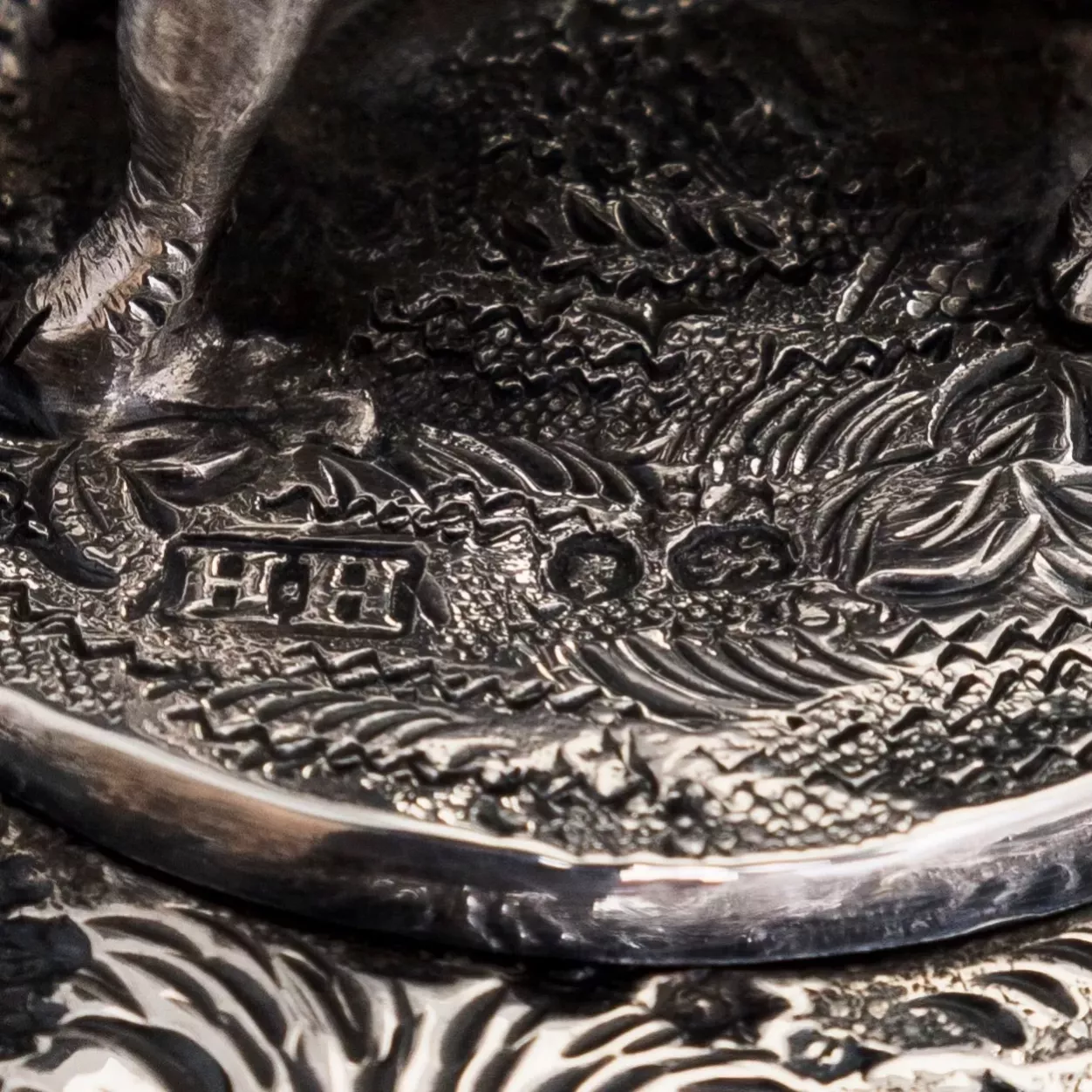
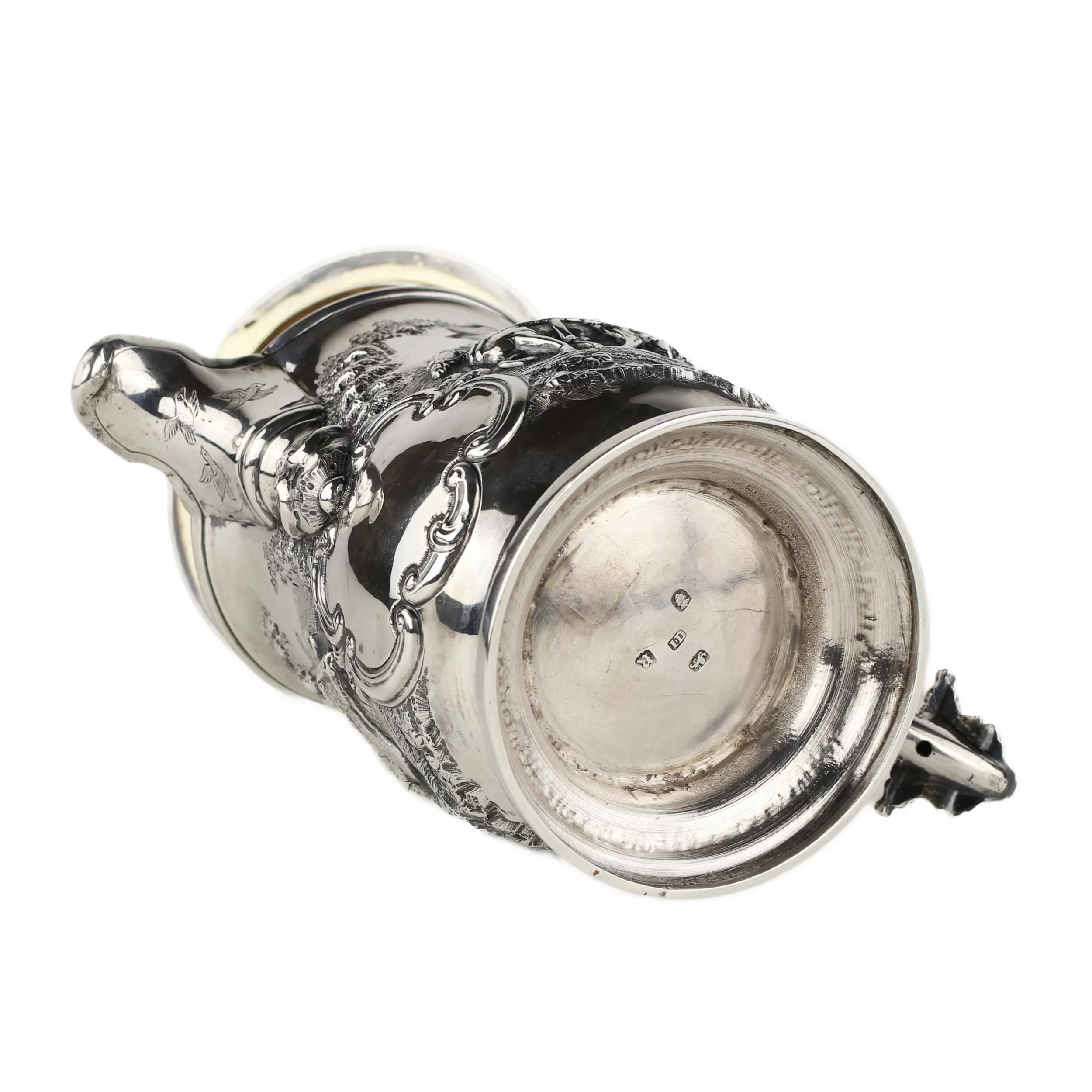
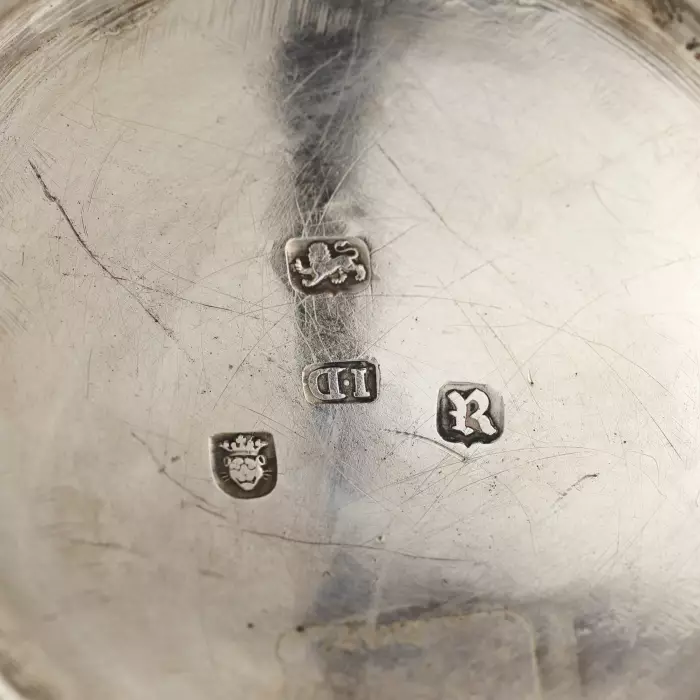
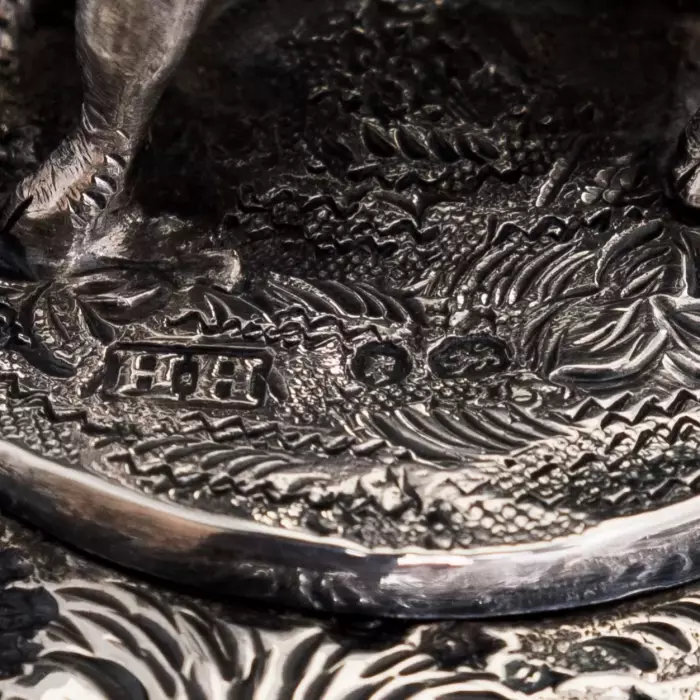
Marks: on the base — London hallmarks for 1772, maker’s mark of John Deacon; on the lid — additional mark HH Henry Holland (London, mid-19th century).
Dimensions: Height 24.5 cm, length 21 cm.
Weight: 1042 g.
Condition: Excellent preservation, with clear hallmarks, evenly preserved interior gilding, and minimal traces of age.
English silver of the George III period (1760–1820) occupies a special place in European decorative art, reflecting both the refined aesthetics of classicism and the strict quality standards of the London Assay Office. Silver items increasingly became symbols of culture and social identity rather than mere utilitarian objects.
John Deacon, one of the most notable silversmiths of the late 18th century, made a significant contribution to the craft. His career began on 19 January 1759, when he apprenticed with John Moore. After seven years, he became a freeman on 2 July 1766 and soon registered his own mark. The first official mention of him as an independent master dates to 11 September 1776, at 23 Greenhills Rents, St John Street, though evidence suggests he had been active earlier, including on Addle Street in 1771. In 1773, his name appears in a parliamentary report as a working silversmith at 1 Love Lane, Wood Street. His works, admired for their detailed chasing and narrative decoration, enjoyed popularity among clients. However, in April 1775, Deacon was declared bankrupt, which likely ended his career. Surviving pieces, such as this jug, confirm his exceptional craftsmanship and place in the history of English silver.
The additional mark of Henry Holland (active mid-19th century) links the jug to another chapter in English silver history. Holland’s firm, later known as Holland, Aldwinckle & Slater, was one of the most prominent London silver companies of the Victorian period. Founded in 1838, the firm expanded through partnerships and acquisitions, including Elizabeth Eaton & Son in 1866, and remained active until 1932. The presence of Holland’s hallmark on this jug demonstrates that it was re-assayed in London during the 19th century — a rare detail that highlights its continued value. Today, similar pieces are preserved in major institutions such as the Victoria and Albert Museum and the British Museum, where they serve as key witnesses to the continuity of English silver craftsmanship across centuries.
The jug is in excellent condition, with crisp hallmarks, well-preserved gilding, and minimal signs of wear, confirming its museum quality.
The condition report is provided for informational purposes only.
It is not comprehensive and may not reflect all defects, restorations, alterations, or adaptations, as Antiqon does not perform professional conservation-level assessments. The information is based on a qualified, yet subjective, evaluation by our specialists.Before purchasing, we recommend consultation with an independent expert.Please also consult our Terms and conditions and Glossary A-Z, which contain important information on lot characteristics and sale conditions.