
ÉMILE LOUIS PICAULT. “LE SOMMELIER”. BRONZE SCULPTURE. FRANCE, LATE 19TH - EARLY 20TH CENTURY
Antiqon consultant will contact you within one business day after receiving your request.
Discover your personalized shipping cost — based on where you are and how you prefer to receive your piece..
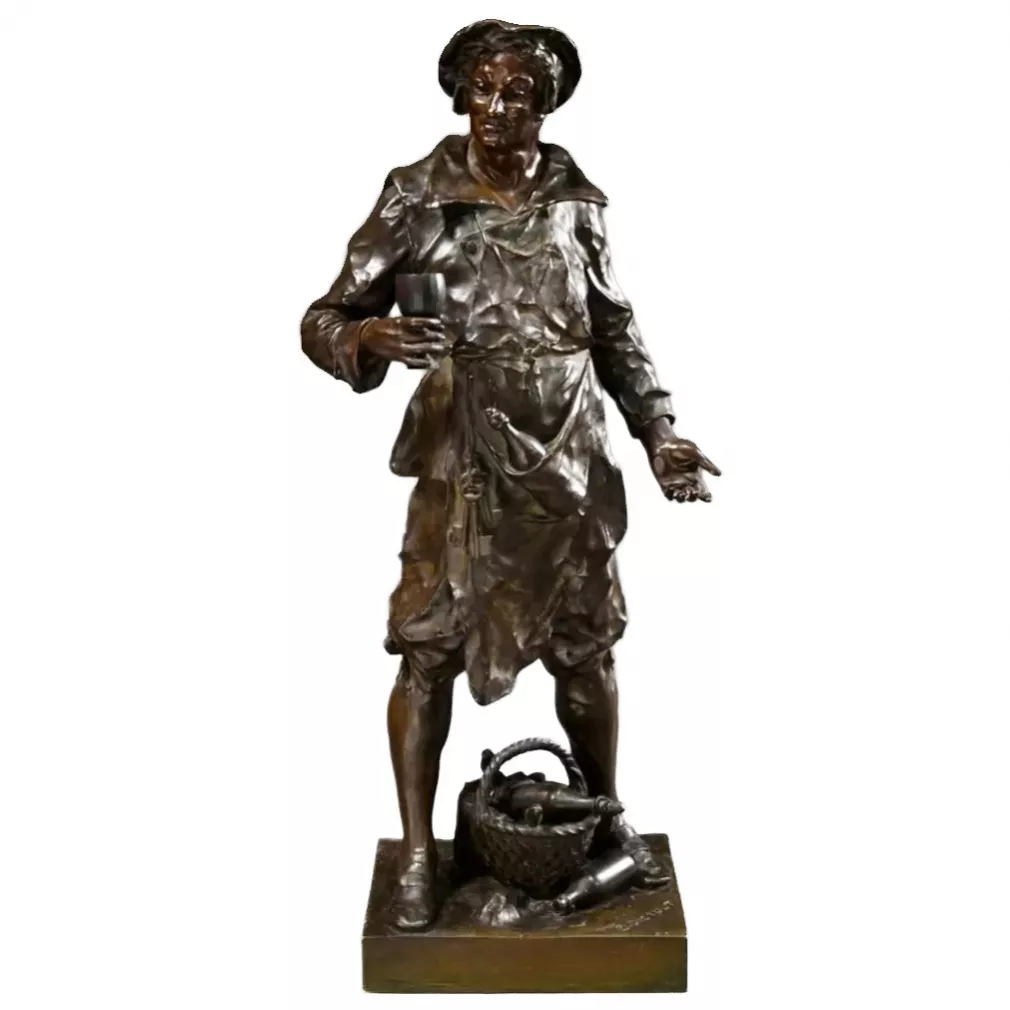
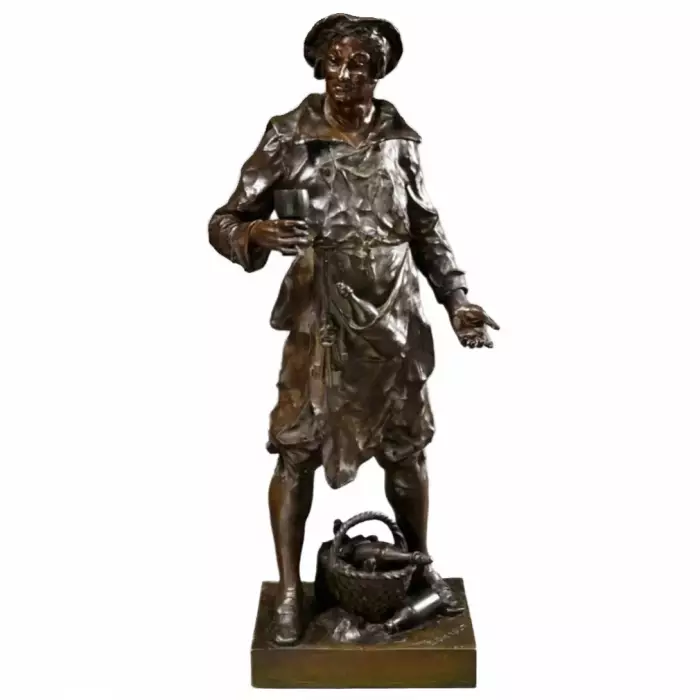
Patinated bronze sculpture entitled “Le Sommelier” by the French sculptor Émile Louis Picault (1833-1922), one of the notable representatives of French Salon sculpture of the second half of the 19th century.
The full-length composition depicts a standing sommelier or wine steward dressed in a characteristic costume with an apron and soft cap. In his right hand, the figure holds a goblet, while his left hand is expressively extended to the side. At his feet are a woven basket containing bottles and a separate bottle lying beside it, directly identifying the subject of the composition. The relaxed stance, slight turn of the head, animated facial expression and carefully modelled folds of the clothing lend the figure a vivid narrative quality.
Picault pays particular attention to genre details: the implements suspended from the belt, the texture of the apron, the basket, bottles and goblet. The contrast between the smoother modelling of the face and hands and the vigorously worked surfaces of the clothing enhances the play of light across the patinated bronze. The composition combines academic precision in figurative modelling with the taste for engaging historical and genre subjects characteristic of late 19th-century French sculpture.
The terrace bears the cast signature “E. PICAULT”. A circular foundry mark is present on the base. Other examples of the “Le Sommelier” model of comparable dimensions are known, allowing the present composition to be confidently identified as one of Émile Louis Picault’s sculptural models.
Marks: Cast signature “E. PICAULT” on the terrace. Circular foundry mark on the base.
Dimensions: Height 69.5 cm. Width 33 cm.
Condition: Good condition. Minor signs of age and natural wear to the patinated surface.
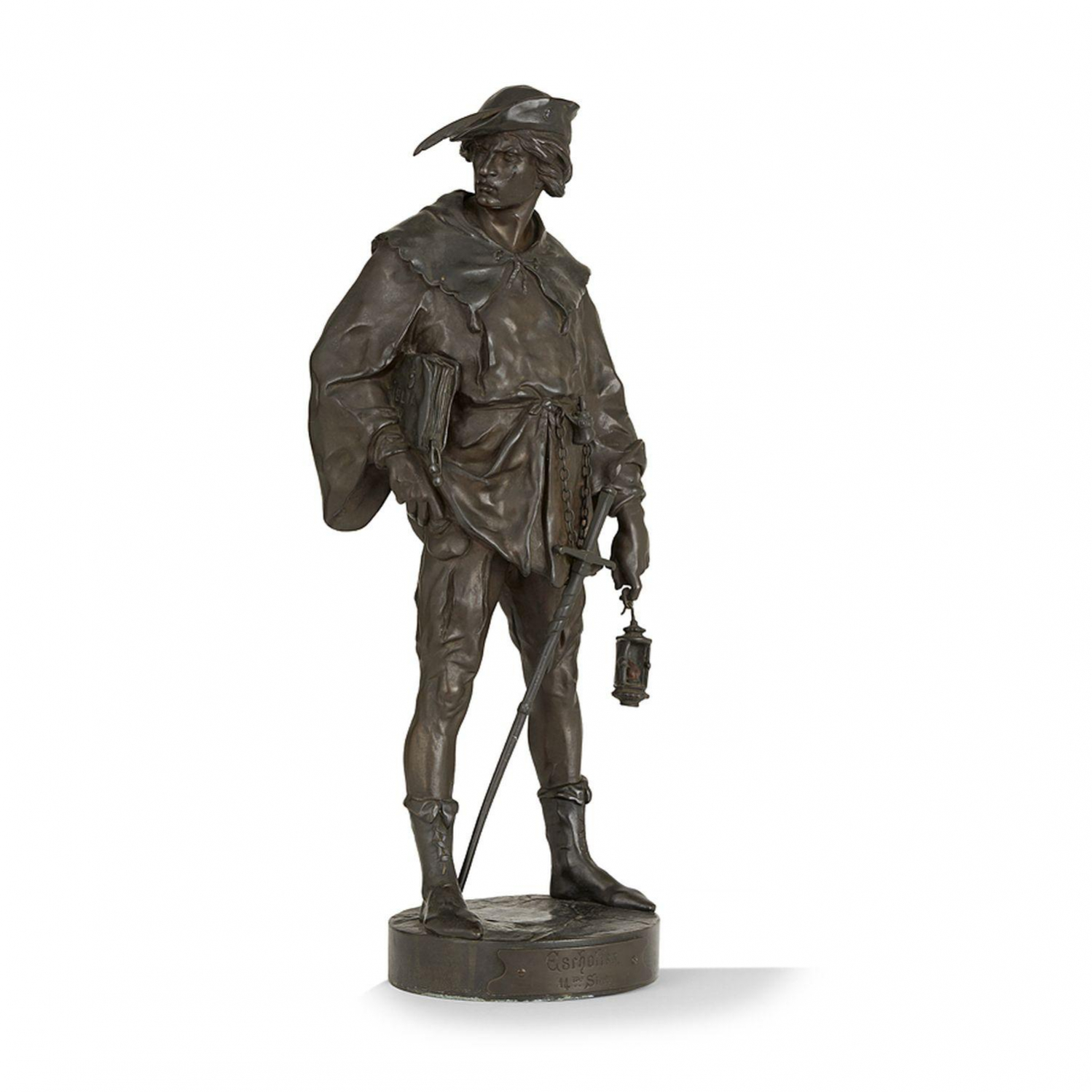
Émile Louis Picault belonged to a generation of French sculptors whose careers developed during the remarkable flourishing of artistic bronze casting in France in the second half of the 19th century. The Musée d’Orsay records Picault as a French sculptor born in Paris in 1833 and deceased there in 1922. Several works by the artist are represented in the museum’s collections, including “Le Génie du Travail”, “Escholier du XIVe siècle” and “Mercure et Pégase”.
Picault’s artistic language developed within the traditions of French academic and Salon sculpture. His bronze figures combine clarity of silhouette, narrative composition and meticulous attention to the attributes of the individual character. Expressive modelling, an interest in historical costume, carefully rendered details and the ability to convey personality through pose, gesture and surrounding objects are characteristic features of his work.
“Le Sommelier” belongs to the genre-oriented aspect of Picault’s oeuvre. Rather than a figure from classical antiquity or an elevated allegory, the sculptor presents a recognisable professional type associated with French wine culture and the traditional world of the wine cellar. The goblet, bottles, basket and working apron form a coherent system of narrative attributes, allowing the sculpture to function both as an engaging genre scene and as an accomplished decorative cabinet bronze.
French bronze sculpture of the late 19th century enjoyed considerable international demand. The sophisticated network of Parisian art foundries enabled successful sculptural models to be cast in editions while retaining the complexity of the original modelling and the quality of the surface treatment. Known examples of “Le Sommelier” measuring approximately 69 cm in height confirm the composition as an editioned sculptural model. Today, bronzes by Émile Louis Picault represent a characteristic aspect of French decorative art of the Third Republic and retain significant collecting appeal as examples of 19th-century French Salon sculpture.
Good state of preservation. The patinated surface displays minor signs of age and localised wear consistent with the history of the object. The modelling and principal details of the composition remain well preserved.
The condition report is provided for informational purposes only.
It is not comprehensive and may not reflect all defects, restorations, alterations, or adaptations, as Antiqon does not perform professional conservation-level assessments. The information is based on a qualified, yet subjective, evaluation by our specialists.Before purchasing, we recommend consultation with an independent expert.Please also consult our Terms and conditions and Glossary A-Z, which contain important information on lot characteristics and sale conditions.