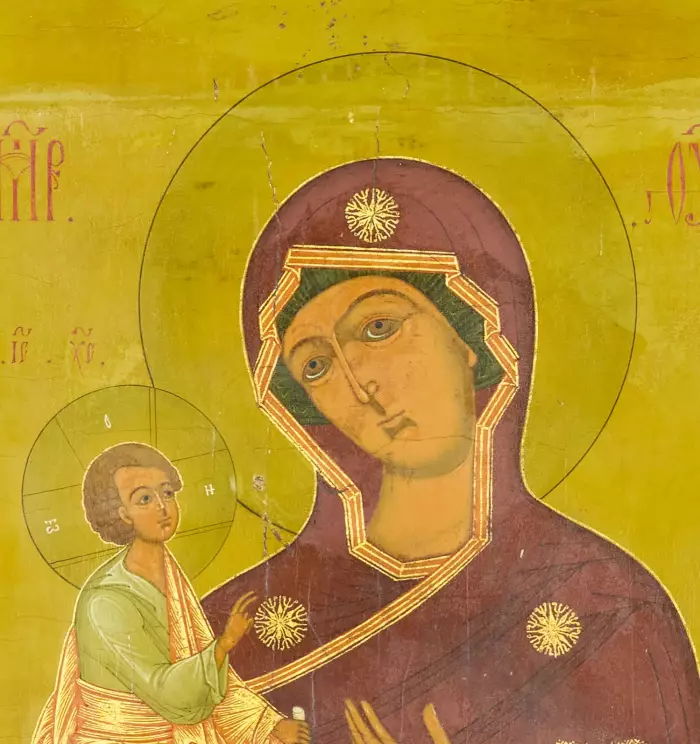
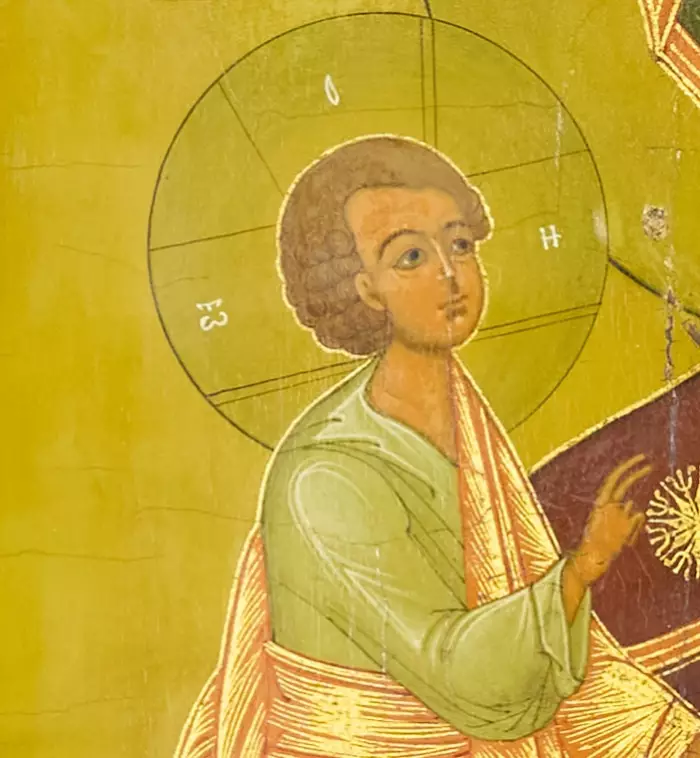
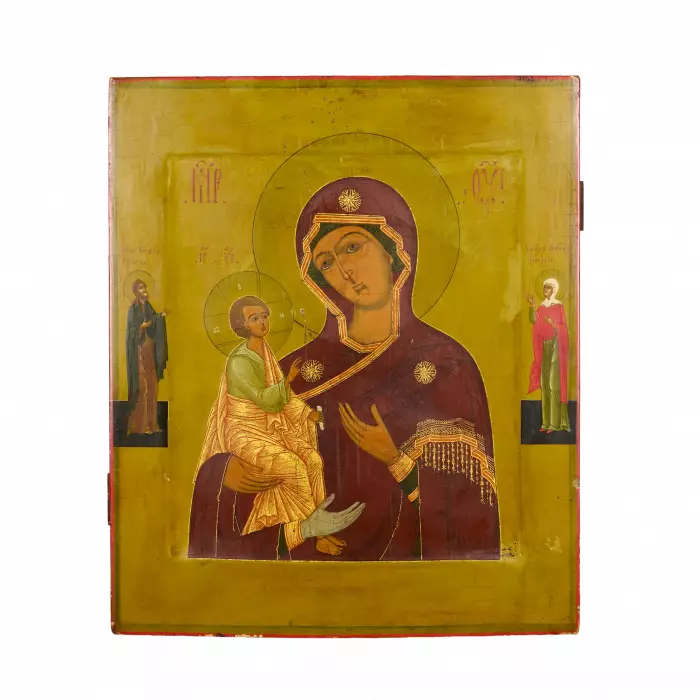
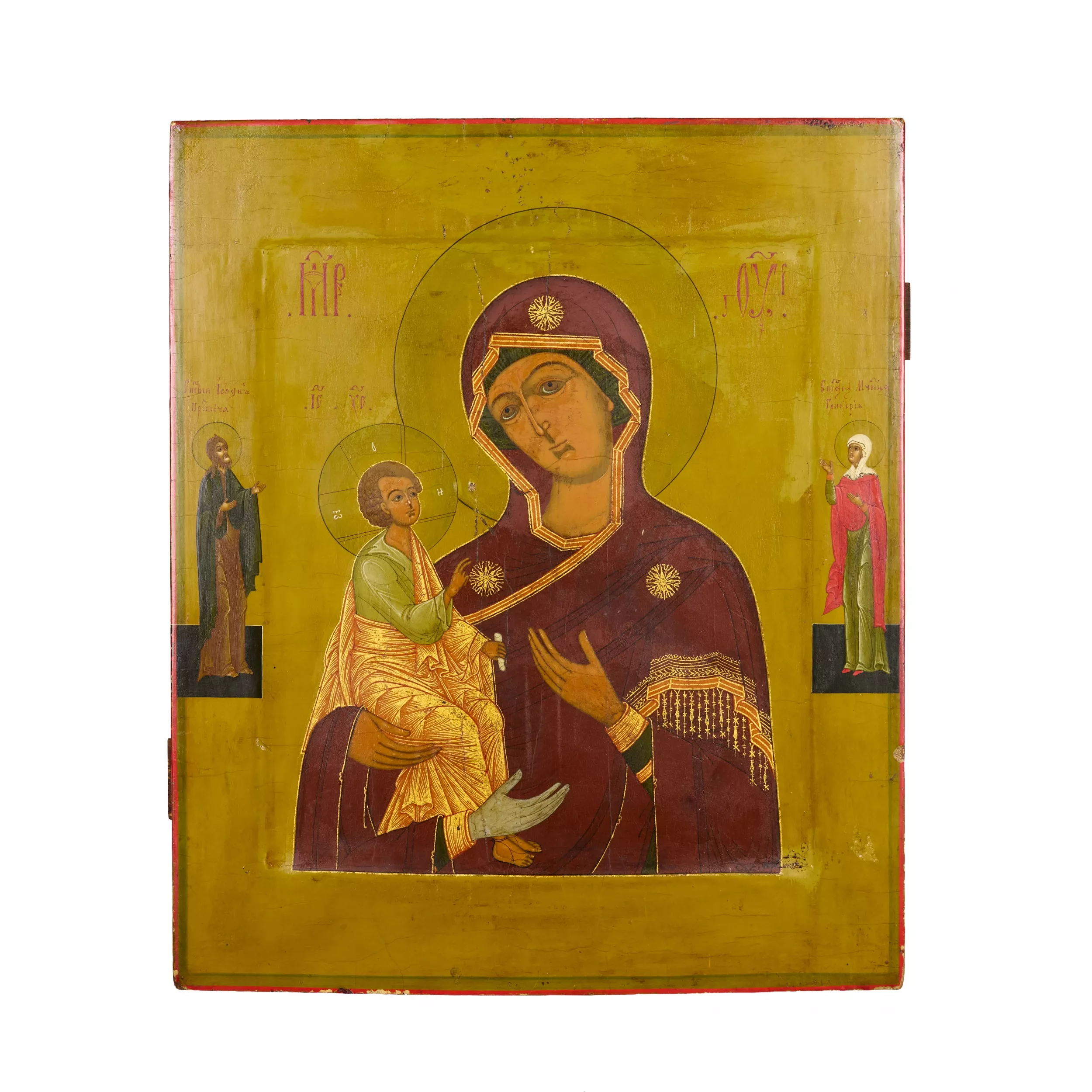
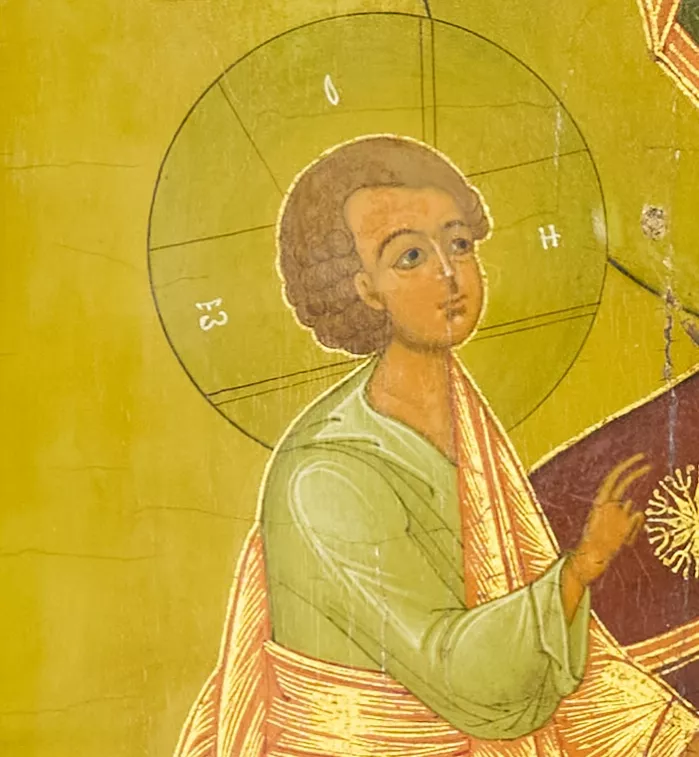
A finely painted icon of the Mother of God “Three-Handed”, executed in Mstera in the last quarter of the 19th century in the tradition of accomplished late Russian icon painting. The Mother of God is depicted half-length, holding the Christ Child on her left arm. Christ turns towards His Mother, raising His right hand in blessing and holding a scroll in His left. The composition is distinguished by the restrained interaction of the figures and the monumental character of the central image.
The defining iconographic feature of the “Three-Handed” Mother of God is the depiction of a third hand. In the present icon, it appears in the lower part of the composition beneath the figure of the Christ Child, with the palm turned upwards. This element is harmoniously incorporated into the overall silhouette of the Virgin and constitutes the principal identifying feature of this iconographic type.
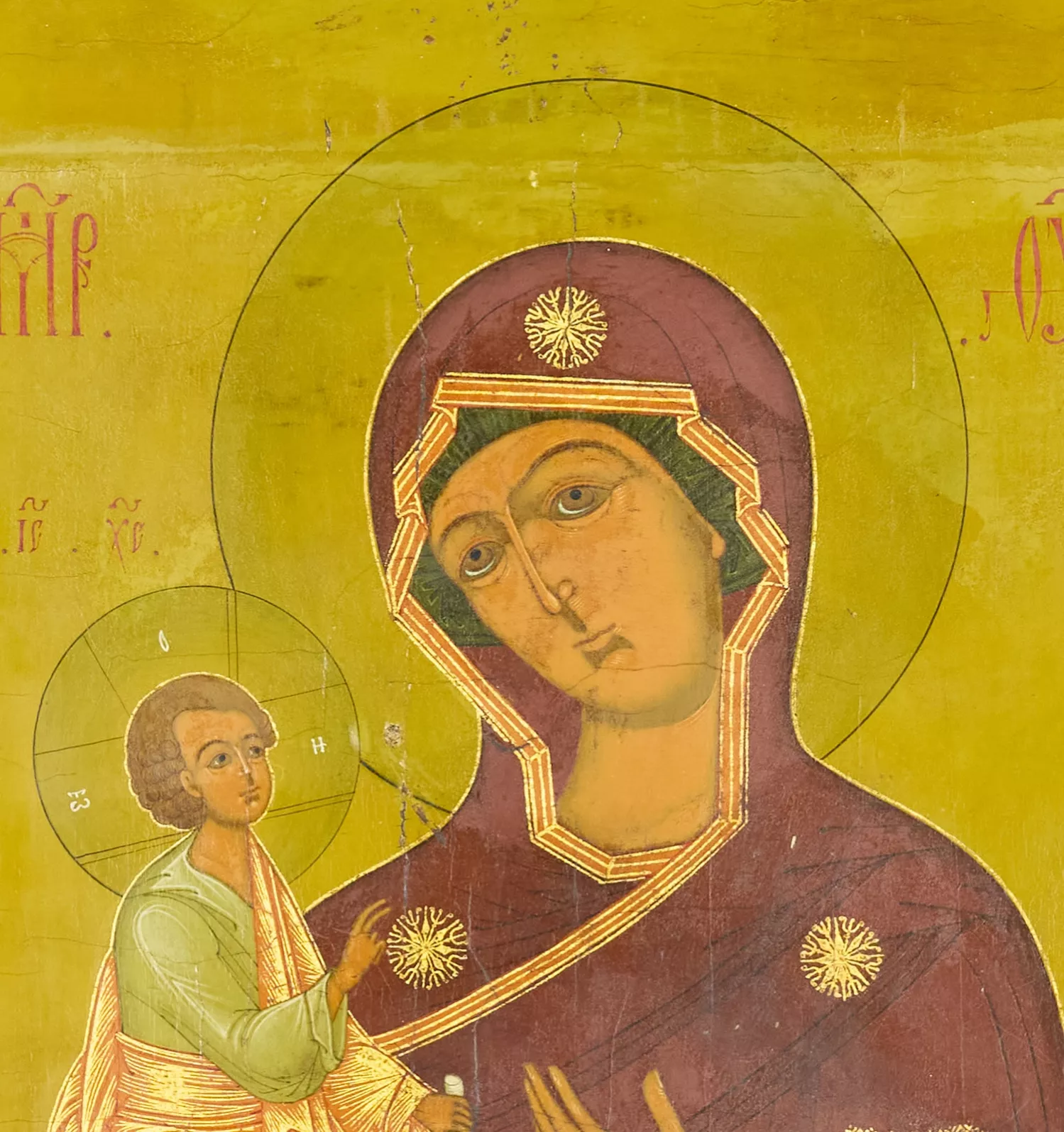
The Mother of God wears a deep cherry-brown maphorion adorned with three gold stars. The borders of the garments are enriched with delicate gold ornament. The robes of the Christ Child are particularly finely worked with shell gold, applied in numerous slender lines that articulate the folds of the fabric and create the refined decorative rhythm characteristic of Mstera icon painting. The faces are delicately and restrainedly modelled, with smooth transitions of ochre tones and precisely delineated features.
The side margins depict selected saints turned in prayer towards the central image. Saint Joseph the Hymnographer, dressed in monastic robes, appears on the left, while Saint Glyceria the Martyr is shown on the right. Both figures are accompanied by identifying inscriptions. Their inclusion within the composition was probably connected with a personal or family commission and with the heavenly patronage invoked by the icon’s original owners.
The gold ground, refined facial modelling, restrained palette and combination of yellow and white shell gold lend the work the elegance and decorative unity characteristic of Mstera icon painting of the second half of the 19th century.
Material: Wood panel, levkas, tempera, white and yellow shell gold.
Dimensions: 36 × 30 cm.
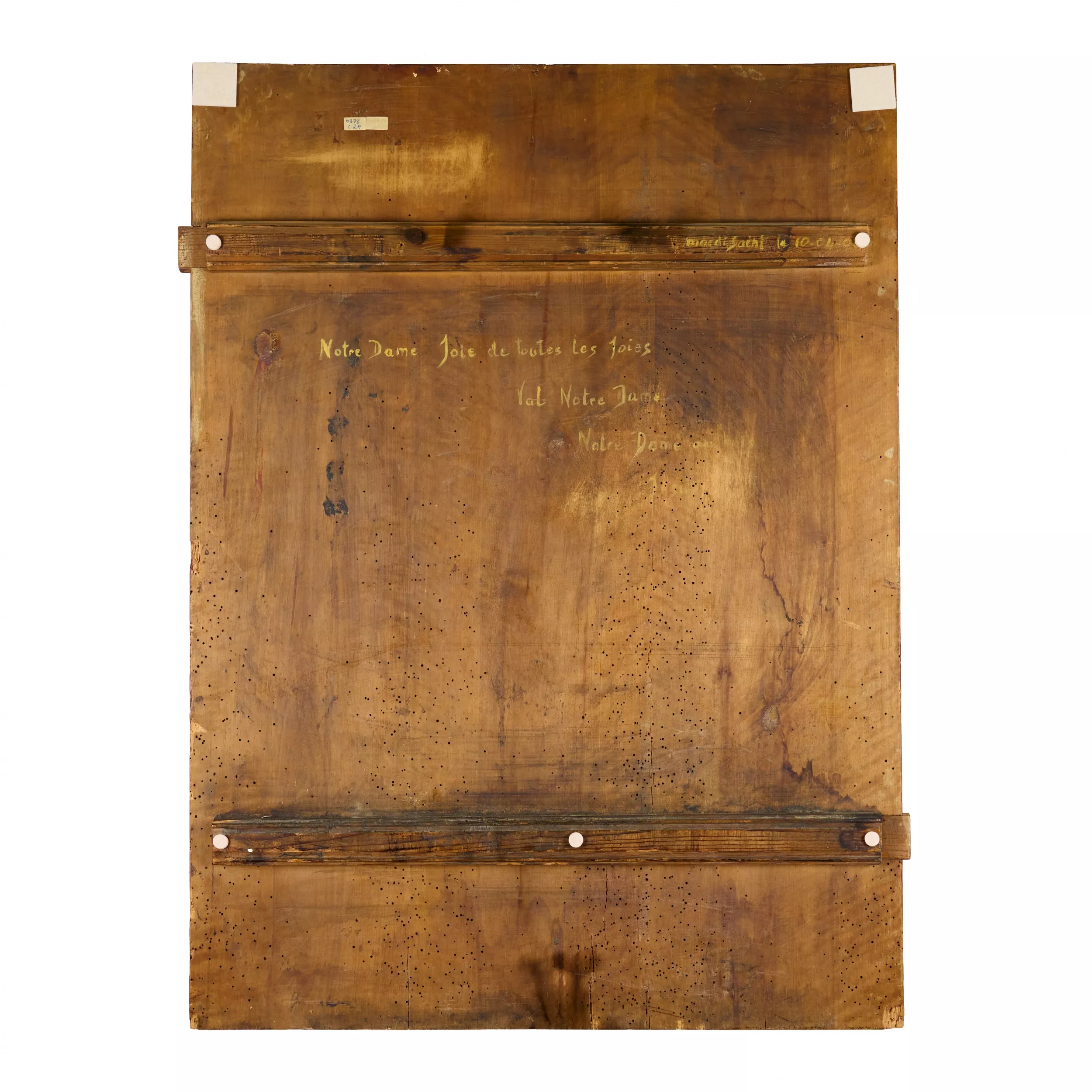
Condition: Good condition consistent with age. Natural craquelure, localised rubbing and minor losses to the paint layer and gilding, together with traces of age and use, primarily affecting the ground and edges of the panel.
Mstera, in the Vladimir Governorate, ranks among the most important historic centres of Russian icon painting. The State Russian Museum recognises the work of Mstera icon painters from the late 18th to the early 20th century as a distinct and significant part of the artistic heritage of this centre. The collection of the Vladimir-Suzdal Museum-Reserve includes more than one hundred Mstera icons, reflecting the scale and continuity of the local icon-painting tradition throughout the 19th century. Museum collections preserve numerous Mstera icons of the second half of the 19th century executed in tempera on levkas over wood, closely comparable to the present work in both date and traditional technique.
The iconography of the Mother of God “Three-Handed”, or Tricherousa, occupies a distinctive place among Marian images because of the unusual inclusion of a third hand. The State Historical Museum preserves an 18th-century icon of the “Three-Handed” Mother of God, as well as a group of iconographic patterns and representations of this type dating from the late 18th and 19th centuries. The survival of such museum drawings and models demonstrates that the composition existed as an established iconographic prototype intended for repeated interpretation by painters working in different artistic centres.
The widespread popularity of the image during the late 19th century is particularly significant. The collection of the State Historical Museum includes a chromolithographic representation of the “Three-Handed” Mother of God dated 1889, together with multi-image printed sheets of 1894 and 1897 in which this iconographic type appears alongside some of the most venerated Russian icons. These works document the continuing importance of the Tricherousa image during the very period in which the present Mstera icon was created.
The present icon combines traditional iconography with the artistic culture of late 19th-century Mstera, characterised by refined facial painting, precise draughtsmanship, a luminous gold ground and virtuoso detailing of the garments in shell gold. The selected saints represented in the margins lend the icon an individual, commissioned character and connect the universal Marian image with the personal devotional practice of its original owner.
The icon is in good condition consistent with age. Natural craquelure, localised rubbing and minor losses to the painted surface and gilding are visible, principally on the ground and along the edges of the panel.
The condition report is provided for informational purposes only.
It is not comprehensive and may not reflect all defects, restorations, alterations, or adaptations, as Antiqon does not perform professional conservation-level assessments. The information is based on a qualified, yet subjective, evaluation by our specialists.Before purchasing, we recommend consultation with an independent expert.Please also consult our Terms and conditions and Glossary A-Z, which contain important information on lot characteristics and sale conditions.