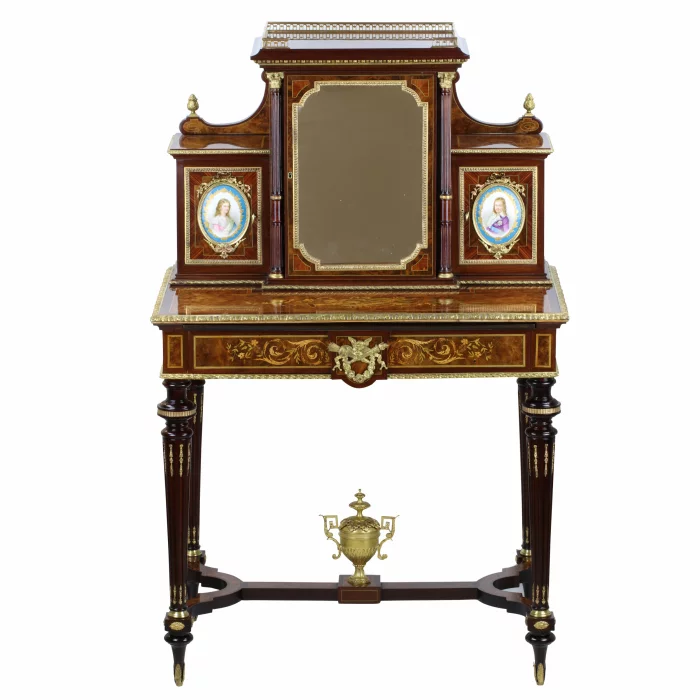
LADY’S BONHEUR DU JOUR IN THE NAPOLÉON III STYLE. FRANCE, SECOND HALF OF THE 19TH CENTURY
Antiqon consultant will contact you within one business day after receiving your request.
Discover your personalized shipping cost — based on where you are and how you prefer to receive your piece..
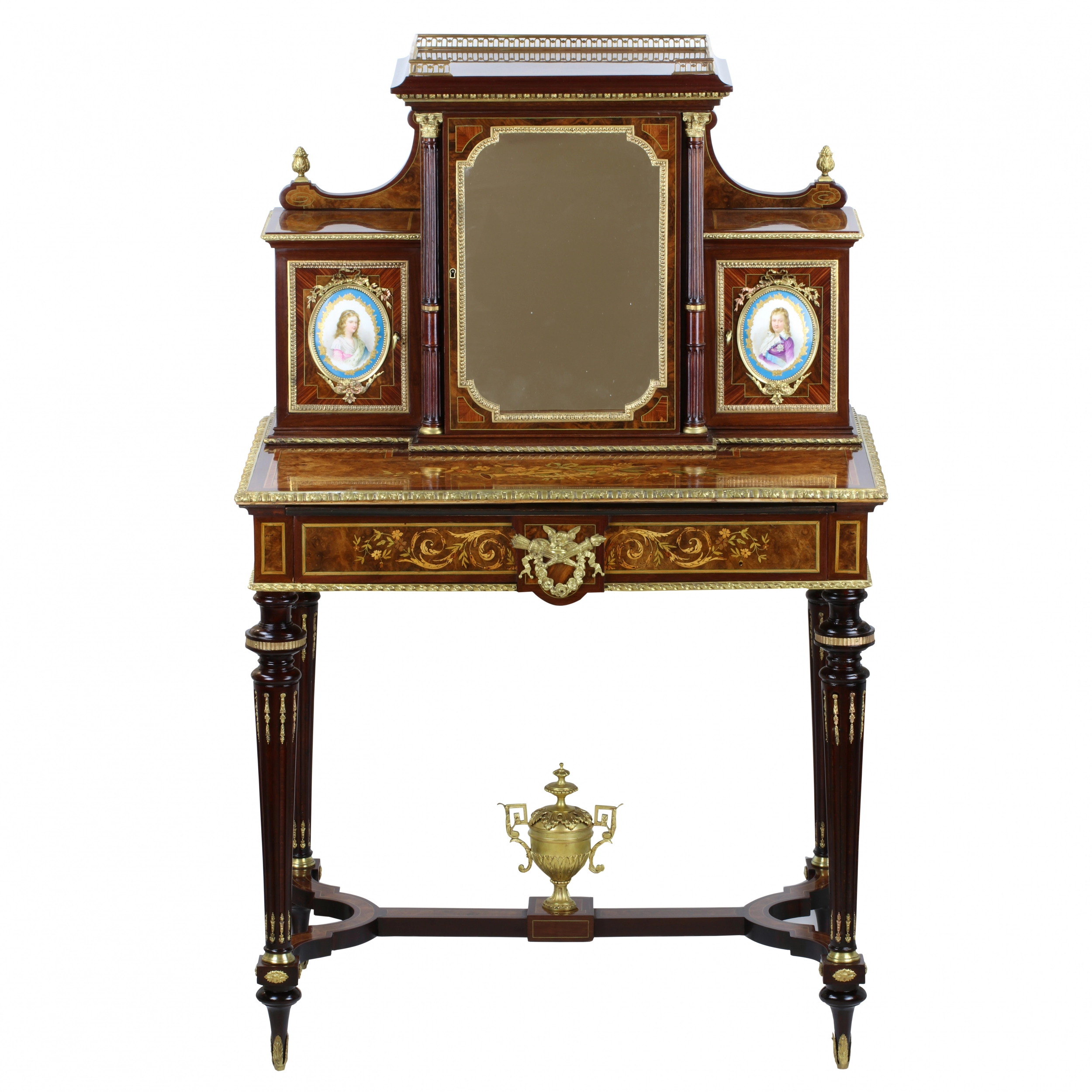
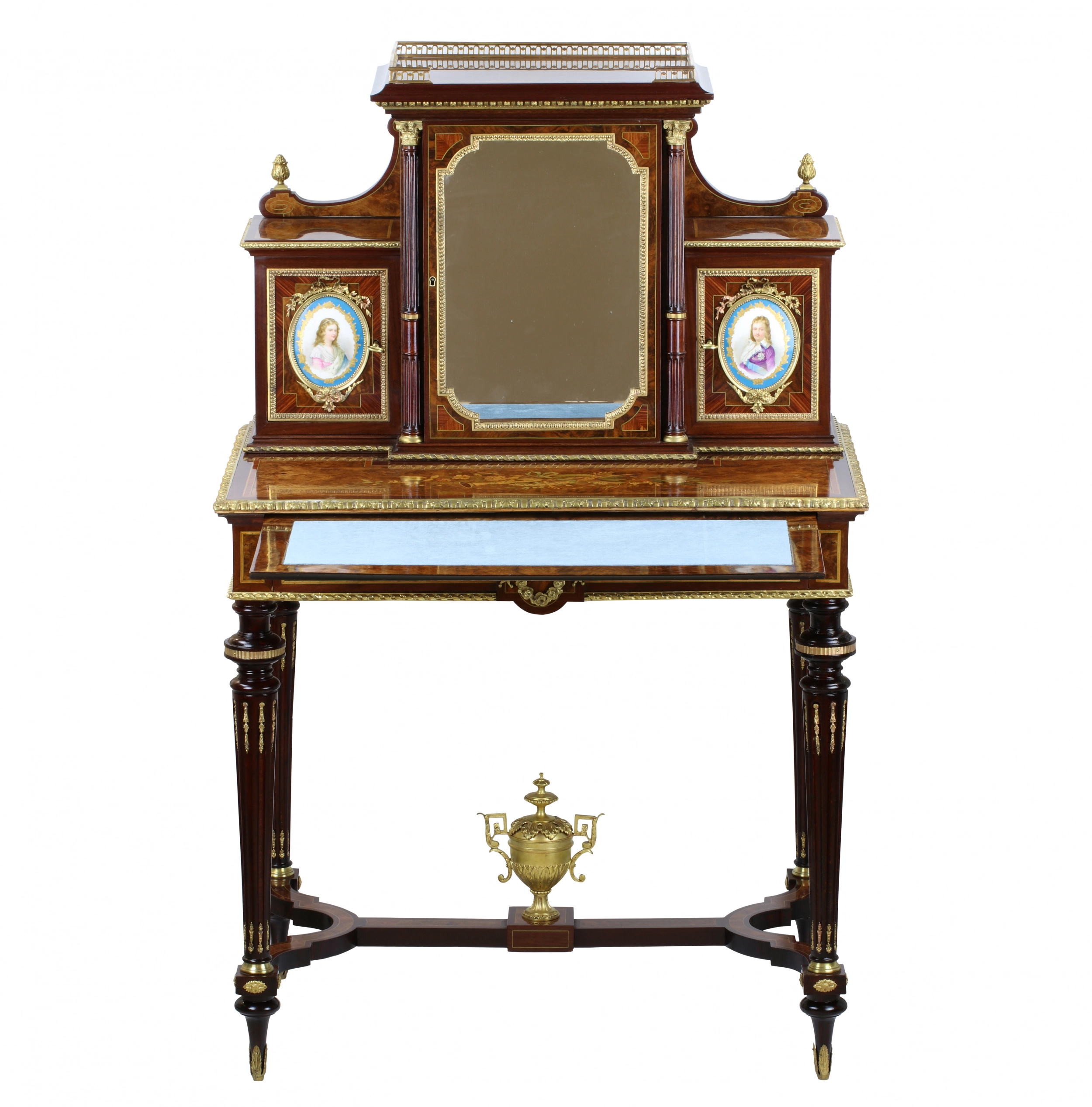
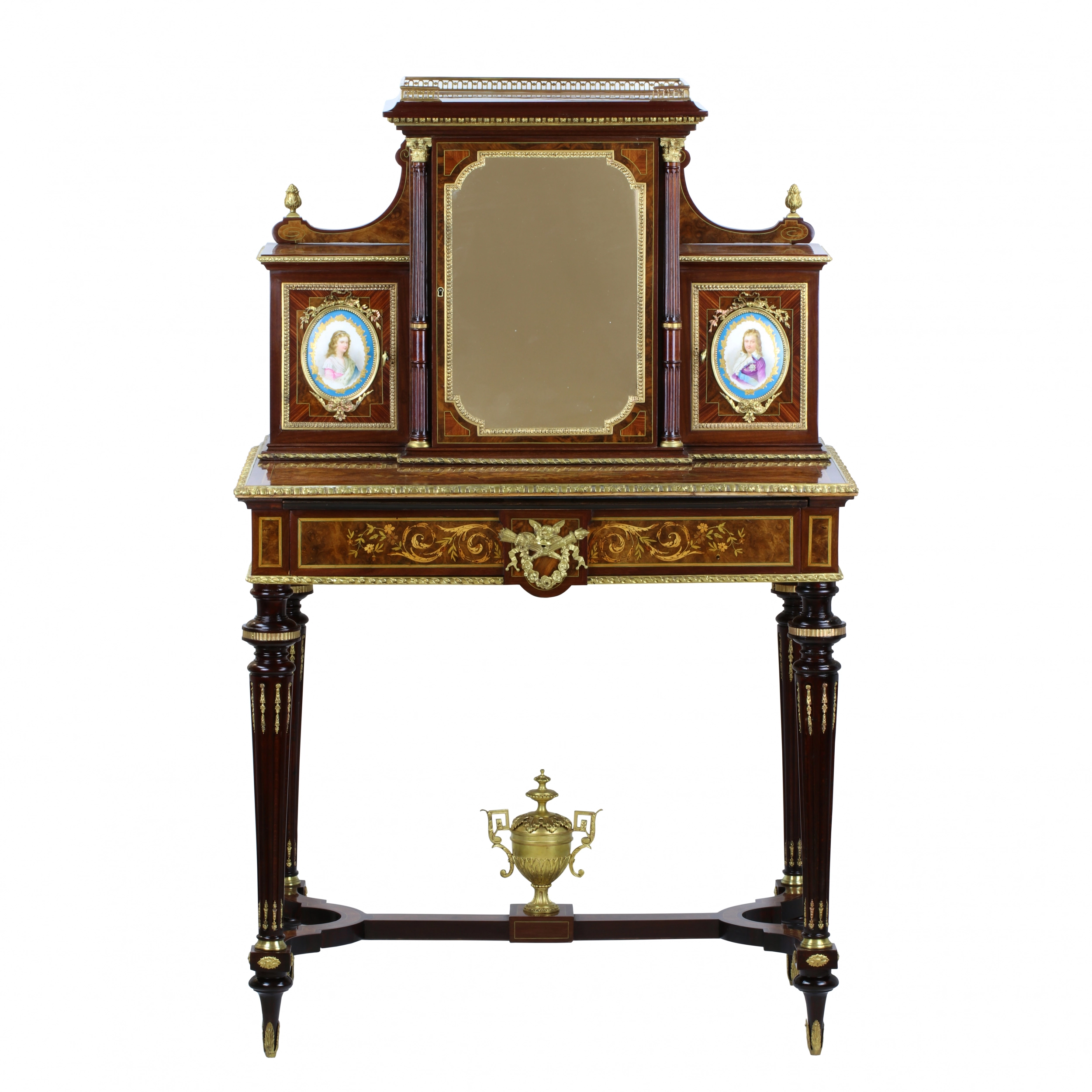
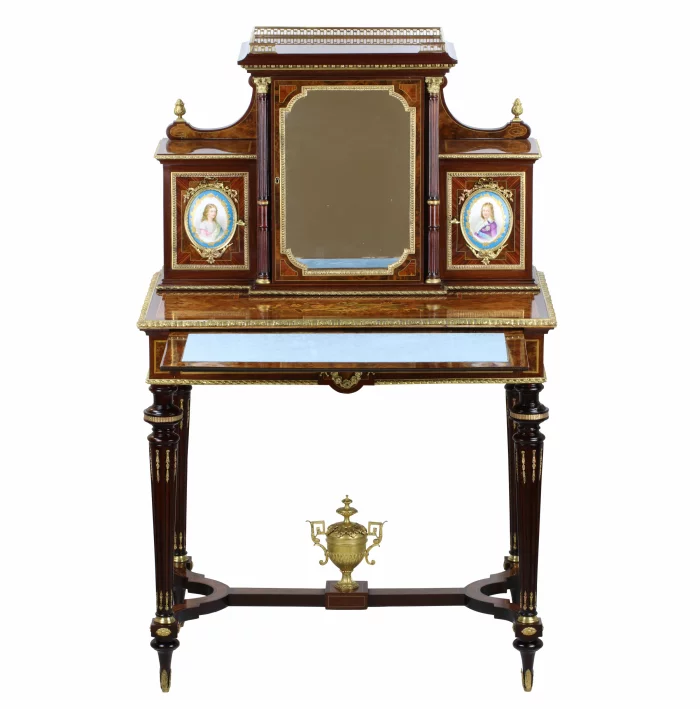
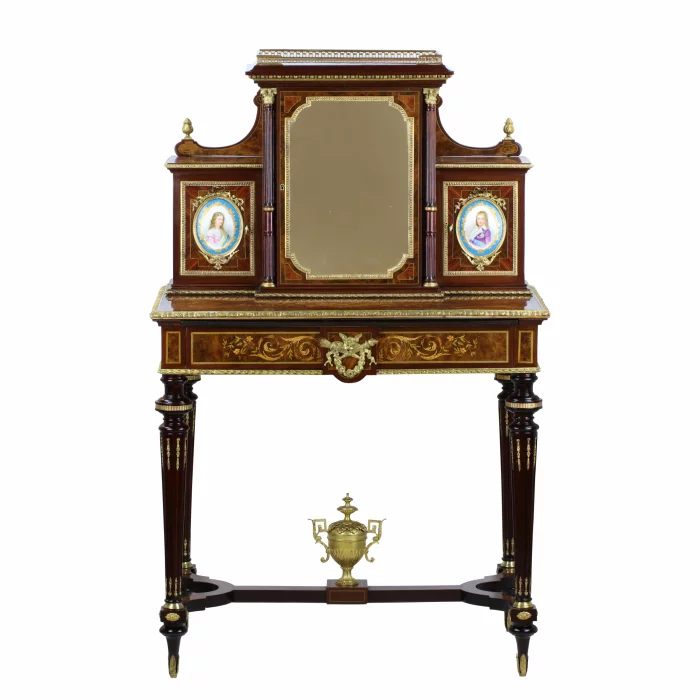
An elegant lady’s Bonheur du Jour, made in France during the second half of the 19th century in the Napoléon III style, representing a distinguished example of fine cabinetmaking from the Historicist period. The piece combines refined ornament, accomplished craftsmanship and carefully considered functionality, characteristic of high-quality Parisian furniture of the period.
The cabinet is distinguished by its particularly expressive proportions. The tall superstructure increases the visual presence of the piece and creates an intimate architectural setting around it, establishing the desk as the focal point of a lady’s boudoir. The composition is at once formal and inviting, combining classical architectural discipline with the decorative richness associated with the Second Empire.
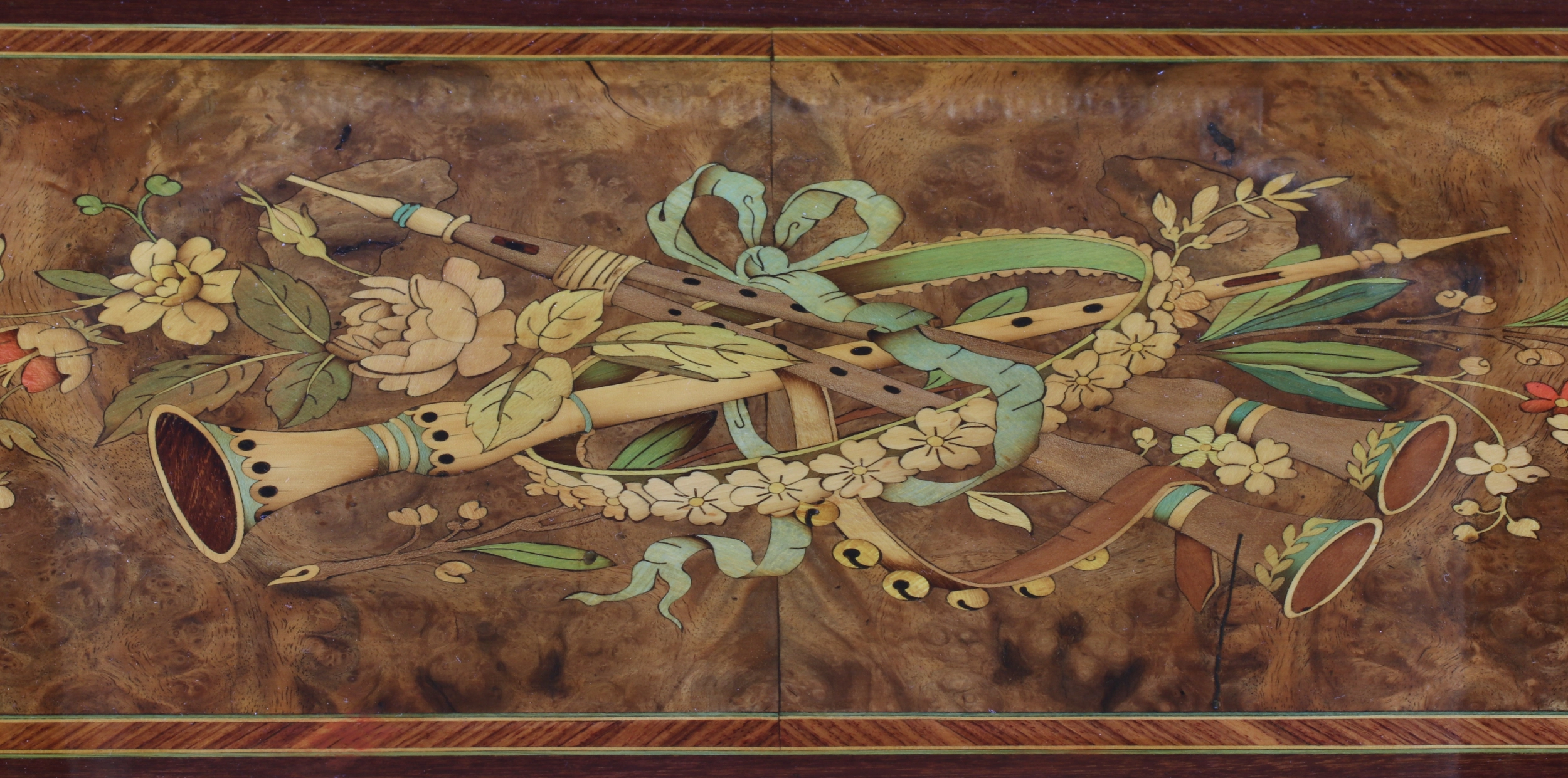
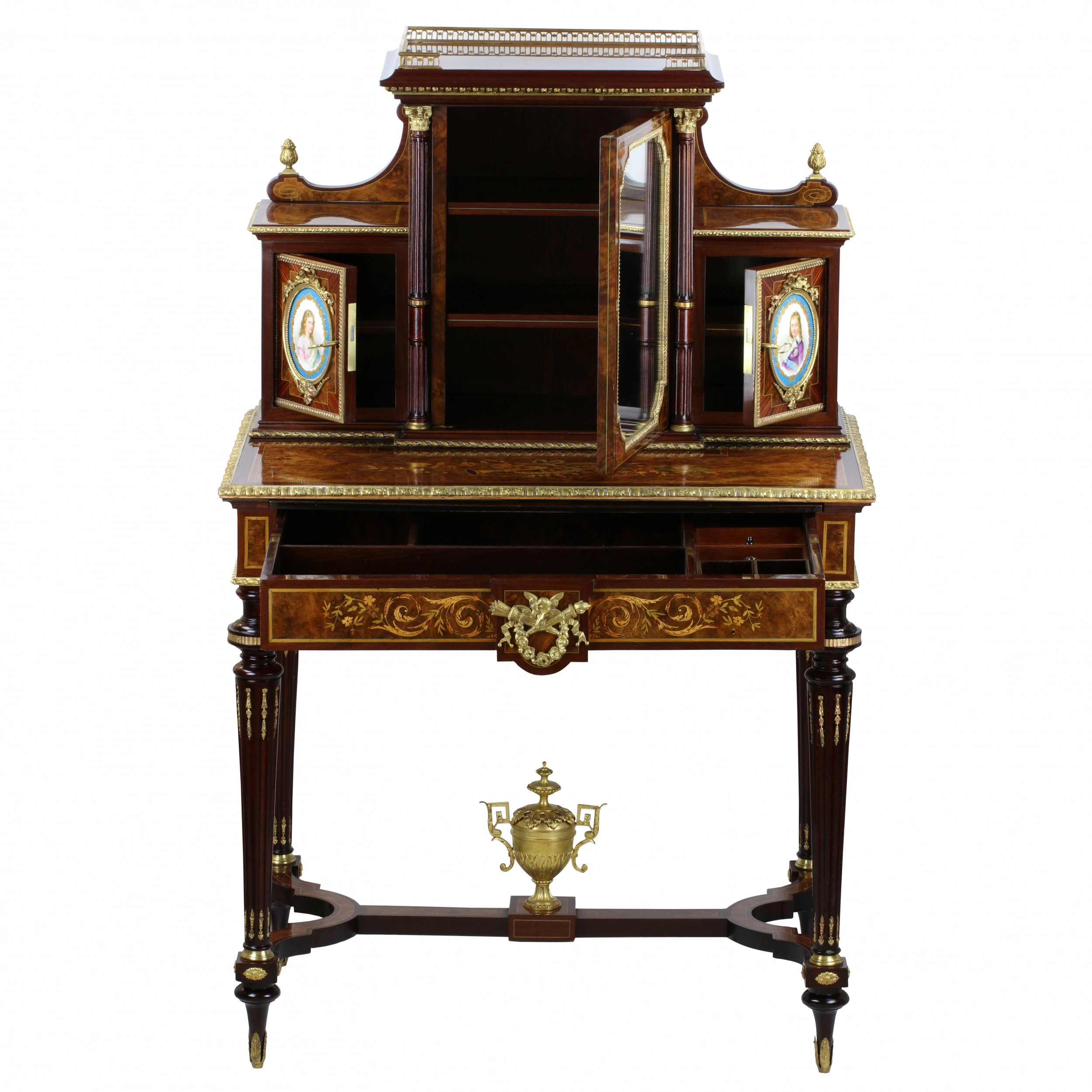
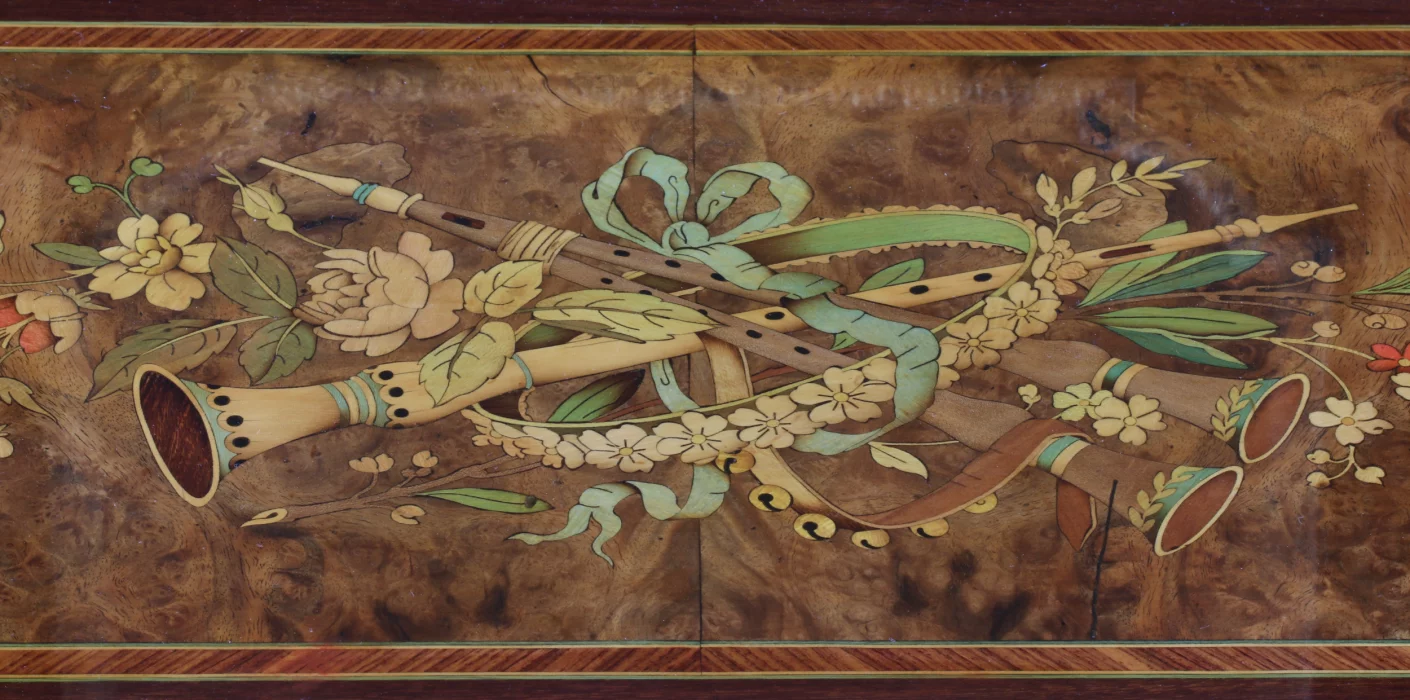
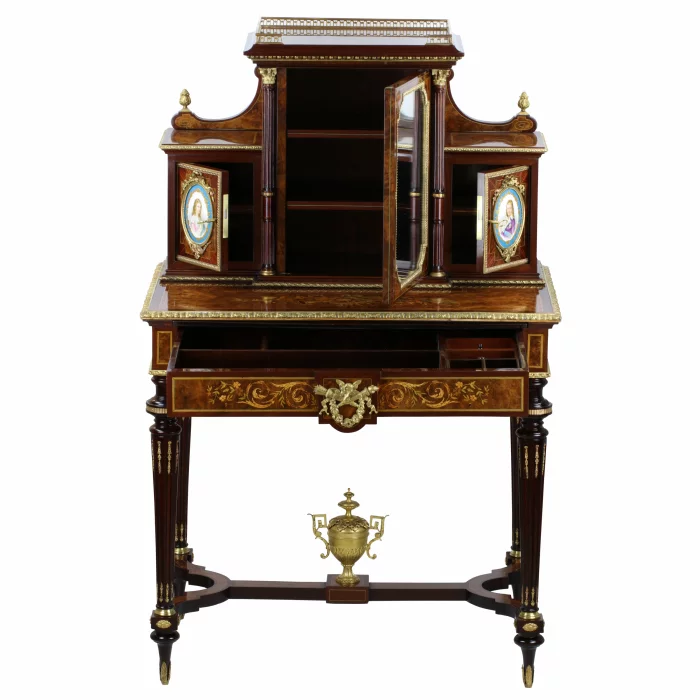
The wooden carcass is richly embellished with marquetry in contrasting timbers. The writing surface is decorated with finely executed inlaid motifs depicting musical instruments, Cupid’s quiver and arrows, the torch of love, floral garlands and ribbons, traditional emblems of affection, harmony and domestic happiness. These allegorical motifs emphasise the cabinet’s original function within a refined feminine interior.
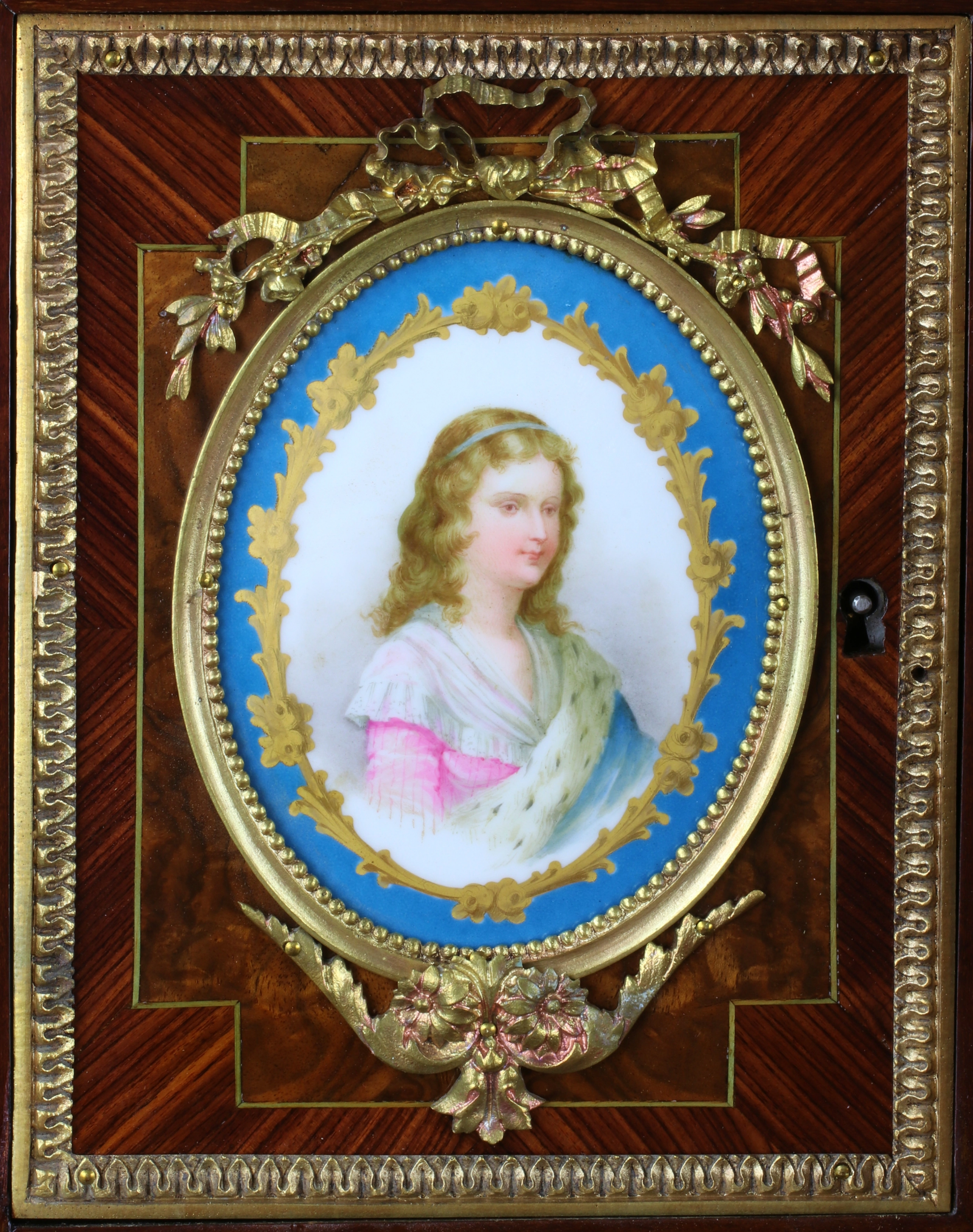
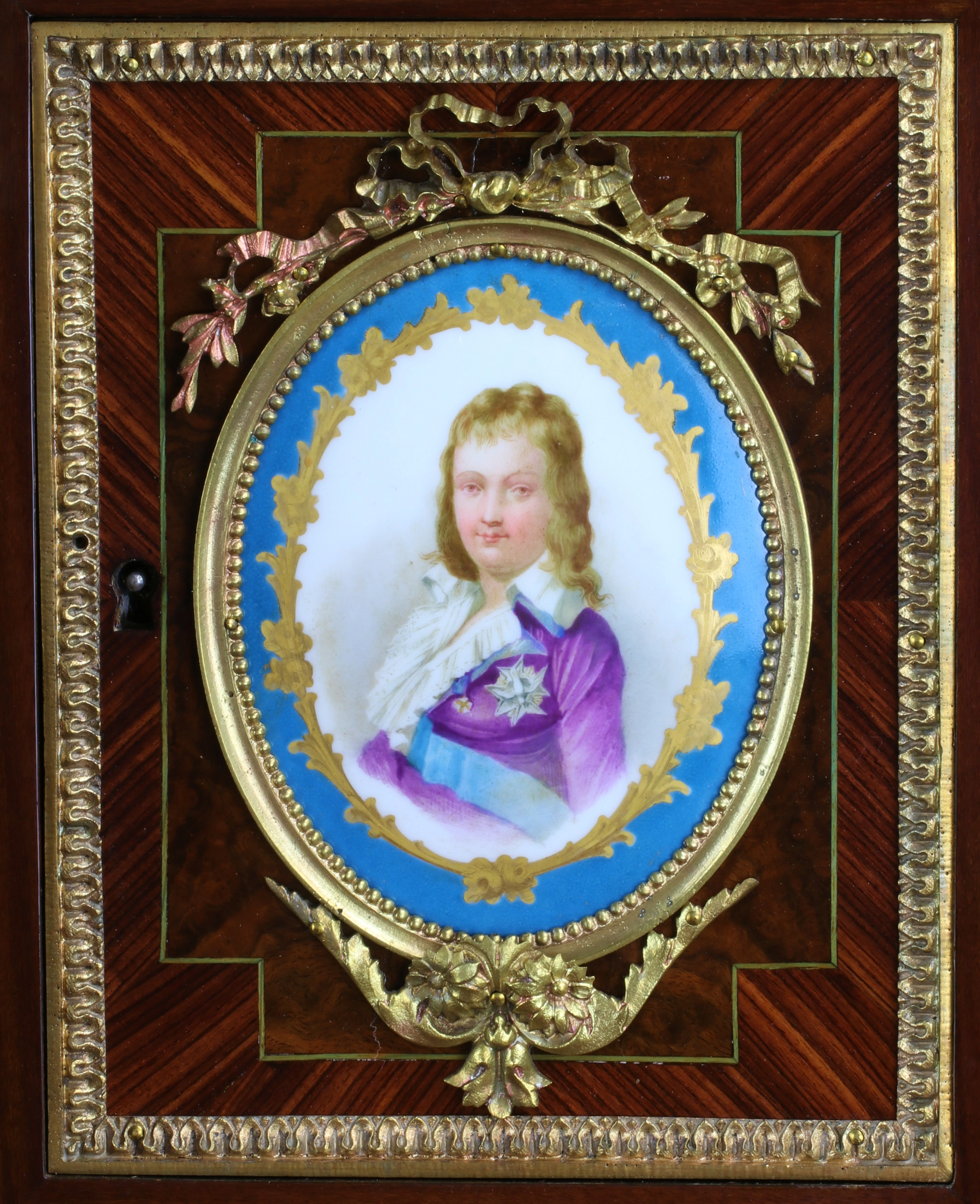
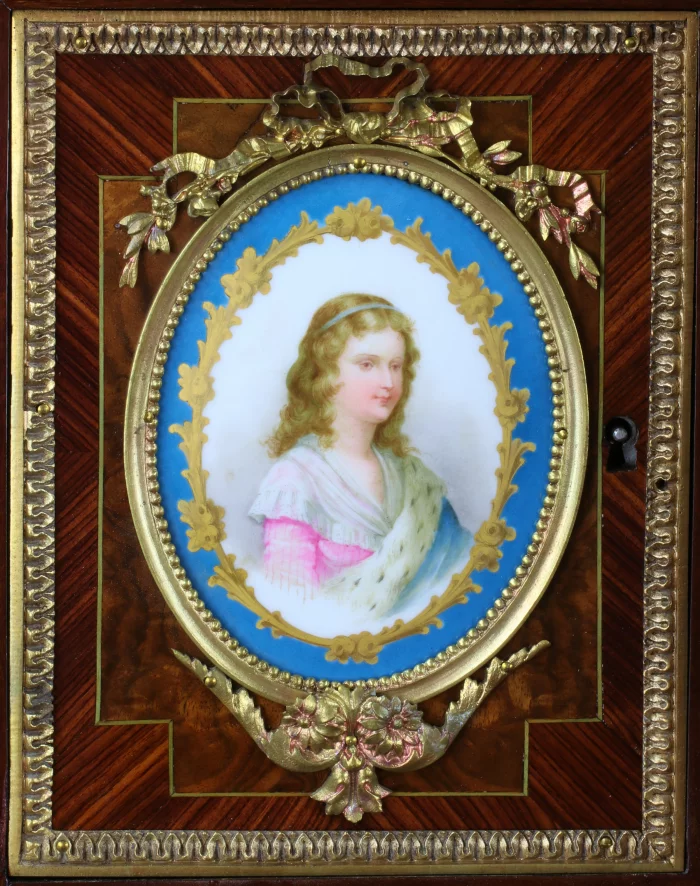
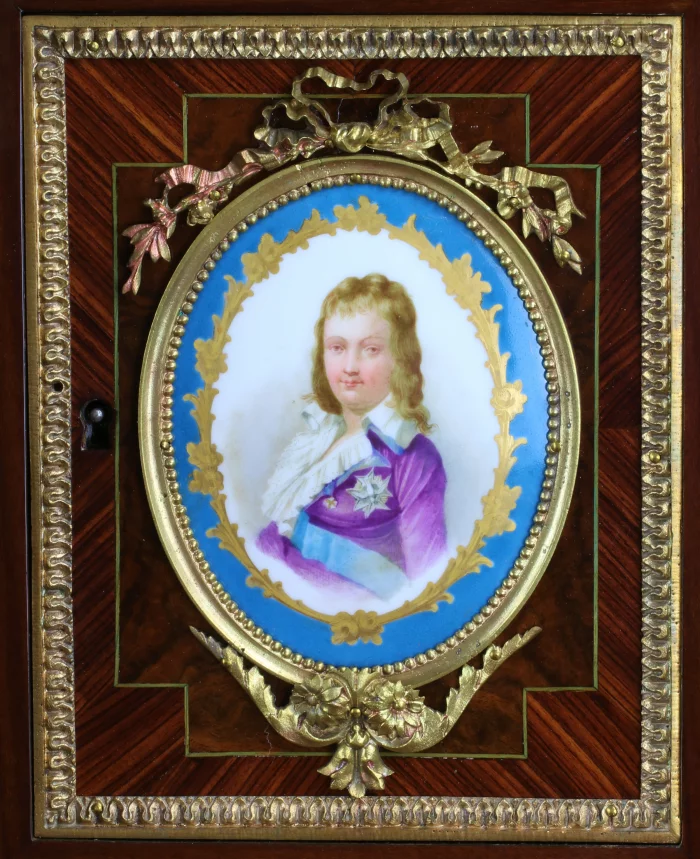
The superstructure is adorned with two oval porcelain portrait plaques in the style of the Manufacture de Sèvres. One reproduces the traditional portrait type of the Dauphin Louis XVII, while the second probably represents Marie Thérèse of France, known as Madame Royale. Both portraits are set within finely cast gilt-bronze frames decorated with ribbons, floral garlands and laurel motifs characteristic of French decorative arts under Napoléon III.
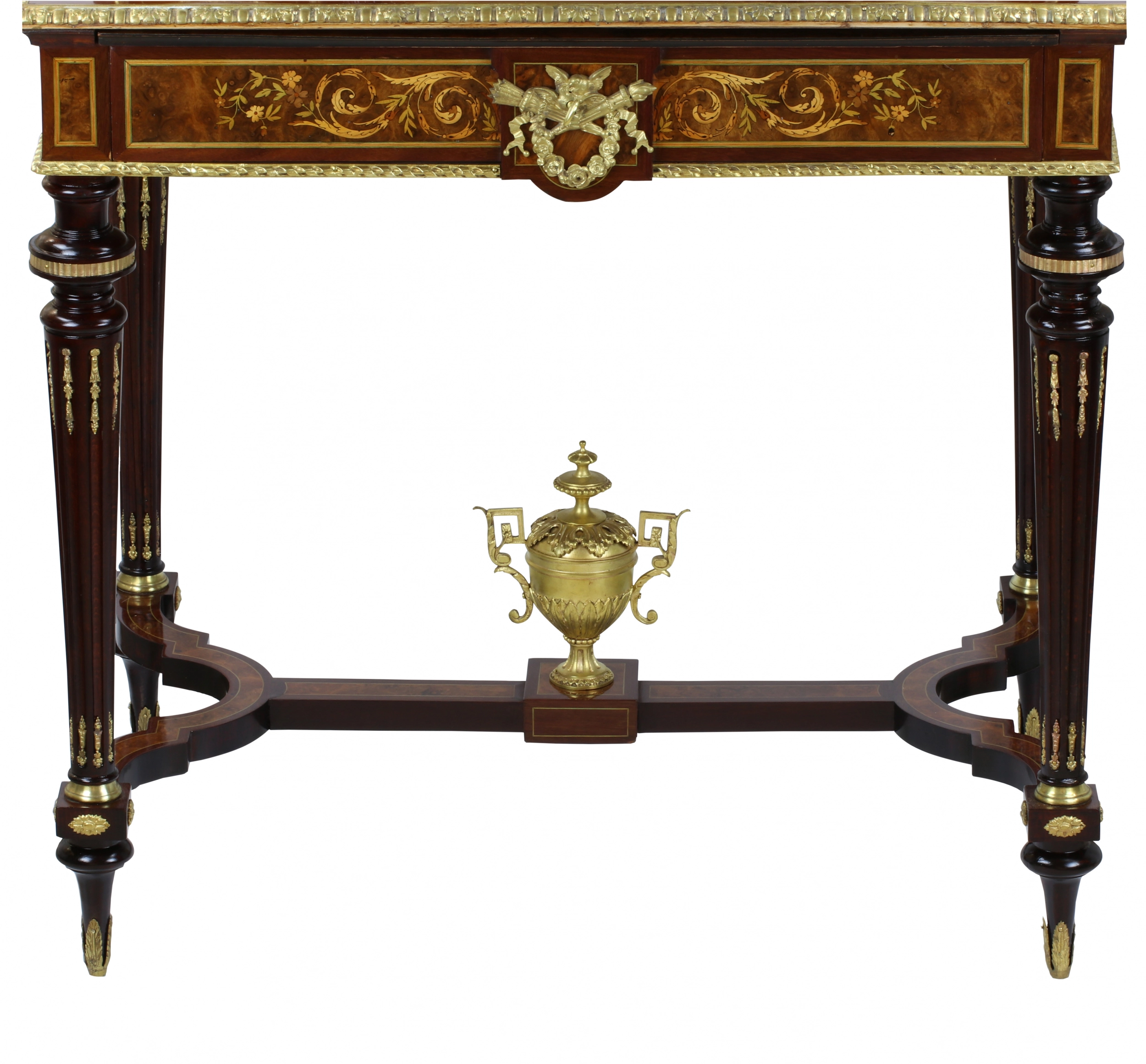
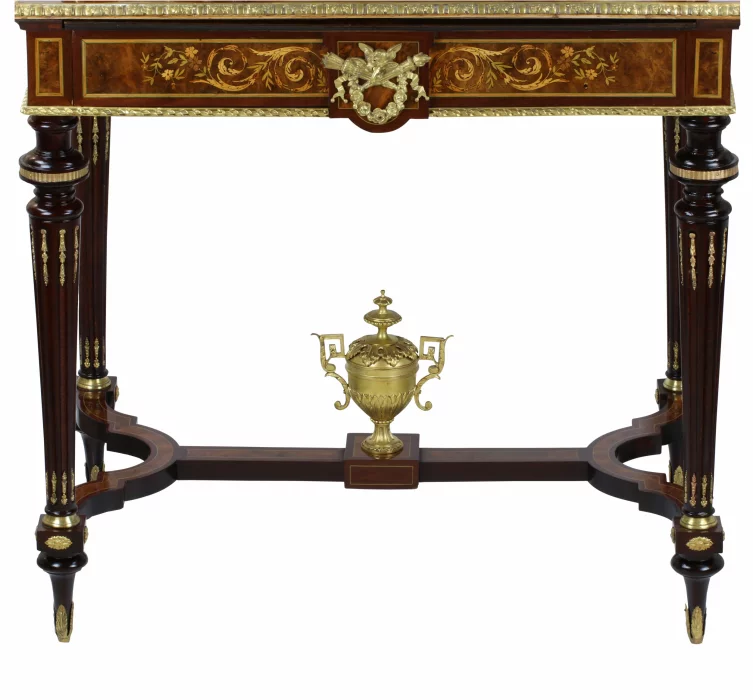
The cabinet is raised on slender tapering legs with fluted decoration and finely applied gilt-bronze enrichments. Of particular note are the small bronze elements set within the channels of the fluting, an unusually refined detail indicative of the maker’s technical sophistication. The frieze is mounted with gilt-bronze ornaments comprising classical garlands and a central mask. The lower stretcher is centred by a decorative gilt-bronze vase, completing the balanced architectural silhouette.
The fitted interior incorporates a central mirror, open shelves, a pull-out writing slide and practical compartments for writing implements and personal effects. The original key is included.
Dimensions: Height: 133.5 cm. Width: 84 cm. Depth: 55 cm.
Provenance: Private collection.
The Bonheur du Jour is among the most refined types of French lady’s furniture, first developed during the reign of Louis XV and revived with renewed splendour under the Second Empire. Originally conceived as a compact writing desk for correspondence, private papers, jewellery and personal possessions, it reflected the growing importance of privacy and domestic ritual in aristocratic interiors of the 18th century. During the second half of the 19th century, French cabinetmakers working under Napoléon III returned to celebrated models of the Ancien Régime, enlarging their proportions and enriching them with increasingly elaborate ornament.
The Historicist period marked an exceptional flourishing of French furniture design and production. Parisian workshops combined the architectural clarity of Classicism with Rococo curves, intricate marquetry, gilt-bronze mounts and painted porcelain. These luxurious furnishings were intended for the reception rooms, salons and boudoirs of a wealthy European clientele. During this period, the Bonheur du Jour evolved from a modest writing table into a highly decorative interior composition with an elevated superstructure, mirror and porcelain panels.
Porcelain portrait plaques in the style of the Manufacture de Sèvres were especially prized in furniture of this quality. They reflected the 19th-century fascination with the artistic legacy of the French royal court and frequently reproduced portraits of members of the Bourbon family. Combined with marquetry depicting musical instruments, Cupid’s arrows, the torch of love and floral garlands, these plaques formed a decorative programme associated with harmony, cultivated taste, education and domestic virtue.
Furniture of this type brought together the skills of cabinetmakers, bronziers, porcelain painters and marquetry specialists. Today, Napoléon III Bonheur du Jour cabinets are highly valued by collectors and museums as representative examples of 19th-century French decorative arts and of the period’s sophisticated revival of 18th-century courtly design.
Good antique condition. Minor signs of age and use consistent with the period. The marquetry, gilt-bronze mounts, porcelain plaques and structure are well preserved. The original key is included.
The condition report is provided for informational purposes only.
It is not comprehensive and may not reflect all defects, restorations, alterations, or adaptations, as Antiqon does not perform professional conservation-level assessments. The information is based on a qualified, yet subjective, evaluation by our specialists.Before purchasing, we recommend consultation with an independent expert.Please also consult our Terms and conditions and Glossary A-Z, which contain important information on lot characteristics and sale conditions.