

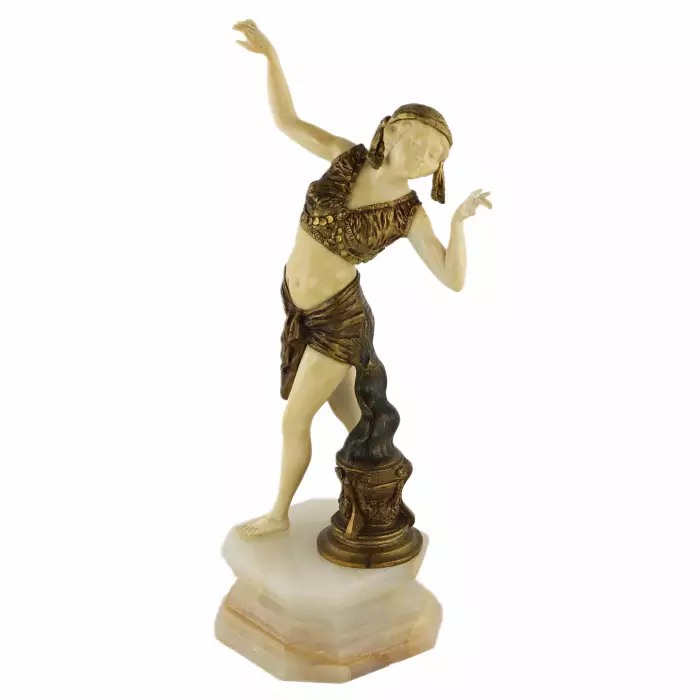
SALAMMBÔ. A CHRYSELEPHANTINE ART DECO SCULPTURE. CIRCA 1920
Antiqon consultant will contact you within one business day after receiving your request.
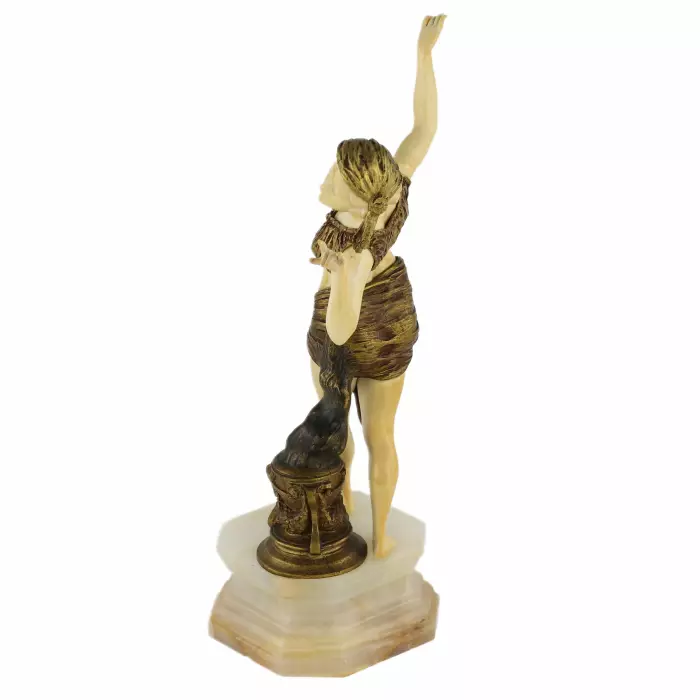
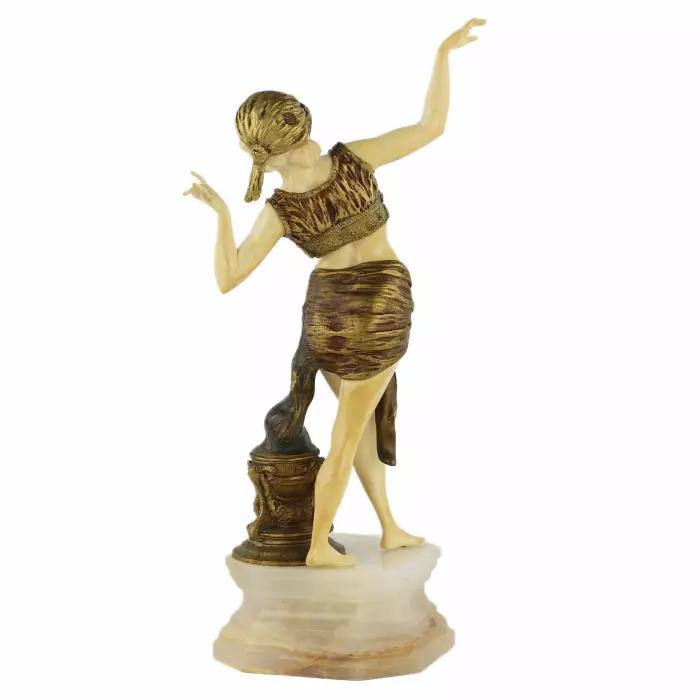
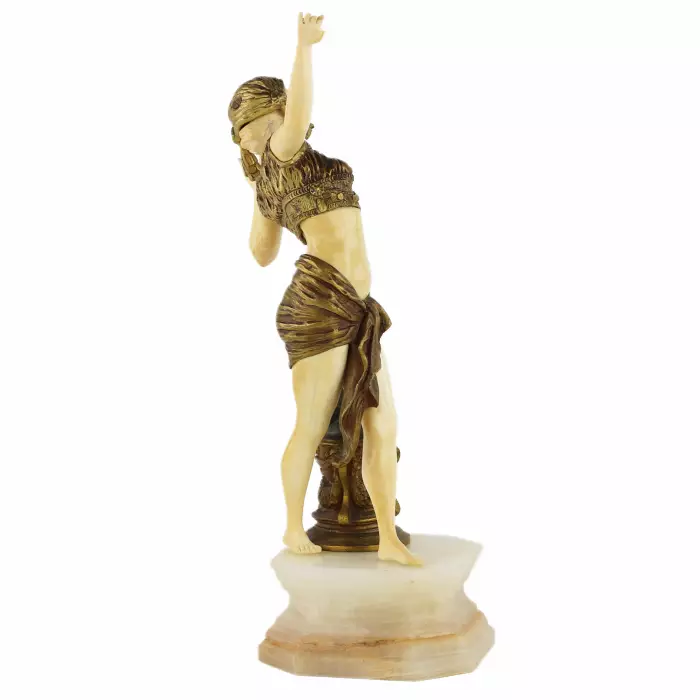
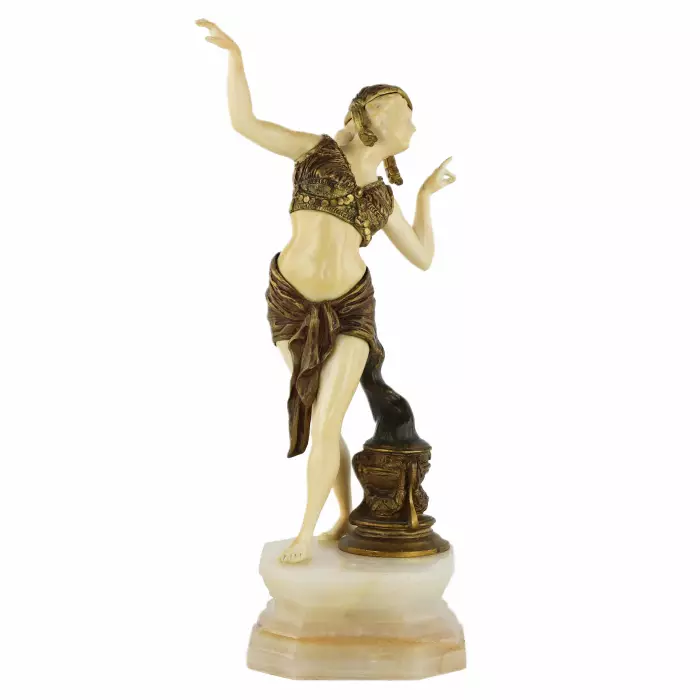
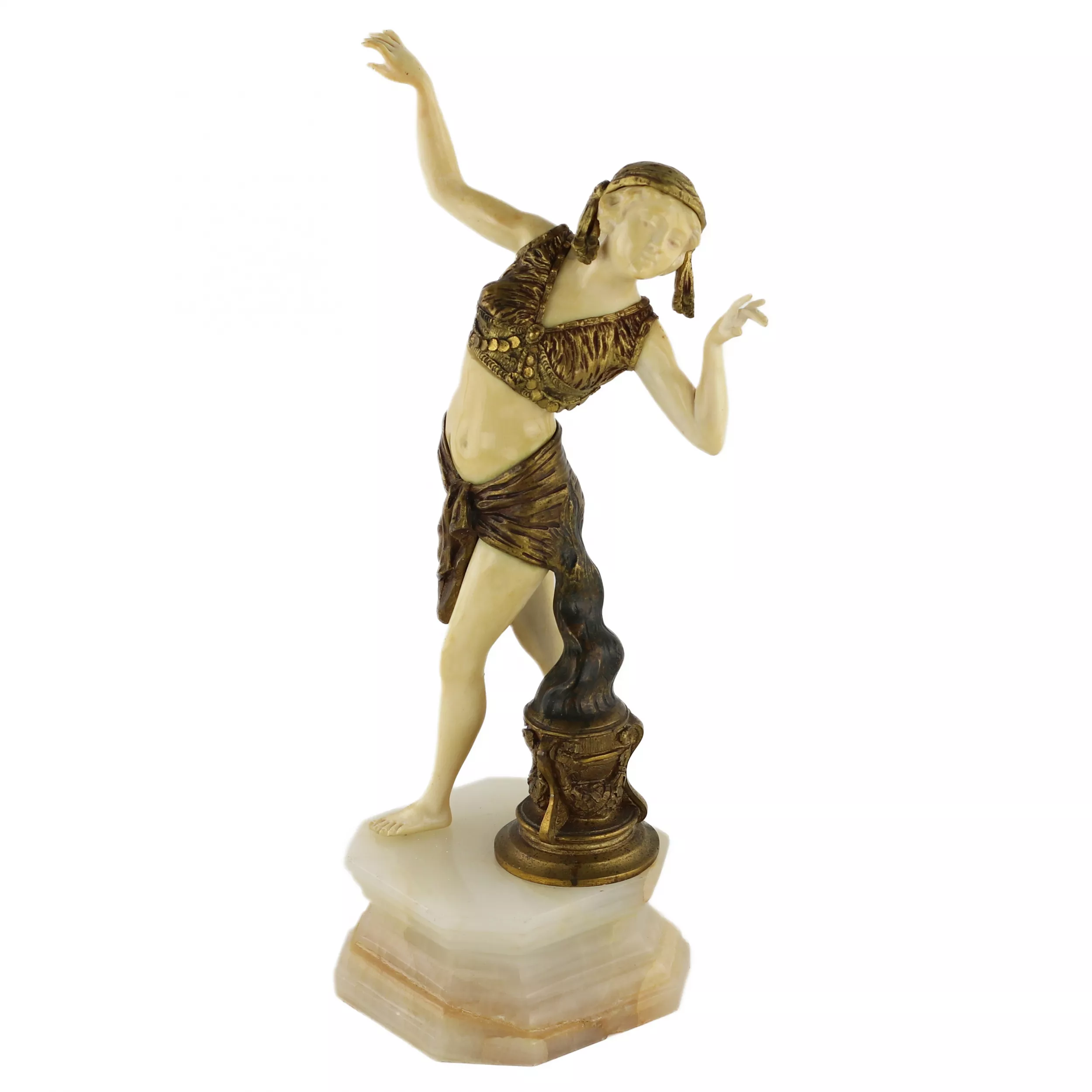
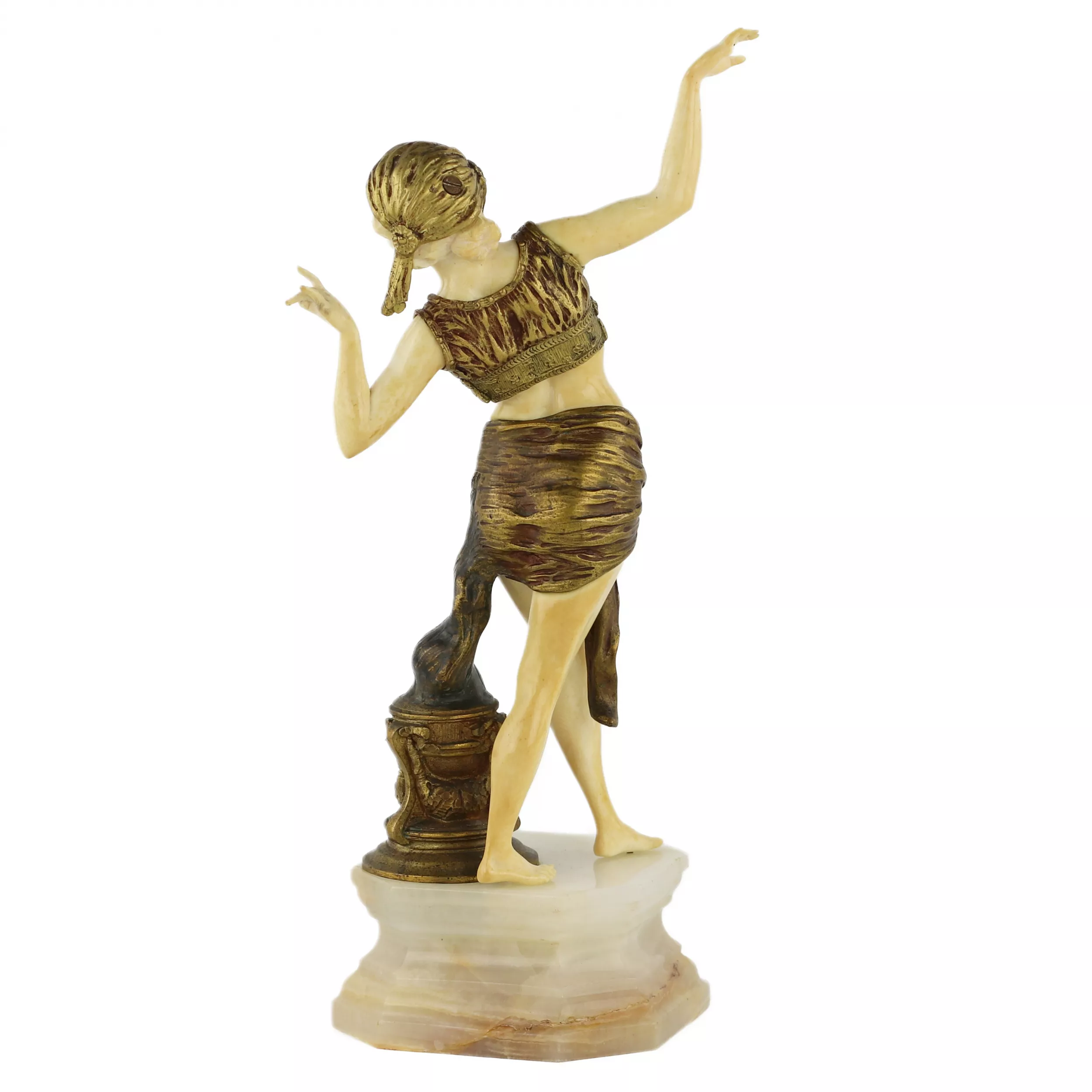
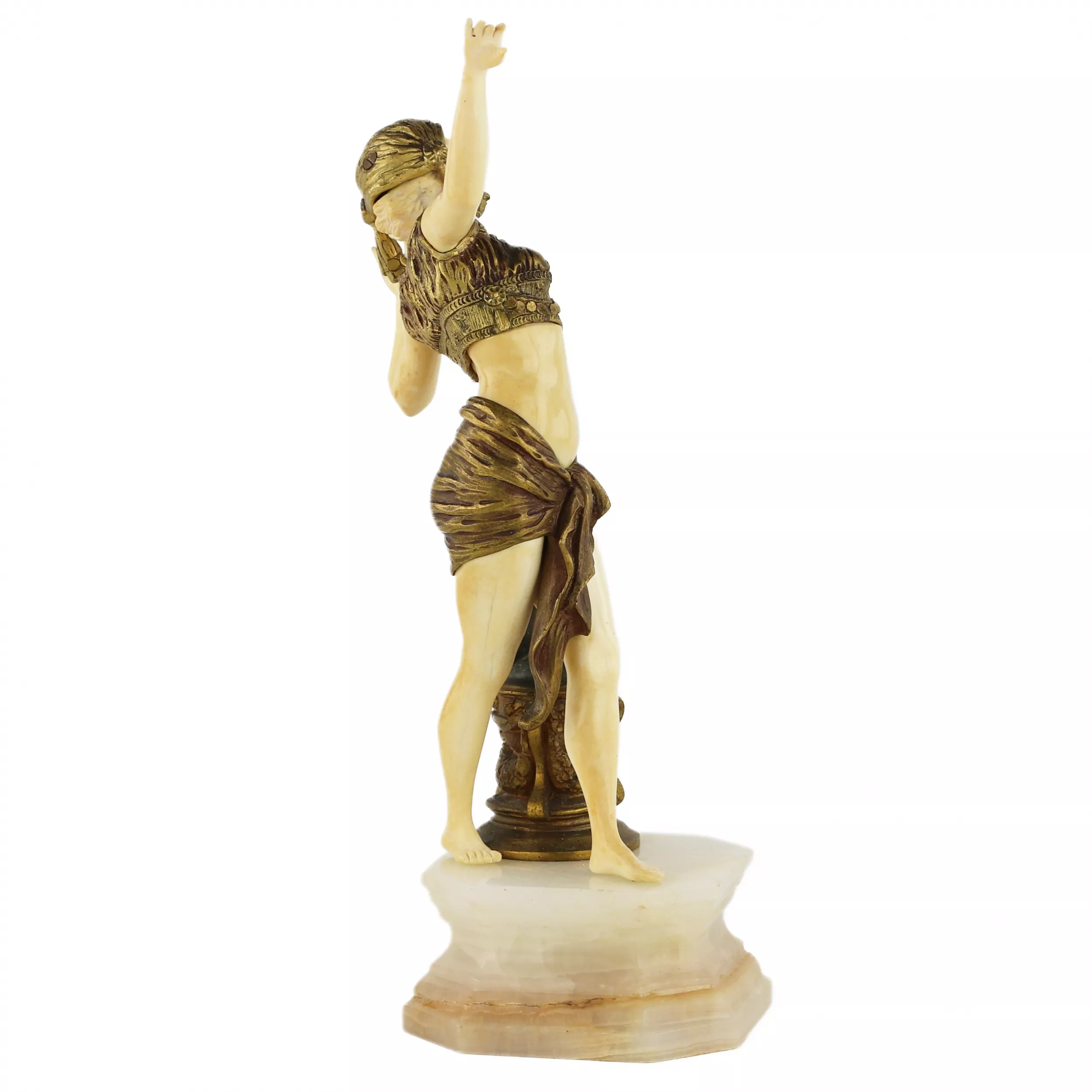
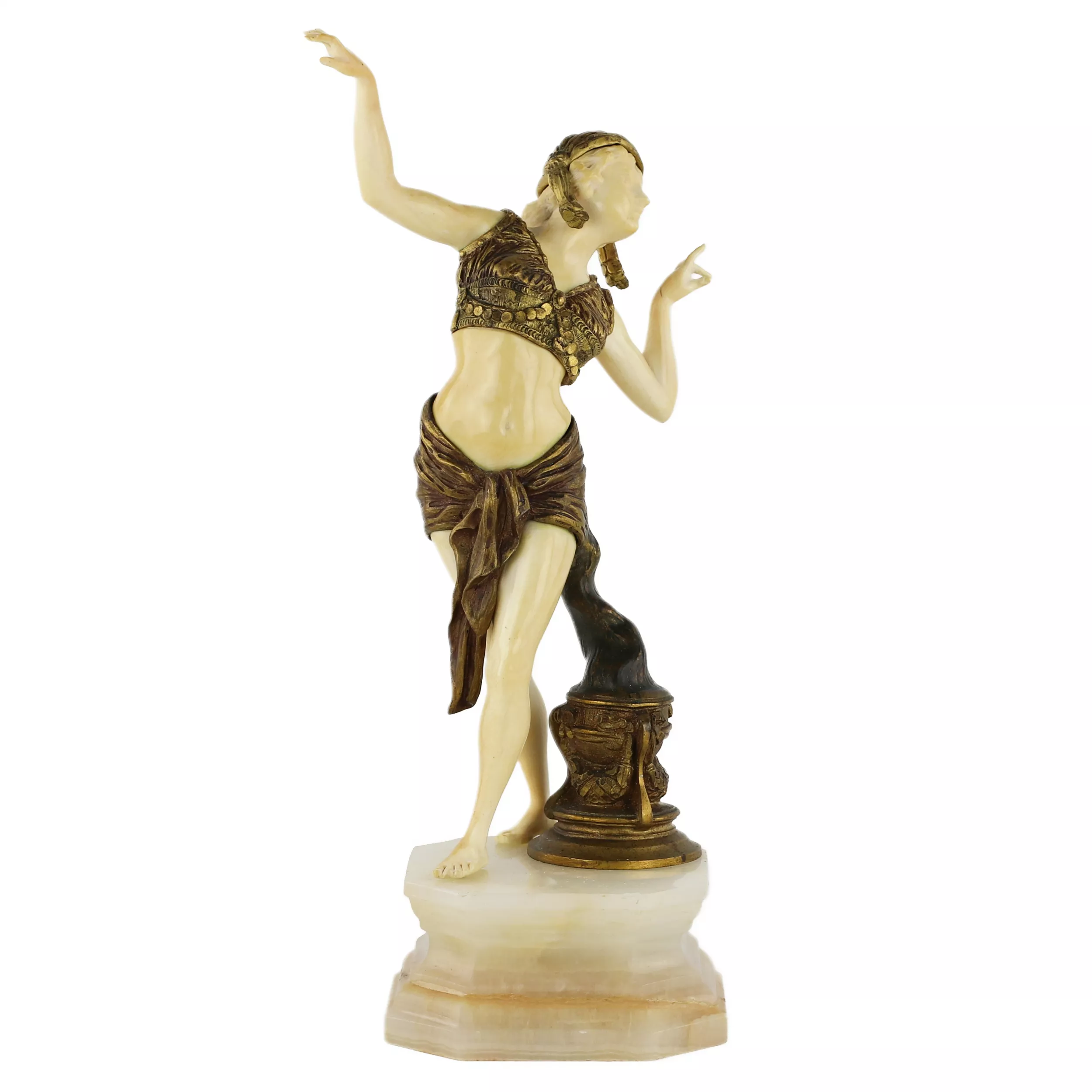
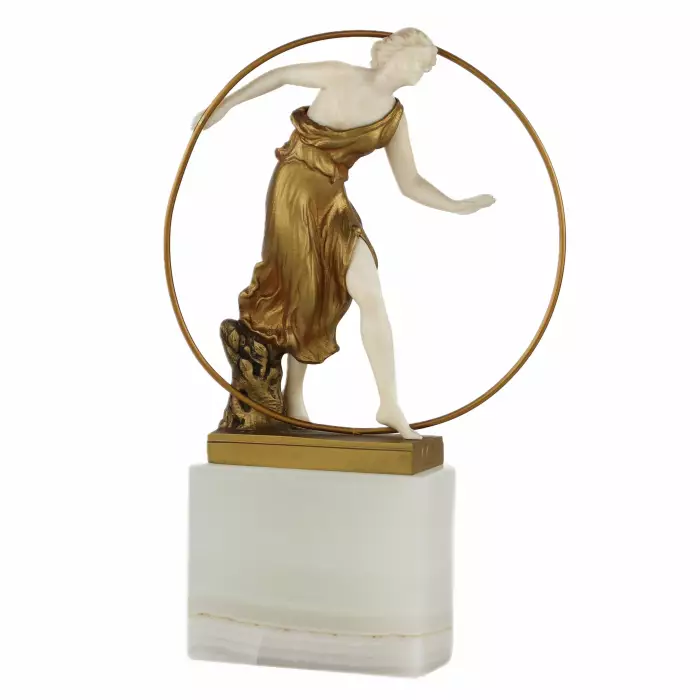
An elegant chryselephantine sculpture entitled Salammbô, also known as The Oriental Dancer, created circa 1920 and representing a characteristic example of European decorative sculpture from the Art Deco period. The composition embodies the legendary Carthaginian priestess Salammbô, inspired by Gustave Flaubert’s novel of the same name, which became an important source of Orientalist imagery in European art during the late nineteenth and early twentieth centuries.
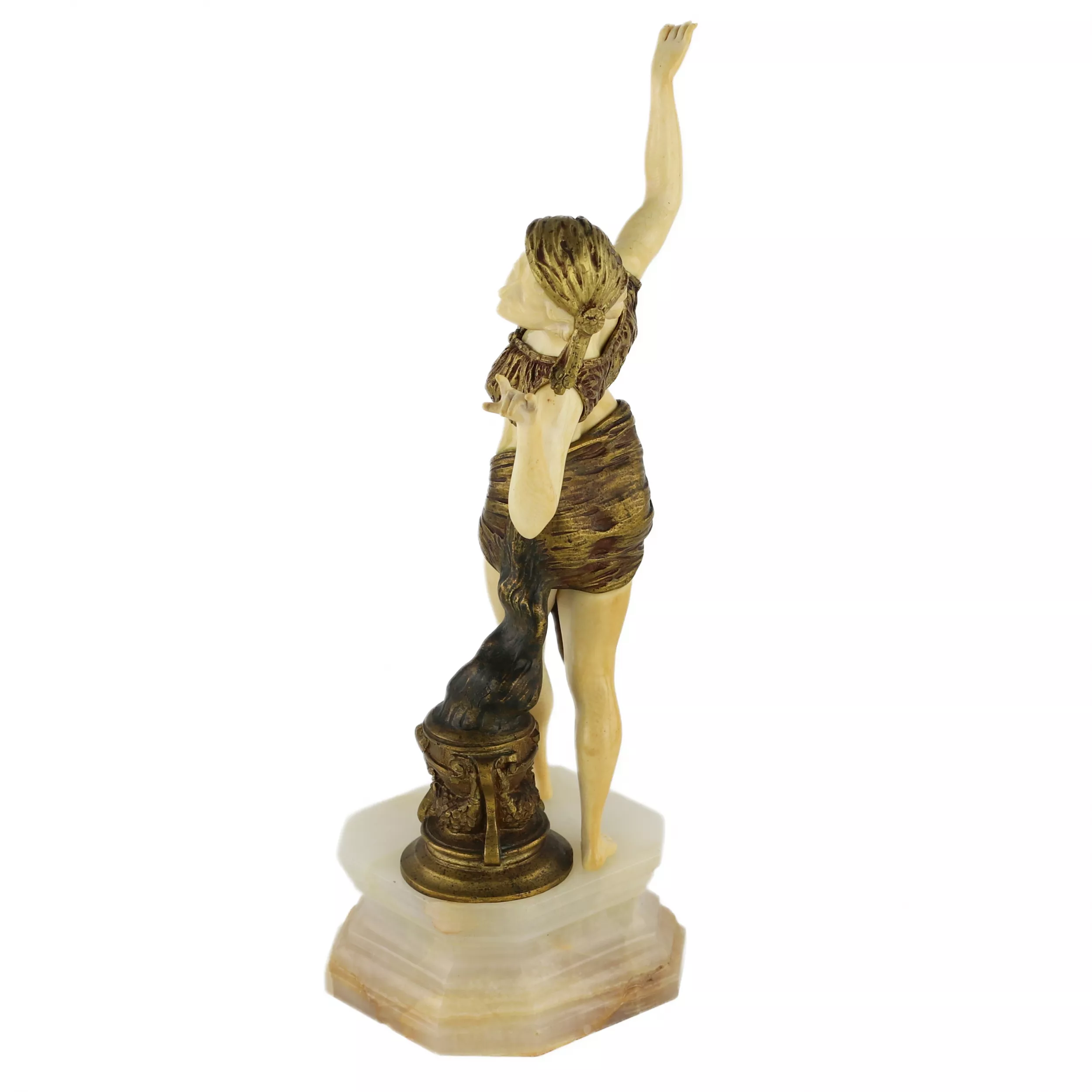
The figure depicts a young dancer captured at the culminating moment of her movement. The pronounced twist of the torso, the expressive positioning of the arms and the fluid silhouette form a dynamic composition reflecting the aesthetic principles of Art Deco, based on decorative refinement, rhythmic structure and elegant sculptural modelling.
The sculpture is executed in the chryselephantine technique, combining gilt bronze and ivory. The smoothly polished ivory elements contrast skilfully with the warm, richly worked surface of the bronze, emphasising the quality of the materials and the refinement of the workmanship. Particular attention has been paid to the modelling of the figure, the treatment of the drapery and the detailed rendering of the costume’s decorative elements.
The composition is distinguished by the high quality of its casting, finely chased surfaces and harmonious combination of materials, characteristic of accomplished European decorative bronzes from the first quarter of the twentieth century.
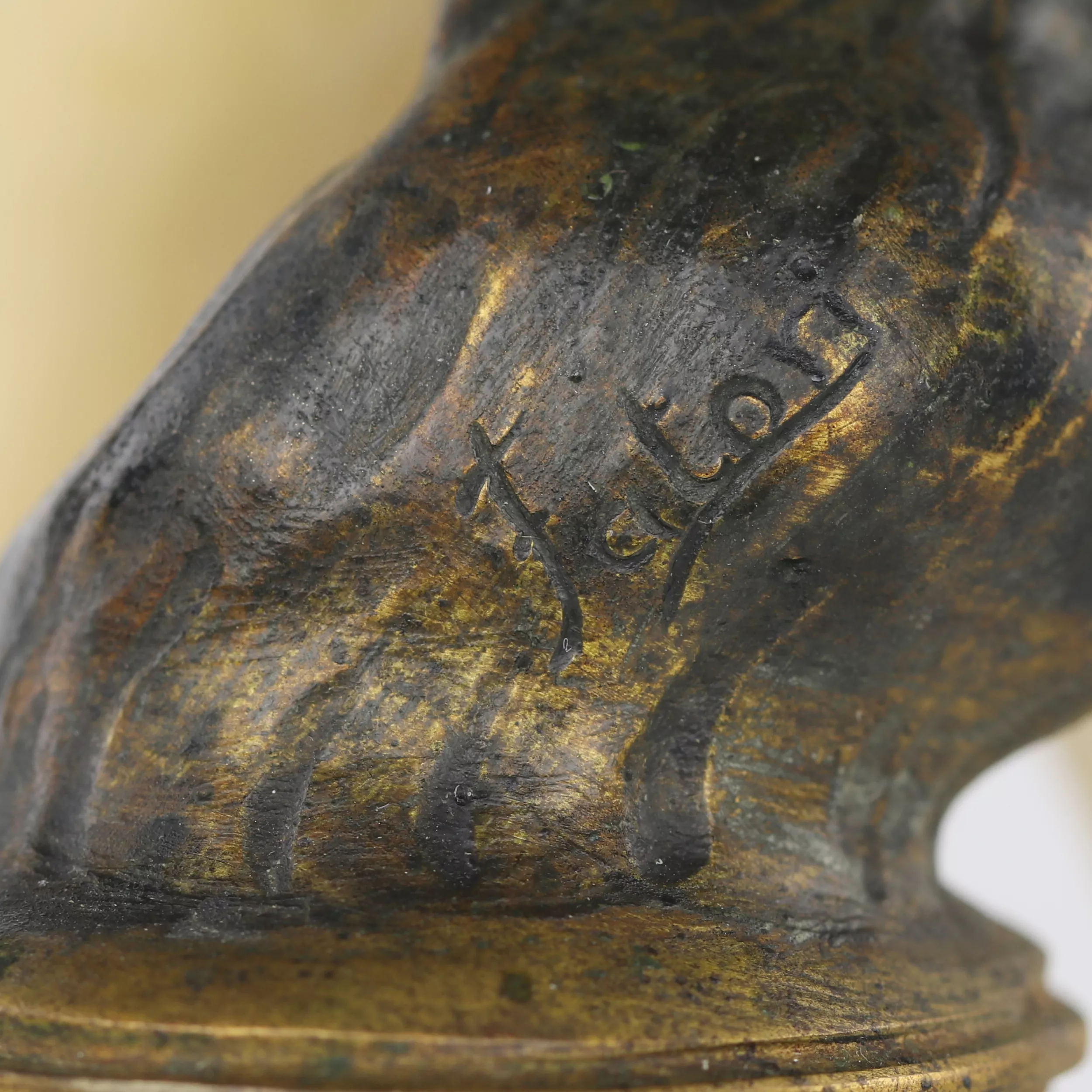
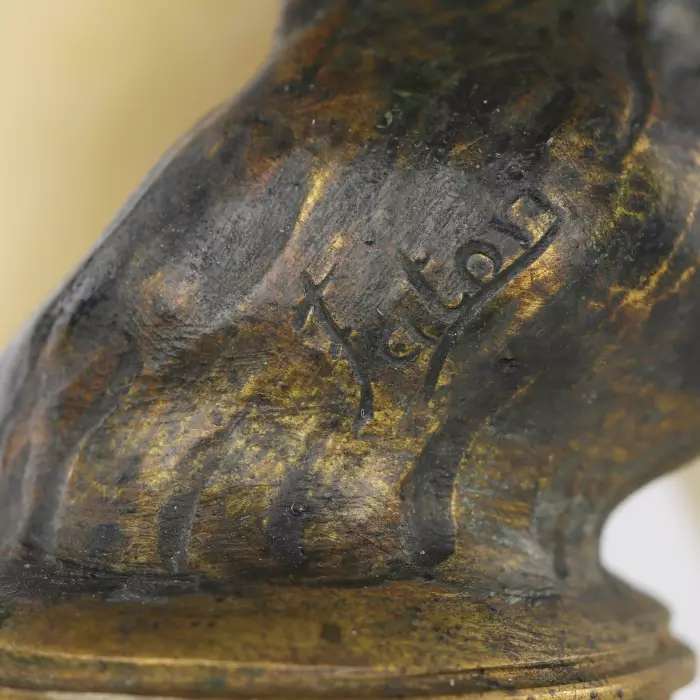
Marks: Signed FATORI on the bronze section of the sculpture.
Dimensions: Height: 34 cm. Width: 28 cm.
Weight: 2.5 kg.
Material: Chryselephantine technique. Gilt bronze and ivory.
Documentation: Accompanied by a CITES certificate confirming the lawful status and circulation of the object containing historic ivory elements.
Chryselephantine sculpture became one of the most recognisable forms of European Art Deco decorative art. The term derives from the ancient Greek words chrysos, meaning gold, and elephas, meaning ivory. In the context of early twentieth-century sculpture, however, it is commonly used to describe works combining bronze with carved ivory, a technique employed by prominent foundries and sculptural workshops in France, Austria, Germany and Belgium. During this period, decorative sculpture experienced exceptional development, combining the legacy of academic modelling with the modern visual language of the interwar era.
The figure of Salammbô achieved widespread popularity following the publication of Gustave Flaubert’s novel in 1862. Its evocation of ancient Carthage, ritual, exoticism and dramatic sensuality provided European artists with a rich repertoire of Orientalist themes. Salammbô was repeatedly interpreted by painters, illustrators, stage designers, jewellers and sculptors, and came to embody an ideal of mysterious femininity, theatrical splendour and refined sensuality.
European sculpture of the 1910s to the 1930s frequently combined Orientalist subject matter with the formal innovations of Art Deco. Sculptors sought to unite decorative richness with an energetic silhouette, stylised movement and precise control of materials. The contrast between gilt bronze and polished ivory created a particularly striking visual effect, enabling the exposed areas of the body to acquire a smooth, luminous quality against the elaborate surface of the costume and drapery.
Such sculptures occupied a prominent place in sophisticated European and North American interiors, where they were appreciated both as autonomous works of art and as luxurious decorative objects. Their production required close collaboration between sculptors, ivory carvers, bronze founders, chasers and patinators. The final result depended not only upon the artistic conception of the model, but also upon the technical precision of casting, assembly, surface finishing and the carefully calibrated relationship between the contrasting materials.
French bronze foundries played a significant role in the development and international circulation of chryselephantine sculpture. Works of this type were exhibited at international decorative arts exhibitions and reflected the broader transformation of sculpture during the Art Deco period, when classical, Orientalist and theatrical subjects were reinterpreted through a modern language of rhythm, elegance and stylisation.
Today, chryselephantine Art Deco sculptures are regarded as some of the most distinctive objects of interwar decorative art. Their appeal lies in the union of sculptural virtuosity, technical complexity, luxurious materials and the unmistakable visual identity of the period. The present Salammbô belongs to this tradition, combining expressive movement, refined modelling and the exotic imagery that played such an important role in the formation of the Art Deco aesthetic.
Good condition. The gilding and patinated bronze surfaces are well preserved. The ivory elements show no apparent damage upon visual inspection. Minor signs of age and handling are consistent with the date and materials of the sculpture.
The condition report is provided for informational purposes only.
It is not comprehensive and may not reflect all defects, restorations, alterations, or adaptations, as Antiqon does not perform professional conservation-level assessments. The information is based on a qualified, yet subjective, evaluation by our specialists.Before purchasing, we recommend consultation with an independent expert.Please also consult our Terms and conditions and Glossary A-Z, which contain important information on lot characteristics and sale conditions.