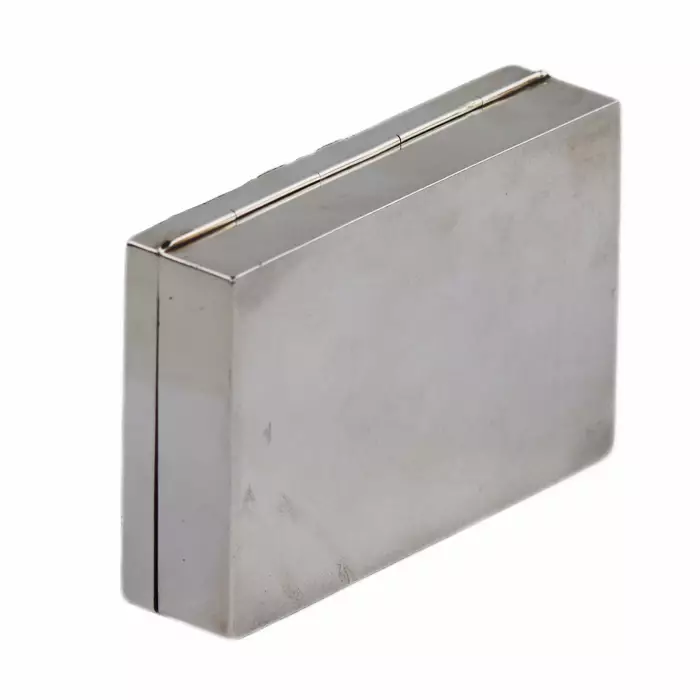
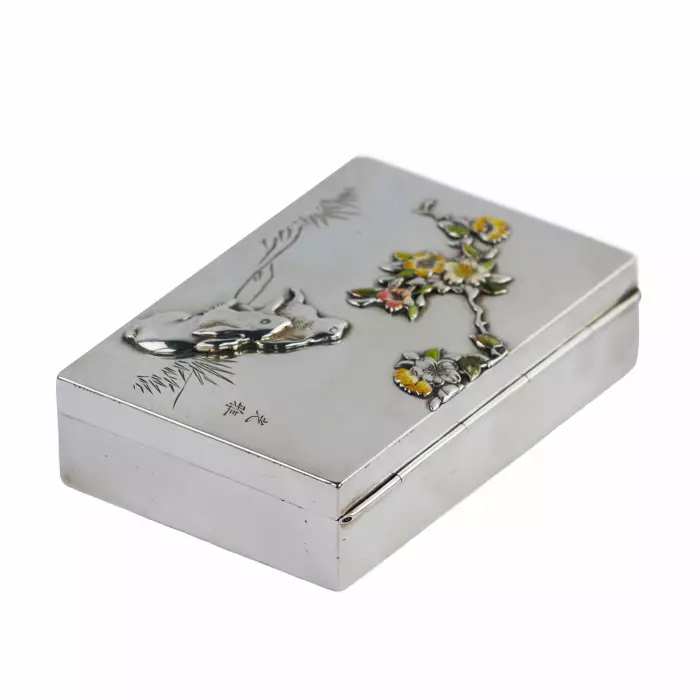
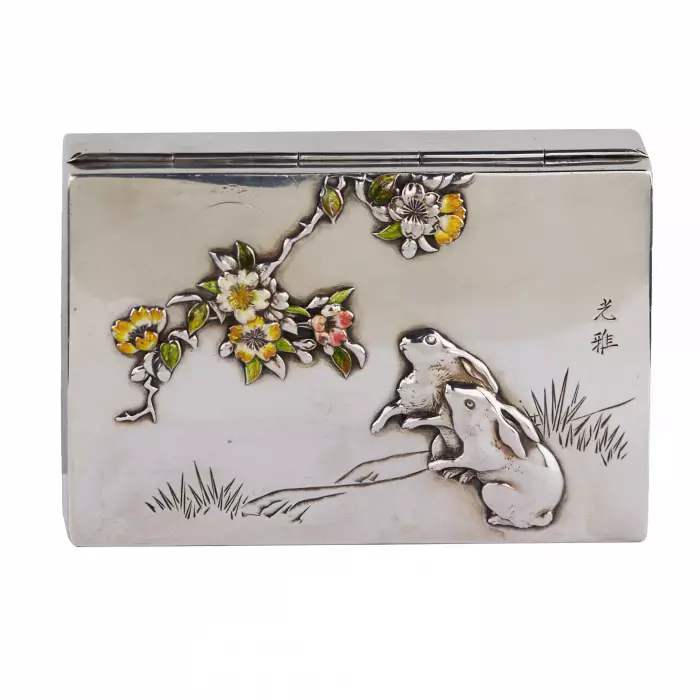
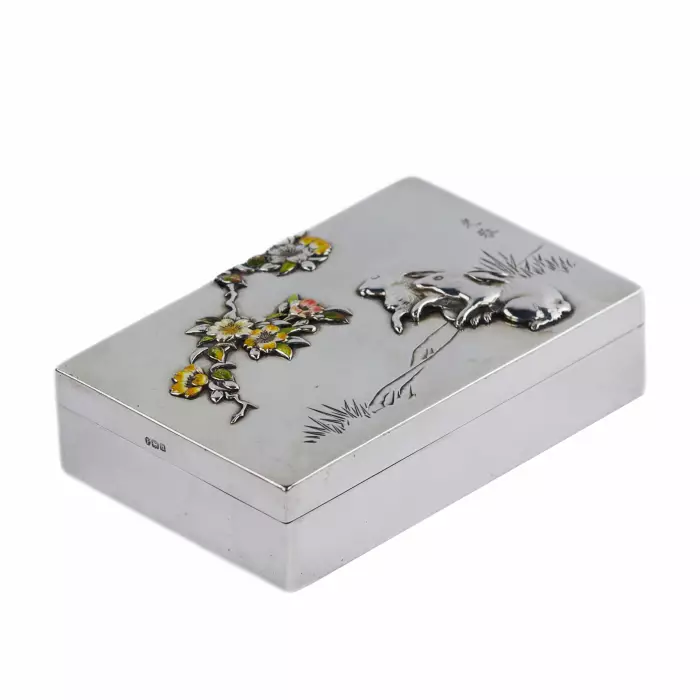
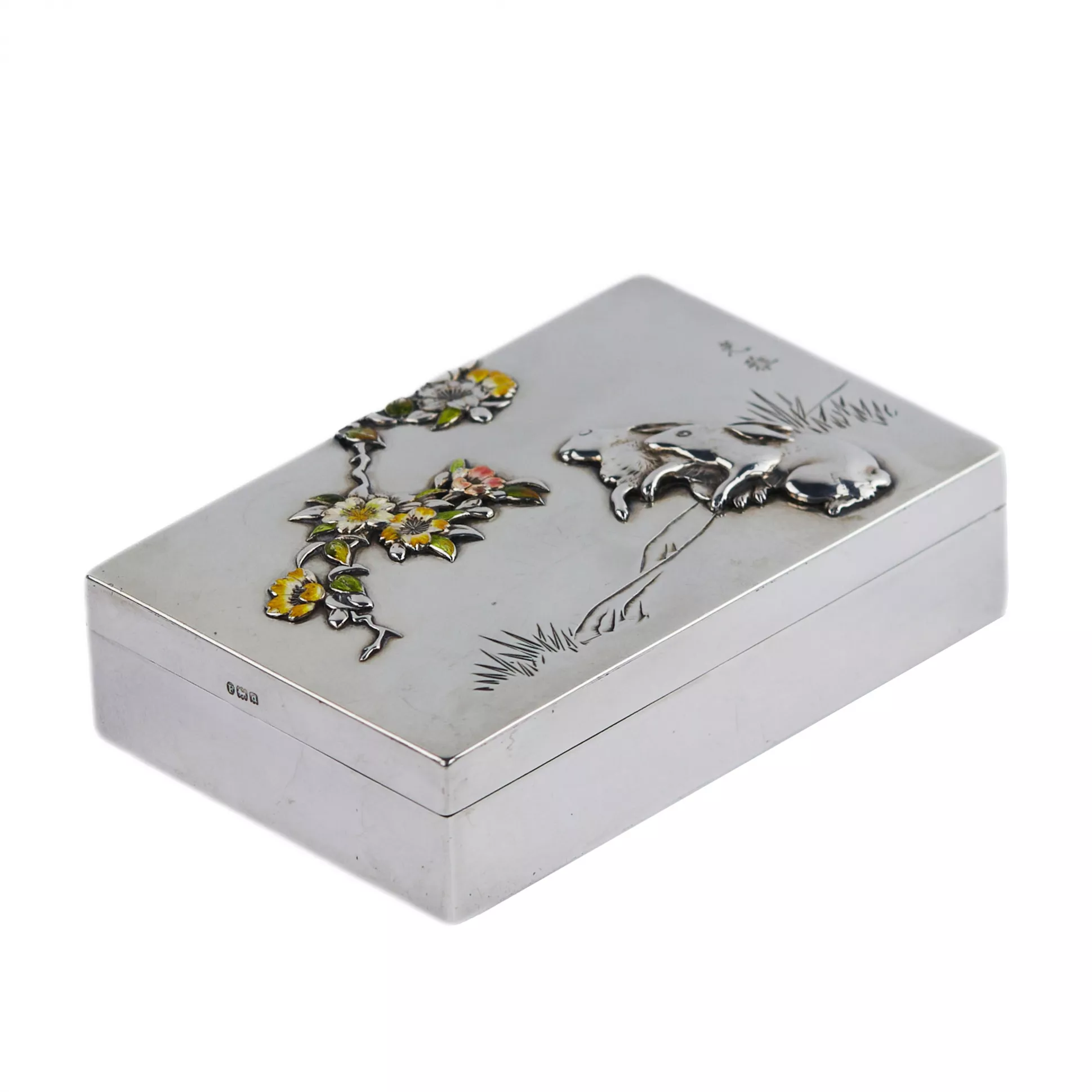
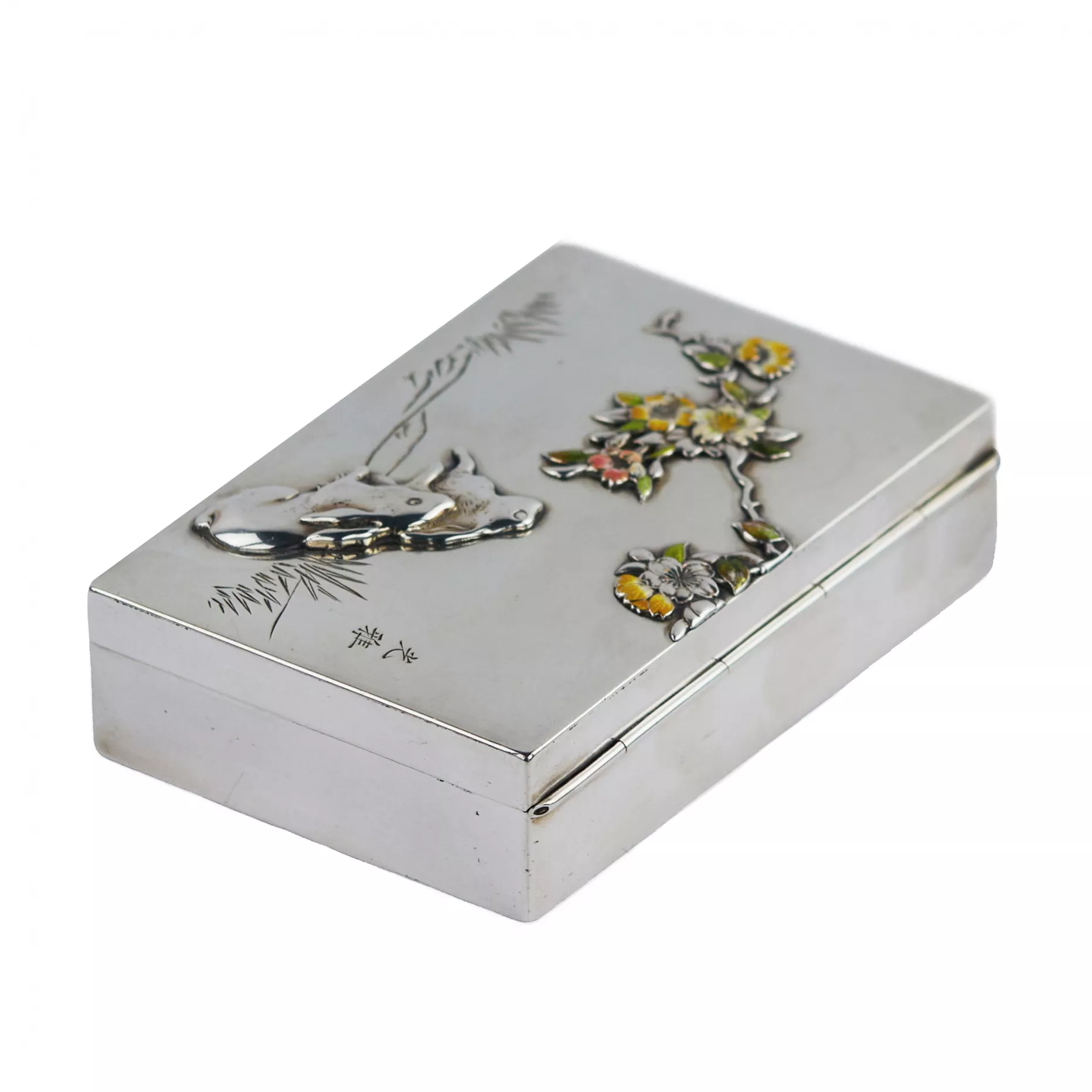
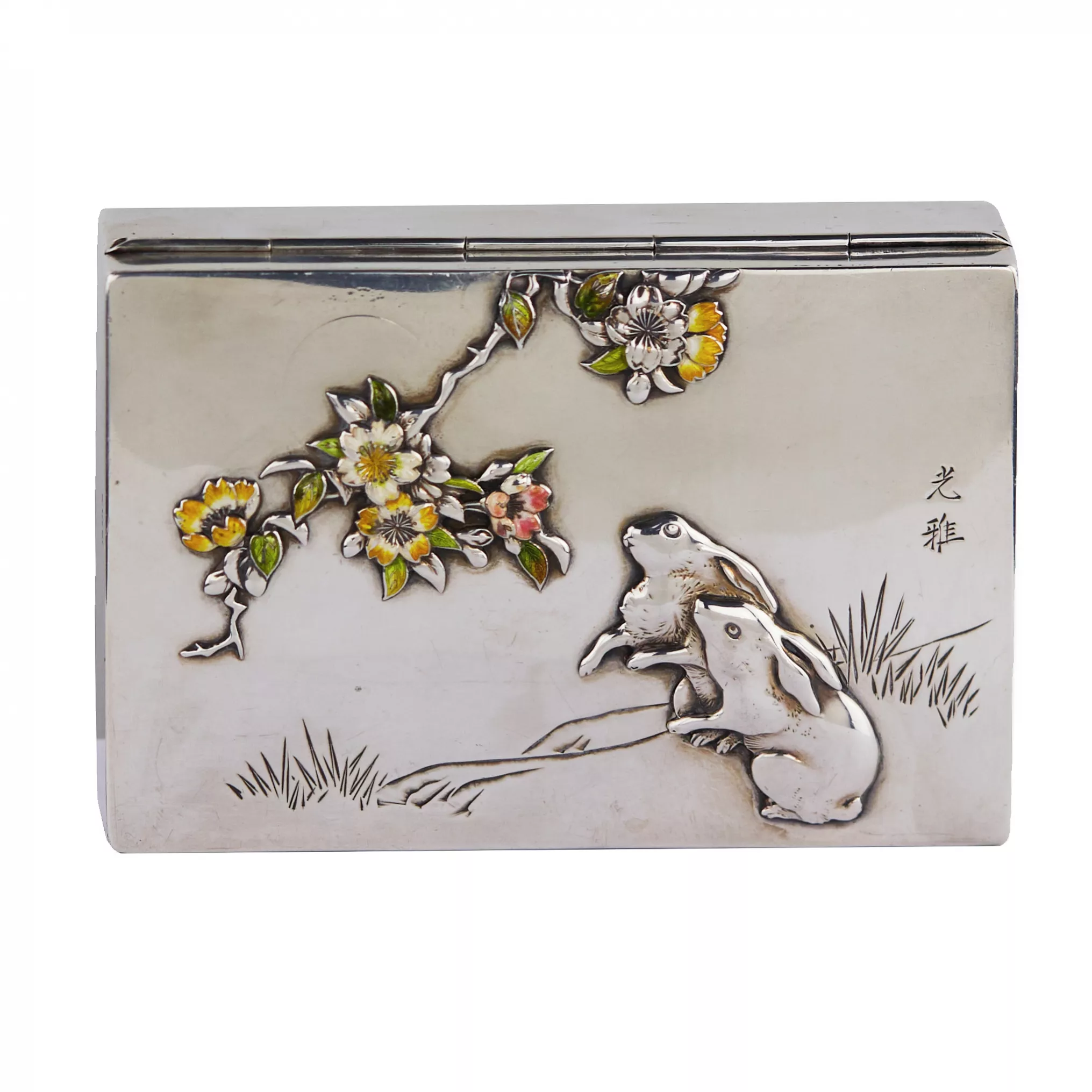
A rare silver cigarette case of rectangular form with hinged cover, executed in the refined traditions of Japanese decorative art of the Meiji period. The cover is ornamented with an elegant repoussé composition depicting a pair of hares beneath a blossoming cherry branch. The flowers and foliage are highlighted with polychrome enamels in shades of yellow, white, green and soft pink, creating a delicate painterly effect against the silver ground.
The composition embodies the asymmetry, restraint and poetic sensitivity characteristic of Japanese aesthetics. The animals are rendered with remarkable softness and naturalism, while the generous use of negative space reflects the influence of traditional Japanese painting and decorative design. The cover bears the artists signature in the form of the characters 光雅 (Kōga), likely representing the artistic name of the designer or workshop responsible for the model.
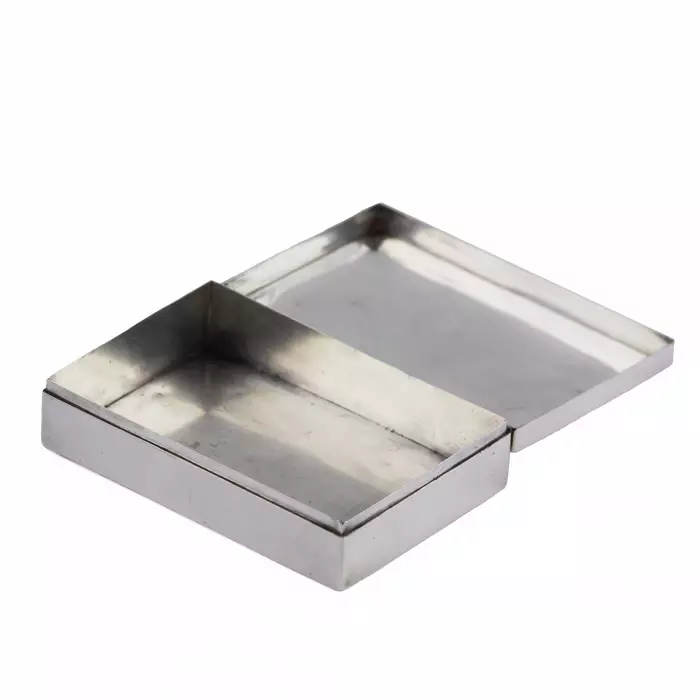
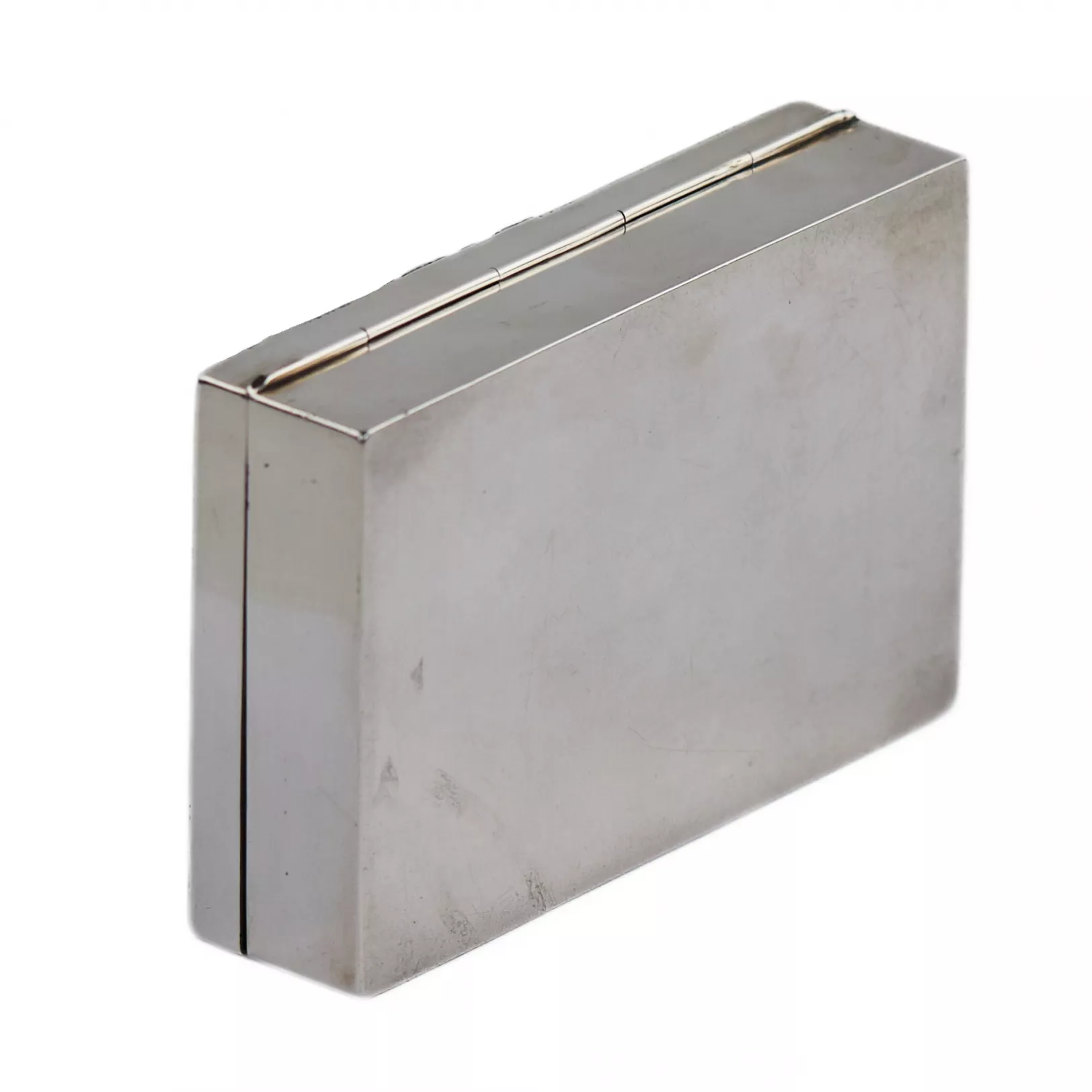
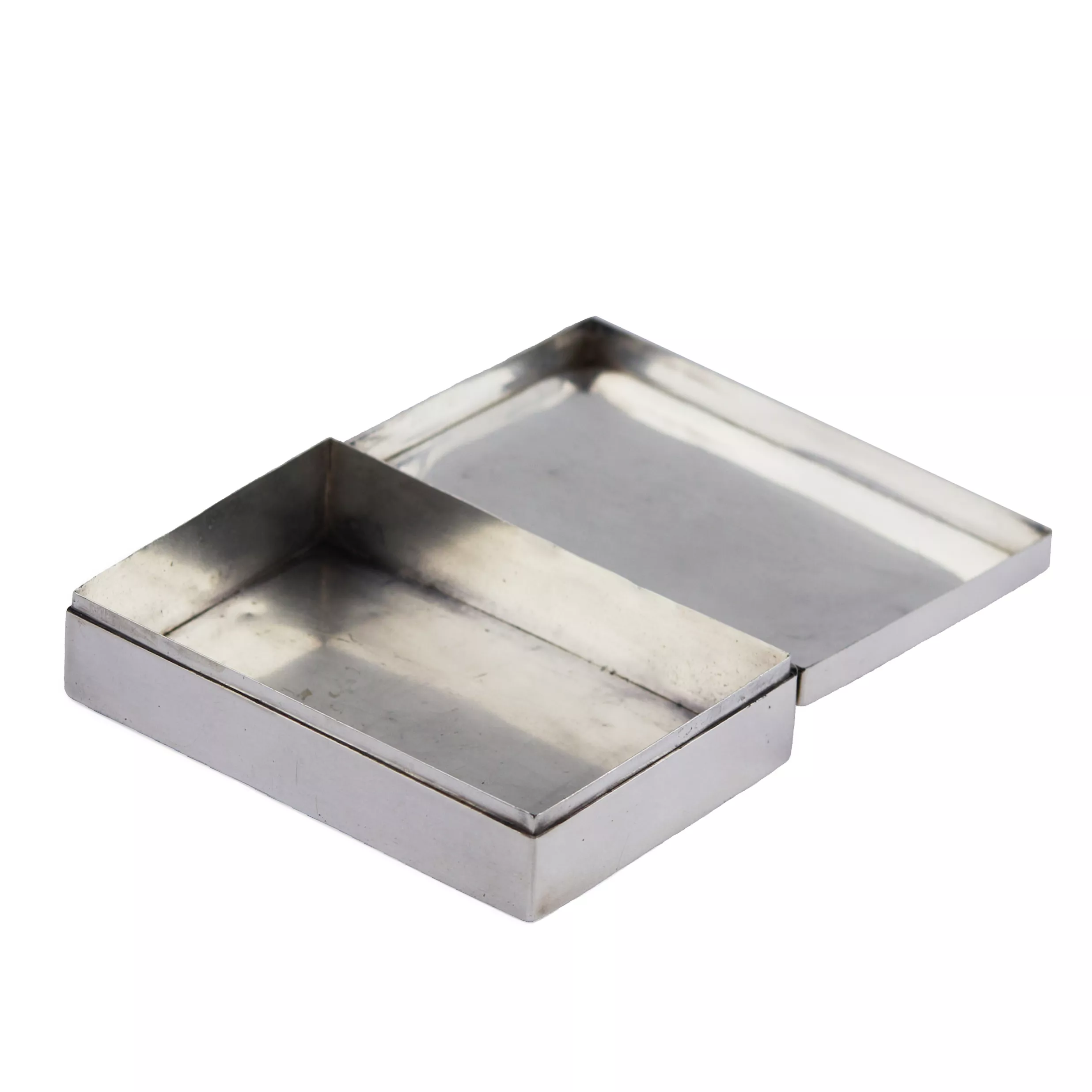
The interior retains a smooth polished finish. This object represents a fine example of Japanese export silver from the Meiji era, created for the international market and subsequently assayed in Great Britain.
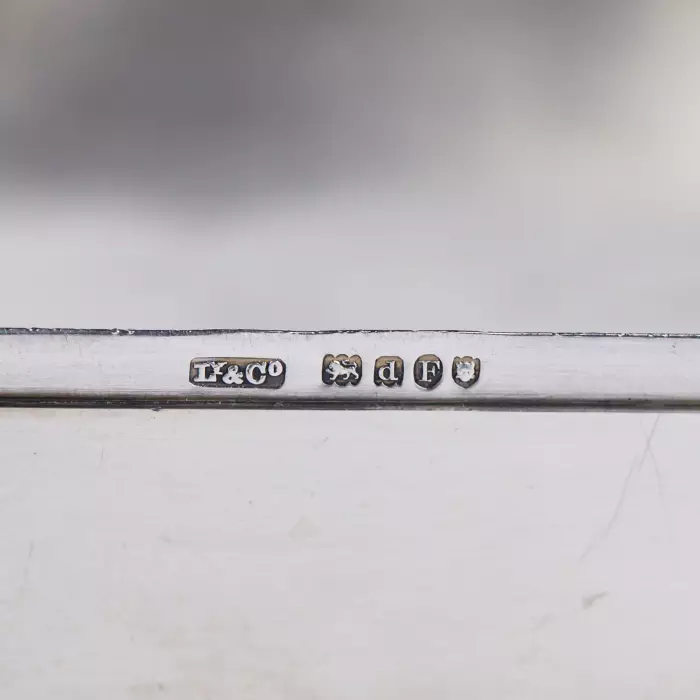
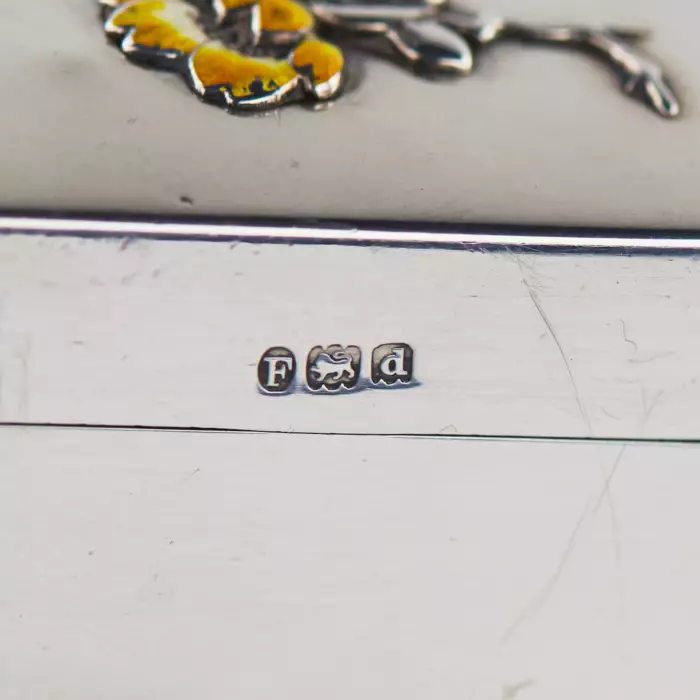
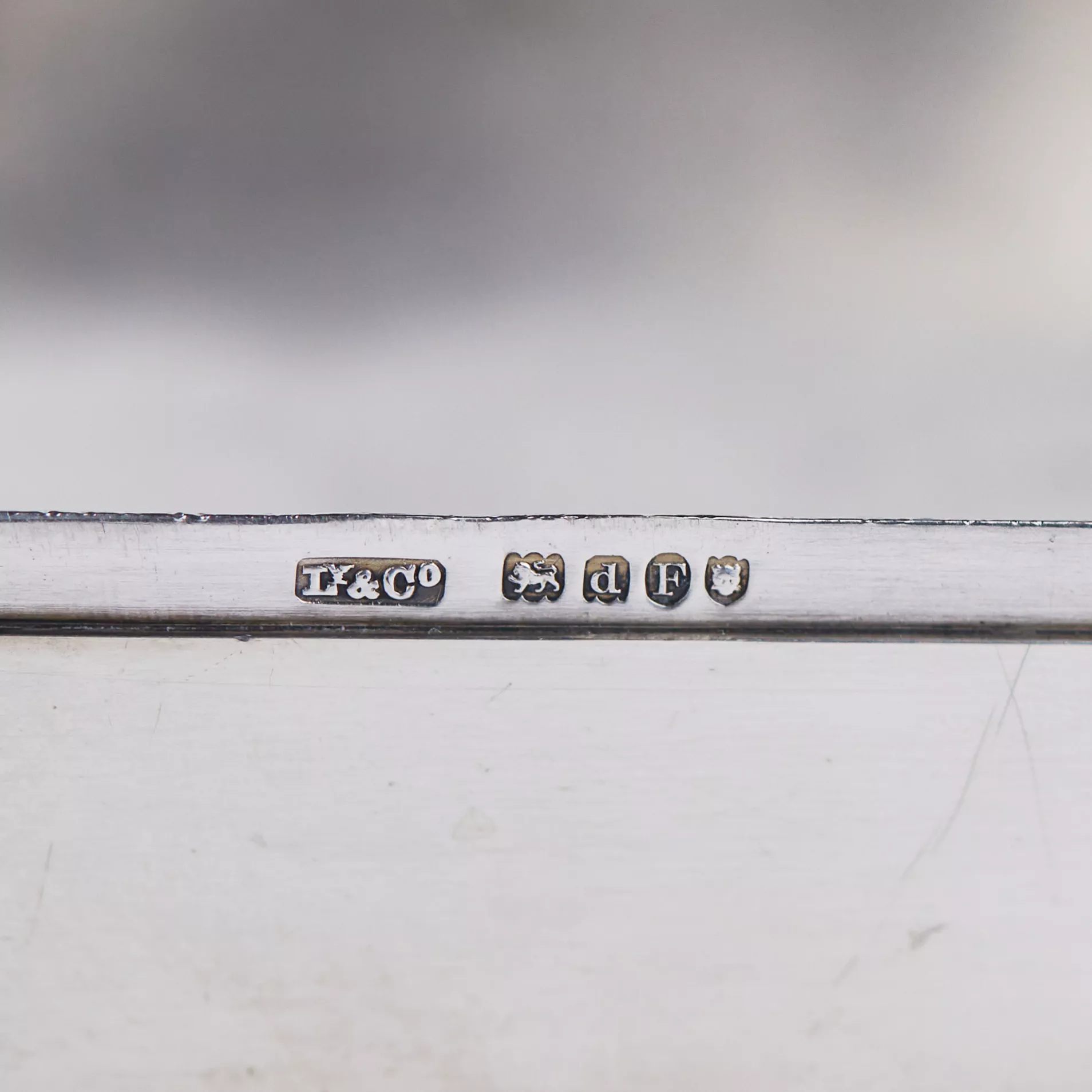
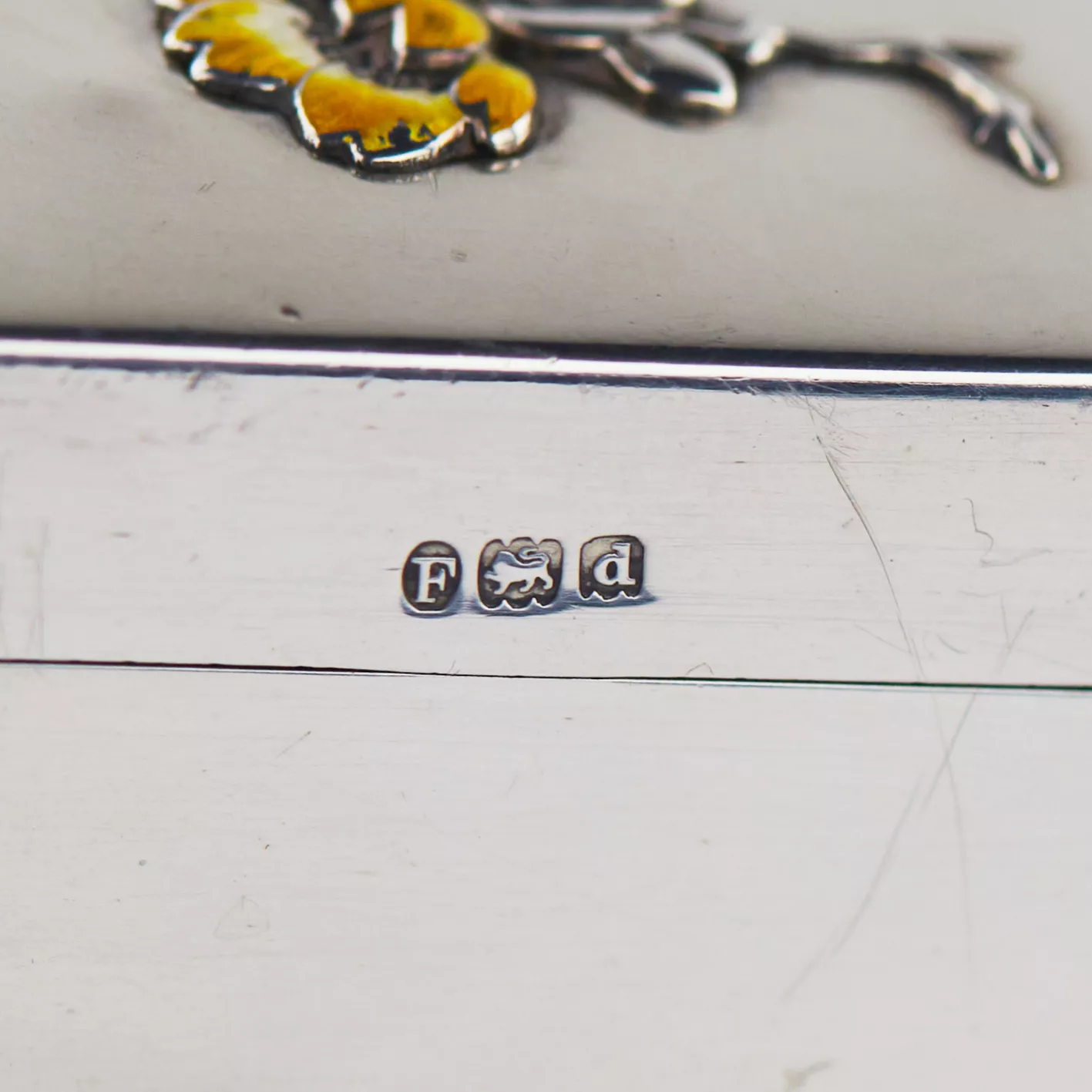
Marks: Importers or retailers mark LY & Co; British sterling silver hallmark with Lion Passant; date letter d; registration mark F; London Assay Office mark depicting the Leopards Head. Artists signature on the cover: 光雅 (Kōga).
Dimensions: Length 9.8 cm; width 6.2 cm; height 3.2 cm.
Weight: 182 g.
Condition: Good. Minor traces of use and light age-related patina. The enamel decoration is well preserved. The relief decoration remains crisp and intact.
Provenance: Private European collection.
The Meiji period (1868-1912) marked a transformative era in Japanese history and simultaneously witnessed an extraordinary flourishing of the nations decorative arts. Following the opening of Japan to international trade, Japanese craftsmen gained global recognition through participation in major international exhibitions in Vienna, Paris, Chicago and London. Works in metal, lacquer and enamel captivated Western audiences and played a significant role in the emergence of the artistic movement known as Japonisme, which profoundly influenced European decorative arts at the end of the nineteenth century.
Among the most admired creations of Meiji craftsmanship were finely executed objects of intimate scale, including cigarette cases, boxes, incense containers and decorative accessories. Such works provided artists and silversmiths with an ideal format for demonstrating technical mastery in repoussé work, engraving and enamelling. Produced both for the domestic market and for export, these objects were highly prized in Europe and North America for their exceptional workmanship and distinctly Japanese aesthetic sensibility.
The hare occupies an important place within Japanese visual culture and folklore. Associated with the moon and themes of longevity, harmony and renewal, it appears frequently in traditional decorative arts. When paired with the blossoming cherry tree, the symbolism becomes particularly evocative. Sakura represents the fleeting beauty of life and the cyclical nature of existence, while the hare embodies continuity and prosperity. Together they form a poetic image celebrating the harmony between nature and the passage of time.
The presence of British hallmarks indicates that the piece was officially imported into Great Britain and assayed in London through the firm LY & Co. Such procedures were common for high-quality Japanese export works destined for the British market during the late nineteenth and early twentieth centuries. Today, objects of this type are especially sought after by collectors of Meiji-period silver and by scholars interested in the artistic exchange between Japan and the West during one of the most dynamic periods of global cultural interaction.
Good collectors condition. The silver surface retains its original character and attractive age patina. The enamel decoration remains well preserved with no significant losses observed. Minor surface wear is consistent with age and careful use.
The condition report is provided for informational purposes only.
It is not comprehensive and may not reflect all defects, restorations, alterations, or adaptations, as Antiqon does not perform professional conservation-level assessments. The information is based on a qualified, yet subjective, evaluation by our specialists.Before purchasing, we recommend consultation with an independent expert.Please also consult our Terms and conditions and Glossary A-Z, which contain important information on lot characteristics and sale conditions.