
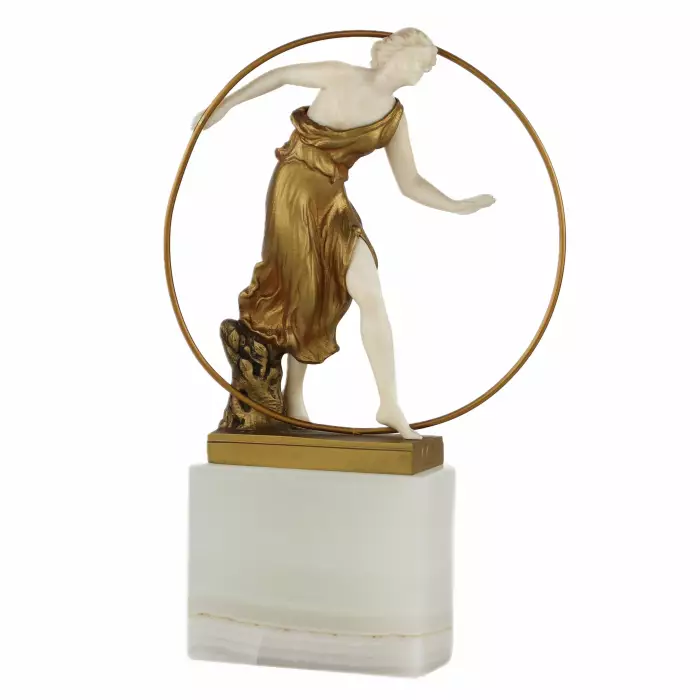
WOMAN WITH A HOOP. CHRYSÉLÉPHANTINE SCULPTURE BY GEORGES MORIN. FRANCE, CIRCA 1920
Antiqon consultant will contact you within one business day after receiving your request.
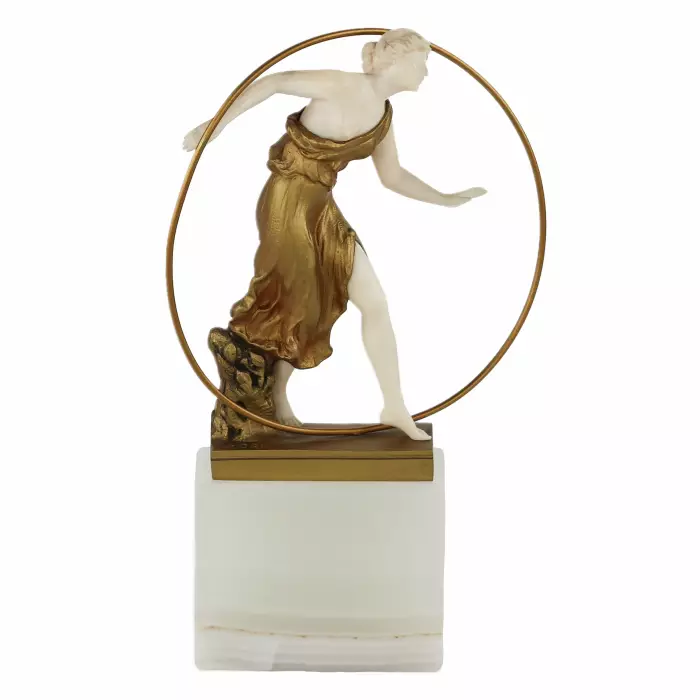
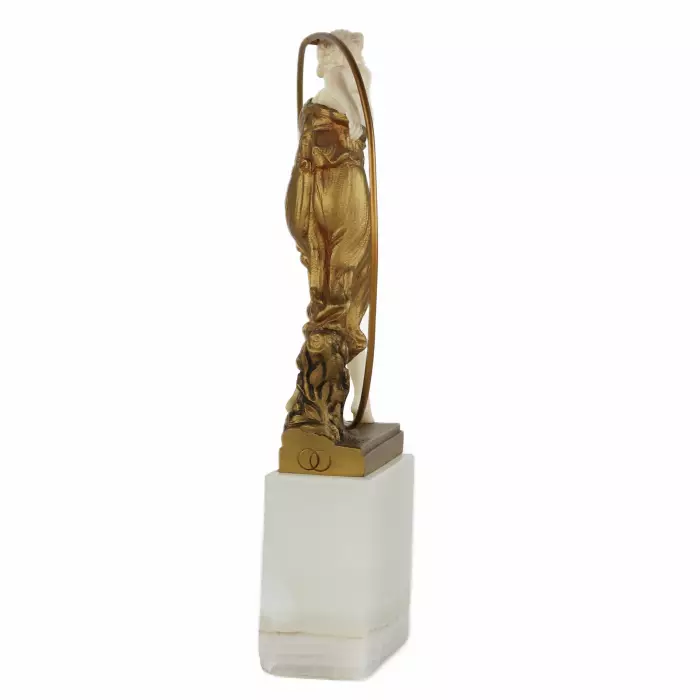
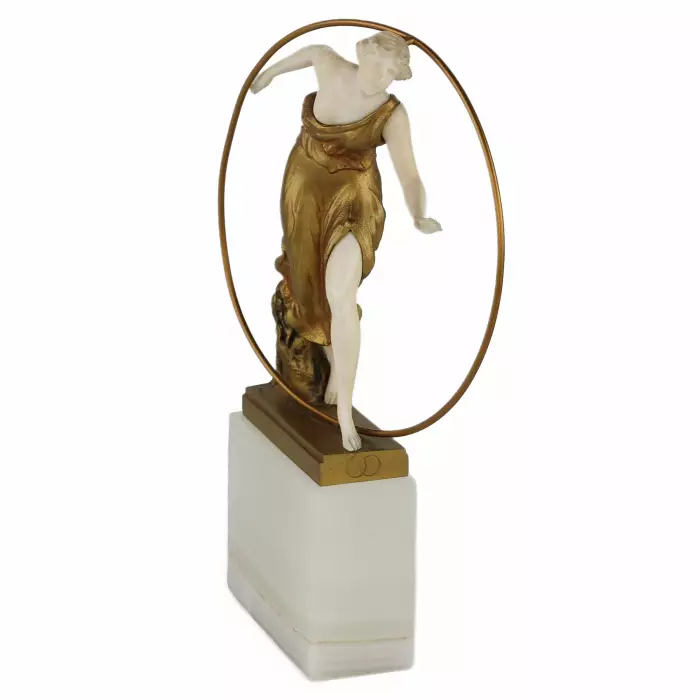
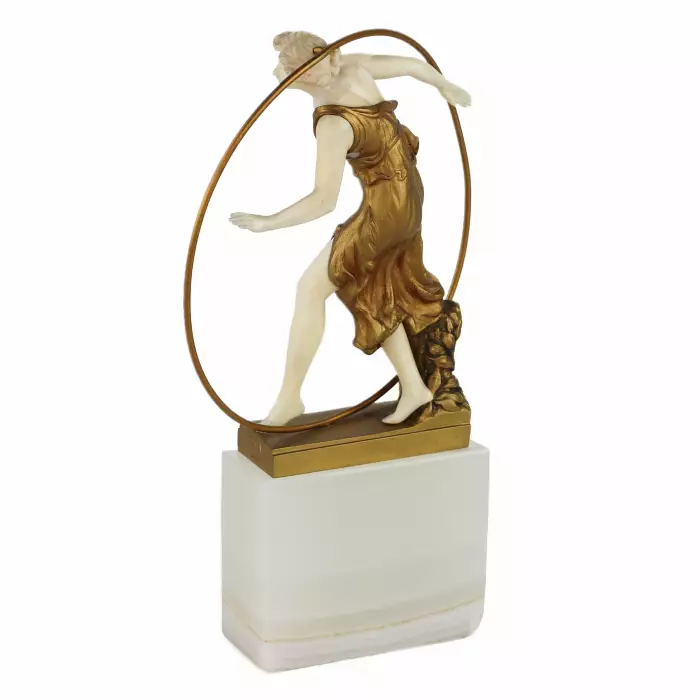
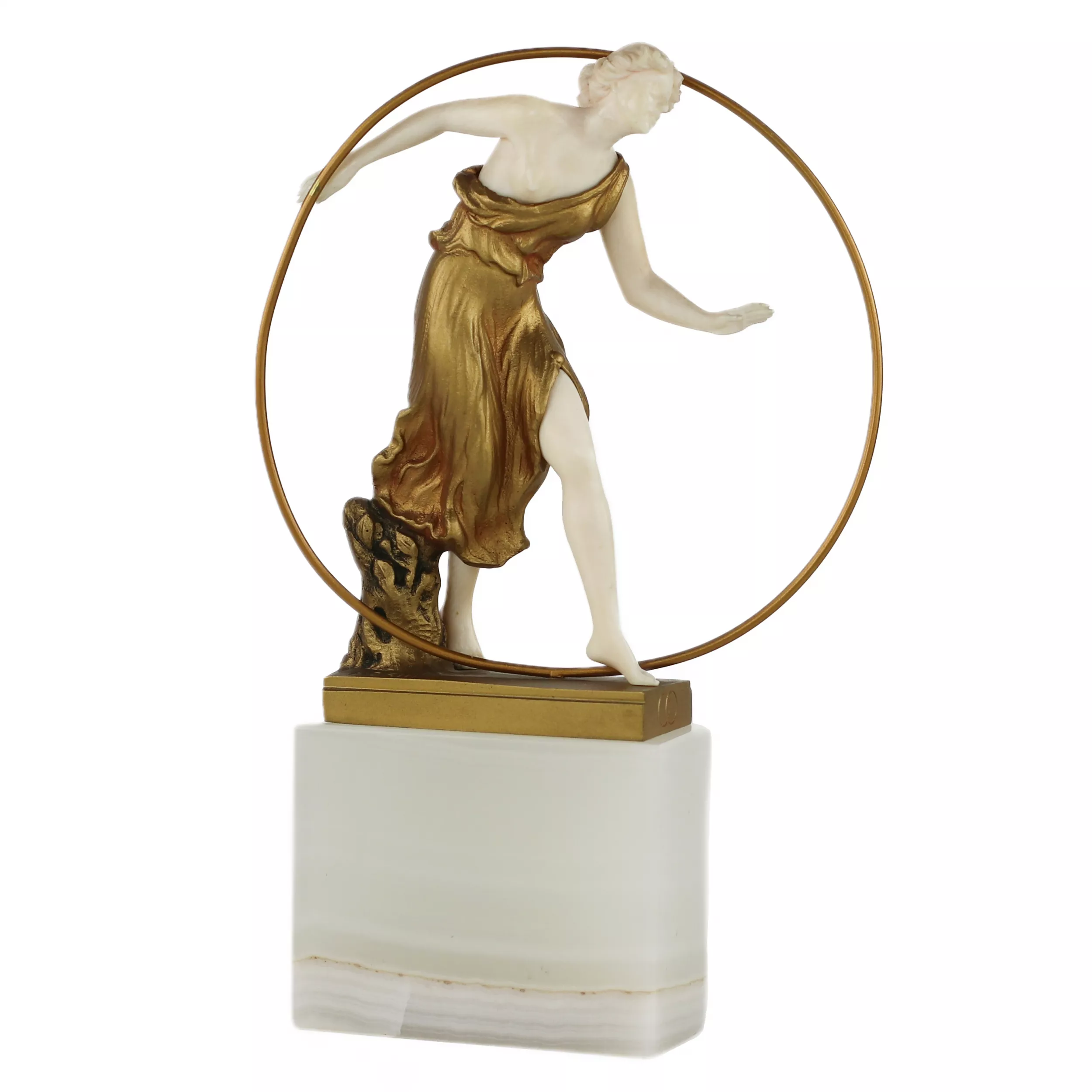
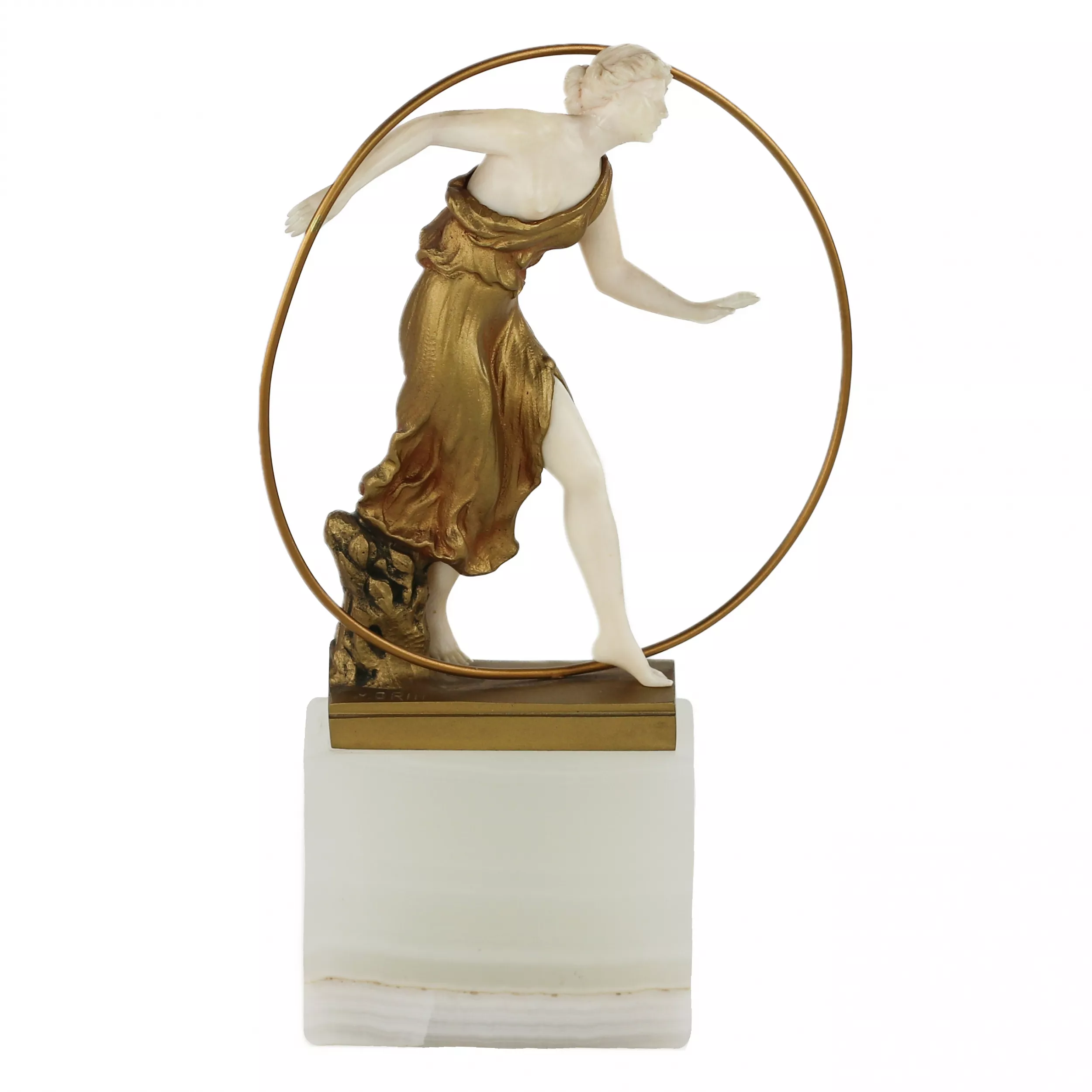
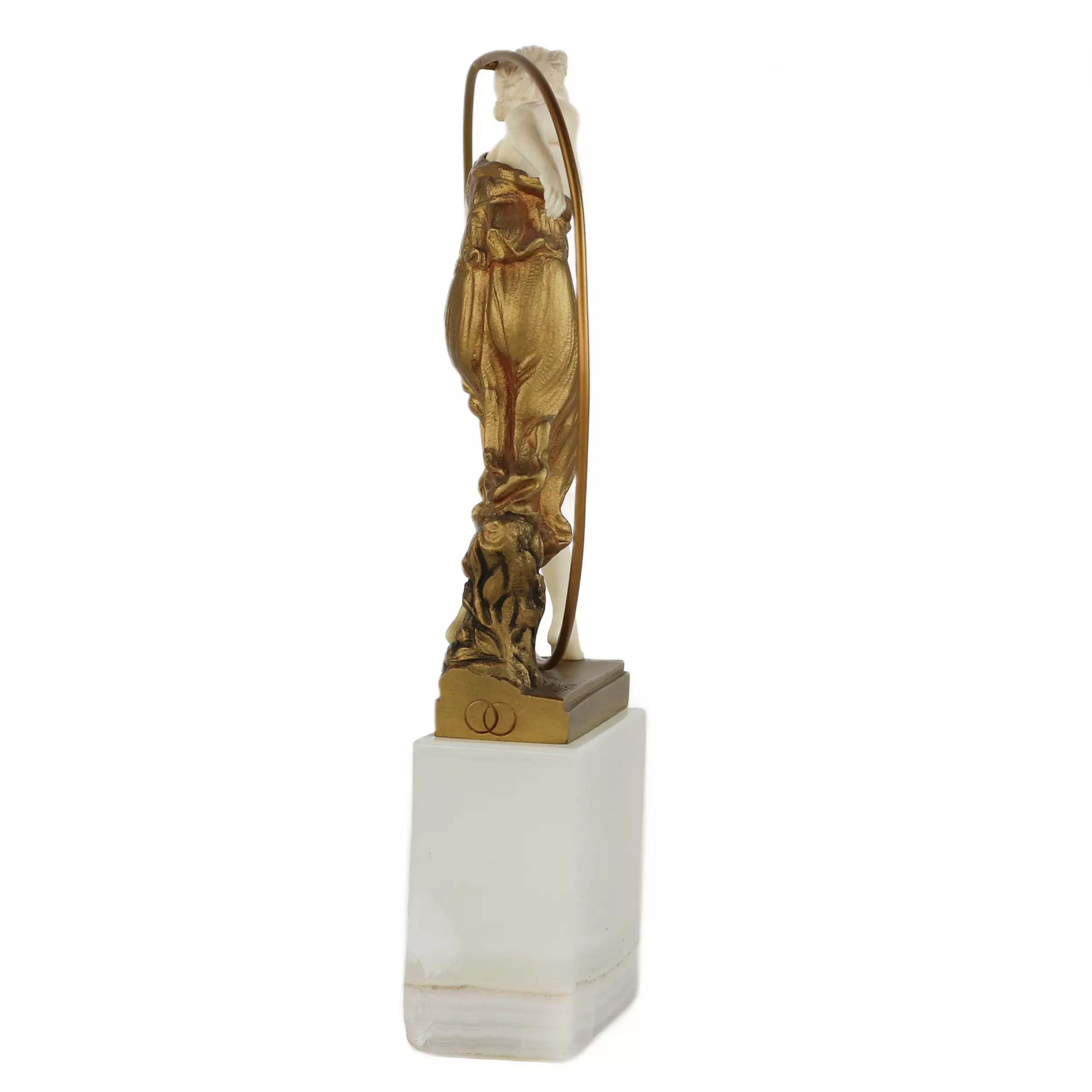
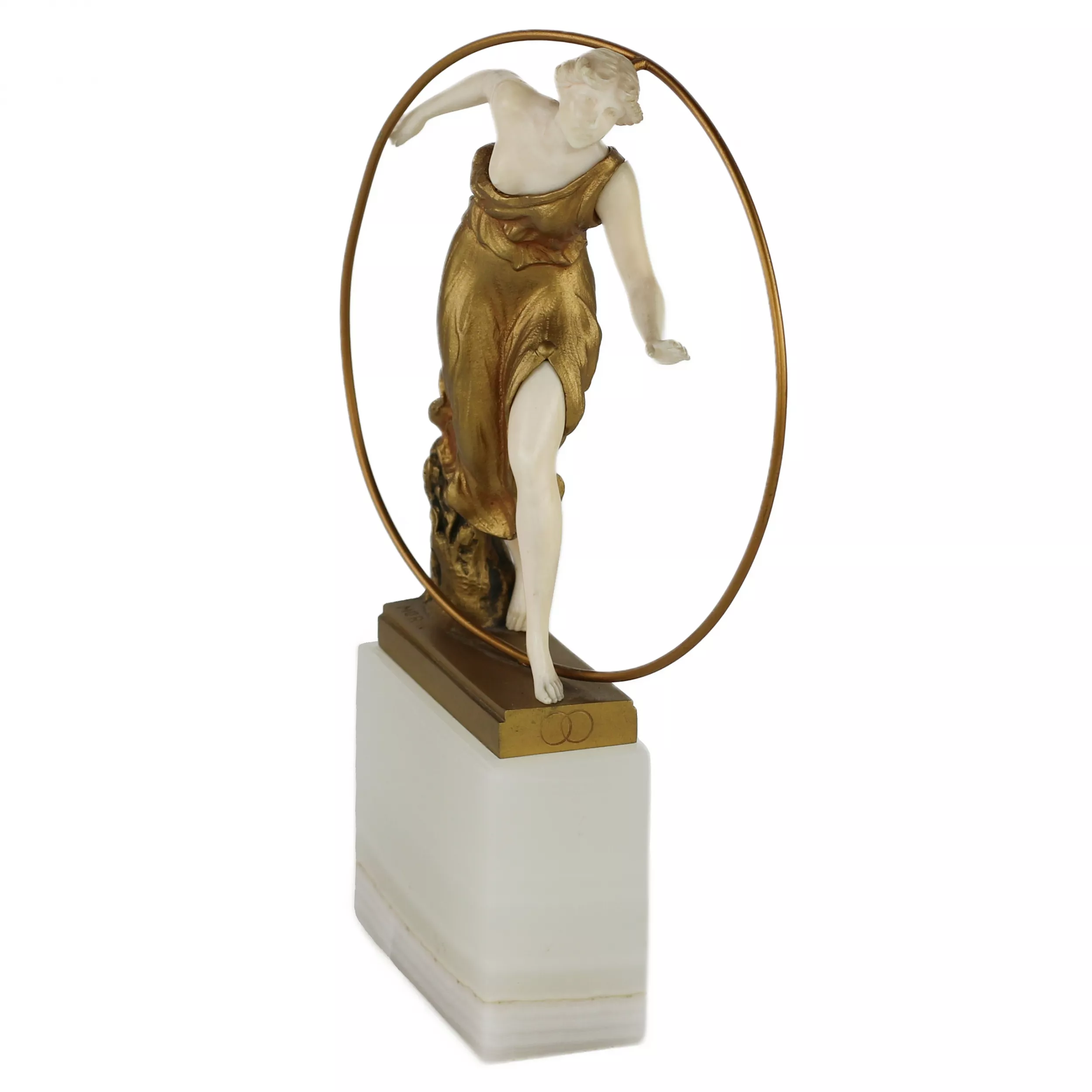
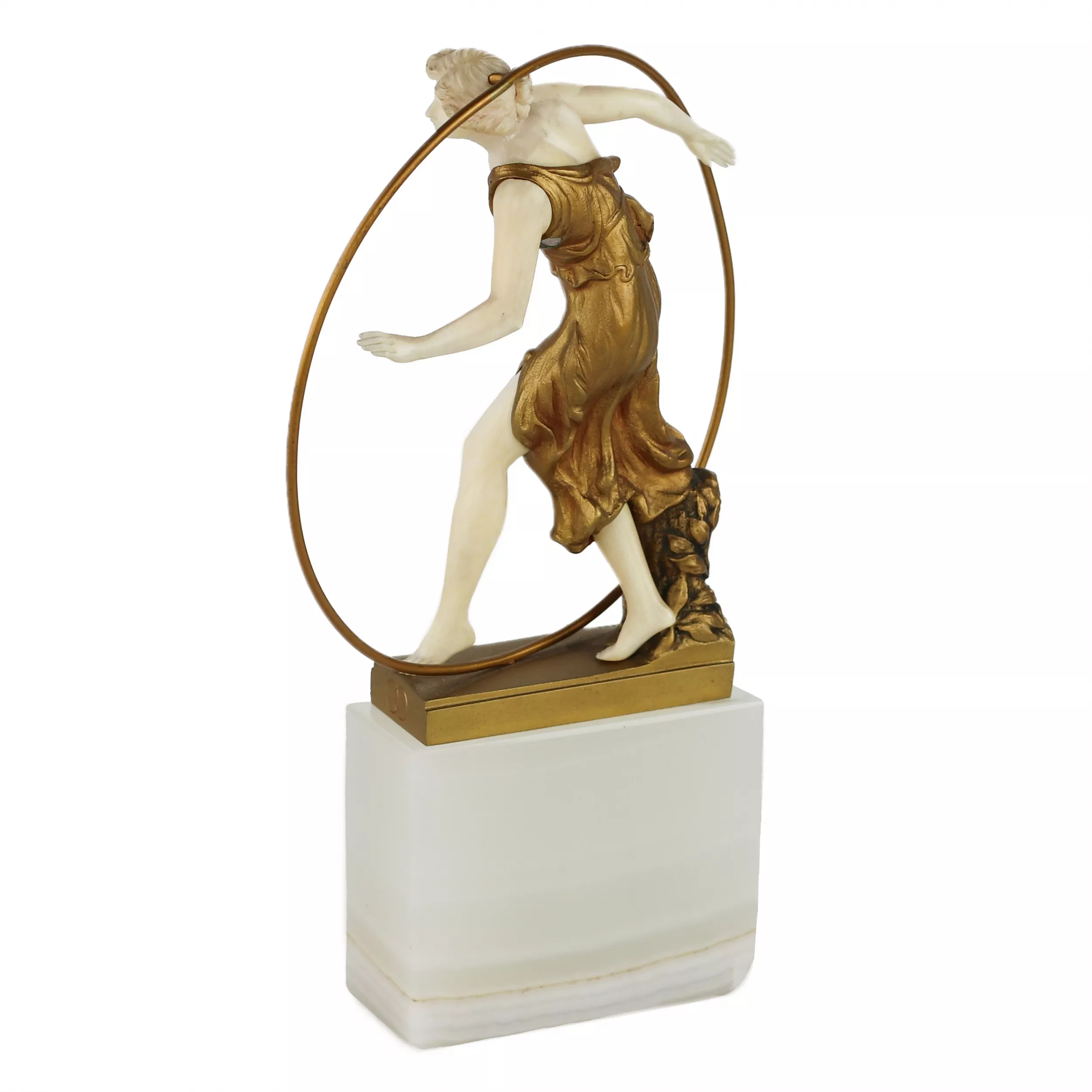
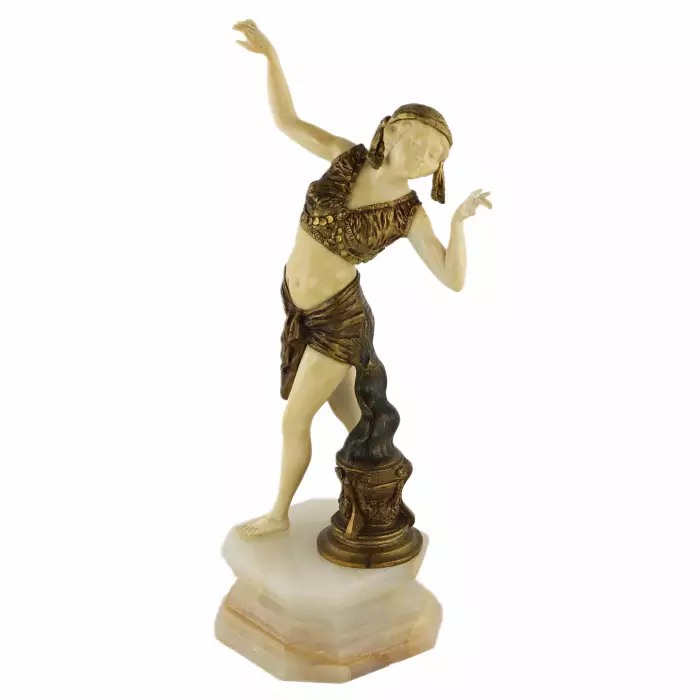
An elegant chryséléphantine cabinet sculpture entitled Woman with a Hoop, created by the French sculptor Georges Morin (1874 - 1950) circa 1920. The work is a refined embodiment of French Art Deco, combining sophisticated decorative design, graceful sculptural modelling and exceptional craftsmanship.
The composition portrays a young woman captured in a fluid moment of movement while holding a gymnastic hoop. The subtle twist of the torso, elongated proportions and poised silhouette convey rhythm, elegance and effortless dynamism, reflecting the aesthetic ideals of the early 1920s. Morin masterfully balances naturalistic anatomy with the stylised decorative language that defines Art Deco sculpture.
Executed in the prestigious chryséléphantine technique, the sculpture combines gilt bronze with finely carved natural ivory. The exposed areas of the body, including the face, arms, legs and bust, are rendered in ivory, while the costume and ornamental elements are cast in finely chased gilt bronze retaining their original gilded surface. The figure stands upon a polished onyx base, whose rich coloration enhances both the architectural composition and the luxurious contrast of materials.
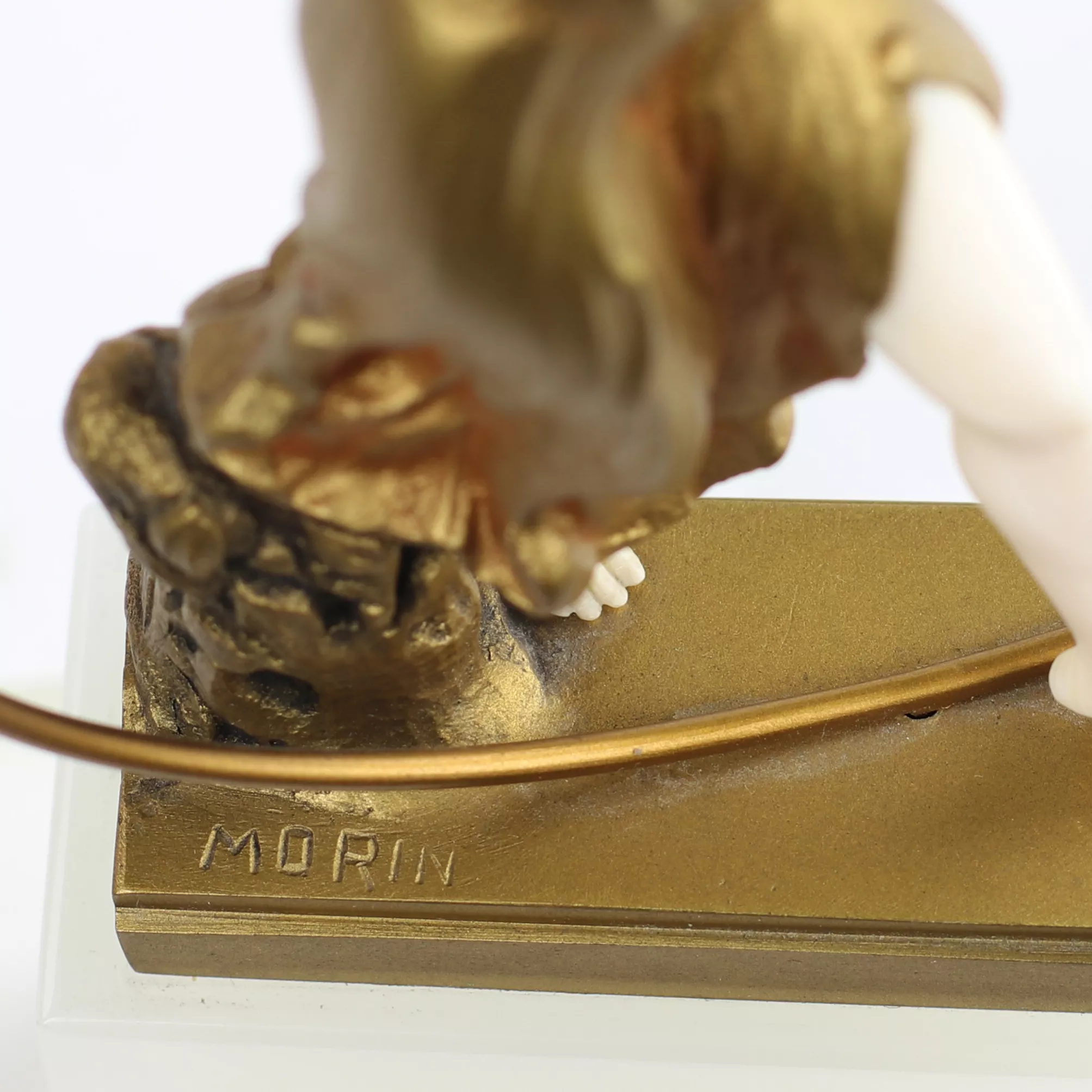
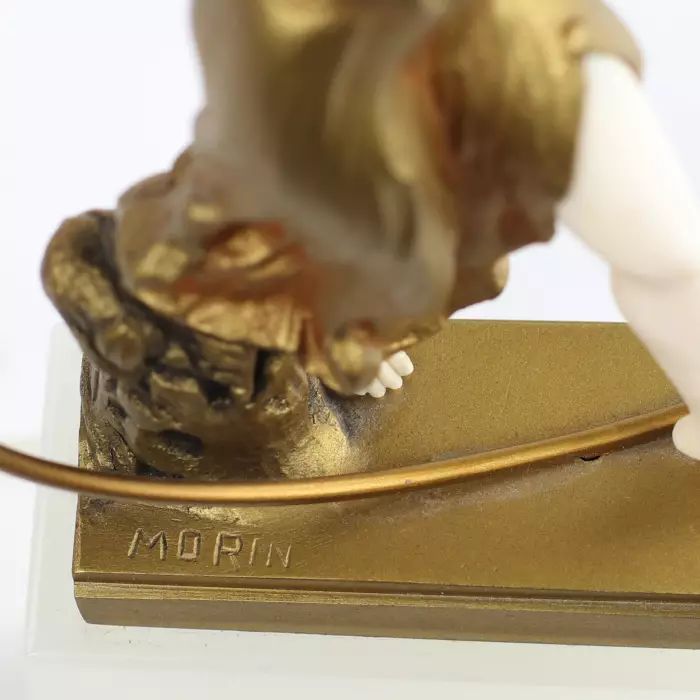
The base bears the sculptors incised signature, Georges Morin. The sculpture is accompanied by a CITES Certificate, confirming the lawful circulation of the ivory components.
Signature, Marks and Hallmarks: Signed Georges Morin on the base.
Dimensions: Height: 18 cm. Width: 11.5 cm.
Weight: 600 g.
Materials: Gilt bronze, ivory, onyx.
Condition: Very good condition.
Georges Morin (1874 - 1950) belongs to the distinguished generation of European sculptors whose careers bridged the transition from Art Nouveau to Art Deco. He is particularly celebrated for his refined chryséléphantine cabinet sculptures, in which expertly cast bronze, carved ivory and luxurious ornamental stone are united into harmonious decorative compositions. Such works became highly desirable among sophisticated collectors in France and Belgium during the first decades of the twentieth century, when decorative sculpture occupied a central place within fashionable interiors.
The chryséléphantine technique traces its origins to Classical Antiquity but experienced a remarkable revival during the Art Deco period. Sculptors employed bronze to render garments and ornamental details, while ivory was reserved for the exposed flesh, producing a striking contrast of texture and colour that imparted exceptional vitality and elegance to the human figure. This combination of noble materials became one of the defining characteristics of French decorative sculpture between approximately 1915 and 1935.
Woman with a Hoop perfectly reflects Art Decos fascination with the modern woman and the contemporary ideals of athleticism, dance and physical grace. Following the First World War, artists increasingly celebrated feminine independence, movement and refined elegance, drawing inspiration from ballet, gymnastics and the growing international culture of sport. Comparable subjects are represented in the collections of leading institutions including the Musée des Arts Décoratifs in Paris and the Victoria and Albert Museum, where chryséléphantine sculpture is recognised as one of the most distinctive artistic expressions of the Art Deco movement.
Morins sculptures are distinguished by their harmonious proportions, elegant silhouettes and outstanding quality of execution. His sophisticated interplay between the warm tones of ivory, the luminous brilliance of gilt bronze and the polished depth of onyx demonstrates the extraordinary decorative refinement achieved by the finest sculptors working in France during the interwar years.
Original chryséléphantine sculptures by Georges Morin remain highly sought after by international collectors of twentieth-century decorative arts and regularly appear in the catalogues of major European auction houses. They represent important examples of French Art Deco sculpture and hold significant appeal for both museum collections and discerning private collectors.
The sculpture is preserved in very good collectors condition. The original gilding and patinated bronze remain well preserved. The ivory elements show no apparent losses. The polished onyx base displays only minor age-related wear consistent with the period of manufacture.
The condition report is provided for informational purposes only.
It is not comprehensive and may not reflect all defects, restorations, alterations, or adaptations, as Antiqon does not perform professional conservation-level assessments. The information is based on a qualified, yet subjective, evaluation by our specialists.Before purchasing, we recommend consultation with an independent expert.Please also consult our Terms and conditions and Glossary A-Z, which contain important information on lot characteristics and sale conditions.