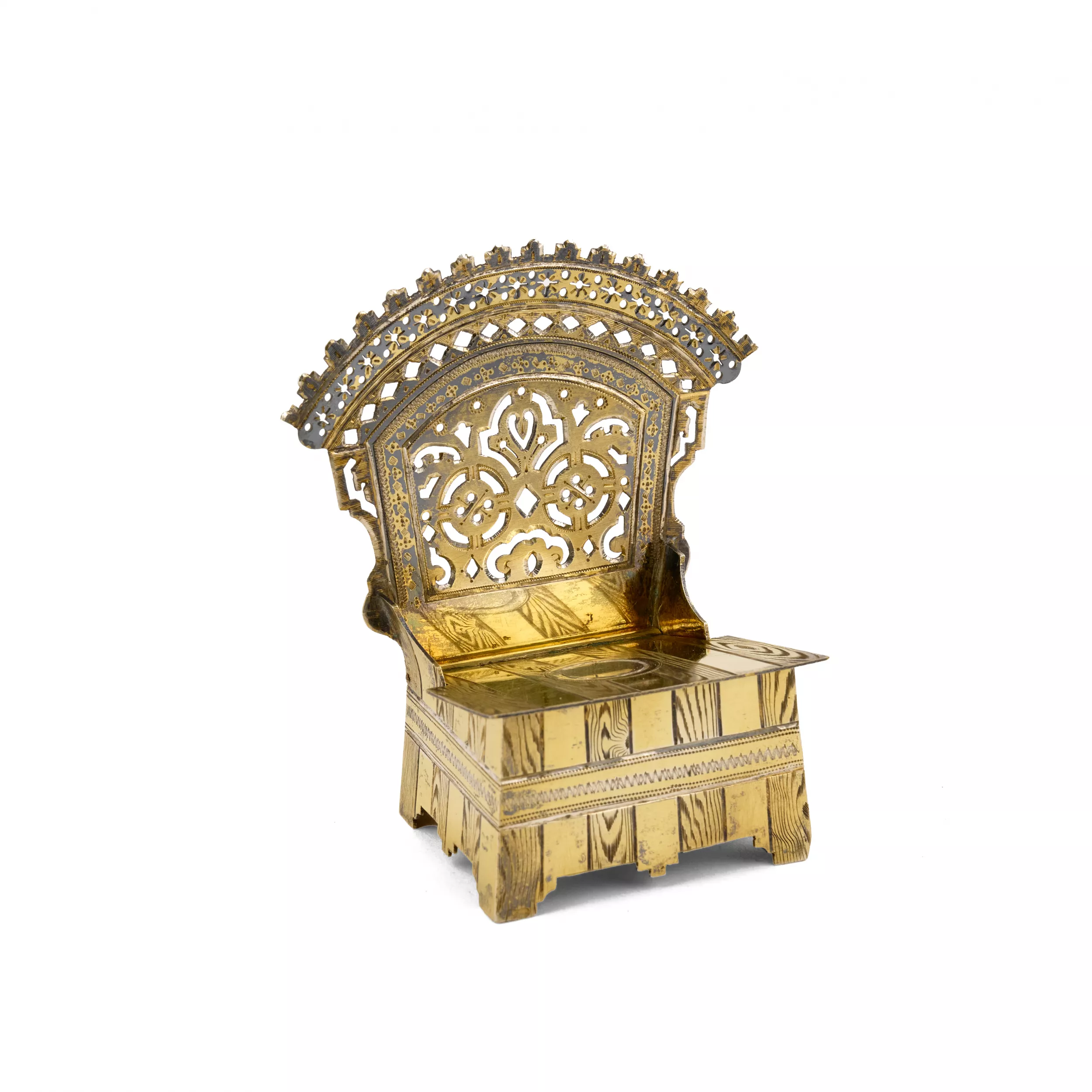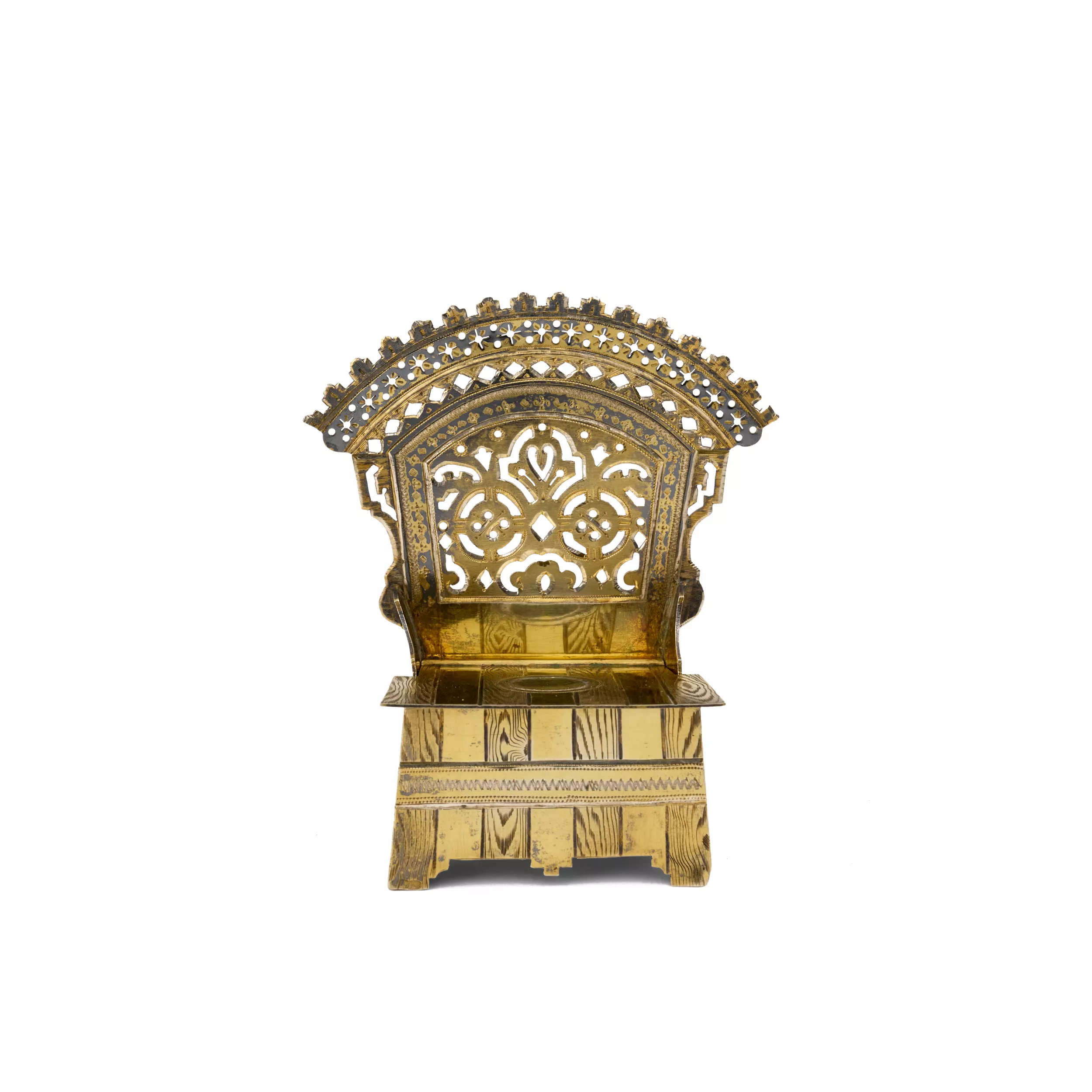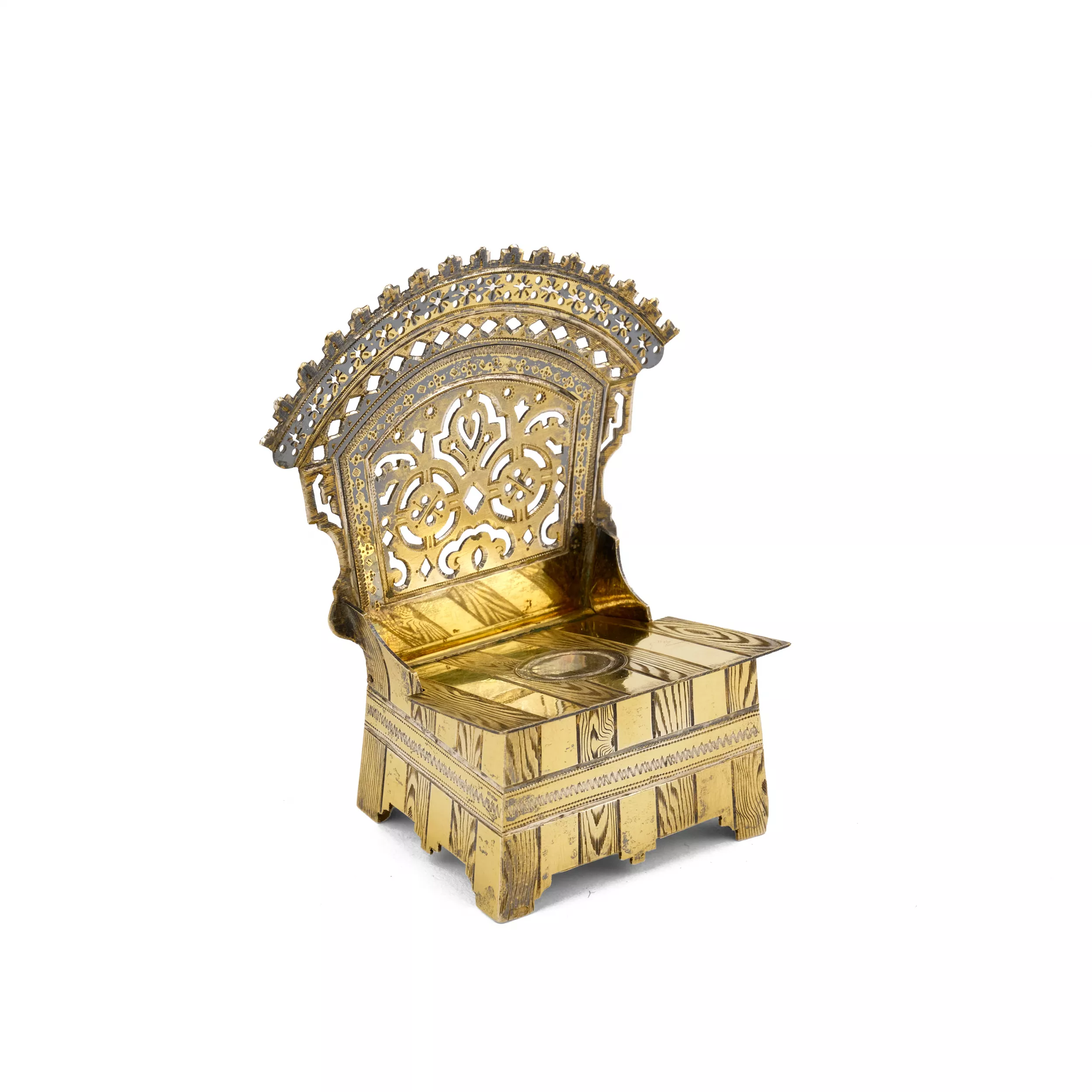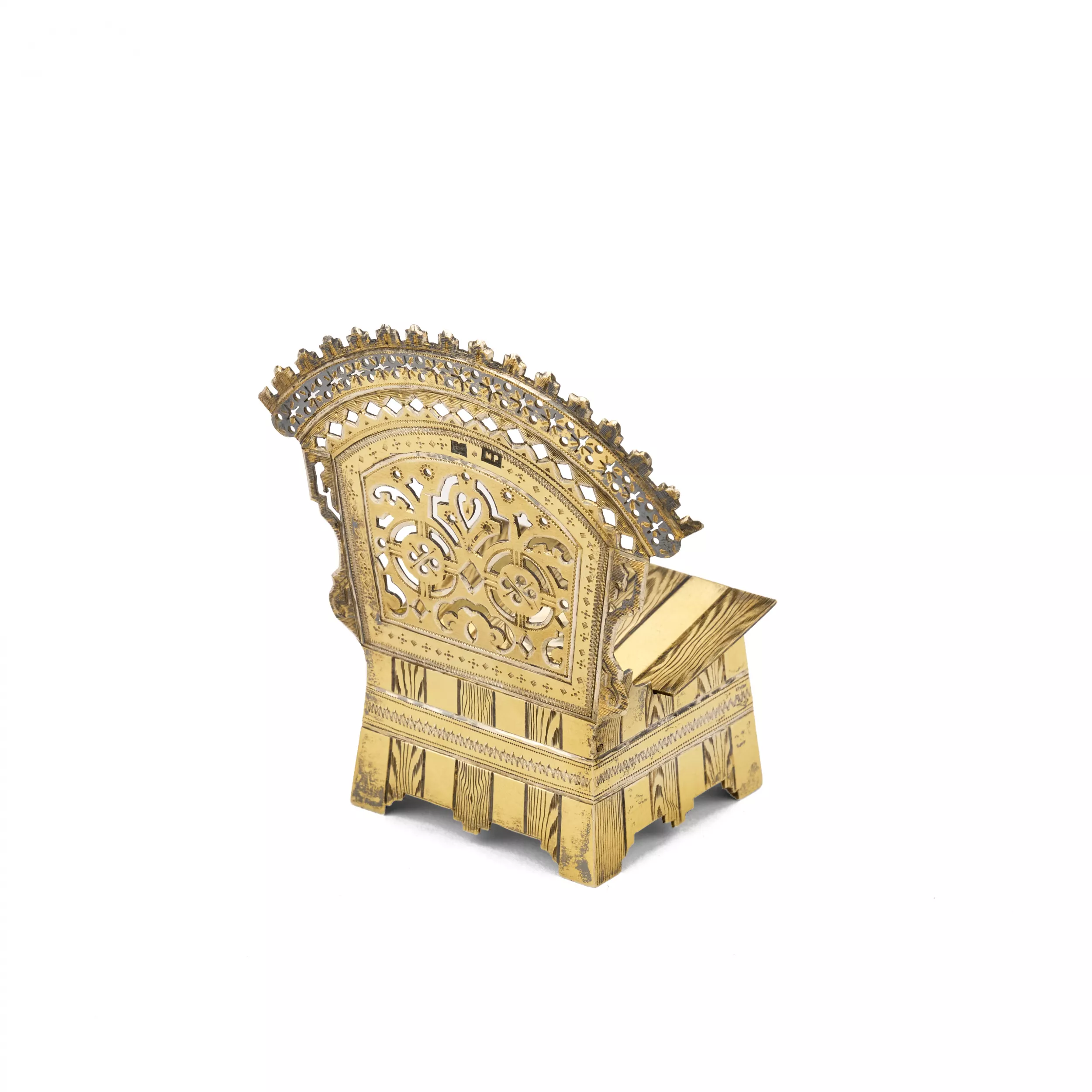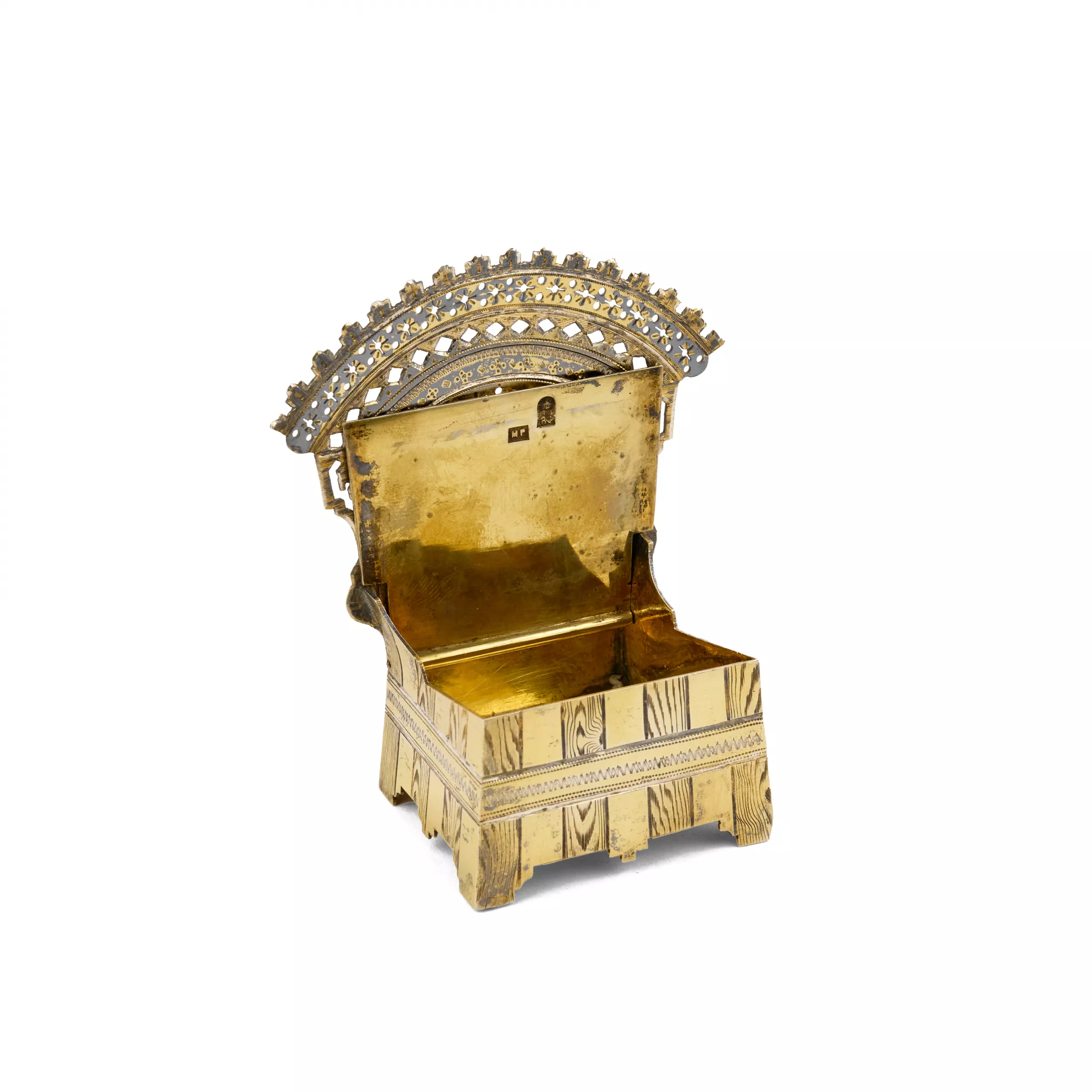


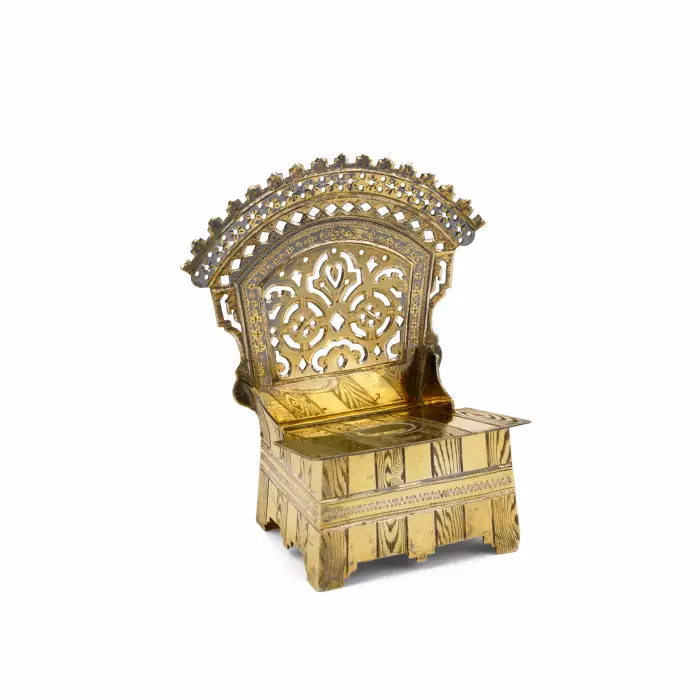
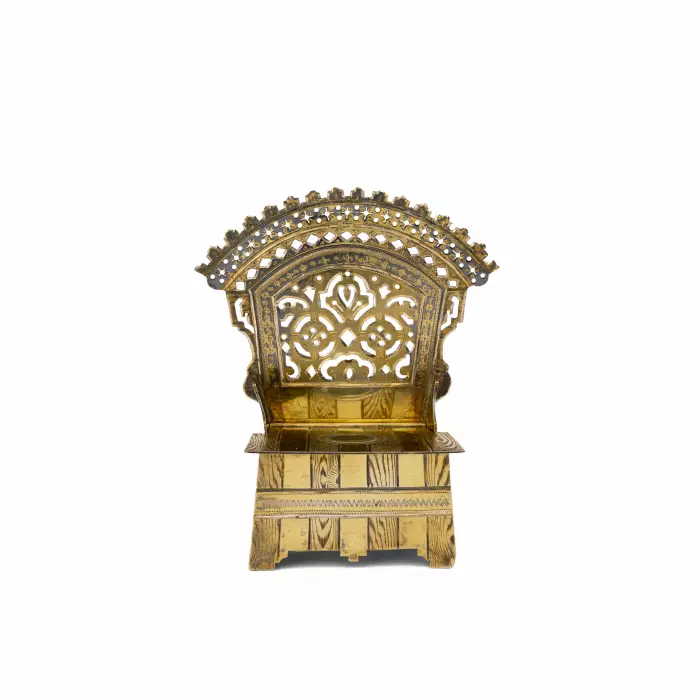
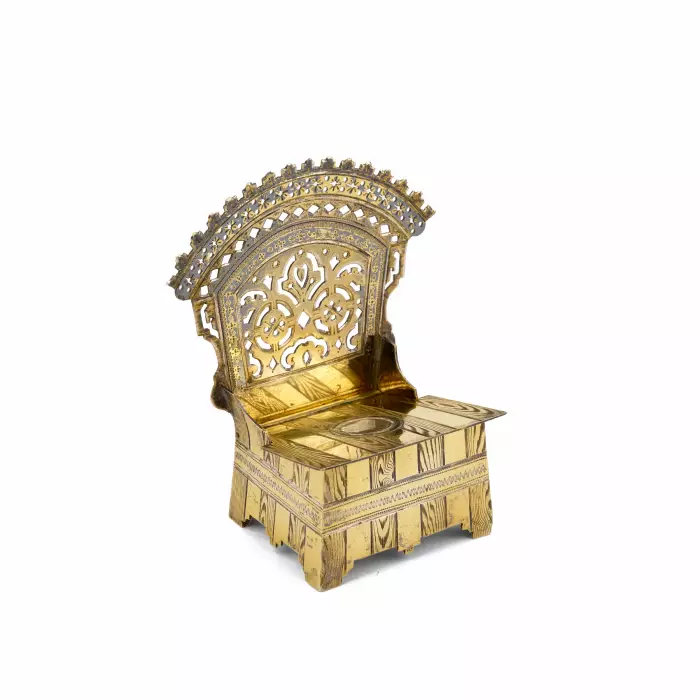
SILVER-GILT THRONE-FORM SALT CELLAR IN THE RUSSIAN STYLE. MOSCOW, 1882
Antiqon consultant will contact you within one business day after receiving your request.
Discover your personalized shipping cost — based on where you are and how you prefer to receive your piece..
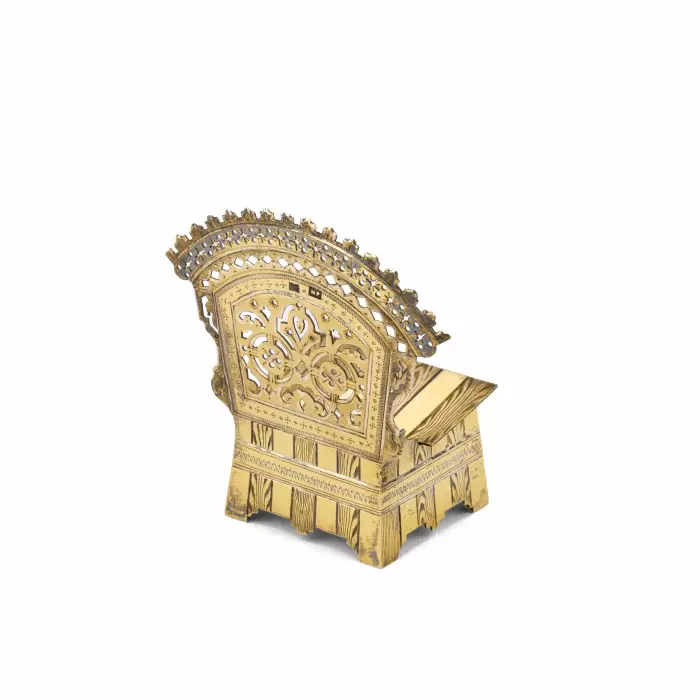
A Russian silver-gilt salt cellar, made in Moscow in 1882. Designed as a miniature throne, the object represents a characteristic type of Russian silverwork of the last quarter of the 19th century.
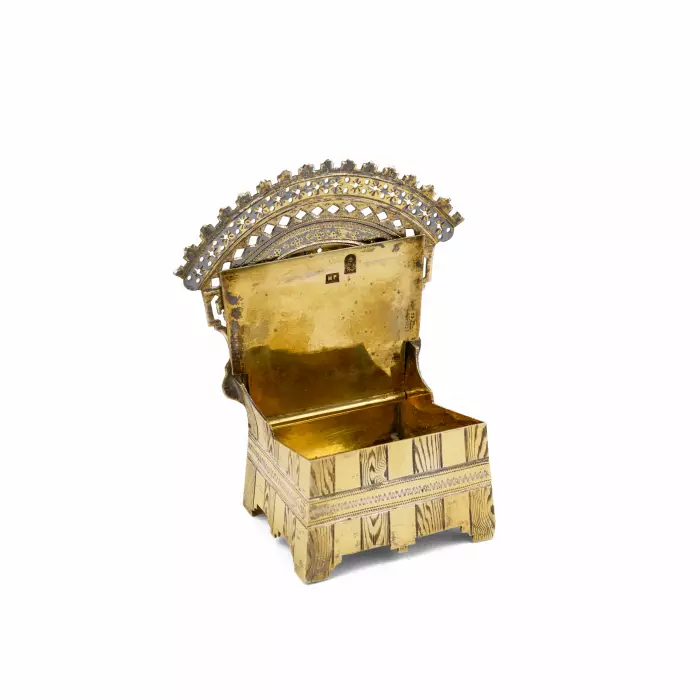
The body is conceived as an architectural chair with a rectangular base and a high, keel-shaped openwork back. The central field is decorated with symmetrical pierced foliate ornament, framed by bands of lozenge-shaped and circular piercings, geometric motifs and a crenellated border. The composition draws upon the forms of medieval Russian architecture and traditional wood carving.
The silver surface was originally entirely gilt. The body is decorated in a trompe-l`œil technique imitating the construction and texture of a wooden chair. Engraved lines, knots and wood-grain patterns reproduce the appearance of individual wooden boards, particularly effectively rendered on the seat and lower section. This illusionistic treatment directly references traditional Russian wooden chair-form salt cellars.
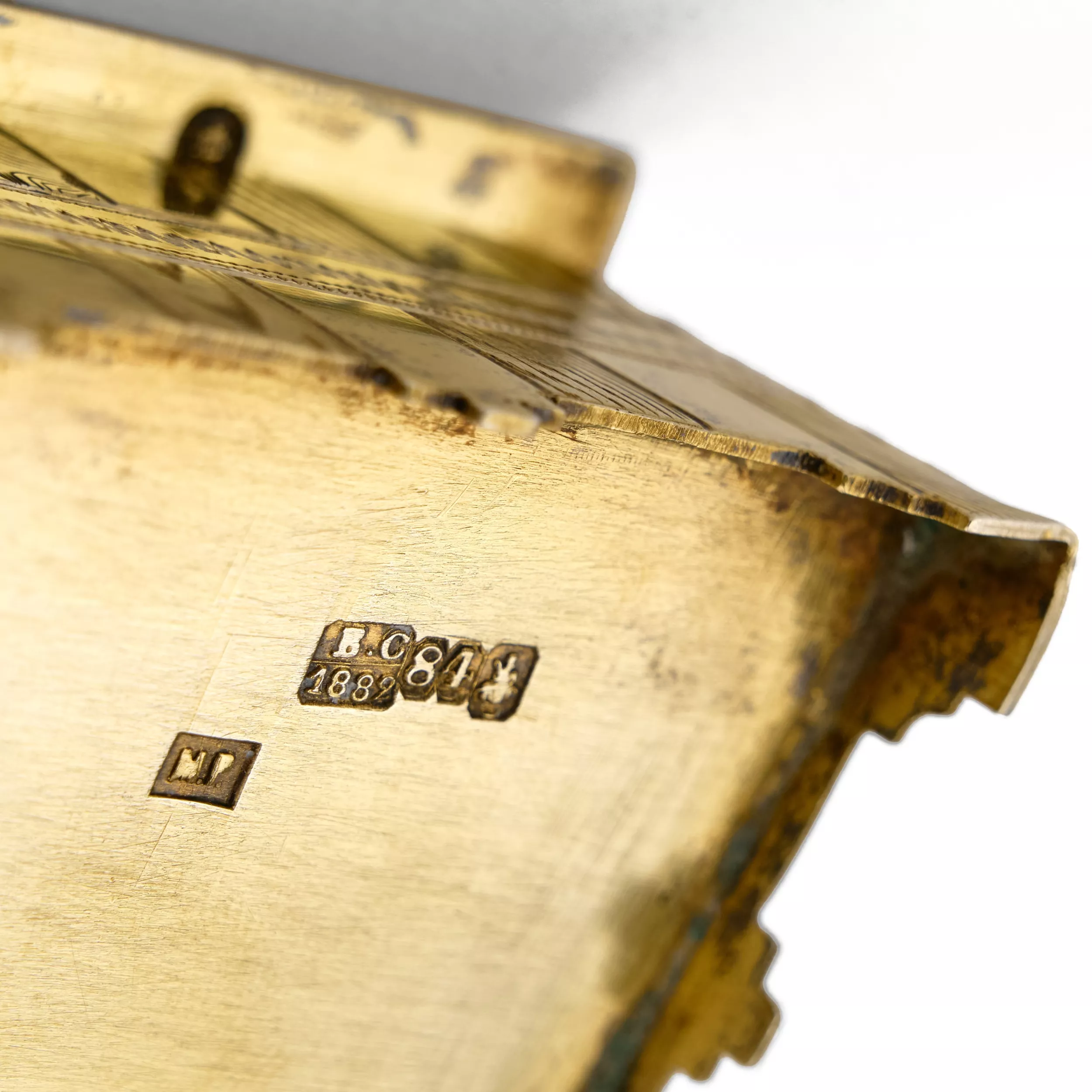
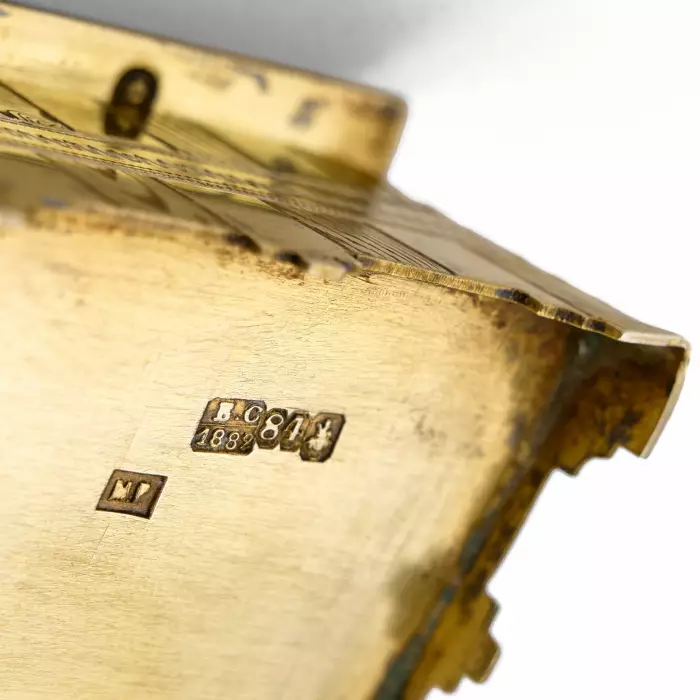
Hallmarks: Maker`s mark «М.Р.» within a rectangular punch; Moscow assay mark of assay master Viktor Savinkov «В.С.», dated 1882, with the Moscow city mark and 84 zolotnik silver standard.
Dimensions: Height: 8.4 cm. Width: 7.9 cm.
Weight: 78 g.
Condition: Good.
The condition report is provided for informational purposes only.
It is not comprehensive and may not reflect all defects, restorations, alterations, or adaptations, as Antiqon does not perform professional conservation-level assessments. The information is based on a qualified, yet subjective, evaluation by our specialists.Before purchasing, we recommend consultation with an independent expert.Please also consult our Terms and conditions and Glossary A-Z, which contain important information on lot characteristics and sale conditions.