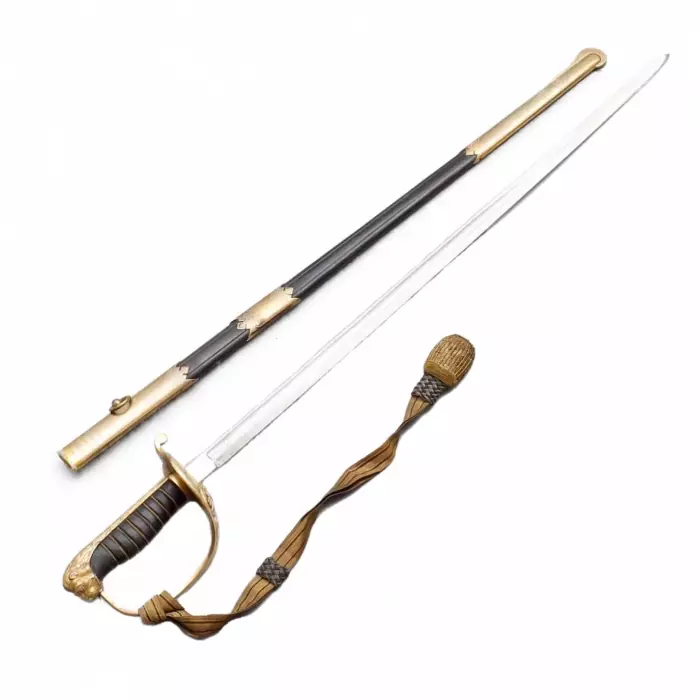
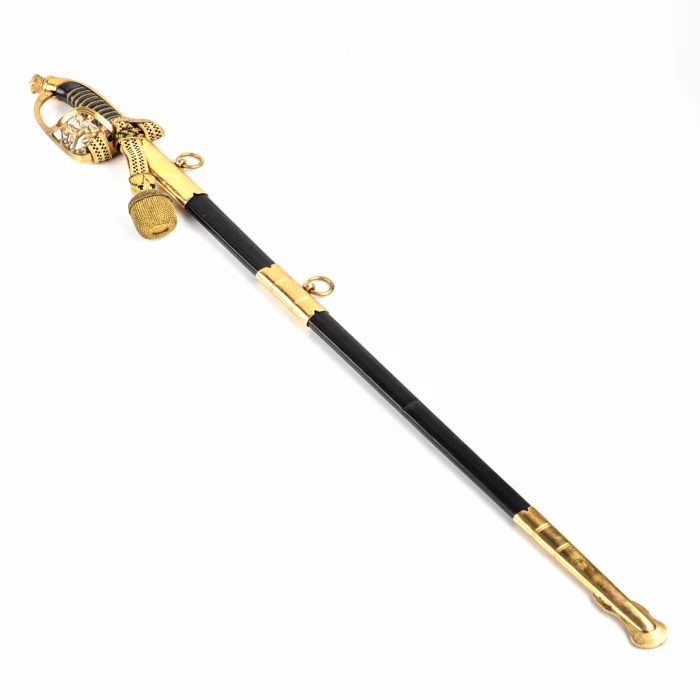
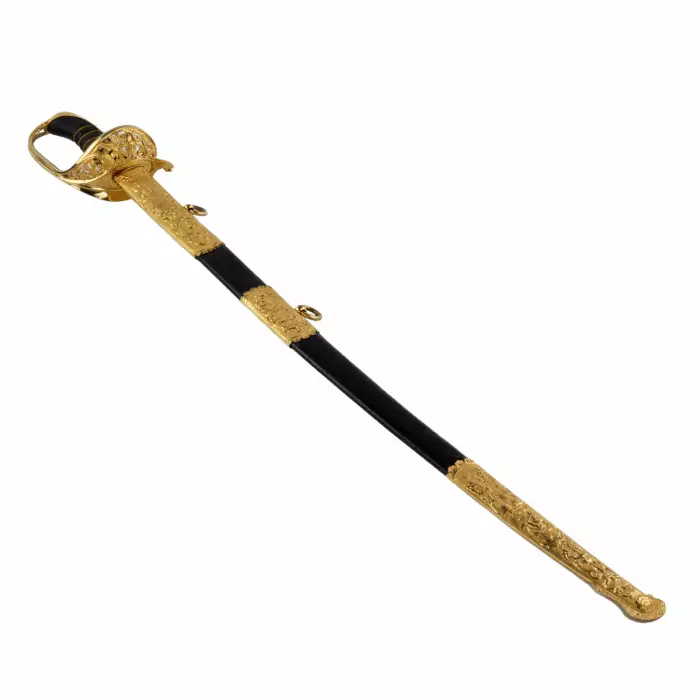
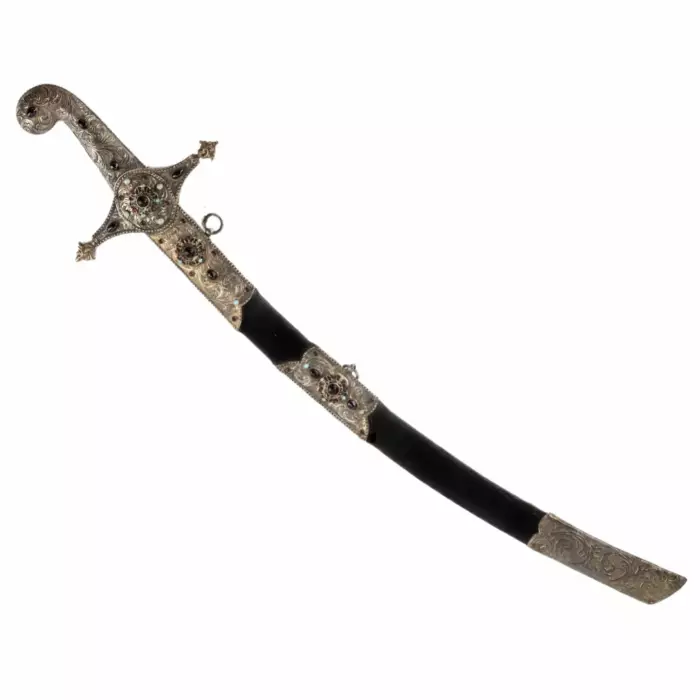
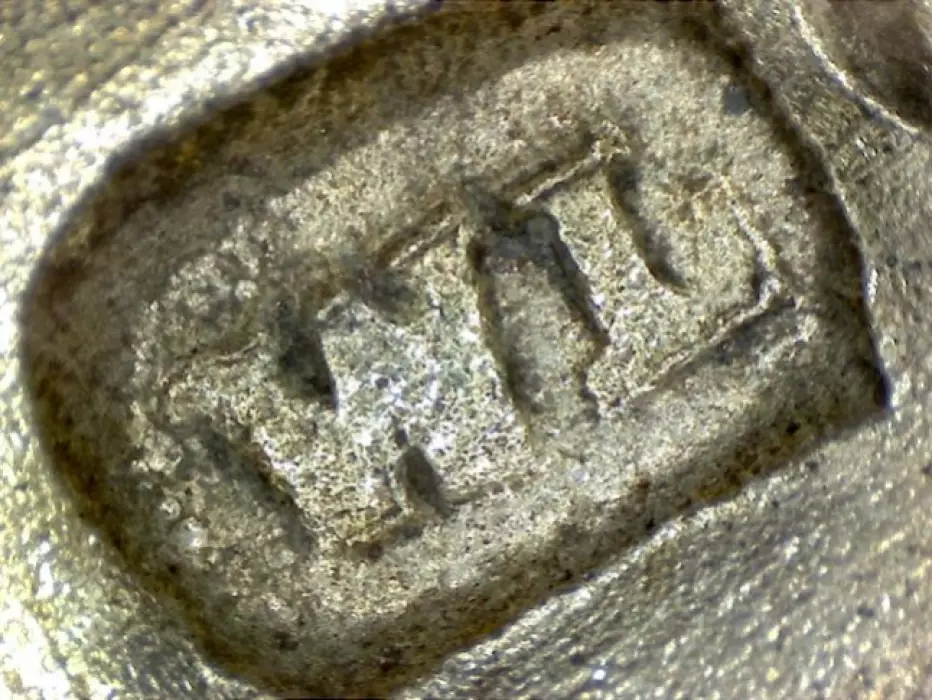
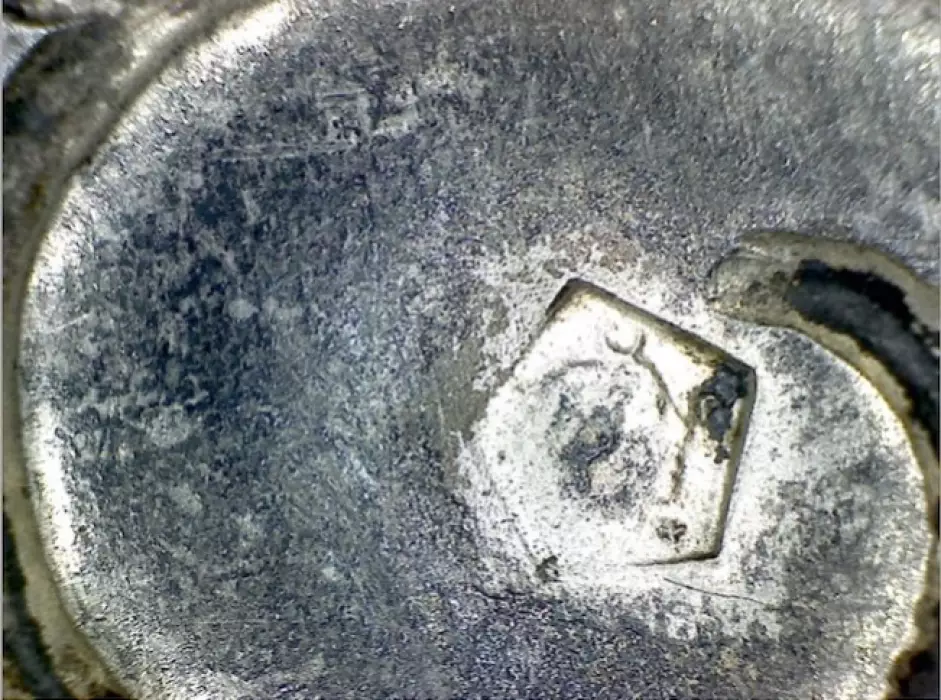
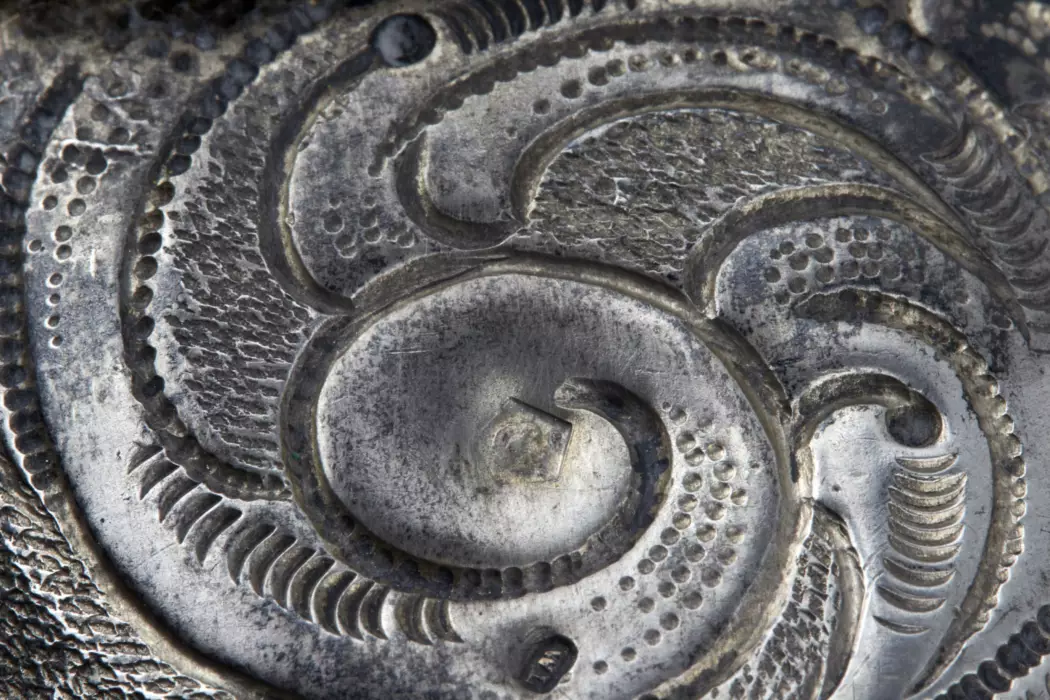
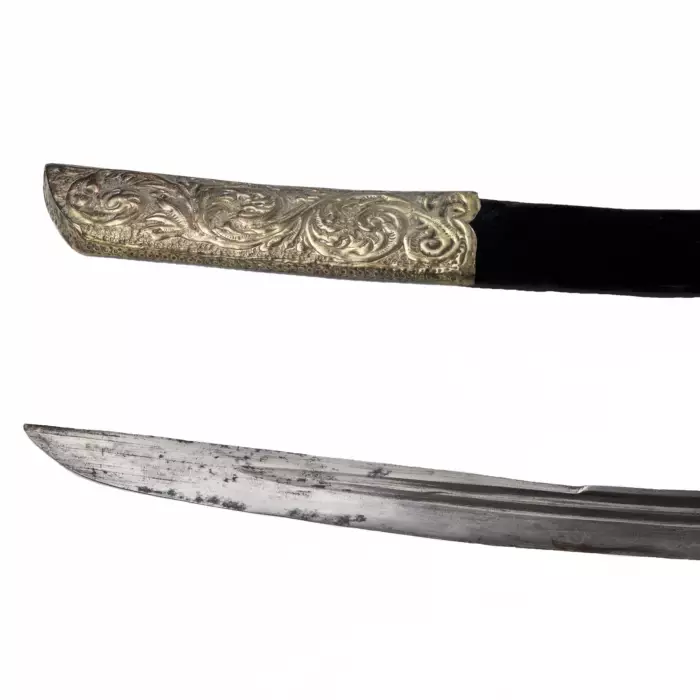
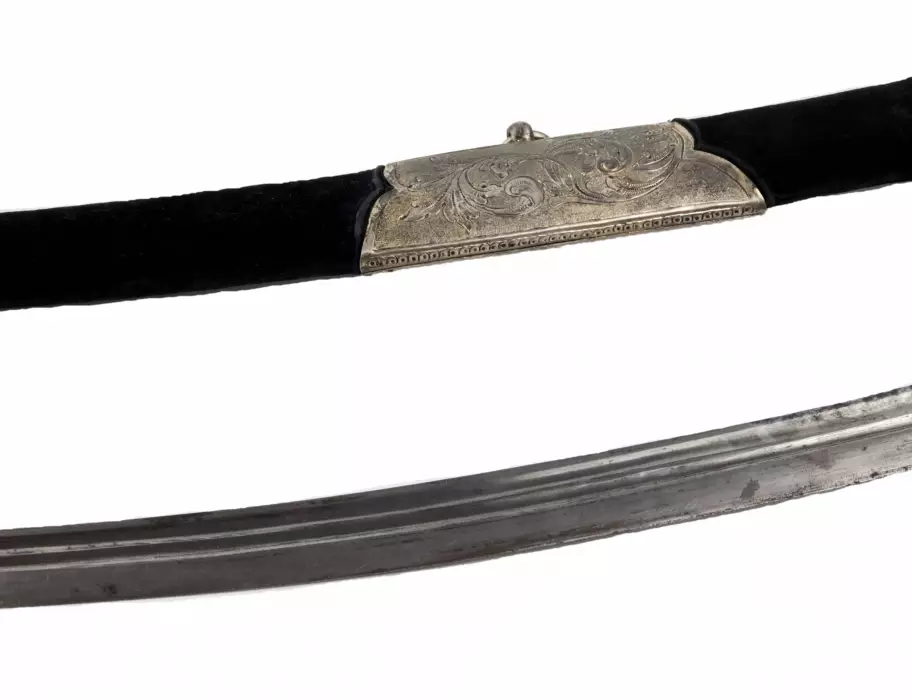
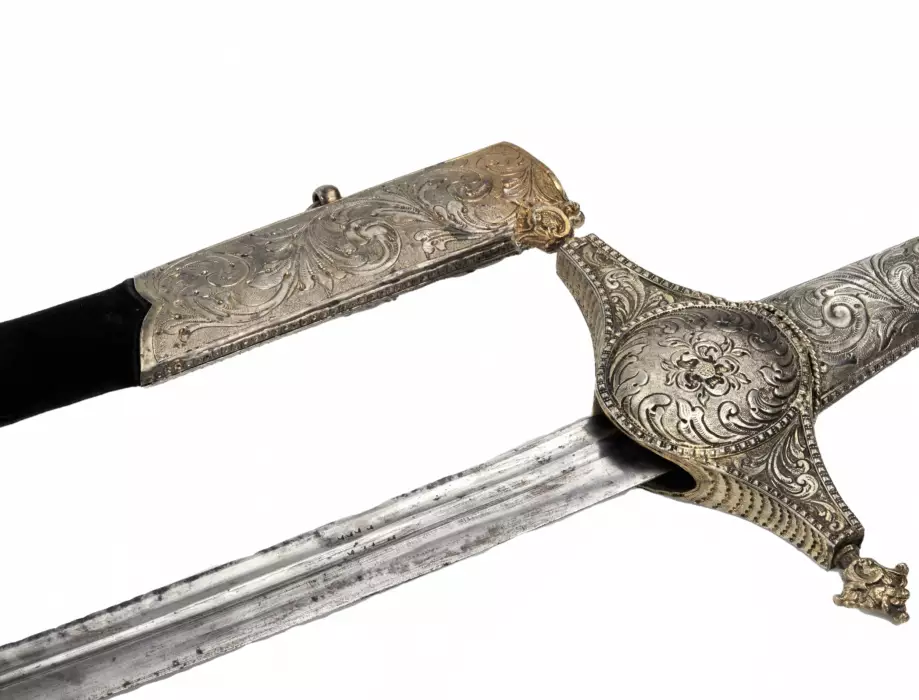
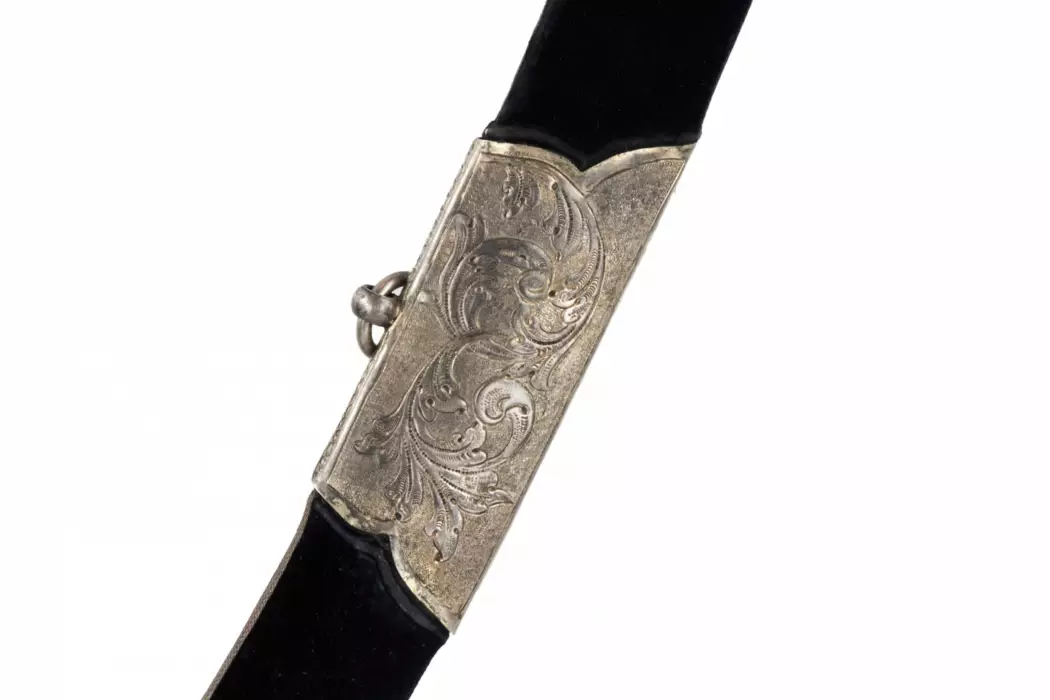
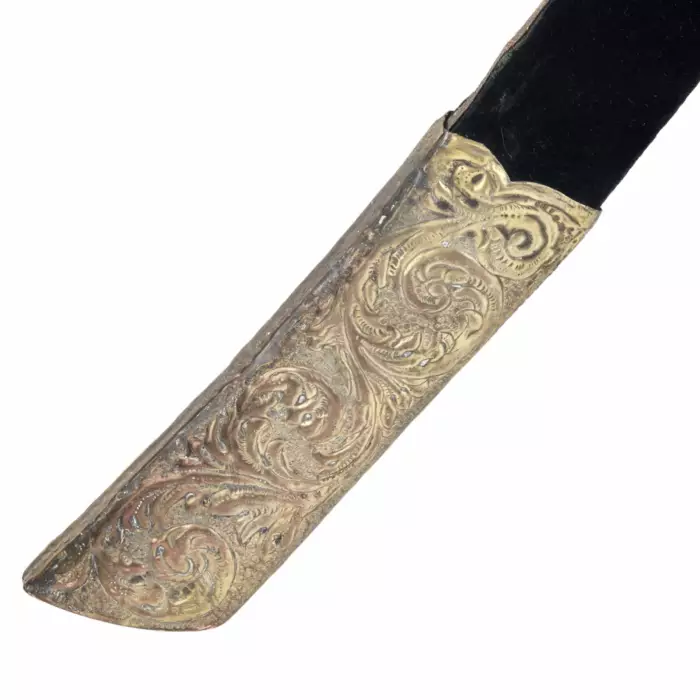
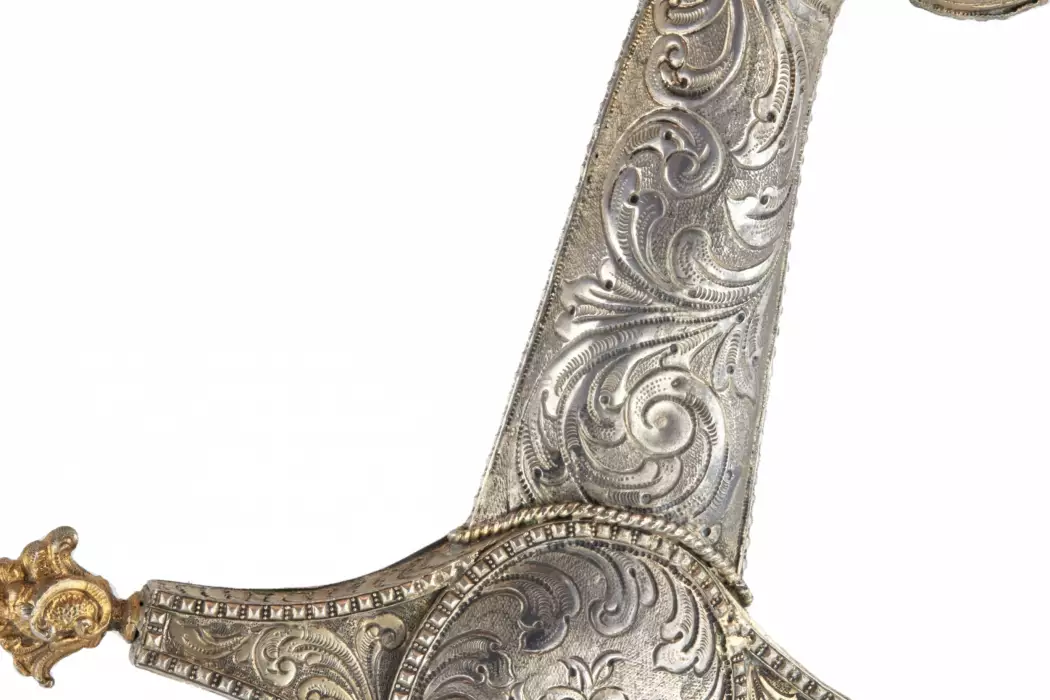
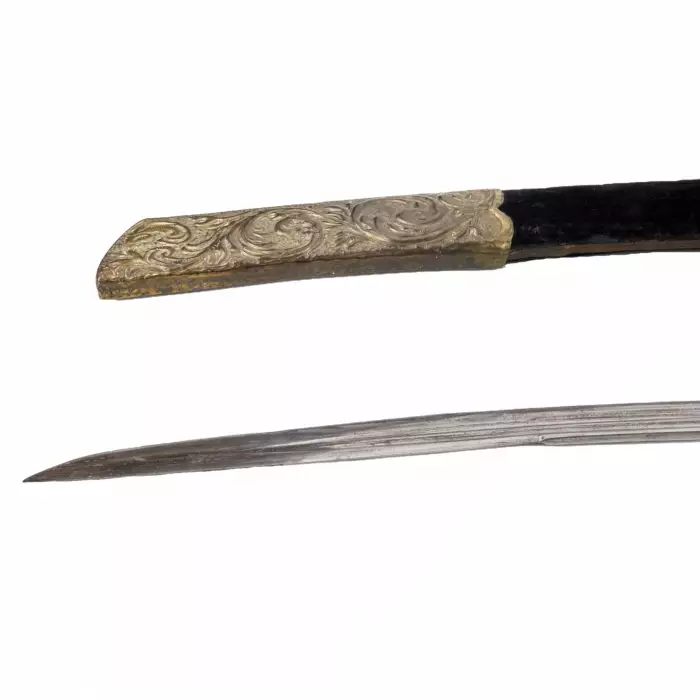
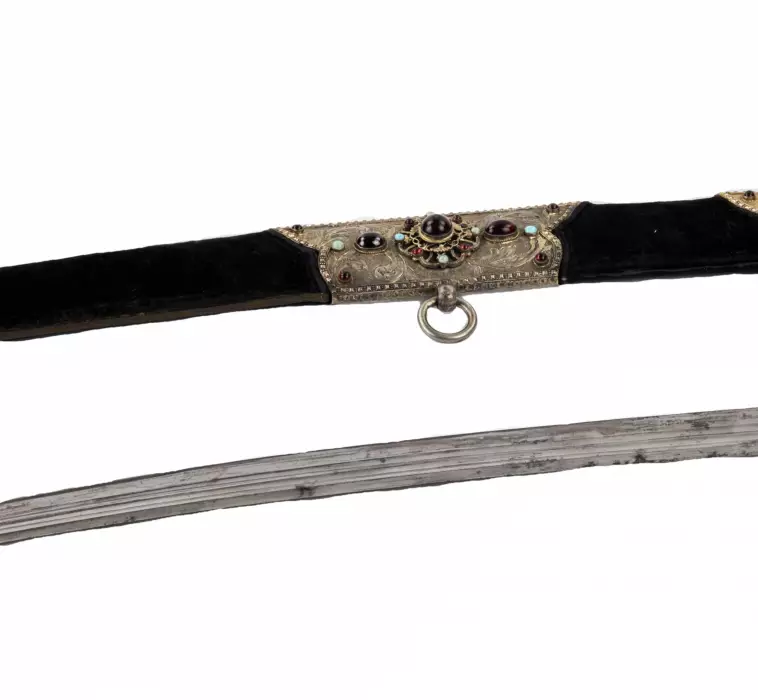
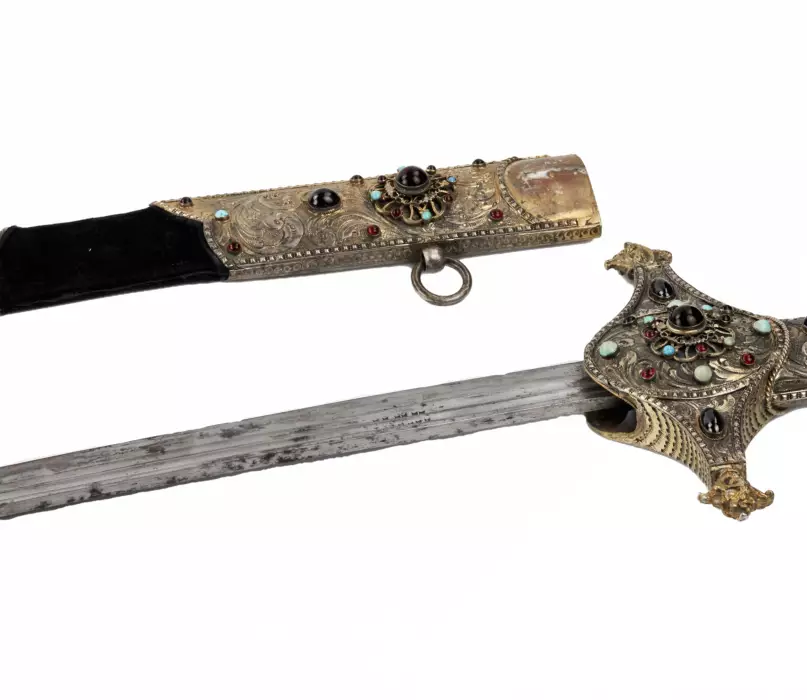
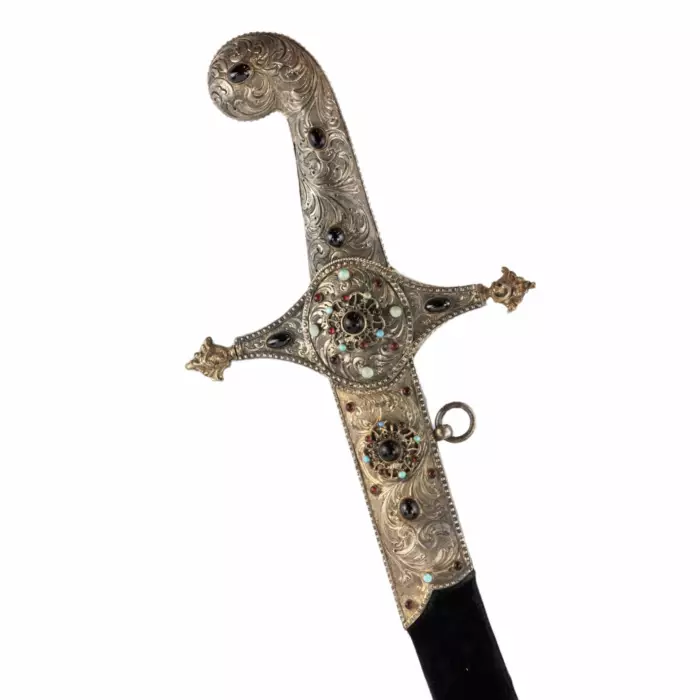
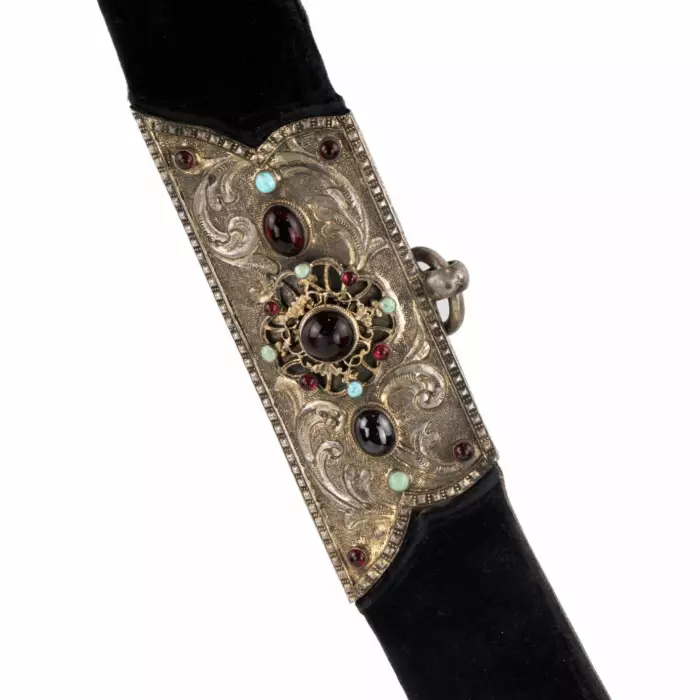
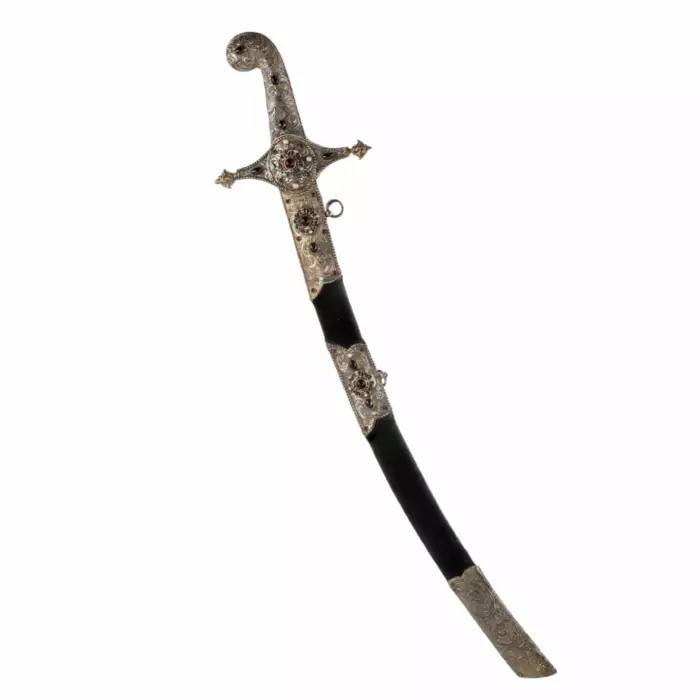
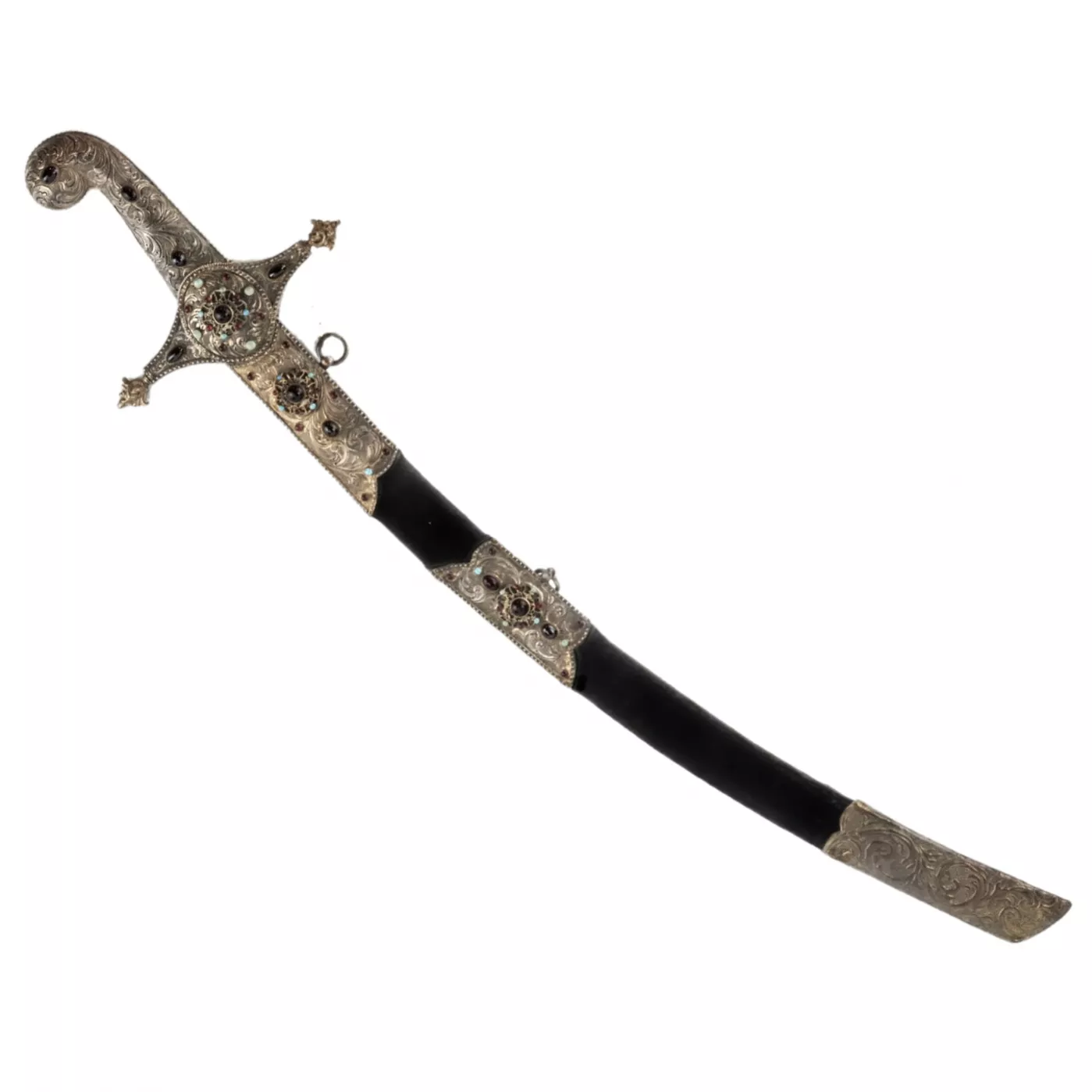
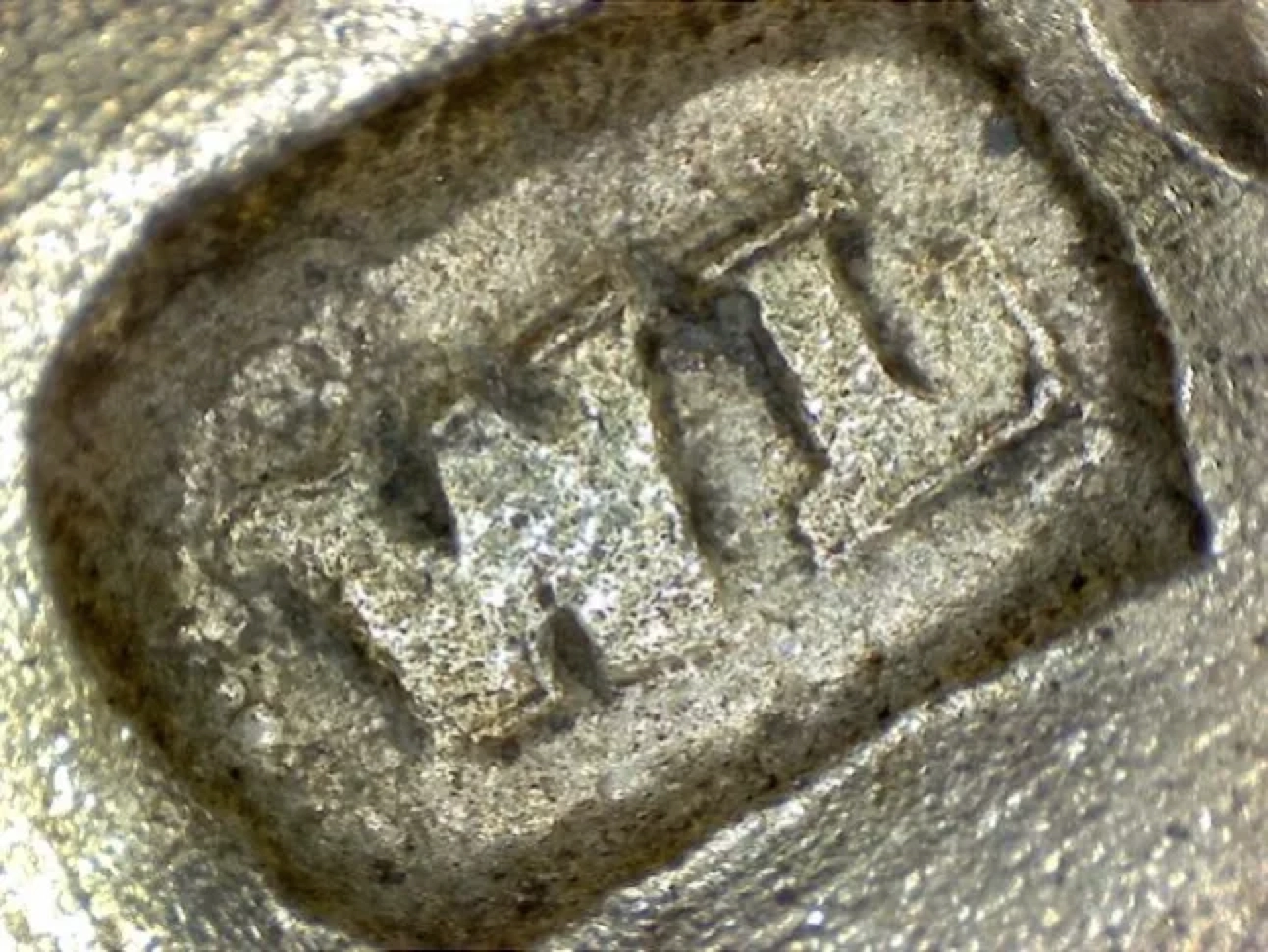
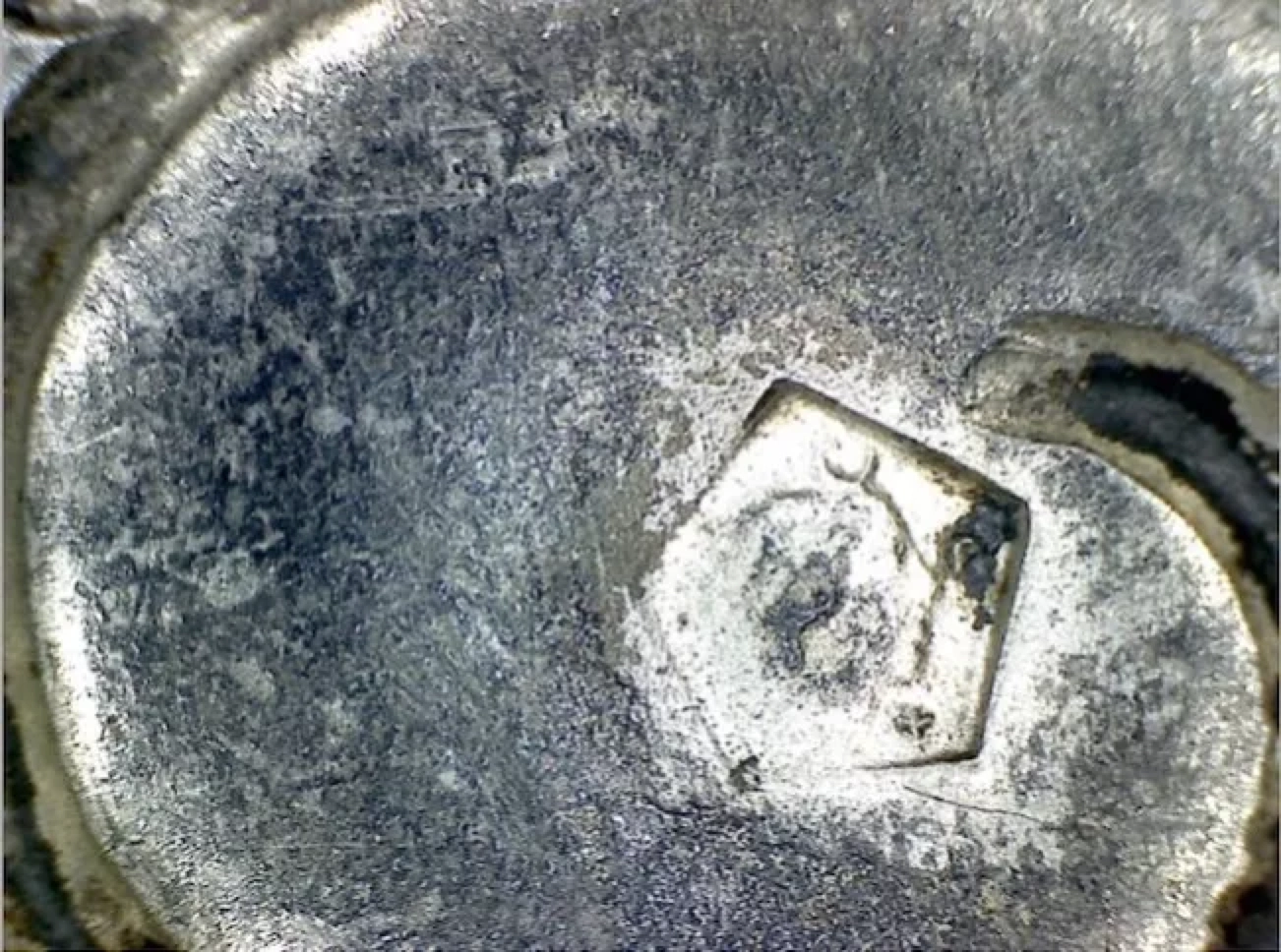
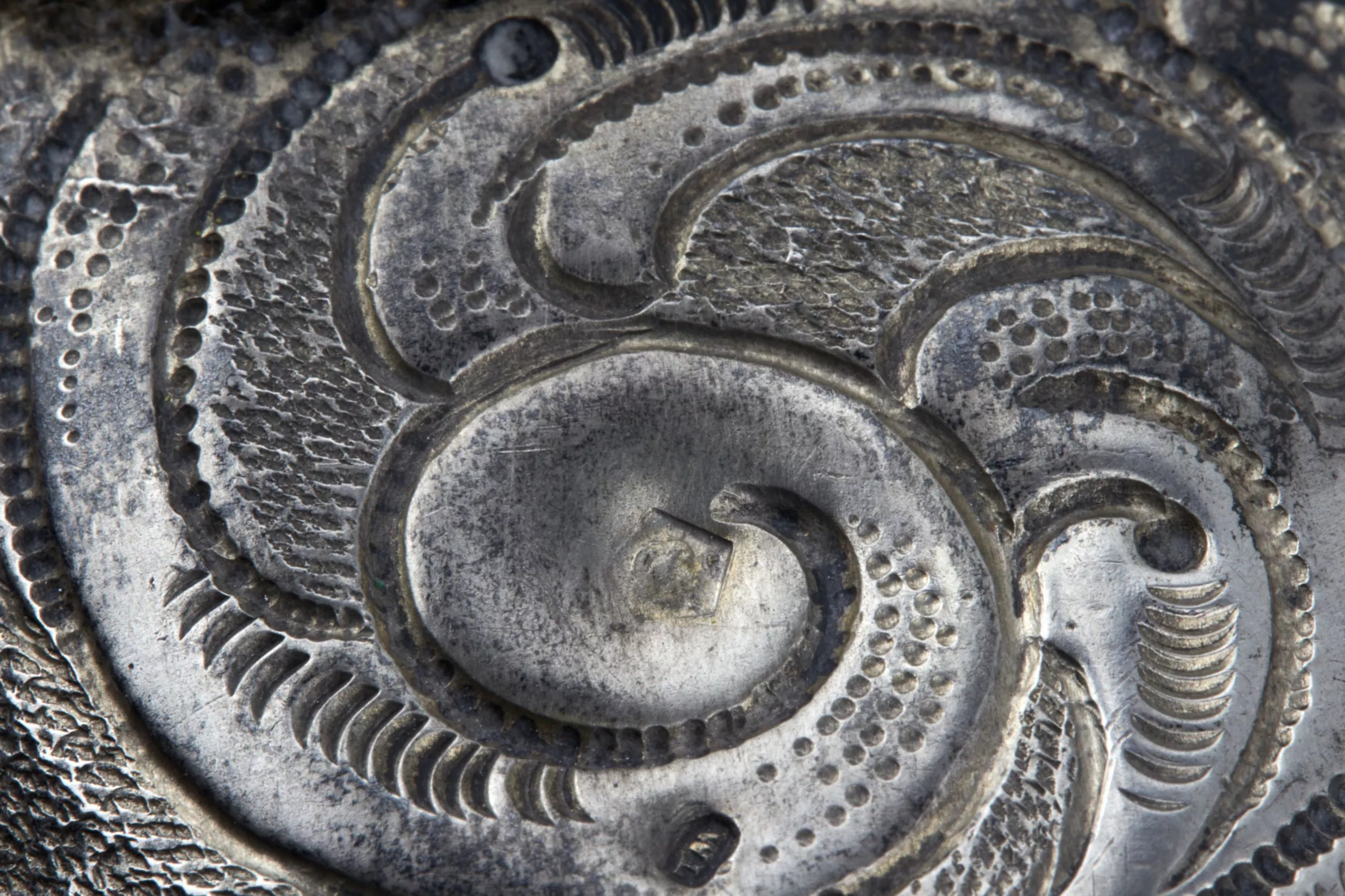
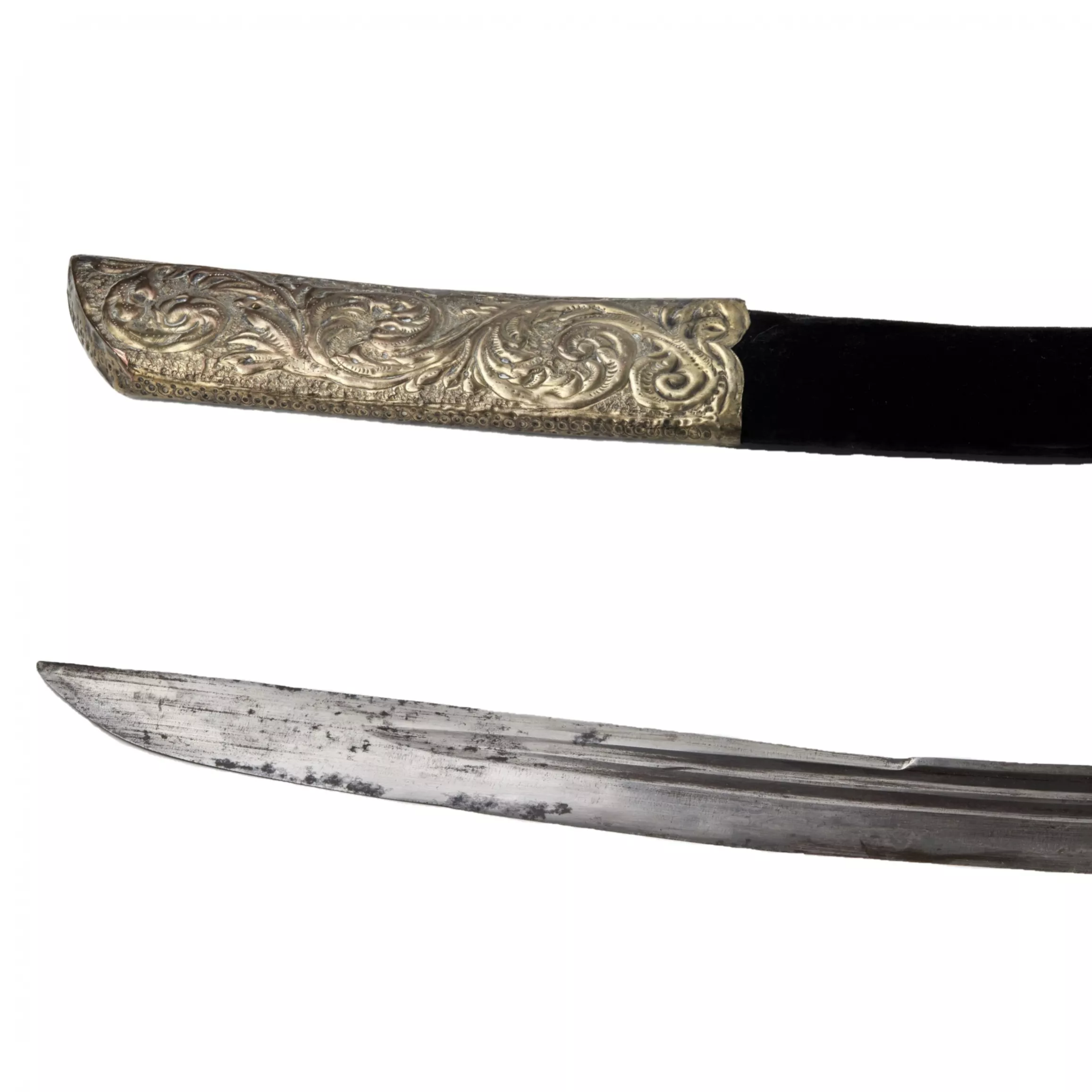
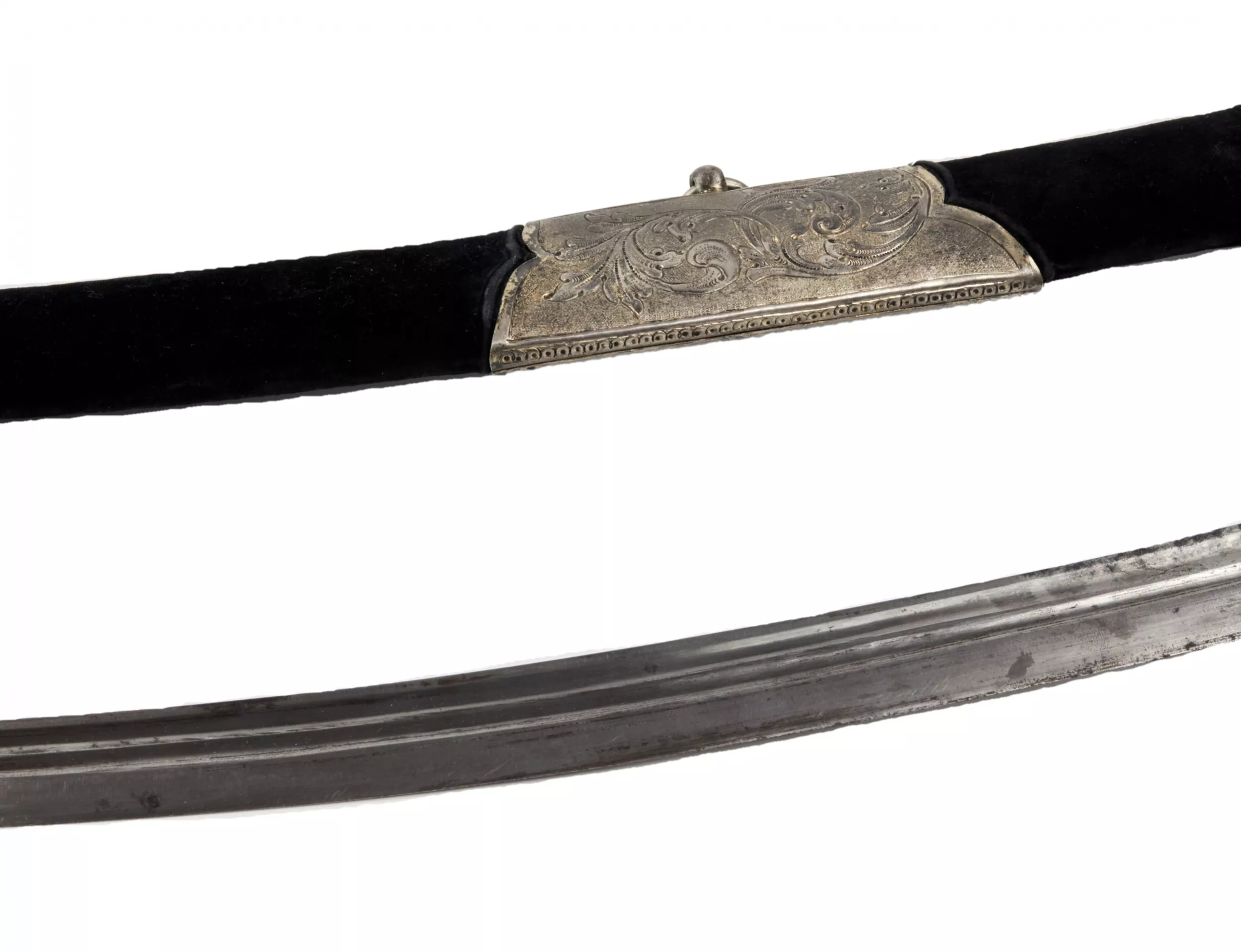
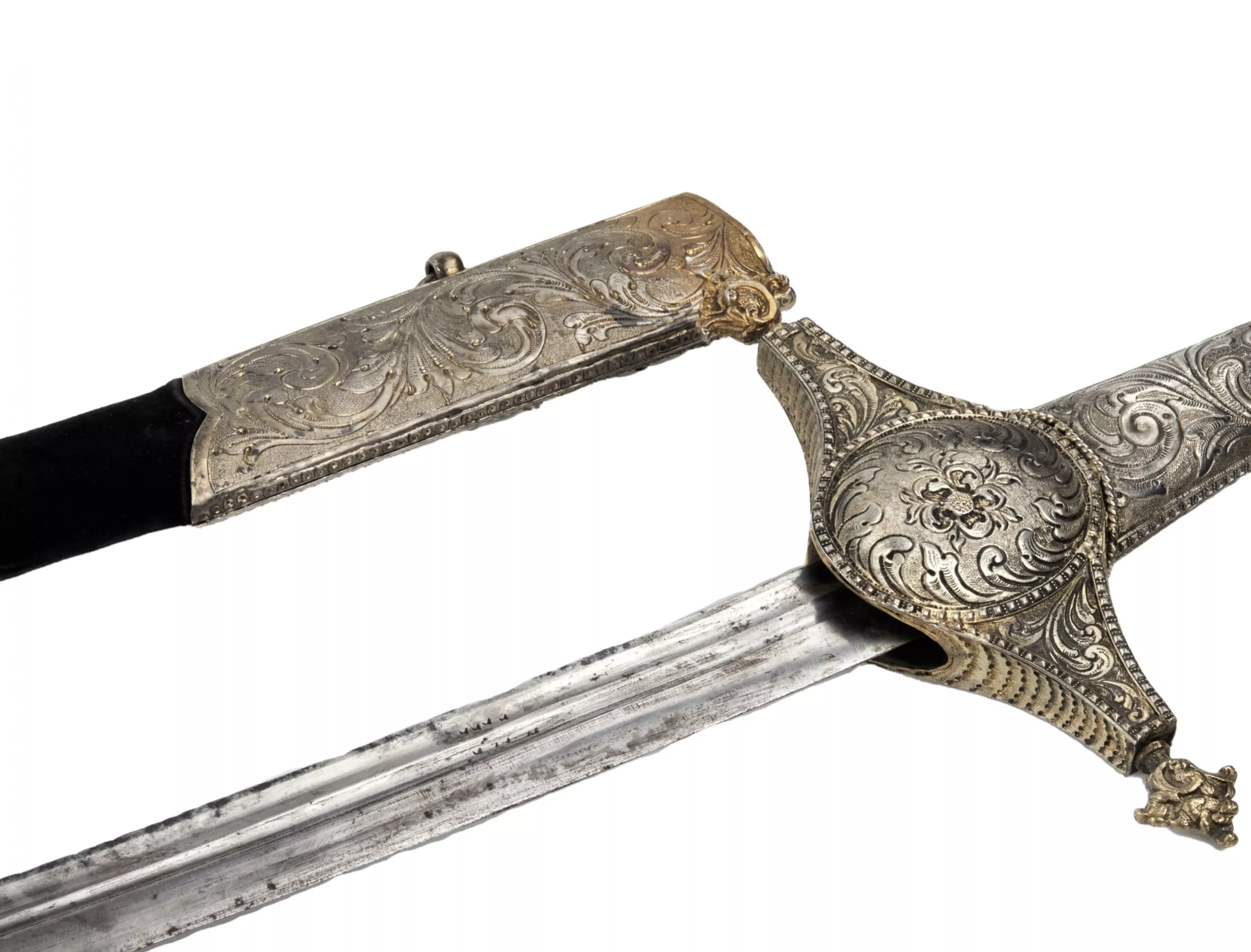
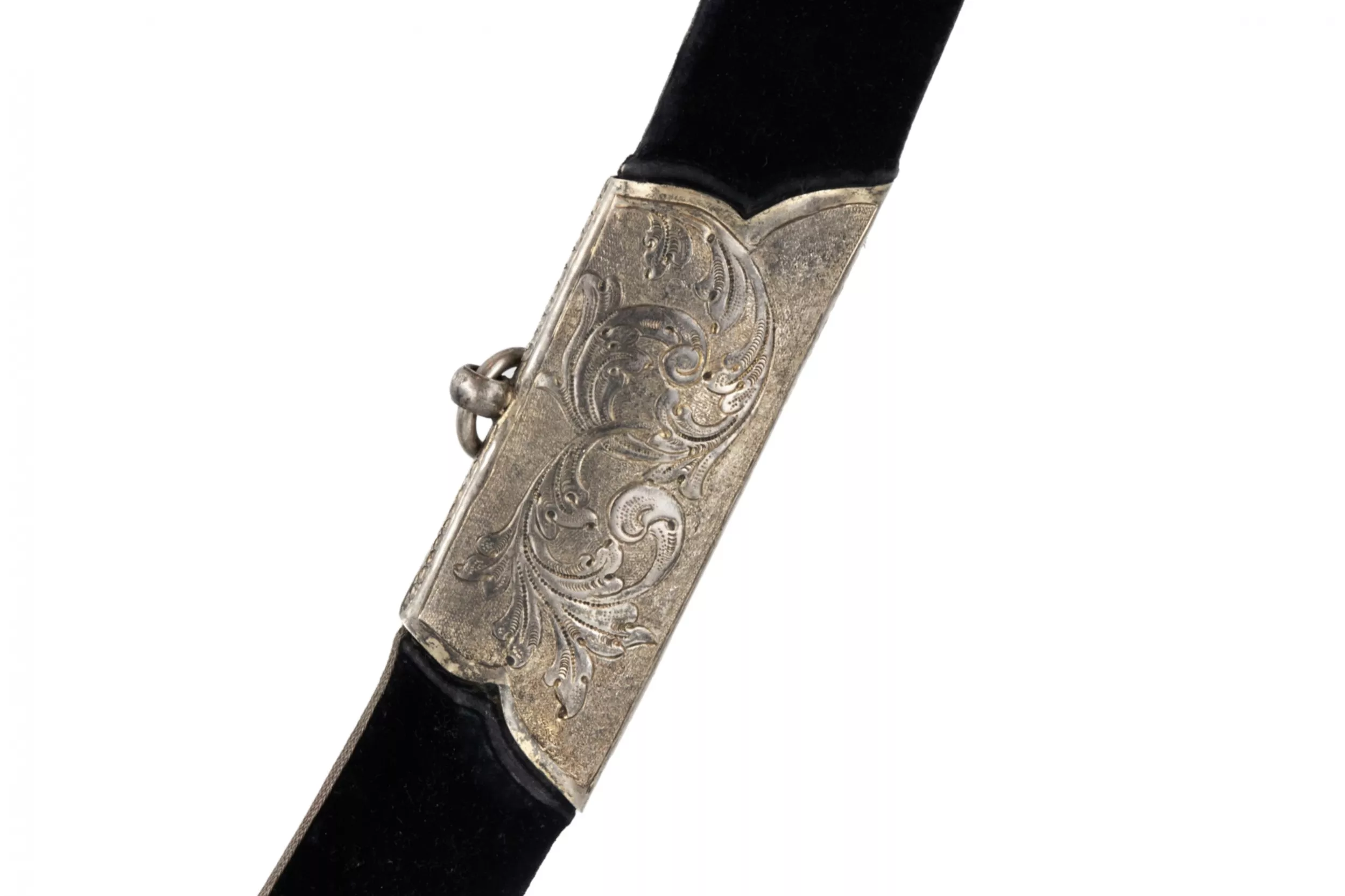
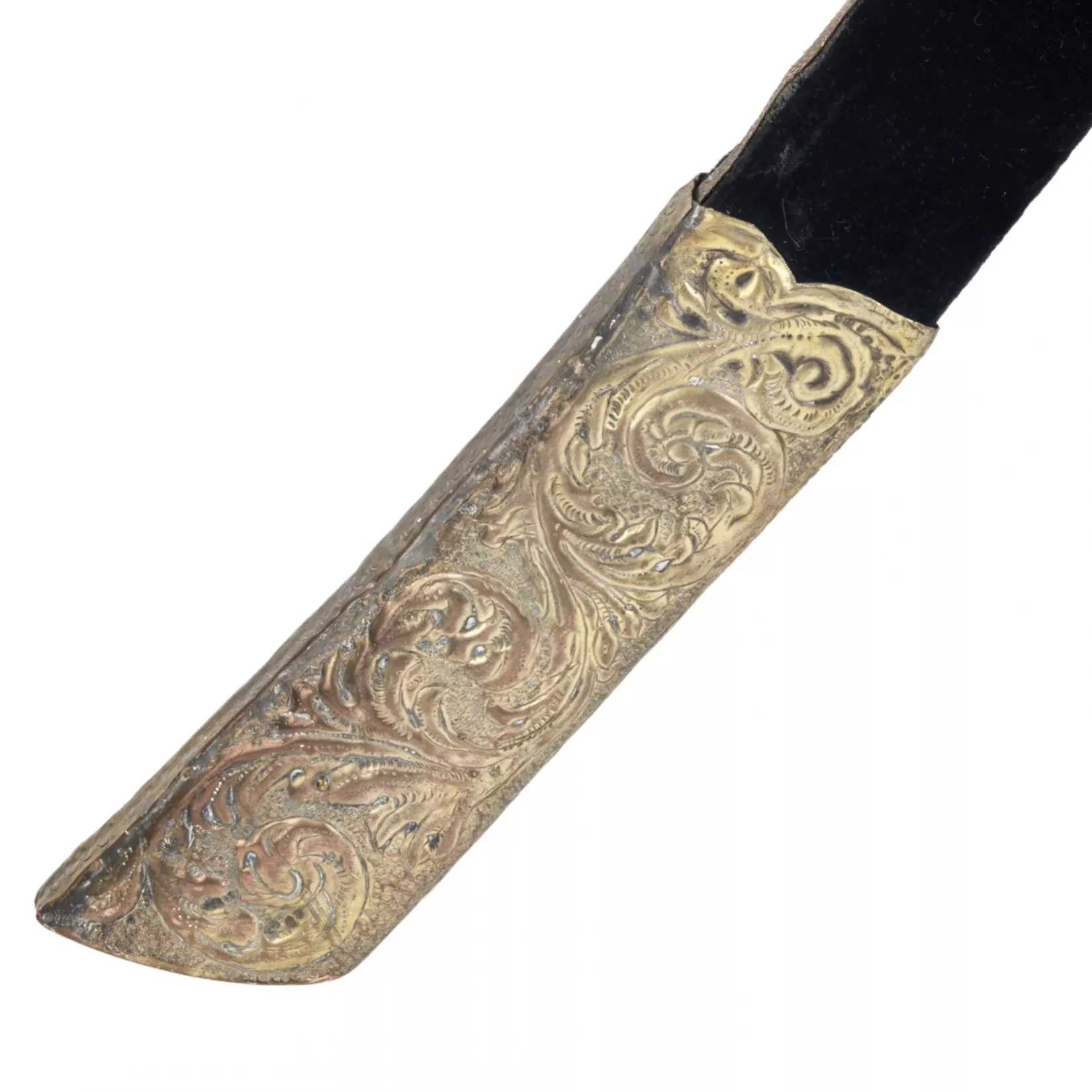
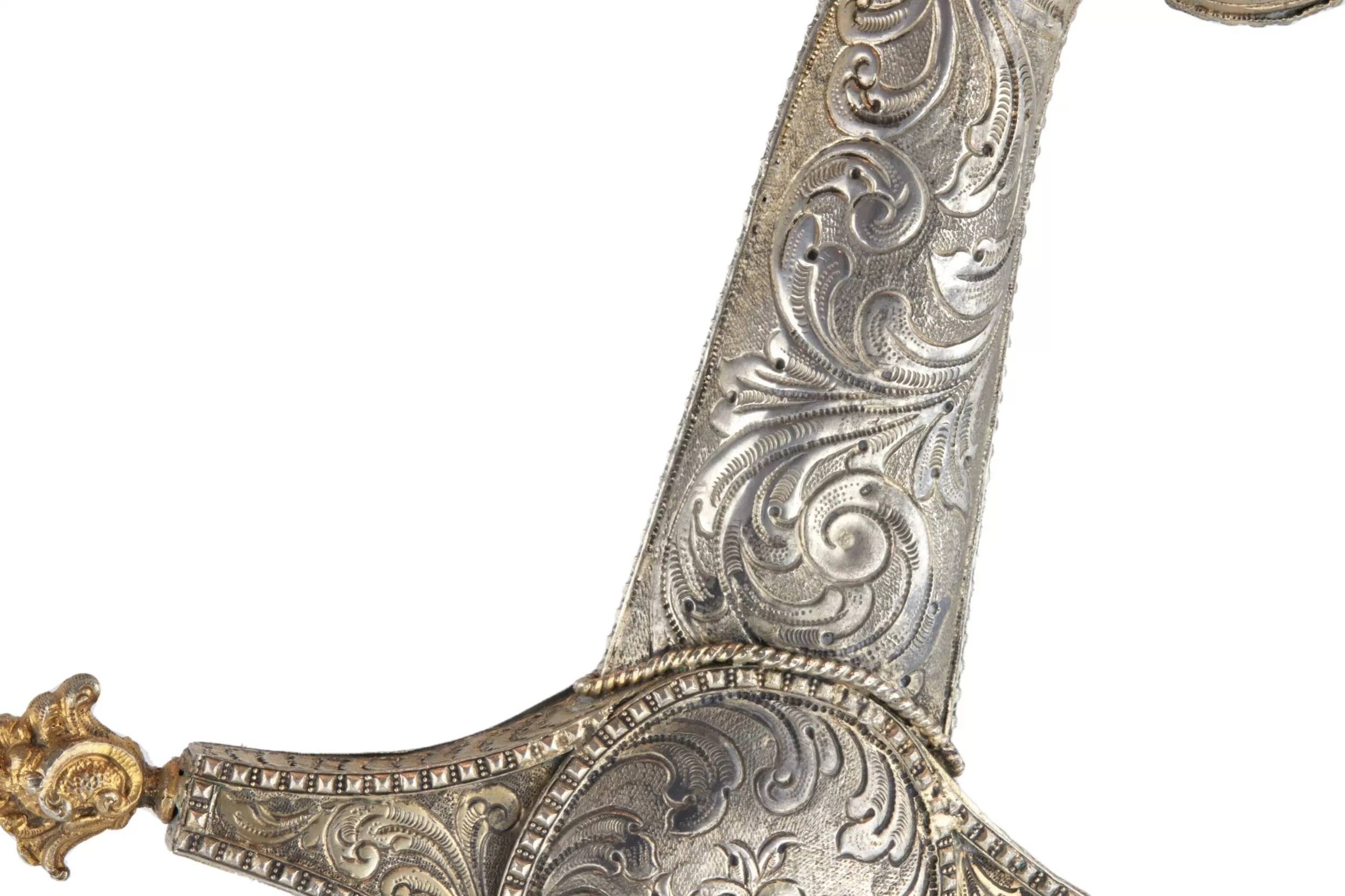
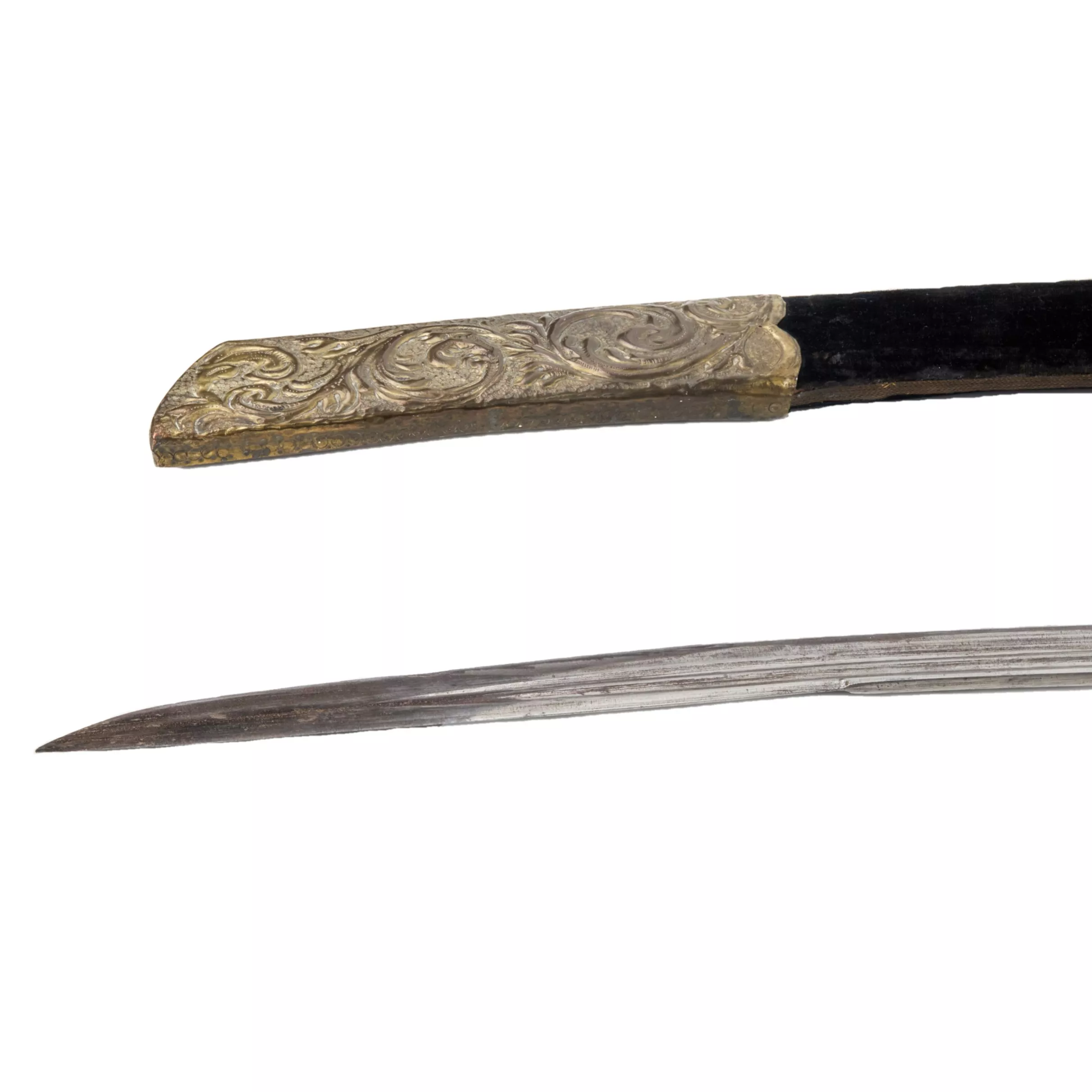
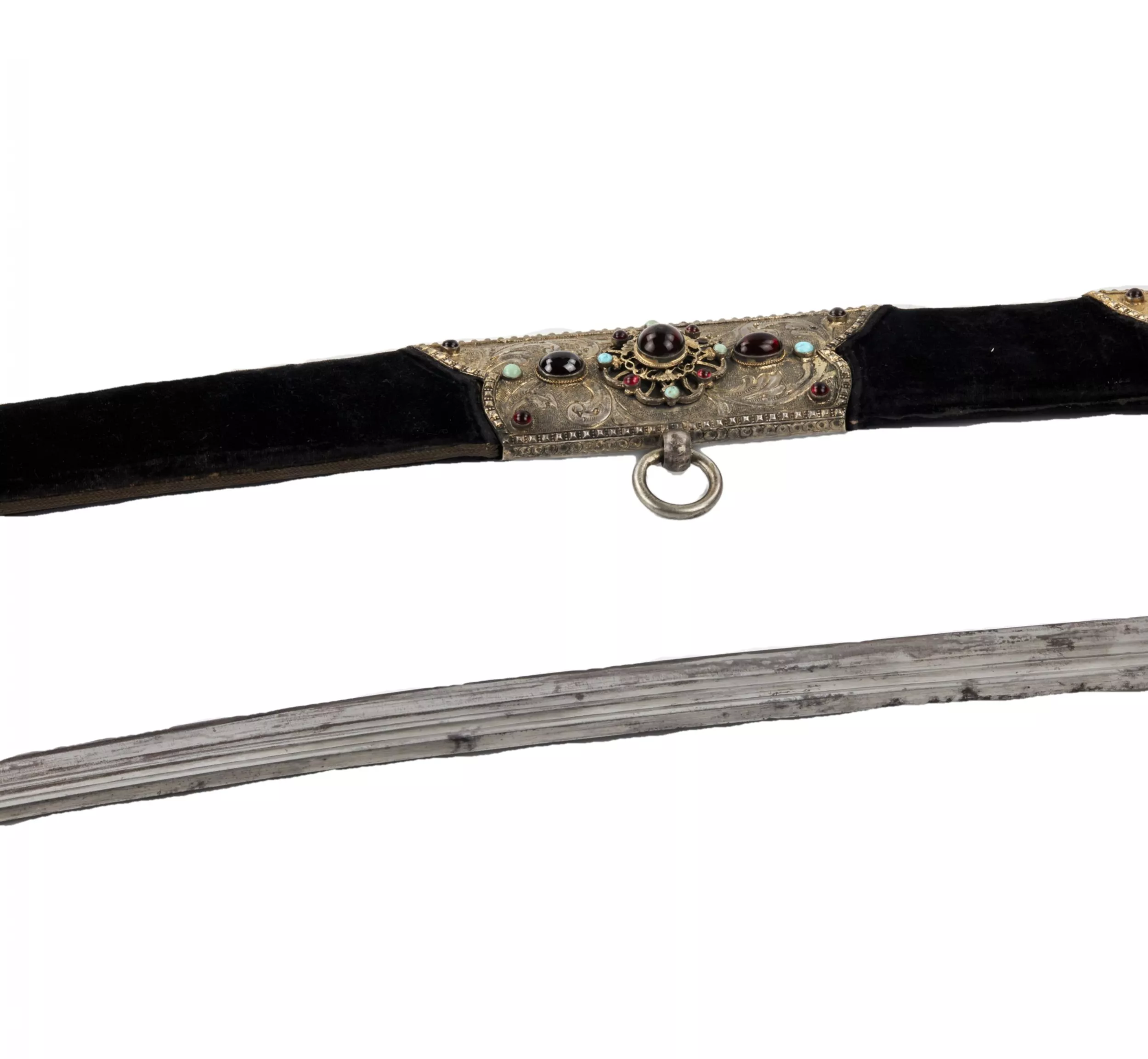
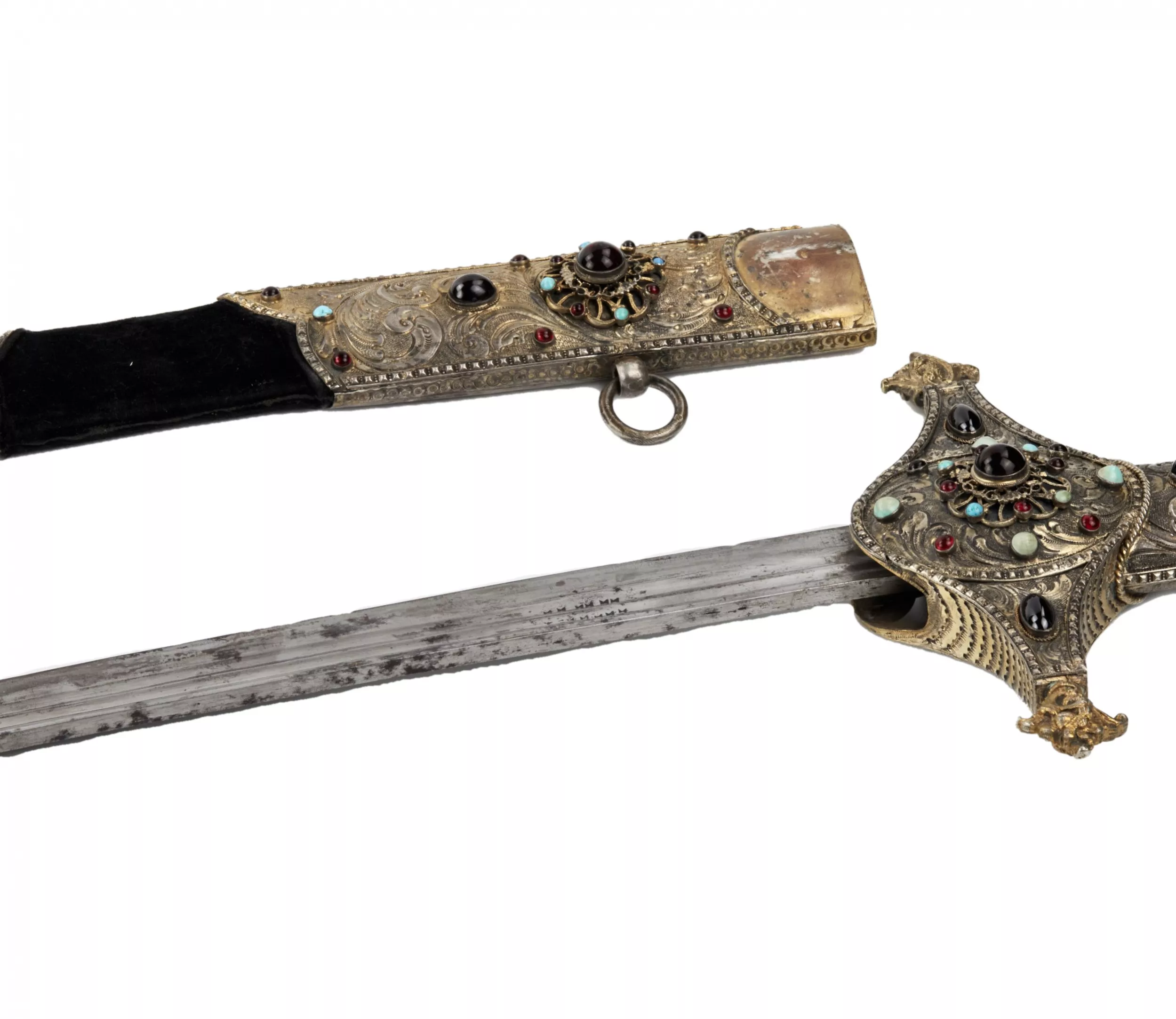
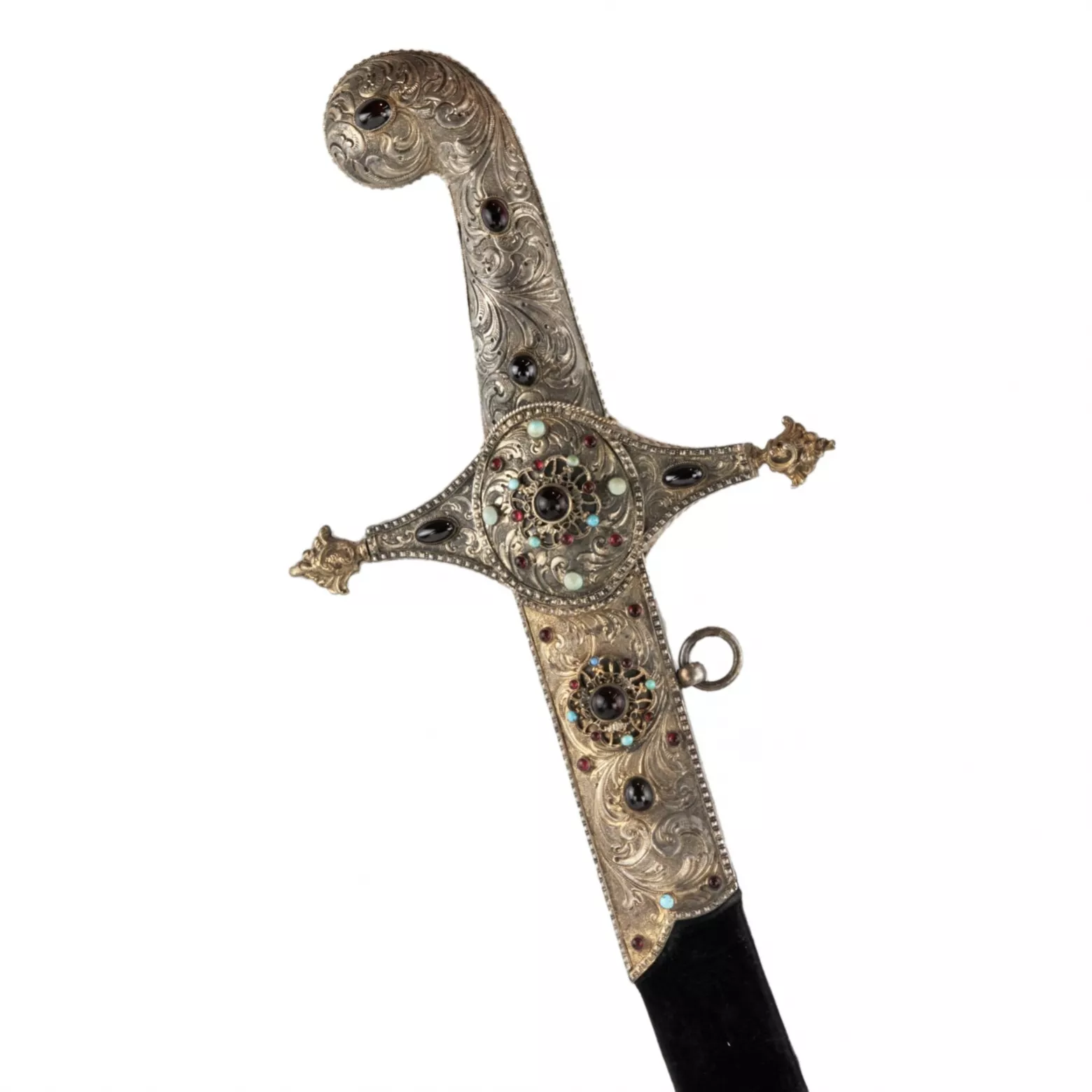
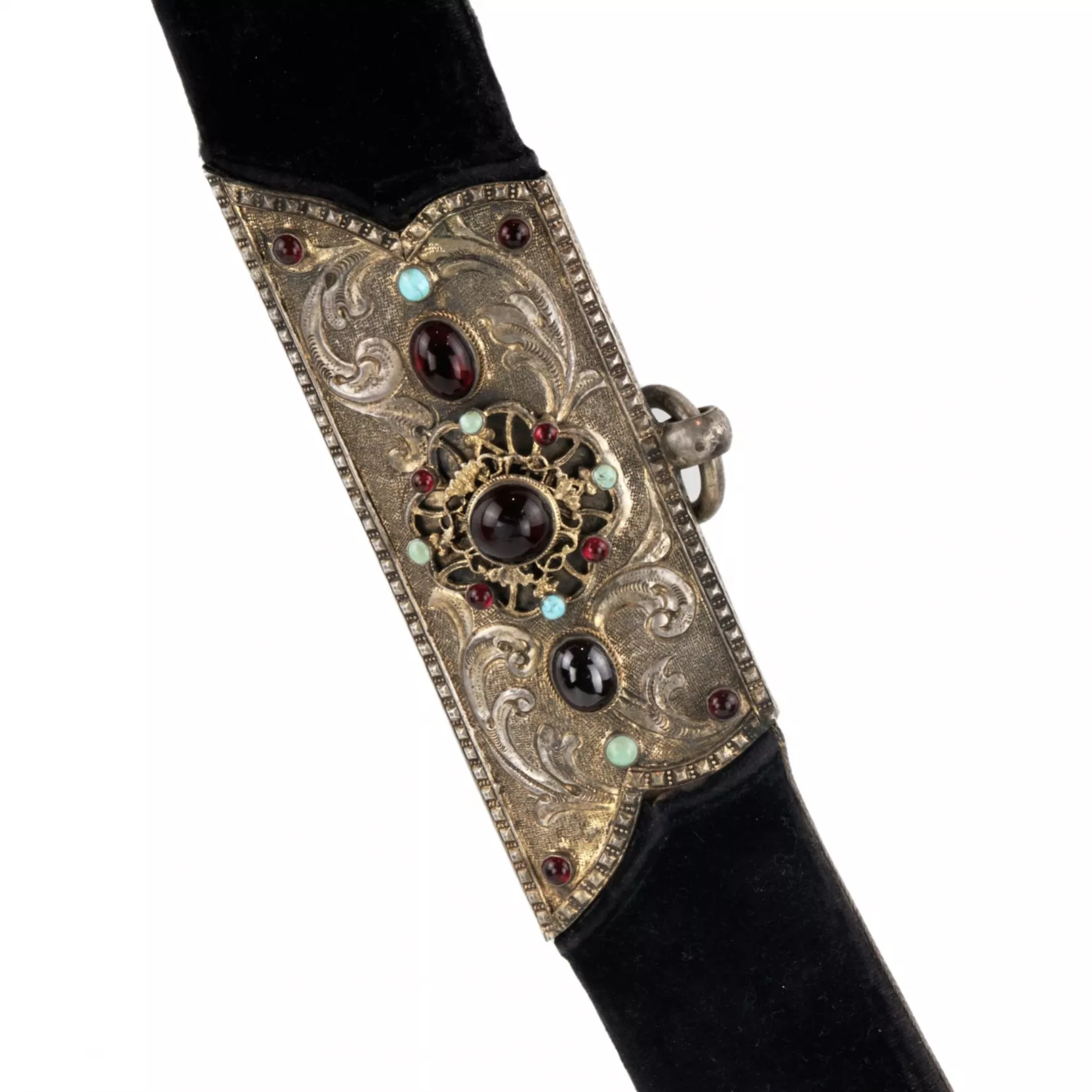
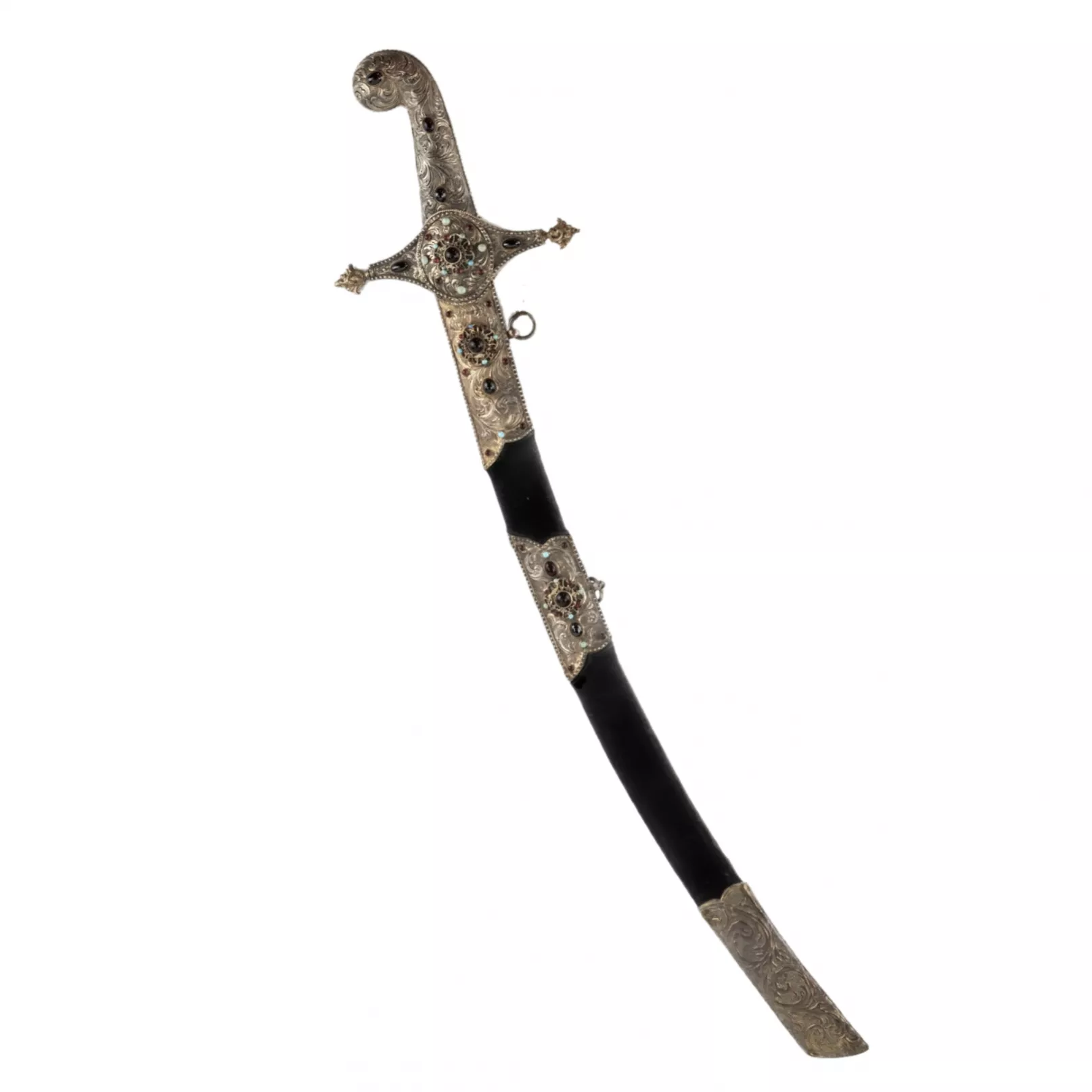
Ceremonial Kılıç (Turkish kılıç - kılıç - kılıç, literally a sword) of the 1860s. Hallmarks: the master of the letter WL, the head of a girl with a moon in a pentagonal rhombus with the letter P, corresponding to the city of Budapest and the number 4, certifying the fourth Austrian standard (equal to the 72nd Russian). Supposedly belonged to a general staff officer, Kaiserliche und königliche Armee - Imperial Royal Army, during the reign of Franz Joseph, Austro-Hungarian Empire 1867-1922. Material: Steel blade. The scabbard is made of chased silver with remnants of gilding, decorated with cabochon-cut semi-precious stones: ruby, garnet, jade, turquoise. The lower part of the scabbard in a later version. The rarest work of art made by master gunsmiths of the 19th century undoubtedly has historical and artistic value.
Historical note: For the first time, the Central Asian Turks and their offshoots began to use curved cavalry swords, in the period from the end of the 3rd century BC. The earliest examples of curved Turkish swords can be found during the period of the Eastern Turkic Khaganate. After the Ottoman invasion of the Balkans, in most European armies, sabers of the Kilich type were adopted.
Material:
Ruby, Stamping, Gilding, Inlay, Silver, Cabochon, Metal, Turquoise, Garnet
The condition report is provided for informational purposes only.
It is not comprehensive and may not reflect all defects, restorations, alterations, or adaptations, as Antiqon does not perform professional conservation-level assessments. The information is based on a qualified, yet subjective, evaluation by our specialists.Before purchasing, we recommend consultation with an independent expert.Please also consult our Terms and conditions and Glossary A-Z, which contain important information on lot characteristics and sale conditions.