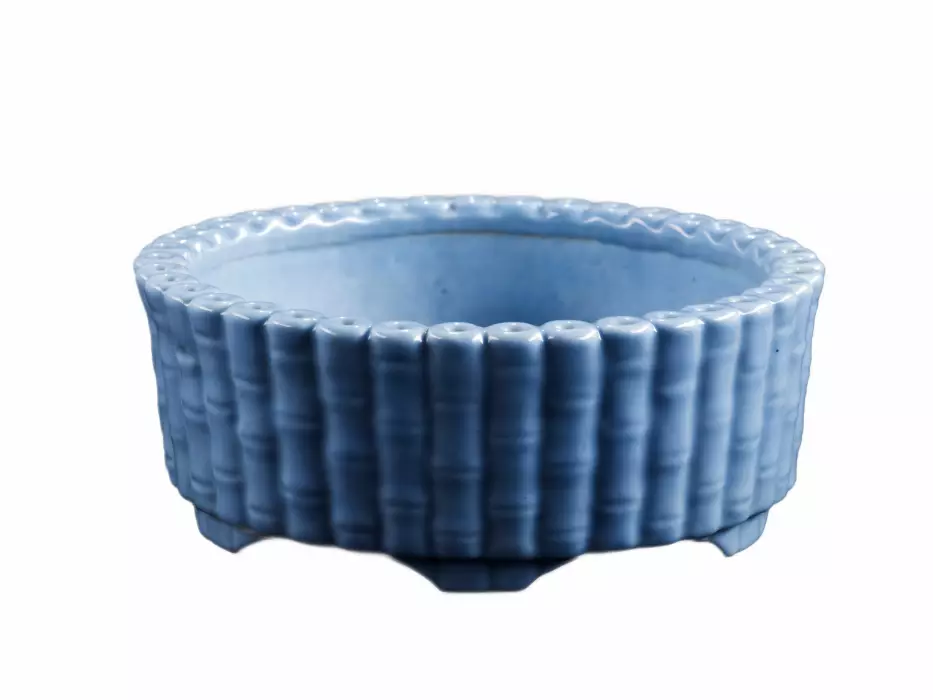
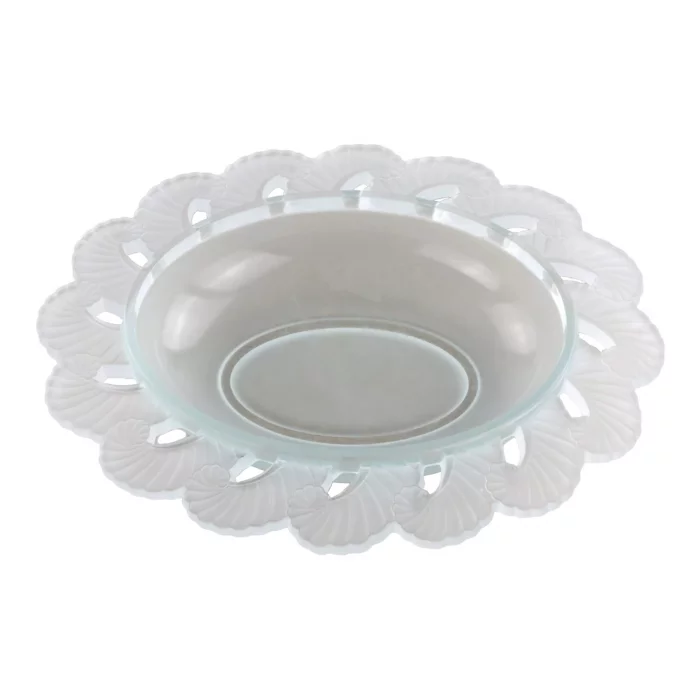
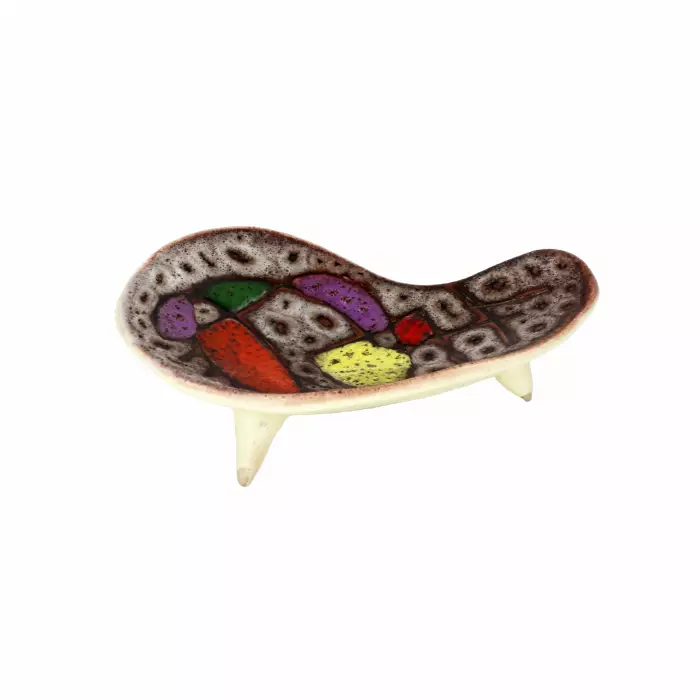
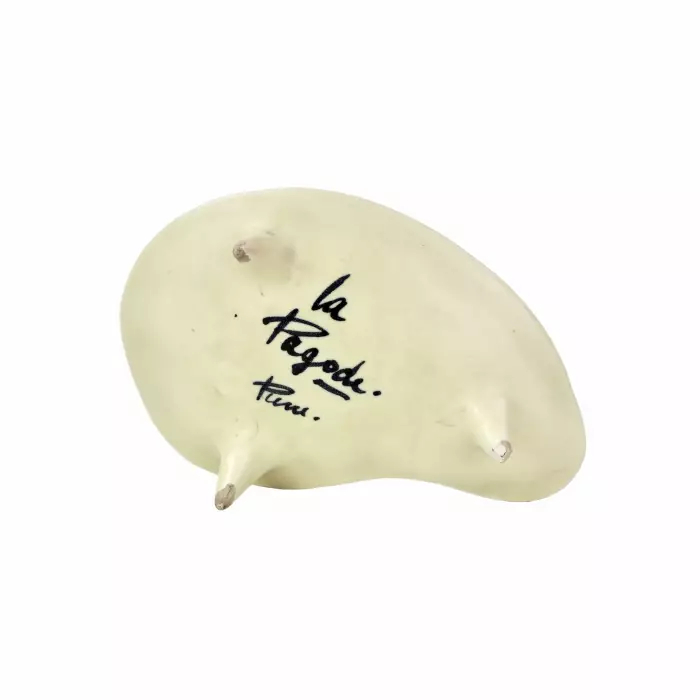
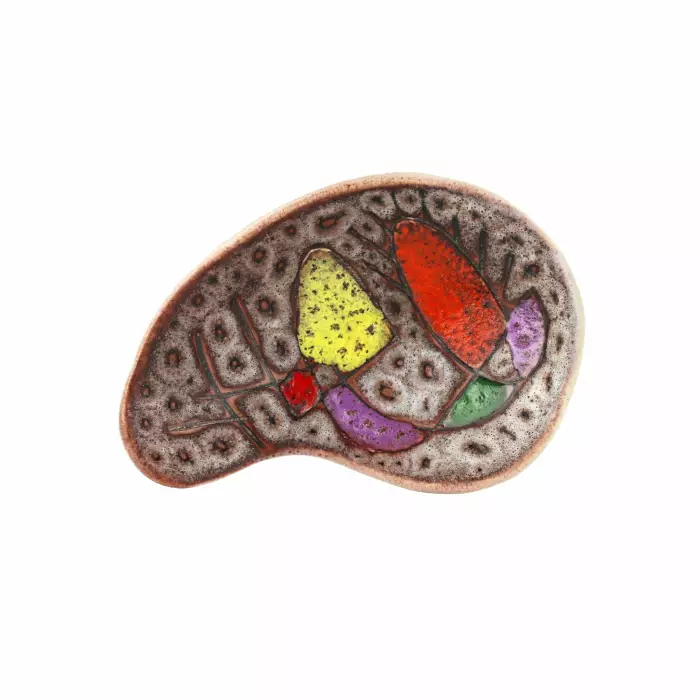
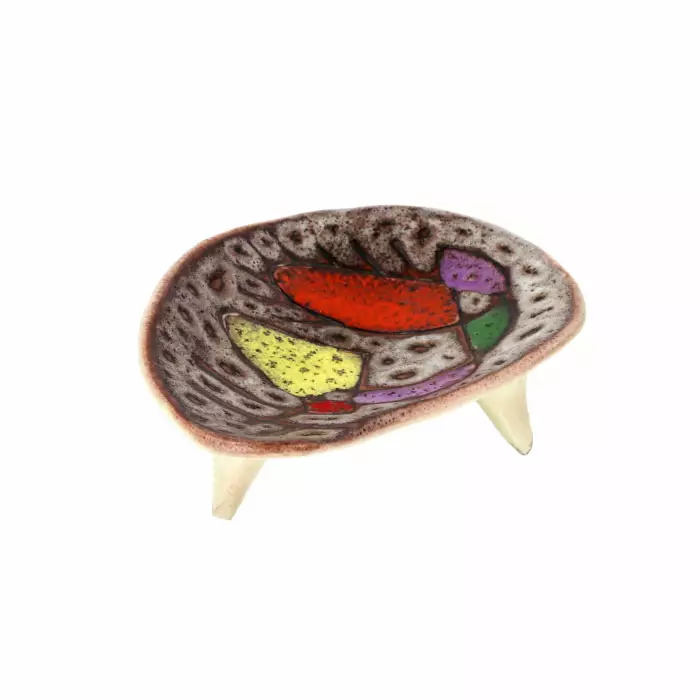
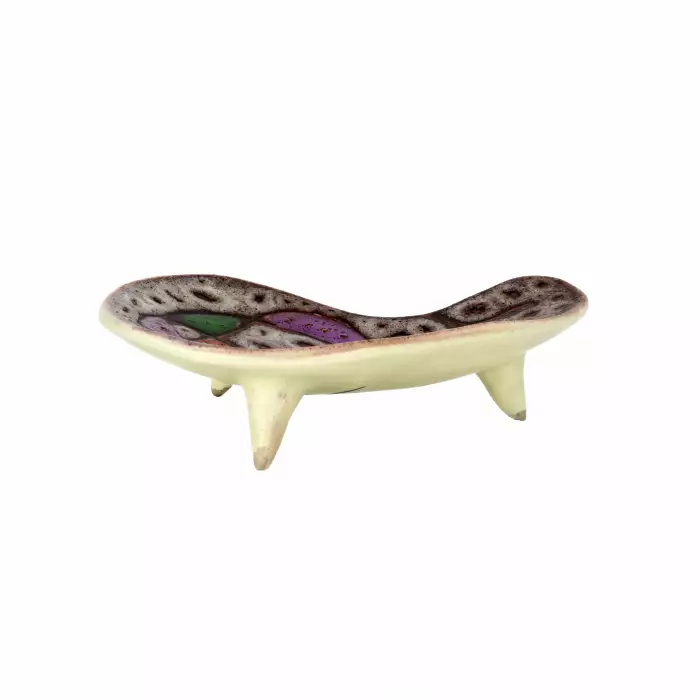
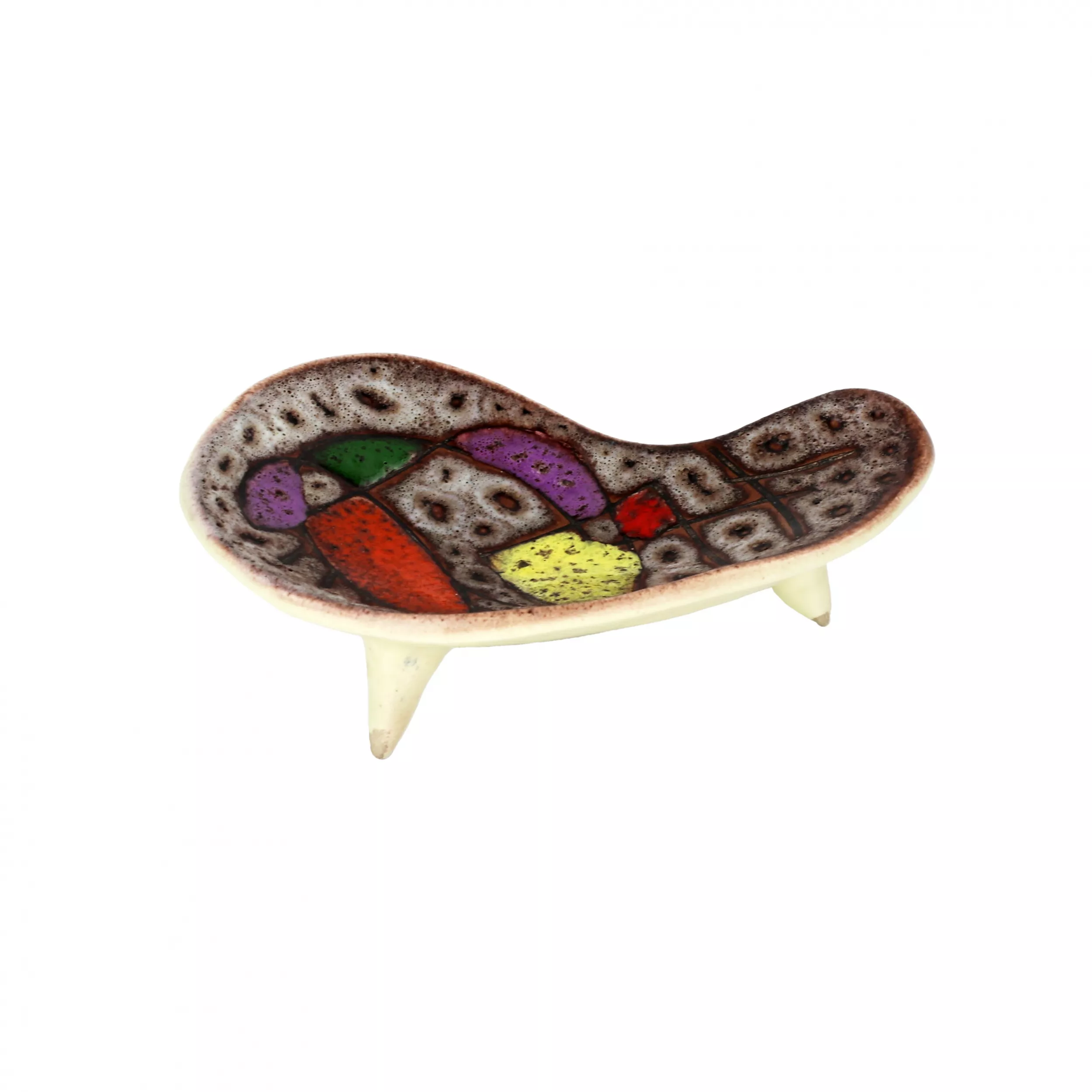
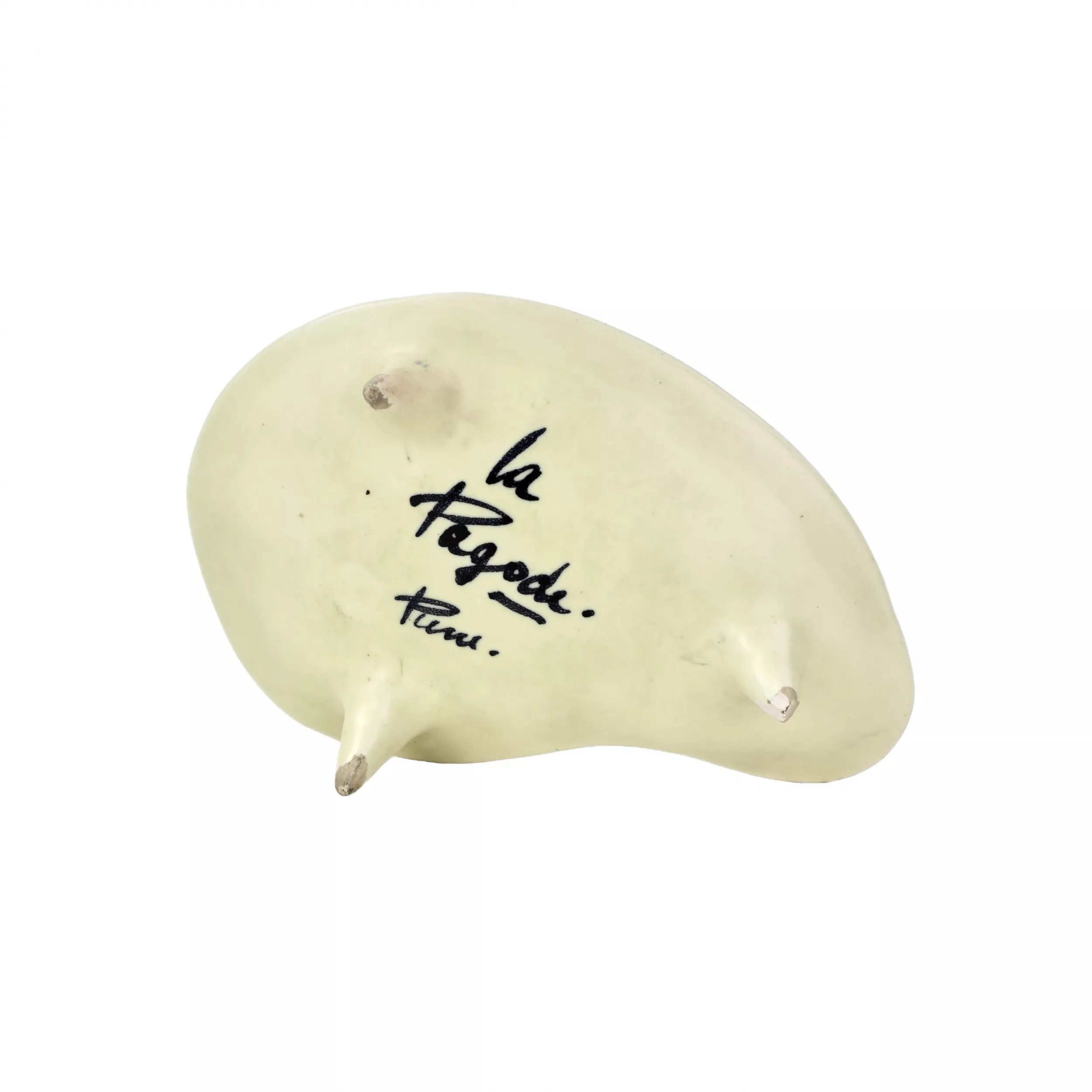
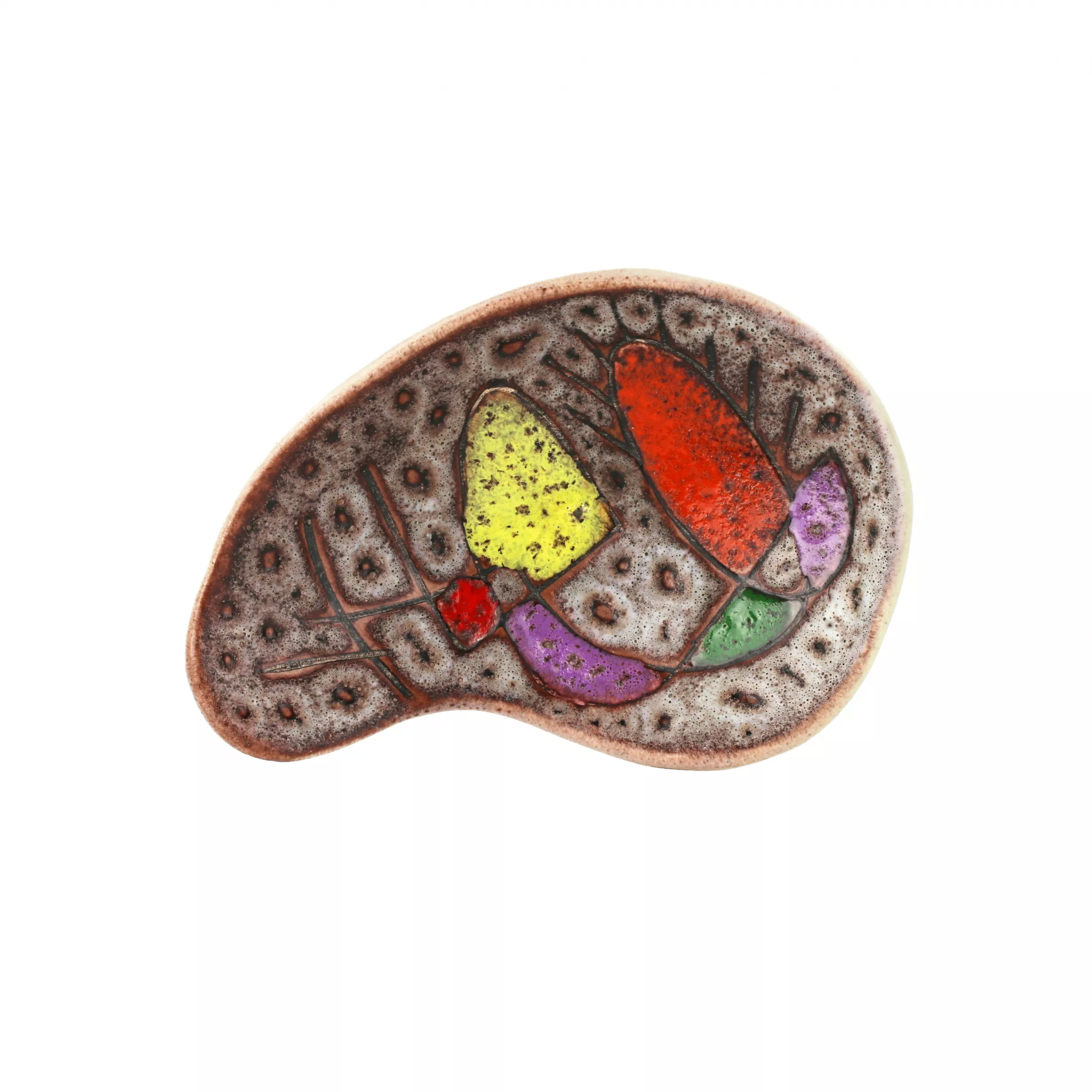
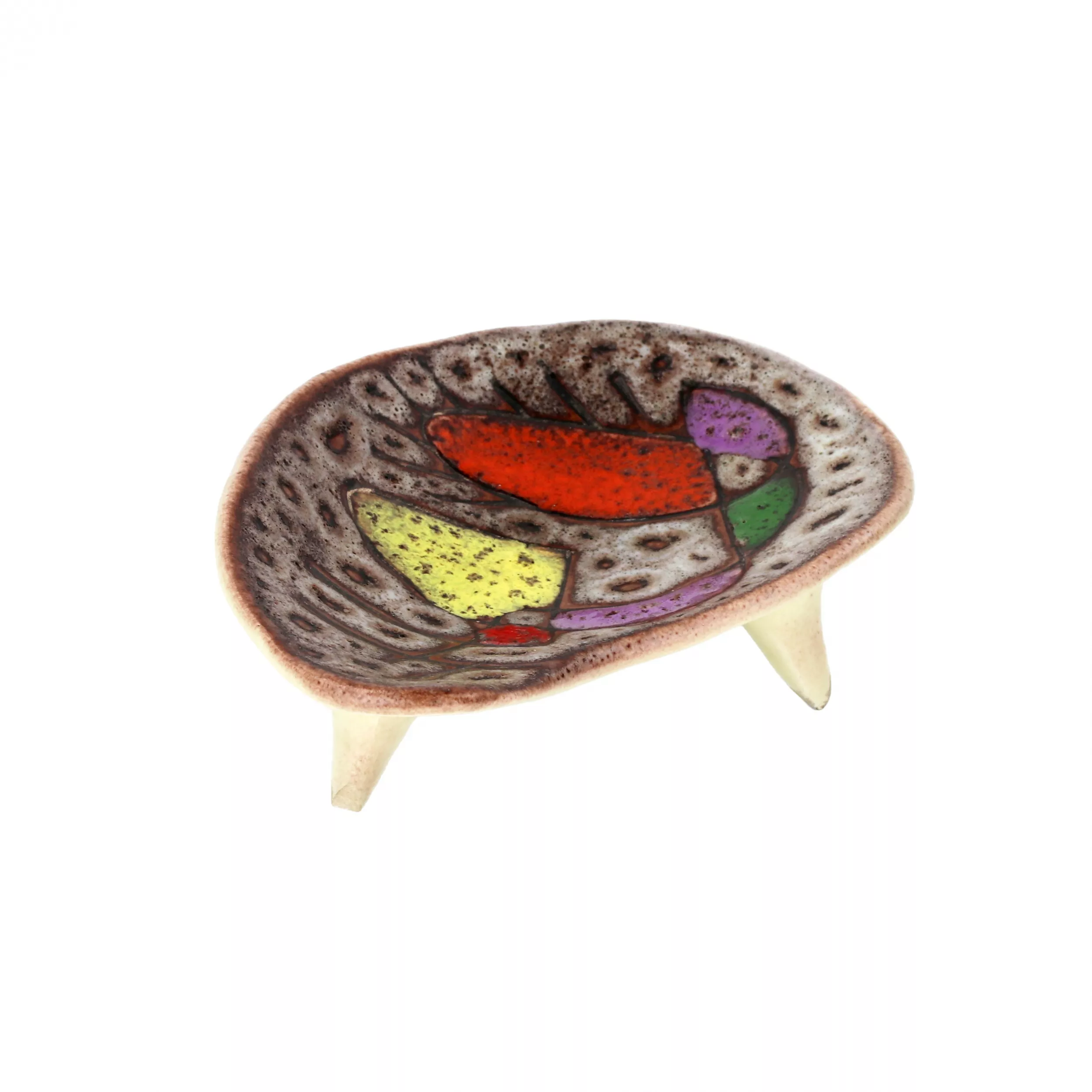
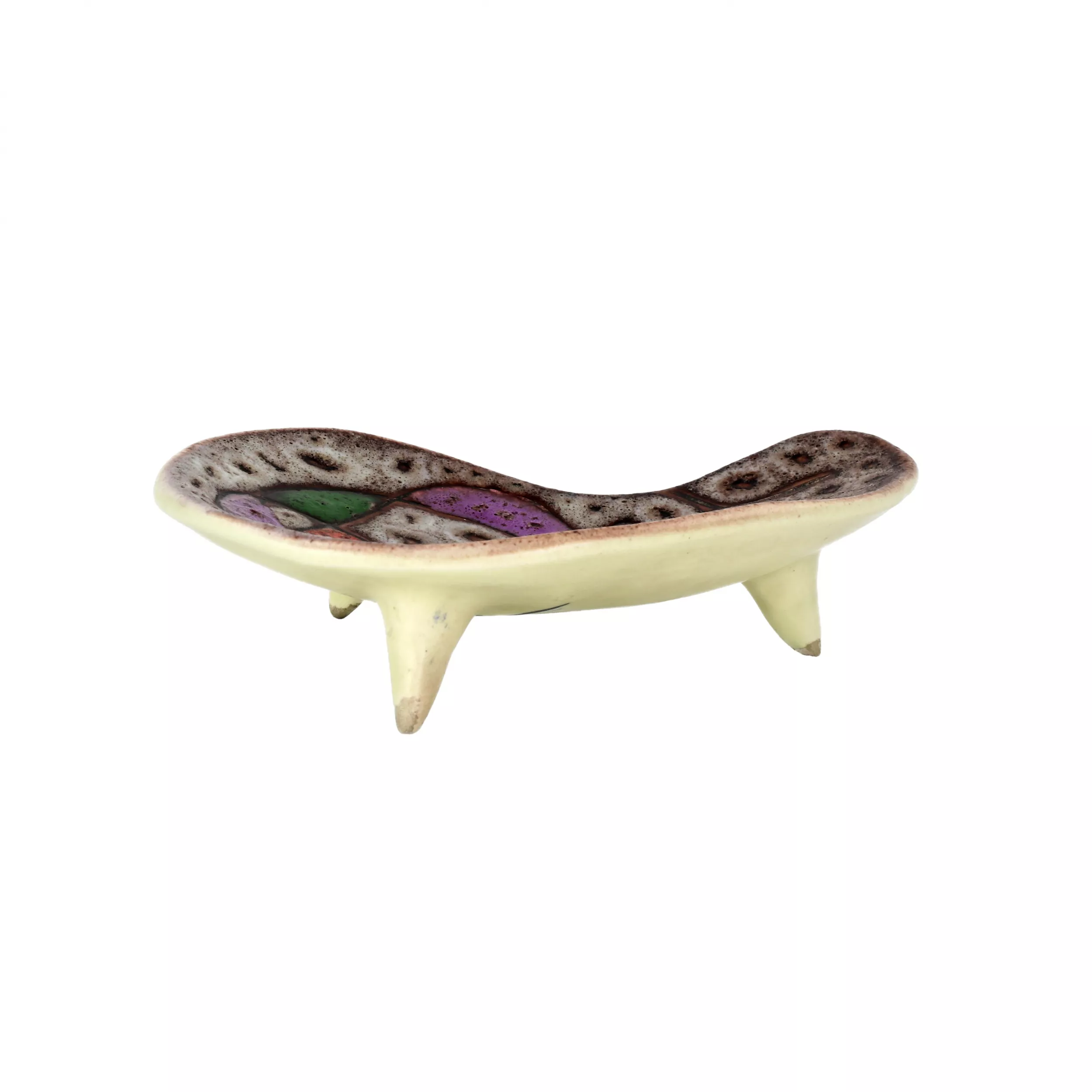
IVAN ALBERTOVICH PUNI (1892-1956). LA PAGODE. A small ceramic candy bowl with a provocative signature on the back of La Pagode, Puni. In the title, the author probably alludes to the first floor of the pagoda - the basis of all syncretic spirituality. And then the monpasier folded in a pyramid turn into sacred truths. The form implements the organi-tech aesthetics, on which the honored masters of modernism worked in the middle of the 20th century: Picasso, Miro, Le Carbusier and Pugni. The candy bowl stylizes a living cage with spiritual color elements inside. It rests on three legs growing out of the body, typologically close to Saarinen and the basis of the universe. Size approx. 15 x 10 x 3.5 cm. Ivan Puni - Russian avant-garde artist, one of the representatives of futurism. After a brief artistic training in Paris, in 1912-1913, he moved to St. Petersburg. Together with the artist Ksenia Boguslavskaya, whom he was married to since 1913. Co-author of avant-garde exhibitions and shocking events. One of the organizers: 0.10, where Malevich presented Suprematism. This exhibition was a breakthrough in abstract painting. At this exhibition, Kazimir Malevich showed his Suprematist composition Black Square, which today is one of the main works of this trend in art. In parallel with this exhibition, Puni, Boguslavskaya, Malevich and Ivan Vasilyevich Klyun wrote the Manifesto on the Zero Point of Painting. After the revolution, he taught, among other things, at an art school in Vitebsk. Puni lived in Berlin from 1920. At the Great Berlin Art Exhibition in 1922, in the November Group section, one of his most famous works, The Synthetic Musician, was shown. In 1924 he emigrated to Paris, where he took the name Jean Pugni and died in 1956.
Material:
Ceramics, Enamel
The condition report is provided for informational purposes only.
It is not comprehensive and may not reflect all defects, restorations, alterations, or adaptations, as Antiqon does not perform professional conservation-level assessments. The information is based on a qualified, yet subjective, evaluation by our specialists.Before purchasing, we recommend consultation with an independent expert.Please also consult our Terms and conditions and Glossary A-Z, which contain important information on lot characteristics and sale conditions.