
DECORATIVE COMPOSITION “EASTER EGG WITH SURPRISE” IN THE TRADITION OF THE HOUSE OF FABERGÉ. 20TH CENTURY
Antiqon consultant will contact you within one business day after receiving your request.
Discover your personalized shipping cost — based on where you are and how you prefer to receive your piece..
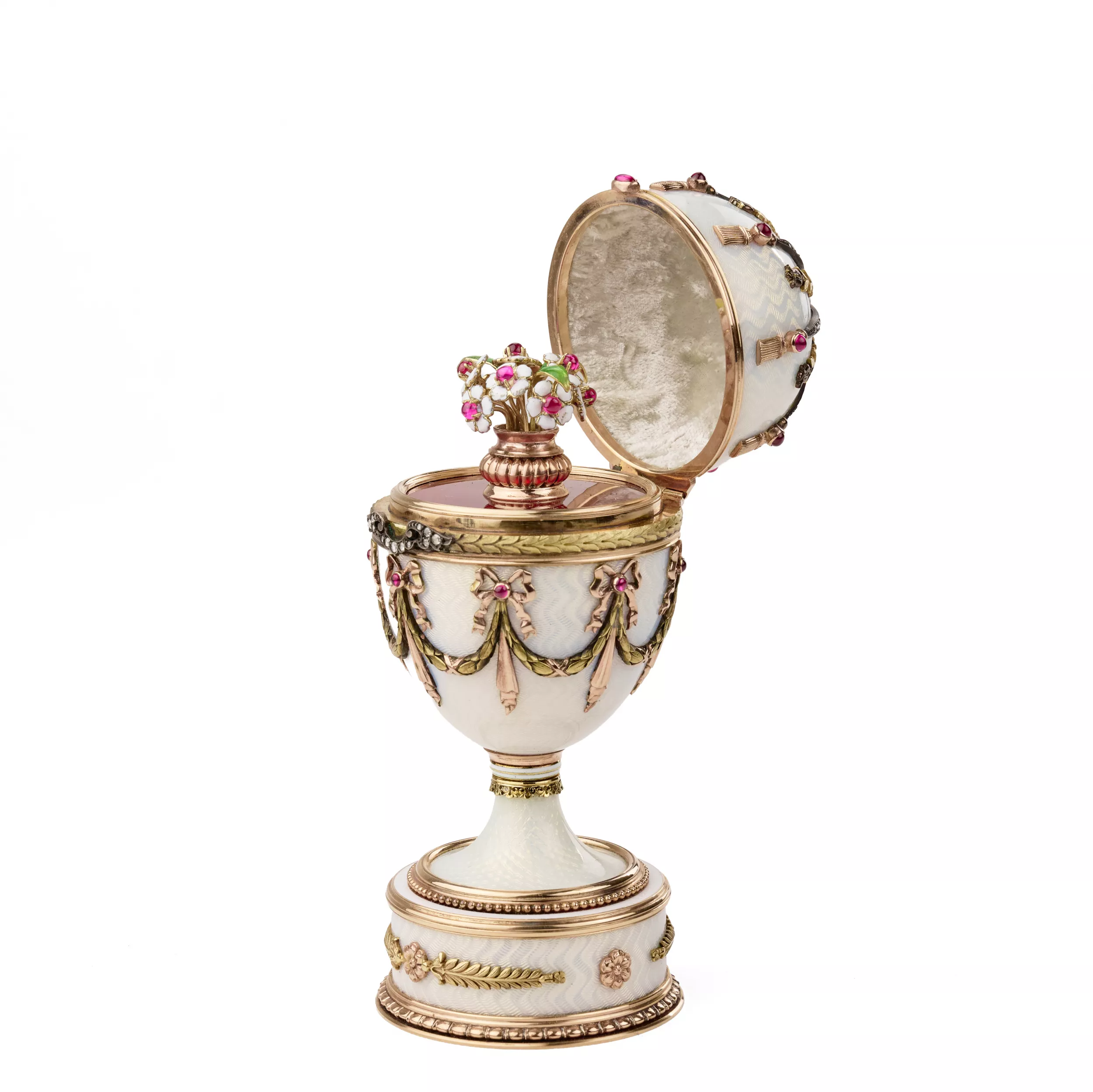
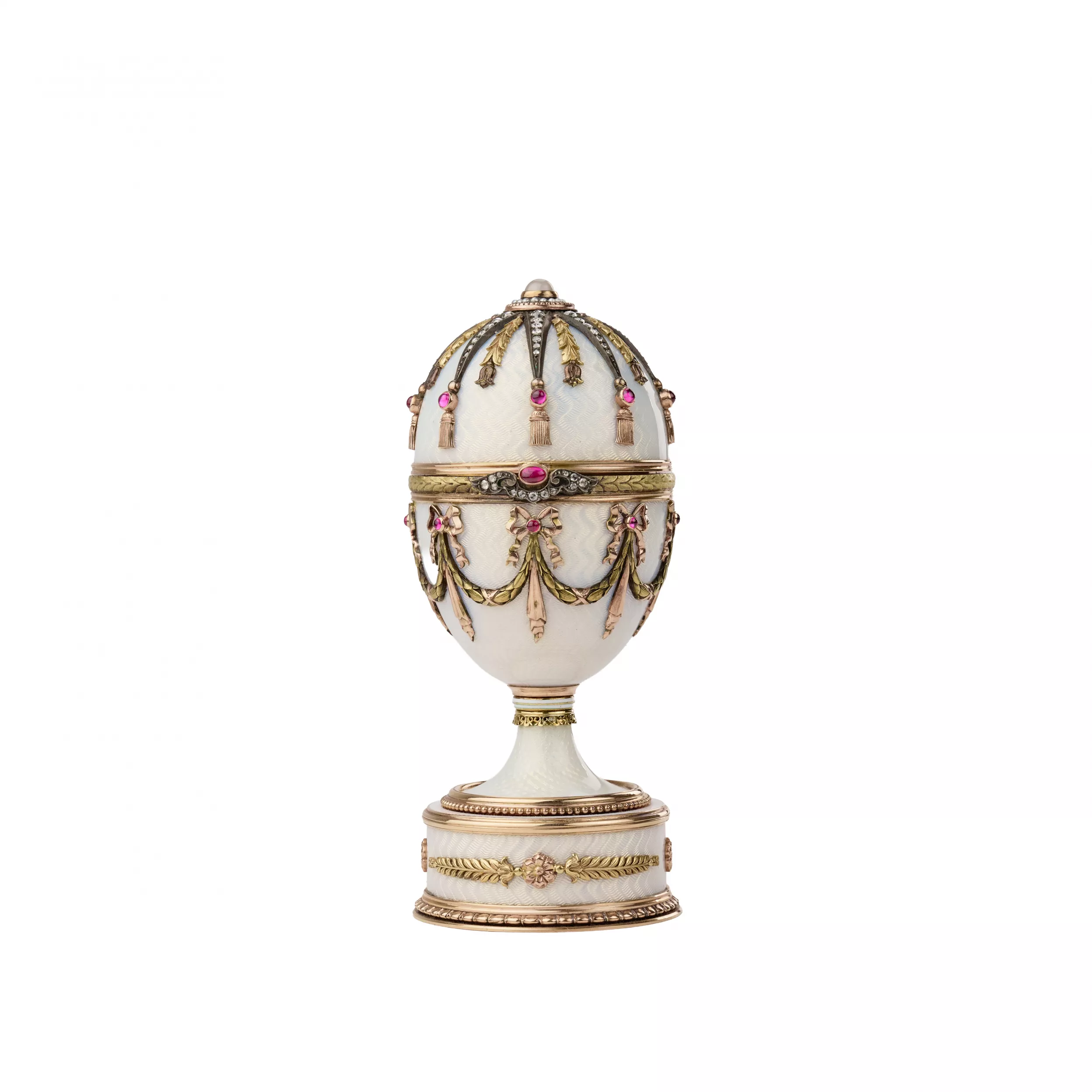
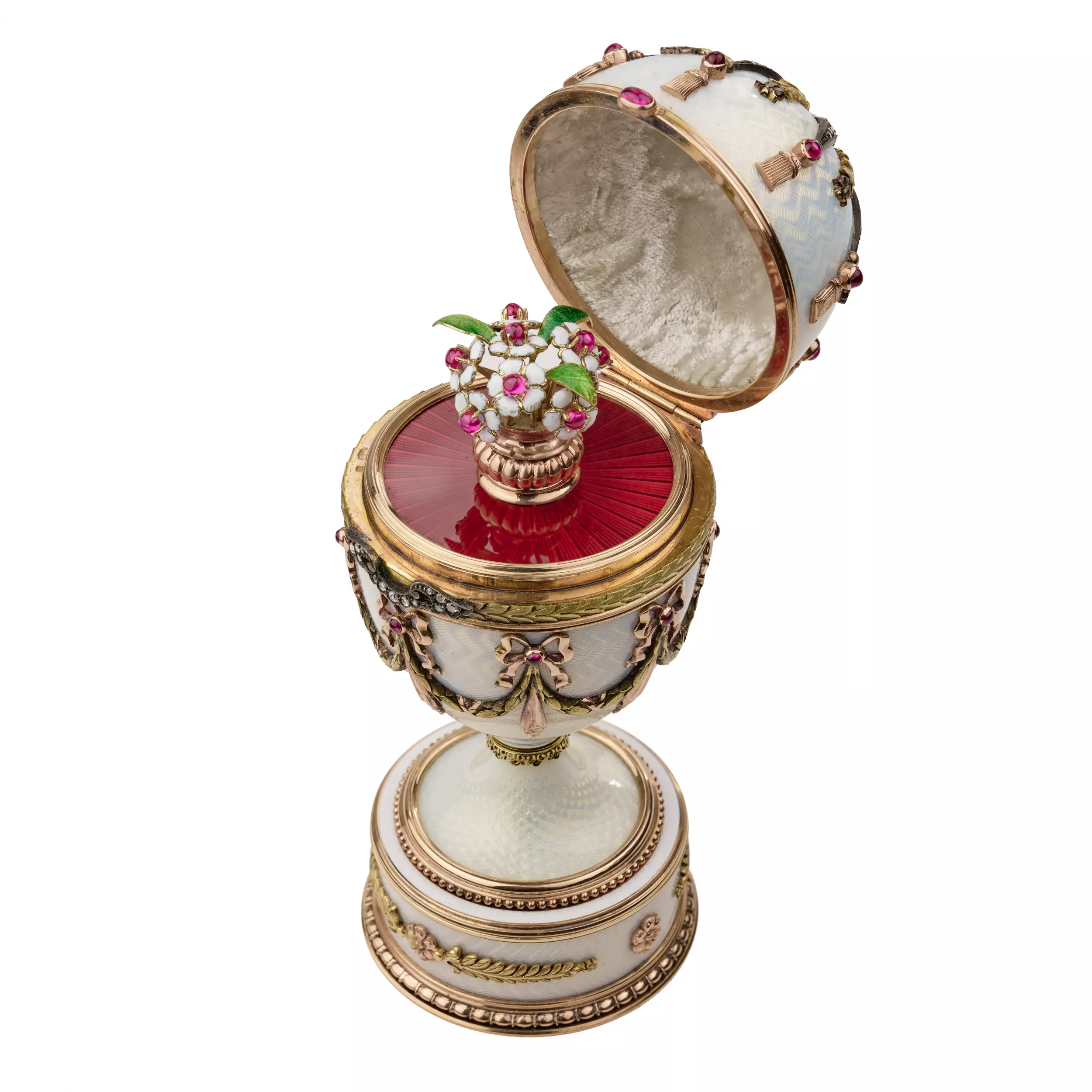
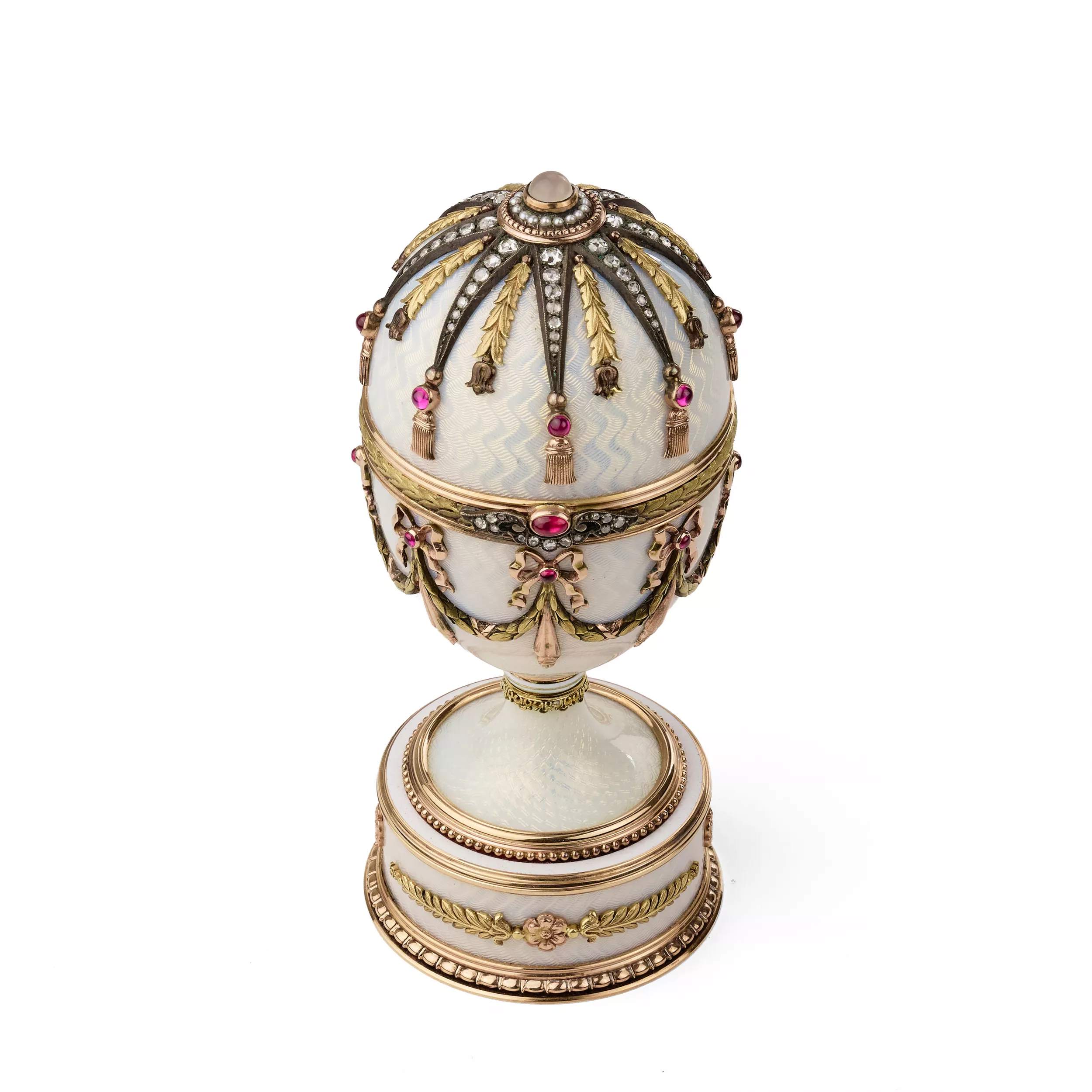
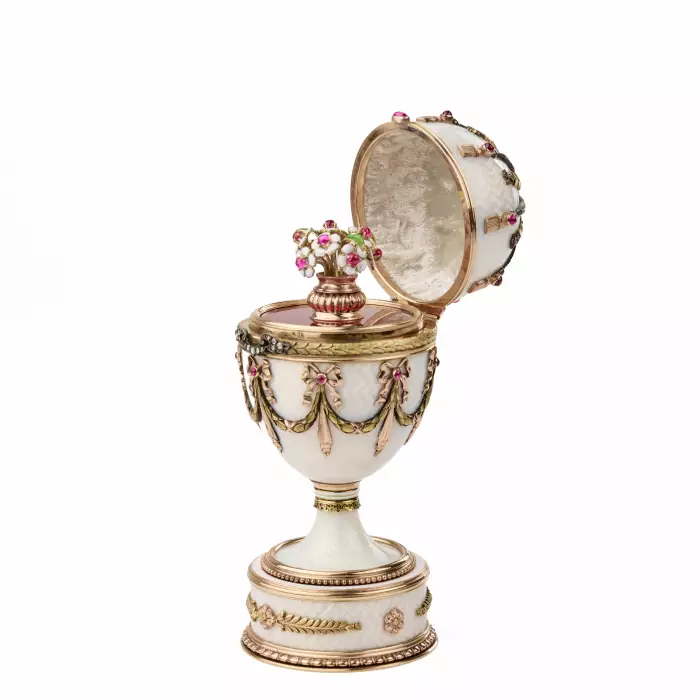
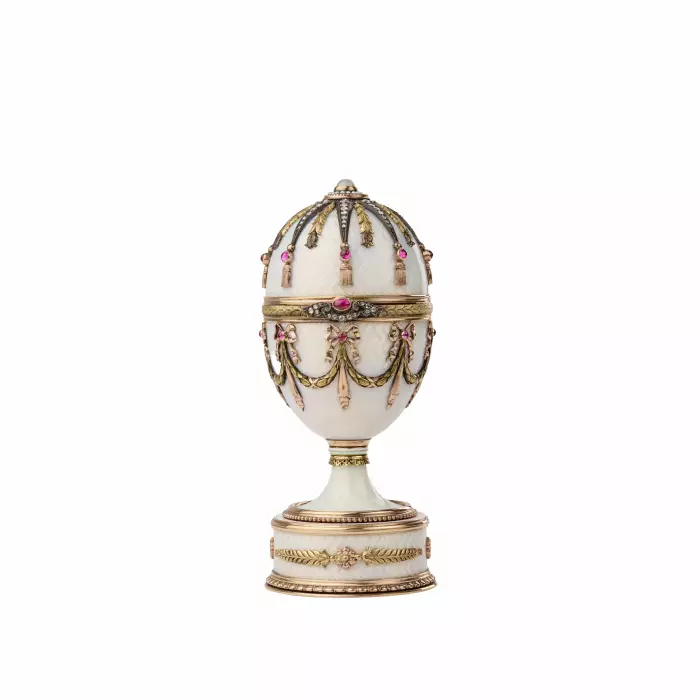
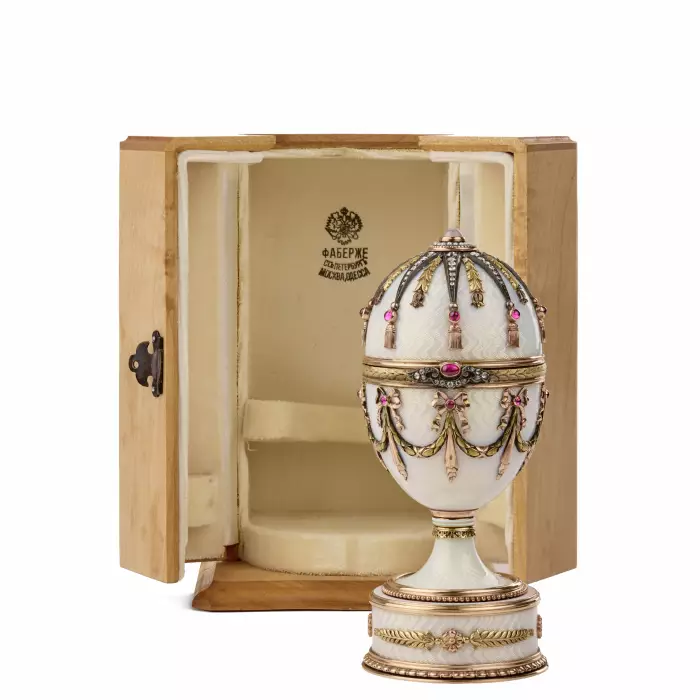
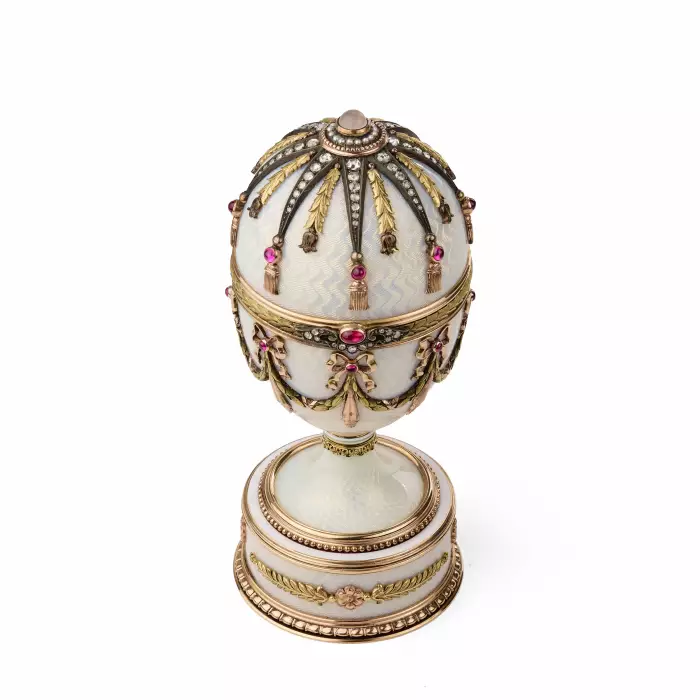
An exquisite 20th-century decorative composition created in the tradition of the celebrated House of Carl Fabergé and inspired by the Imperial Easter eggs of the late 19th and early 20th centuries. The object takes the form of an egg raised on a tall pedestal stem, crafted in gold and silver and covered with white guilloché enamel of exceptional depth and translucency.
The body is embellished with refined applied ornament in the Neoclassical manner, including laurel garlands, ribbon bows, tassels and decorative swags. The upper section is adorned with eight silver rays set with natural rose-cut diamonds. The composition is surmounted by a cabochon-cut natural cat’s-eye tourmaline framed by natural pearls. Synthetic rubies provide additional chromatic accents.
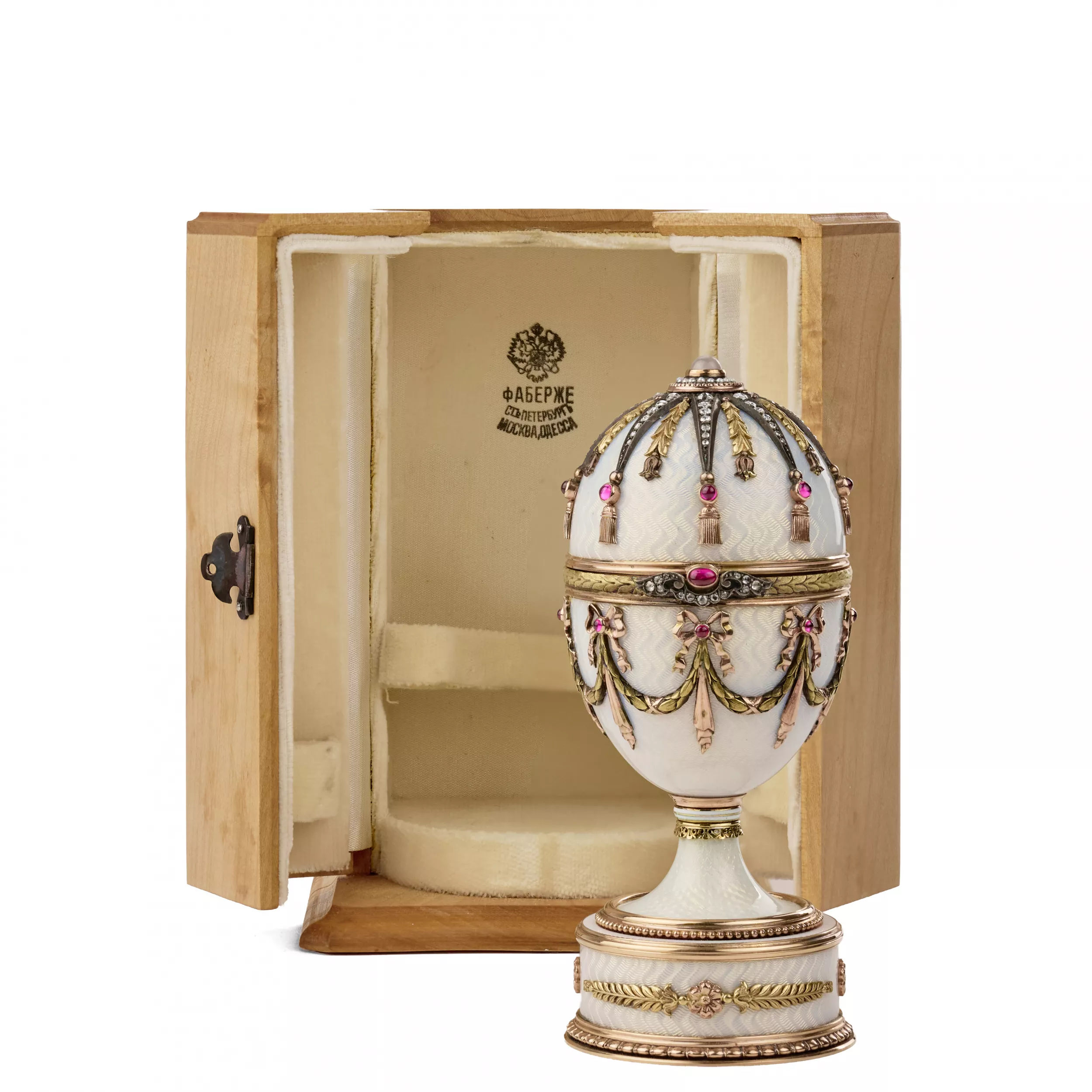
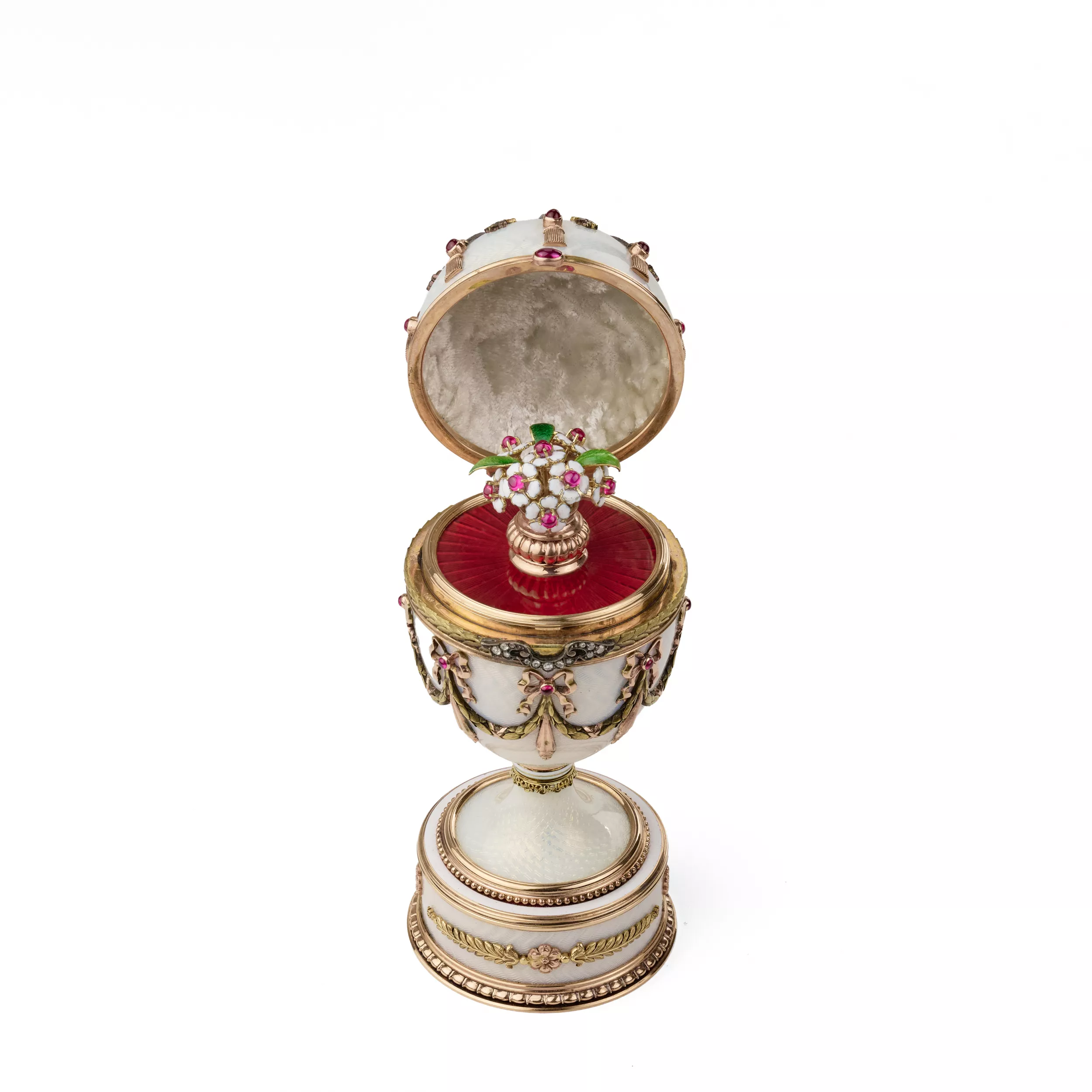
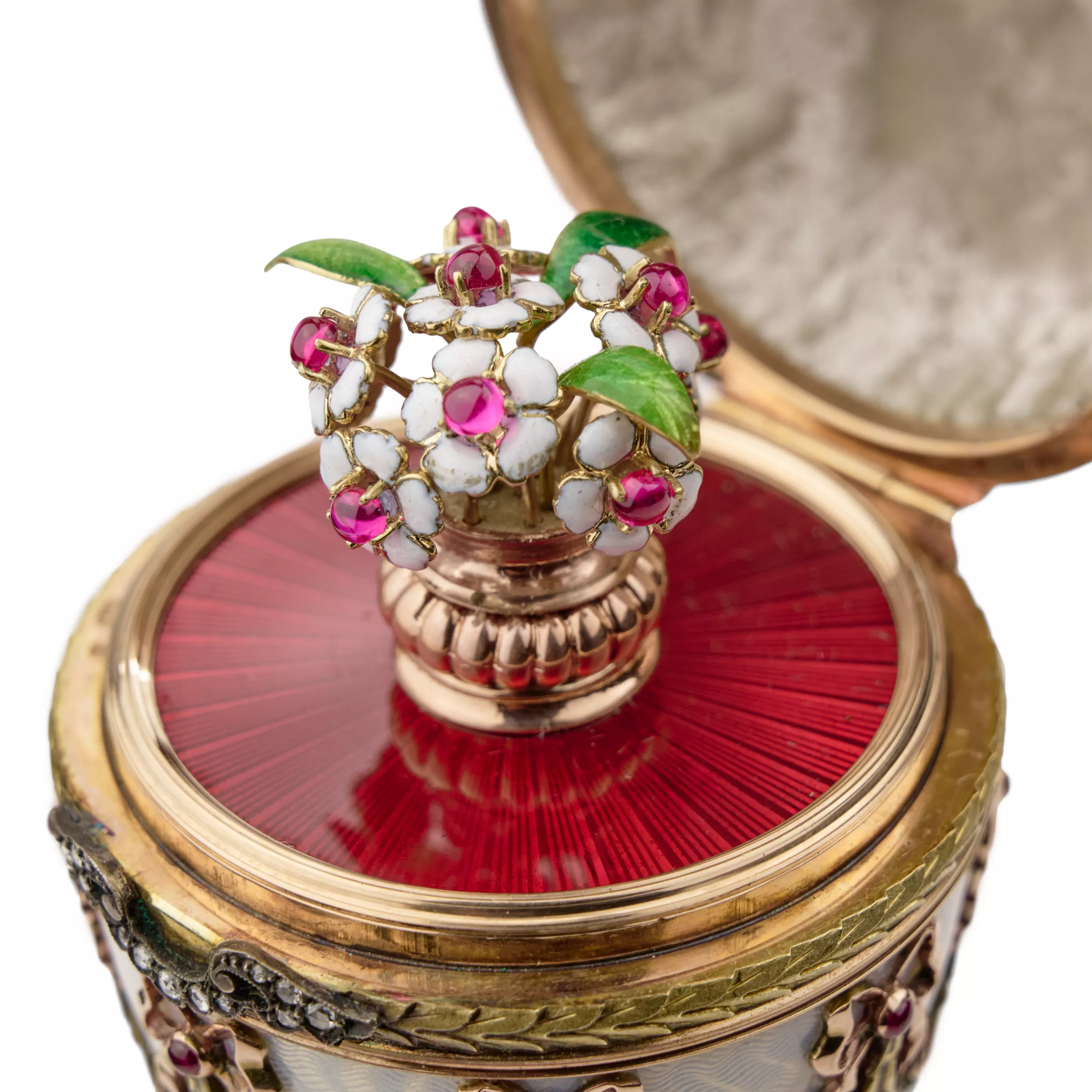
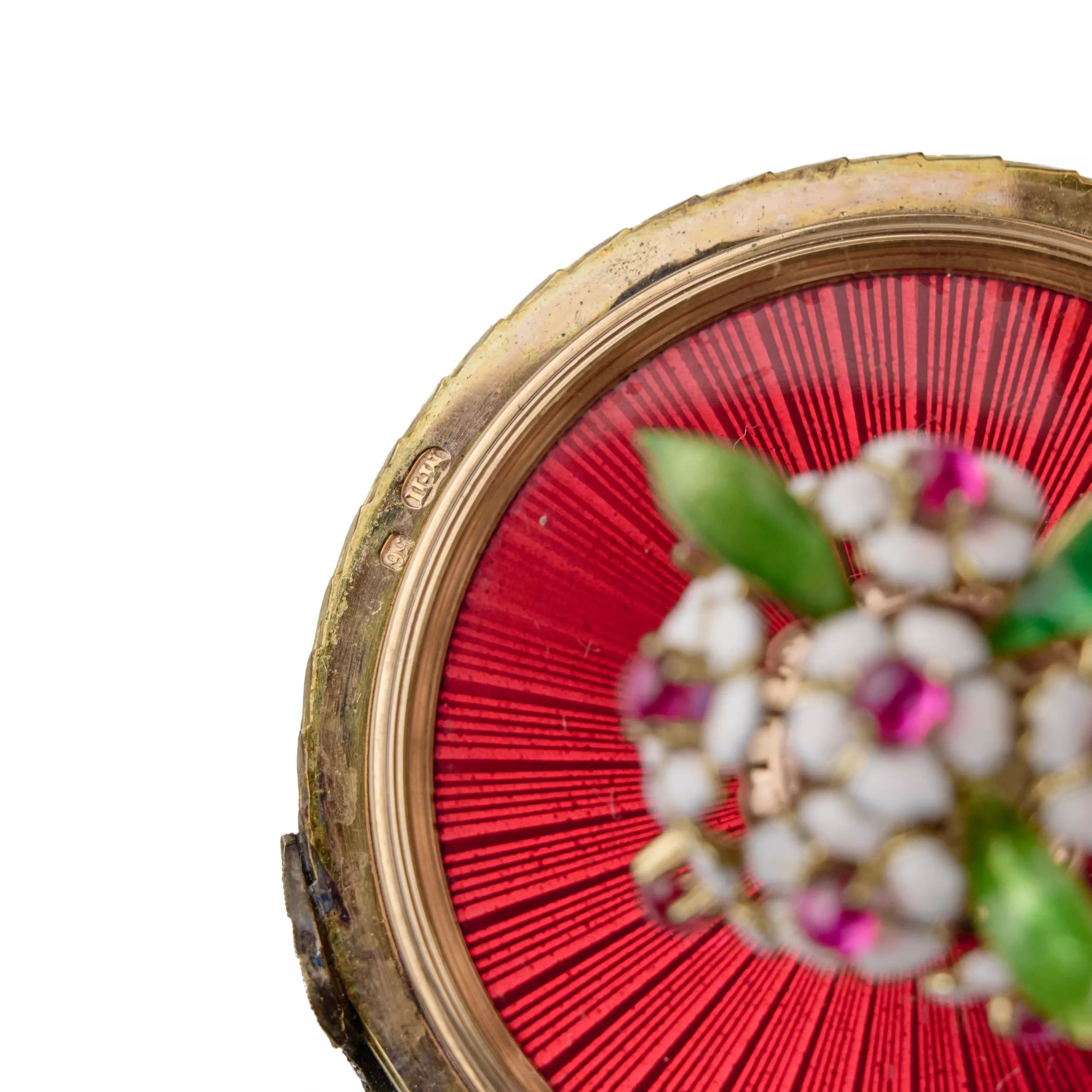
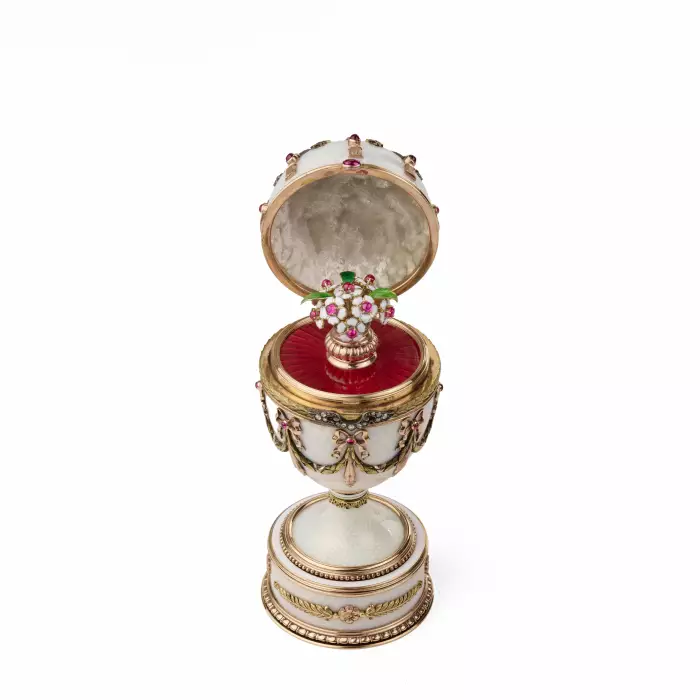
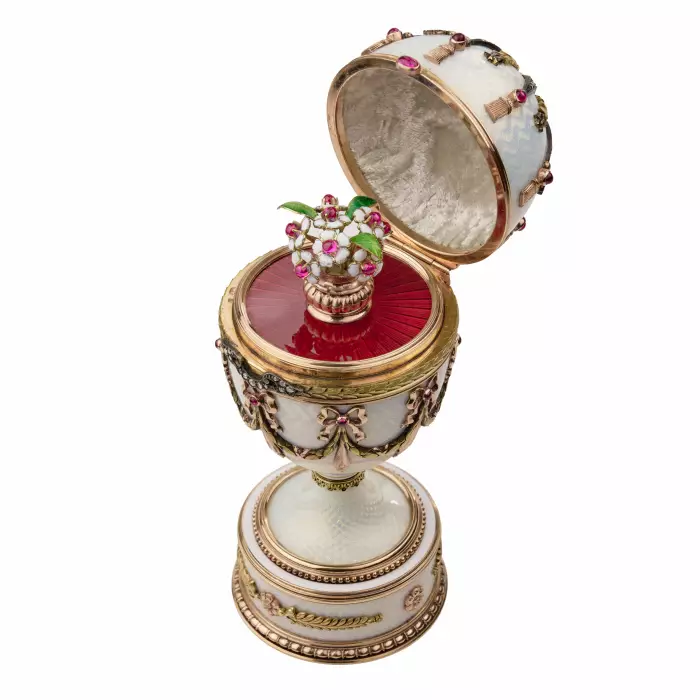
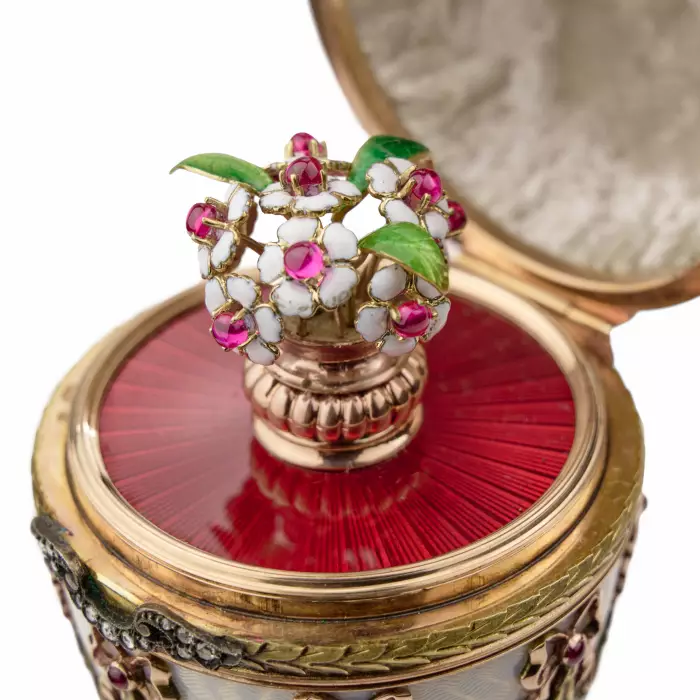
The egg opens on a concealed hinge to reveal an interior surprise in the form of a miniature floral bouquet, mounted on a base covered with ruby-red guilloché enamel. The flowers are fashioned in gold and decorated with opaque white, lilac and green vitreous enamel, synthetic rubies and quartz. The composition is housed in its original wooden presentation case, lined in silk and velvet.
According to independent expert opinions, the object was made by an unidentified master in the 20th century. The composition was executed in the tradition of works produced by the House of Carl Fabergé.
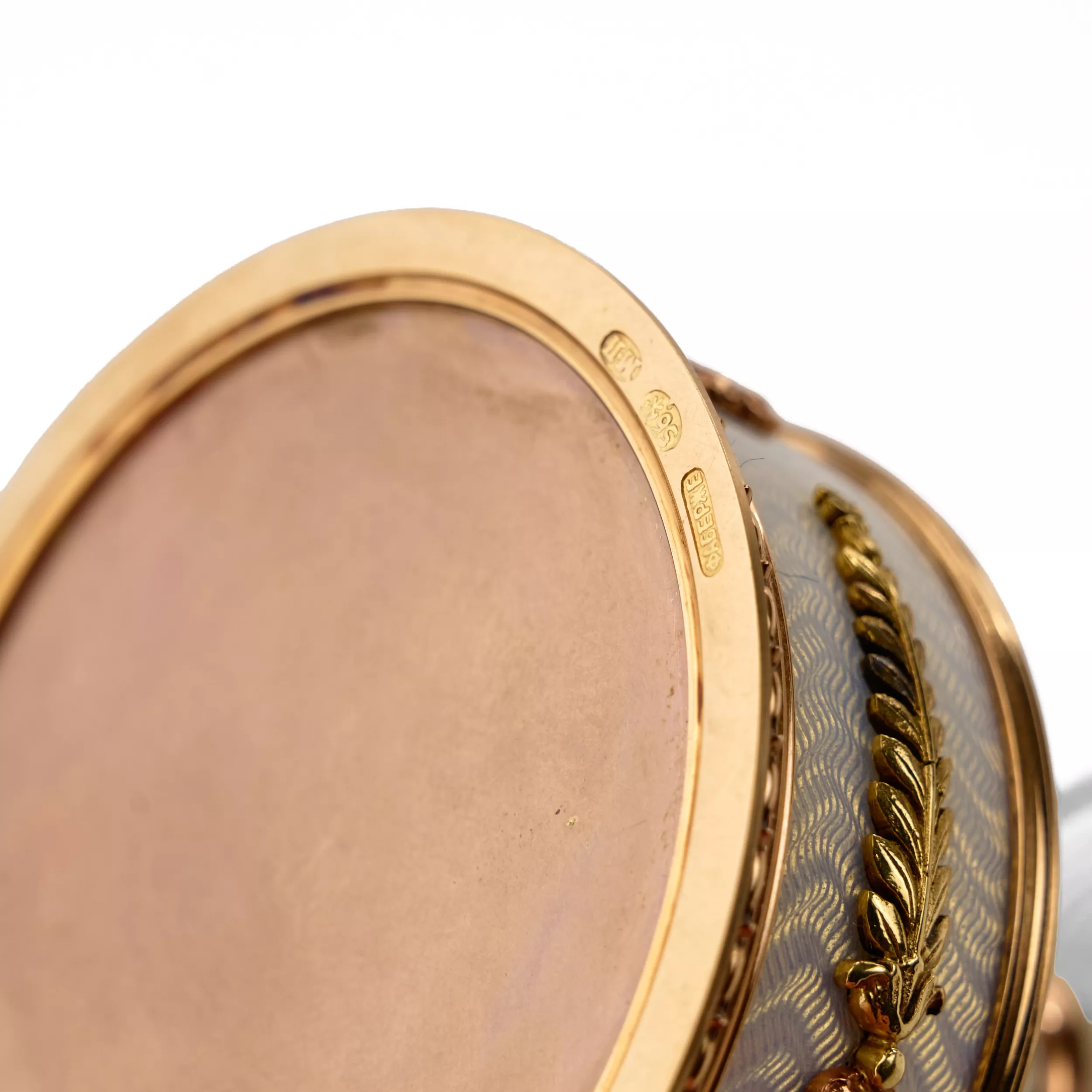
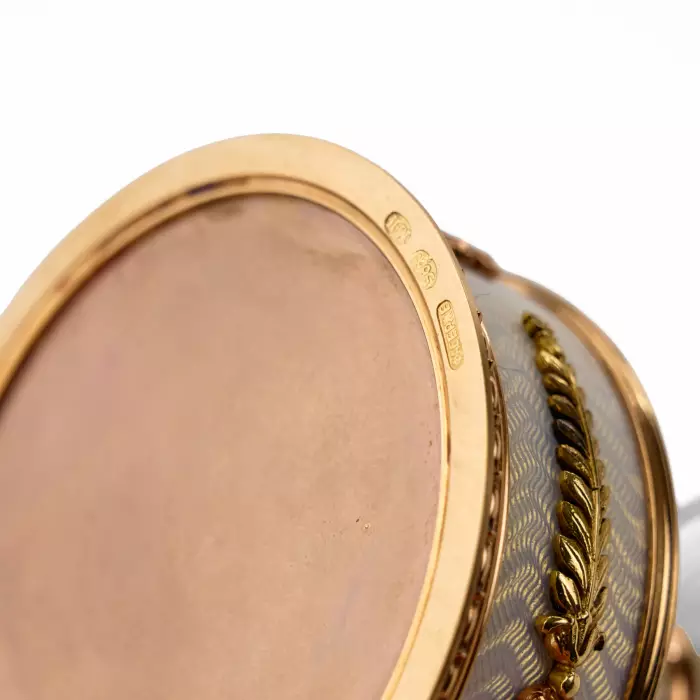
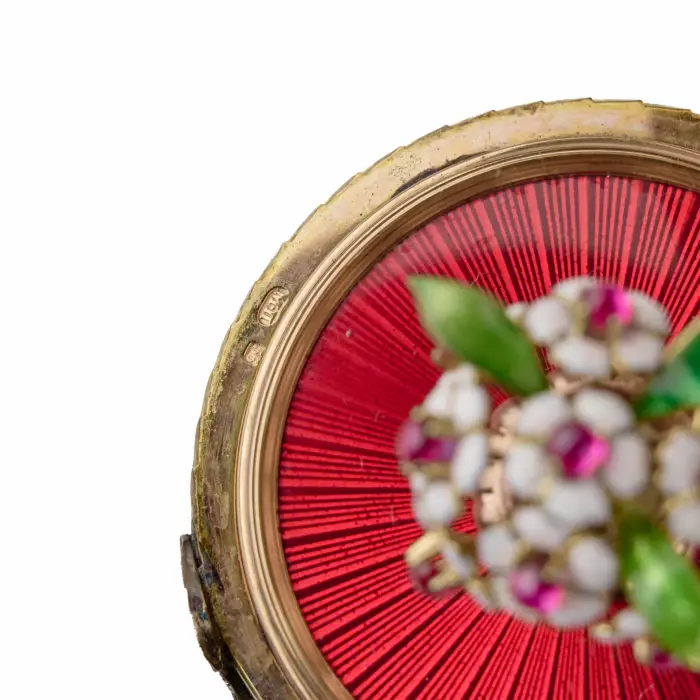
Marks: The inner rim of the lower half of the egg bears apocryphal marks comprising the maker’s mark “М.П.”, reproducing the mark of the master Mikhail Perkhin, together with the assay mark “56”, corresponding to the historic Russian 56 zolotnik gold standard, approximately equivalent to the modern 585 fineness. The base bears the apocryphal marks “Фаберже”, “М.П.” and “56”.
Dimensions: Height 12.5 cm. Diameter of the base 5 cm.
Weight: 284 g.
Condition: Very good condition.
Provenance: Private collection.
Easter eggs produced by the House of Carl Fabergé rank among the most celebrated masterpieces of international jewellery and are regarded as enduring symbols of the exceptional refinement achieved by Russian goldsmiths at the turn of the 20th century. Their combination of precious materials, virtuoso guilloché enamelling, technically sophisticated construction and ingeniously conceived surprises established a distinctive artistic vocabulary that exerted a lasting influence on European decorative arts.
During the second half of the 20th century, renewed scholarly and collecting interest in the Fabergé legacy encouraged jewellers and goldsmiths in various countries to revisit the artistic principles associated with the historic firm. These later works were not necessarily intended as direct copies of individual Imperial Easter eggs. Rather, they represented independent interpretations of a recognisable visual and technical tradition, incorporating guilloché enamel, precious metals, applied ornament and concealed interior surprises.
The present composition displays many of the characteristics associated with this tradition. Its white guilloché enamel, refined Neoclassical decoration, miniature floral surprise and rich gemstone embellishment create a highly decorative ensemble that recalls the technical sophistication and visual splendour of Russian jewelled objects. According to independent expert examination, the object was made by an unidentified master in the 20th century. The apocryphal marks reproduce historic models and form part of the work’s stylistic reference to the jewellery produced by the House of Carl Fabergé.
Today, such works occupy a distinct position within the market for 20th-century collectable jewellery and objets de vertu. They are appreciated for the complexity of their execution, their use of traditional vitreous-enamel techniques, the richness of their decoration and their conscious engagement with the legacy of one of Europe’s most renowned jewellery houses.
The object is preserved in very good overall condition. The enamel, jewelled decoration and interior surprise remain well preserved. Only minor signs of careful handling and age-related wear are visible. The original presentation case is retained.
The condition report is provided for informational purposes only.
It is not comprehensive and may not reflect all defects, restorations, alterations, or adaptations, as Antiqon does not perform professional conservation-level assessments. The information is based on a qualified, yet subjective, evaluation by our specialists.Before purchasing, we recommend consultation with an independent expert.Please also consult our Terms and conditions and Glossary A-Z, which contain important information on lot characteristics and sale conditions.