Description
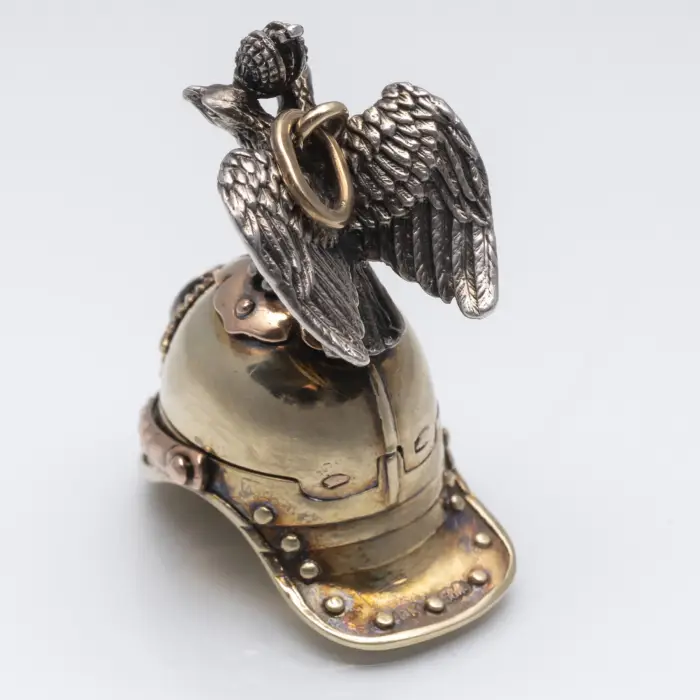
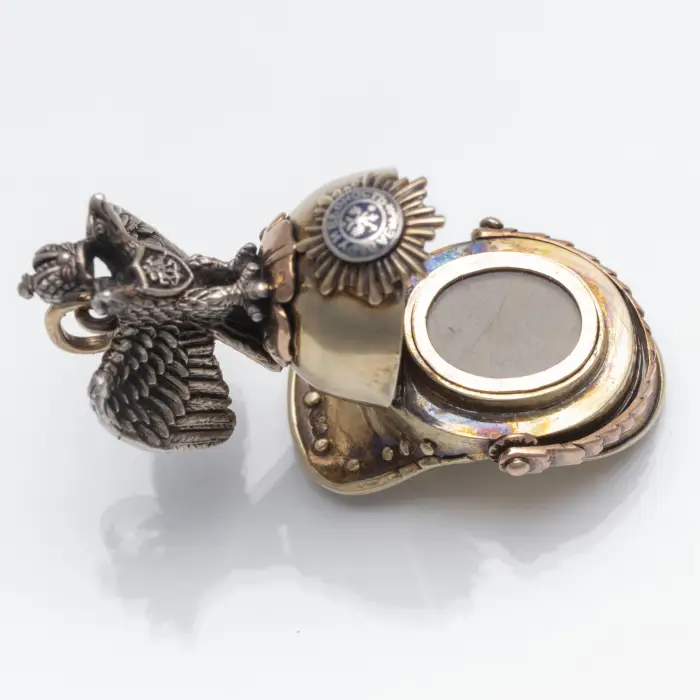
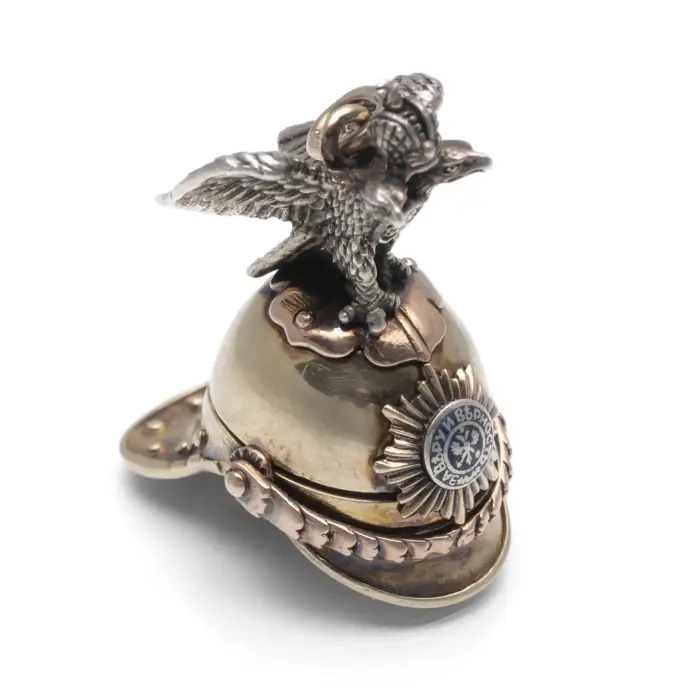
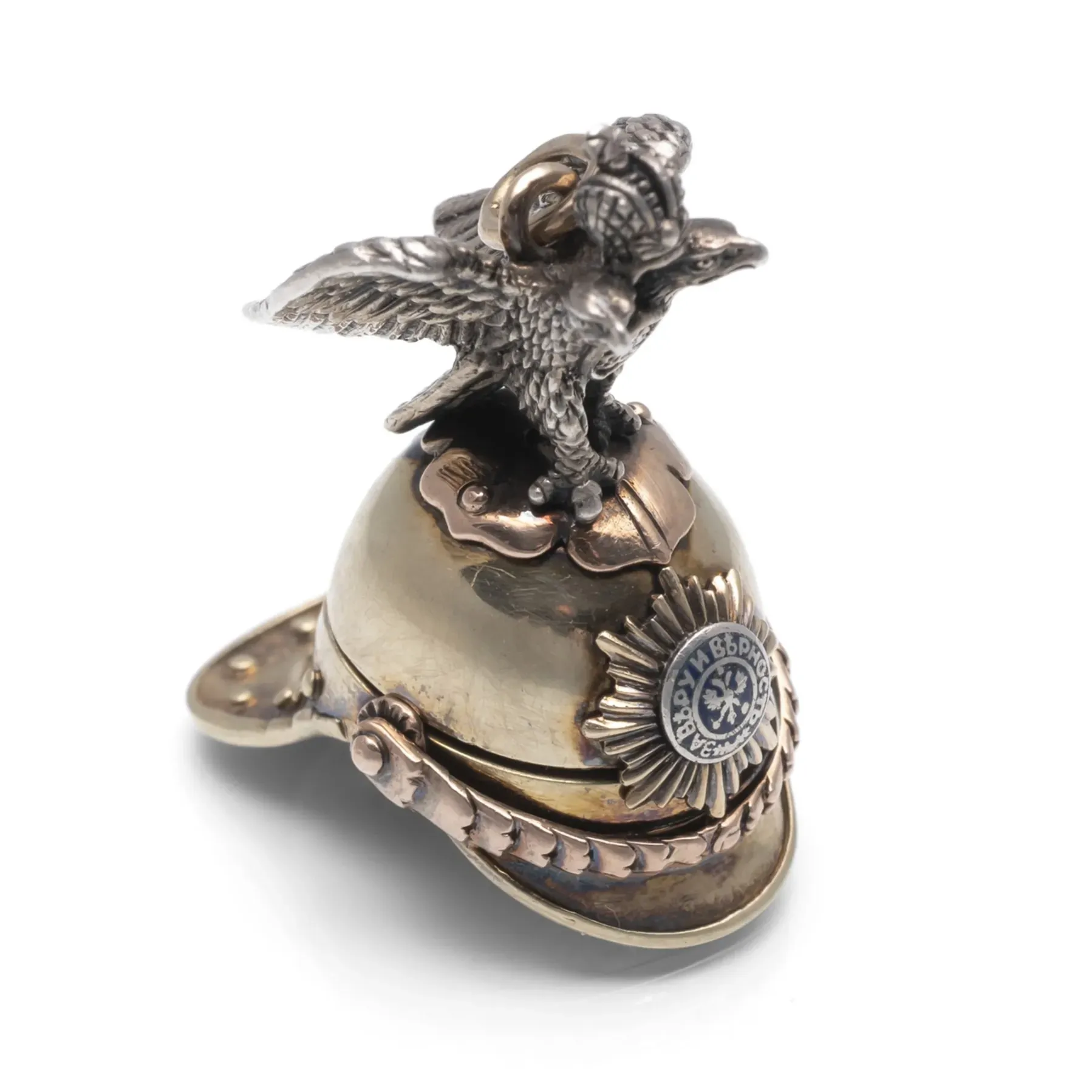
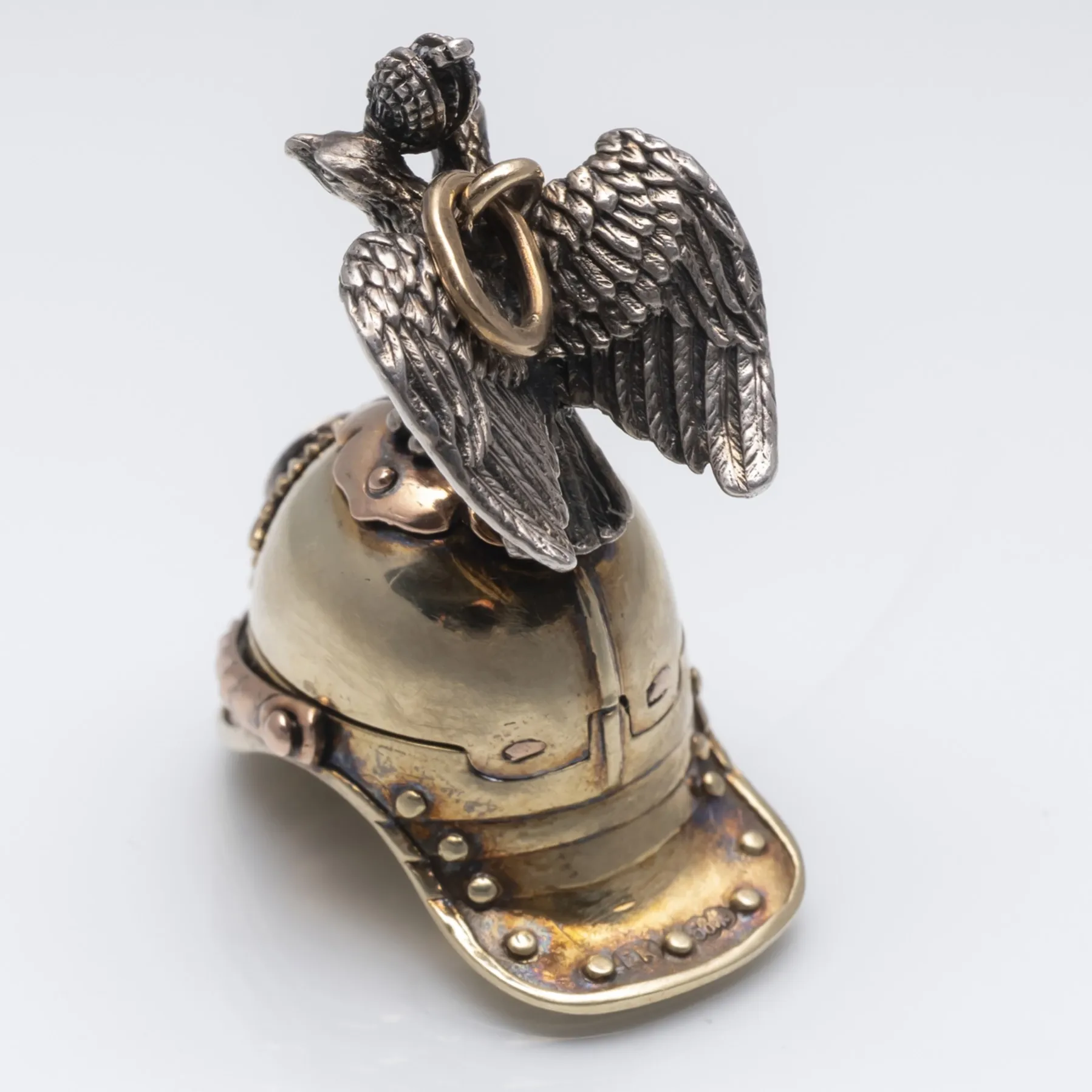
A rare miniature gold pendant locket modelled as the ceremonial helmet of a Chevalier Guard of the Russian Imperial Guard, made in St Petersburg in the late 19th century and attributed to Erik Kollin (1836–1901), a workmaster associated with the firm of Carl Fabergé.
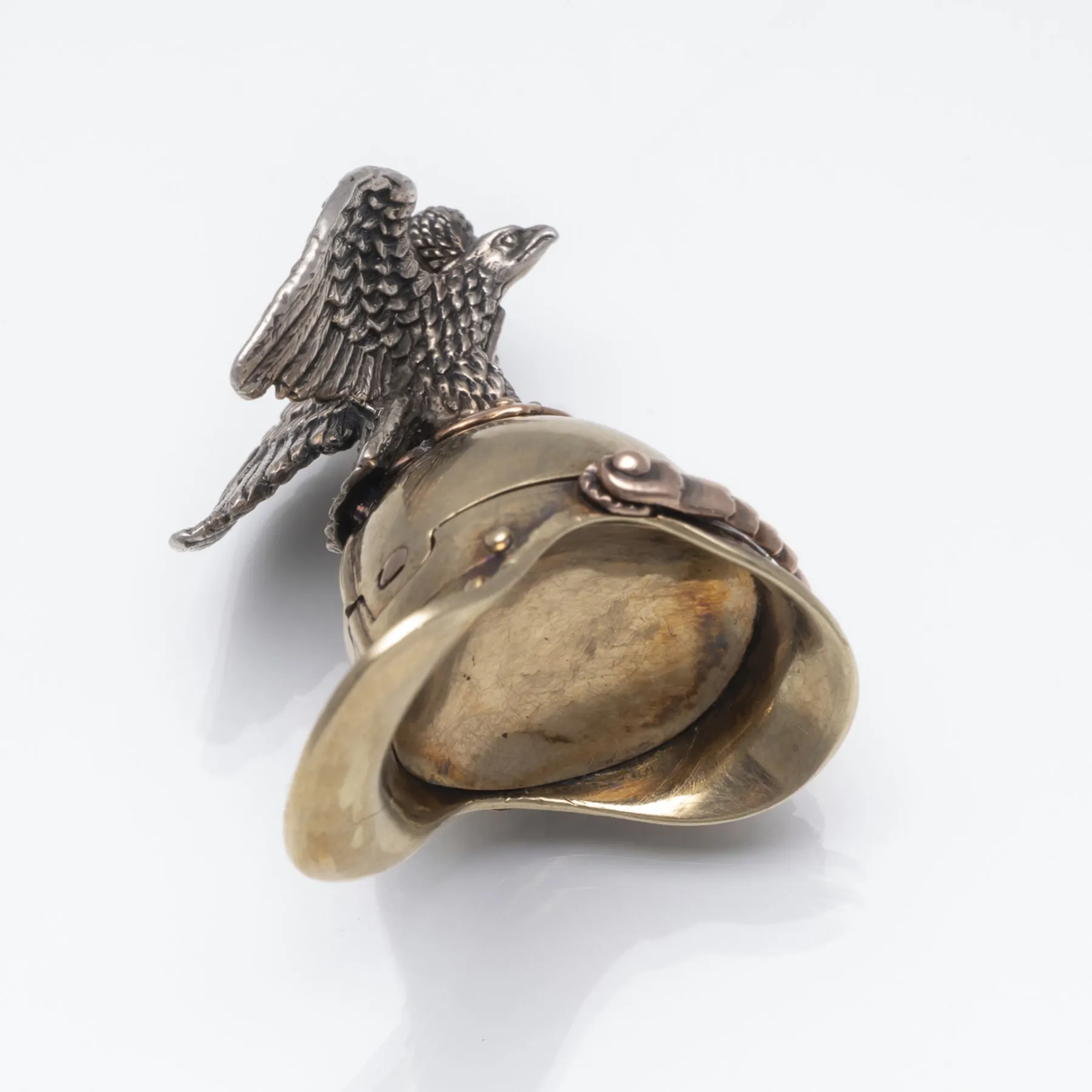
The helmet is crafted in polished yellow gold, with decorative mounts in rose-coloured gold. The composition is distinguished by its meticulous reproduction of historical military details, including the peaks, embossed chinstrap, side fastenings and ornamental mounts.
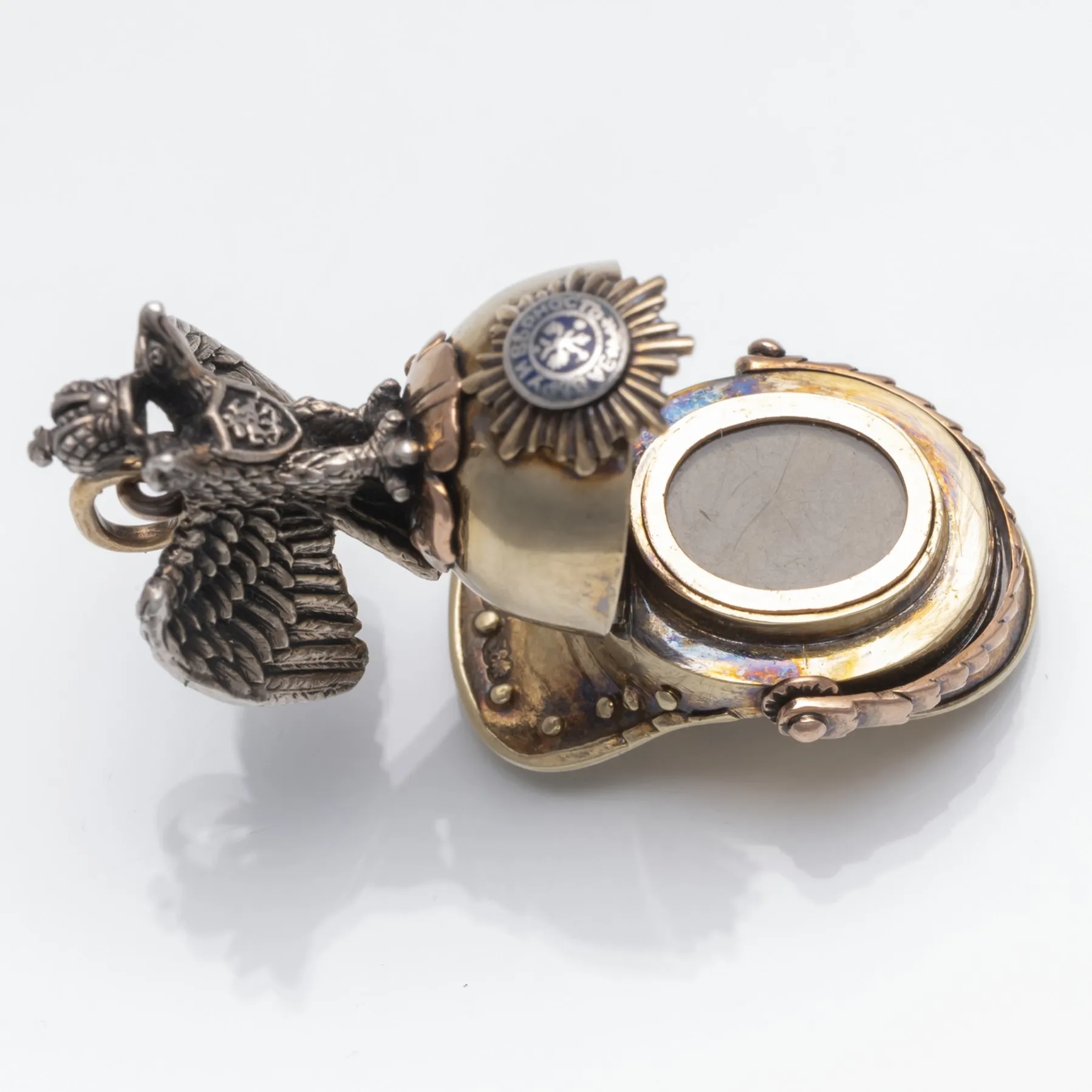
The front of the helmet is adorned with a relief eight-pointed star of the Order of St Andrew the First-Called, centred by a medallion decorated with blue enamel and bearing the motto For Faith and Loyalty. The crest is surmounted by a finely modelled silver Imperial double-headed eagle with outstretched wings, crowned with the Imperial crown. The sculptural treatment of the plumage and finely chased details demonstrate the high standard of craftsmanship associated with Russian Imperial jewellery.
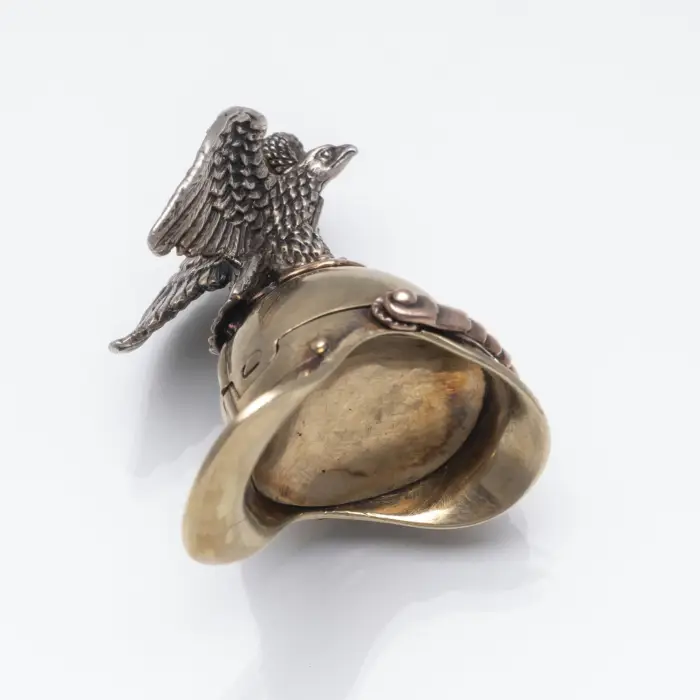
The helmet incorporates an ingenious hinged construction. The upper section opens to reveal an oval compartment intended to accommodate a miniature portrait or commemorative image. The object thus combines the decorative qualities of a pendant with the intimate function of a personal locket.
A gold suspension ring is fitted to the upper section, immediately behind the Imperial eagle.
Hallmarks: The helmet and suspension ring bear the maker`s mark EK, corresponding to Erik Kollin, together with the combined St Petersburg assay mark and the gold standard mark 56, indicating 56 zolotnik gold (approximately 14 carats).
Materials: 56 zolotnik gold, silver and enamel.
Dimensions: Height 3.3 cm.
Weight: Approximately 15.4 g.
Condition: Good condition, with minor signs of age and natural wear consistent with the period.
Provenance: Private collection, Northern Germany.
Historical context
n the jewellery arts of Imperial Russia during the second half of the 19th century, miniature representations of military equipment formed a distinctive category of personal and commemorative ornaments. Such objects combined an appreciation for the faithful reproduction of historical uniforms with the symbolism of Imperial authority and the prestige of the elite Guard regiments. The Chevalier Guard helmet, distinguished by its metal body, order star on the front and Imperial double-headed eagle crest, was among the most recognisable elements of the ceremonial uniform of the Russian Imperial cavalry.
A central feature of the present miniature is the star of the Order of St Andrew the First-Called, bearing the motto For Faith and Loyalty. Established by Peter the Great at the end of the 17th century, the Order occupied the highest position in the honours system of the Russian Empire. Its eight-pointed star and St Andrew`s Cross became enduring symbols of service to the state, loyalty to the sovereign and military honour. Their incorporation into objects of court jewellery transformed small personal ornaments into sophisticated expressions of Imperial heraldry and historical identity.
This tradition of miniature craftsmanship found particular expression in the workshops of the House of Fabergé. Its craftsmen produced not only precious jewellery but also refined objects of personal and commemorative significance, frequently drawing upon military subjects. Erik August Kollin (1836–1901), one of the leading workmasters associated with the firm`s early development, was particularly renowned for his finely executed goldwork and close attention to historical prototypes. His name is associated with jewellery that combines decorative sophistication, precise modelling and ingenious construction.
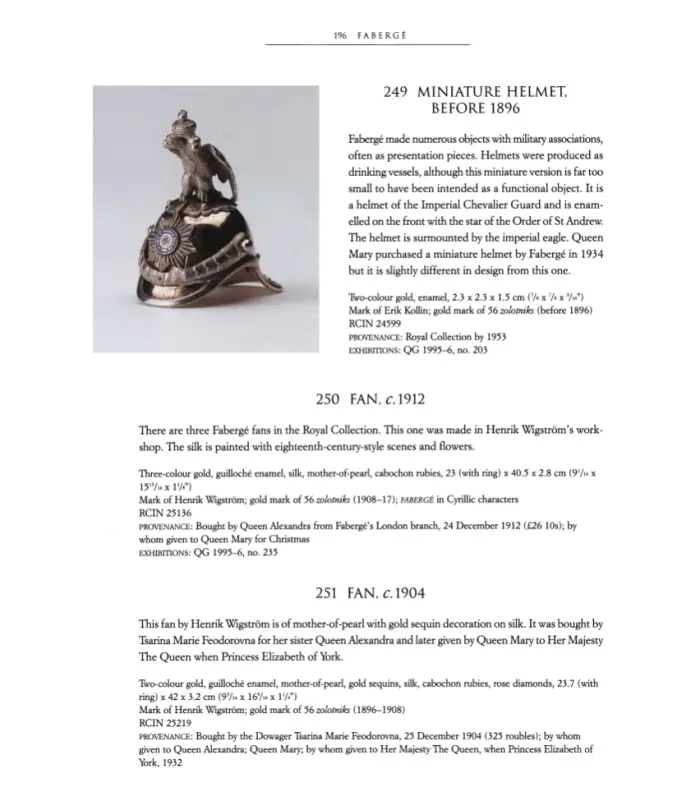
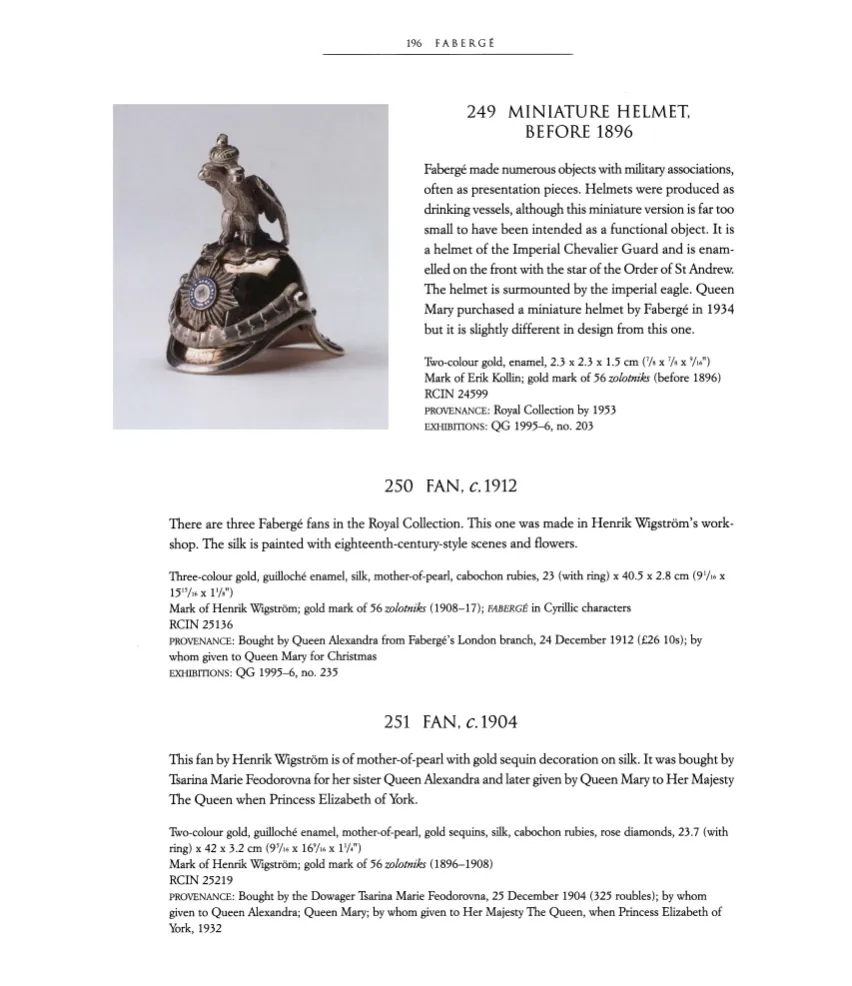
An important comparison is provided by a miniature Chevalier Guard helmet by Erik Kollin in the British Royal Collection (Royal Collection Trust, RCIN 24599). Executed in two colours of gold with enamel, bearing the workmaster`s mark and the 56 zolotnik standard, it is dated to before 1896. This documented museum example establishes the existence of this particular type of miniature within Kollin`s oeuvre, although it does not independently establish the provenance of the present piece.
The hinged construction, concealing a compartment for a miniature portrait or personal image, further enhances the pendant`s intimate character and exemplifies the union of accomplished goldsmithing and the culture of sentimental and commemorative objects in Imperial Russia.
Condition report
Good overall condition. Minor surface wear and natural patination to certain metal elements, consistent with age.
The condition report is provided for informational purposes only.
It is not comprehensive and may not reflect all defects, restorations, alterations, or adaptations, as Antiqon does not perform professional conservation-level assessments. The information is based on a qualified, yet subjective, evaluation by our specialists. Before purchasing, we recommend consultation with an independent expert. Please also consult our Authenticity Guarantee and Glossary A-Z, which contain important information on lot characteristics and sale conditions.