
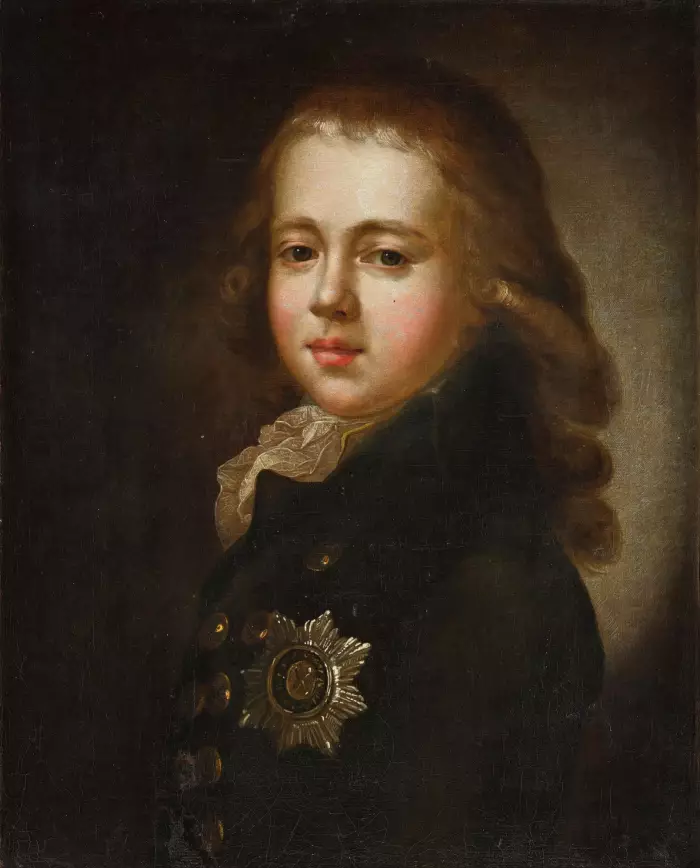
GRAND DUKE CONSTANTINE PAVLOVICH (1779–1831). A VERSION OF THE PORTRAIT BY JEAN-LOUIS VOILLE (1744–1829). MID-1790s
Antiqon consultant will contact you within one business day after receiving your request.
Discover your personalized shipping cost — based on where you are and how you prefer to receive your piece..
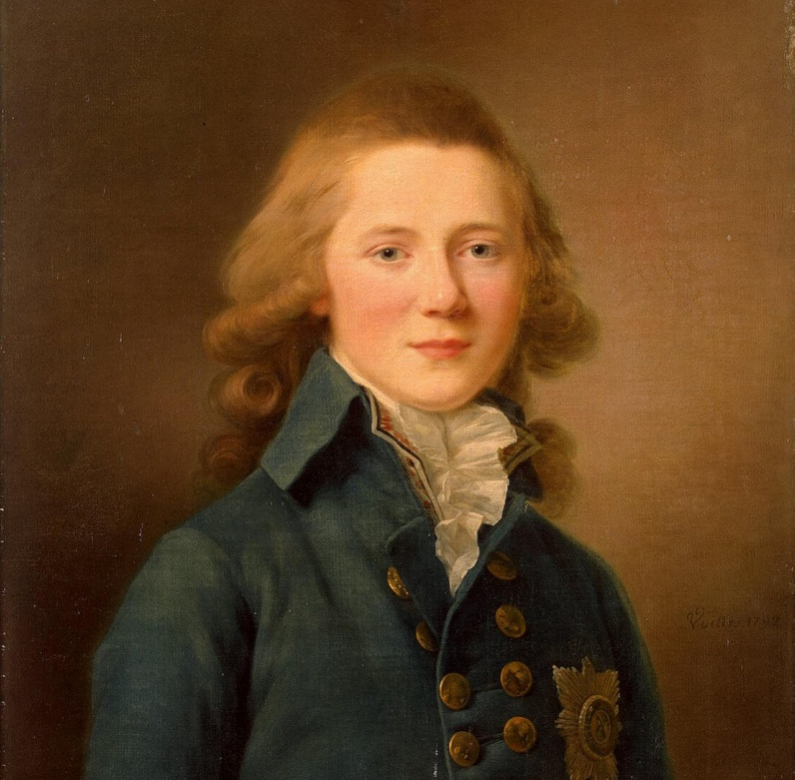
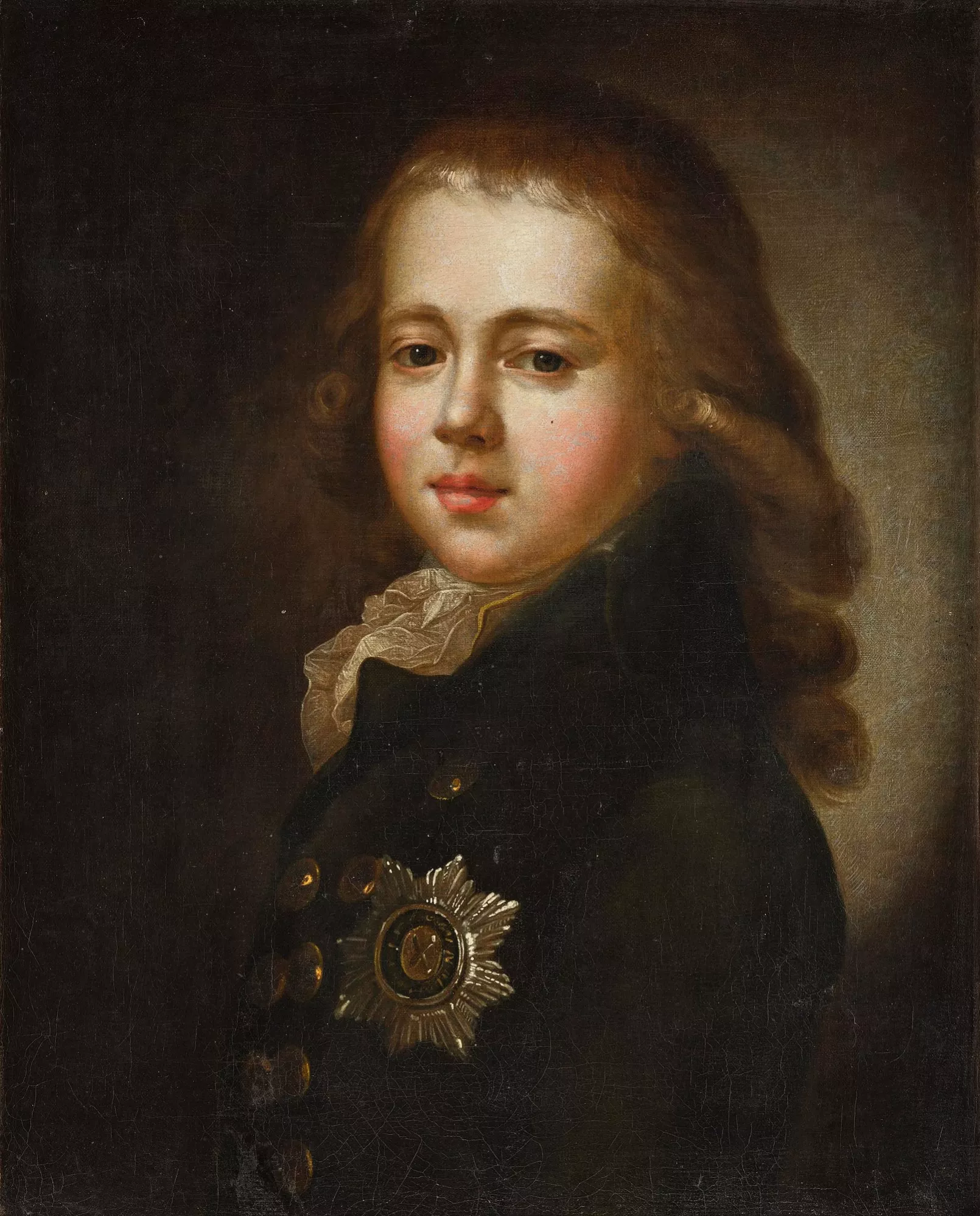
A portrait of Grand Duke Constantine Pavlovich, second son of Emperor Paul I and Empress Maria Feodorovna, representing a version of the portrait by the French artist Jean-Louis Voille (1744–1829), who was active at the Russian Imperial Court during the last quarter of the 18th century. The iconographic prototype for the present work is Voille’s Portrait of Grand Duke Constantine Pavlovich as a Child, painted in Russia in 1792 and now in the collection of the Pavlovsk State Museum-Reserve.
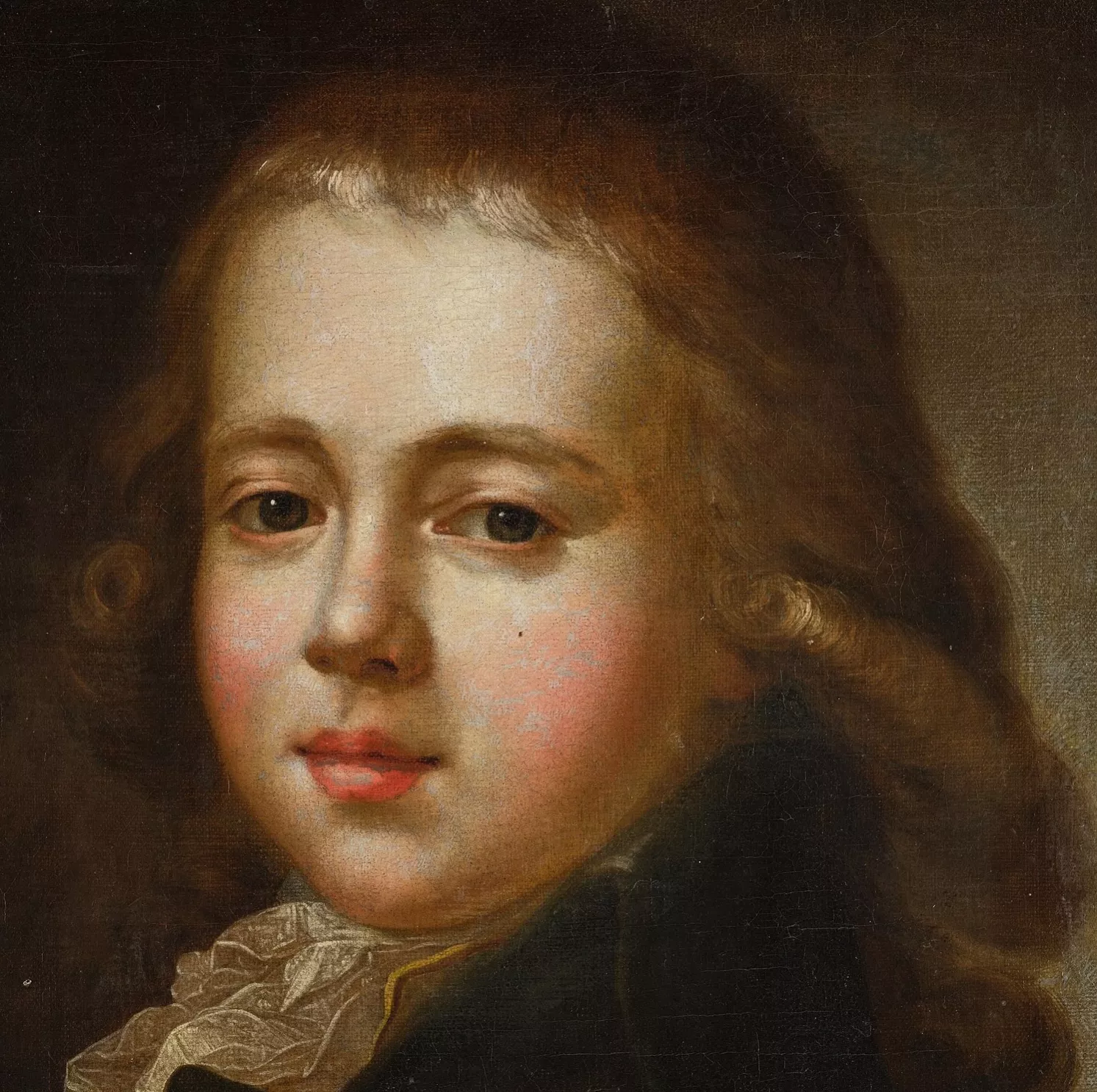
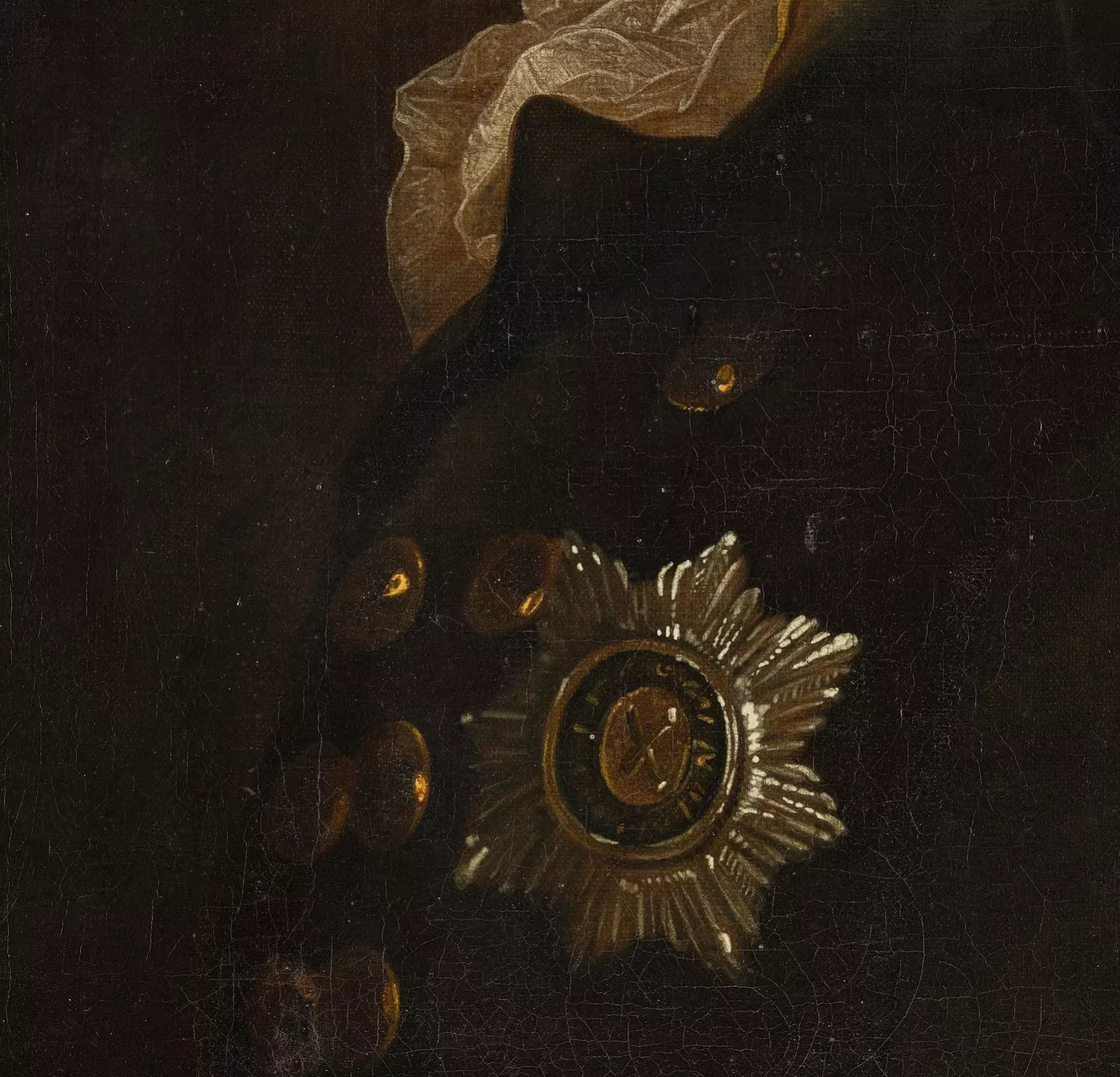
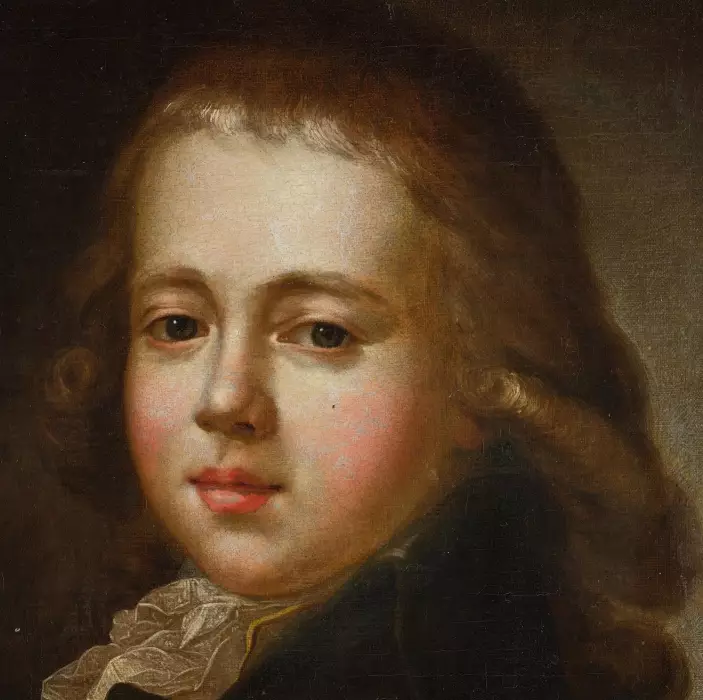
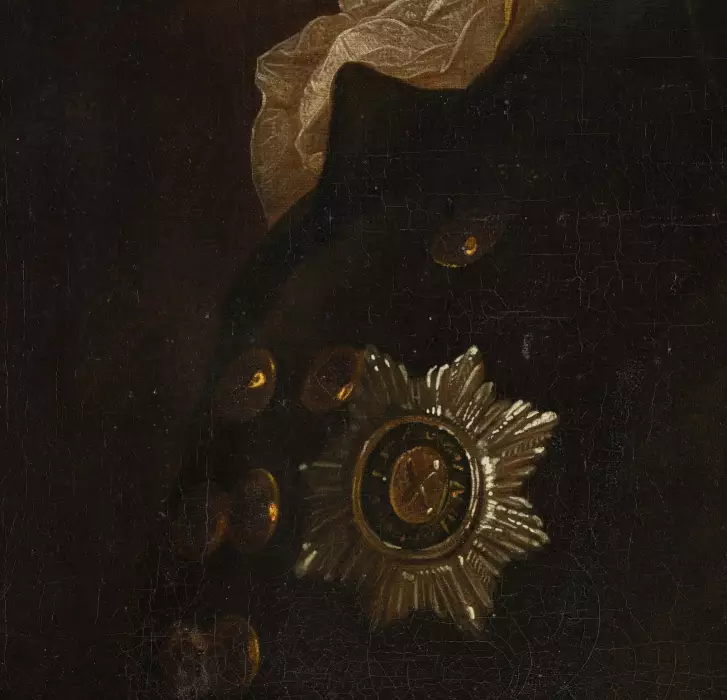
The young Grand Duke is shown in three-quarter view against a deep, neutral background. He wears a dark military uniform with a white lace jabot and the star of the Order of Saint Andrew the First-Called. The restrained composition focuses attention on the sitter’s face. Soft chiaroscuro modelling, subtle transitions in the flesh tones, a delicate flush and a lively gaze lend immediacy to the likeness while preserving the representational character of an Imperial court portrait.
The present work displays a pronounced compositional and iconographic affinity with the documented portrait by Voille at Pavlovsk. The pose of the figure, three-quarter turn of the head, hairstyle, costume, white jabot, placement of the order star and overall tonal arrangement closely follow the established model. According to information provided by the Pavlovsk State Museum-Reserve, Voille’s portrait is dated 1792, executed in oil on canvas, measures 71 × 55.6 cm and bears inventory number ЦХ-2645-III.
A significant distinction lies in the treatment of the sitter’s age. In the present portrait, Constantine Pavlovich appears somewhat older than in Voille’s portrait of 1792. While retaining the iconographic type established by the artist, the Grand Duke’s features are rendered with greater maturity and definition. Comparison with the dated Pavlovsk portrait therefore provides an important chronological indication and supports a dating of the present version to the mid-1790s. This conclusion accords with the research material relating to the painting, in which the sitter’s more mature appearance is likewise cited as the basis for the proposed dating.
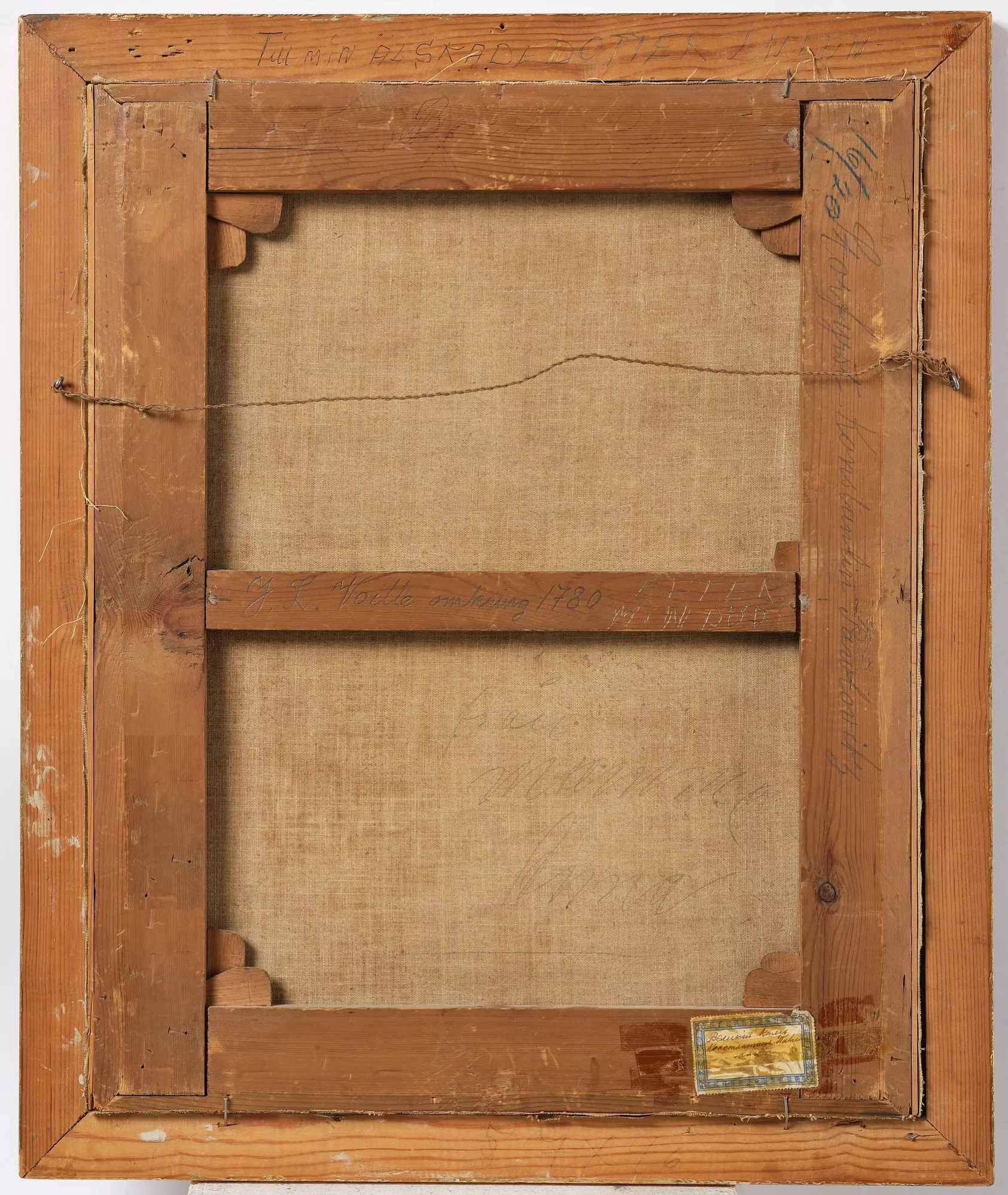
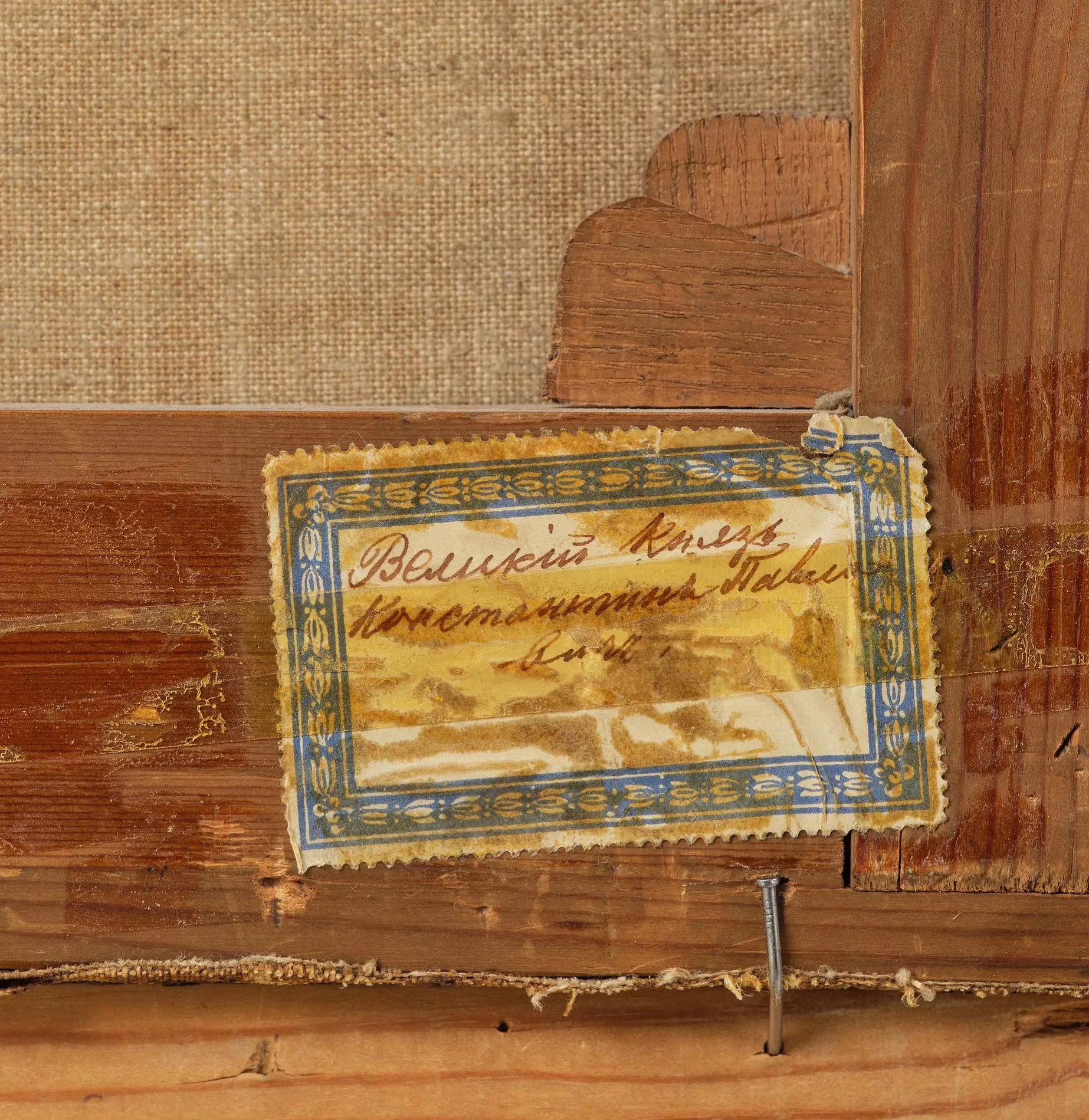
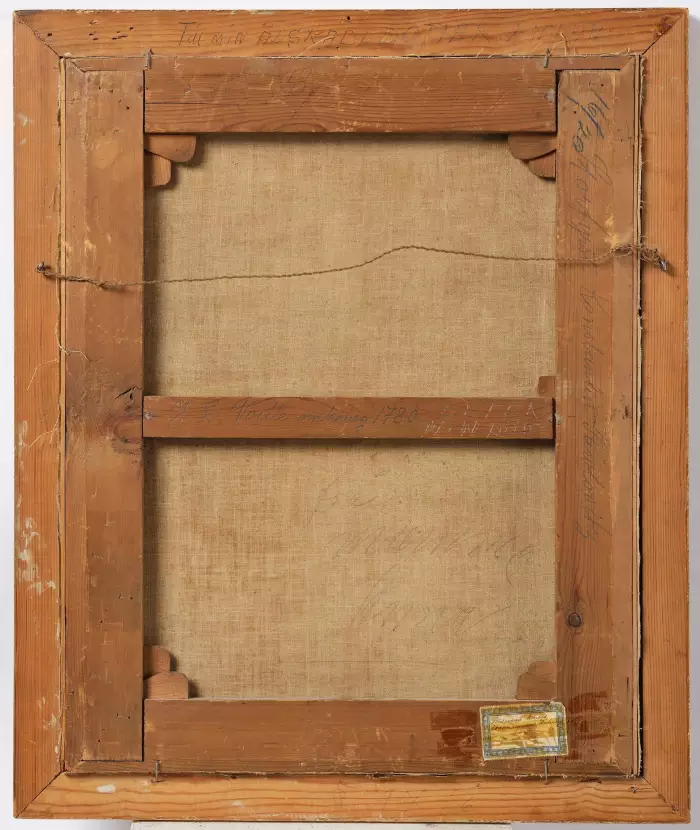
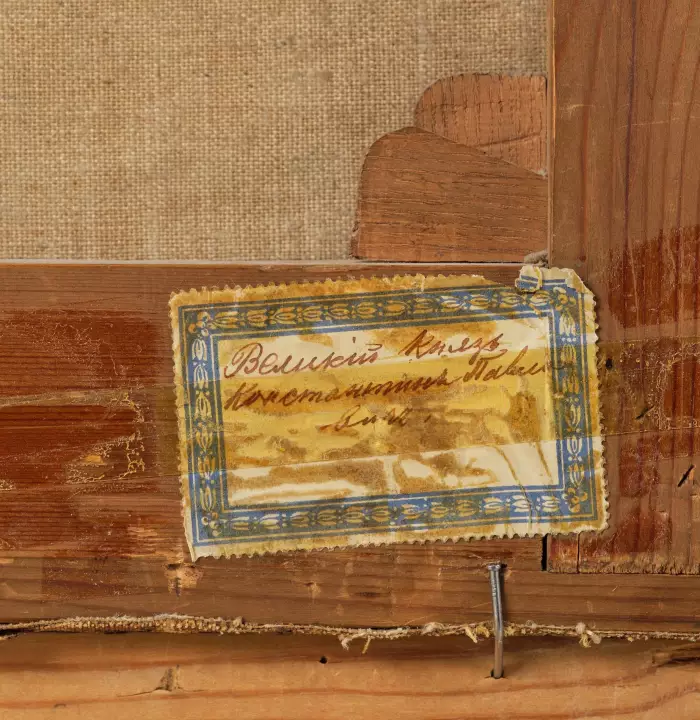
An old inscription on the reverse of the canvas reads “Konstantin Pawlowitz J. L. Voille omkring 1780”. The presence of the name J. L. Voille is of particular interest for the attribution history of the work, recording its longstanding association with the French master’s portrait. The accompanying dating “omkring 1780” (“circa 1780”) is erroneous, since Constantine Pavlovich was born in 1779. The reverse also bears an old label in Russian identifying the sitter, while the reverse of the frame carries the Swedish dedicatory inscription “Min älskade dotter” (“to my beloved daughter”).
Inscriptions: On the reverse of the canvas, the old inscription “Konstantin Pawlowitz J. L. Voille omkring 1780”; an old label in Russian identifying Grand Duke Constantine Pavlovich. On the reverse of the frame, the Swedish dedicatory inscription “Min älskade dotter” (“to my beloved daughter”).
Dimensions: 58 × 46 cm.
Material: Oil on canvas.
Condition: Good overall condition. The canvas has been lined. Stable age-related craquelure, minor signs of age and handling, and traces of previous restoration are visible. The paint layer is well preserved.
Provenance: Private European collection.
Jean-Louis Voille (1744–1829) occupies a notable place among the French portrait painters active in Russia during the second half of the 18th century. His career was closely associated with the Imperial Court and the Saint Petersburg aristocracy, for whom he produced portraits combining the traditions of the French school with the representational requirements of Russian court portraiture. Clarity of composition, delicate modelling of the face, restrained chromatic harmony and close attention to the individuality of the sitter are characteristic features of his artistic language.
Of central importance to the study of the present painting is the Portrait of Grand Duke Constantine Pavlovich as a Child in the collection of the Pavlovsk State Museum-Reserve. The museum attributes the work to Jean-Louis Voille and dates it to 1792; painted in Russia in oil on canvas, it measures 71 × 55.6 cm and bears inventory number ЦХ-2645-III. This documented work provides a specific iconographic prototype against which the present portrait may be considered.
Within the court culture of the Russian Empire in the late 18th century, portraits of members of the Imperial family fulfilled an important dynastic and representational function. Established portrait types could exist in versions and repetitions intended for Imperial residences, members of the dynastic circle and aristocratic collections. While retaining the principal compositional scheme, such works could acquire distinctive features in their individual pictorial treatment.
The age of the sitter assumes particular importance when the present painting is compared with Voille’s portrait of 1792. Despite the close compositional correspondence, Constantine Pavlovich appears somewhat more mature in the present version. This observation supports an interpretation of the painting as a subsequent version of the portrait type established by Voille and provides a significant basis for dating it to the mid-1790s.
The historic inscriptions further illuminate the painting’s attribution and ownership history. “Konstantin Pawlowitz” preserves the longstanding identification of the sitter, while the accompanying name “J. L. Voille” records an earlier association of the work with the French master’s portrait. The Swedish dedicatory inscription on the frame indicates a further stage in the painting’s European history. Taken together, the documented Pavlovsk prototype, the close compositional relationship, the sitter’s more mature appearance and the historic inscriptions support the identification of the present work as a version of the portrait by Jean-Louis Voille, dating from the mid-1790s.
The canvas has been professionally lined. The painted surface displays stable age-related craquelure, with isolated evidence of previous restoration and minor abrasions along the edges. The paint layer remains well preserved. Overall condition is consistent with the age of the work.
The condition report is provided for informational purposes only.
It is not comprehensive and may not reflect all defects, restorations, alterations, or adaptations, as Antiqon does not perform professional conservation-level assessments. The information is based on a qualified, yet subjective, evaluation by our specialists.Before purchasing, we recommend consultation with an independent expert.Please also consult our Terms and conditions and Glossary A-Z, which contain important information on lot characteristics and sale conditions.