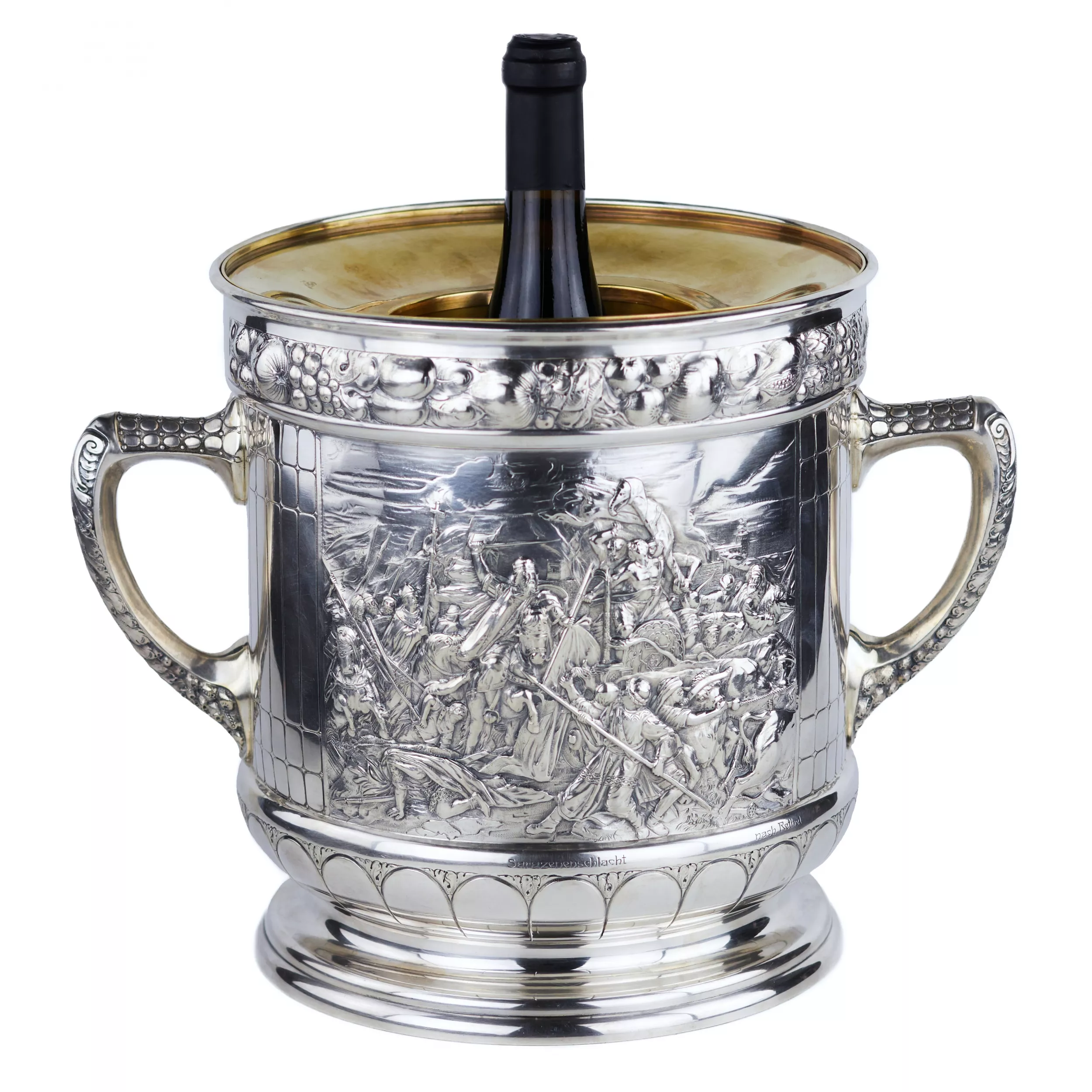


LARGE SILVER WINE COOLER WITH HISTORICAL BATTLE SCENES. C. F. SCHMEDDING. AUGSBURG, GERMANY. TURN OF THE 20TH CENTURY
Antiqon consultant will contact you within one business day after receiving your request.
Discover your personalized shipping cost — based on where you are and how you prefer to receive your piece..
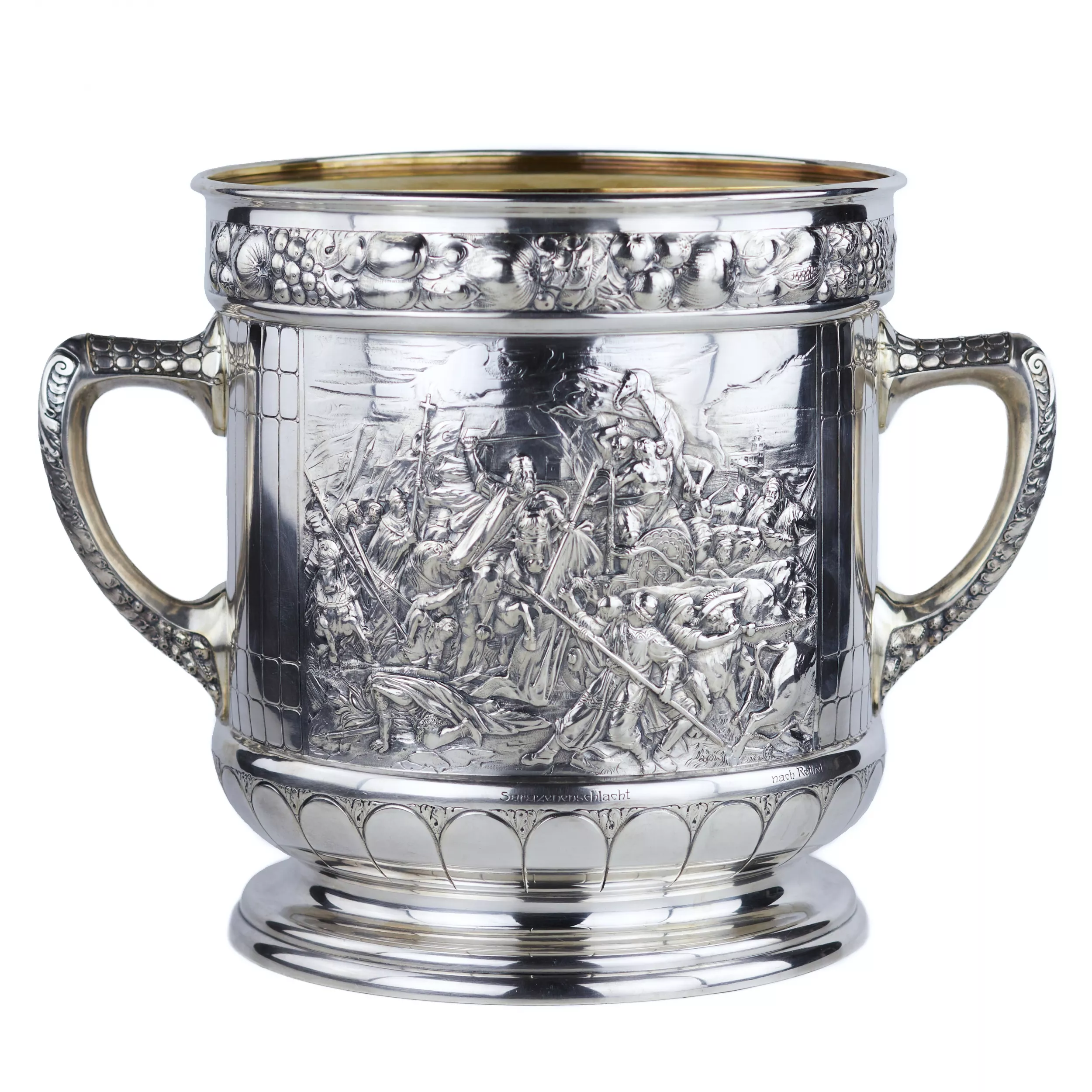
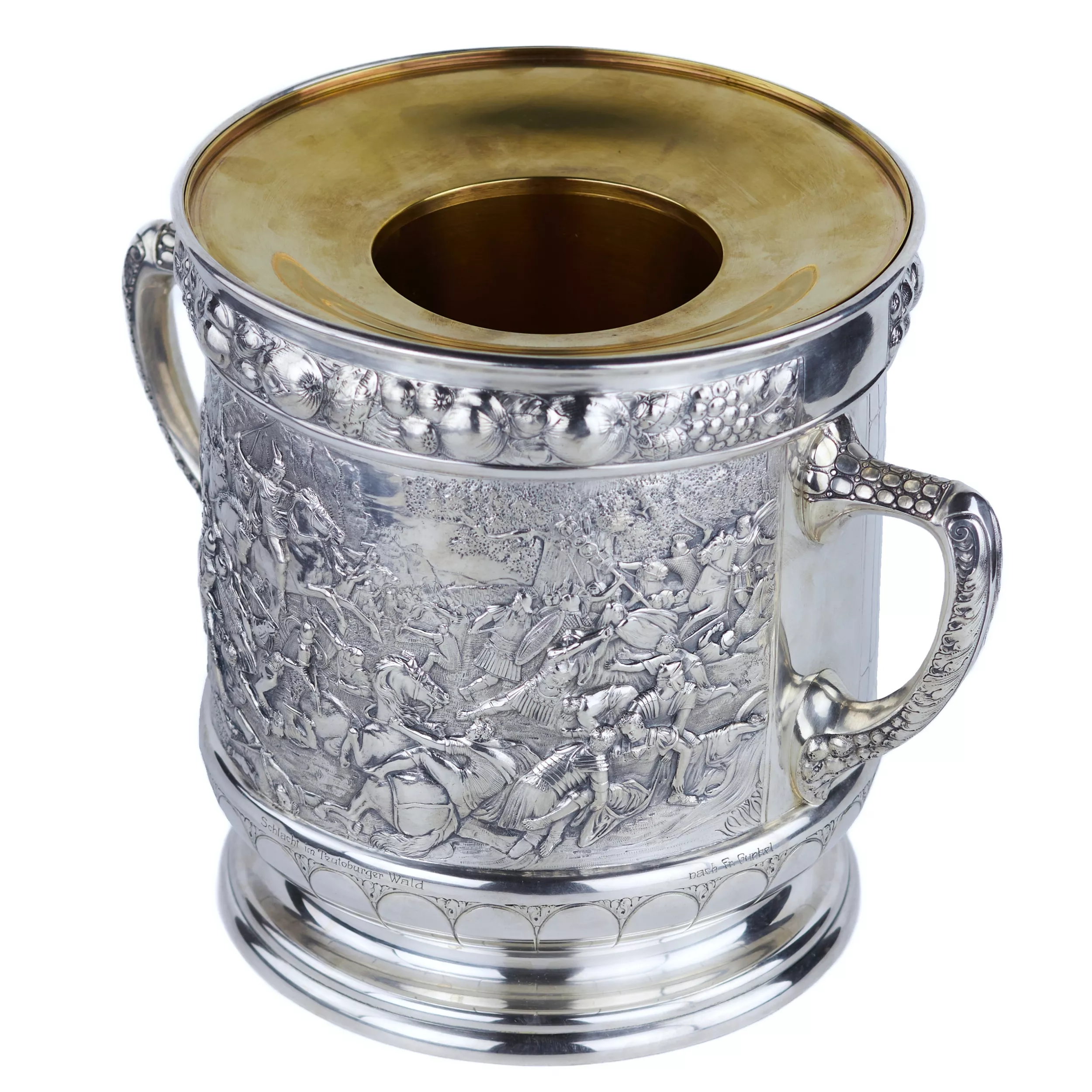
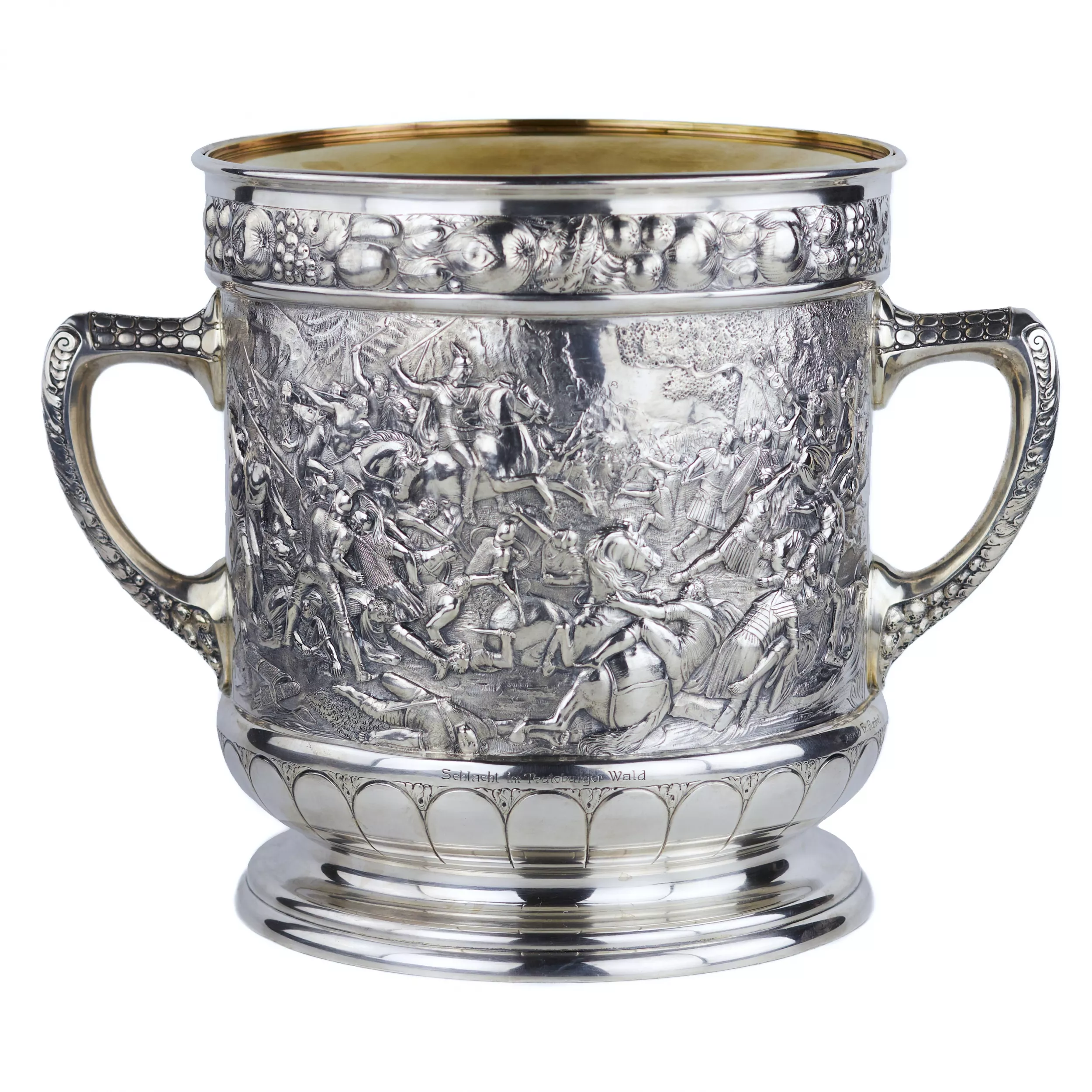
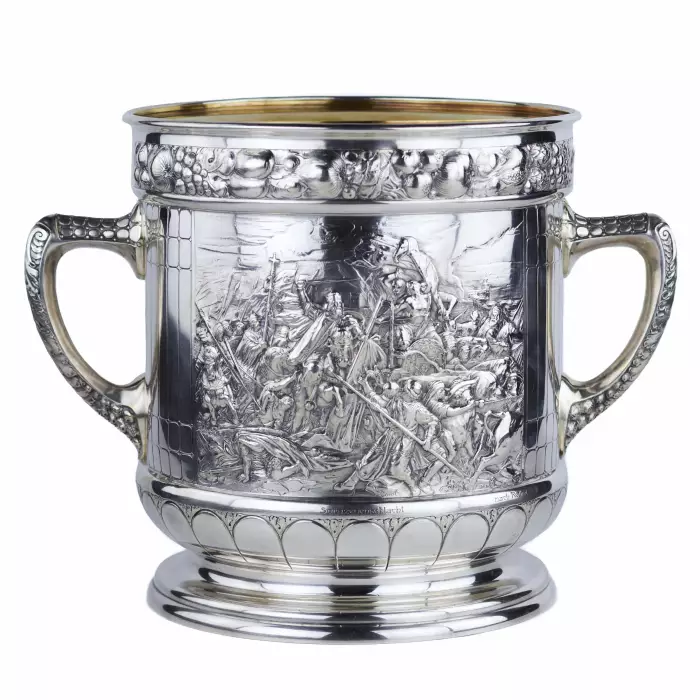
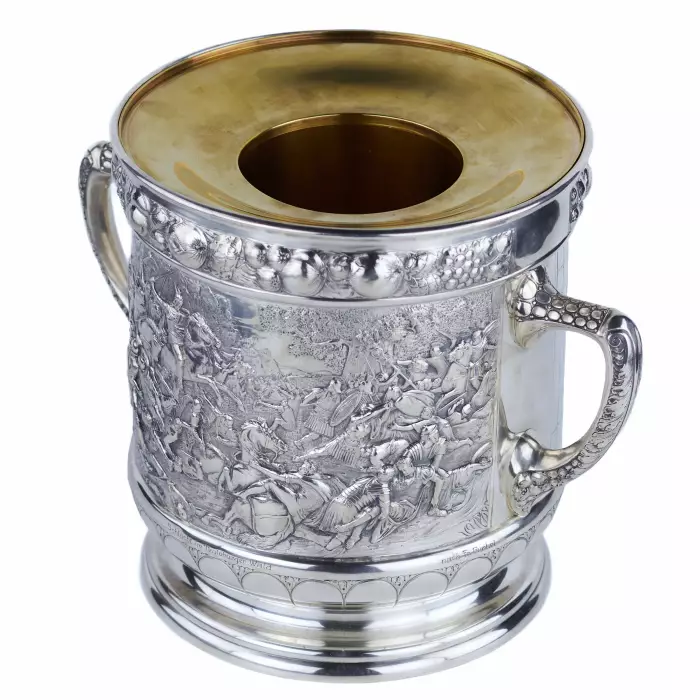
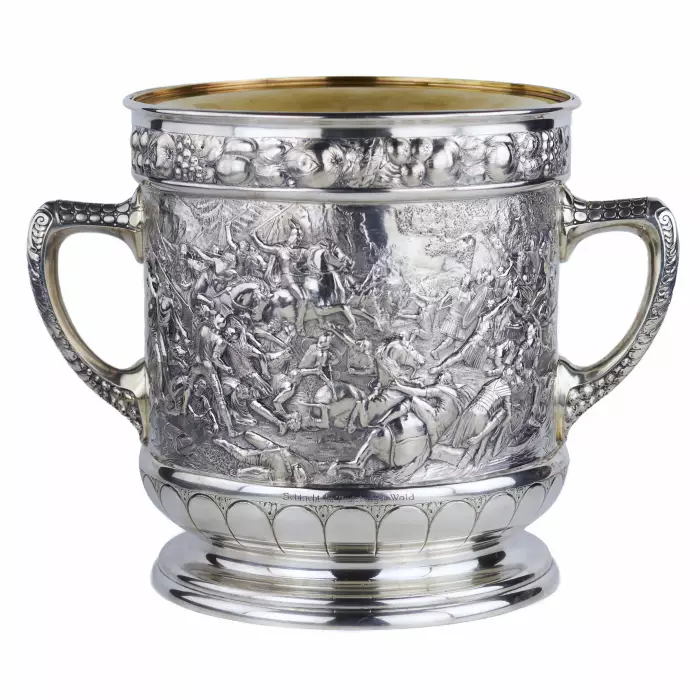
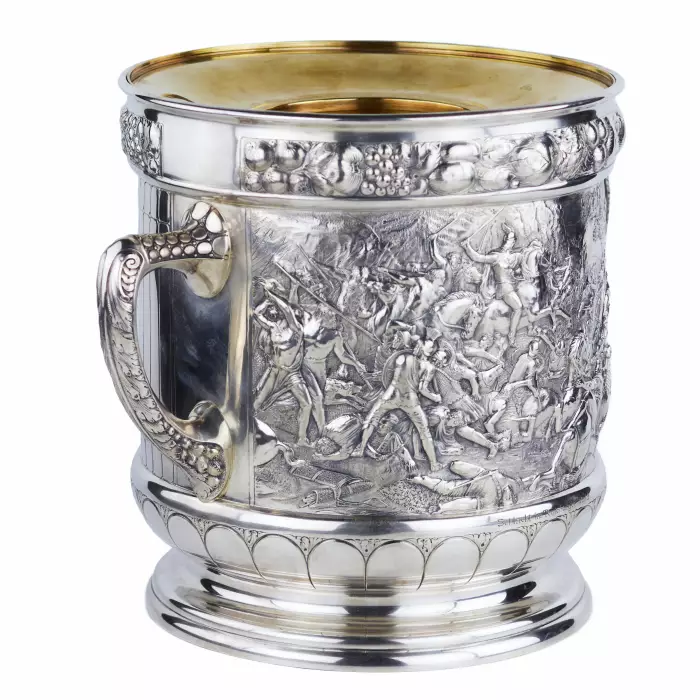
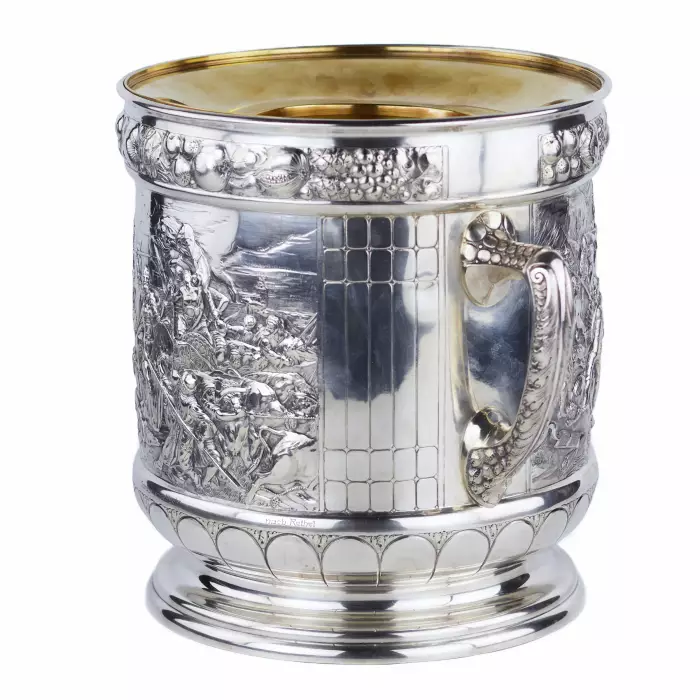
A monumental cylindrical silver wine cooler with two substantial cast side handles, made by the firm of C. F. Schmedding in Augsburg at the turn of the 20th century. Executed in 800-standard silver, the piece is distinguished by virtuoso repoussé and chasing, richly modelled reliefs, and an ambitious historical decorative programme characteristic of the finest German silverwork of the Historicist period.
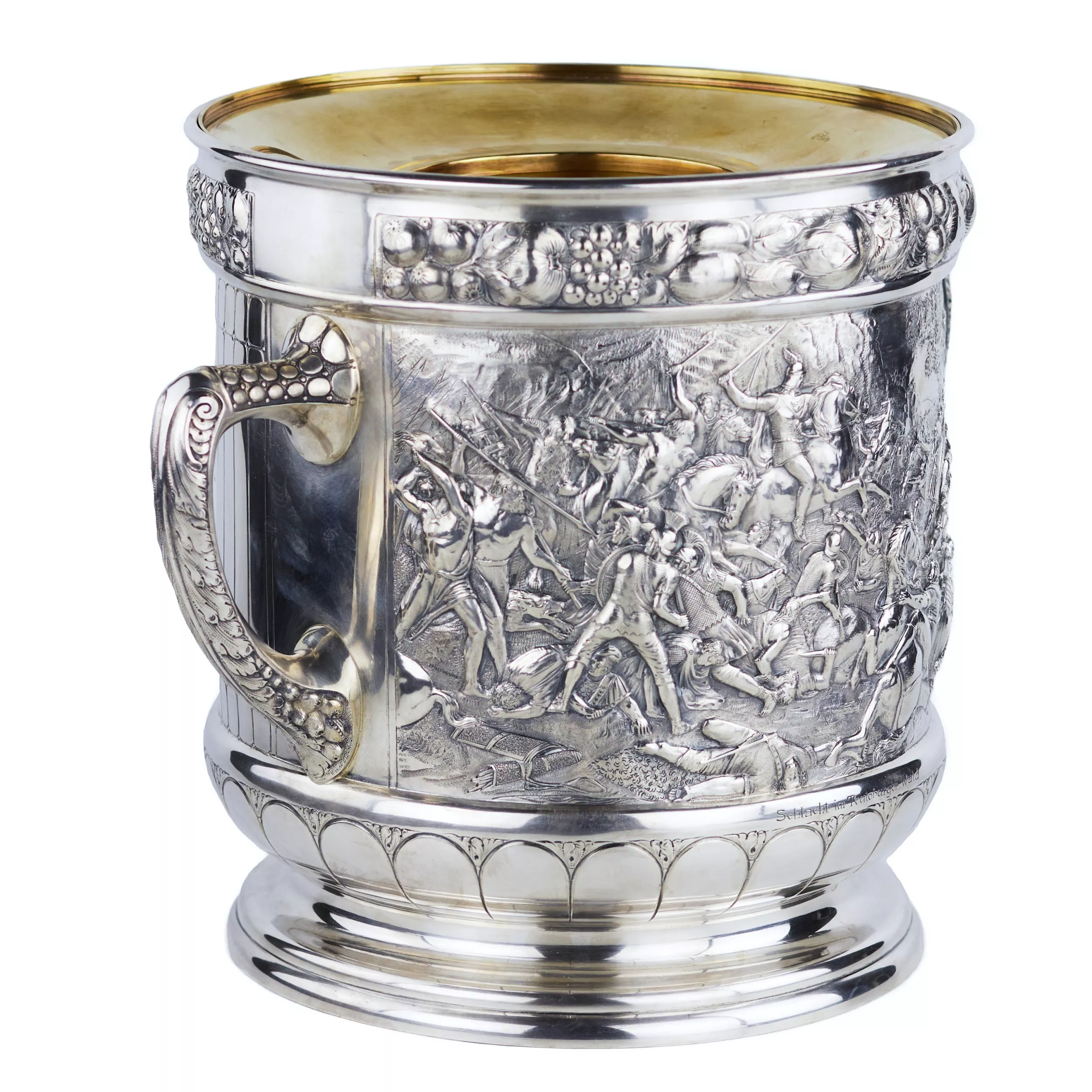
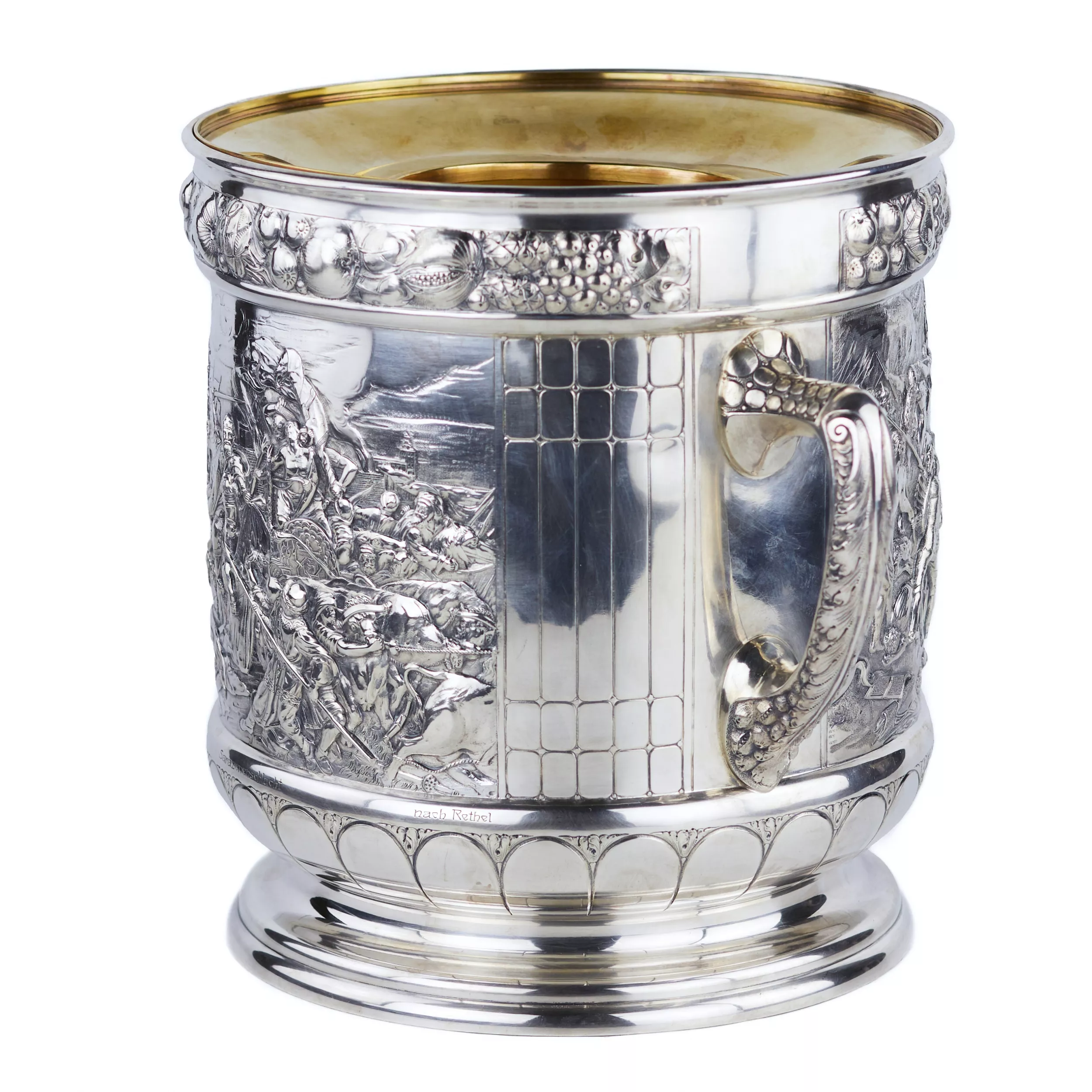
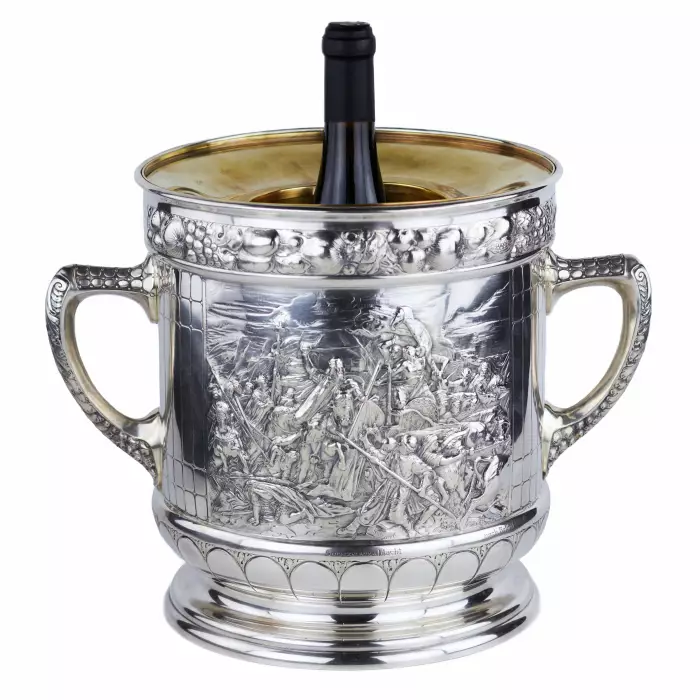
The body is decorated with two continuous high-relief battle scenes populated by numerous foot soldiers, horsemen, standard-bearers, and military commanders. The meticulous rendering of armour, weaponry, equestrian trappings, and landscape details attests to the exceptional skill of the silversmiths and sculptors involved in its production.
The reliefs are accompanied by the inscriptions “Schlacht im Teutoburger Wald” and “Sarazenenschlacht”, together with the designations “nach Rethel” and “nach Fr. Gunkel”, identifying works by the eminent German history painters Alfred Rethel and Friedrich Gunkel as the artistic sources for the compositions. The scene entitled “Schlacht im Teutoburger Wald” reproduces Friedrich Gunkel’s celebrated monumental painting “Die Hermannsschlacht”, depicting the victory of the Germanic tribes under Arminius over the Roman legions in the Teutoburg Forest.
The upper section of the body is encircled by a broad relief frieze of vine leaves, bunches of grapes, pomegranates, apples, pears, and other fruits, symbolising abundance and the culture of wine. The lower register is ornamented with a stylised band of repeated petals, reinforcing the monumental character of the silhouette. The two substantial cast handles are embellished with foliate ornament and harmoniously integrated into the overall architectural composition.
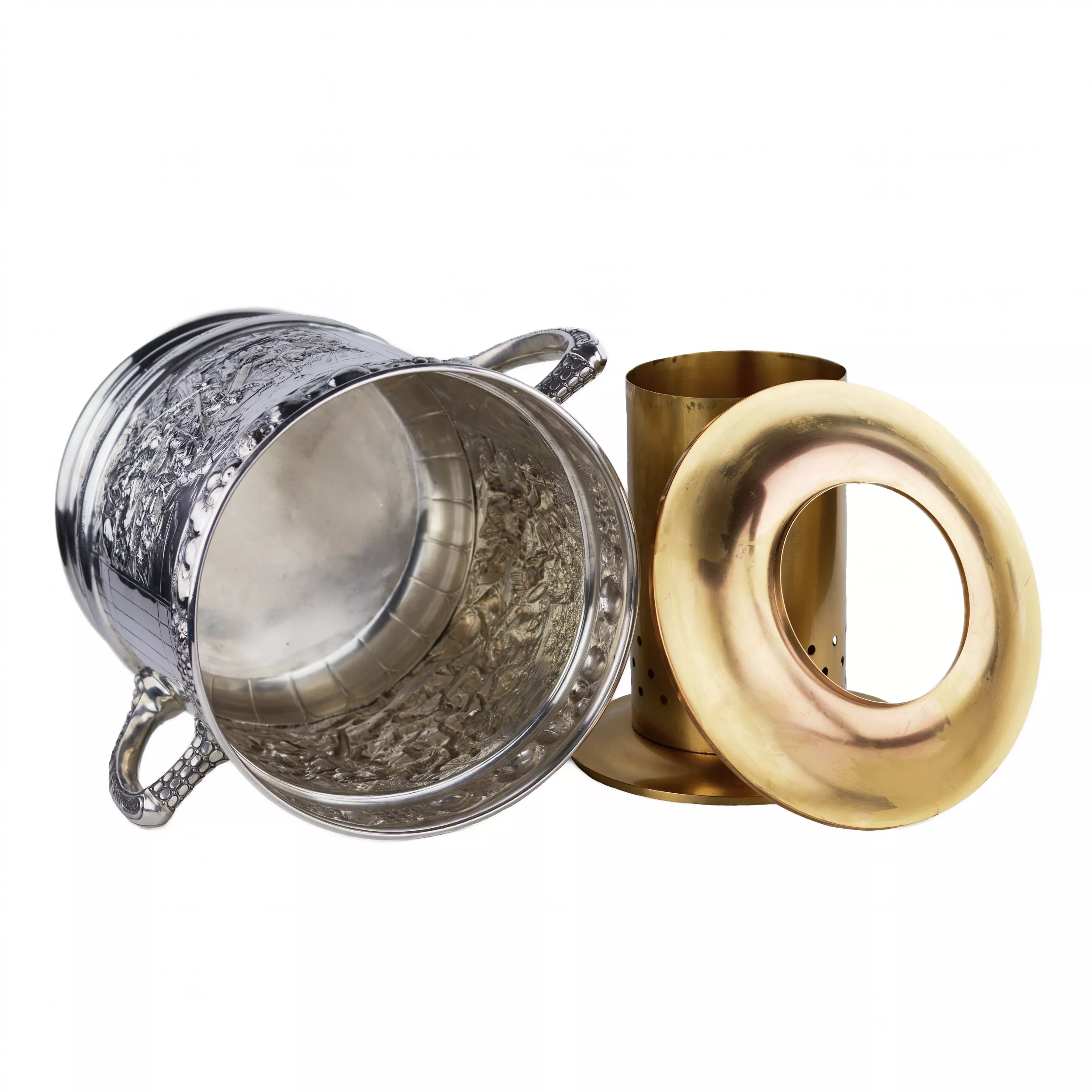
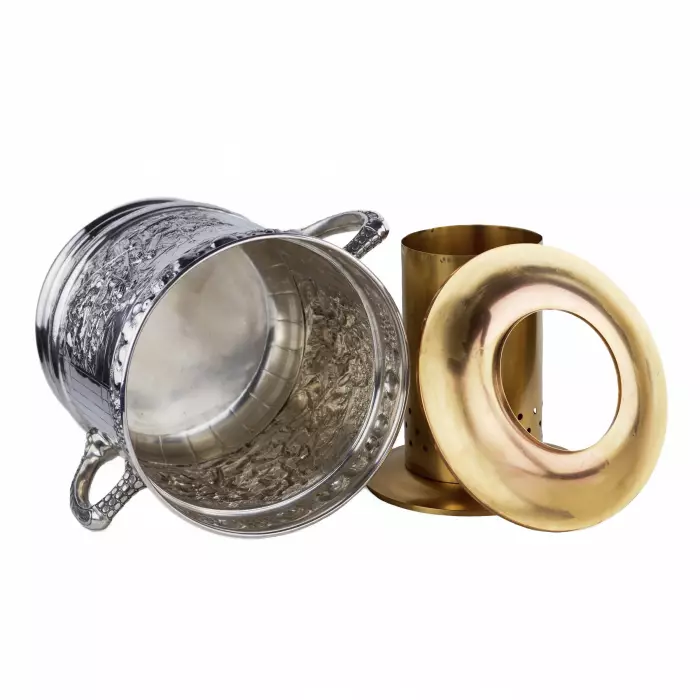
The cooler retains its original removable metal liner, the interior of which is fully gilded. Such liners were traditionally used to protect the vessel during the cooling and serving of wine or champagne.
This wine cooler belongs to the most prestigious category of ceremonial table silver, intended for the reception rooms of affluent private residences, palaces, clubs, and luxury hotels.
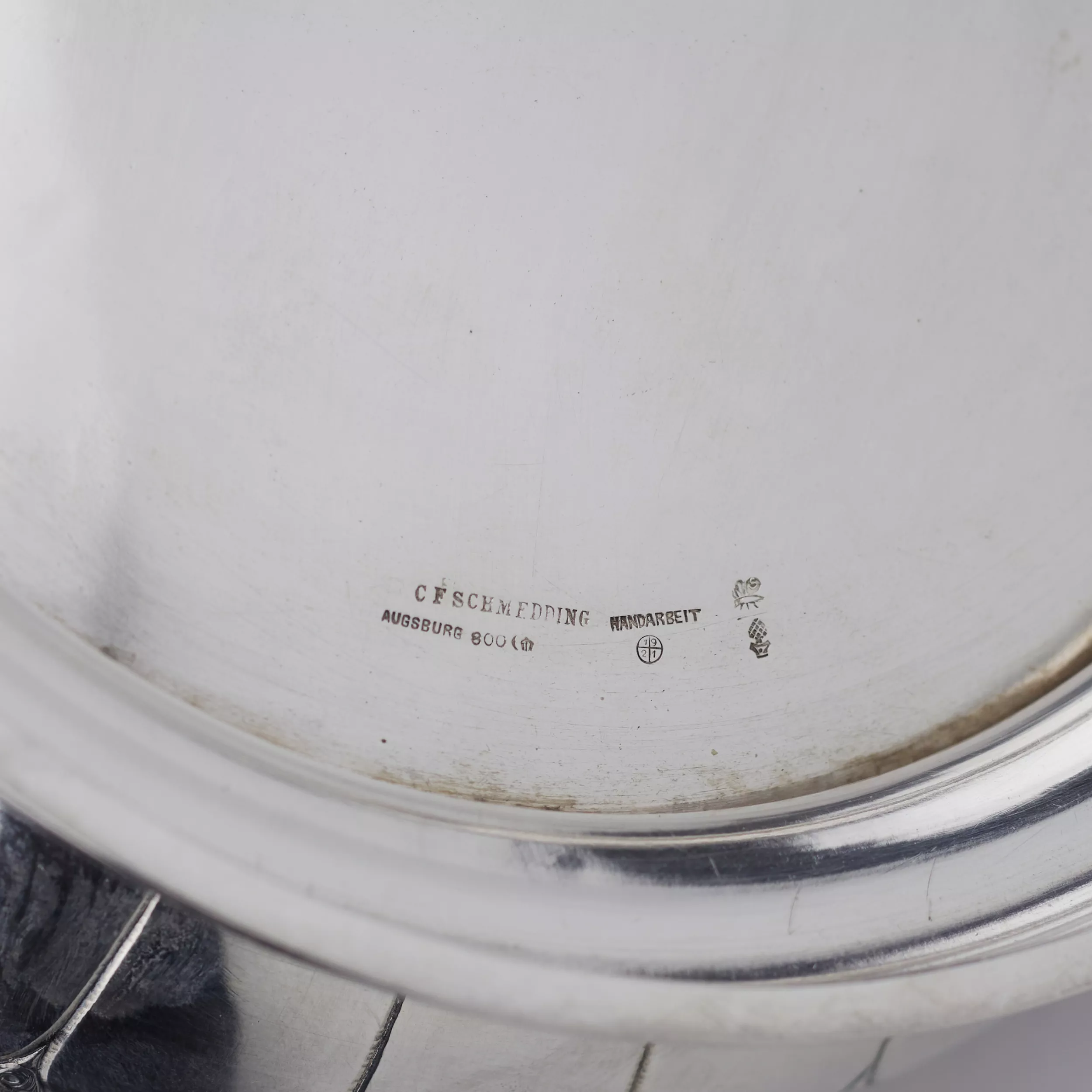
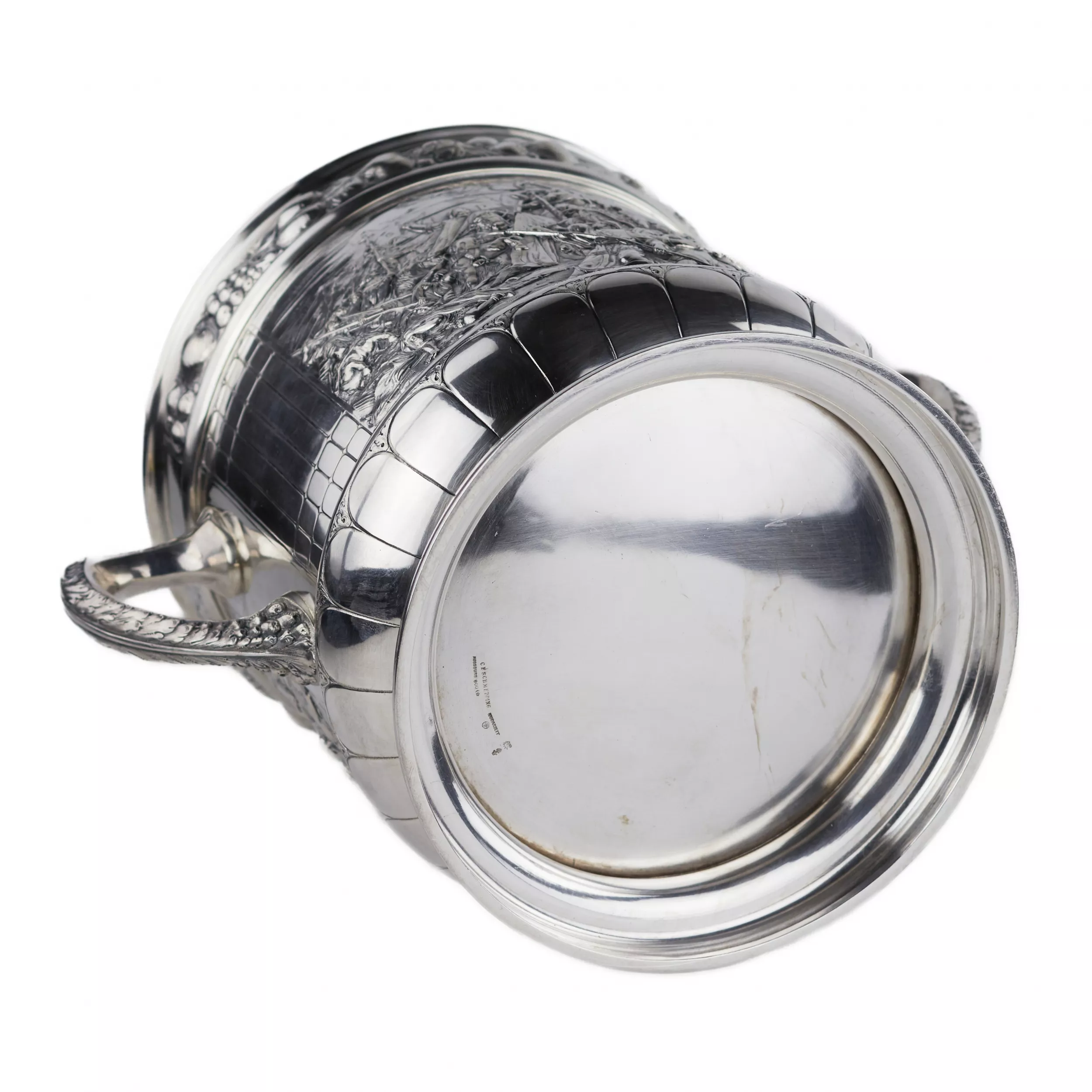
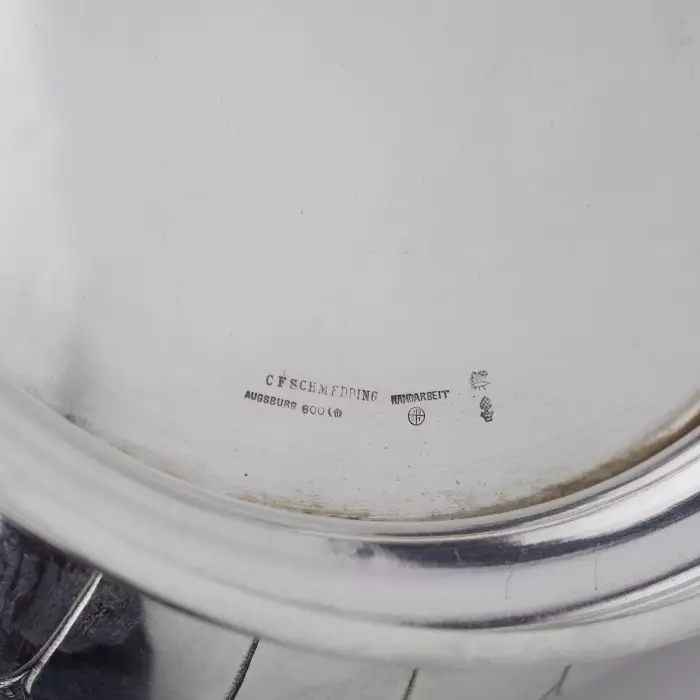
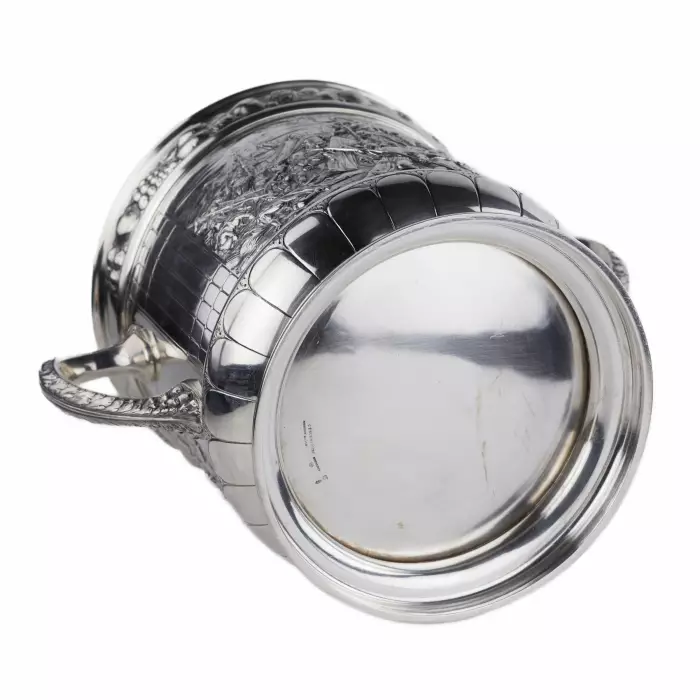
Hallmarks: Struck with the maker’s mark “C. F. SCHMEDDING”; the place name “AUGSBURG”; the German Imperial silver hallmark of crescent moon and crown; the silver standard “800”; the designation “HANDARBEIT”, indicating hand craftsmanship; and a circular workshop mark “1921”.
Dimensions: Height 28 cm. Width across handles 38 cm. Diameter 26 cm.
Weight: 2,086 g, excluding the removable liner.
Condition: Good collector’s condition.
Provenance:
For more than five centuries, Augsburg was one of Europe’s foremost centres of artistic silver production. From the fifteenth century onwards, the city developed one of the most highly regarded traditions of goldsmiths’ and silversmiths’ work in the Holy Roman Empire, supplying princely courts, royal residences, and major European collections of decorative art. During the late nineteenth century, at the height of Historicism, Augsburg workshops experienced a renewed period of artistic prosperity, drawing inspiration from Renaissance and Baroque forms as well as from academic history painting. It was in this context that elaborate serving vessels, ceremonial cups, wine coolers, and presentation pieces were created for aristocratic interiors, private clubs, grand hotels, and public institutions.
A defining feature of German Historicism was its engagement with national history and monumental historical painting. Following the unification of Germany in 1871, subjects associated with the origins of German identity and statehood acquired particular cultural significance. Among the most prominent was the Battle of the Teutoburg Forest, fought in AD 9, when an alliance of Germanic tribes led by Arminius destroyed three Roman legions commanded by Publius Quinctilius Varus. In nineteenth-century German culture, the victory came to symbolise freedom and national unity, and was repeatedly represented in history painting, monumental sculpture, graphic art, and the decorative arts. Scenes depicting conflicts between European knights and Saracen forces were likewise popular, reflecting the Romantic fascination with the Middle Ages and the Crusades.
The inscription “nach Rethel” refers to compositions by the distinguished German history painter Alfred Rethel (1816–1859), whose work exerted a profound influence on the development of national historical painting in Germany. The inscription “nach Fr. Gunkel” identifies the German artist Friedrich Gunkel (1819–1876), creator of the monumental painting “Die Hermannsschlacht”, executed between 1862 and 1864 for the Maximilianeum in Munich. The composition became one of the best-known visual interpretations of Arminius’s victory over the Roman legions and was widely disseminated through engravings, reproductions, and works of decorative art during the second half of the nineteenth century. The adaptation of paintings by Rethel and Gunkel into chased silver reliefs accords fully with the practices of leading German silver workshops of the Historicist period, which frequently translated celebrated works of national history painting into precious metal.
The firm of C. F. Schmedding ranked among the notable producers of artistic silver in Augsburg during this period. Its works were characterised by finely executed hand chasing, complex sculptural modelling, and a consistently high standard of craftsmanship. The present wine cooler is a distinguished example of late Historicist German silver, combining accomplished metalwork with an ambitious academic historical programme. Comparable objects are preserved in museum and private collections and are regarded as significant examples of German decorative art from the turn of the twentieth century.
The piece is in good collector’s condition. The silver body retains the crispness of the chasing and its original surface texture. The removable metal liner displays minor localised distortions. The gilding to its interior is fully preserved. Signs of age and use are consistent with the date and historical function of the object.
The condition report is provided for informational purposes only.
It is not comprehensive and may not reflect all defects, restorations, alterations, or adaptations, as Antiqon does not perform professional conservation-level assessments. The information is based on a qualified, yet subjective, evaluation by our specialists.Before purchasing, we recommend consultation with an independent expert.Please also consult our Terms and conditions and Glossary A-Z, which contain important information on lot characteristics and sale conditions.