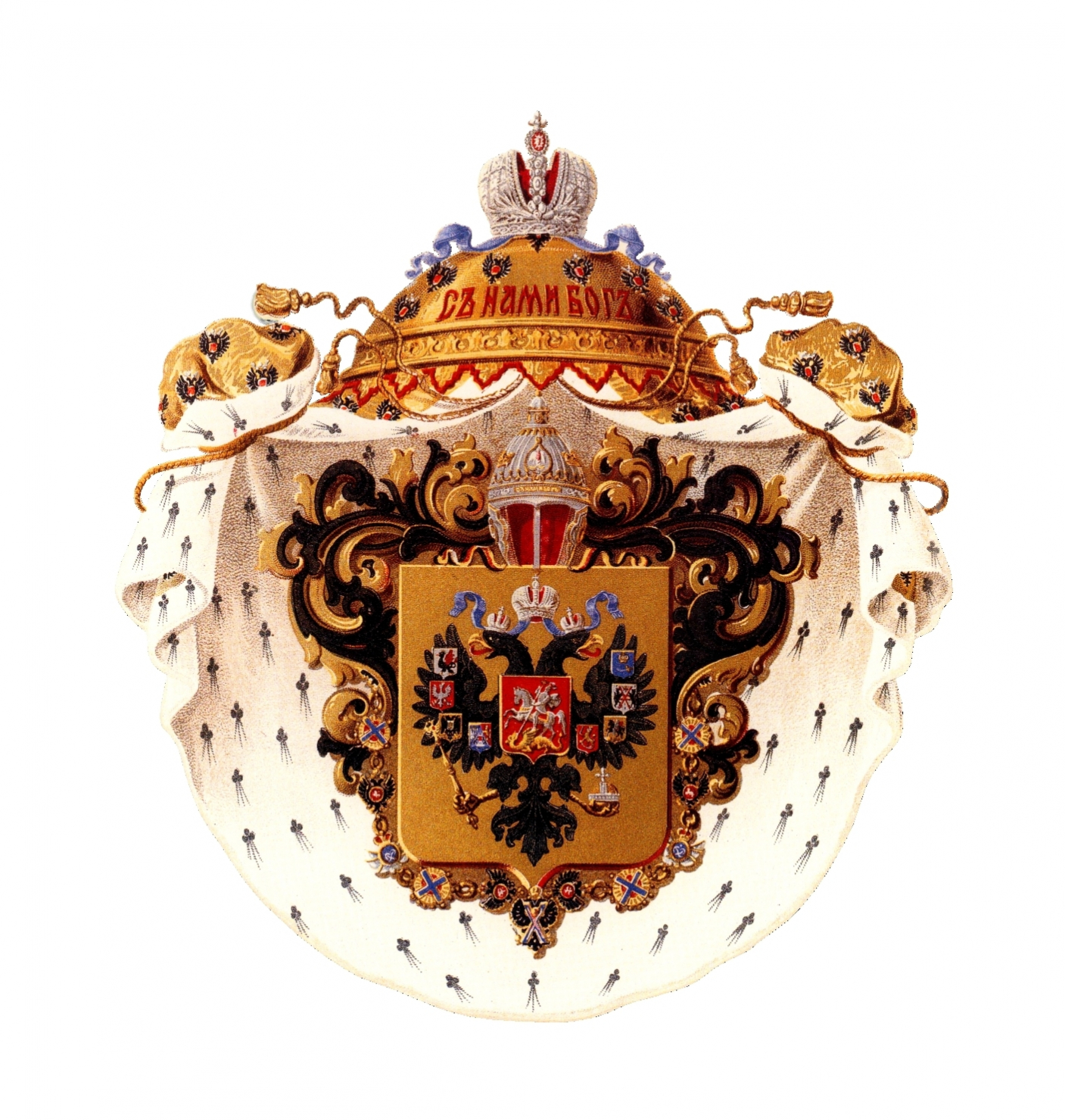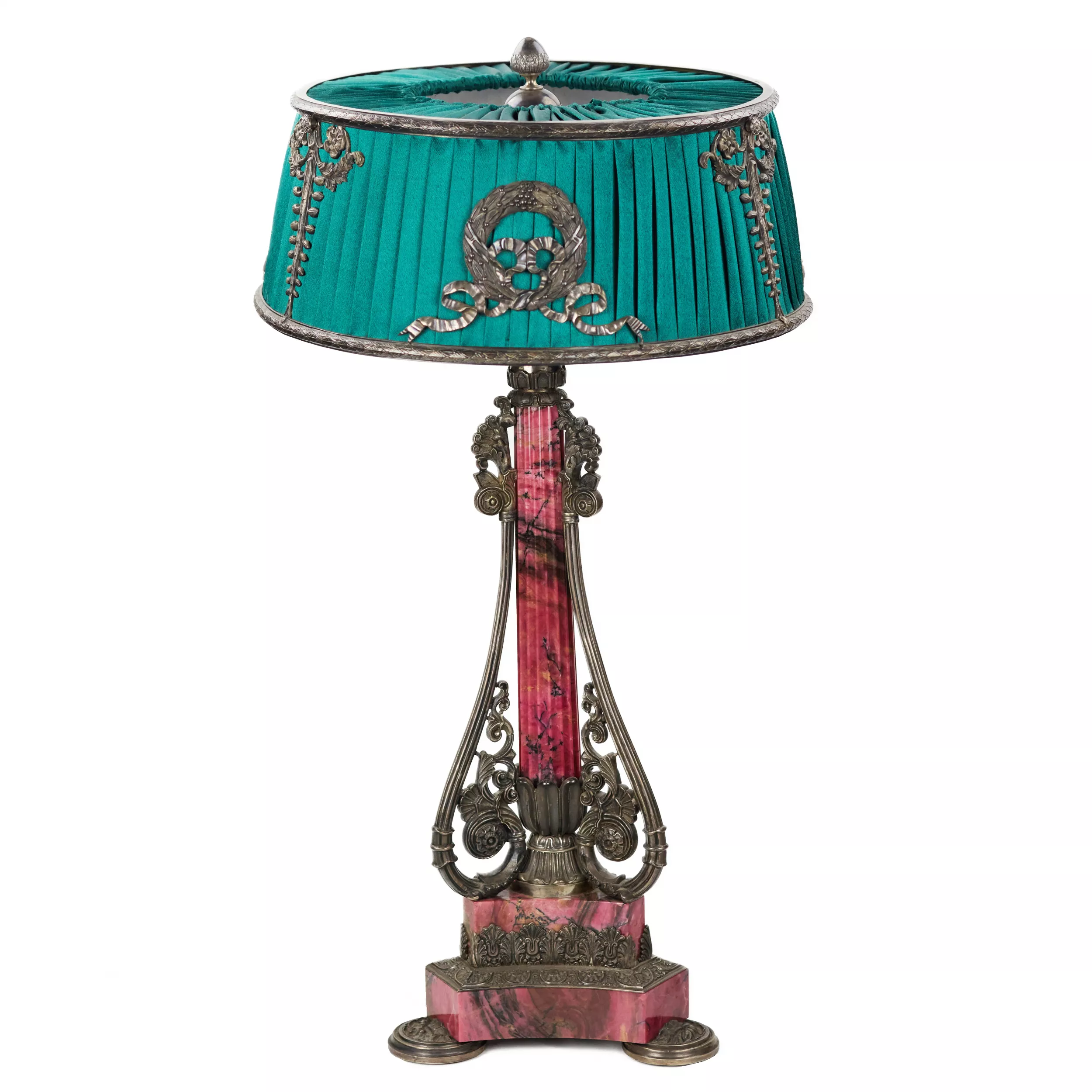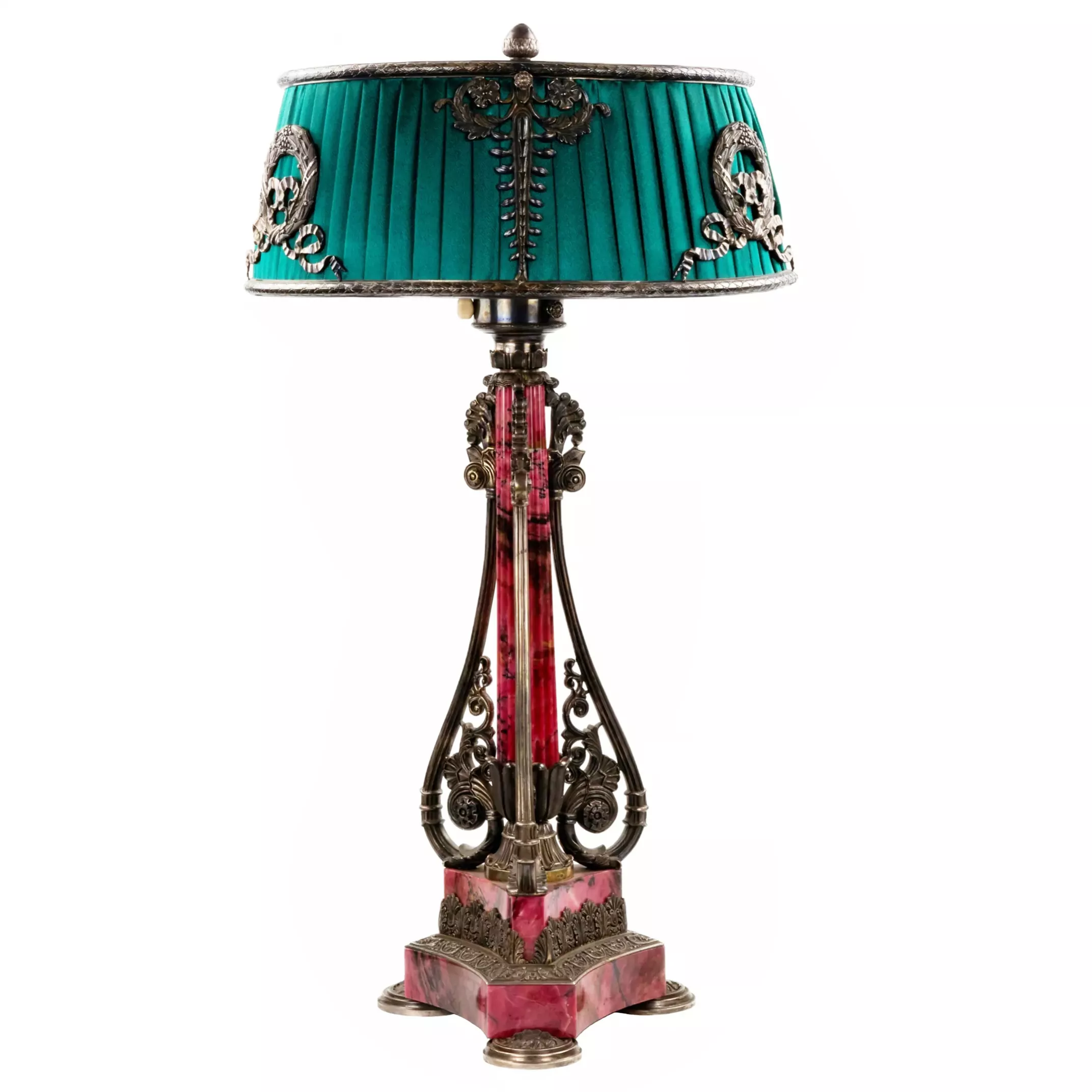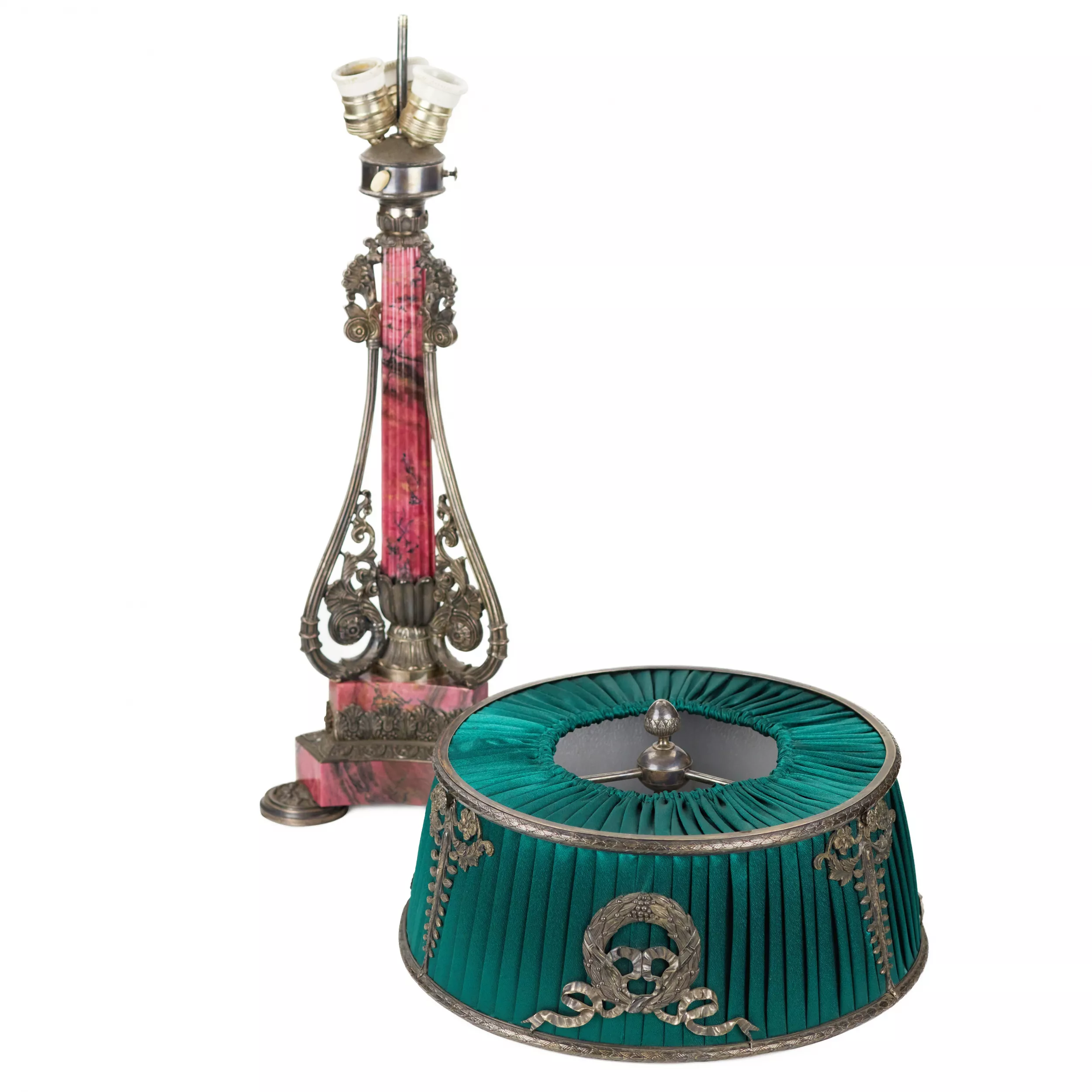
LARGE SILVER AND RHODONITE TABLE LAMP. WORKSHOP OF NEDMIROV-KOLODKIN. MOSCOW, CIRCA 1890
Antiqon consultant will contact you within one business day after receiving your request.
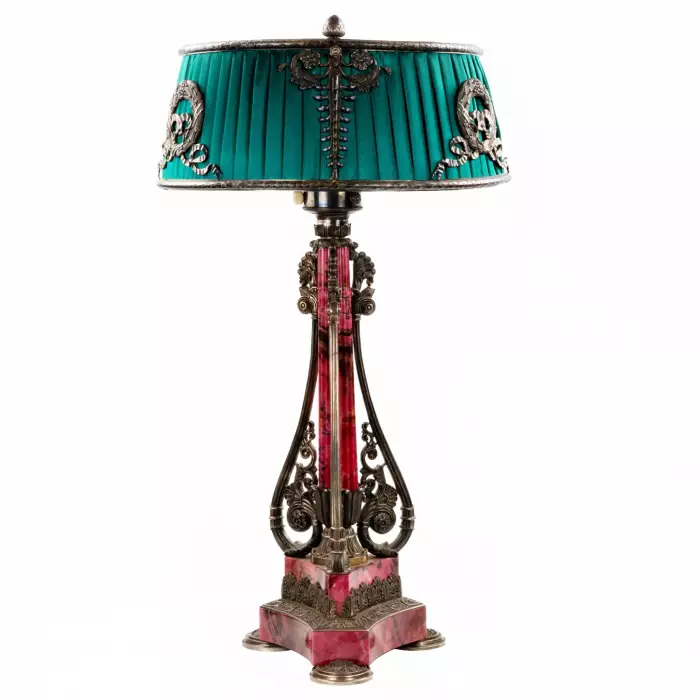
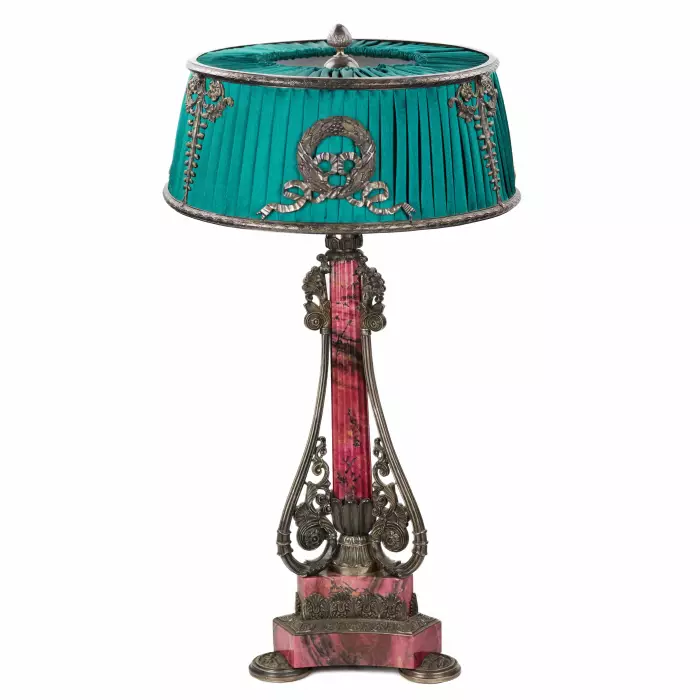
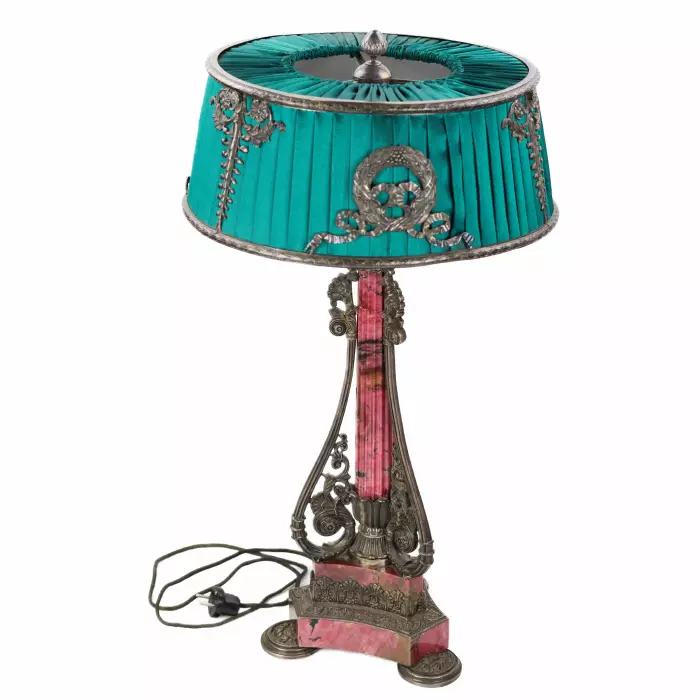
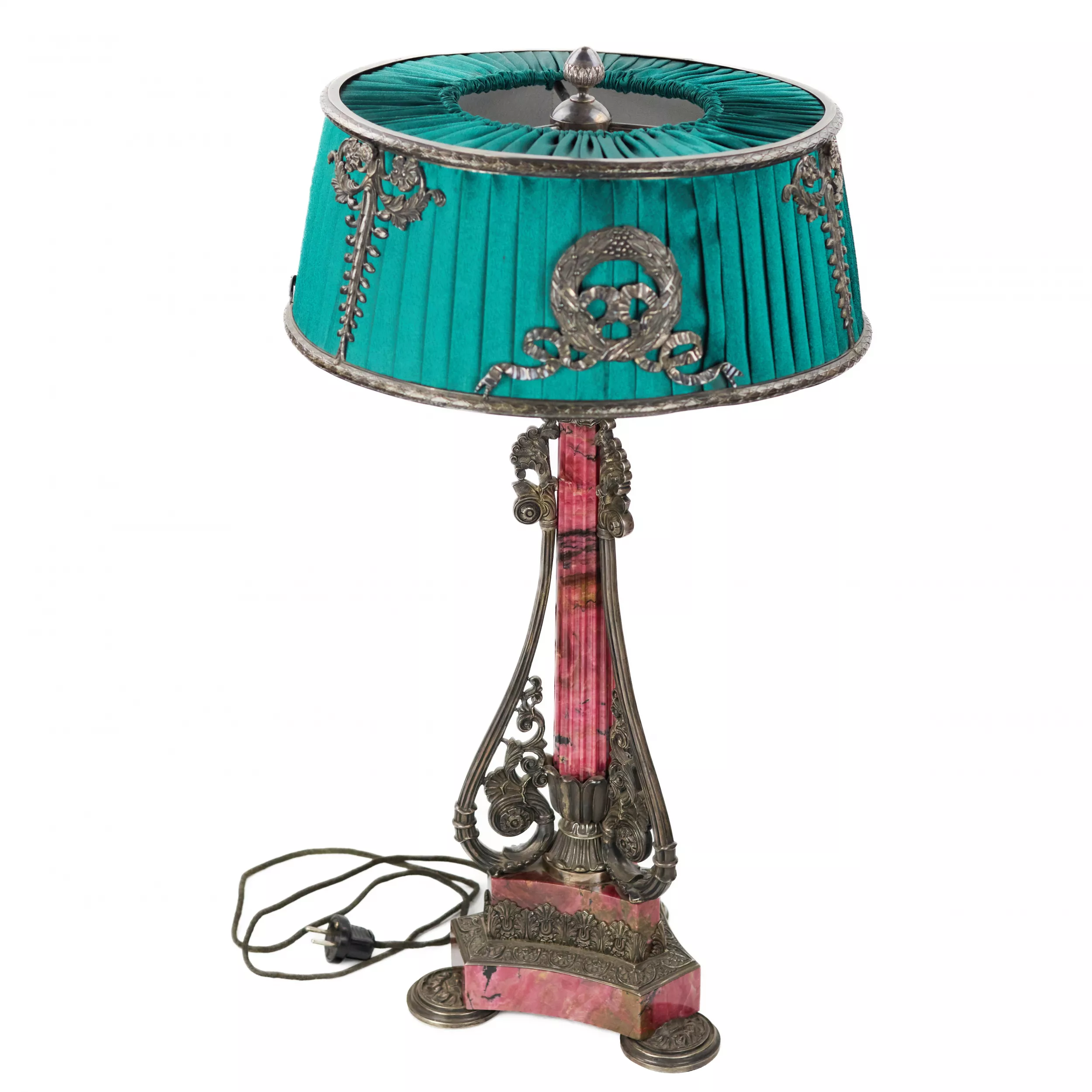
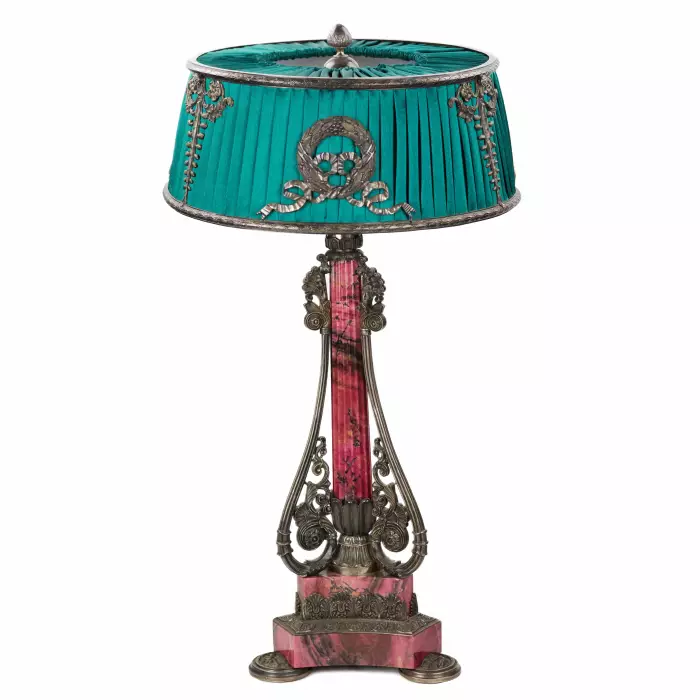
A large table lamp made in the Moscow workshop of Nedmirov-Kolodkin circa 1890, representing an outstanding example of Russian decorative arts of the Historicist period and embodying the aesthetic of the Russian Neo-Empire style. The object combines accomplished silversmithing with the exceptional decorative qualities of Ural rhodonite, one of the most prestigious Russian hardstones employed in the late nineteenth century.
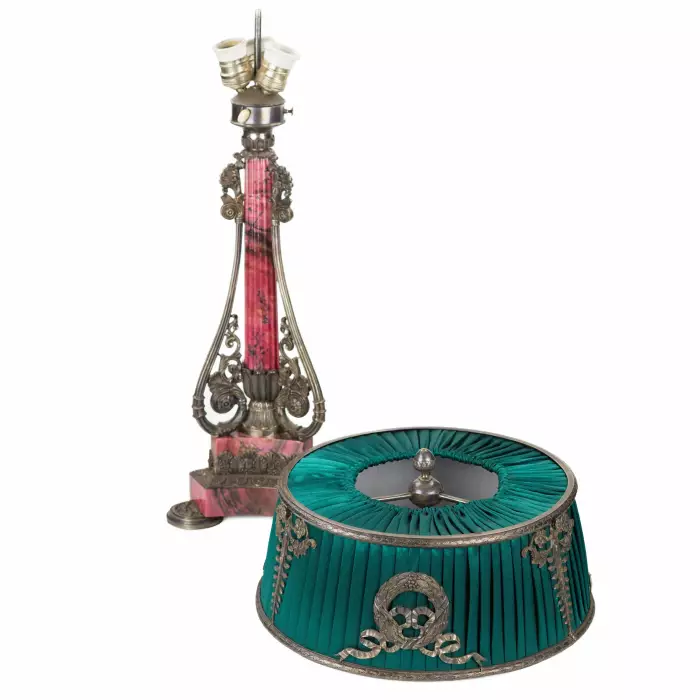
The tall triangular column, fashioned from richly coloured pink rhodonite, rises from a substantial architectural base lavishly ornamented with cast silver mounts. The composition is enriched with acanthus leaves, cartouches, scrolls, garlands and other ornamental motifs characteristic of the workshop’s most distinguished productions. The exceptional quality of the casting, the meticulous treatment of detail and the pronounced modelling of the relief testify to the high standard of workmanship associated with suppliers to the Imperial Court.
The shade, formed from deeply pleated emerald-green fabric, completes the architecturally balanced silhouette of the lamp. It is embellished with silver wreaths, ribbons and ornamental elements that continue the decorative vocabulary of the late nineteenth-century Russian Neo-Empire style. The contrast between the silver, the saturated tones of the rhodonite and the dark green textile produces a striking decorative effect, establishing the lamp as a commanding focal point within an interior.
Lamps of this type were intended for prestigious studies, palatial interiors and the reception rooms of affluent town residences, where the combination of silver and Ural rhodonite served as an expression of status and luxury. The object also reflects the characteristic late nineteenth-century Russian tendency to unite indigenous materials with the formal language of European decorative traditions.
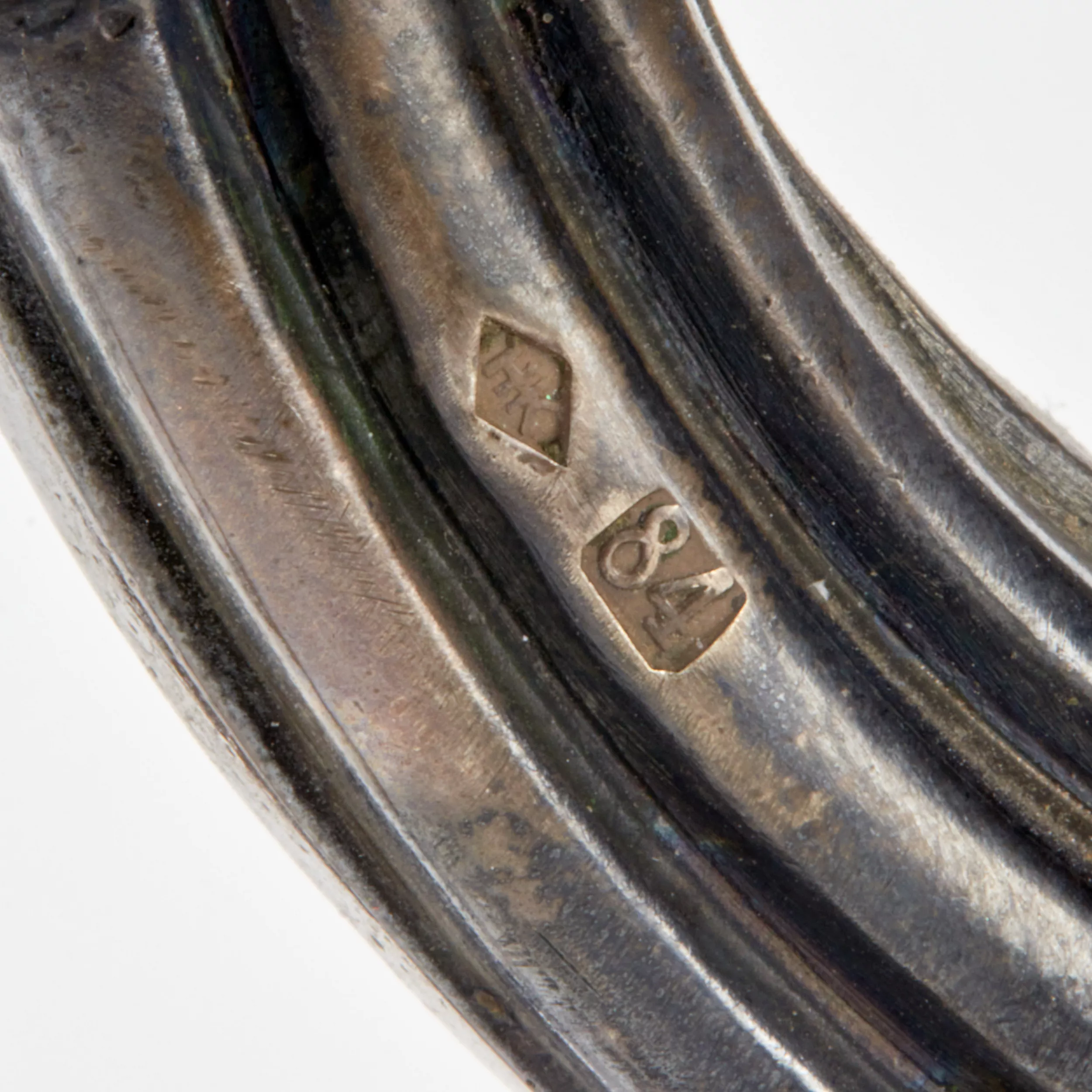
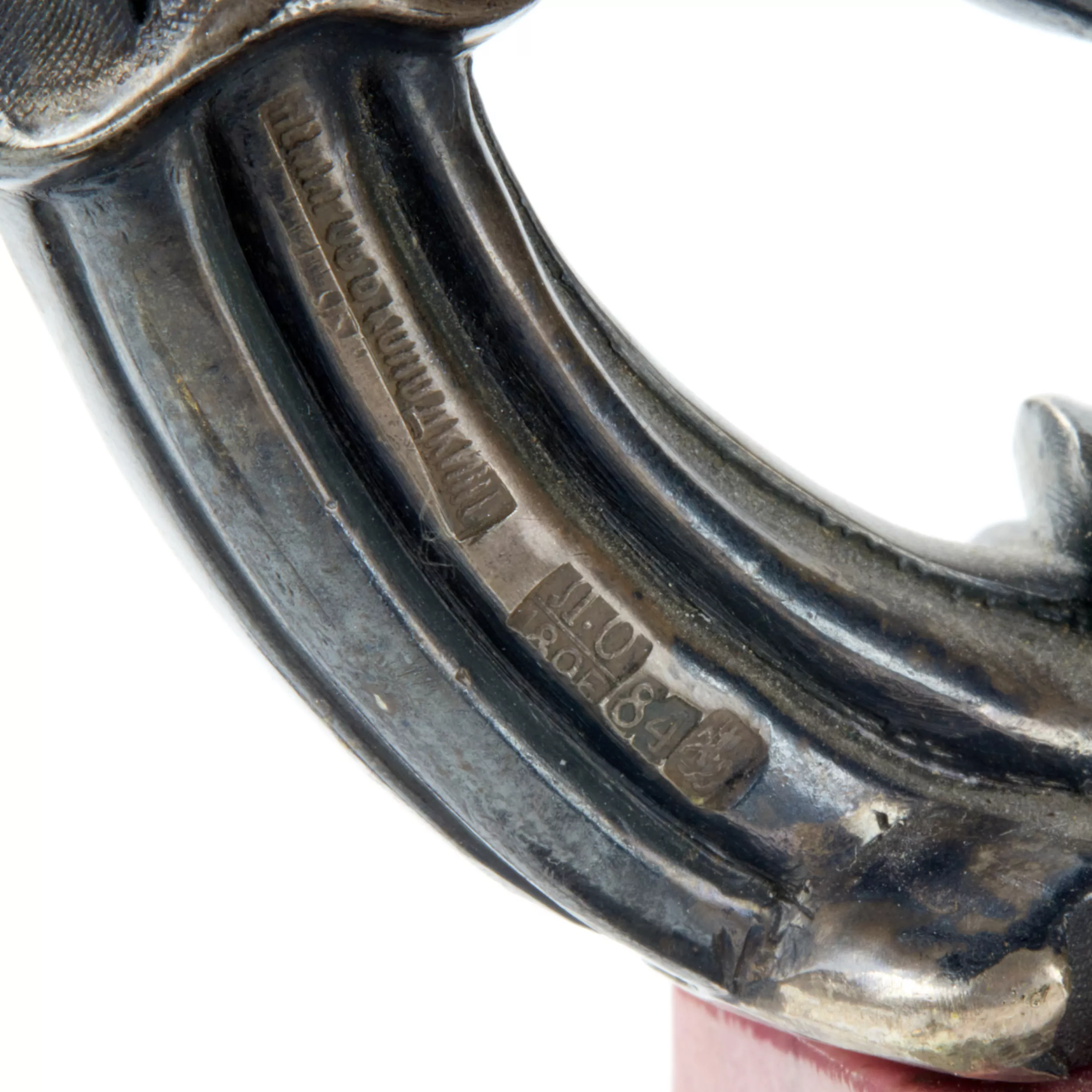
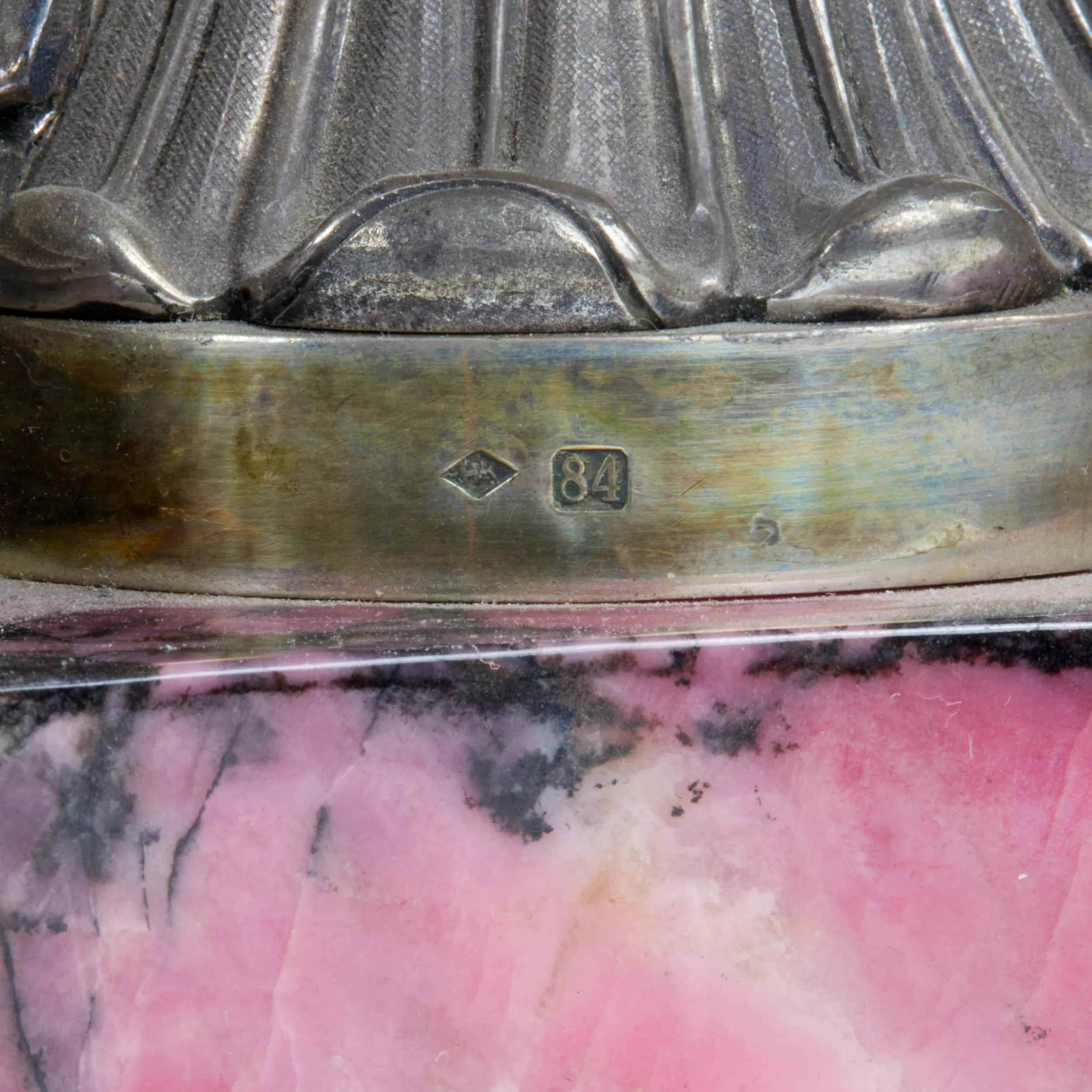
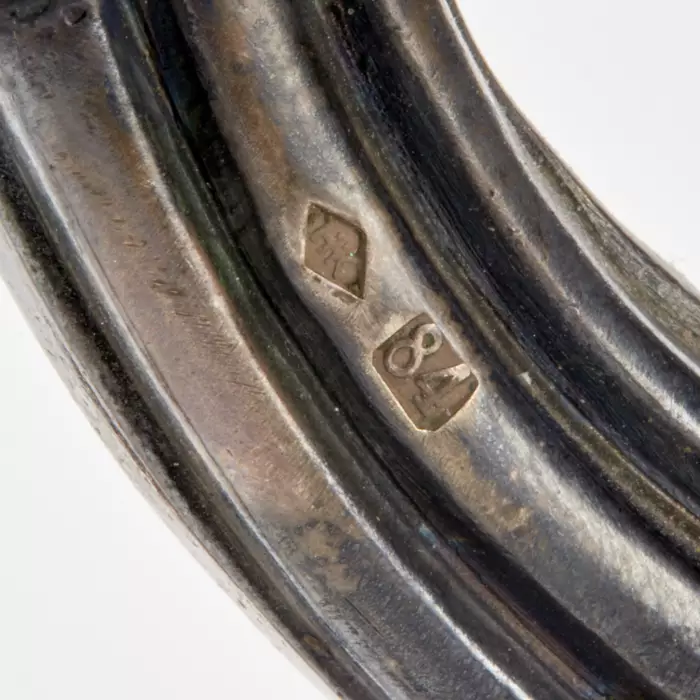
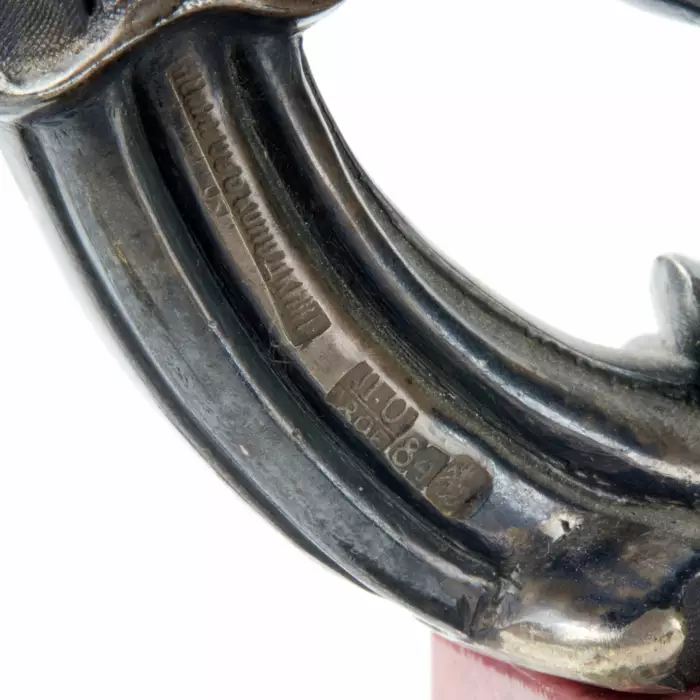
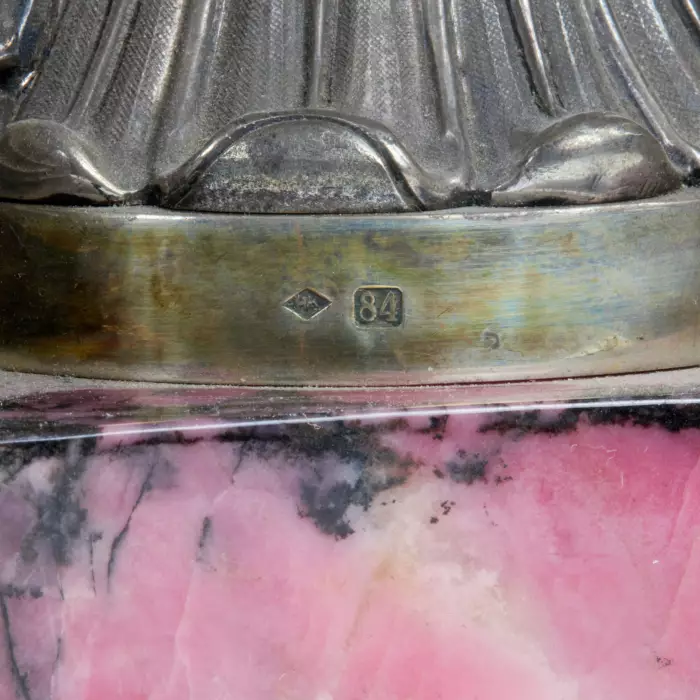
Hallmarks: Full Cyrillic maker’s mark reading “Nedmirov-Kolodkin” with the designation “Supplier to the Court of His Imperial Majesty”. Small lozenge-shaped workshop mark “NNK”. Assay mark “L.O.” above the date “1890”, attributed to an unidentified Moscow assay master active between 1890 and 1895. “84” silver standard mark. Moscow city assay mark depicting Saint George facing left and slaying the dragon.
Dimensions: Height: 67 cm. Diameter of shade: 38 cm.
Weight: Available upon request.
Condition: Good condition. Natural patination to the silver. Minimal signs of age consistent with the period of manufacture. The rhodonite is free from cracks and losses. The shade is a later replacement and is in excellent condition.
Provenance: Private European collection.
he Moscow firm of Nedmirov-Kolodkin ranked among the most distinguished Russian silver workshops of the final quarter of the nineteenth century, supplying the aristocracy, senior officials and members of the Imperial Court. The title “Supplier to the Court of His Imperial Majesty” signified the highest standards of workmanship, consistent quality and official recognition. The workshop’s productions were notable for their sophisticated combination of silversmithing, sculptural casting and the use of rare decorative materials.
The late nineteenth century marked a particularly important period in the development of Russian lapidary art. Ural hardstones, including rhodonite, malachite, jasper and lapis lazuli, were extensively employed in the creation of prestigious objects for the interior. Rhodonite, quarried principally in the Urals, was valued for its rich pink colour and distinctive natural veining. It became especially prominent in palace decoration and in major works of Russian decorative art. Important examples of Russian hardstone carving are today preserved in the State Hermitage Museum, the State Historical Museum, the Moscow Kremlin Museums and the State Russian Museum, where such objects are regarded as an essential part of Russia’s artistic heritage.
During the second half of the nineteenth century, the Russian Neo-Empire style emerged as a renewed interpretation of the Empire tradition of the reign of Alexander I, enriched by the ornamental vocabulary of Historicism. Architectural forms, acanthus leaves, wreaths, garlands, cartouches and classical motifs created the ceremonial visual language characteristic of prestigious interior objects. Table lamps of this quality were not merely functional lighting devices, but autonomous works of decorative art that reflected the social standing and cultivated taste of their owners.
A defining feature of Nedmirov-Kolodkin’s production was the harmonious combination of cast silver ornament with substantial elements of coloured hardstone. Such works required the coordinated expertise of silversmiths, chasers, founders and lapidaries, transforming each object into a complex synthesis of the decorative arts. Archival documents attest to the considerable value of comparable works at the time of their creation. According to historical sources, in 1897 a similar silver and rhodonite table lamp was commissioned from the Nedmirov-Kolodkin firm and sold for 1,500 roubles. For the late nineteenth century, this represented an exceptionally substantial sum, consistent with objects intended for the wealthiest members of the Russian aristocracy, senior state officials and the Imperial Court. Such commissions demonstrate the workshop’s artistic distinction, exceptional reputation and status among the leading Russian makers of artistic silver. Large-scale interior works by Nedmirov-Kolodkin are considerably rarer today than table silver or ecclesiastical objects, making lamps of this type especially desirable among collectors of Russian silver, Russian hardstone carving and museum-quality decorative arts.
The object is in good collectible condition. The silver retains the definition of its relief decoration and a fine natural patina. The rhodonite is free from cracks and losses. The shade is a later replacement and remains in excellent condition.
The condition report is provided for informational purposes only.
It is not comprehensive and may not reflect all defects, restorations, alterations, or adaptations, as Antiqon does not perform professional conservation-level assessments. The information is based on a qualified, yet subjective, evaluation by our specialists.Before purchasing, we recommend consultation with an independent expert.Please also consult our Terms and conditions and Glossary A-Z, which contain important information on lot characteristics and sale conditions.