ICON OF THE SELECTED FEASTS OF THE MOTHER OF GOD CYCLE. PALEKH, RUSSIA, 19TH CENTURY
Antiqon consultant will contact you within one business day after receiving your request.
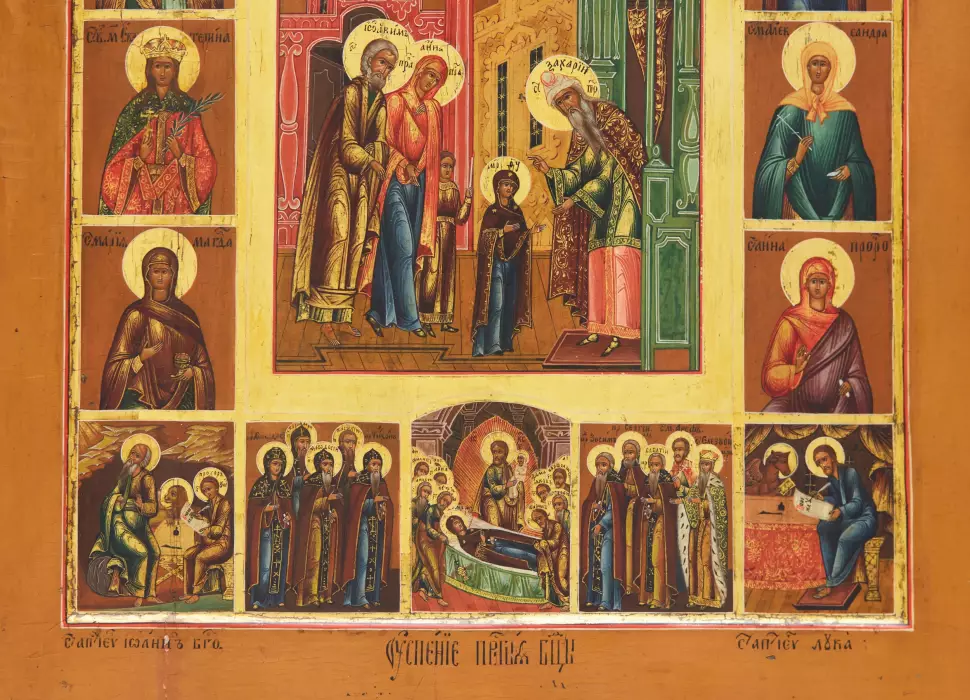
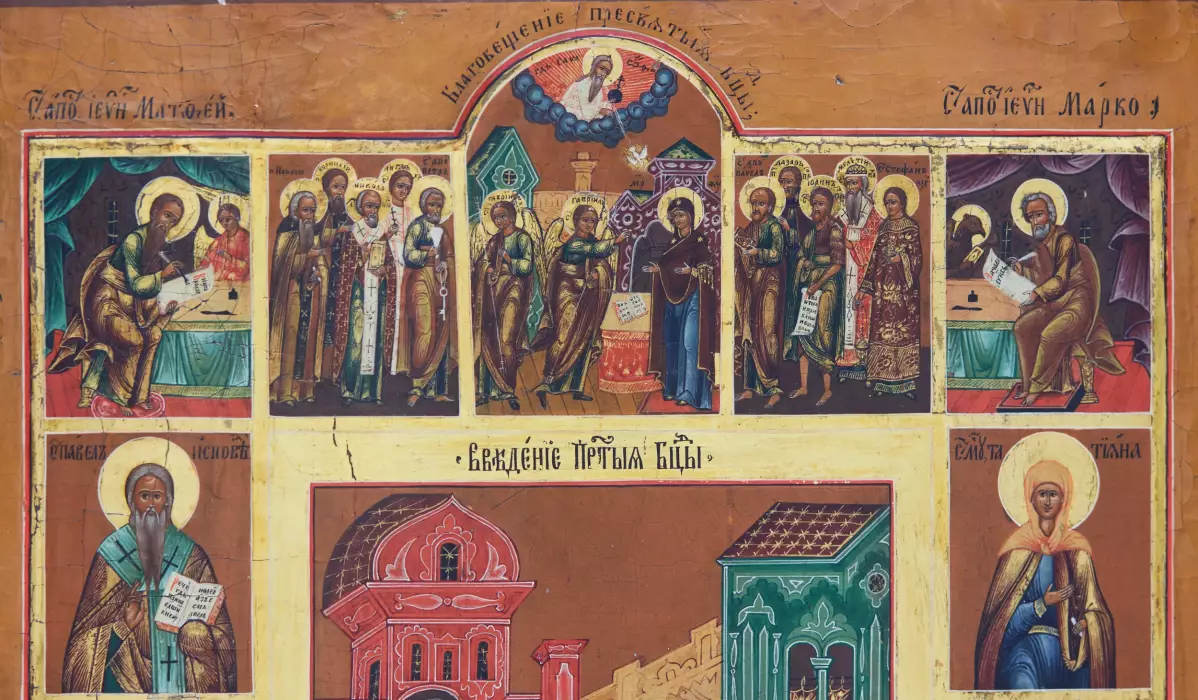
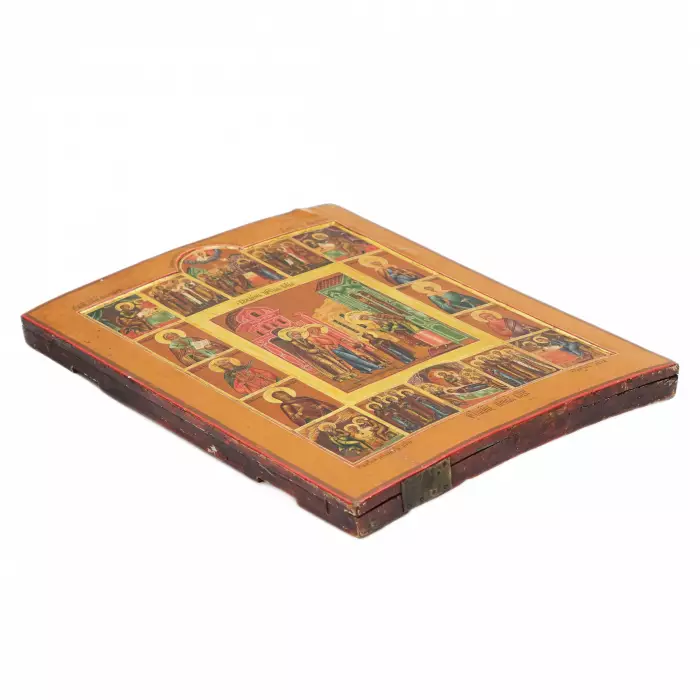
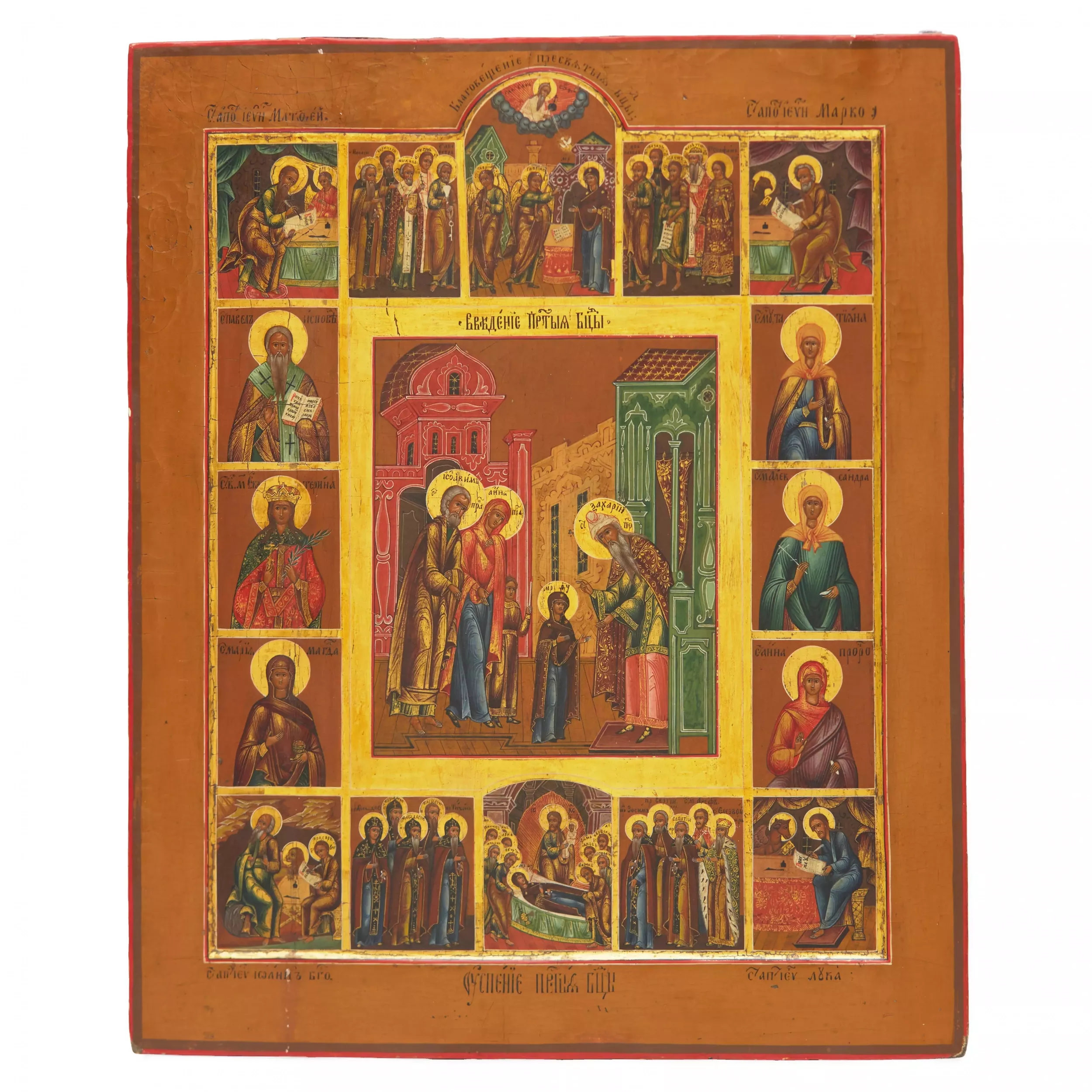
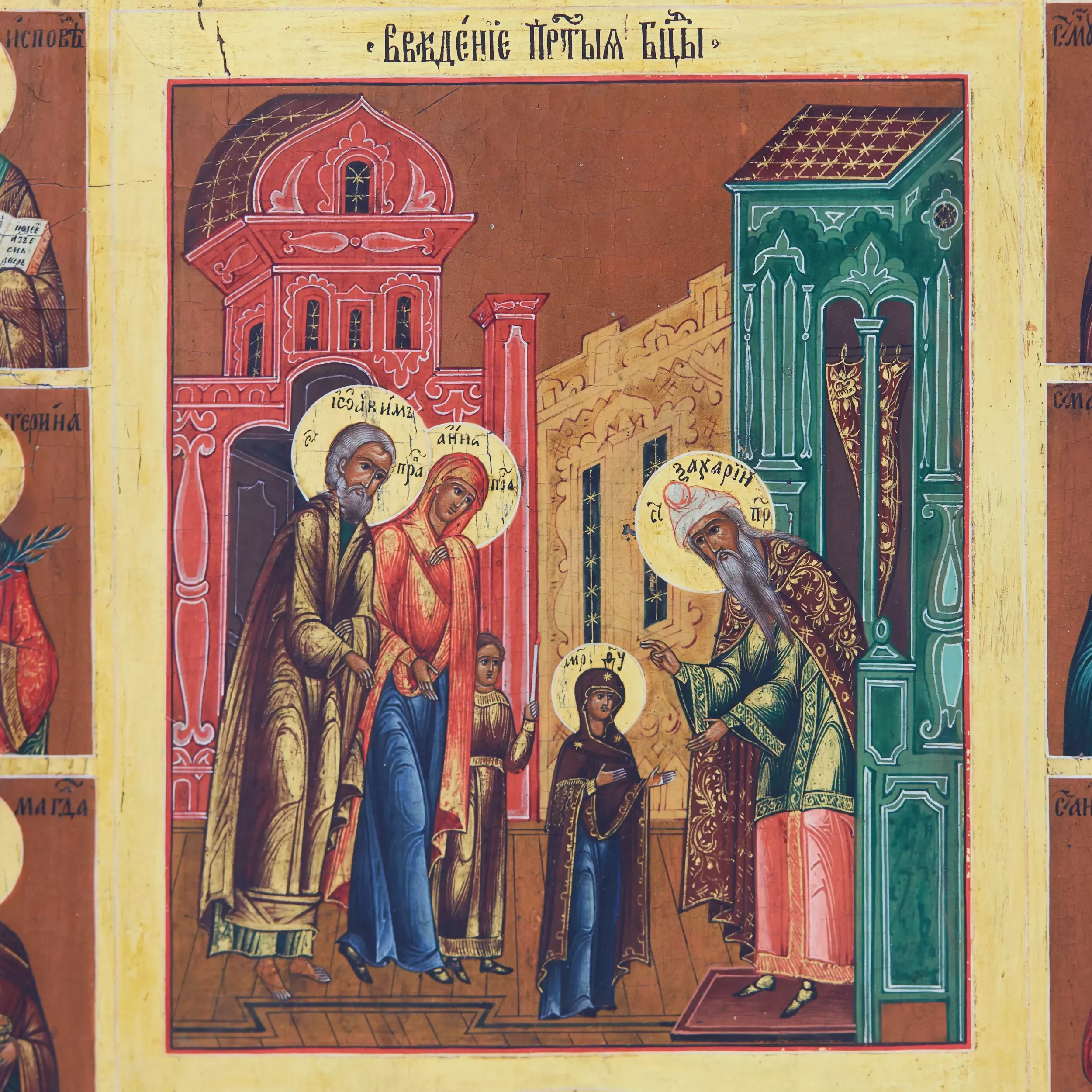
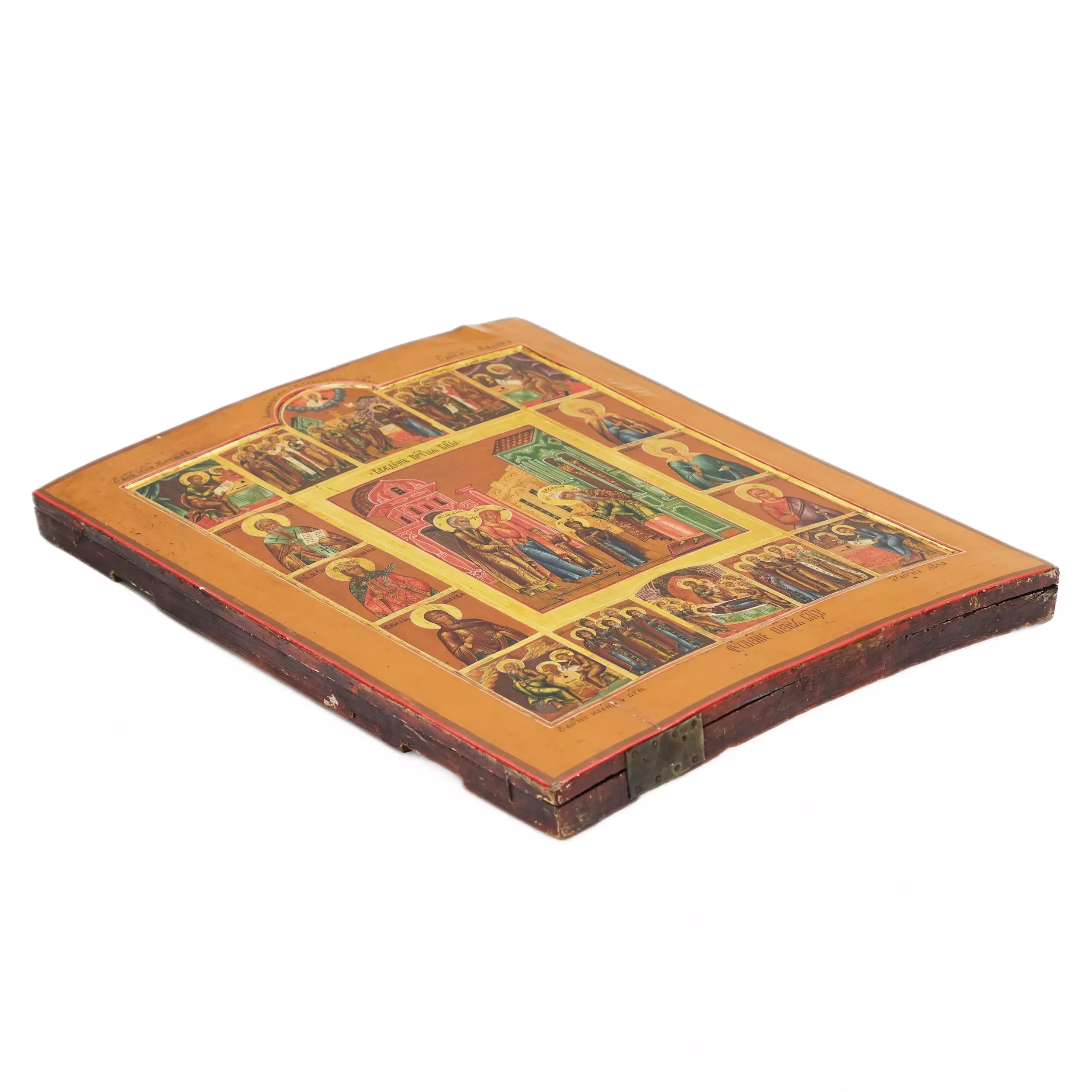
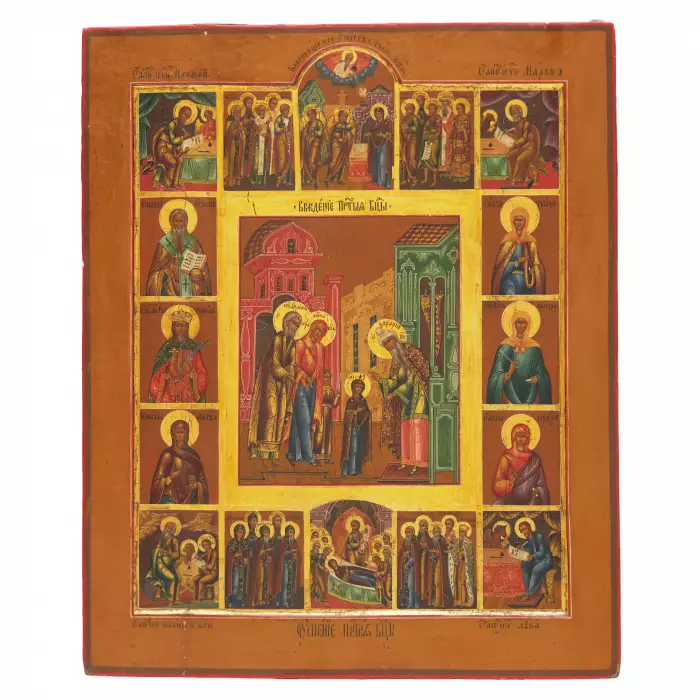
The Icon of the Selected Feasts of the Mother of God Cycle, created by Palekh masters in the 19th century, represents a refined example of the Russian icon-painting tradition with a carefully developed theological programme. The composition is arranged along a central vertical axis and is dedicated to the principal events in the earthly life of the Most Holy Theotokos, from the Annunciation to the Dormition.
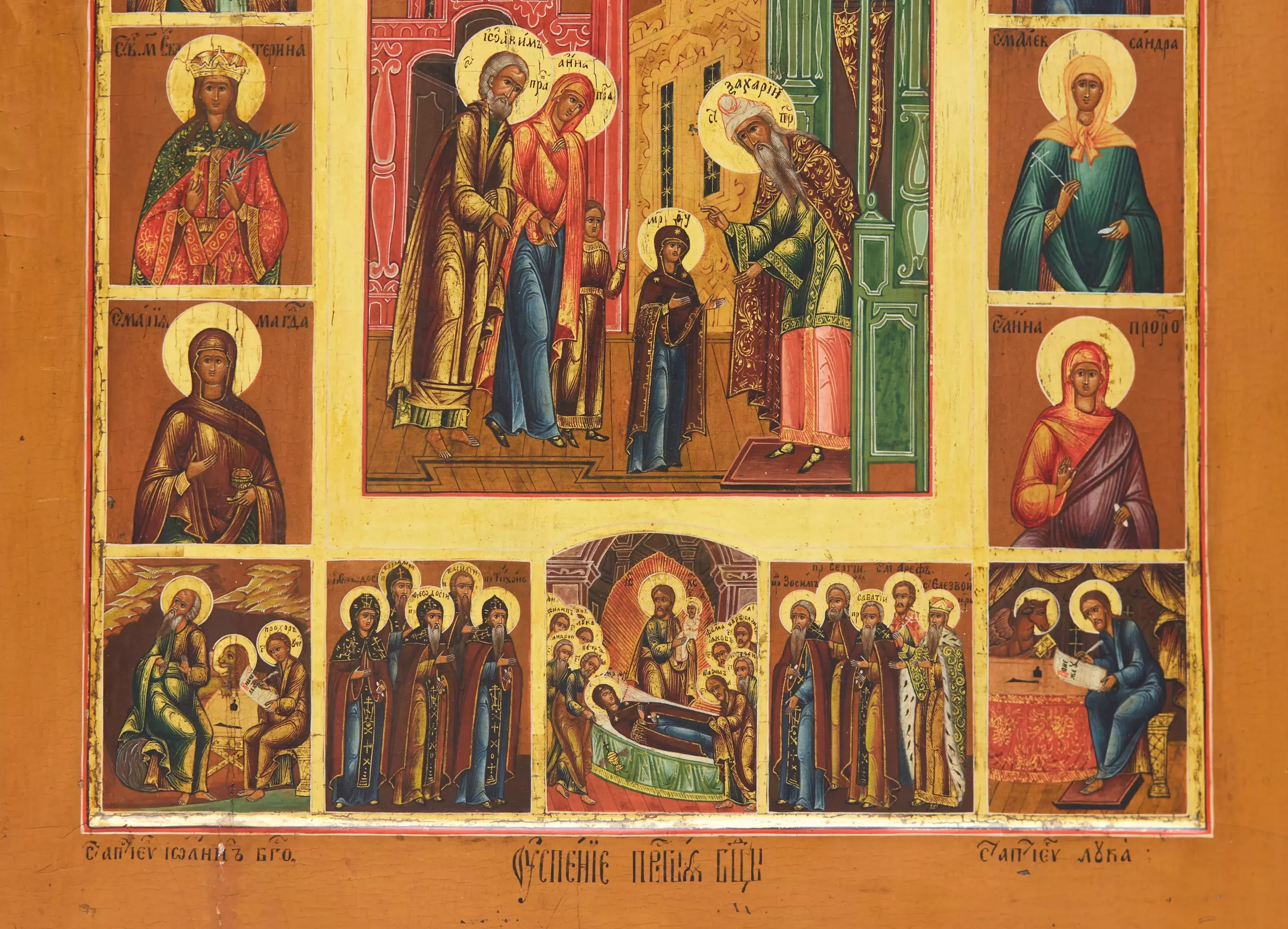
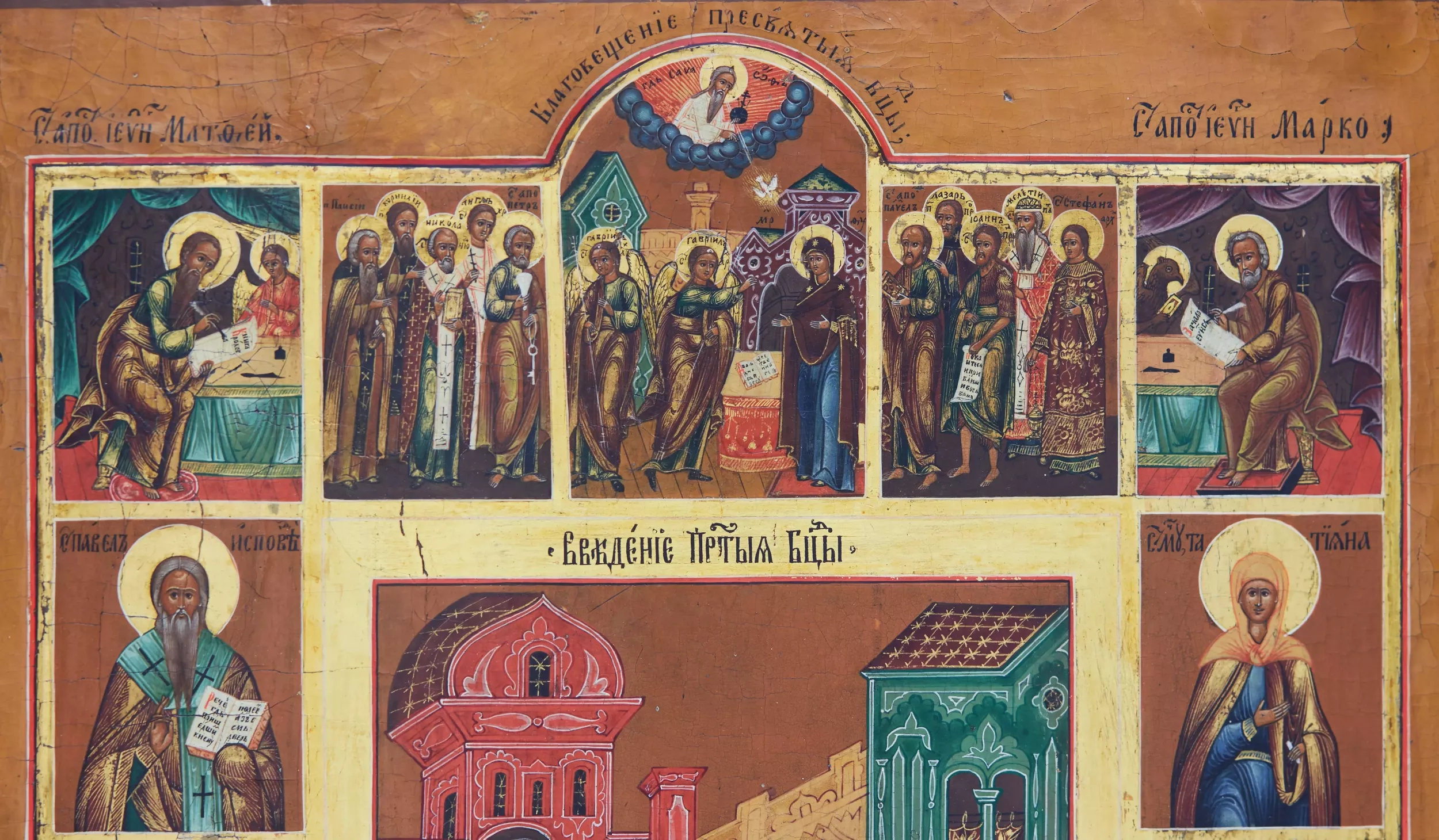
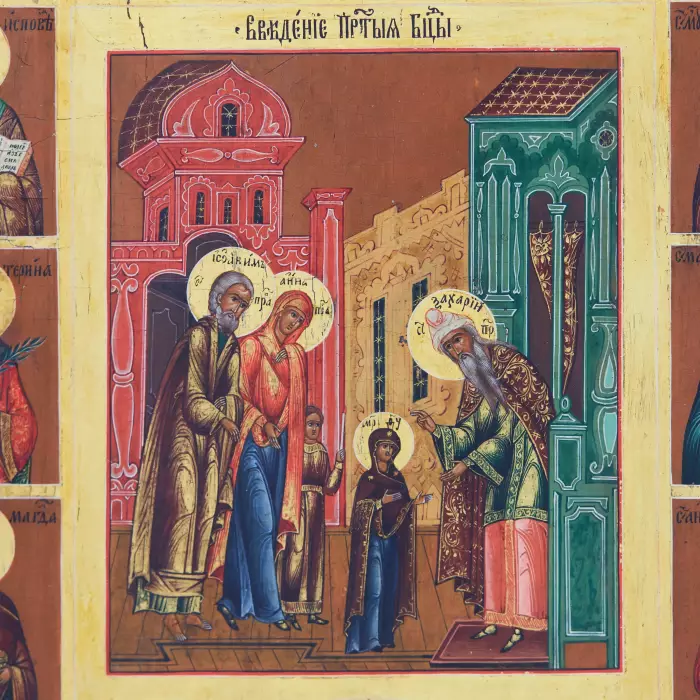
The central position is occupied by the scene of the “Presentation of the Most Holy Theotokos into the Temple”. At the centre of the composition is the three-year-old Virgin Mary, brought by her parents, Saints Joachim and Anna, to the Temple of Jerusalem in fulfilment of their vow to God. The Virgin is received by the High Priest Zacharias, the future father of Saint John the Baptist, depicted with a halo as a righteous saint. Behind him are shown the gates of the Holy of Holies, symbolising Mary’s divine election and her unique role in the history of salvation.
The upper section of the icon features the “Annunciation of the Most Holy Theotokos”, depicting the appearance of the Archangel Gabriel to the Virgin Mary and the proclamation of the forthcoming Birth of the Saviour. The lower register is occupied by the composition of the “Dormition of the Mother of God”, completing the Marian cycle and expressing the theme of the earthly journey and heavenly glorification of the Theotokos.
The corners of the feast compositions contain depictions of the Four Evangelists, emphasising the connection of the represented events with Sacred Tradition and the Gospel narrative. Surrounding the central scene are selected saints: Saint Tatiana, Saint Alexandra, Saint Anna, Apostle Paul, Saint Catherine the Great Martyr and Saint Mary Magdalene Equal-to-the-Apostles.
A distinctive feature of the iconographic programme is the predominance of female saints among the intercessory figures, suggesting that the icon may have served as a family devotional image, possibly associated with the spiritual protection of the female members of the household and the idea of initiation into the Orthodox faith.
The work was executed in the traditions of the Palekh school of icon painting, renowned for its miniature-like precision, delicate drawing, complex multi-figure compositions and exceptional decorative refinement.
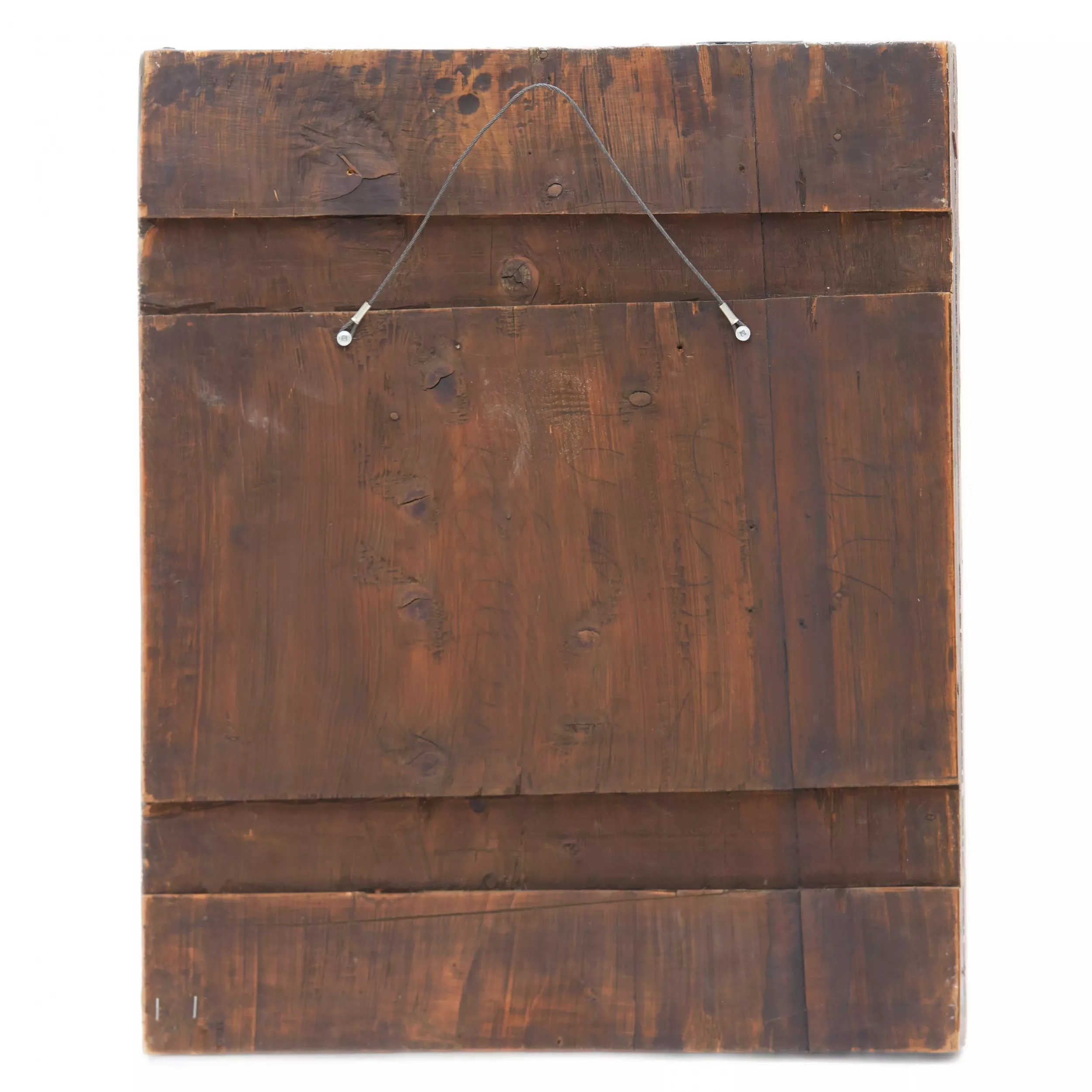
Material: Wood, levkas, tempera.
Dimensions: Height: 53.5 cm. Width: 44 cm.
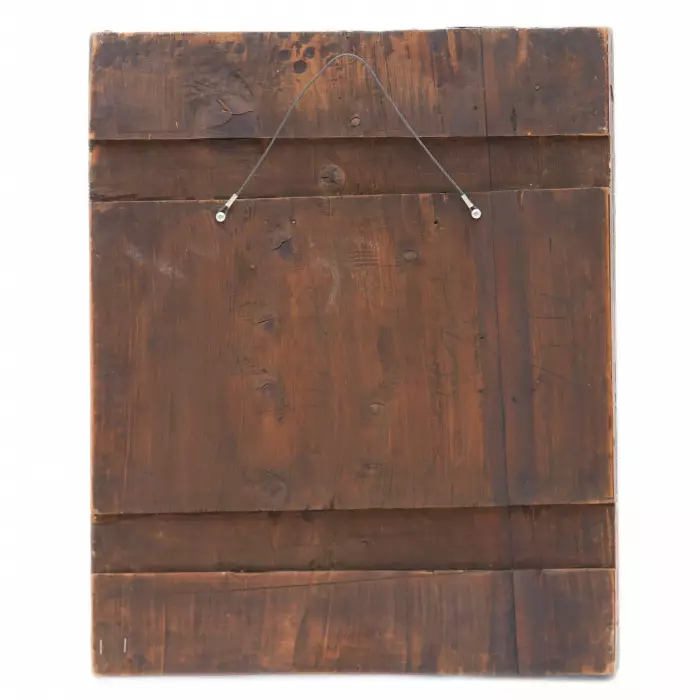
Condition: Good condition. Minor craquelure of the painted surface and natural signs of age consistent with the period of creation and the technique of execution.
The Palekh school of icon painting occupies a significant place in the history of Russian ecclesiastical art of the 18th and 19th centuries. Established in the village of Palekh in the Vladimir Governorate, it became one of the most important centres of Russian icon painting alongside Mstyora and Kholuy. Palekh masters preserved the traditions of Old Russian icon painting, originating from the artistic heritage of the Moscow and Stroganov schools of the 16th and 17th centuries, combining strict Orthodox canonicity with exceptional decorative sophistication.
A 19th-century Palekh icon is distinguished by refined miniature painting, elegant elongated proportions of figures, a harmonious colour palette, intricate architectural elements and meticulous attention to the smallest details. Multi-part family icons depicting selected feasts and patron saints became particularly widespread. Such works served not only as objects of religious devotion but also as reflections of a family’s spiritual history.
The cycle dedicated to the Mother of God represents one of the most important themes in Orthodox iconography. The scenes of the Annunciation, Presentation into the Temple and Dormition reveal the spiritual journey of the Virgin Mary from her dedication to God to the completion of her earthly life and her glorification as the Mother of God and heavenly intercessor. The combination of these scenes within a single composition emphasises the continuity of sacred history and the special significance of the image of the Theotokos in Orthodox tradition.
The inclusion of selected saints within the composition was a characteristic feature of Russian commissioned and family icons. Such works often reflected the names of family members or particularly venerated patron saints. The predominance of female saints surrounding the central Marian subject gives the icon a special symbolic meaning connected with motherhood, spiritual education and the preservation of Orthodox tradition.
Today, 19th-century Palekh icons are regarded as an important part of Russian artistic heritage and are represented in museum collections as examples of outstanding craftsmanship of the Russian icon-painting school, combining theological depth, refined artistic technique and the unique aesthetics of Orthodox art.
The icon is in good condition with natural signs of age. Minor craquelure of the painted surface is present, typical for 19th-century tempera painting. The composition, colour depth and fine details characteristic of Palekh icon painting have been preserved.
The condition report is provided for informational purposes only.
It is not comprehensive and may not reflect all defects, restorations, alterations, or adaptations, as Antiqon does not perform professional conservation-level assessments. The information is based on a qualified, yet subjective, evaluation by our specialists.Before purchasing, we recommend consultation with an independent expert.Please also consult our Terms and conditions and Glossary A-Z, which contain important information on lot characteristics and sale conditions.