GOLD SNUFFBOX WITH ENAMEL. HANAU, 1810–1815 GERMANY, EARLY 19TH CENTURY
Antiqon consultant will contact you within one business day after receiving your request.
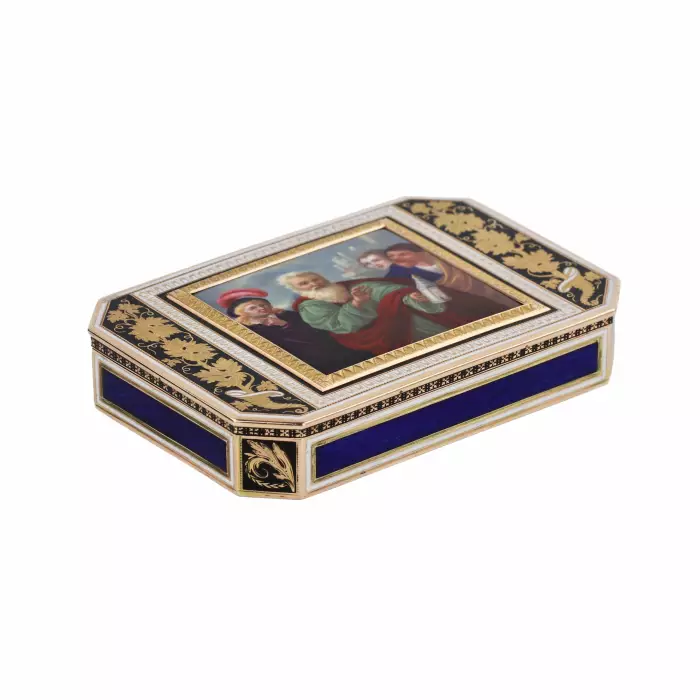
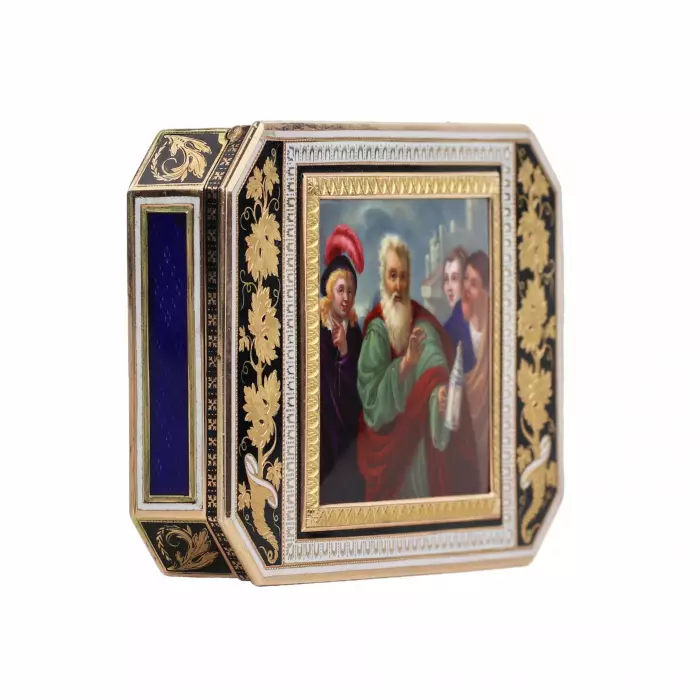
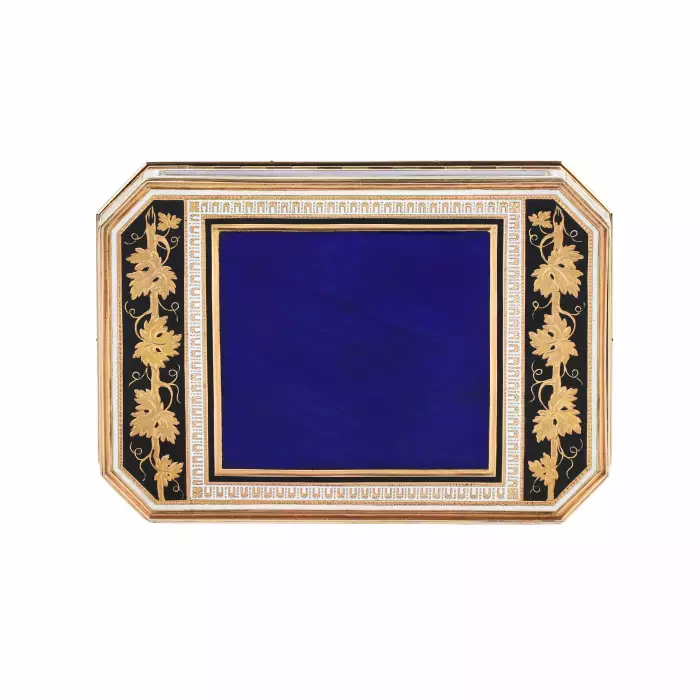
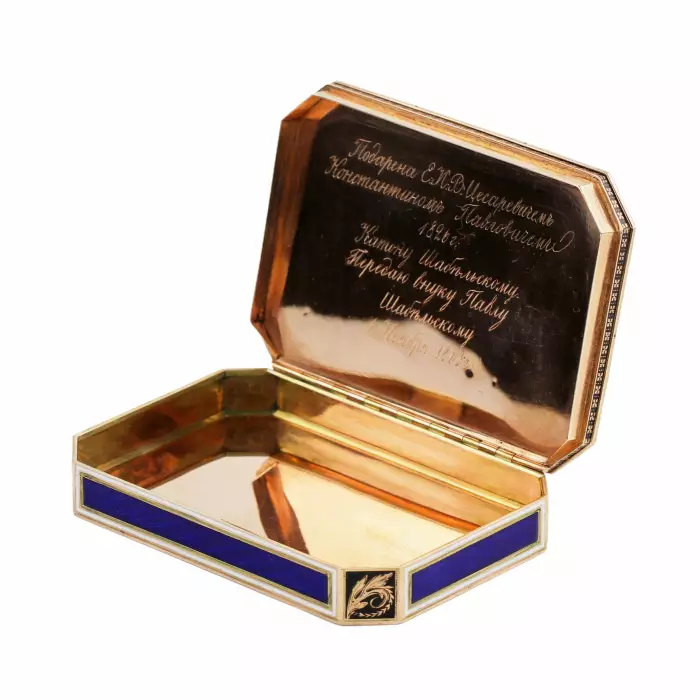
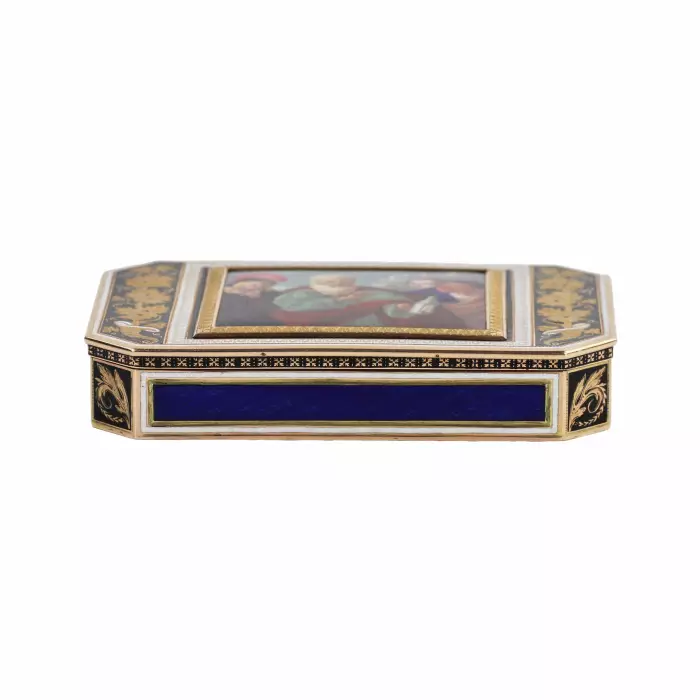
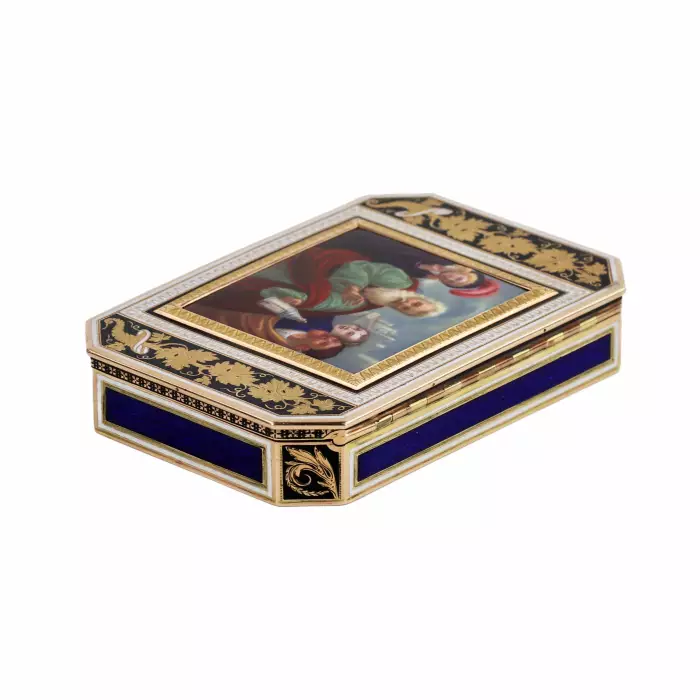
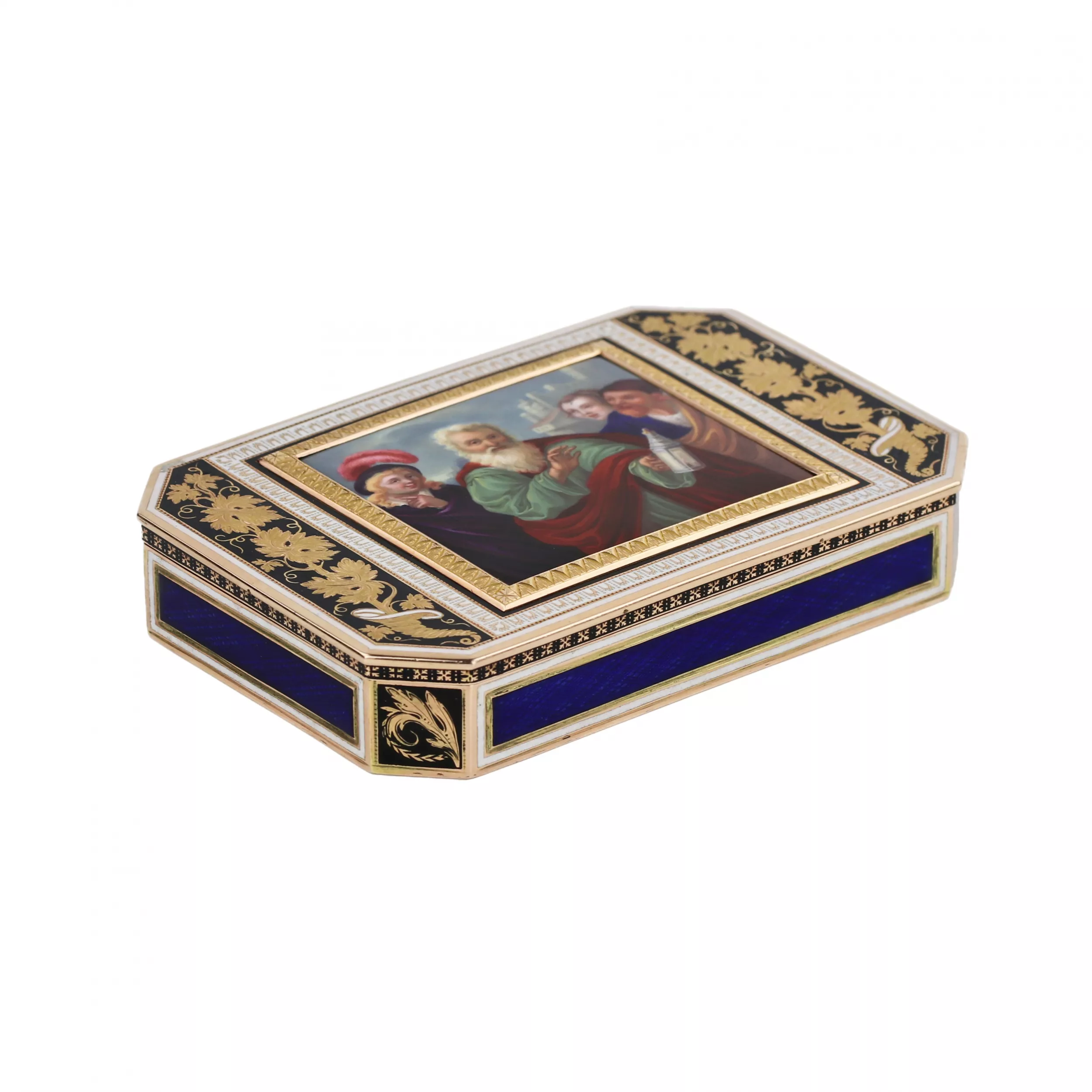
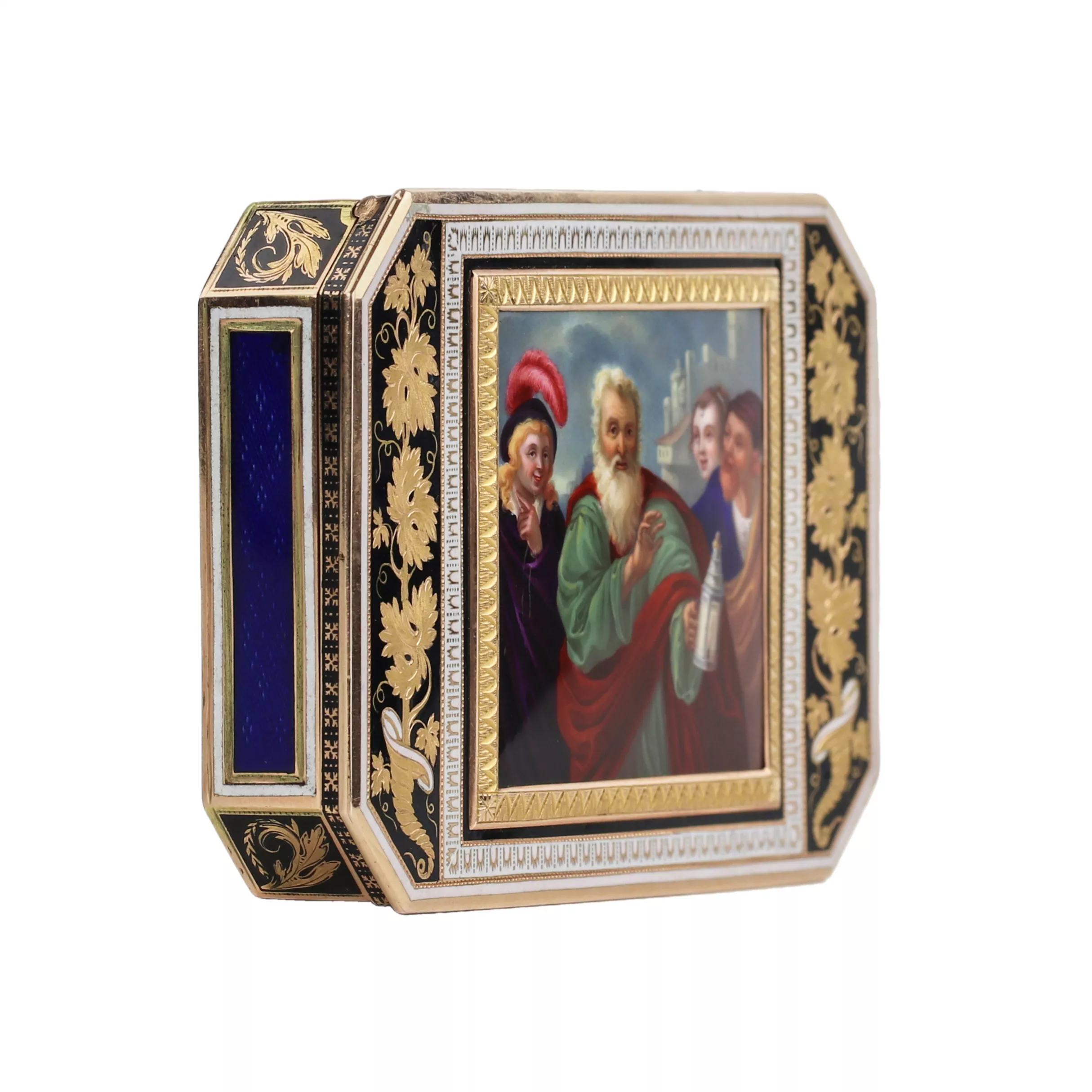
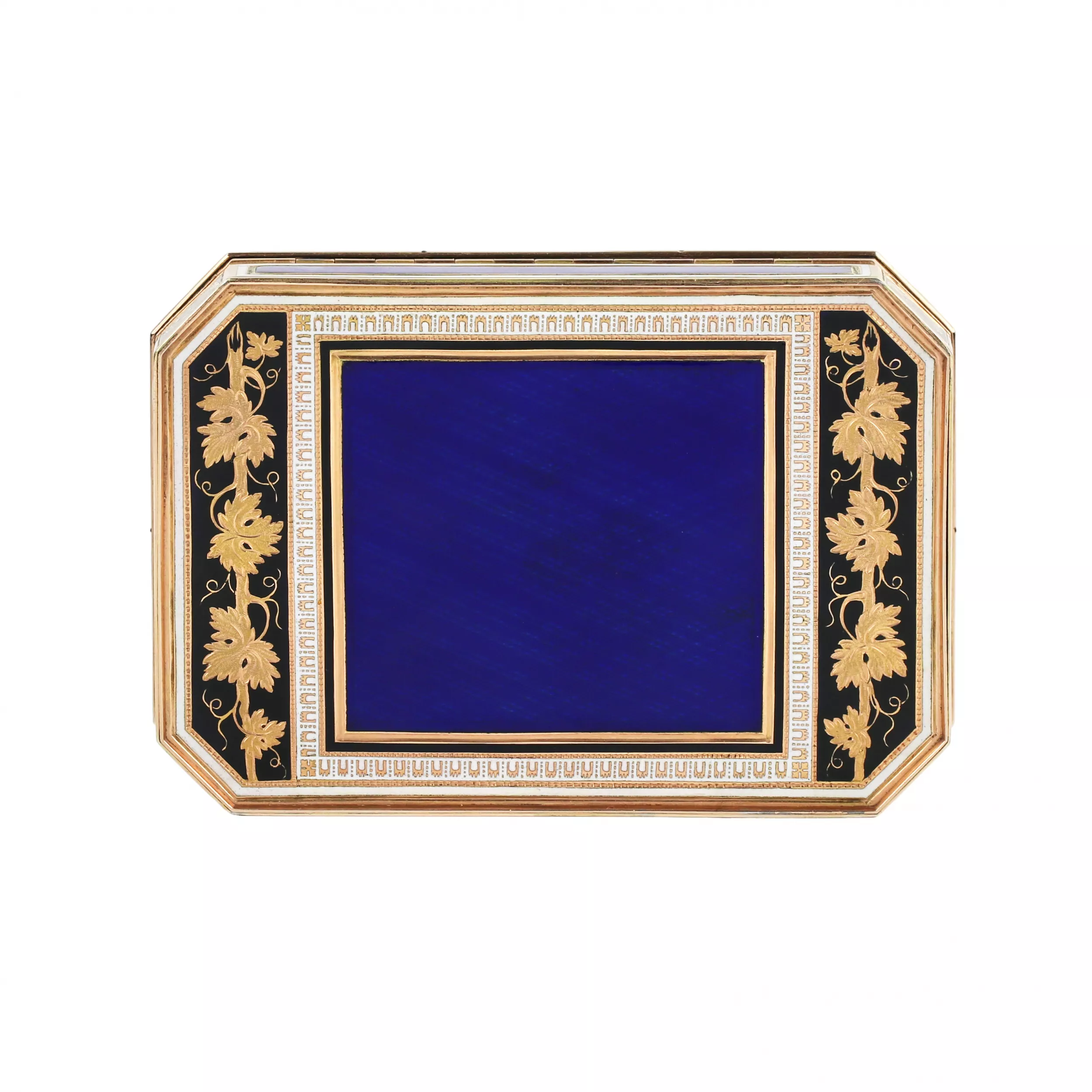
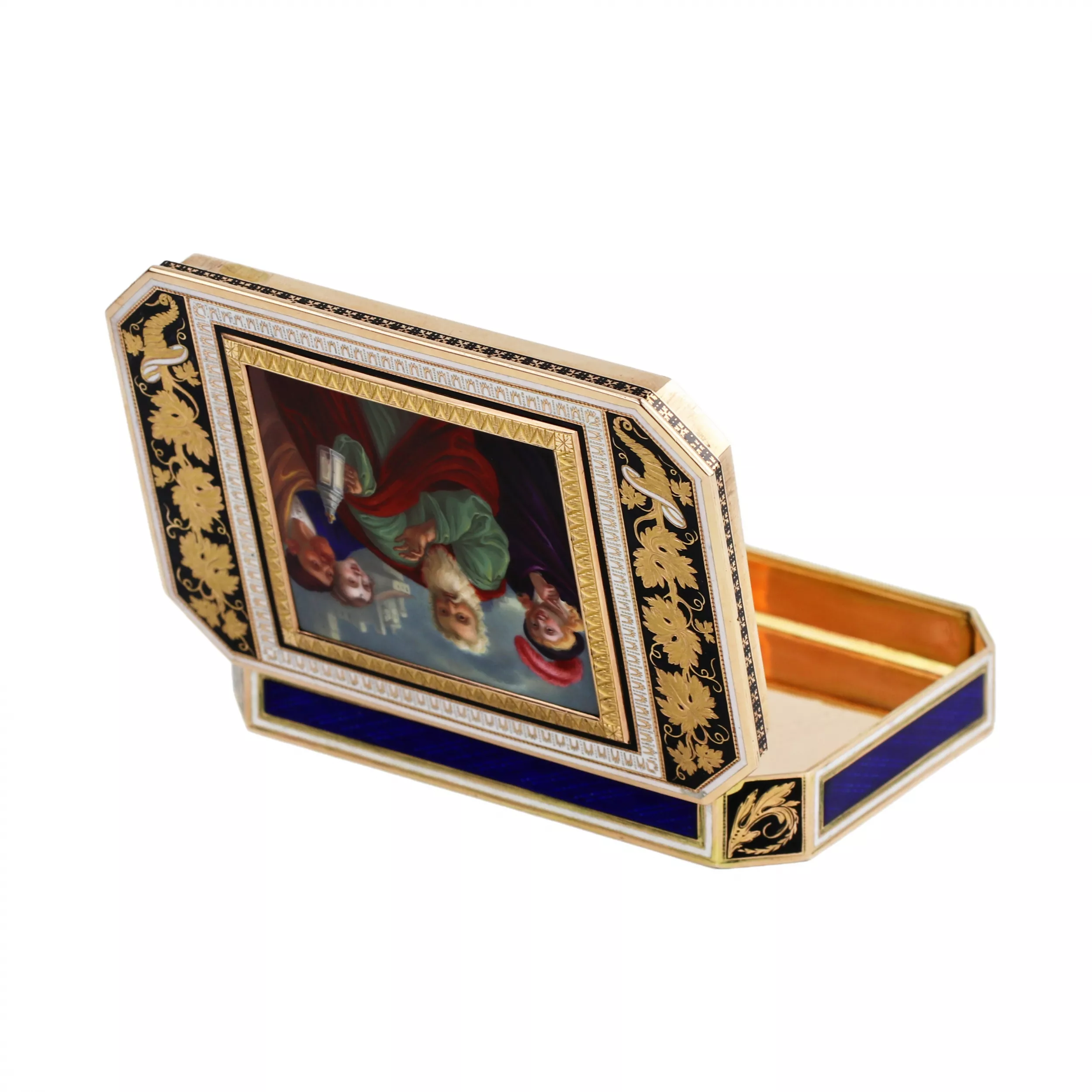
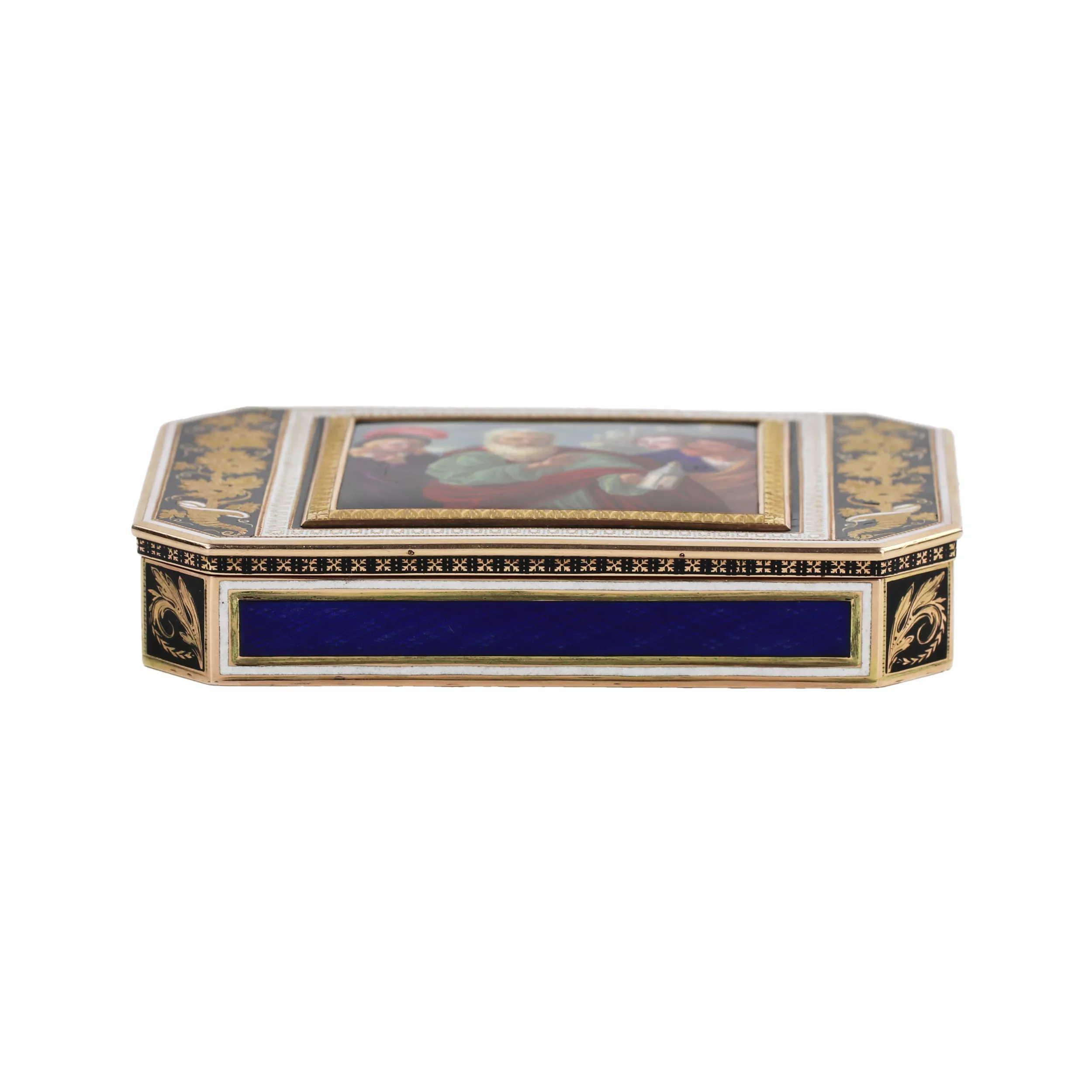
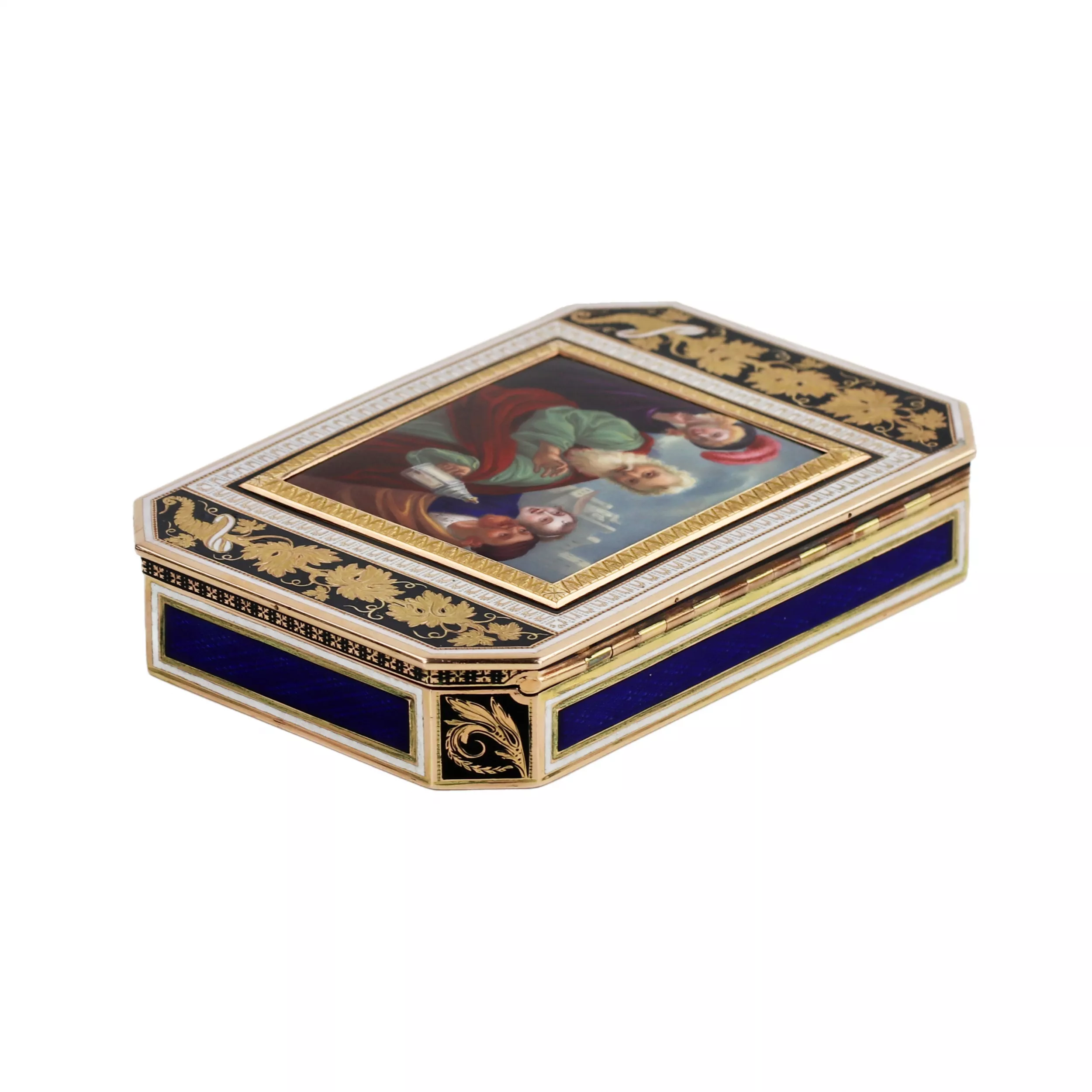
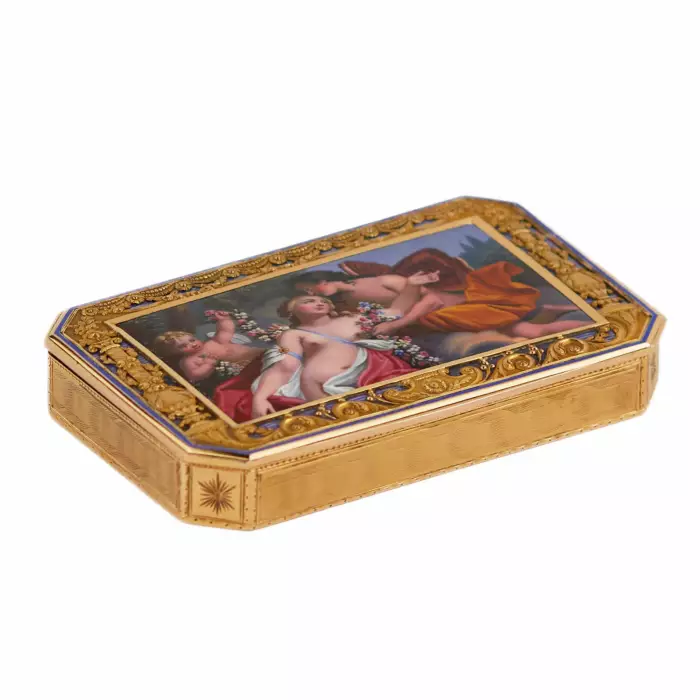
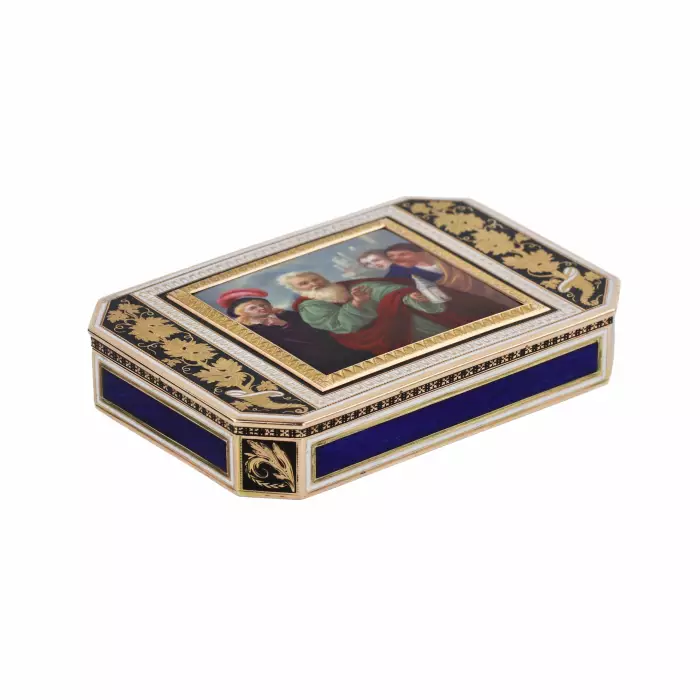
A rare rectangular gold and enamel snuffbox, created around 1810–1815 in the workshops of Hanau, representing an outstanding example of early 19th-century European goldsmithing. The canted rectangular body is decorated with deep dark-blue guilloché enamel with a fine lozenge pattern, enhancing the brilliance of the gold.
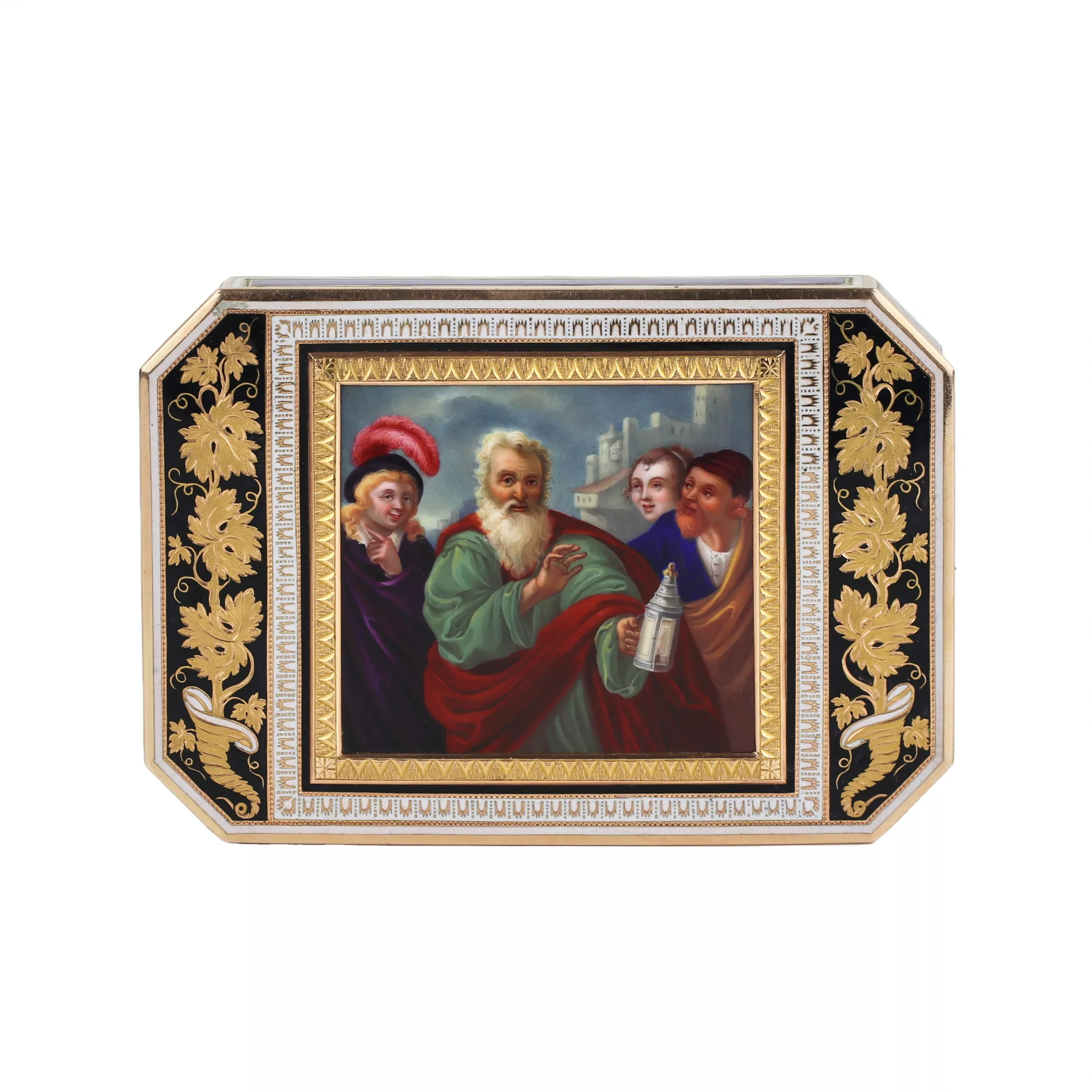
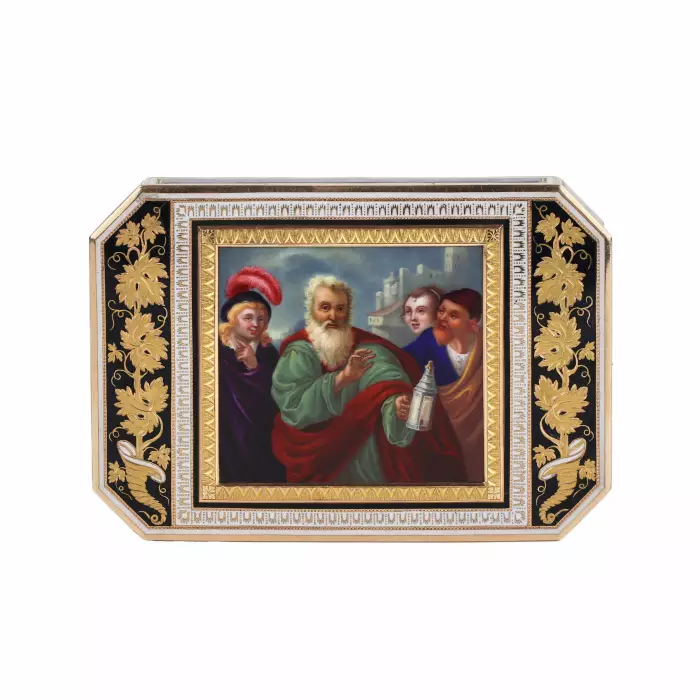
The lid is crowned with a highly refined polychrome enamel miniature depicting Diogenes searching for truth with a lamp in broad daylight. The composition is attributed to models from the circle of Antoine Cardon and executed with exceptional precision. The miniature is framed by bands of gold, white and black enamel with applied vine leaves and cornucopia motifs.
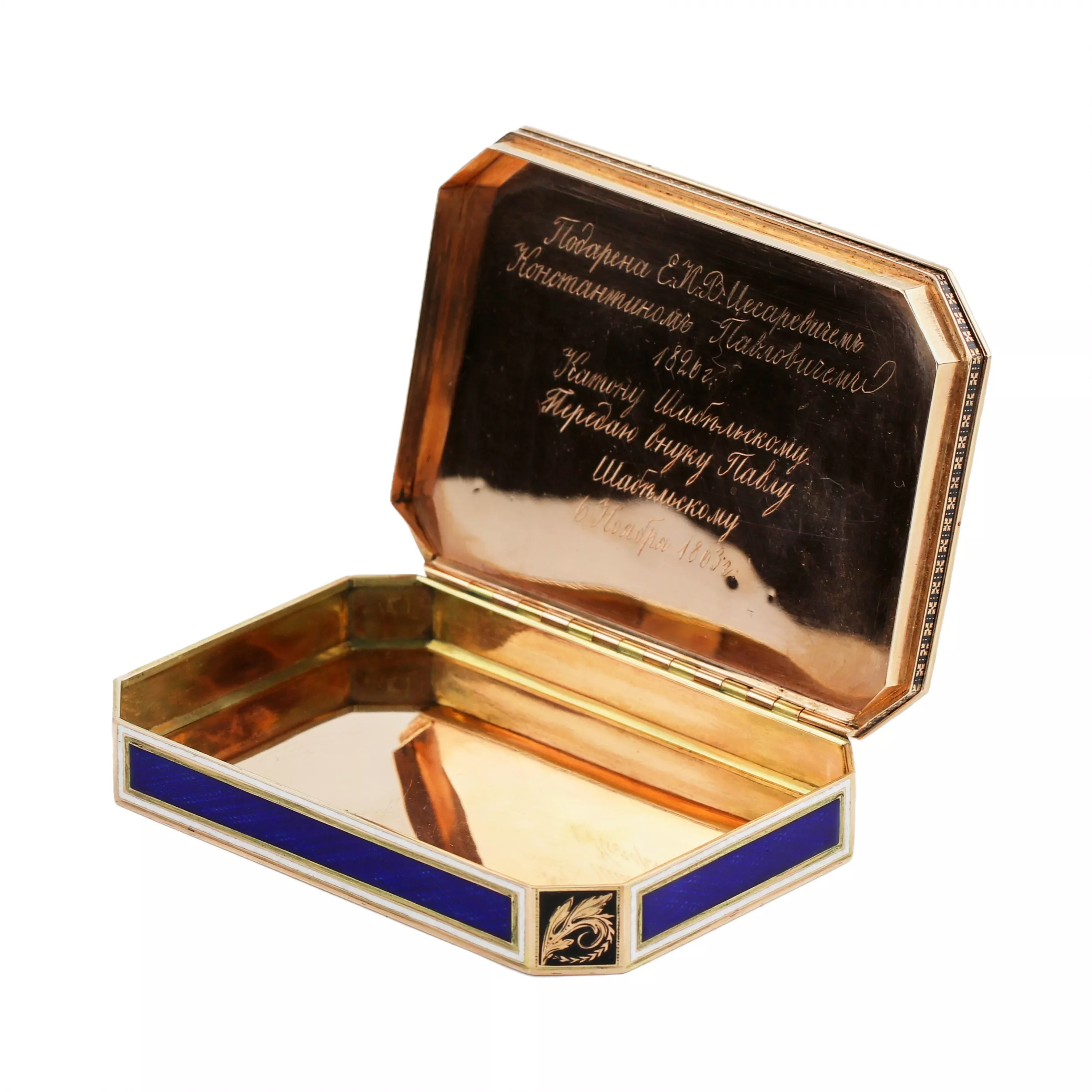
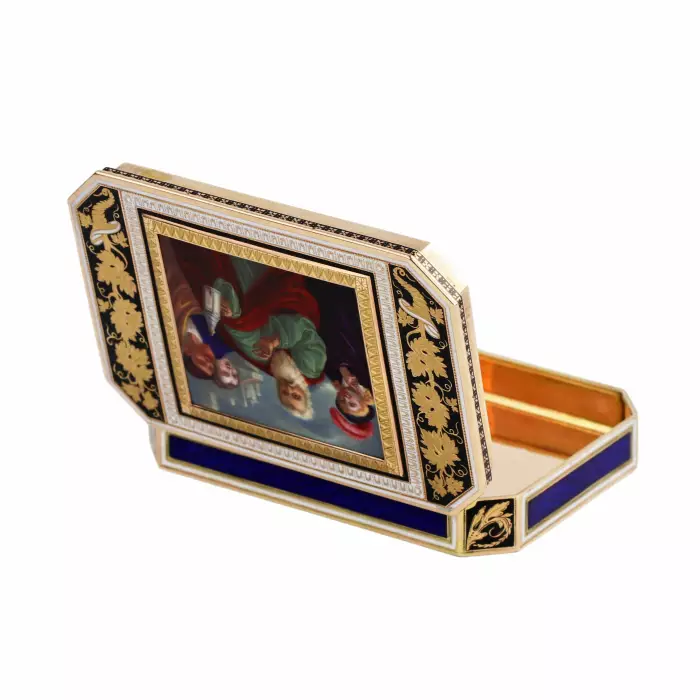
The sides are adorned with cobalt guilloché enamel, while the corners feature stylised descending leaves. The interior is fully gilt. On the inner lid is a historically significant inscription: “Presented by His Imperial Highness the Tsesarevich Konstantin Pavlovich in 1826 to Katon Shabelsky. Passed to his grandson Pavel Shabelsky on 6 November 1863.”
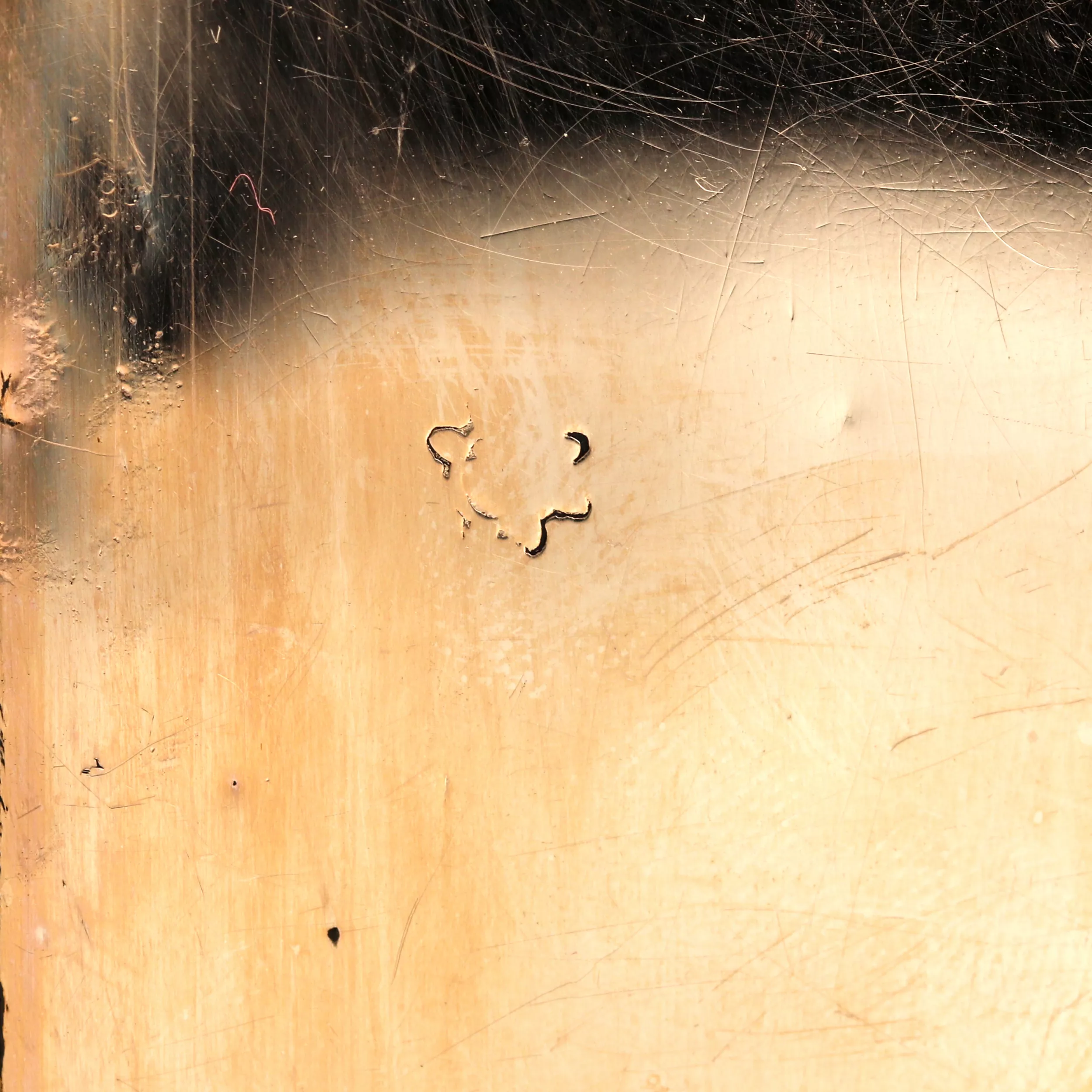
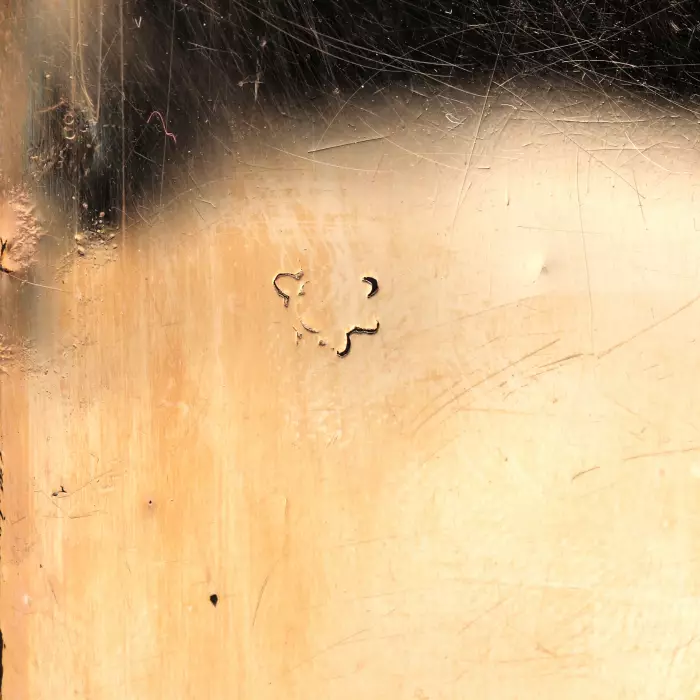
Marks: Worn; a surviving fragment of an early Hanau mark (the characteristic “cogwheel”), corresponding to Hanau production of 1810–1815.
Dimensions: Length 9.5 cm; width 6.7 cm; height 1.8 cm.
Weight: 159 g.
Condition: Very good. Gilding preserved; enamel without cracks or losses; minimal wear.
Provenance: Private European collection. Formerly in the Shabelsky family collection.
n the early 19th century, the city of Hanau near Frankfurt emerged as one of the leading centres of European goldsmithing. Its workshops became renowned for gold and enamel objects with intricate guilloché, miniature painting and characteristic pseudo-marks imitating 18th-century assay stamps. Hanau producers catered to the refined tastes of European aristocracy and competed with Geneva, Lyon and Paris.
The subject of Diogenes searching for truth symbolised the intellectual values of the Enlightenment and enjoyed considerable popularity during the first quarter of the 19th century. Hanau artists often drew inspiration from 18th-century French painters, creating miniatures noted for their clarity and refinement.
The Shabelsky family belonged to the old Russian nobility, traditionally linked with the military and administrative elite. Katon Pavlovich Shabelsky (1805–before 1870), named in the inscription, was educated at the Imperial Moscow University, served in the cavalry, advanced rapidly through the ranks and later became Governor of Chernigov. His position places him among those to whom members of the Imperial family, including the Tsesarevich Konstantin Pavlovich, could plausibly present distinguished gifts.
Snuffboxes of this quality often served as diplomatic or honorary presents. The later transfer of the box to his grandson in 1863 reflects the aristocratic tradition of preserving family heirlooms. This example therefore represents not only the finest Hanau workmanship but also a rare artefact with documented provenance linked to the Romanov court.
In very good collector’s condition. Enamel bright and intact; gilding even and rich; hinges and clasp functional. Minor wear consistent with age.
The condition report is provided for informational purposes only.
It is not comprehensive and may not reflect all defects, restorations, alterations, or adaptations, as Antiqon does not perform professional conservation-level assessments. The information is based on a qualified, yet subjective, evaluation by our specialists.Before purchasing, we recommend consultation with an independent expert.Please also consult our Terms and conditions and Glossary A-Z, which contain important information on lot characteristics and sale conditions.