APANESE MODEL OF YOROI ARMOUR. JAPAN, MEIJI PERIOD, LATE 19TH CENTURY
Antiqon consultant will contact you within one business day after receiving your request.
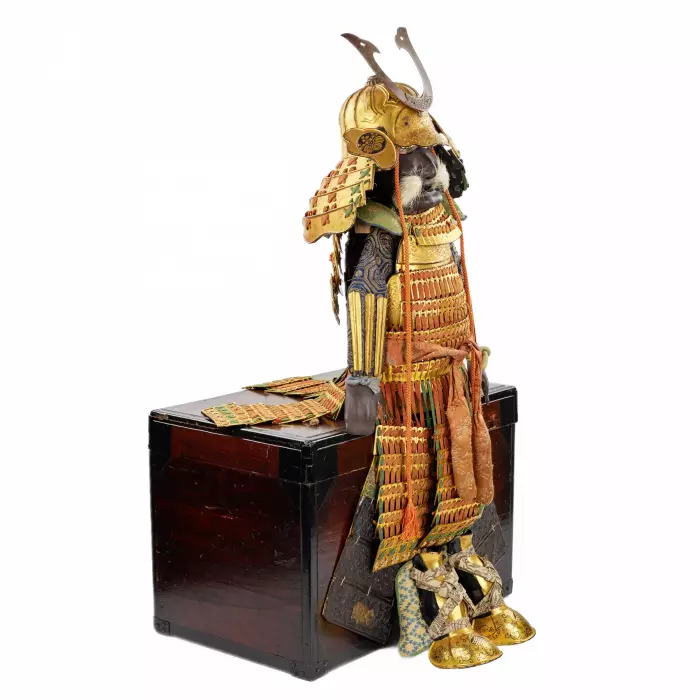
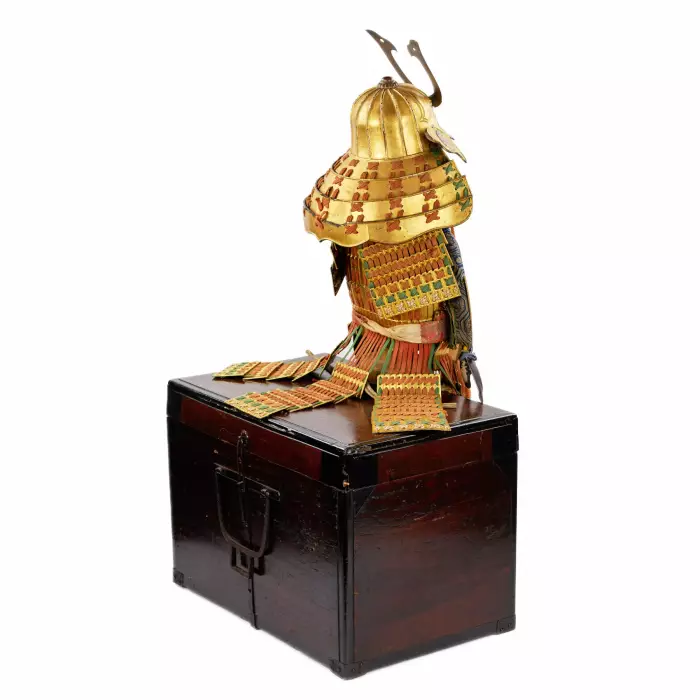
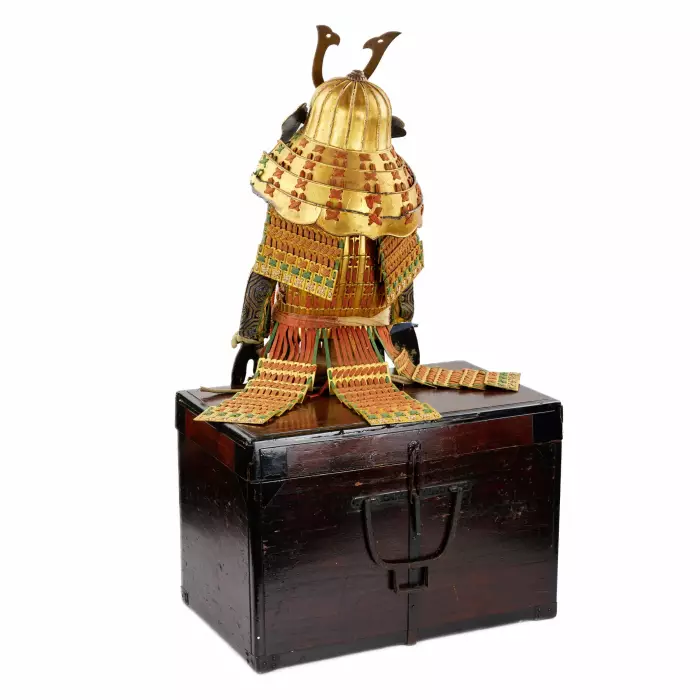
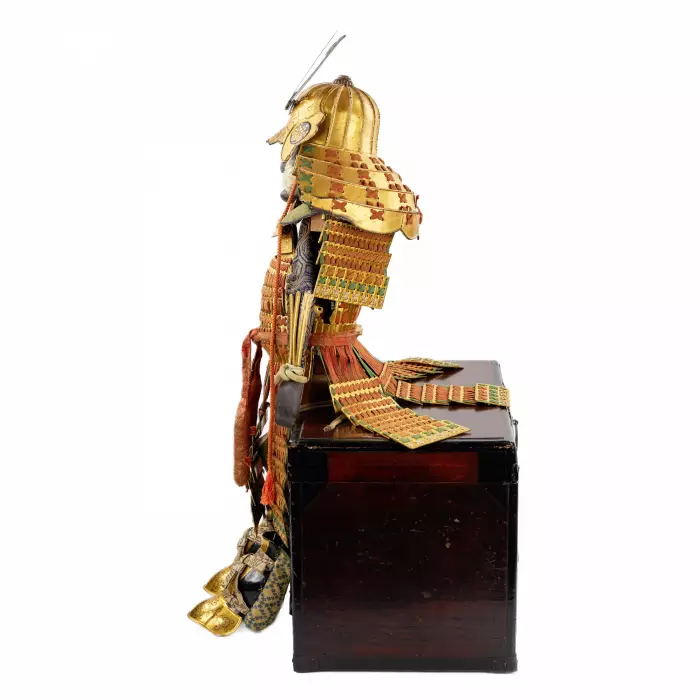
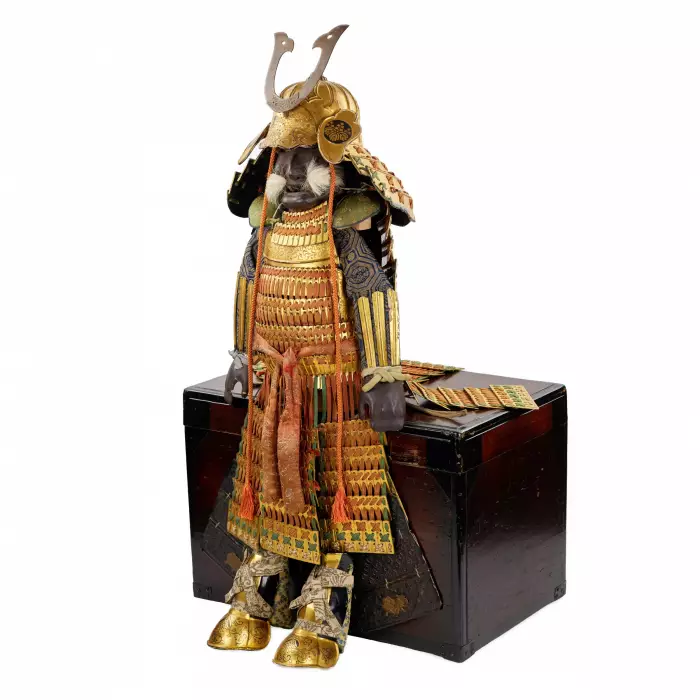
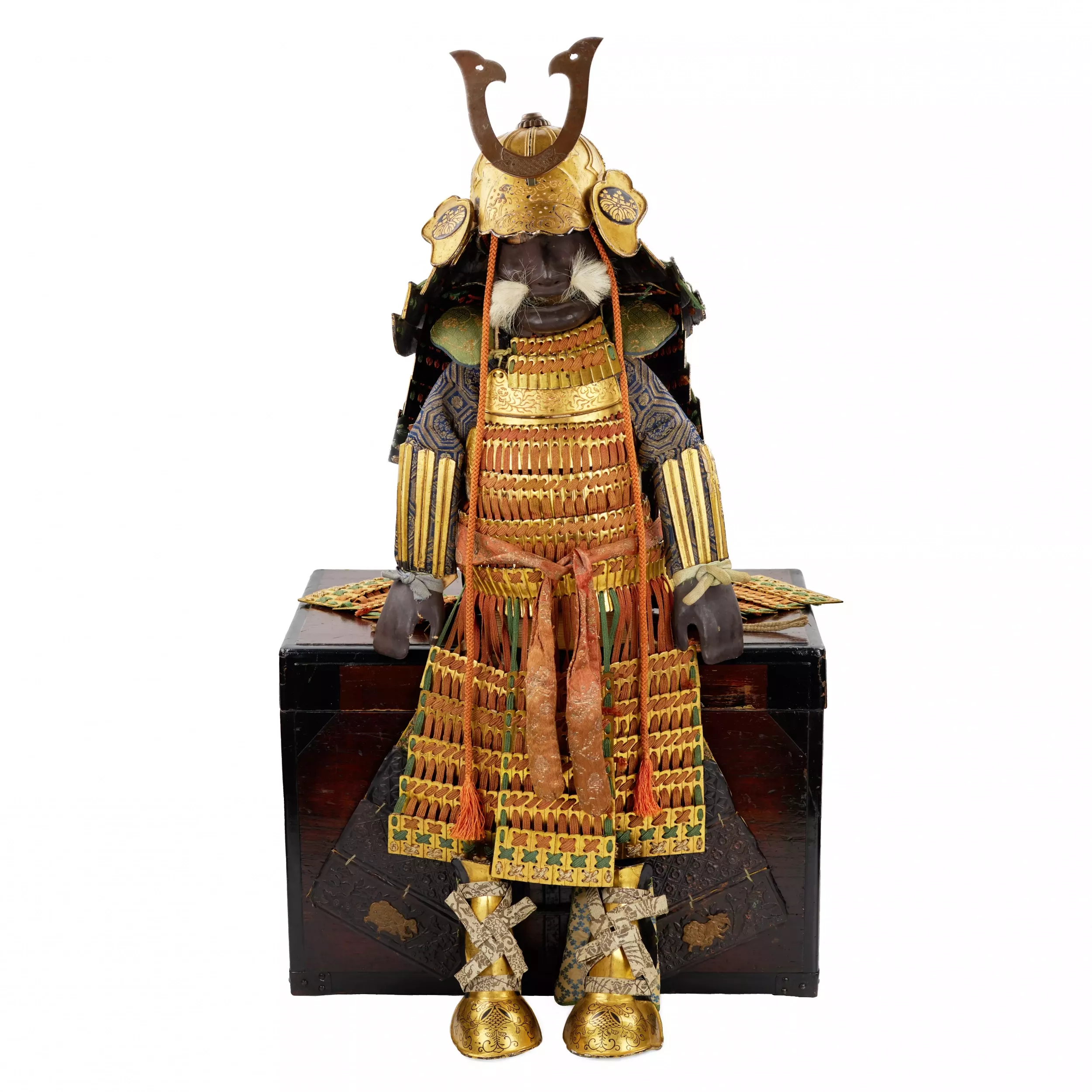
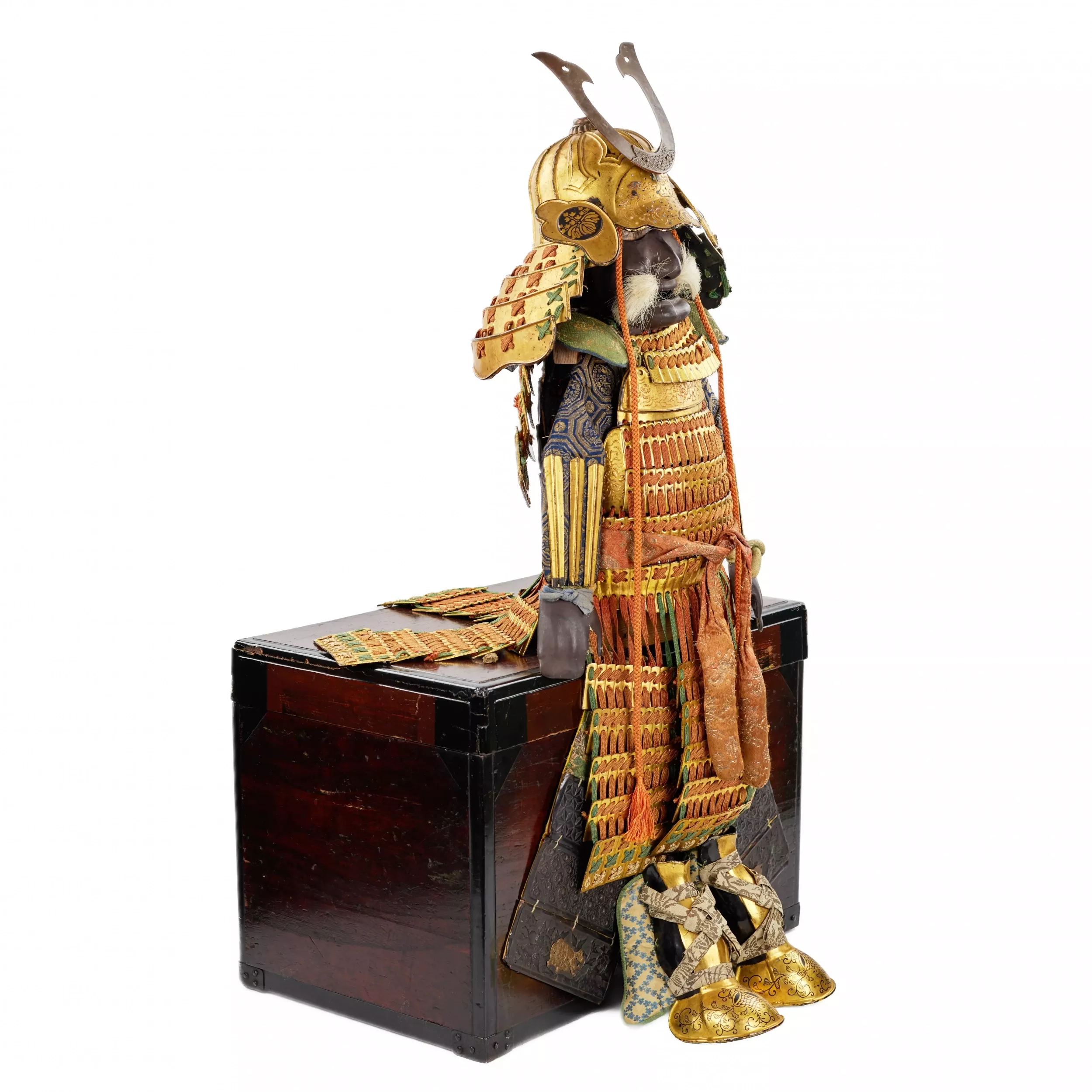
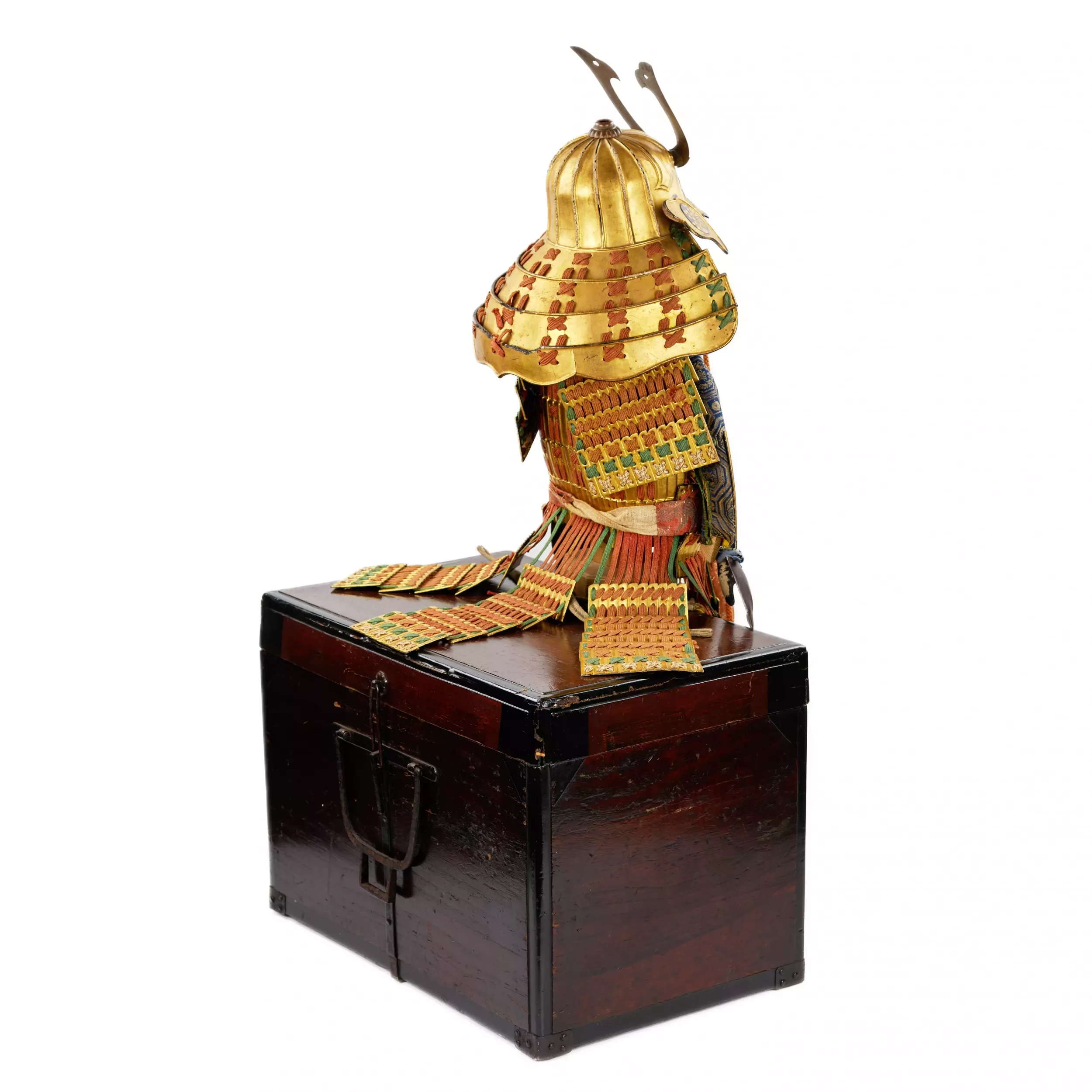
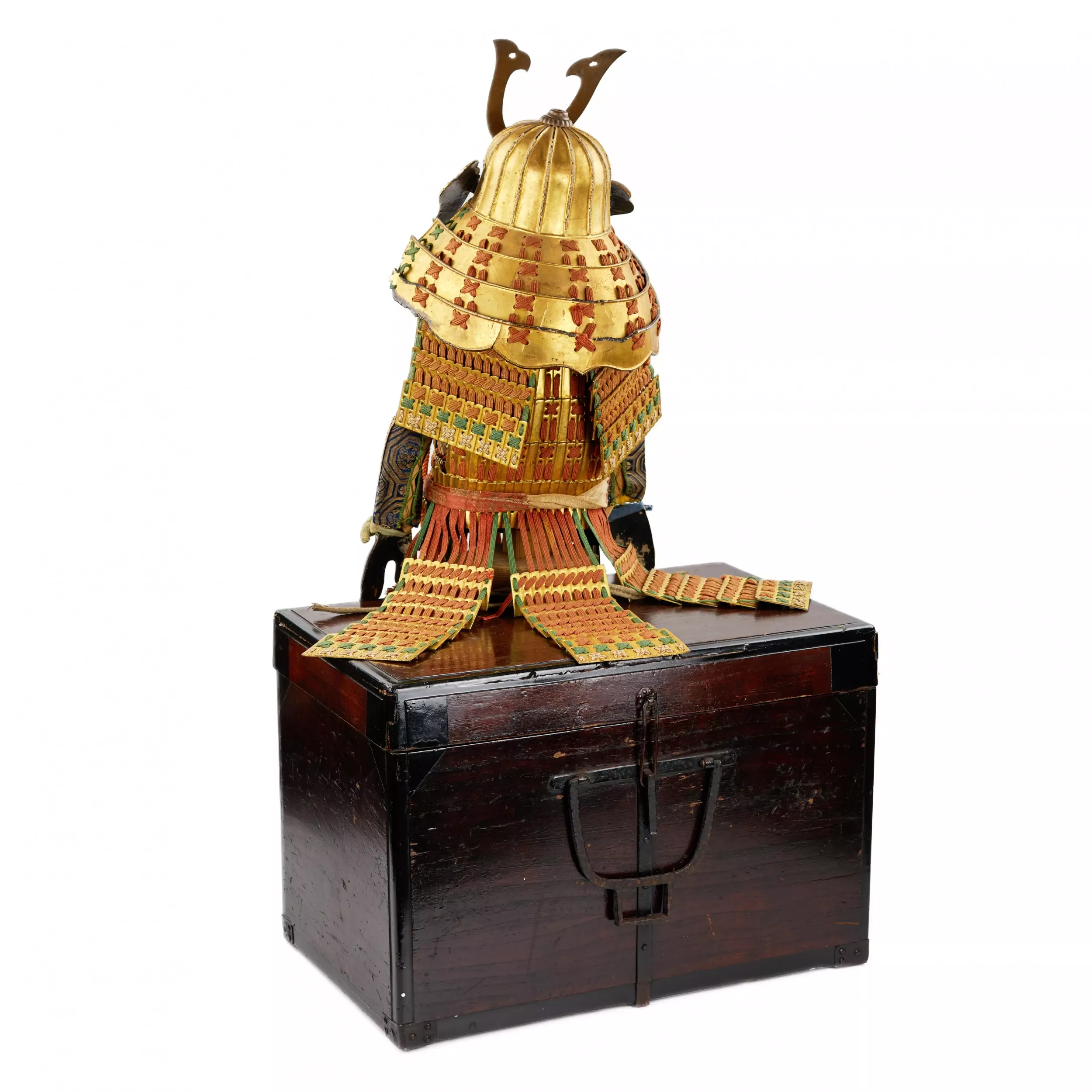
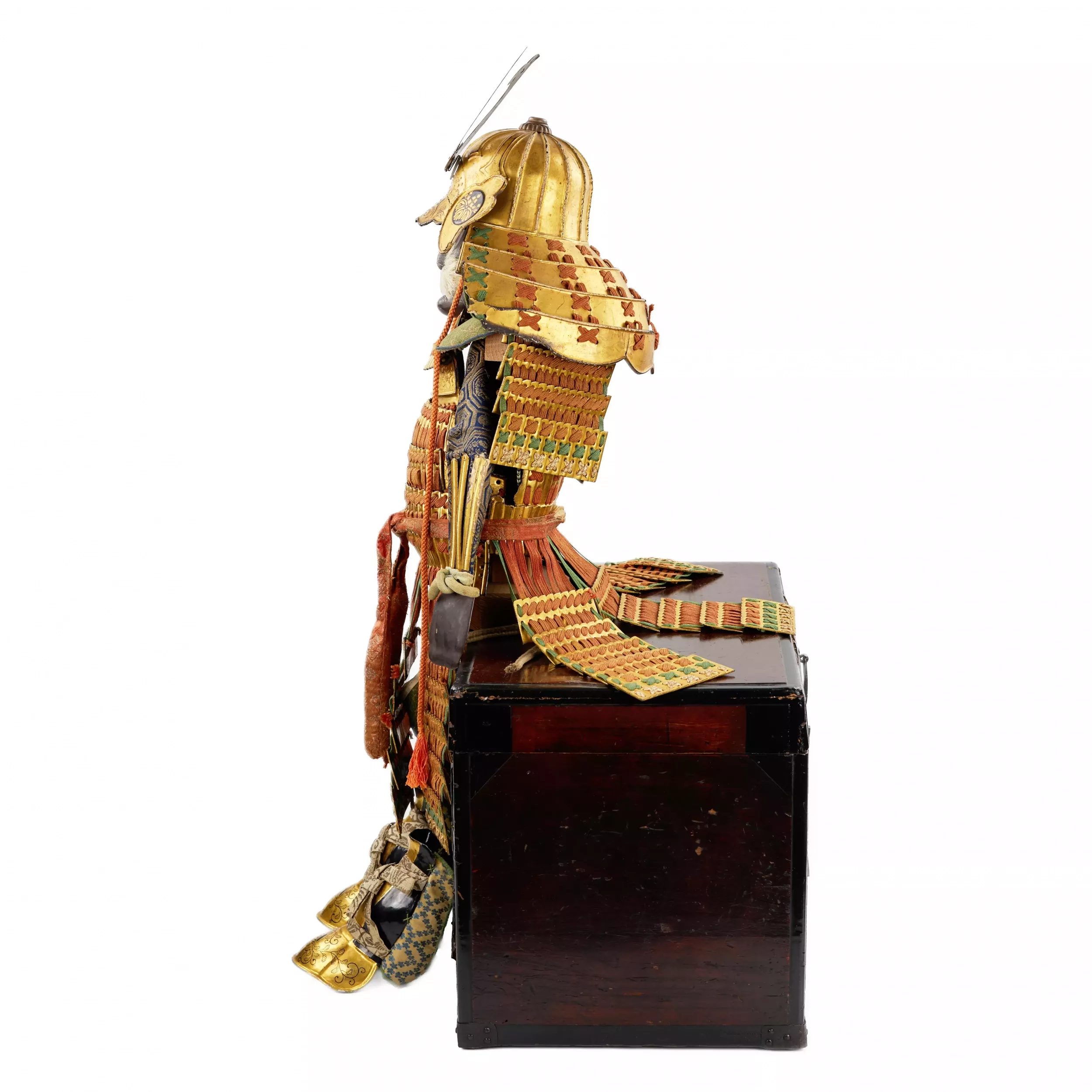
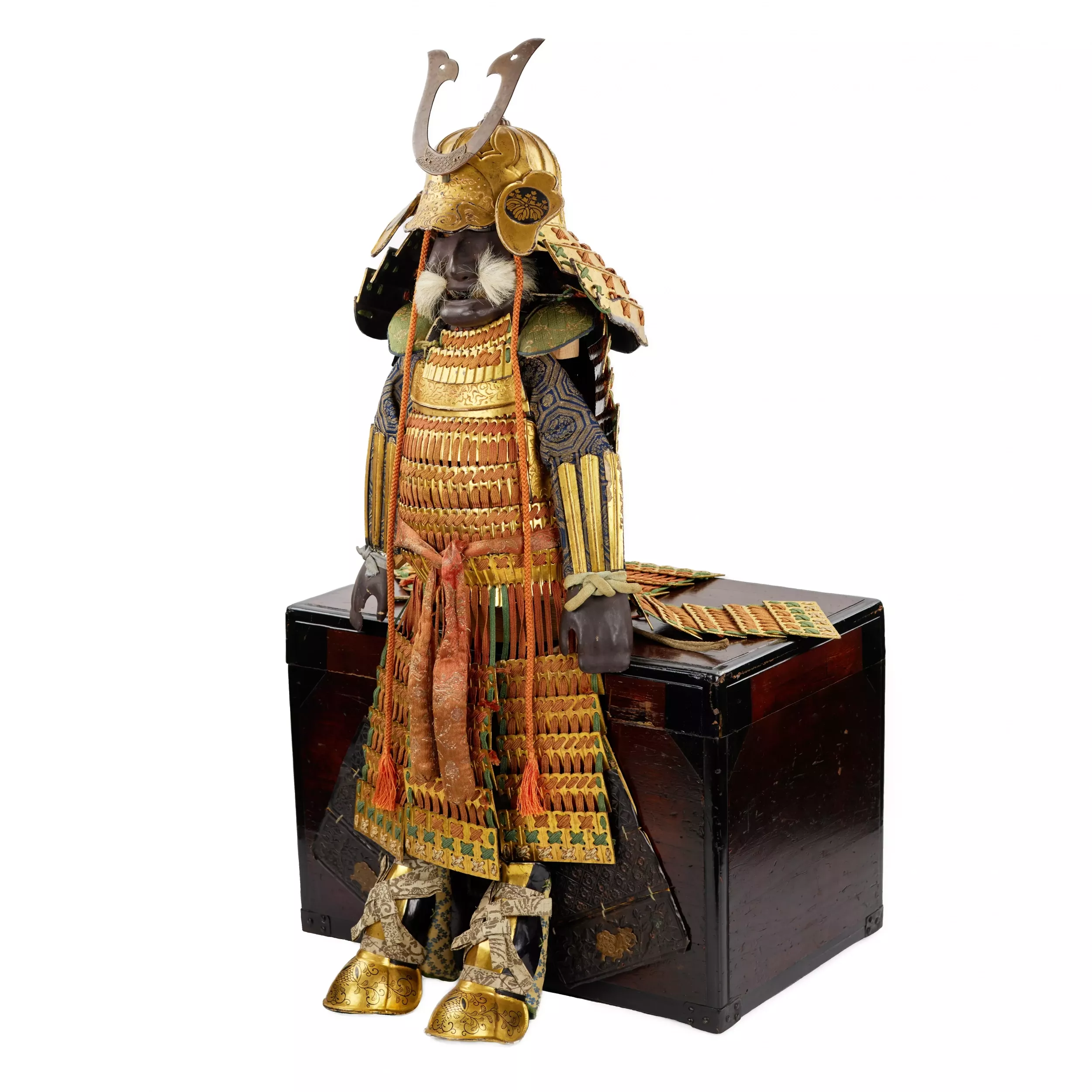
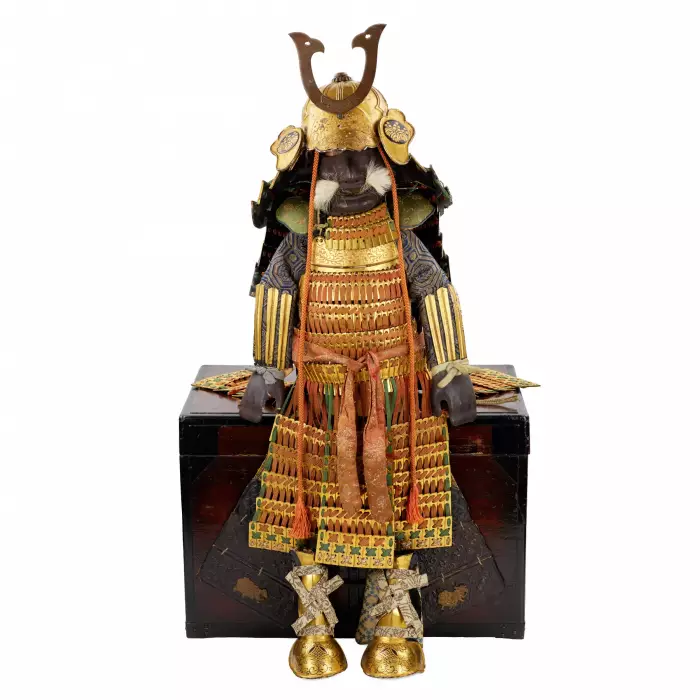
An important Japanese display model of samurai Yoroi armour, created in Japan during the Meiji period in the late nineteenth century. This finely executed ceremonial miniature faithfully reproduces the construction and appearance of a full-scale suit of armour, demonstrating the exceptional craftsmanship of Japanese armourers during the export era.
The helmet, or kabuto, is richly finished in gilt and fitted with prominent fuki-gaeshi bearing a family mon, reflecting the heraldic traditions of the Japanese warrior class. The cuirass, shoulder guards (sode), thigh guards (kusazuri), armoured sleeves (kote) and shin guards (suneate) are constructed from black lacquered lamellar plates highlighted with gilded elements and laced with alternating orange and green silk odoshi. Decorative tassels complete the ceremonial appearance of the ensemble.
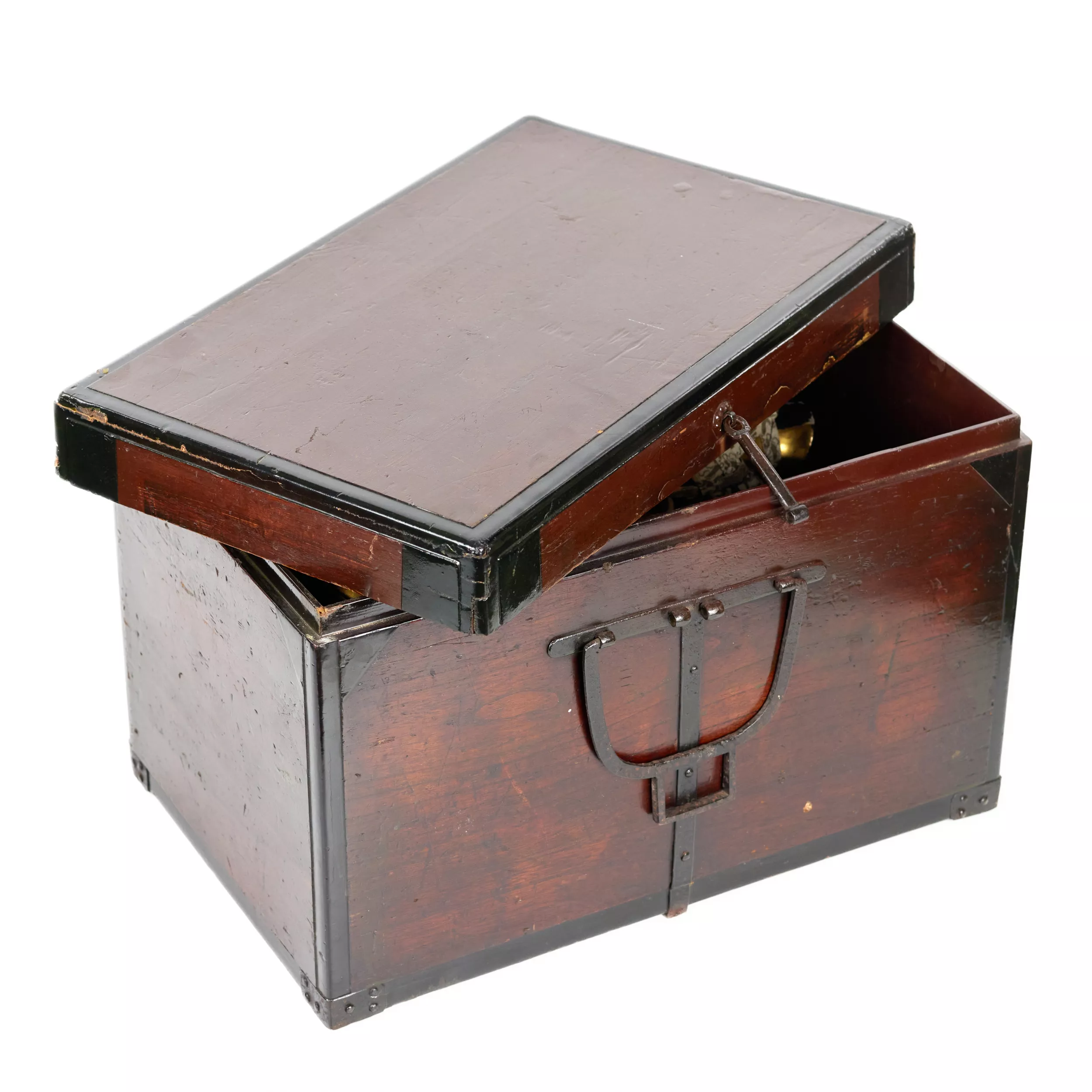
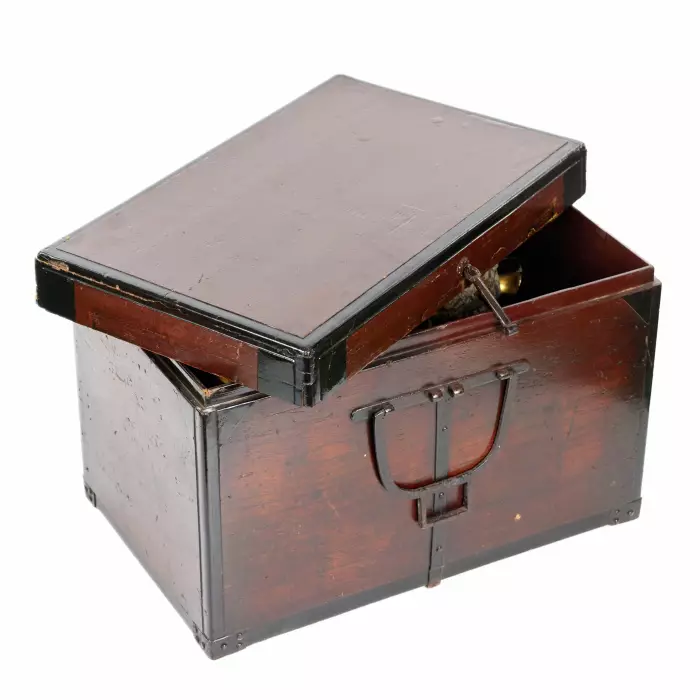
The armour is displayed upon its original lacquered wooden bitsu-gusoku storage chest, fitted with iron mounts and locks. During the Meiji period, such miniature suits were produced as prestigious presentation pieces, luxury export works and refined decorative objects celebrating Japans martial heritage following the countrys opening to international trade. Owing to its impressive scale, high quality of execution and excellent state of preservation, this example represents an outstanding collectors piece of Japanese decorative arts and arms.
Marks: No visible marks.
Dimensions: Armour height: 84 cm. Storage chest: 34 × 45 × 28 cm.
Condition: Very good condition.
Provenance: Japan, Meiji period, late nineteenth century.
The Meiji period, 1868 to 1912, marked one of the most transformative eras in Japanese history, during which rapid modernisation coincided with a renewed appreciation of the nations cultural identity. Although the samurai class was officially abolished following the Meiji Restoration, the visual language of samurai armour evolved into a powerful symbol of Japanese tradition and artistic excellence. Rather than serving military purposes, finely crafted models of Yoroi armour became highly prized diplomatic gifts, prestigious interior furnishings and luxury export objects destined for Europe and North America.
Master armourers continued to employ traditional techniques developed over centuries, producing miniature suits that accurately reproduced the construction of historical o-yoroi and tosei-gusoku. Kabuto helmets with elaborate maedate, heraldic fuki-gaeshi, lamellar lacquered plates joined with intricate silk odoshi lacing, together with sode, kote, kusazuri and suneate, were recreated with remarkable precision. Traditional urushi lacquer, mercury gilding, repoussé metalwork and fine forging techniques preserved the aesthetic integrity of classical Japanese armour while adapting it for the international art market.
Following Japans celebrated participation in the Vienna Worlds Fair of 1873 and the Paris Exposition Universelle of 1878, Japanese decorative arts became highly sought after by Western collectors and museums. Workshops in Kyoto, Tokyo and Osaka produced luxurious ceremonial armour models that combined historical authenticity with exceptional decorative refinement. Comparable examples are preserved today in the collections of the Tokyo National Museum, the Victoria and Albert Museum and The Metropolitan Museum of Art, where they are recognised as significant expressions of Meiji craftsmanship and enduring symbols of Japans samurai heritage.
Preserved in very good condition with its original lacquered surfaces, gilding, silk lacing and lacquered storage chest. Minor signs of age and careful handling are consistent with the period and do not detract from the overall presentation.
The condition report is provided for informational purposes only.
It is not comprehensive and may not reflect all defects, restorations, alterations, or adaptations, as Antiqon does not perform professional conservation-level assessments. The information is based on a qualified, yet subjective, evaluation by our specialists.Before purchasing, we recommend consultation with an independent expert.Please also consult our Terms and conditions and Glossary A-Z, which contain important information on lot characteristics and sale conditions.