STILL LIFE WITH PEONIES. MAXIMILIAN MAKSOLLY. ESTONIA, 1930s
Antiqon consultant will contact you within one business day after receiving your request.
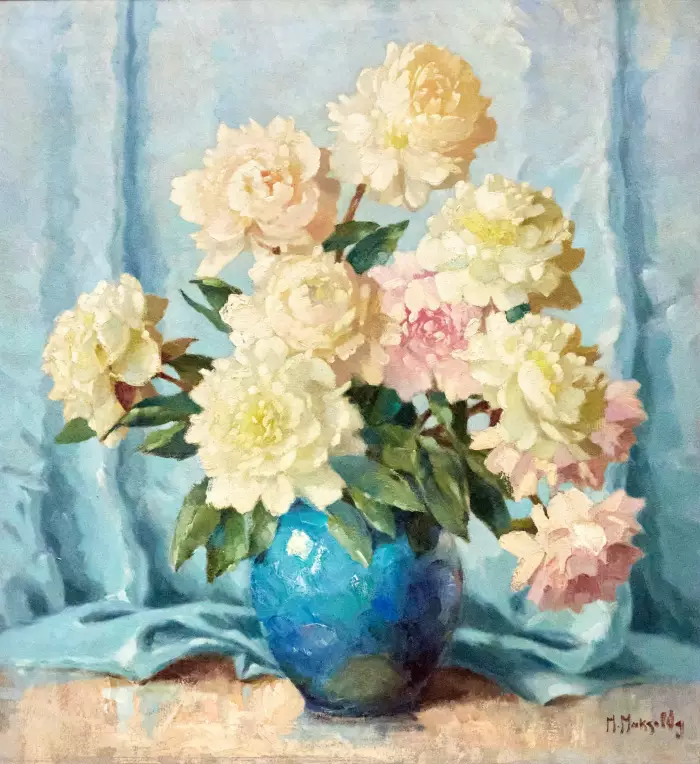
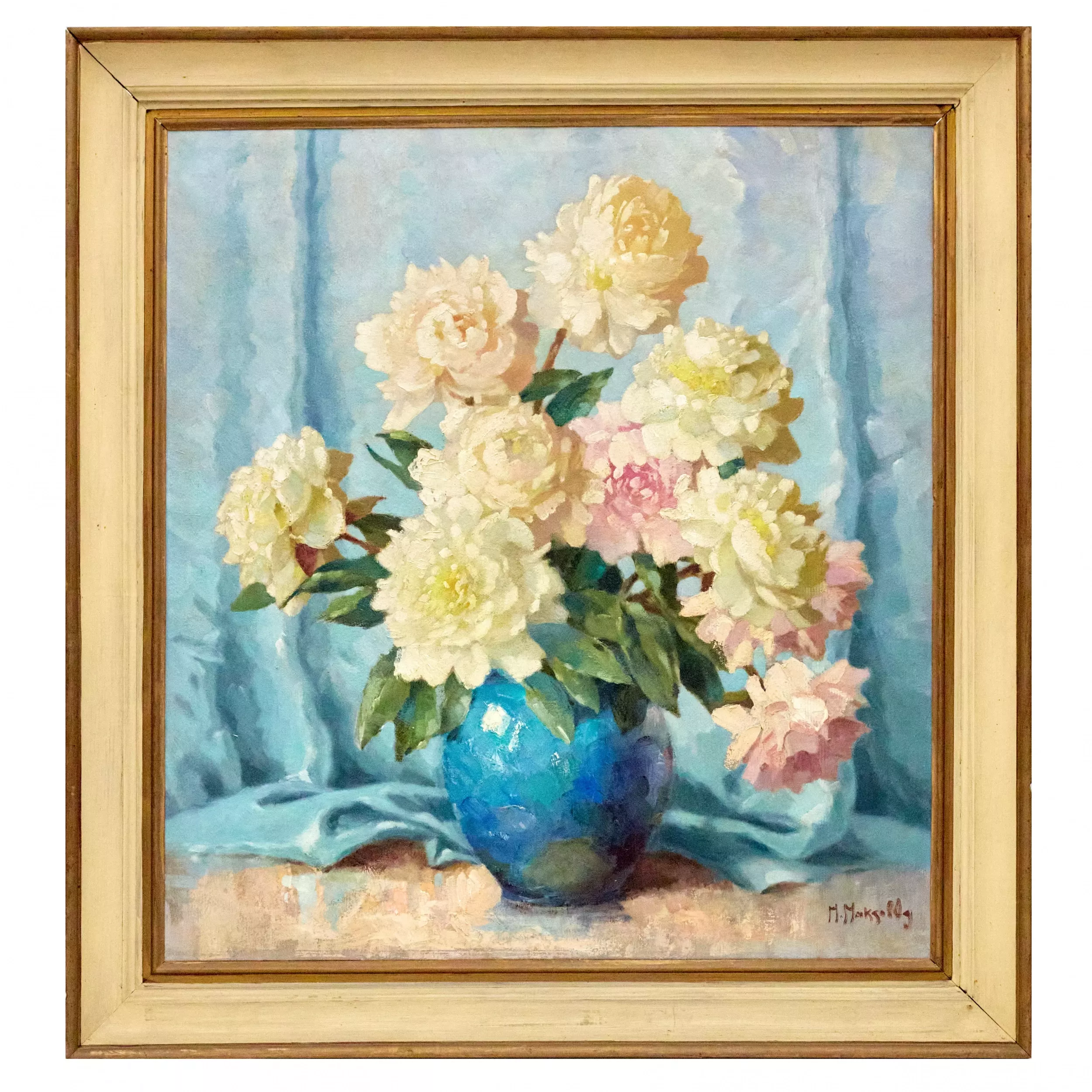
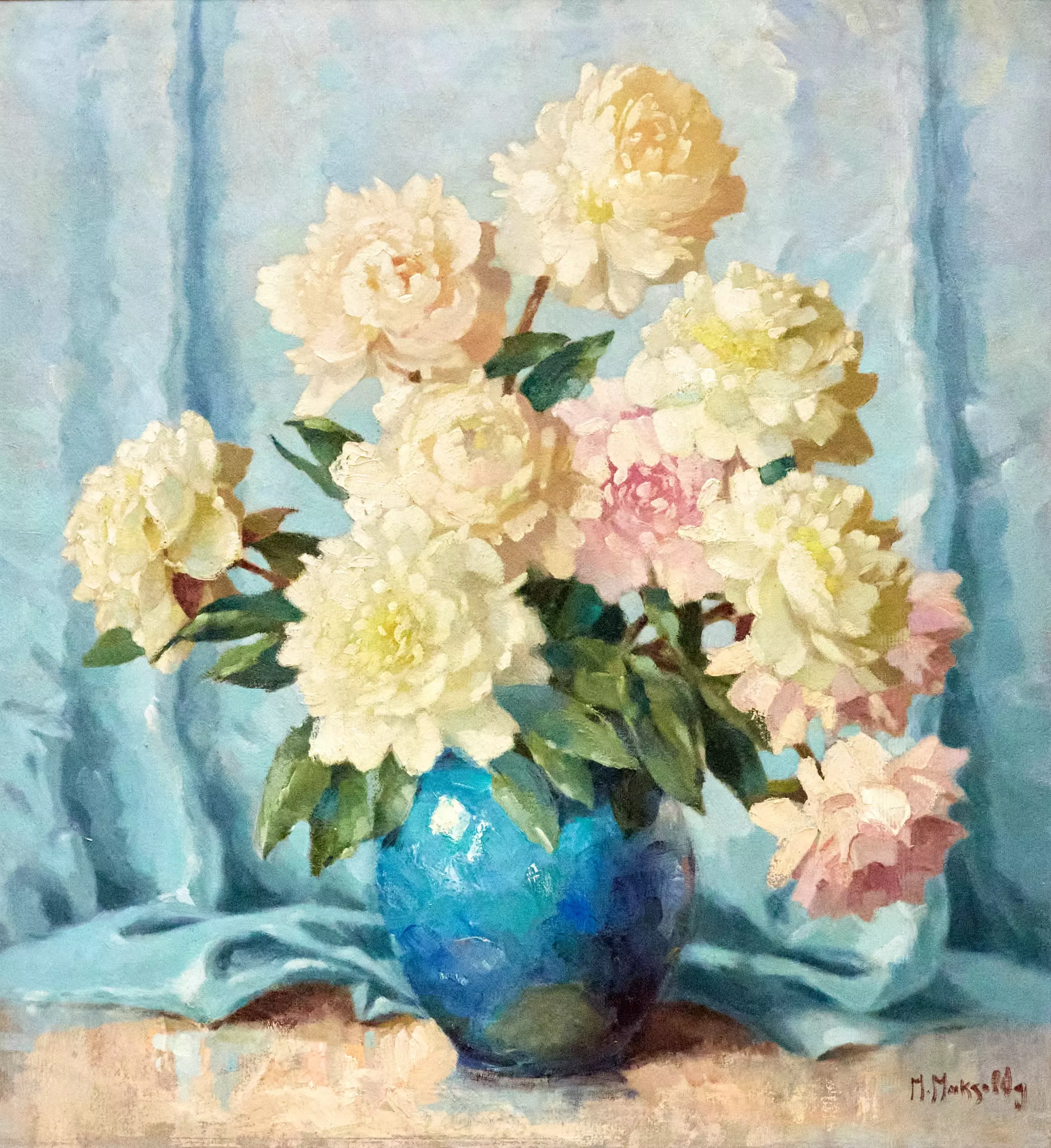
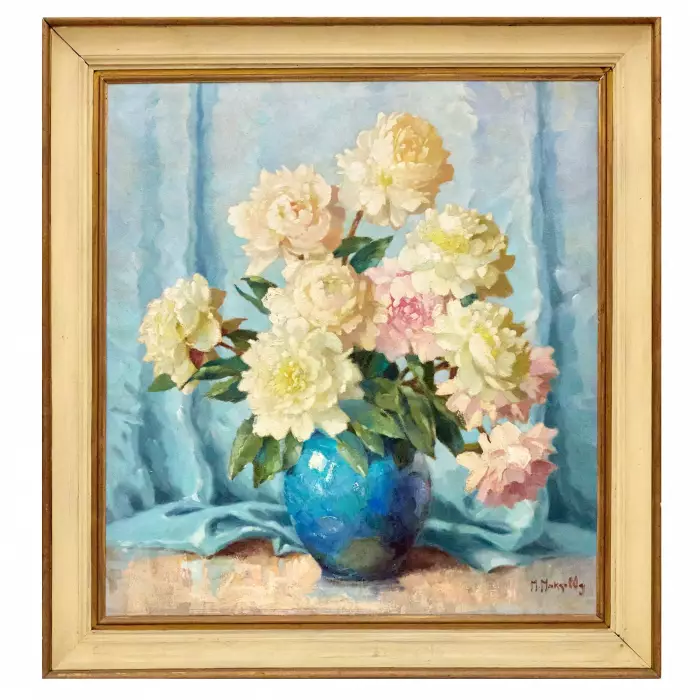
An exquisite still life painting “Peonies” by the Estonian artist Maximilian Maksolly, created in the 1930s. The composition presents a lush bouquet of blooming peonies arranged in a turquoise vase, reflecting the characteristic aspirations of early 20th-century European painting to convey the beauty of everyday subjects through harmony of colour, light and emotional expression.
The delicate pictorial palette is built upon subtle transitions of blue, lilac, pink and pearlescent tones, creating the impression of a soft chromatic veil. The artist’s free brushwork, gentle modelling of forms and decorative expressiveness of the paint surface lend the work a sense of freshness, lightness and optimistic vitality.
The painting reveals Maksolly’s refined attention to the texture of flowers, the play of light across the petals and the harmonious relationship between the object and its surrounding space. Presented in a decorative frame, the work emphasizes the intimate and collectible character of the still-life genre.
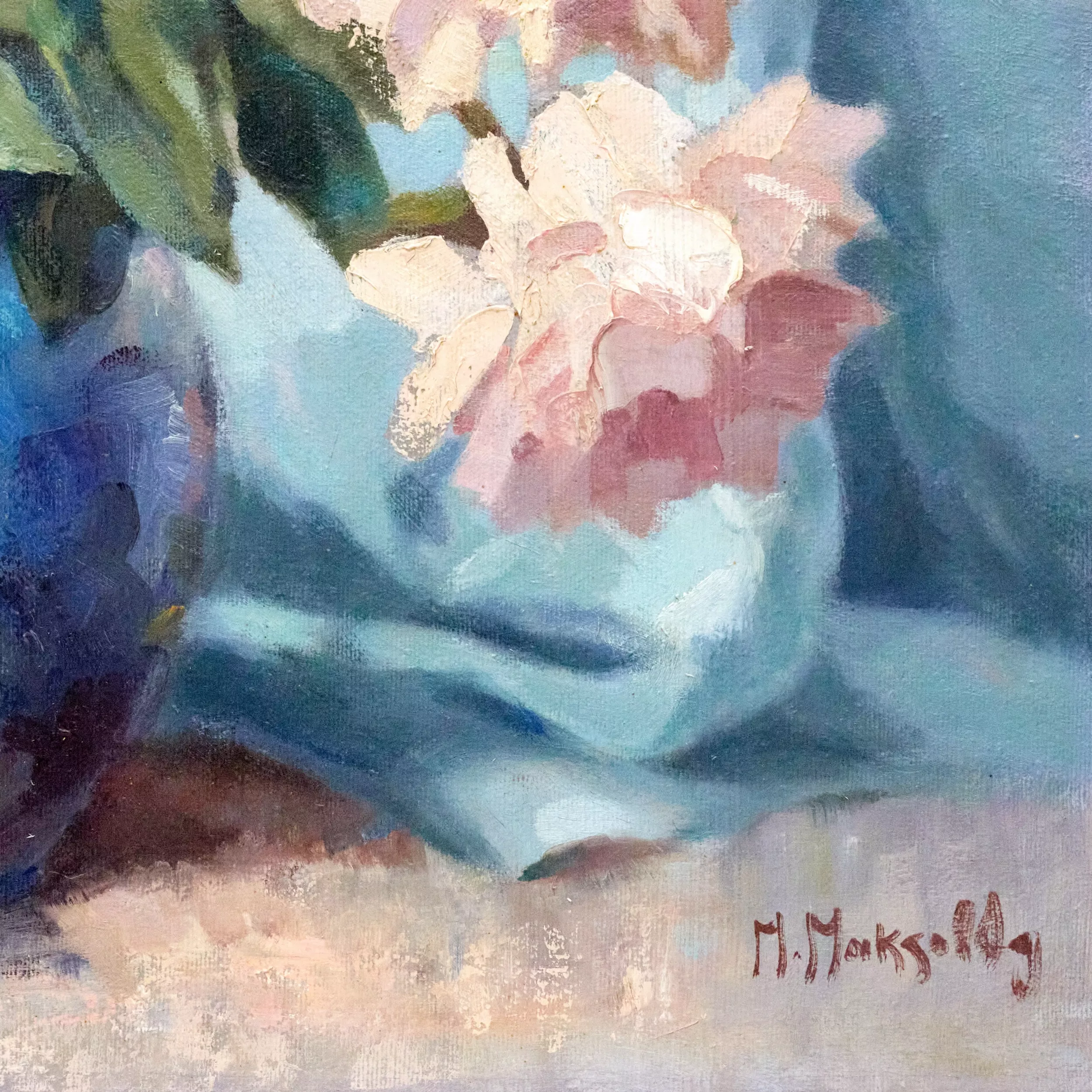
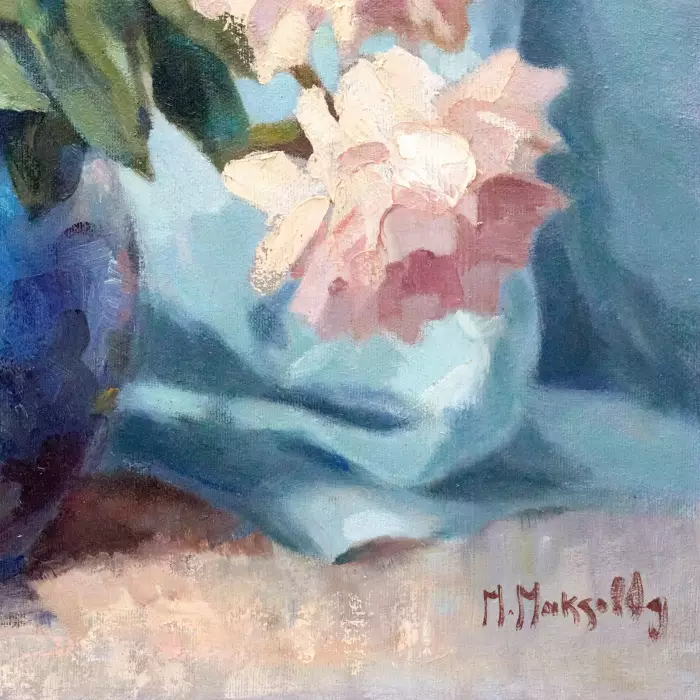
Signature: Signed “M. Maksolly” in the lower right corner.
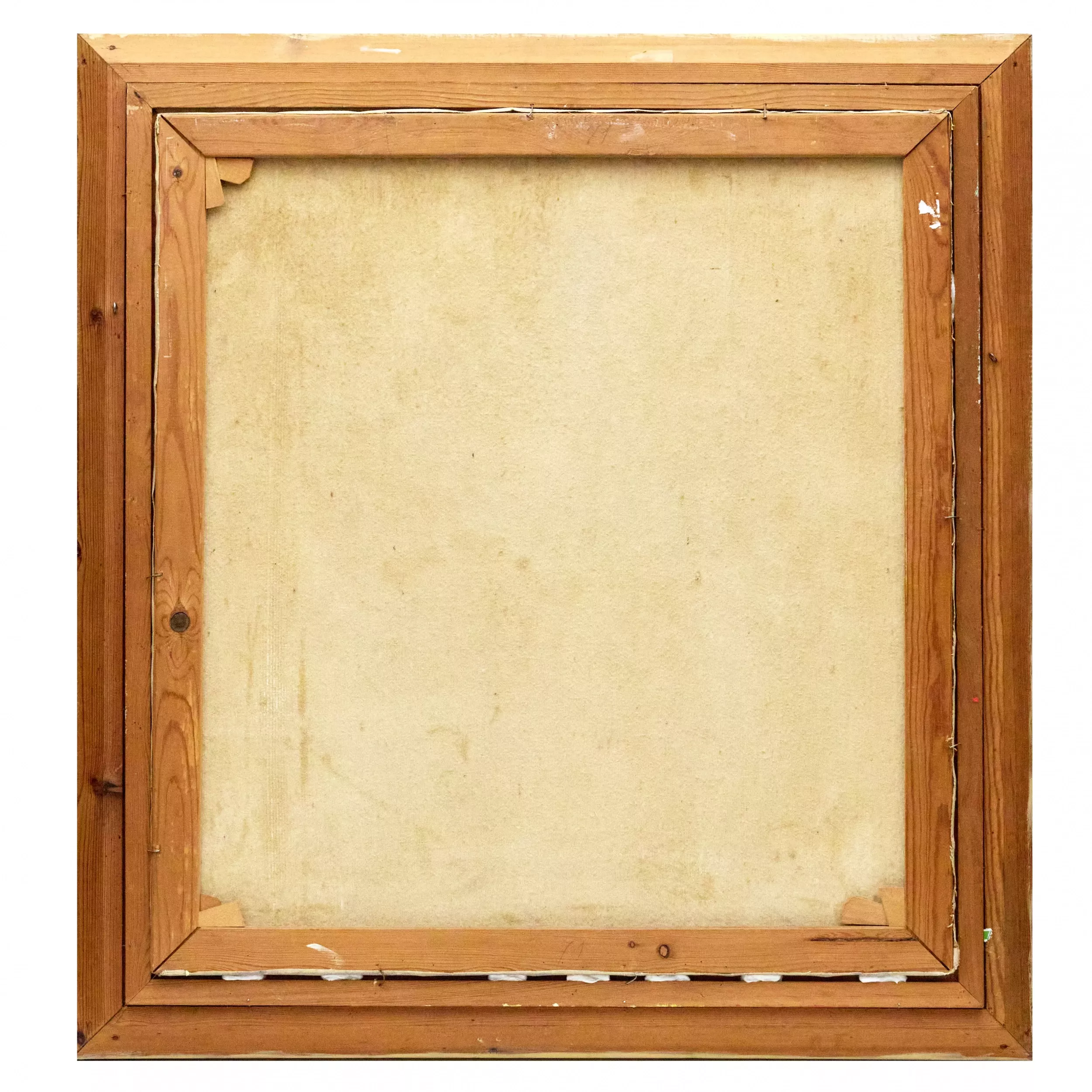
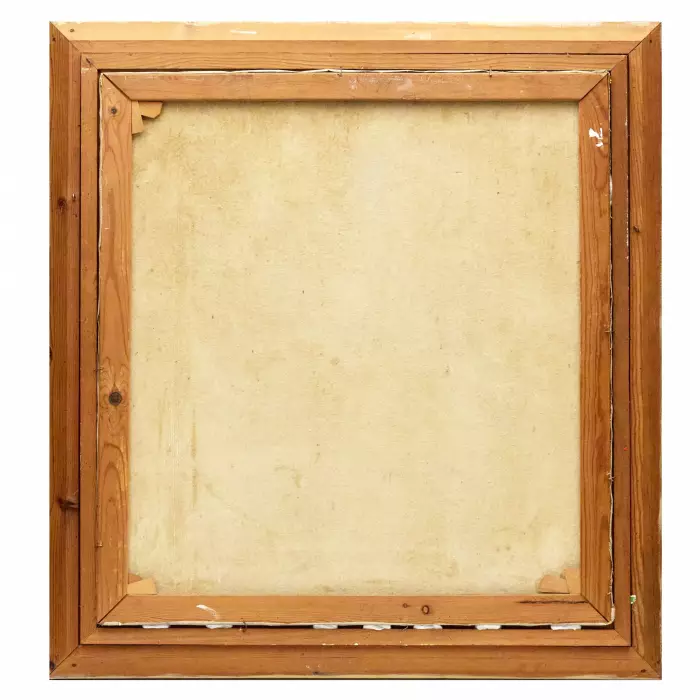
Dimensions: Canvas: 77 × 71 cm. Frame: 93 × 87 × 8 cm.
Material: Oil on canvas.
Provenance: Private European collection.
Maximilian Maksolly belongs to the artistic milieu of Estonia in the first half of the 20th century, a period marked by the formation of a distinctive national school of painting and the integration of Baltic art into the wider European artistic movement. During the 1920s and 1930s, Estonian artists developed their own visual language, combining academic traditions, influences of the French school and modern approaches to colour characteristic of early 20th-century artistic developments.
The still-life genre occupied an important place in European art of this period, offering artists the opportunity to explore the interaction between form, colour and light. Floral compositions, especially depictions of peonies, became symbols of beauty, the fleeting nature of life and the aesthetics of the domestic interior. Unlike the more formal academic arrangements of the 19th century, early 20th-century still lifes acquired greater painterly freedom, with artists focusing not only on the accurate depiction of objects but also on atmosphere, mood and emotional perception.
Maksolly’s artistic manner reflects an interest in the decorative qualities of colour and the expressive potential of painterly texture. His works are characterized by a soft colour palette, sensitivity to light and a desire to preserve the immediate impression of living nature. The present still life with peonies demonstrates these qualities through its translucent tones, free brushwork and balanced composition.
The work occupies a significant place within the context of Baltic painting of the interwar period, when Estonian artists established an independent artistic identity while maintaining a close connection with broader European artistic tendencies.
The work is in good collectible condition. The painted surface retains its richness of colour and decorative expressiveness. Presented in a frame and ready for display.
The condition report is provided for informational purposes only.
It is not comprehensive and may not reflect all defects, restorations, alterations, or adaptations, as Antiqon does not perform professional conservation-level assessments. The information is based on a qualified, yet subjective, evaluation by our specialists.Before purchasing, we recommend consultation with an independent expert.Please also consult our Terms and conditions and Glossary A-Z, which contain important information on lot characteristics and sale conditions.