SILVER KOVSH BY PAVEL OVCHINNIKOV, EXECUTED AFTER DESIGNS BY SERGEI VASHKOV. MOSCOW, 1899–1908
Antiqon consultant will contact you within one business day after receiving your request.
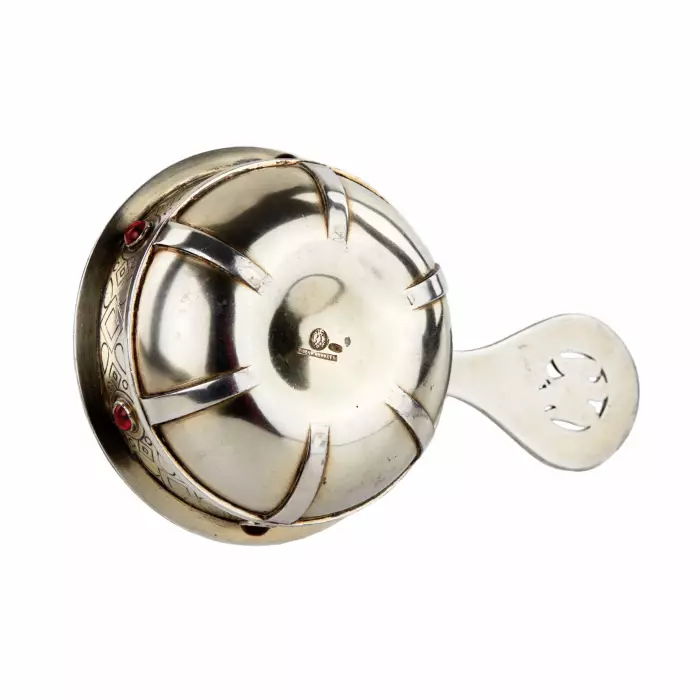
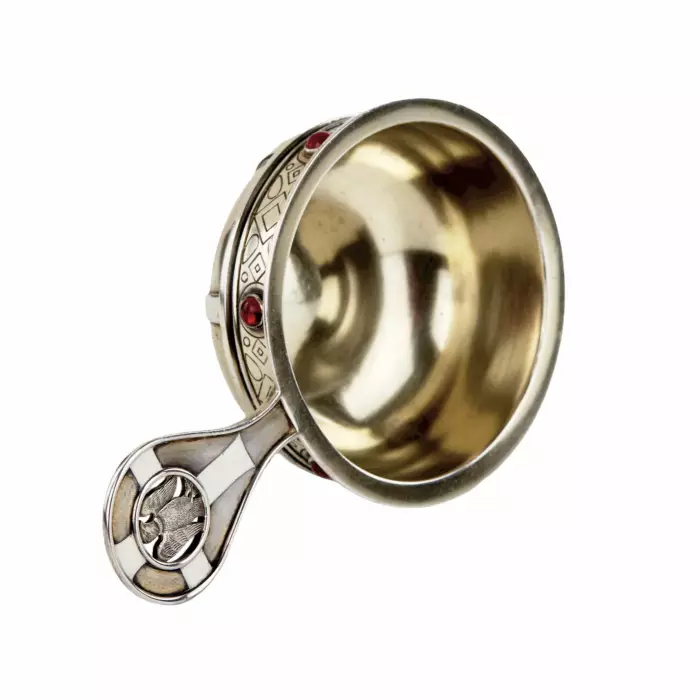
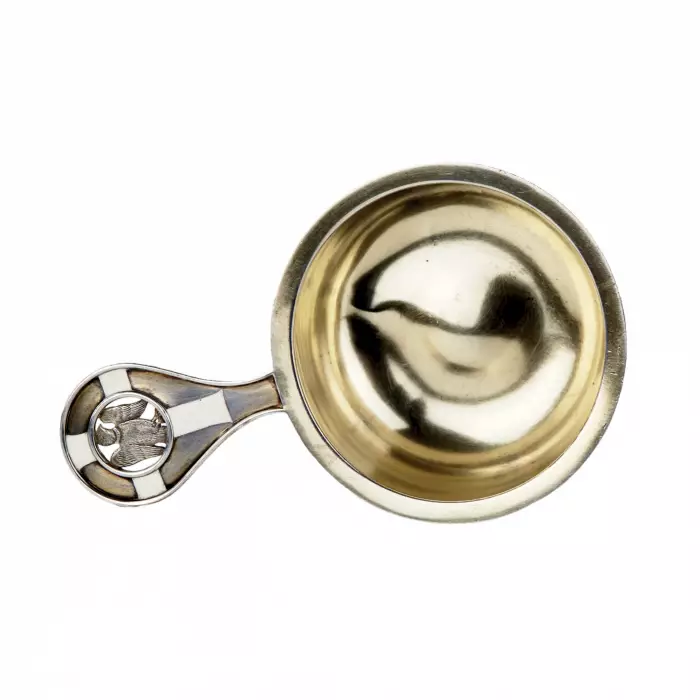
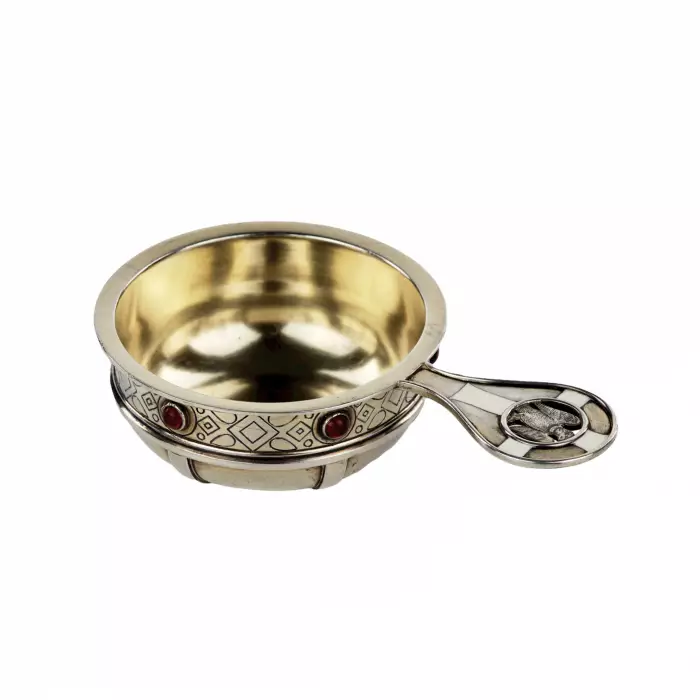
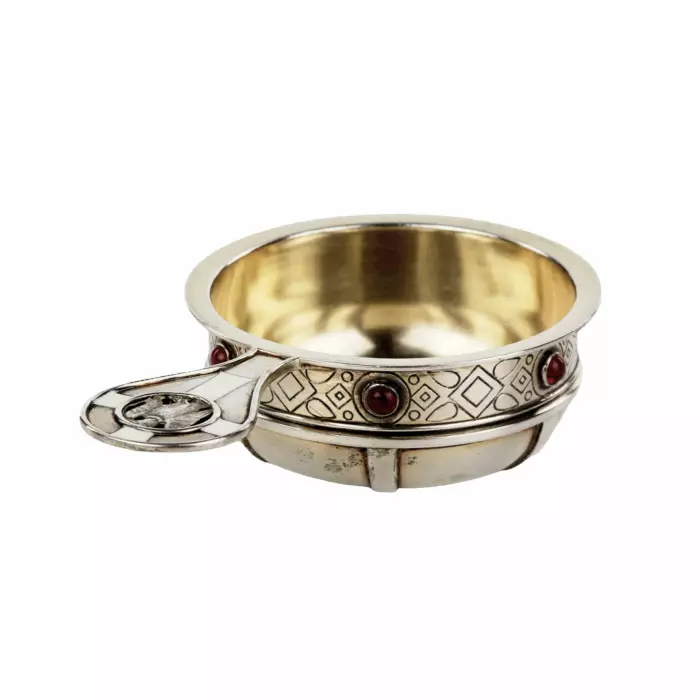
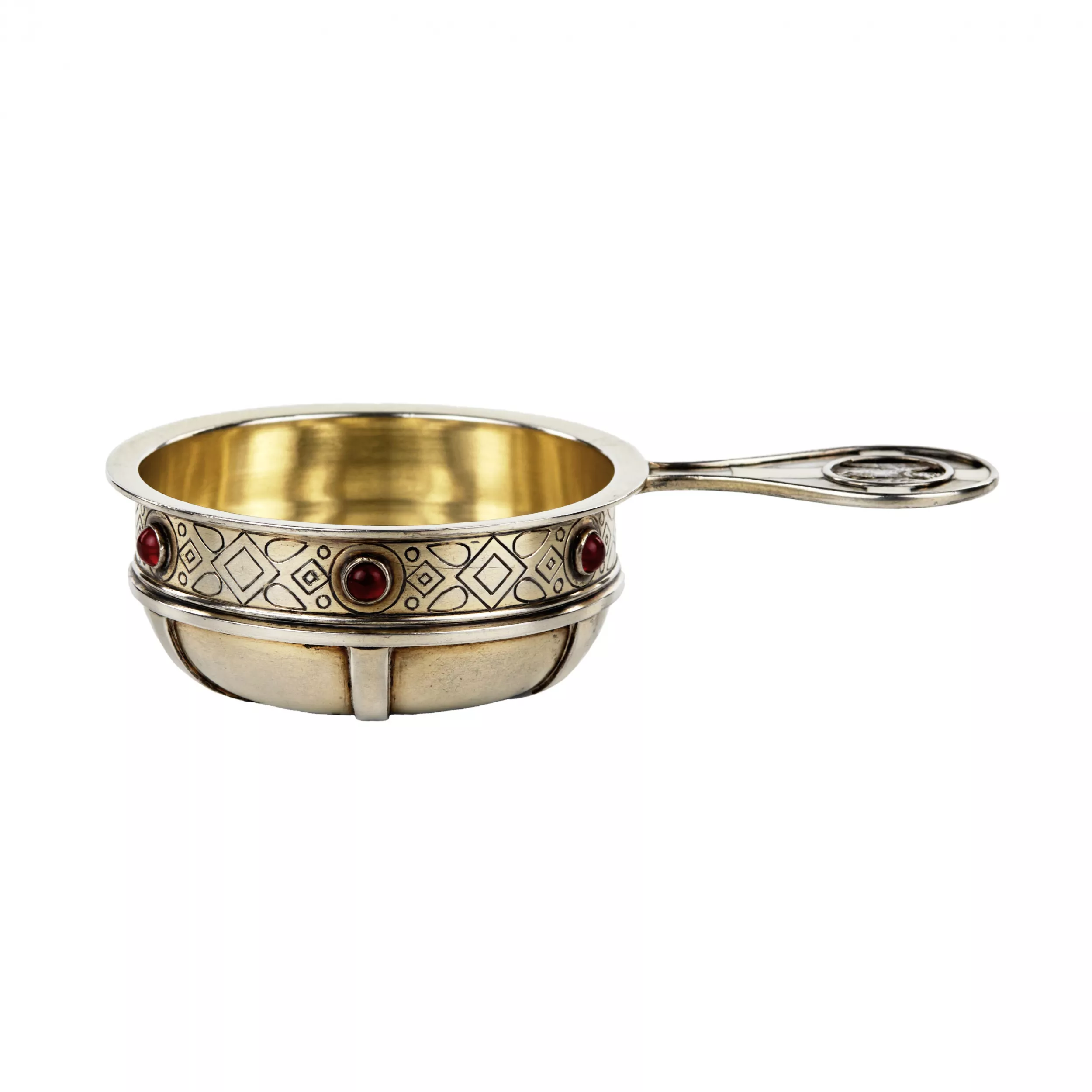
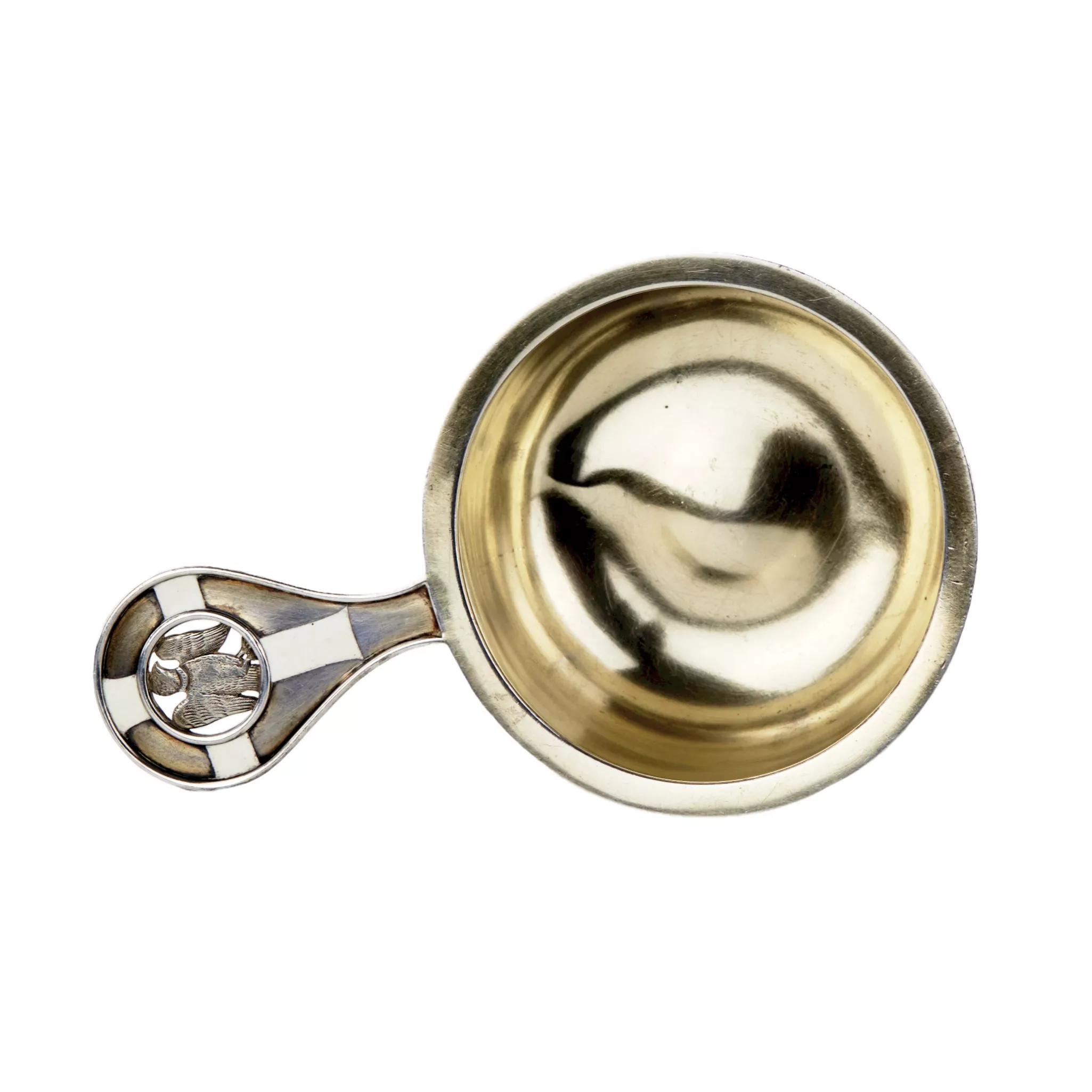
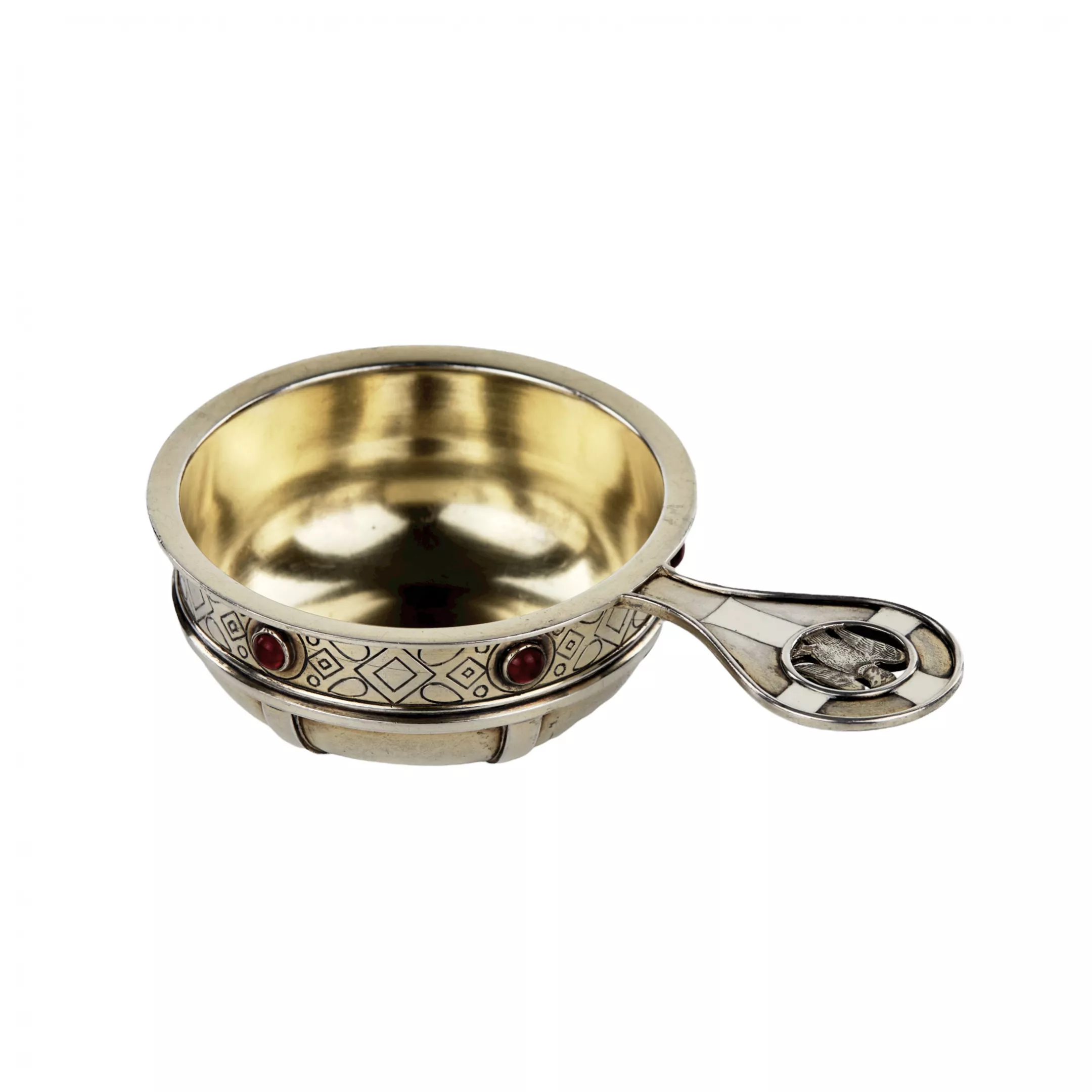
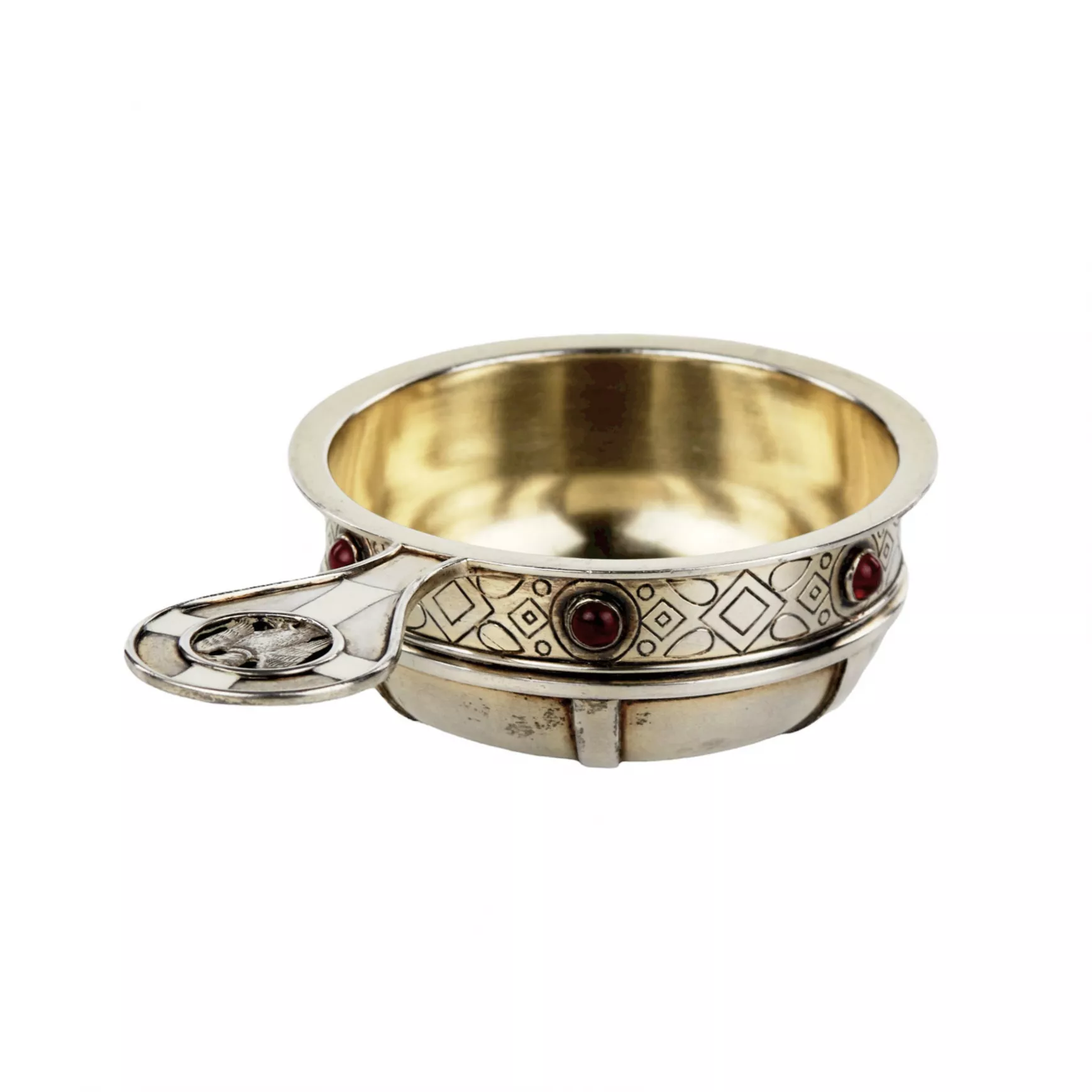
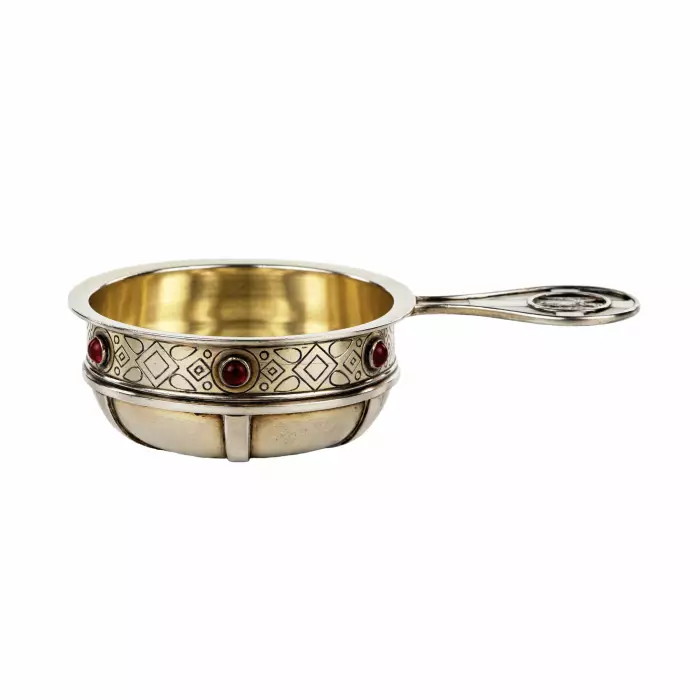
A rare silver kovsh by the Moscow firm of Pavel Ovchinnikov, Purveyor to the Imperial Court, made at the turn of the 20th century in the Neo-Russian style. The artistic conception of the piece is associated with the ornamental designs of Sergei Ivanovich Vashkov, one of the most significant figures in Russian decorative art of the Art Nouveau period.
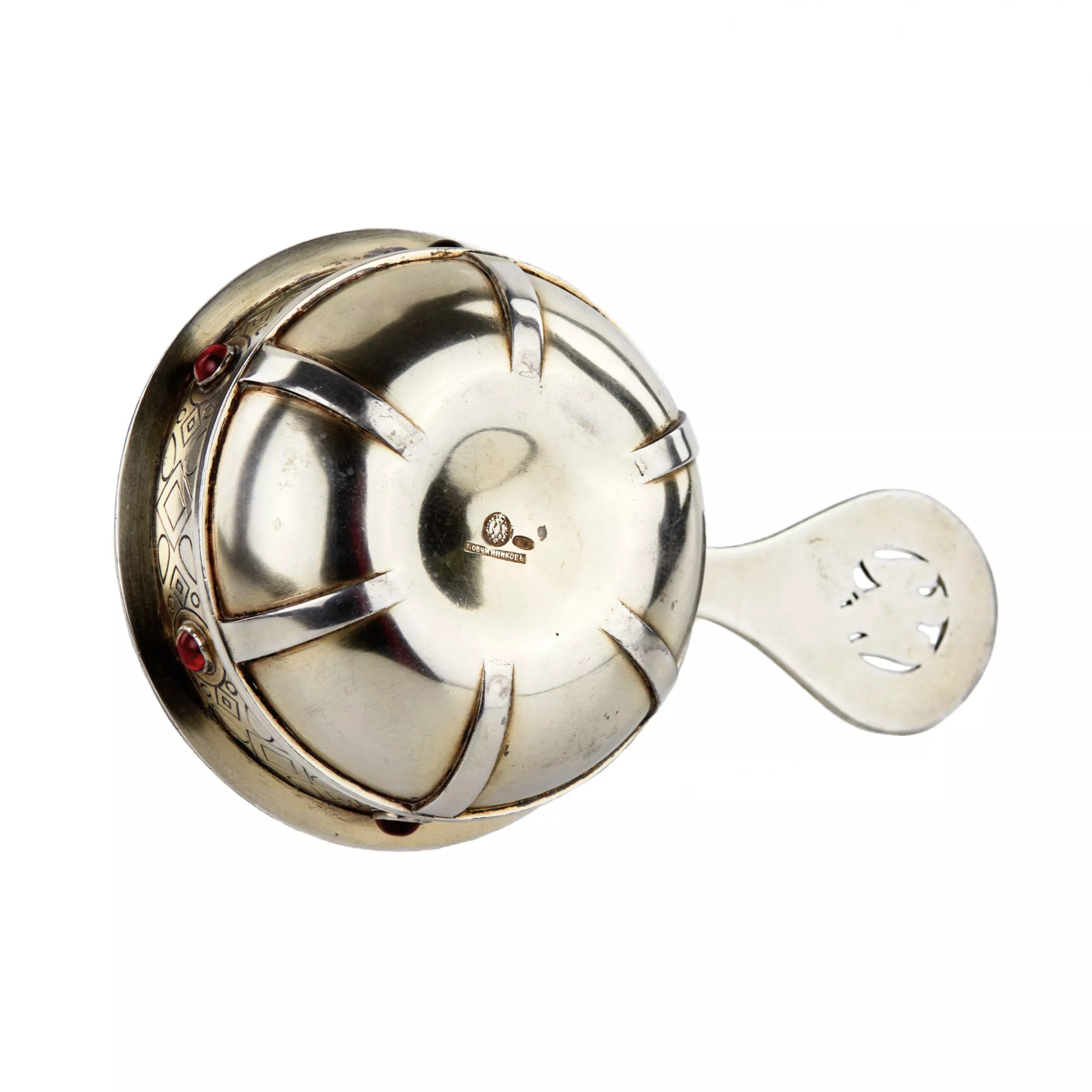
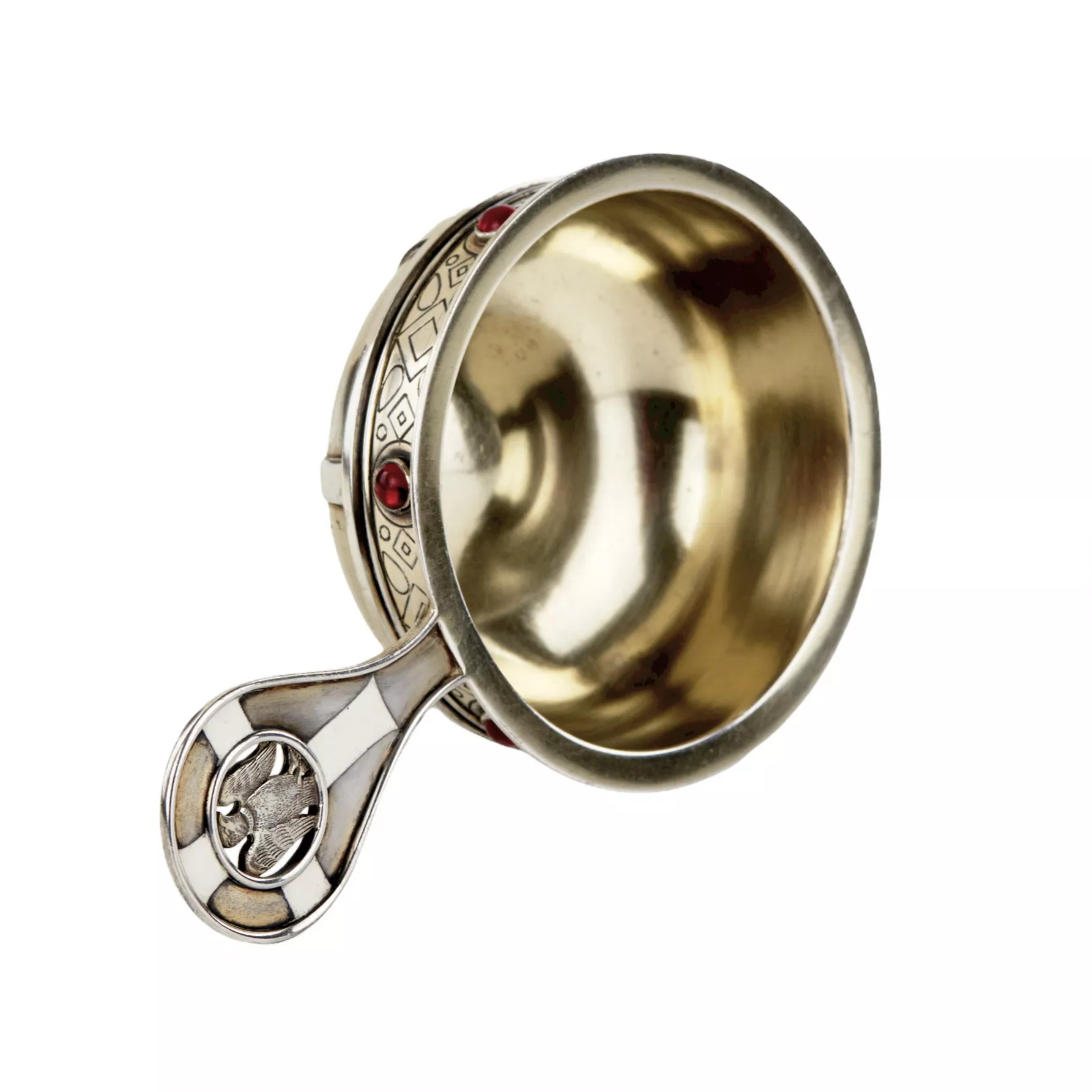
The low rounded body, with a broad everted rim, is articulated by applied vertical ribs that lend the form a distinctly architectural character. A broad ornamental frieze encircles the body, composed of a rhythmically repeated geometric pattern combining lozenges, circles and stylised vegetal elements. The engraved ornament is accentuated with niello and enriched with red cabochon-cut stones set in smooth circular bezels. The interior of the kovsh is gilded.
The flat, paddle-shaped handle continues the geometric structure of the object and terminates in an openwork circular medallion containing a stylised bird. The treatment of the ornament, the pronounced structural character of the form and the reference to motifs derived from the artistic heritage of medieval Rus` allow the decorative language of the object to be compared with designs by Sergei Vashkov published in Religious Art. A Collection of Works of Ecclesiastical and Secular Objects Executed by the Partnership of P. I. Olovyanishnikov`s Sons (Moscow).
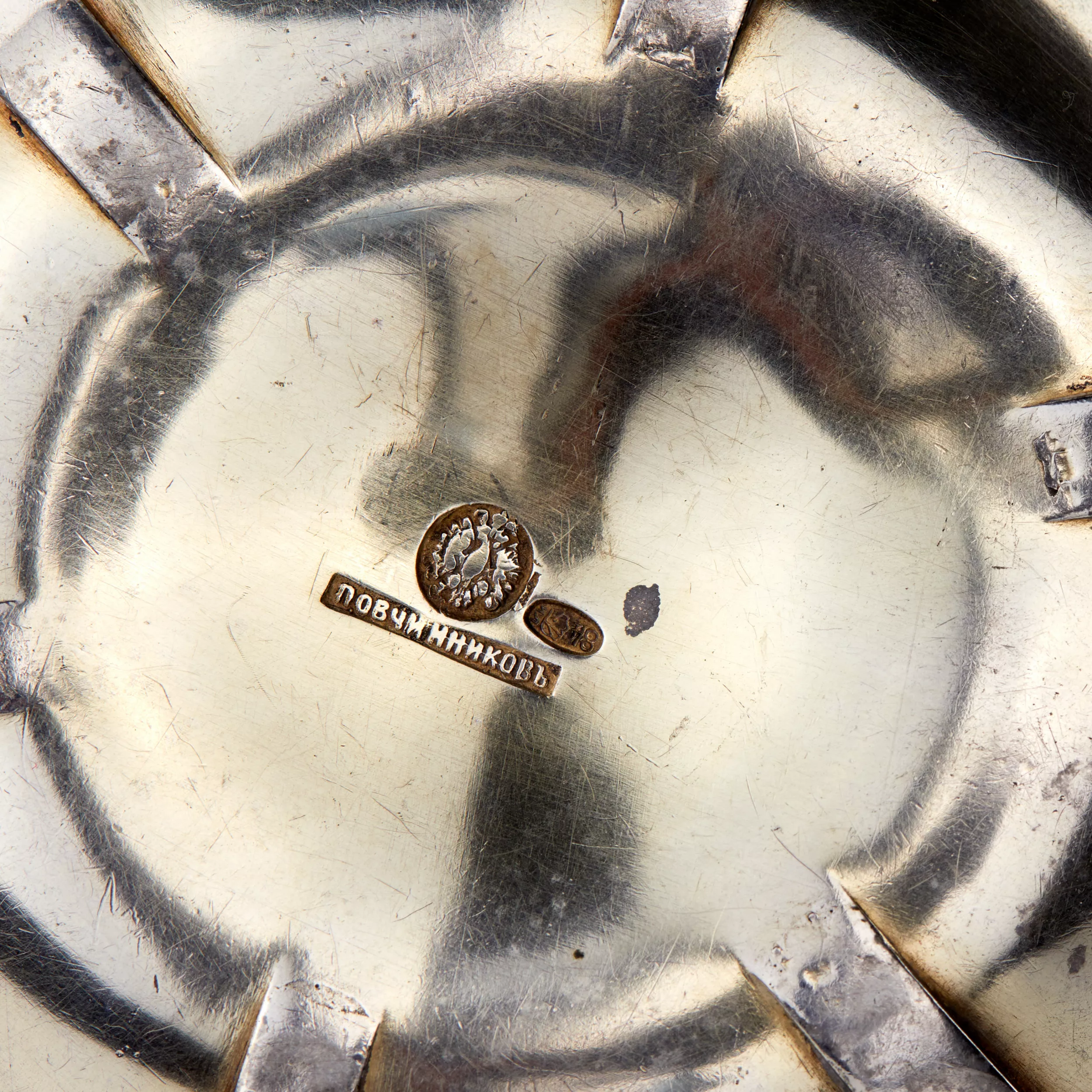
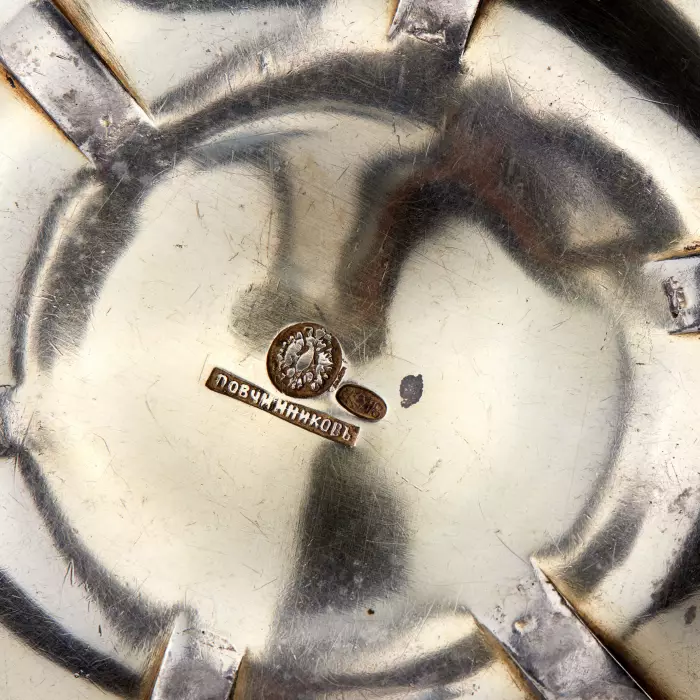
Hallmarks: The underside bears the firm`s mark P. OVCHINNIKOV beneath the Imperial double-headed eagle; the Moscow state assay mark for 84 zolotnik silver with a woman`s head in a kokoshnik; and the mark IL of Moscow assay inspector Ivan Sergeevich Lebedkin. Taken together, the hallmarks date the object to 1899–1908.
Dimensions: Length 14.5 cm. Height 3.5 cm. Diameter 9 cm.
Weight: 145 g.
Condition: Good. Minor traces of natural use and localised tarnishing to the silver. The gilding to the interior is preserved. The decorative stone settings are preserved.
Provenance: Private collection.
At the turn of the 20th century, Russian decorative and applied art underwent an intensive reassessment of the country`s national artistic heritage. Rather than literally reproducing medieval Russian prototypes, artists and craftsmen sought to reinterpret them, transforming the forms of historic vessels, manuscript ornament, architectural motifs and early Russian decorative traditions into a new artistic vocabulary. A comparable interest in national traditions developed within the Abramtsevo artistic circle and became an important component of the Russian interpretation of Art Nouveau.
Sergei Ivanovich Vashkov occupied a distinctive position within this movement. His designs for ecclesiastical and secular objects combined imagery derived from medieval Russian art with the principles of contemporary decorative design. His artistic vocabulary was characterised by bold geometric ornament, stylised vegetal and zoomorphic motifs, an emphasis on the structural construction of the object and expressive combinations of metal, enamel and coloured decorative elements. This approach enabled the traditional Russian kovsh to be transformed into a distinctly modern object while retaining an unmistakable connection with national artistic culture.
The kovsh occupies a particular place in the history of Russian silver. Originally a functional drinking vessel, it gradually acquired ceremonial, commemorative and presentation functions. Historic kovshi consequently became an important category of Russian precious-metalwork and an enduring source of inspiration for silversmiths during the revival of national styles in the late 19th and early 20th centuries.
The Moscow firm of Pavel Ovchinnikov ranked among the leading Russian silver and jewellery manufacturers of its era. In works produced by such workshops, historic forms were combined with exceptional standards of silversmithing and contemporary artistic experimentation. The present Ovchinnikov silver kovsh is characteristic of this development, in which a traditional Russian form received a new decorative interpretation consonant with Sergei Vashkov`s ornamental vocabulary and the aesthetics of the Neo-Russian style.
Good overall condition. Minor surface traces of age and use with localised patination. The interior gilding and decorative stone settings are preserved; no significant visible losses are apparent.
The condition report is provided for informational purposes only.
It is not comprehensive and may not reflect all defects, restorations, alterations, or adaptations, as Antiqon does not perform professional conservation-level assessments. The information is based on a qualified, yet subjective, evaluation by our specialists.Before purchasing, we recommend consultation with an independent expert.Please also consult our Terms and conditions and Glossary A-Z, which contain important information on lot characteristics and sale conditions.