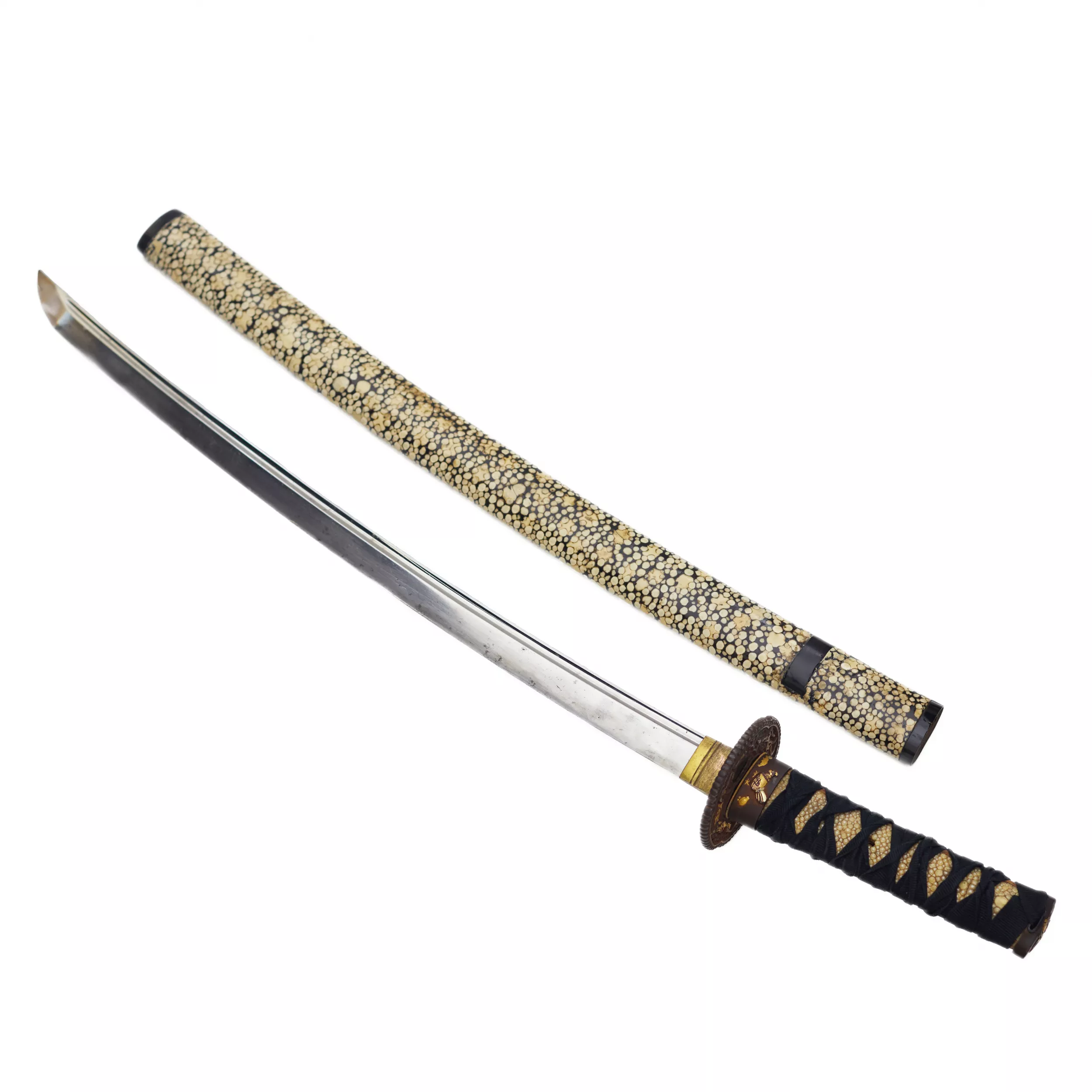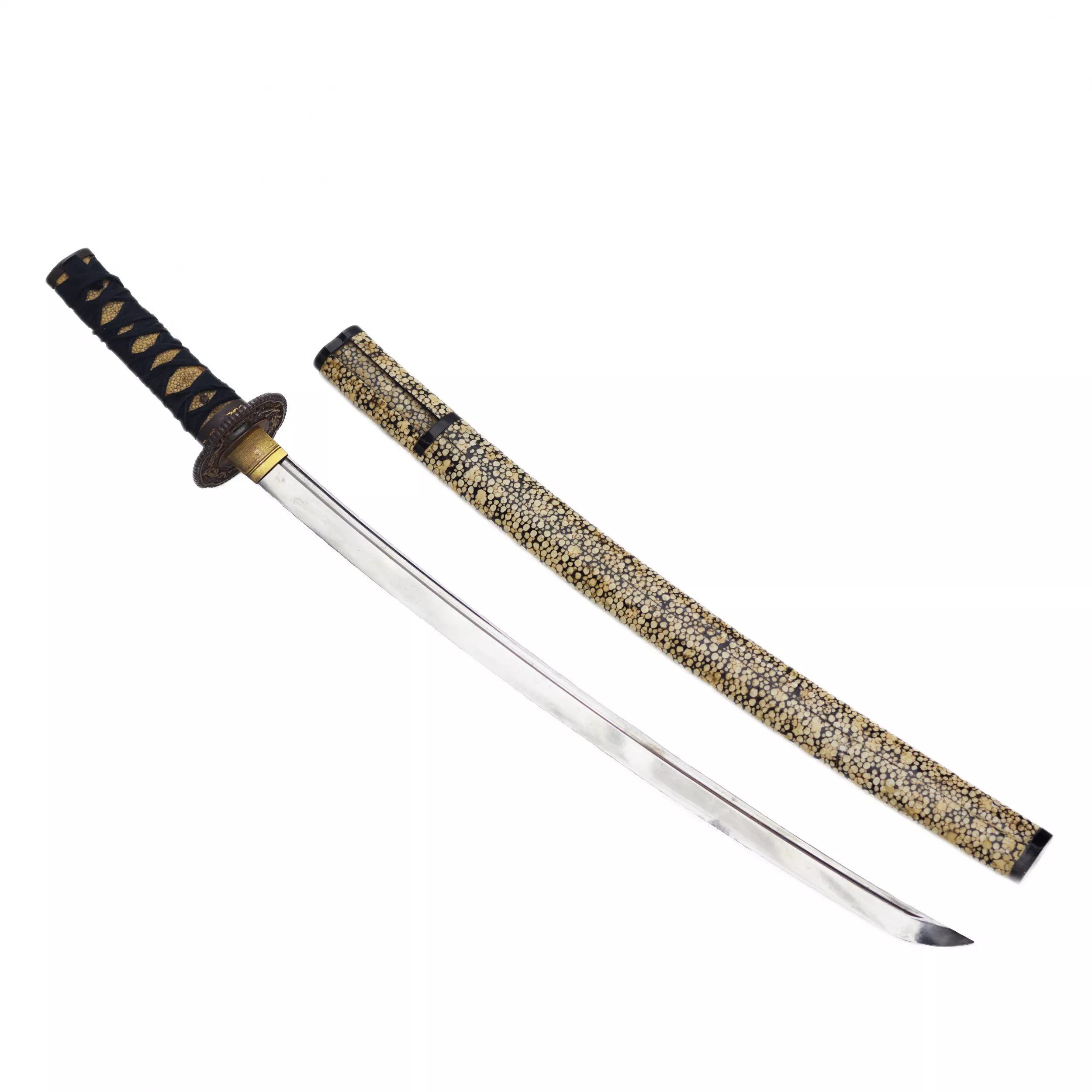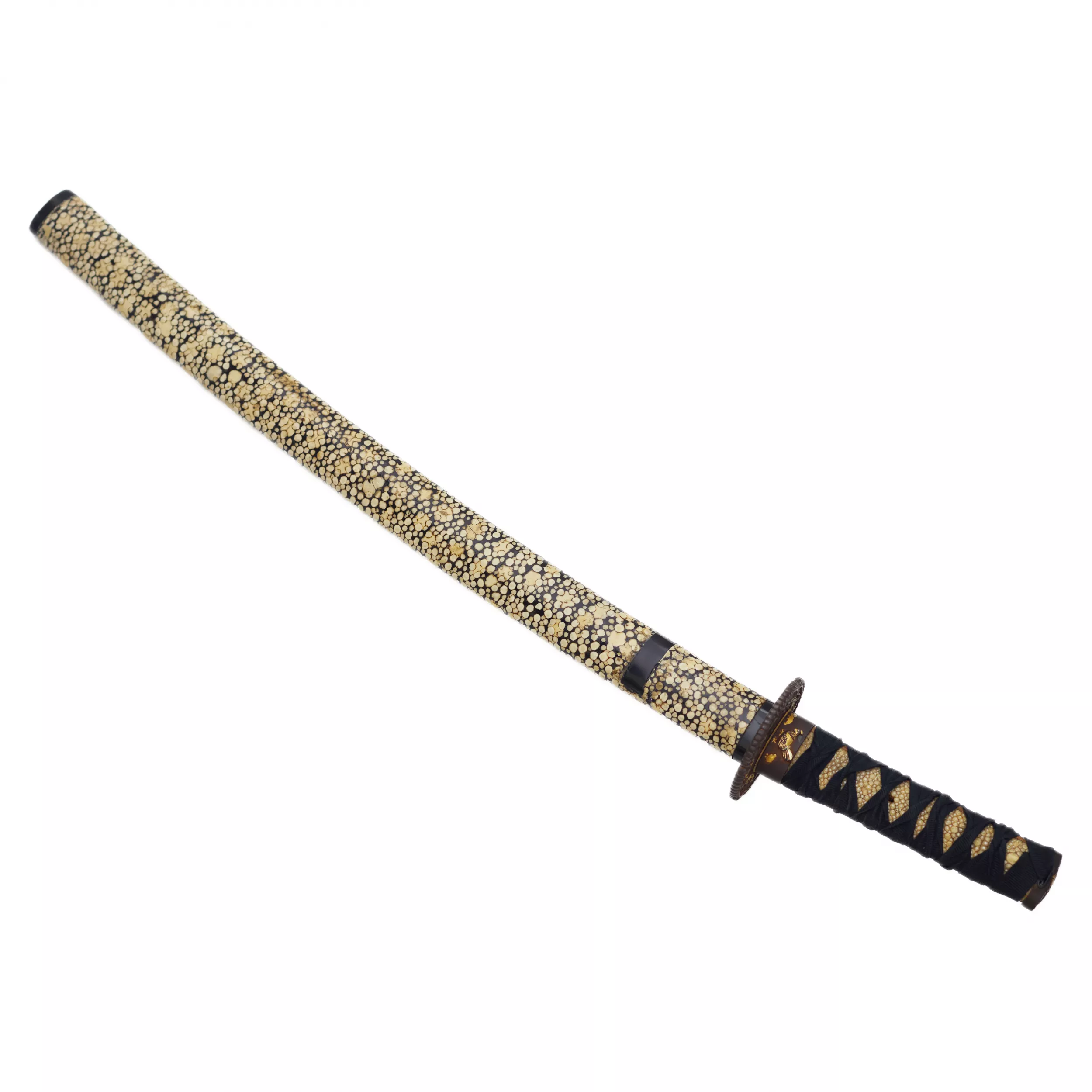
WAKIZASHI IN FORMAL KOSHIRAE WITH A NAMBAN TSUBA. JAPAN, EDO PERIOD, 19TH CENTURY
Antiqon consultant will contact you within one business day after receiving your request.
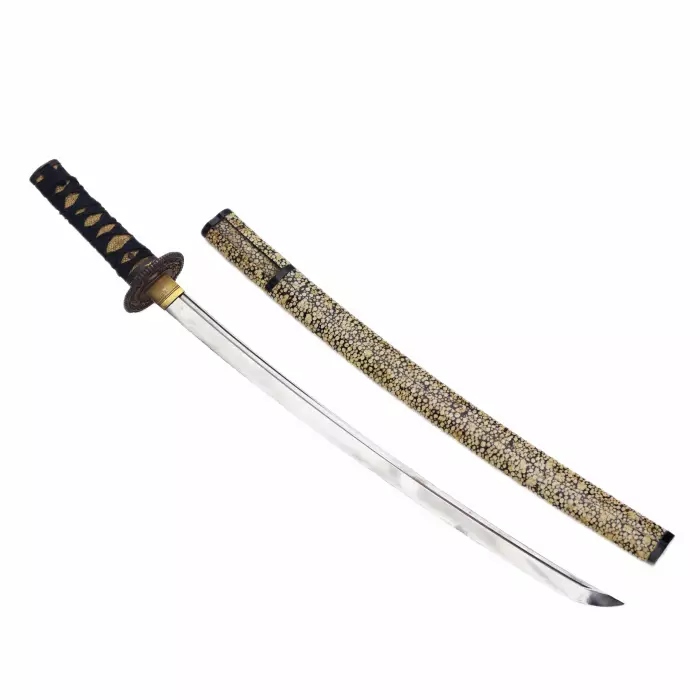
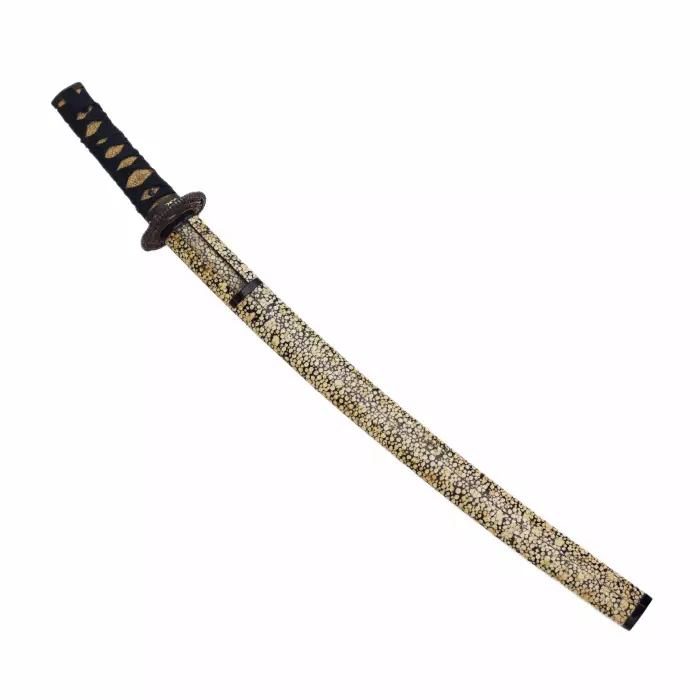
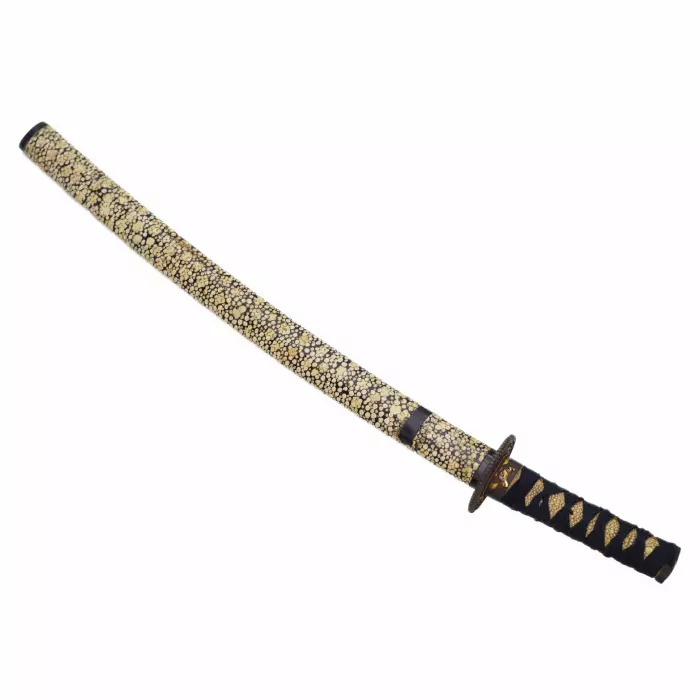
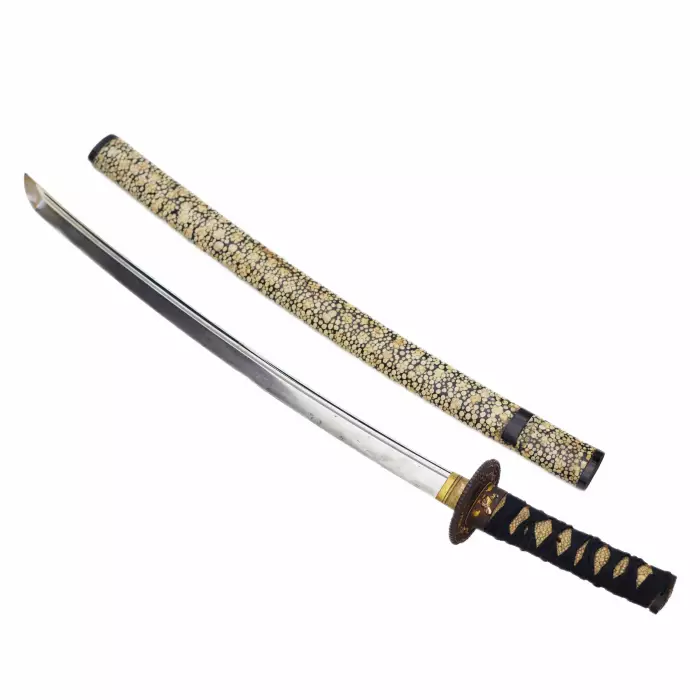
A Japanese wakizashi short sword mounted in richly decorated koshirae, characteristic of the late Edo period and combining the traditions of Japanese sword craftsmanship with the highly developed decorative arts associated with sword fittings.
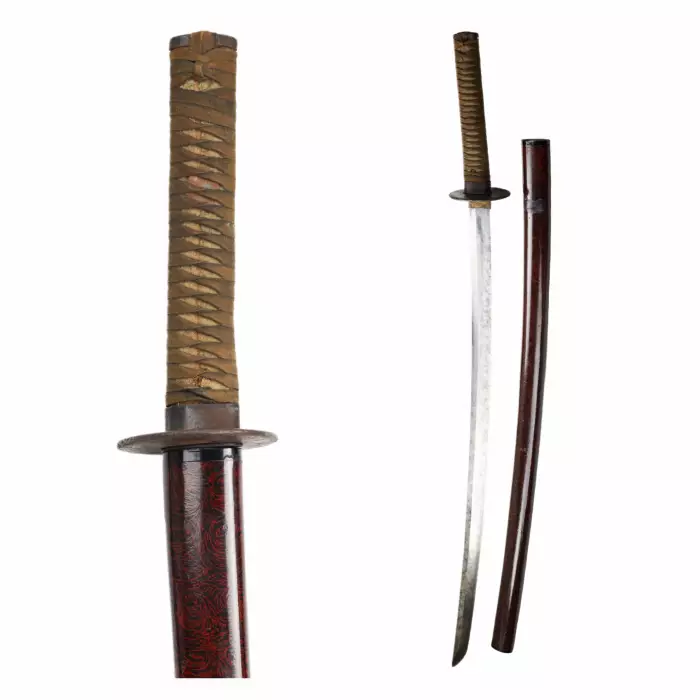
The slightly curved steel blade has a clearly defined kissaki and a broad longitudinal bo-hi extending along a substantial portion of the blade. Such grooves were a traditional feature of Japanese blades, reducing their weight while maintaining structural rigidity. Museum collections record Edo-period wakizashi with broad bo-hi as an established form of Japanese blade construction.
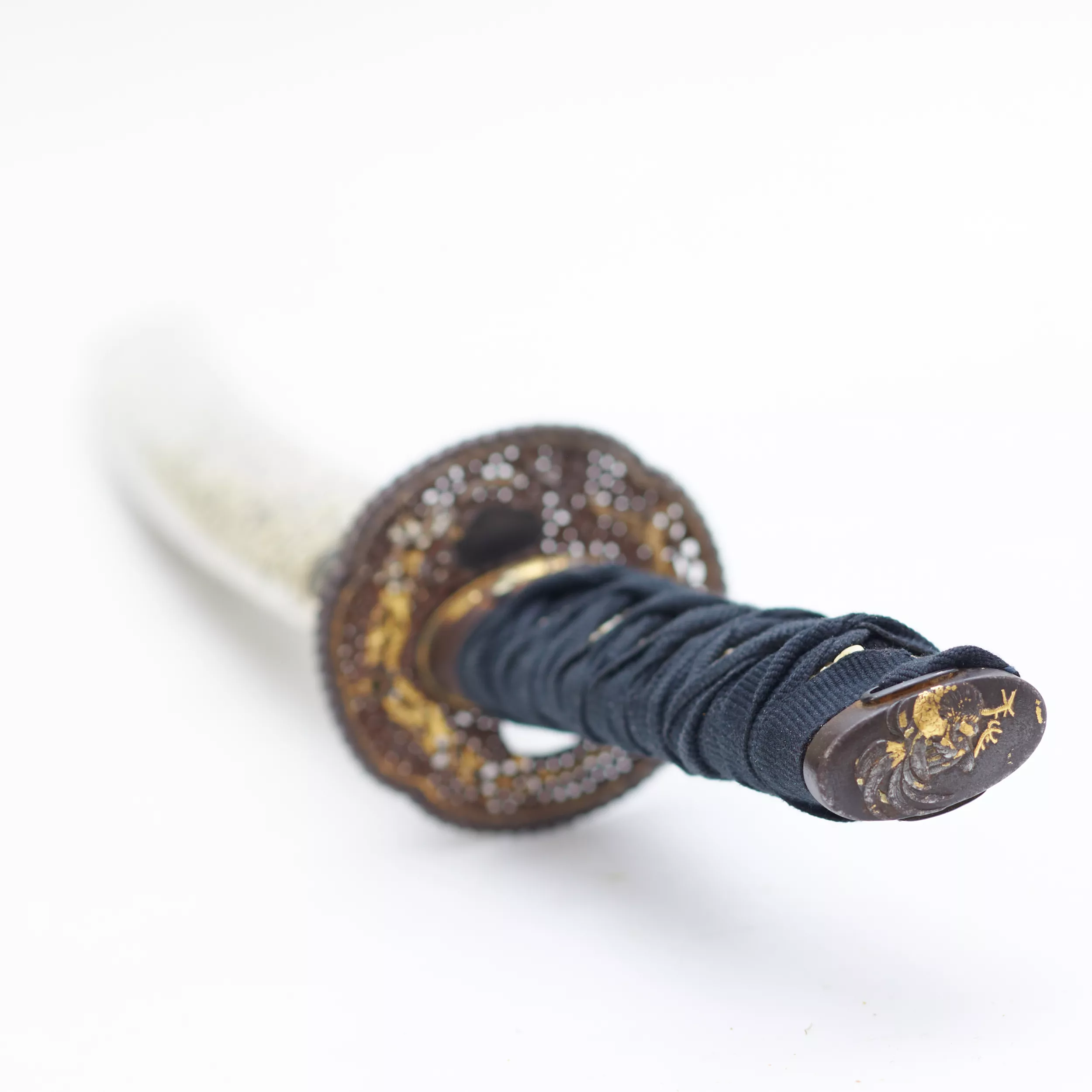
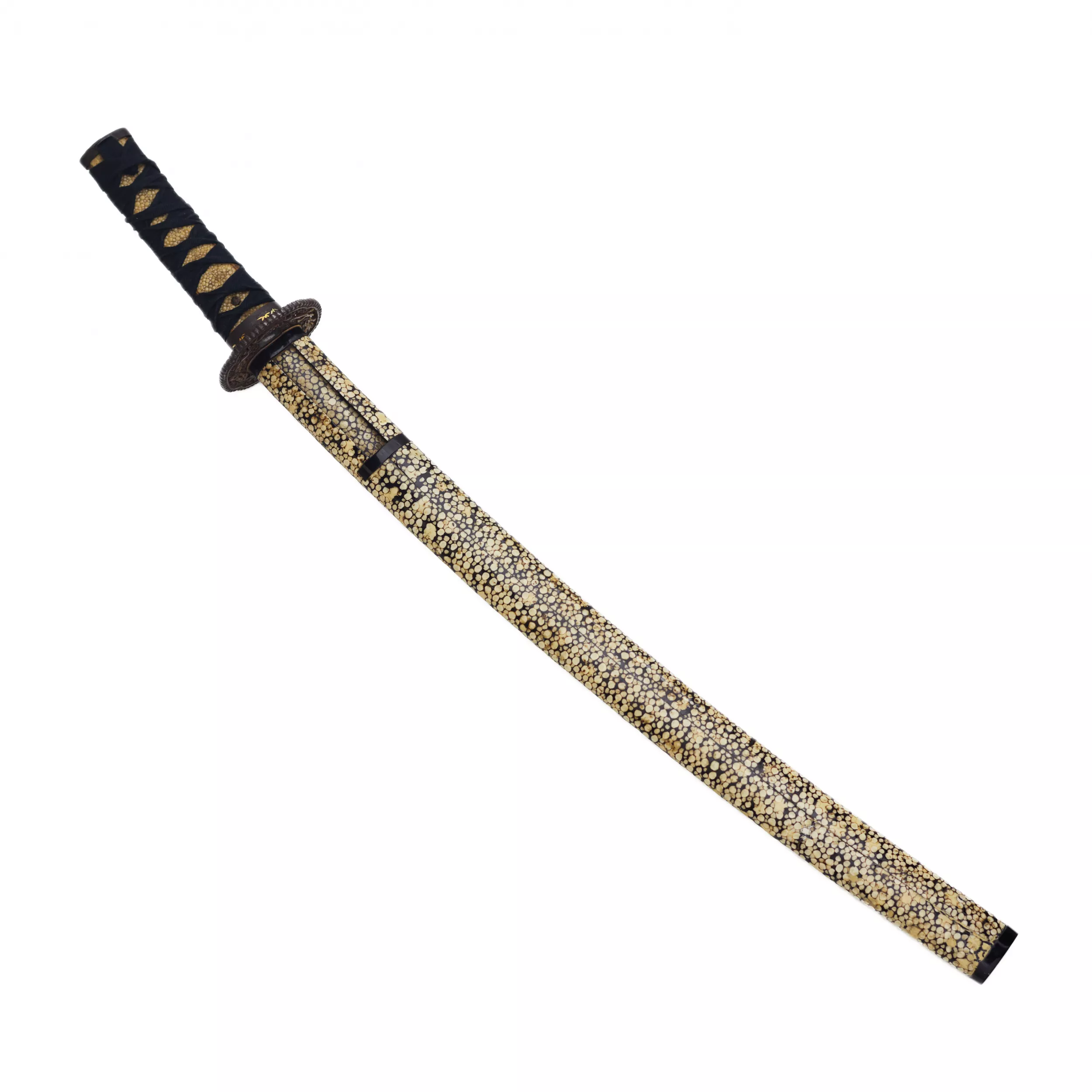
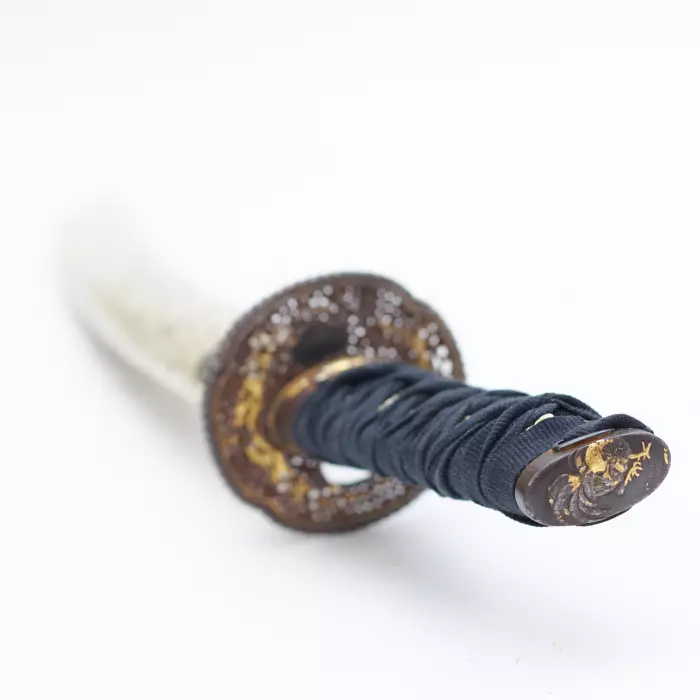
The tsuka is covered in samegawa ray skin and traditionally wrapped with tightly bound black tsuka-ito. Beneath the wrapping are decorative menuki in the form of stylised flowers.
Of particular artistic interest are the iron fuchi and kashira, embellished with inlay and partial gilding. Their decoration depicts a rooster, hen and chick, forming a small genre scene. Zoomorphic and floral motifs executed with metal inlay and gold decoration were characteristic of Japanese sword fittings during the Edo period. Comparable combinations of iron, relief decoration and gilding are represented in museum collections of Japanese arms and armour.
The iron tsuba is executed in the sukashi technique, with openwork decoration and partial gilding. Its design belongs to the Namban tradition, a distinctive current in Japanese sword fittings that developed through the adaptation and interpretation of European and other Asian decorative motifs.
The saya is covered with polished, large-grained ray skin, creating a distinctive natural texture. Dark metal fittings contrast with the cream-brown surface of the scabbard. A slot for a kozuka is present; however, the kozuka itself is missing.
The combination of a blade with bo-hi, a traditional samegawa-covered hilt, figural fuchi-kashira, an openwork Namban tsuba and striking ray-skin scabbard gives the sword the coherent decorative character associated with Japanese arms of the late Edo period. Comparable 19th-century museum examples demonstrate a similar combination of a steel blade with an independently conceived and elaborately decorated ensemble of sword mountings.
Material: Steel, iron, samegawa ray skin, textile, gilding, inlay.
Dimensions: Overall length 68.5 cm.
Condition: Good condition with natural signs of age and use. Kozuka missing.
The condition report is provided for informational purposes only.
It is not comprehensive and may not reflect all defects, restorations, alterations, or adaptations, as Antiqon does not perform professional conservation-level assessments. The information is based on a qualified, yet subjective, evaluation by our specialists.Before purchasing, we recommend consultation with an independent expert.Please also consult our Terms and conditions and Glossary A-Z, which contain important information on lot characteristics and sale conditions.