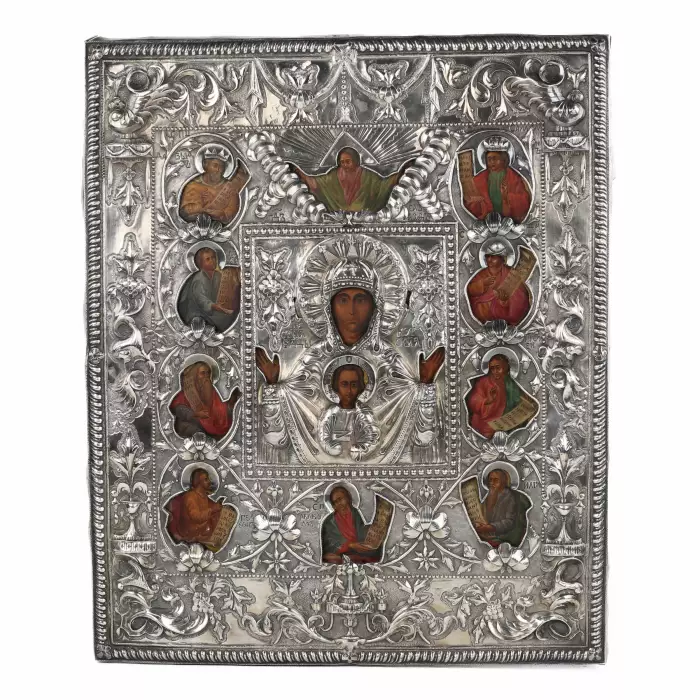
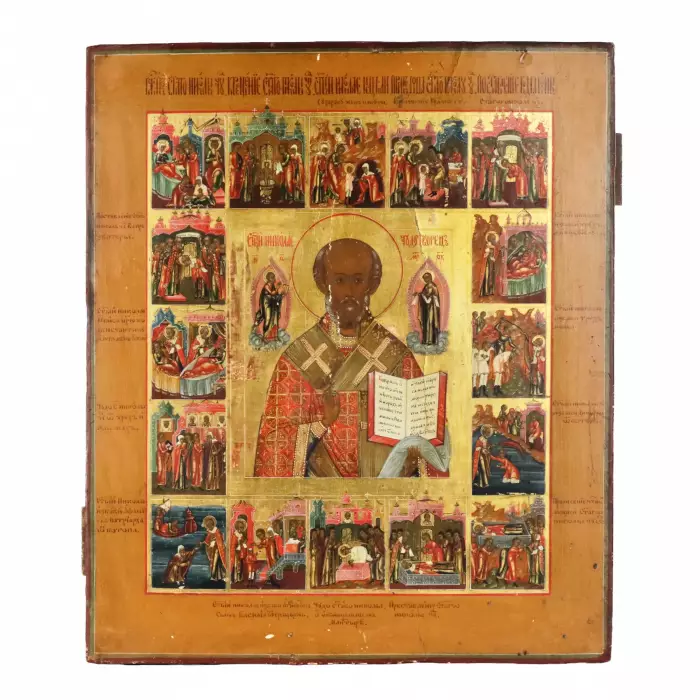
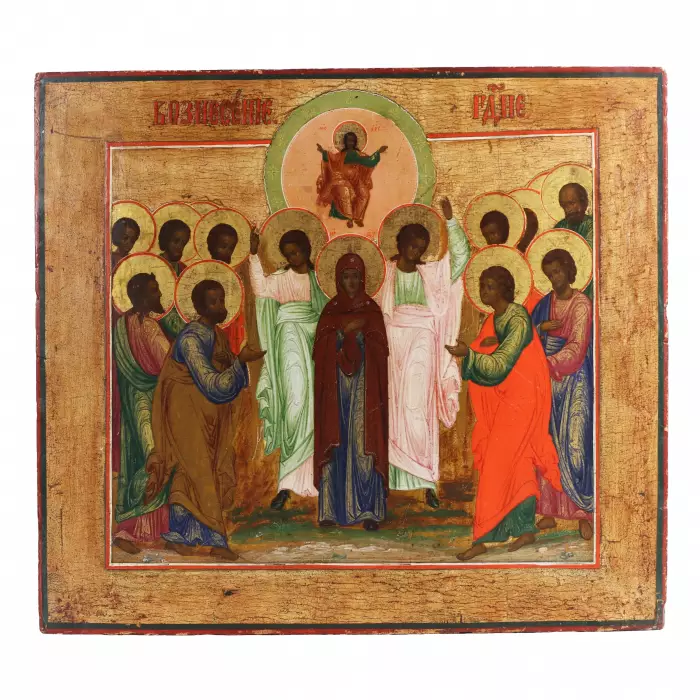
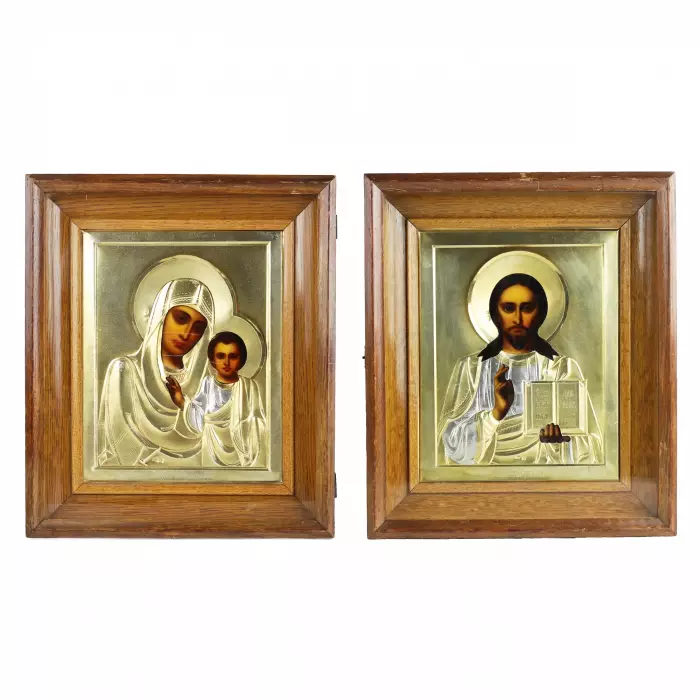
PAIR OF WEDDING ICONS WITH SILVER OKLADS IN THE ART NOUVEAU STYLE. MOSCOW, EARLY 20TH CENTURY
Antiqon consultant will contact you within one business day after receiving your request.
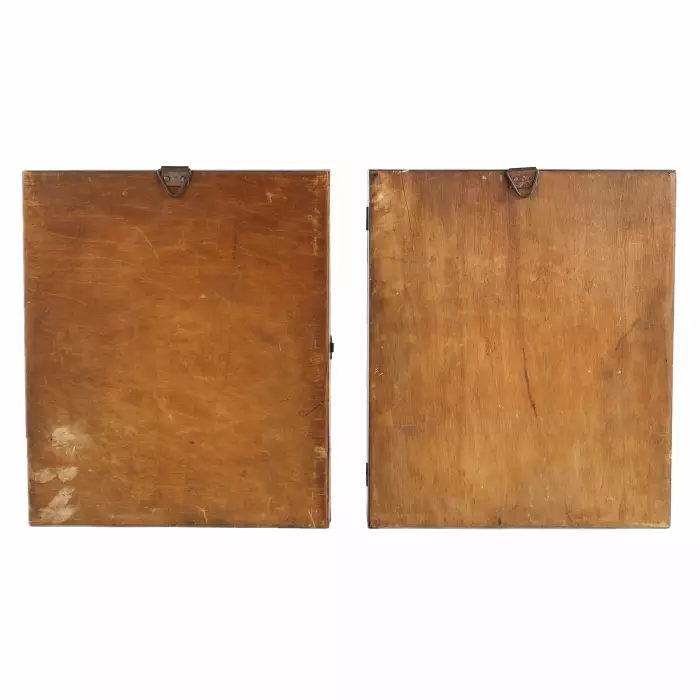
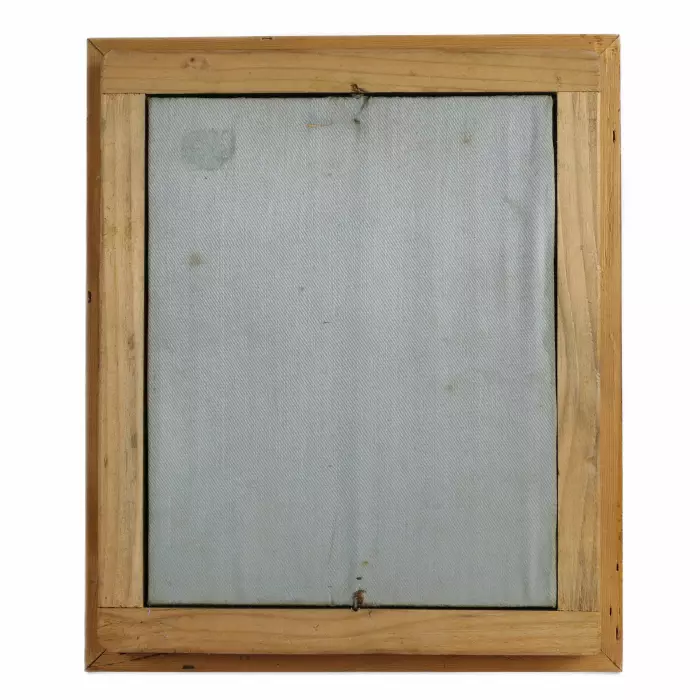
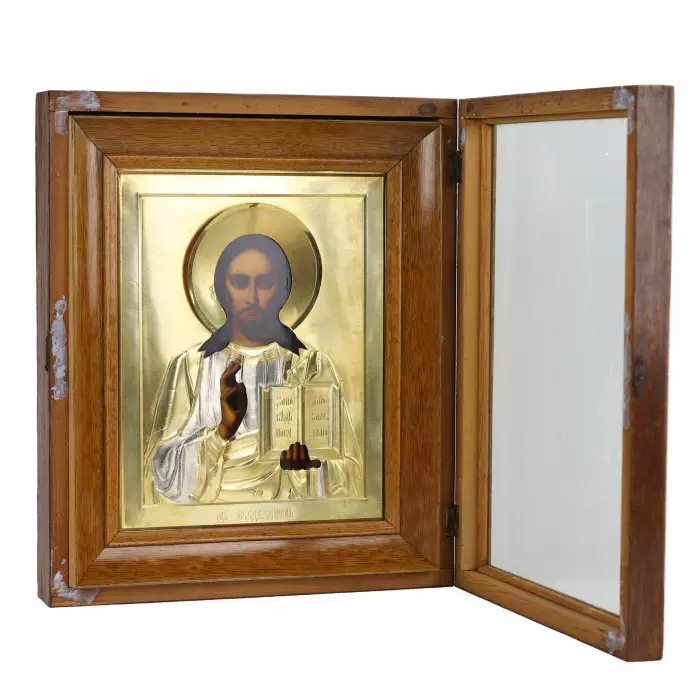
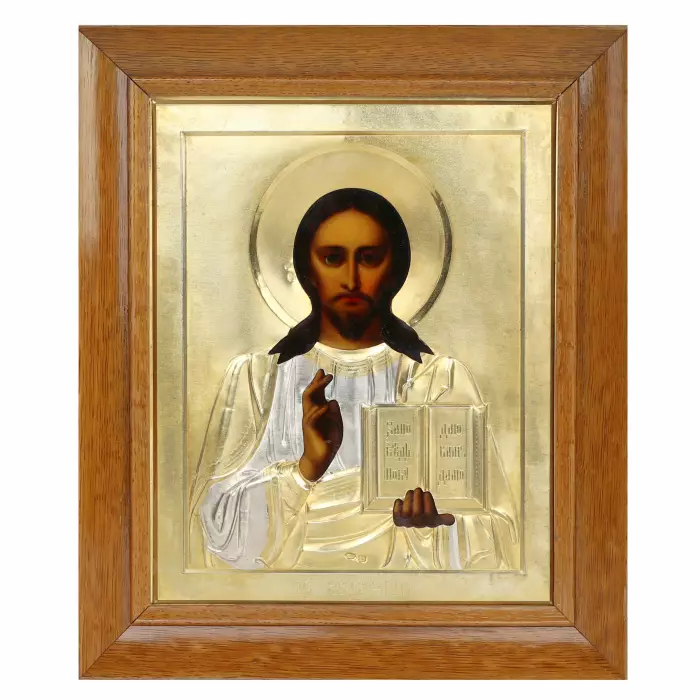
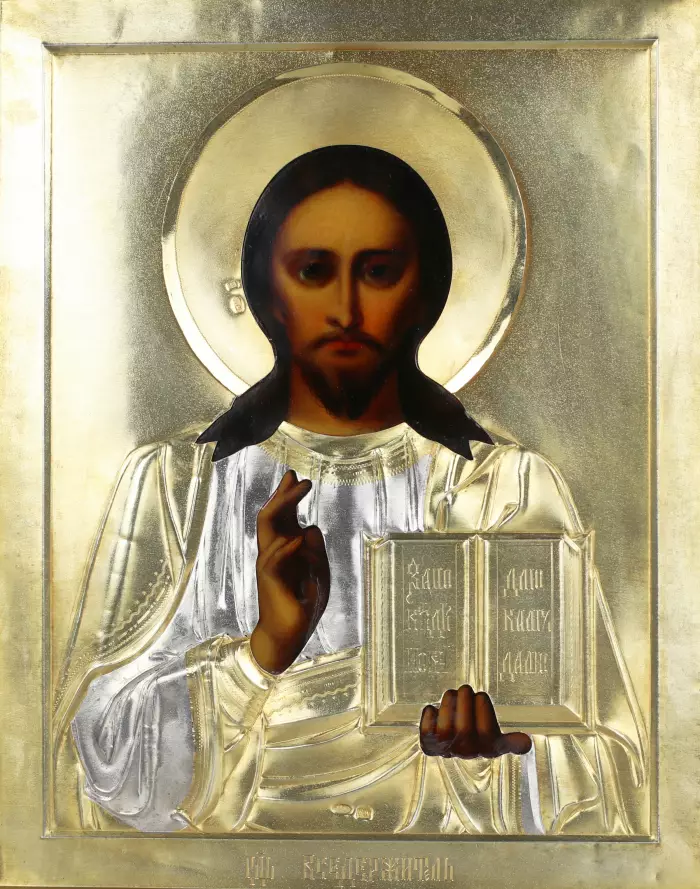
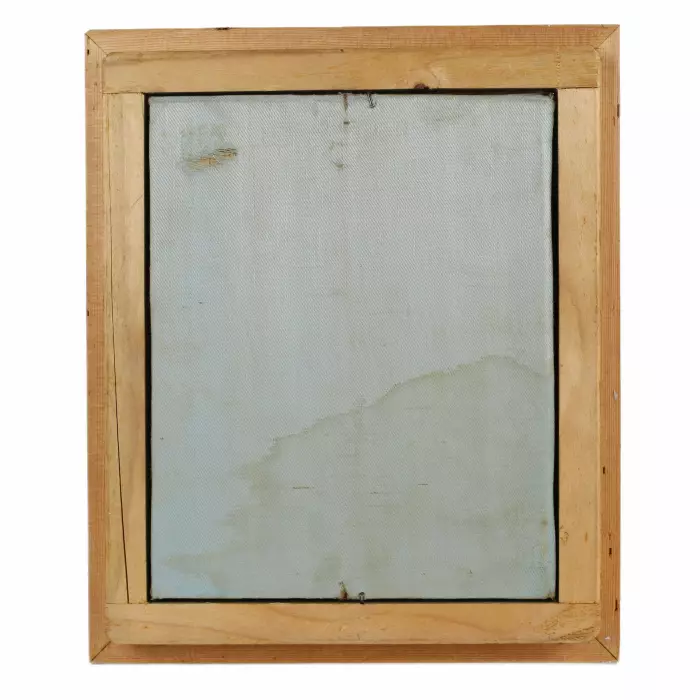
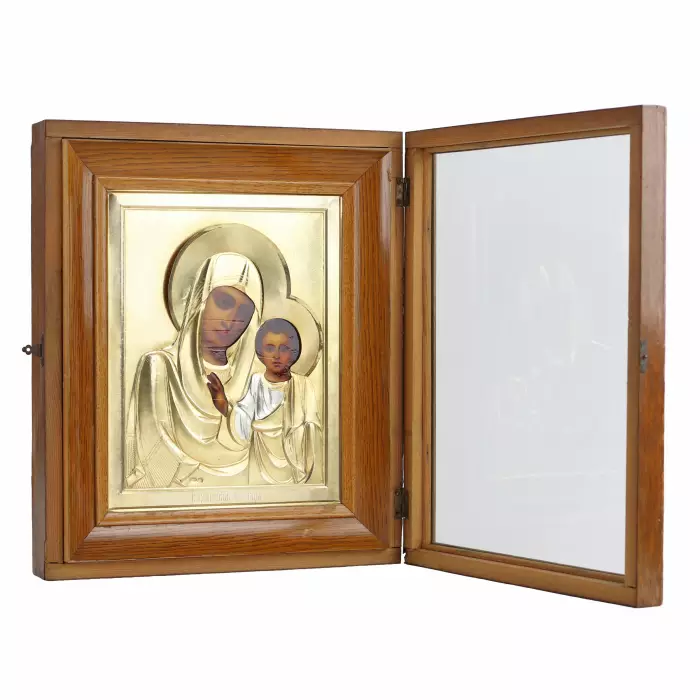
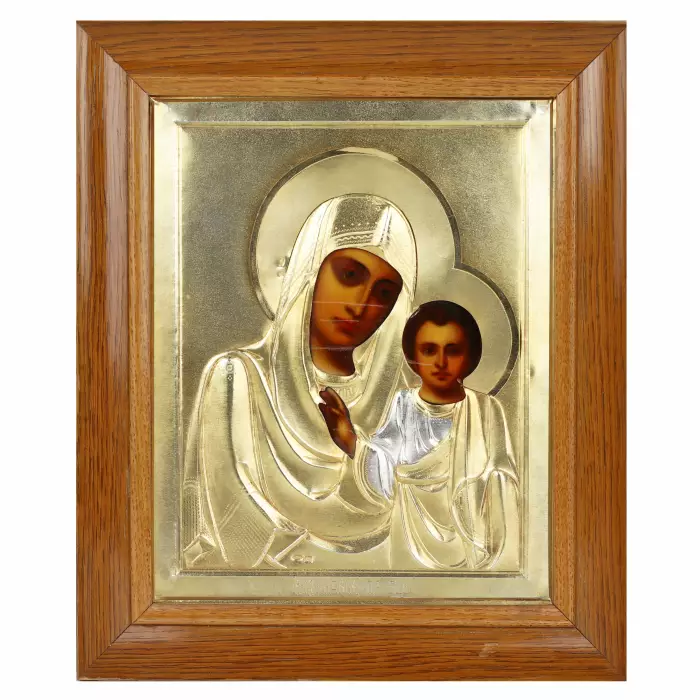
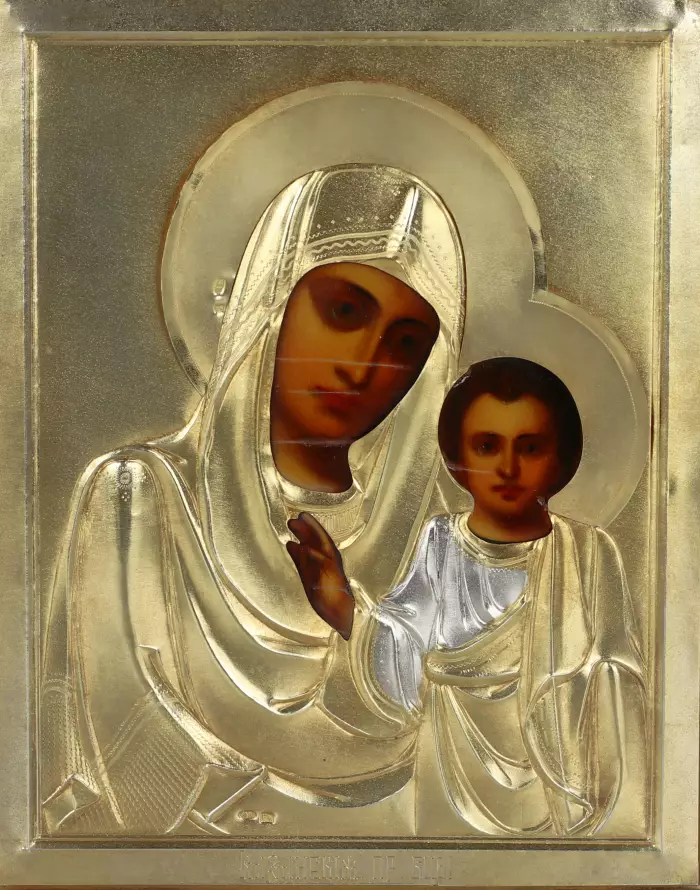
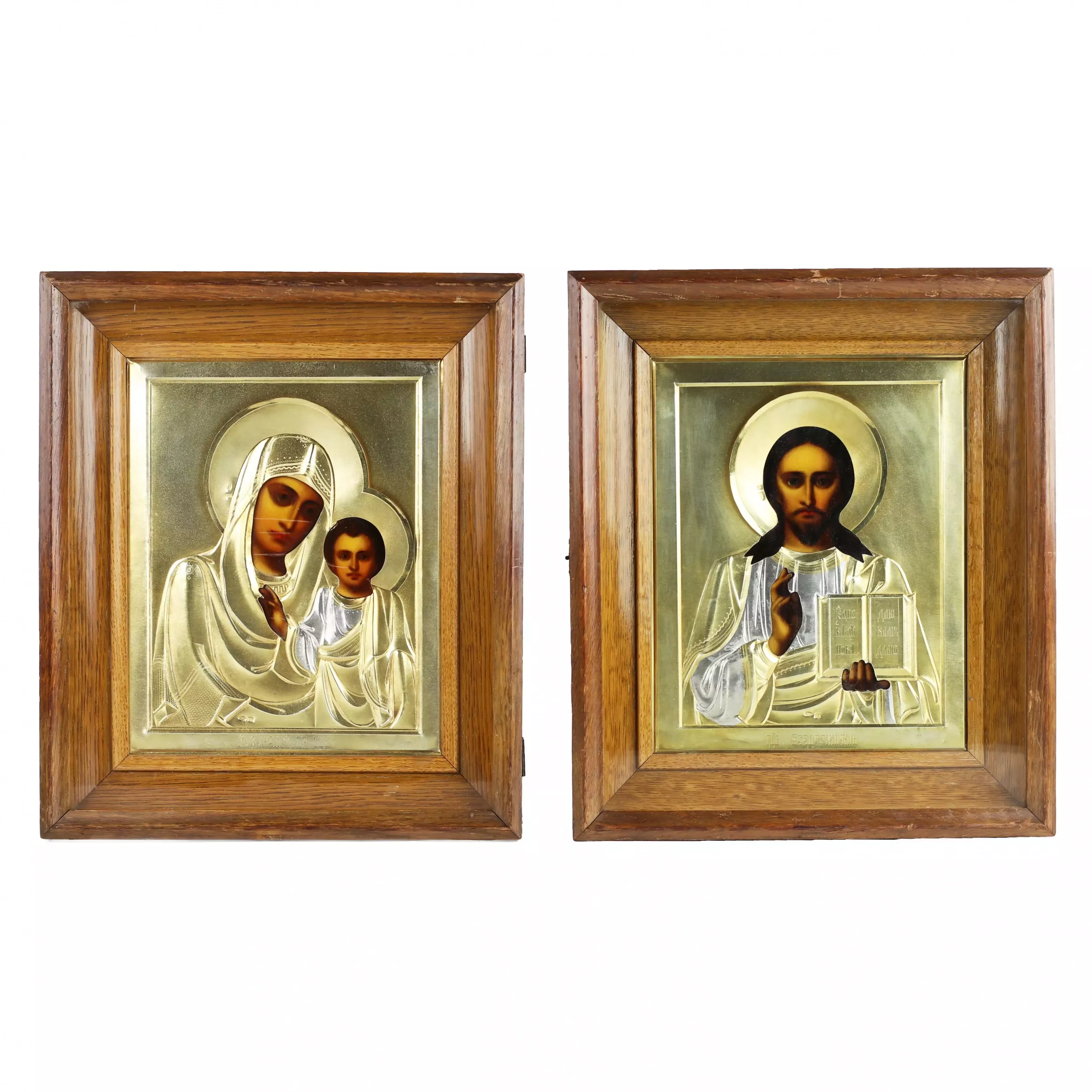
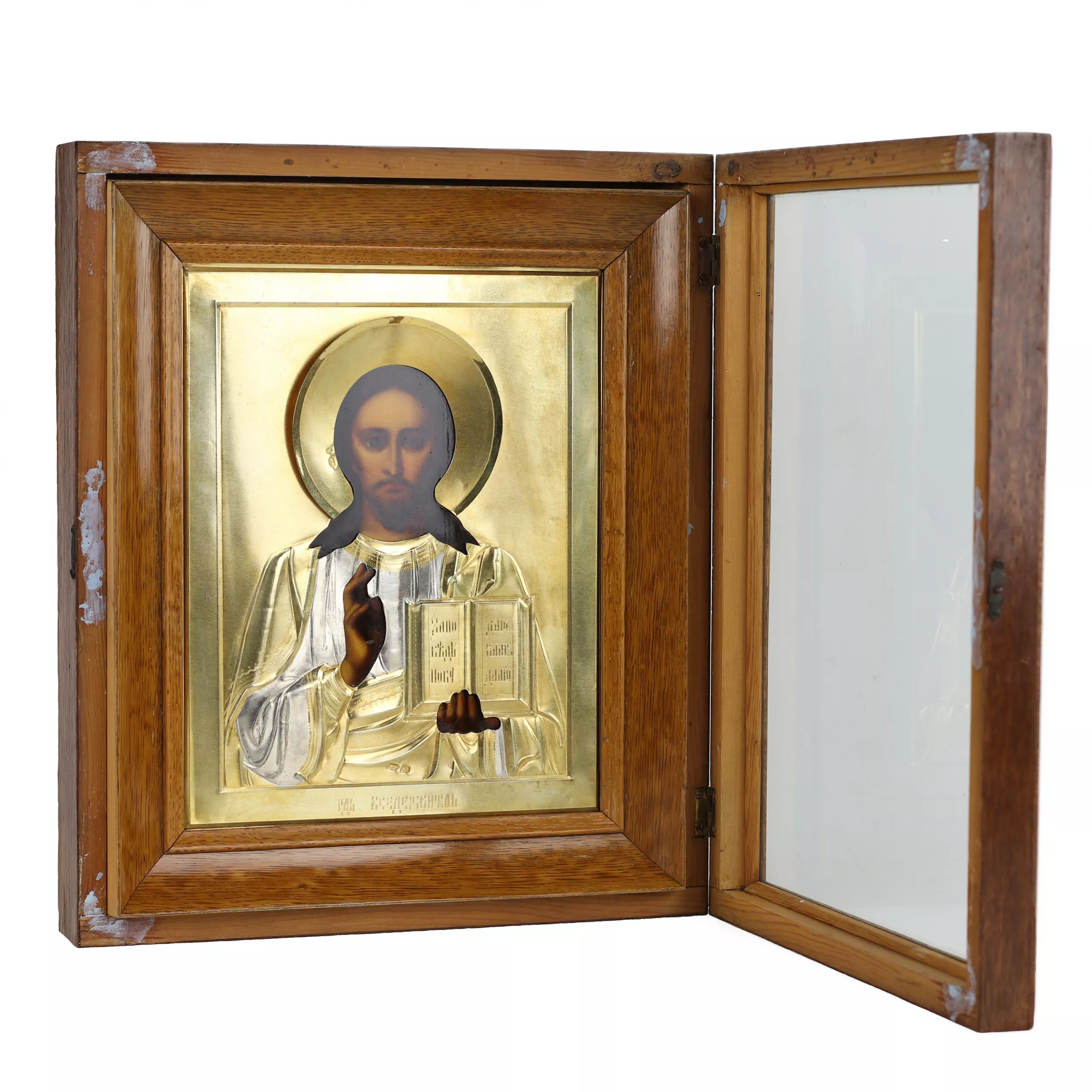
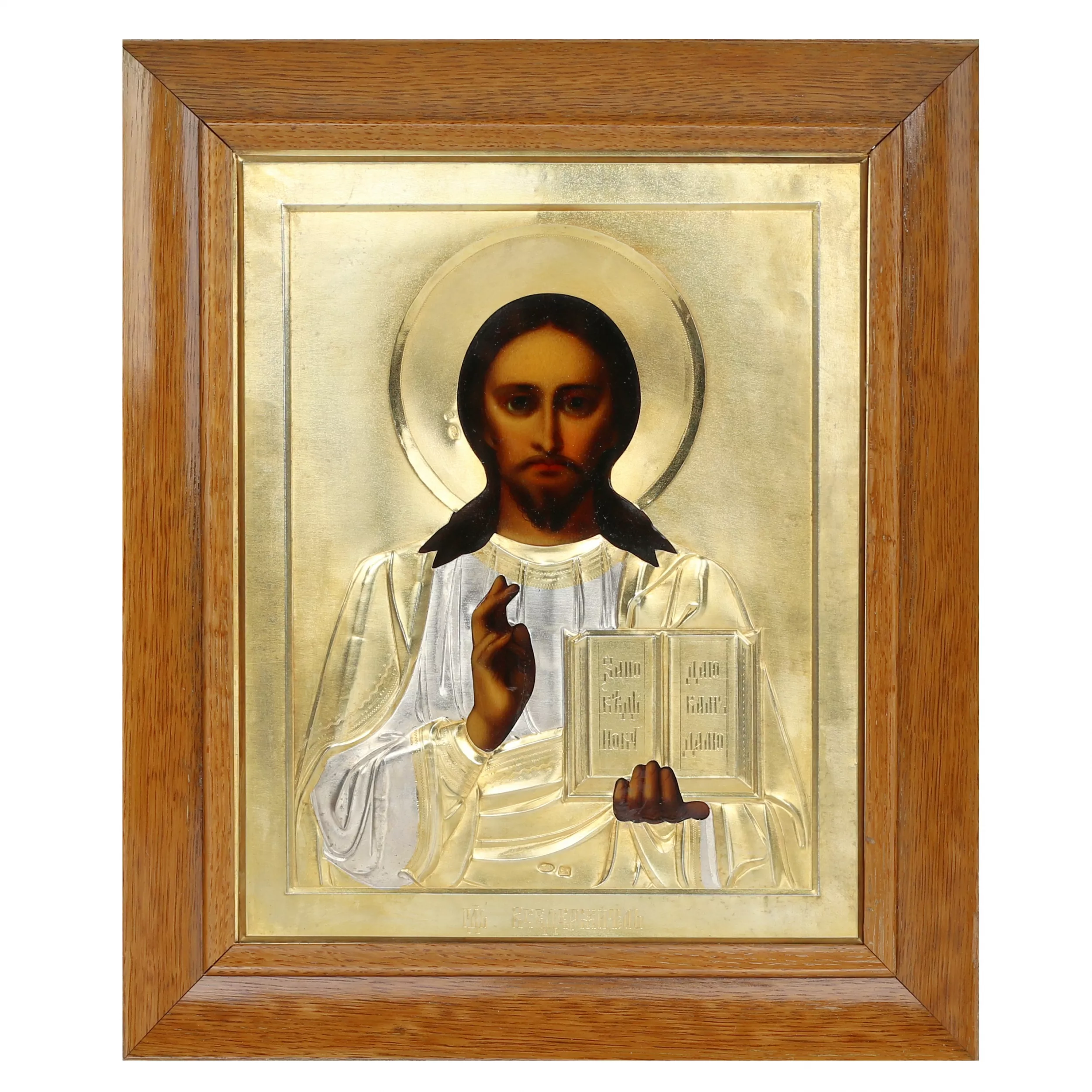
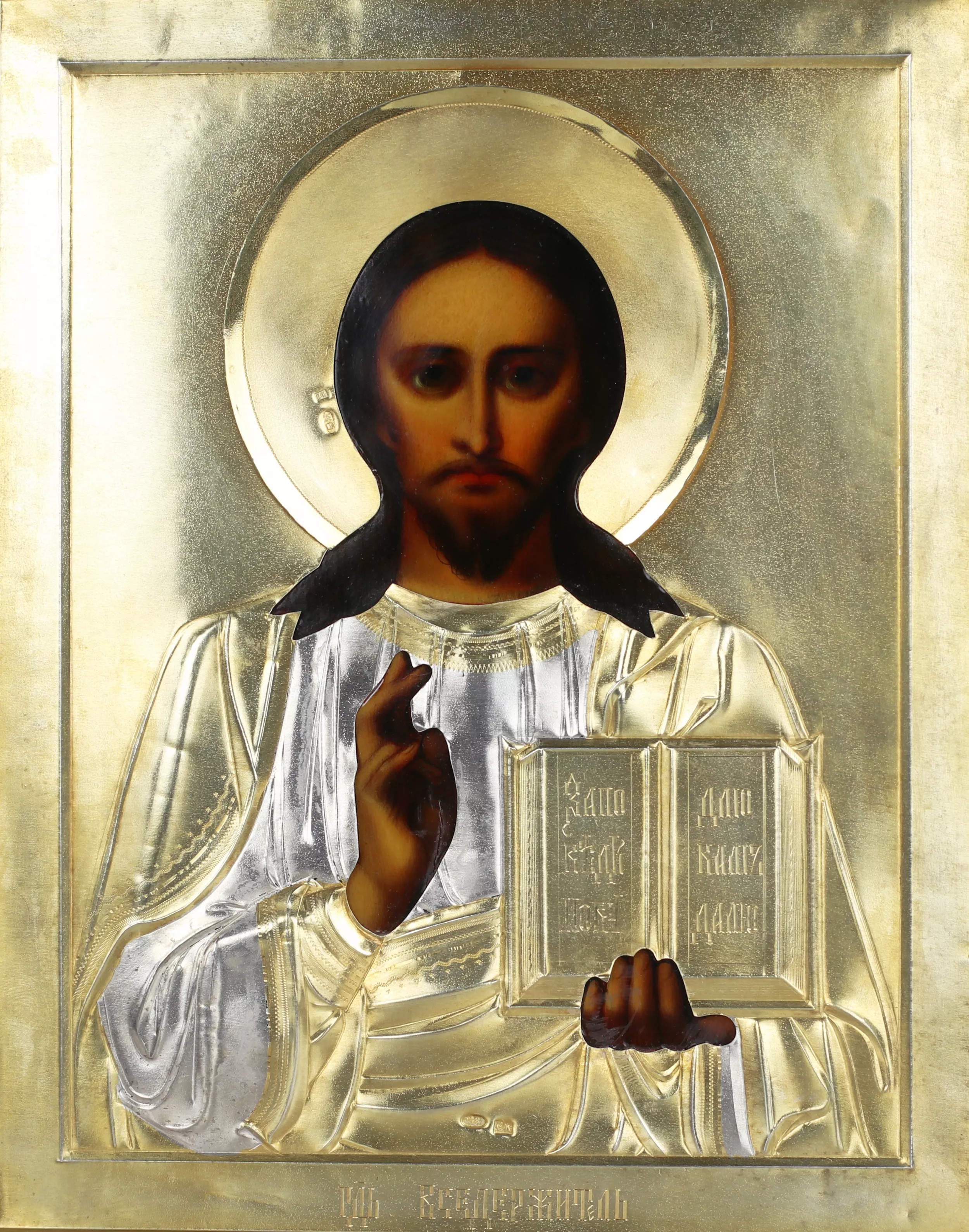
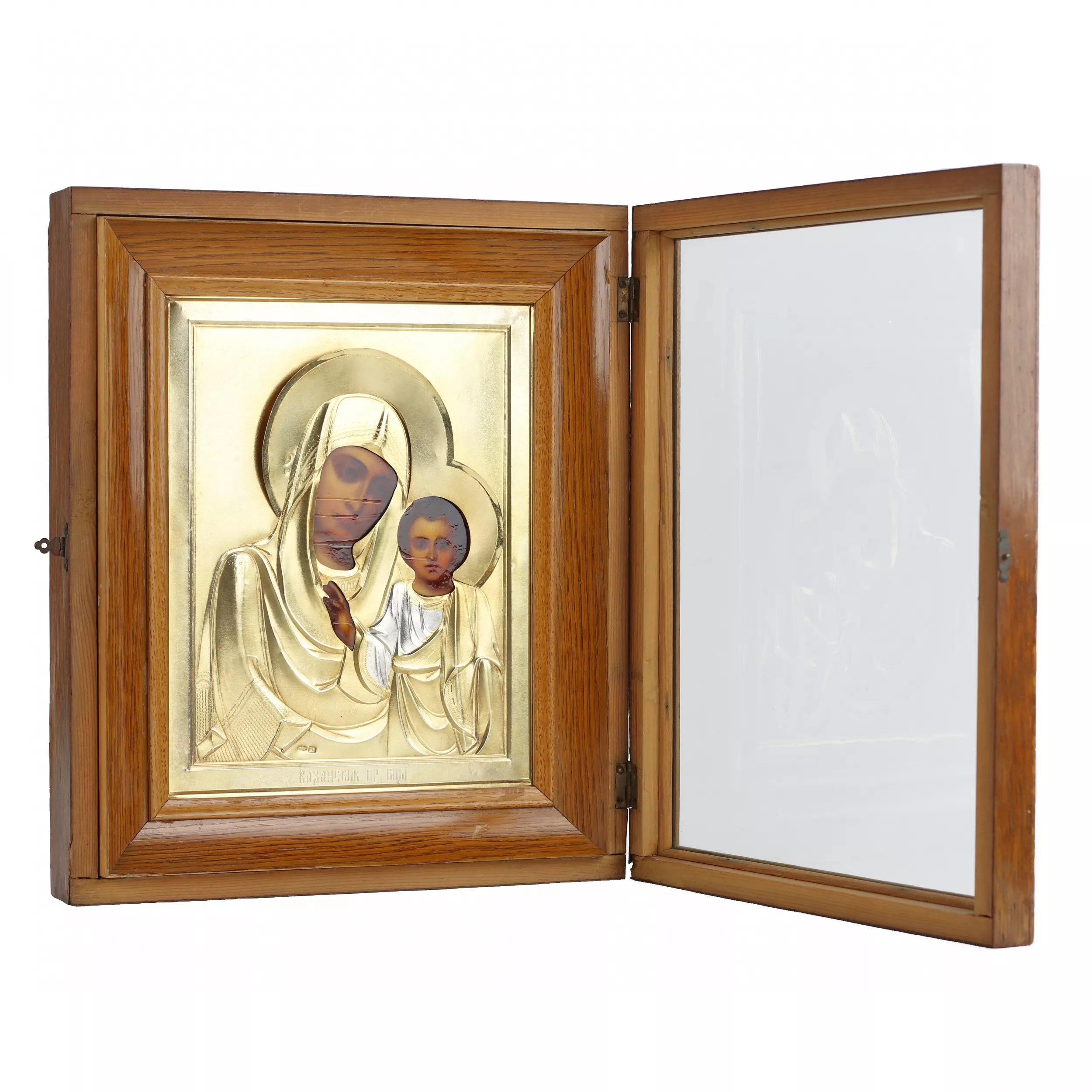
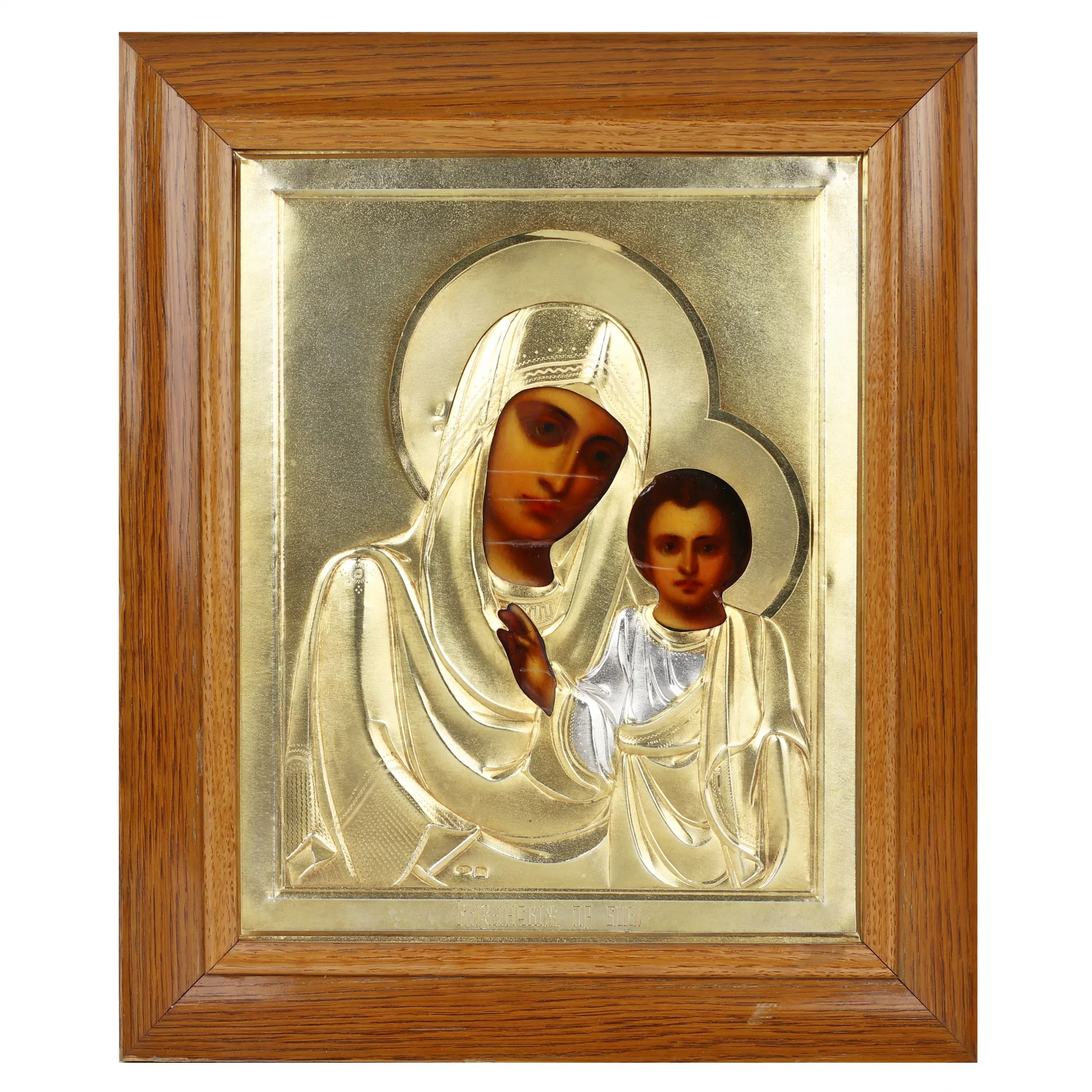
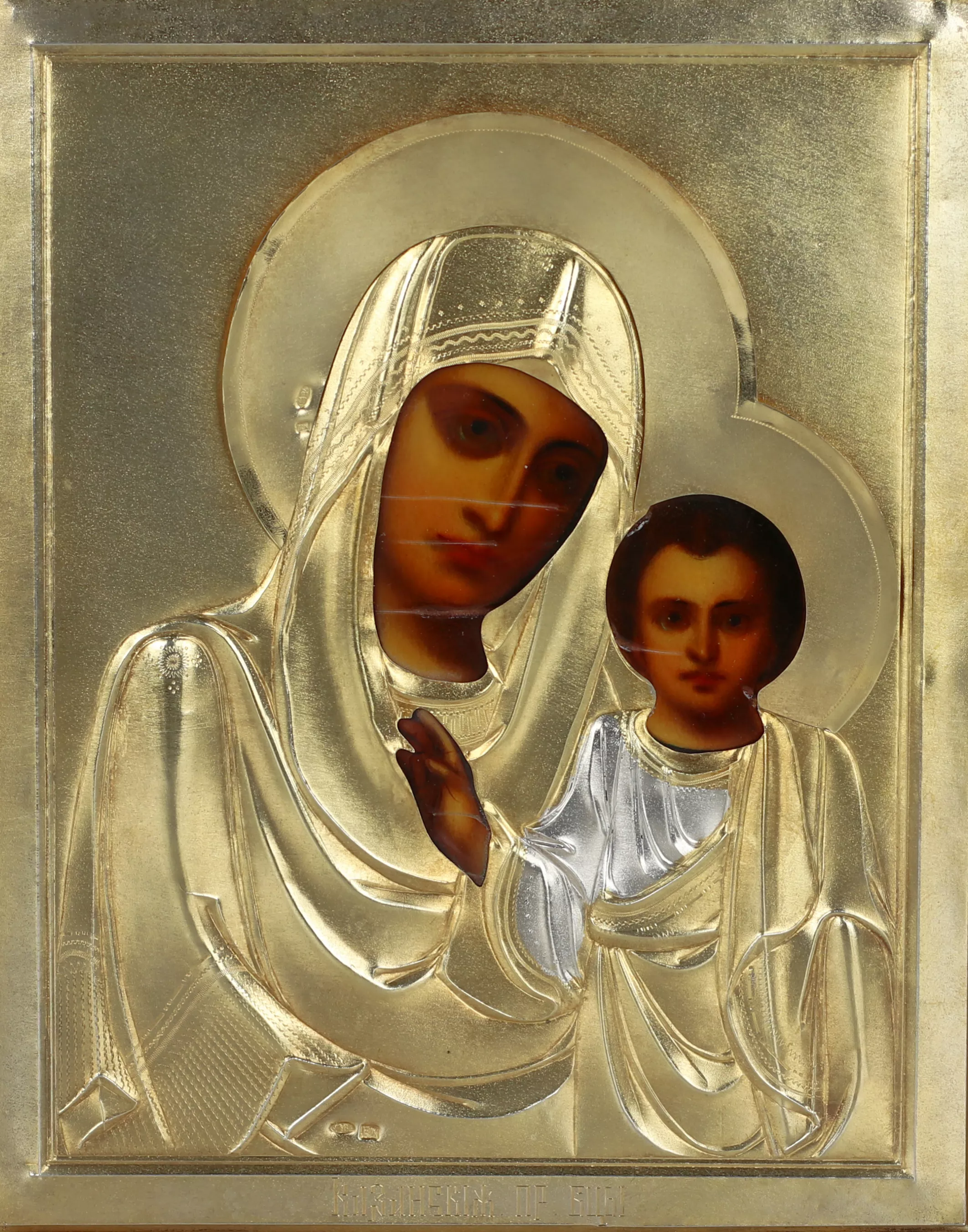
A pair of Russian wedding icons created in Moscow in the early 20th century, representing an exquisite example of Russian icon painting and silversmith craftsmanship of the Art Nouveau period. The composition consists of two traditional wedding images: Christ Pantocrator holding an open Gospel Book in His left hand and raising His right hand in blessing, together with the Kazan Icon of the Mother of God with the Christ Child.
The painted images are executed in an academic manner characteristic of Moscow icon-painting workshops at the turn of the 19th and 20th centuries, combining the Orthodox canonical tradition with soft modelling of the faces and the decorative refinement of the period.
The icons are mounted with silver-gilt oklads produced by the Moscow silverware factory of Emelyan Alekseevich Kuznetsov. The oklads are designed in the aesthetics of Russian Art Nouveau, distinguished by the fluidity of ornamental forms, elegant lines and refined surface treatment. The decorative composition combines the traditions of Russian ecclesiastical silverwork with the artistic innovations of the early 20th century.
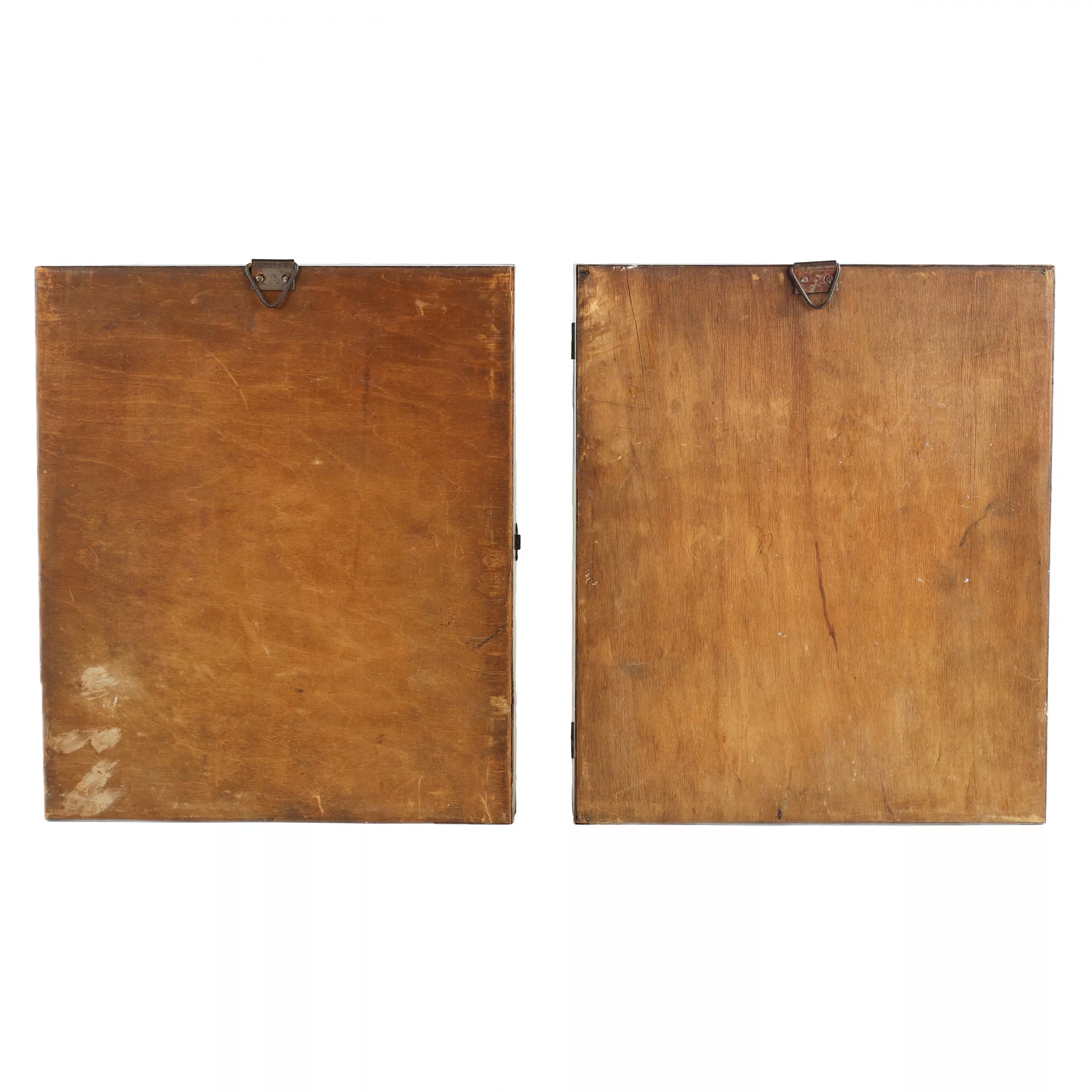
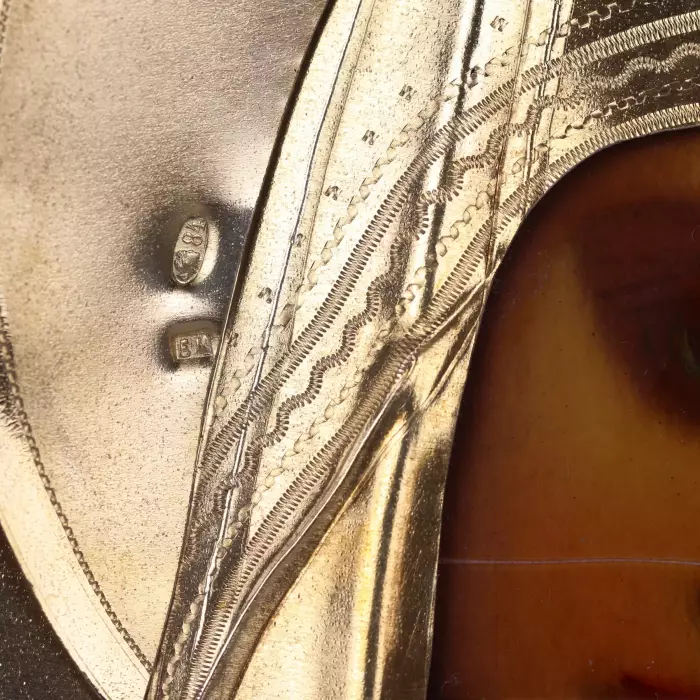
The finely executed details of the oklads give the work particular artistic value: relief chasing, hand engraving with a burin, textured punched decoration and meticulous jewellery finishing. The icons are housed in their original wooden kiots corresponding to the period of their creation.
Materials and Techniques: Wood, gesso, egg tempera, 84 zolotnik silver, gilding, casting, chasing, piercing, hand engraving with a burin, punched decoration, grinding, polishing, finishing and mounting.
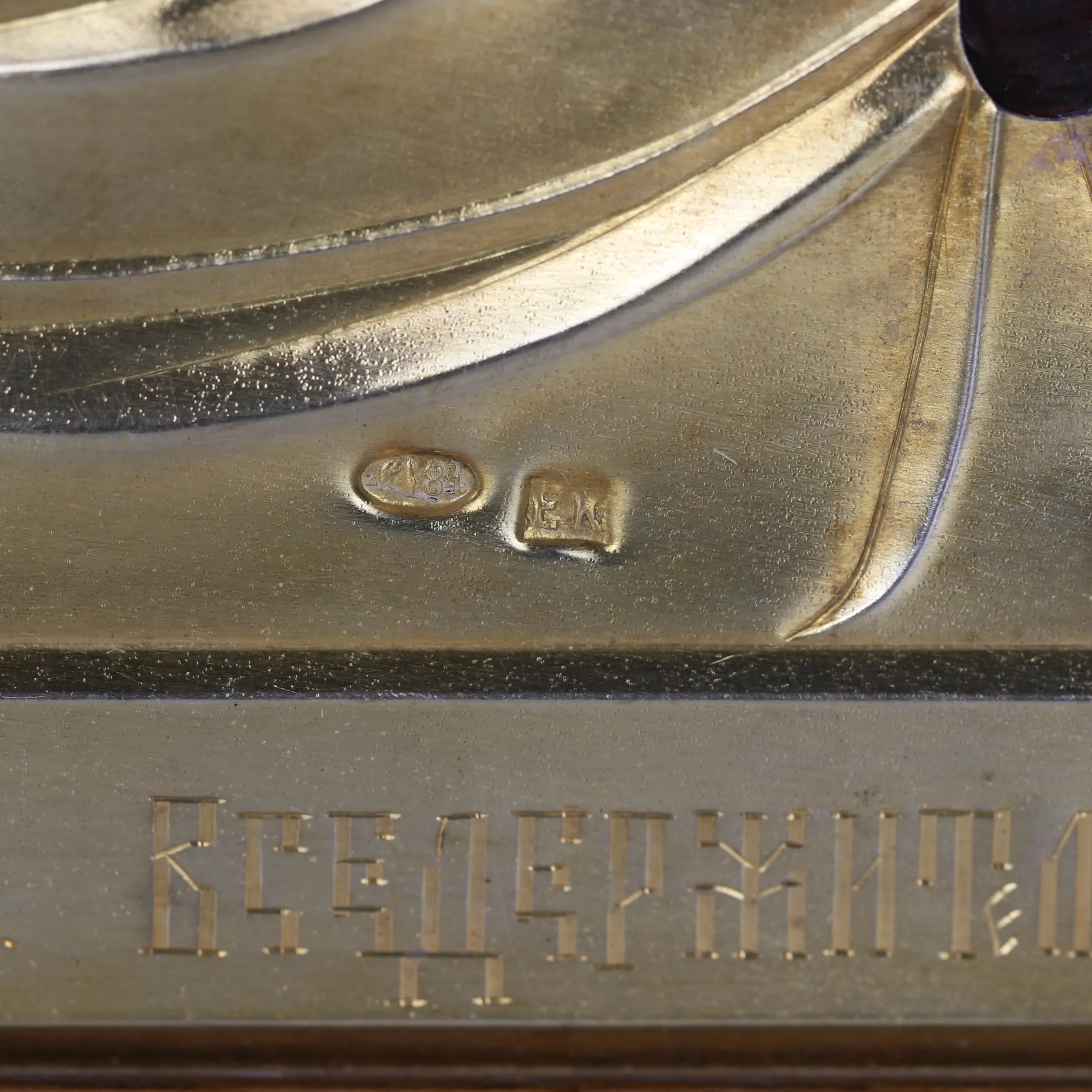
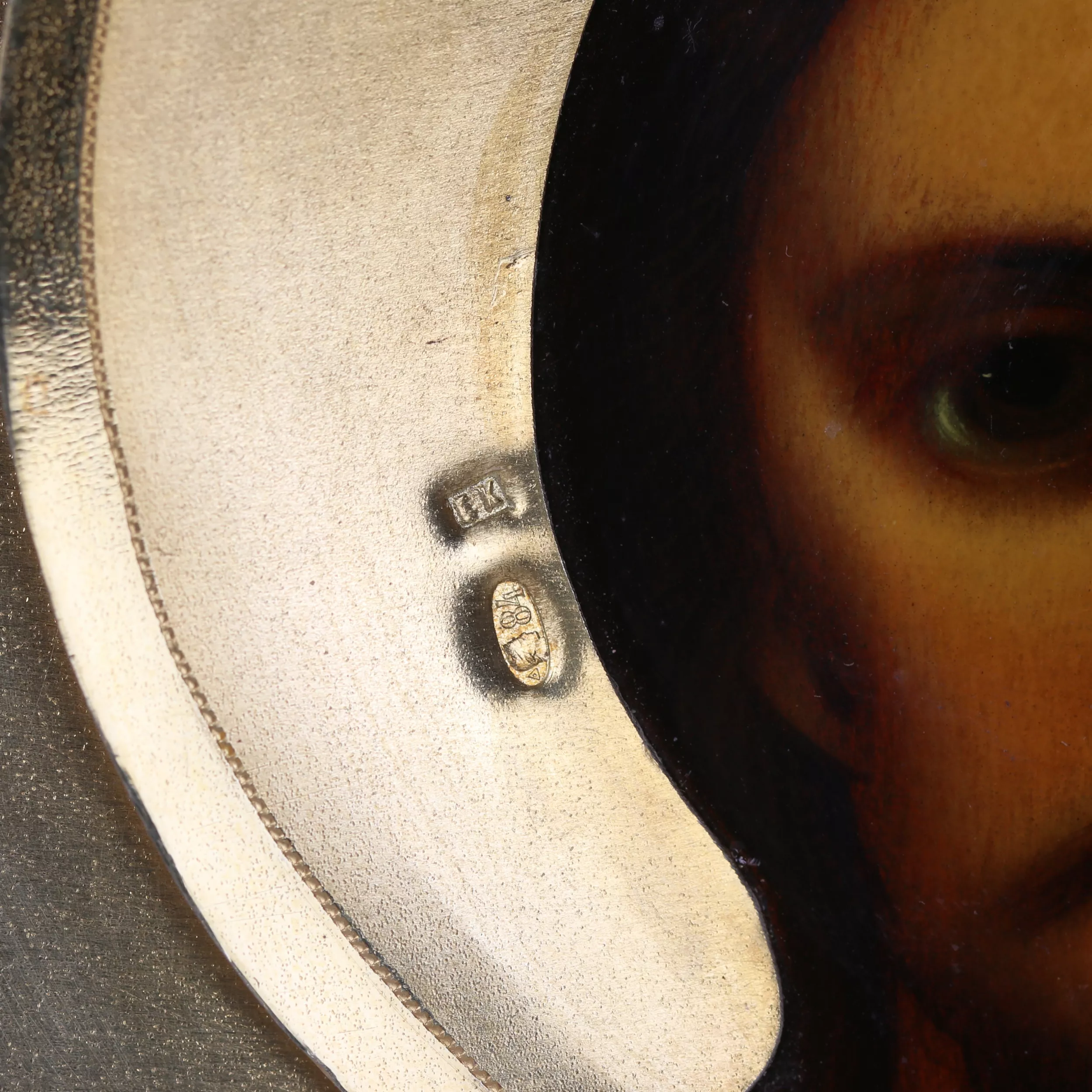
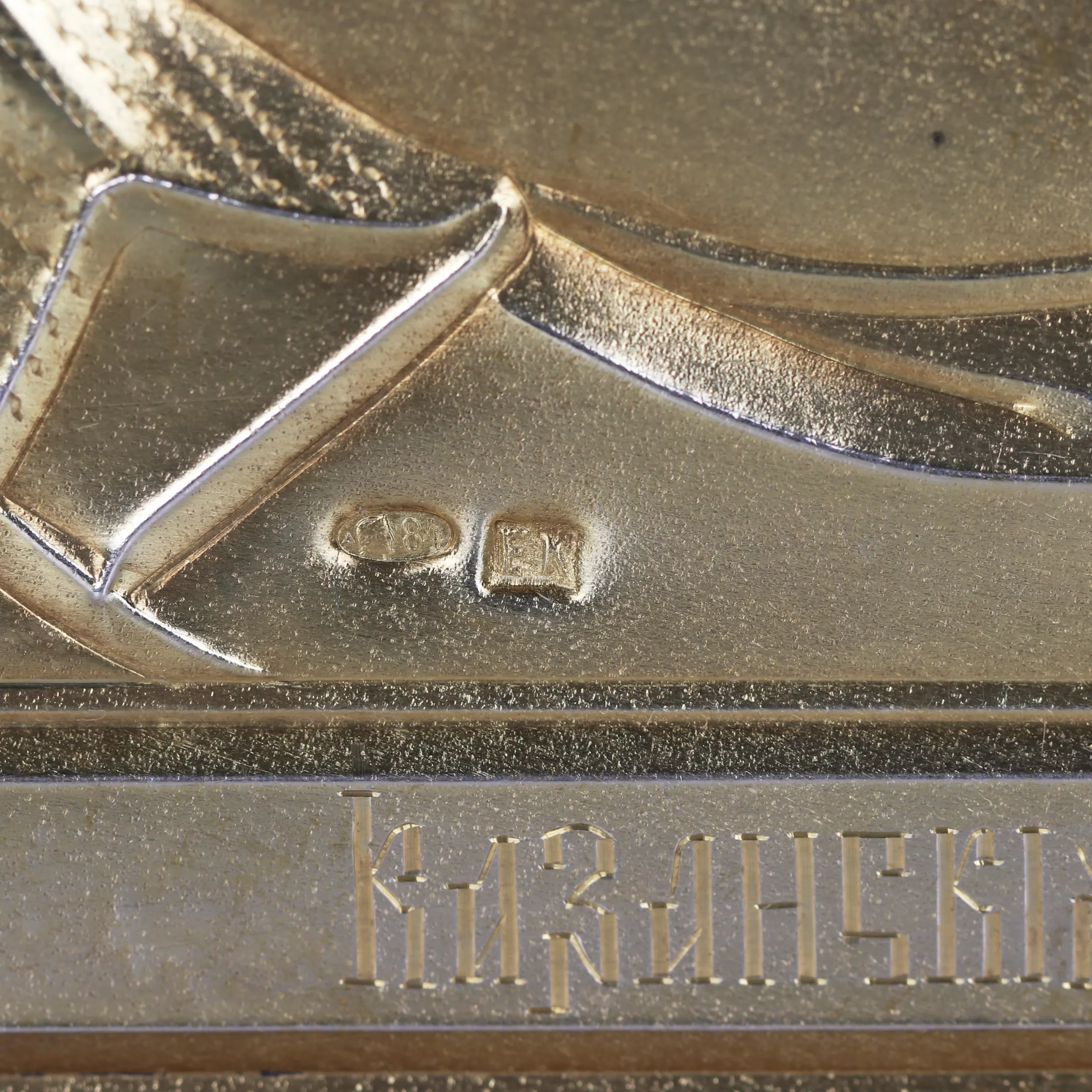
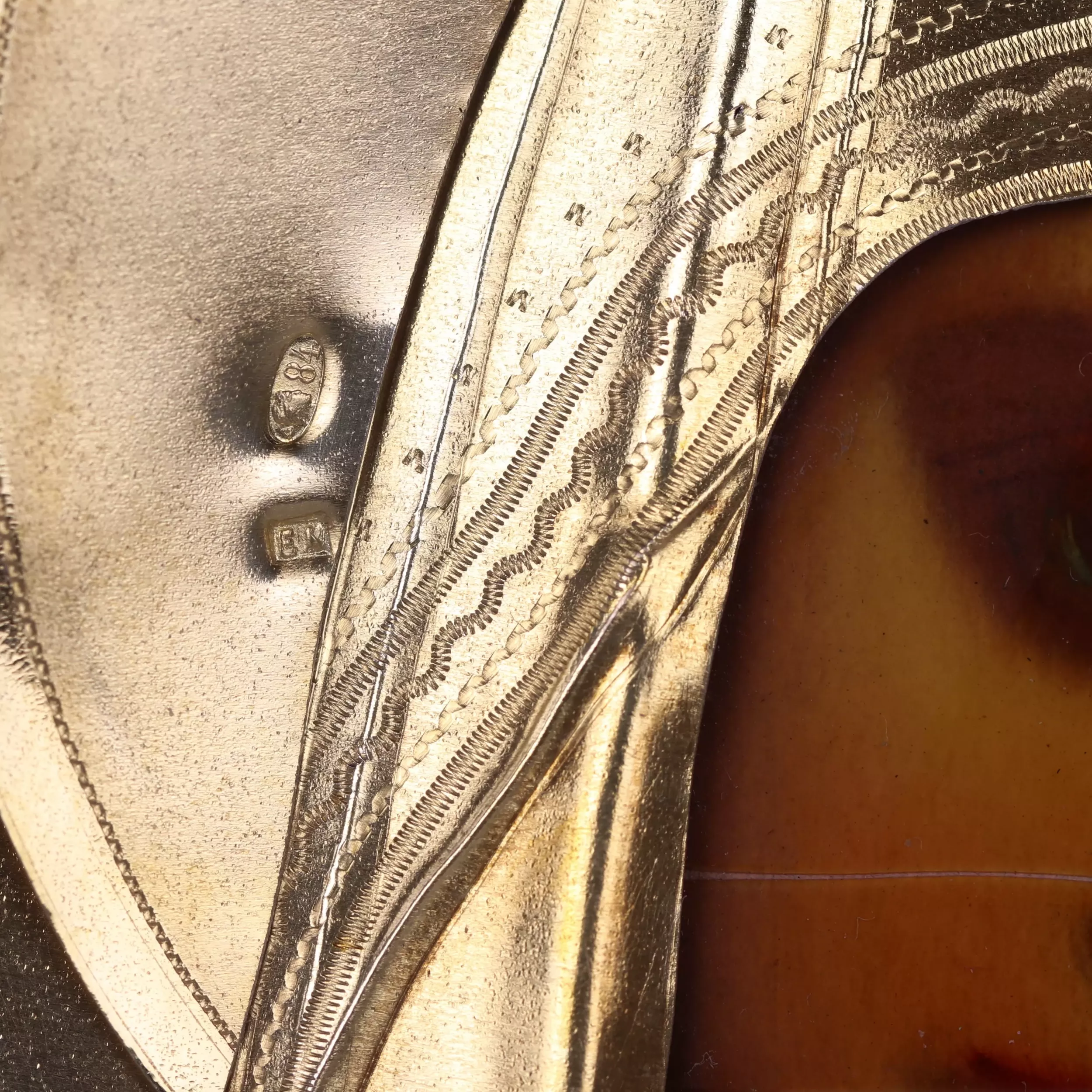
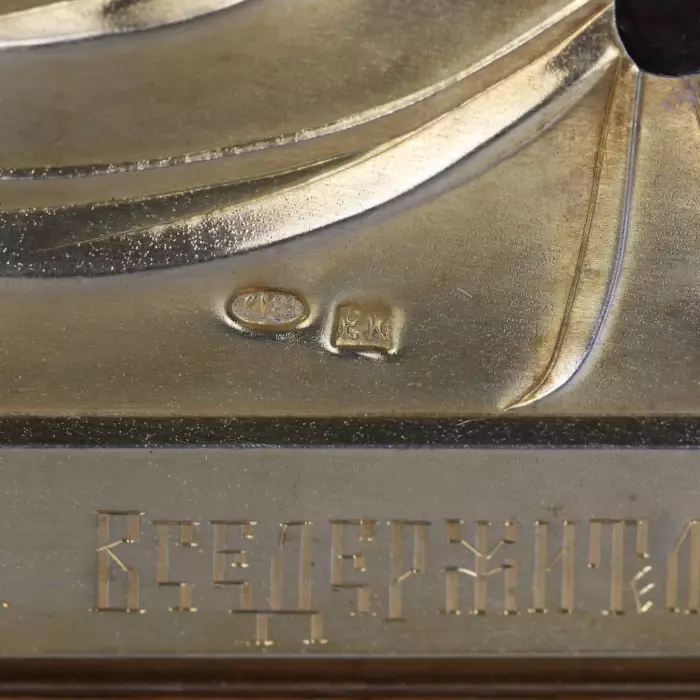
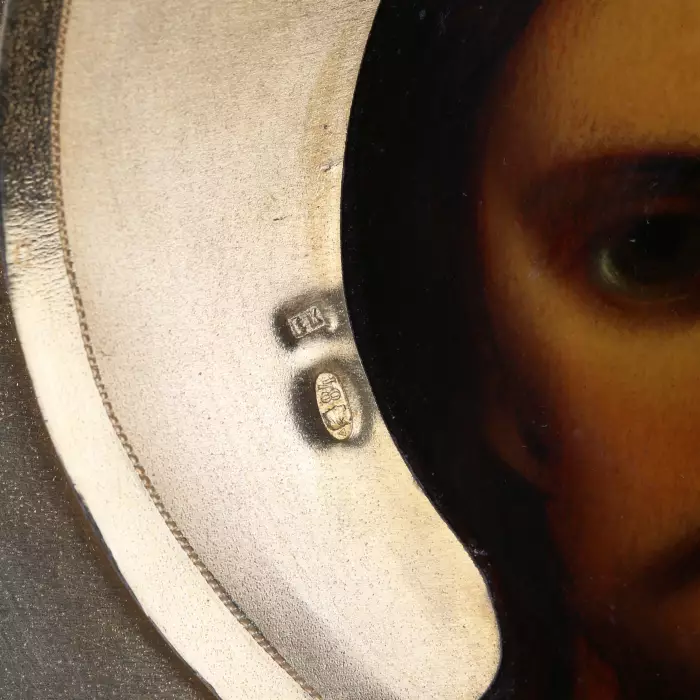
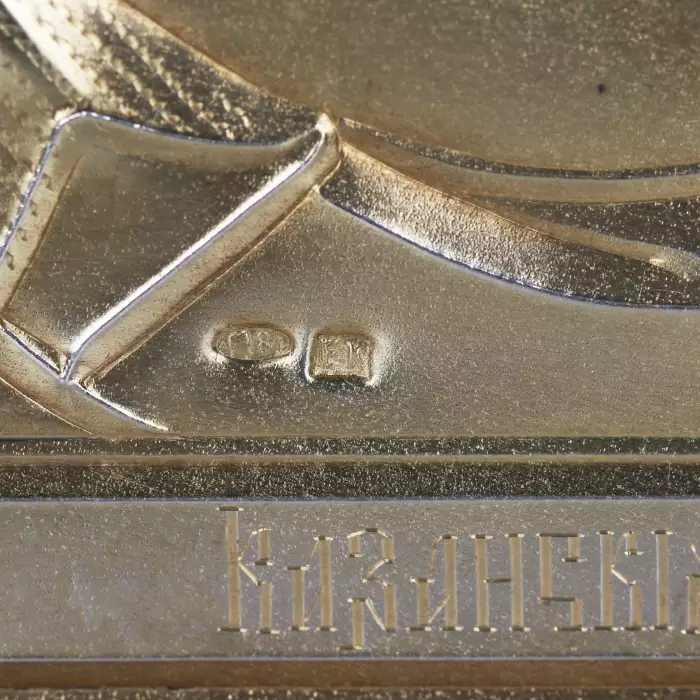
Marks and Hallmarks: Registered maker’s mark “EK” - Emelyan Alekseevich Kuznetsov, owner of the Moscow silverware factory. Silver assay mark “84” with a female head in a kokoshnik facing right and the Greek letter Omega - Moscow Assay Office, 1908-1917.
Dimensions: Icons: height 22 cm, width 17.5 cm. Kiots: height 30 cm, width 26 cm.
Wedding icon pairs occupy a special place in the Russian Orthodox artistic tradition. Consisting of the images of Christ Pantocrator and the Most Holy Mother of God, such pairs accompanied one of the most significant Orthodox sacraments, the wedding ceremony, symbolising spiritual union, family blessing and the continuity of generations.
At the turn of the 19th and 20th centuries, Moscow icon-painting and silver workshops experienced a period of remarkable artistic development. The revival of interest in national heritage was combined with the aesthetics of Art Nouveau, a tendency especially visible in ecclesiastical objects and precious icon oklads. Craftsmen sought to preserve ancient Russian artistic traditions while introducing new decorative solutions characteristic of the early 20th century.
Silver oklads of this period were independent works of decorative art. Their creation required the skills of highly trained silversmiths, chasers and engravers. Complex surface treatment, gilding, floral ornamentation and flowing decorative lines reflected the influence of Art Nouveau, which in Russia developed through a distinctive reinterpretation of national artistic forms.
The factory of Emelyan Alekseevich Kuznetsov was among the Moscow workshops specialising in the production of silver ecclesiastical objects. Established in 1886, the workshop produced silver icon oklads distinguished by their high quality of execution and refined attention to detail. According to late 19th-century records, the enterprise produced a significant number of silver oklads while preserving the traditions of Moscow jewellery craftsmanship.
The images of Christ Pantocrator and the Kazan Mother of God held particular importance within Russian family tradition. During the wedding ceremony, the icon of Christ was traditionally used to bless the groom, while the icon of the Mother of God blessed the bride. After the ceremony, the icons occupied a place of honour in the home, becoming part of the family iconostasis and being passed down through generations as spiritual and historical heirlooms.
This wedding icon pair unites Orthodox iconographic tradition, the mastery of Moscow silverwork and the artistic language of Russian Art Nouveau, representing a refined example of Russian sacred art of the early 20th century.
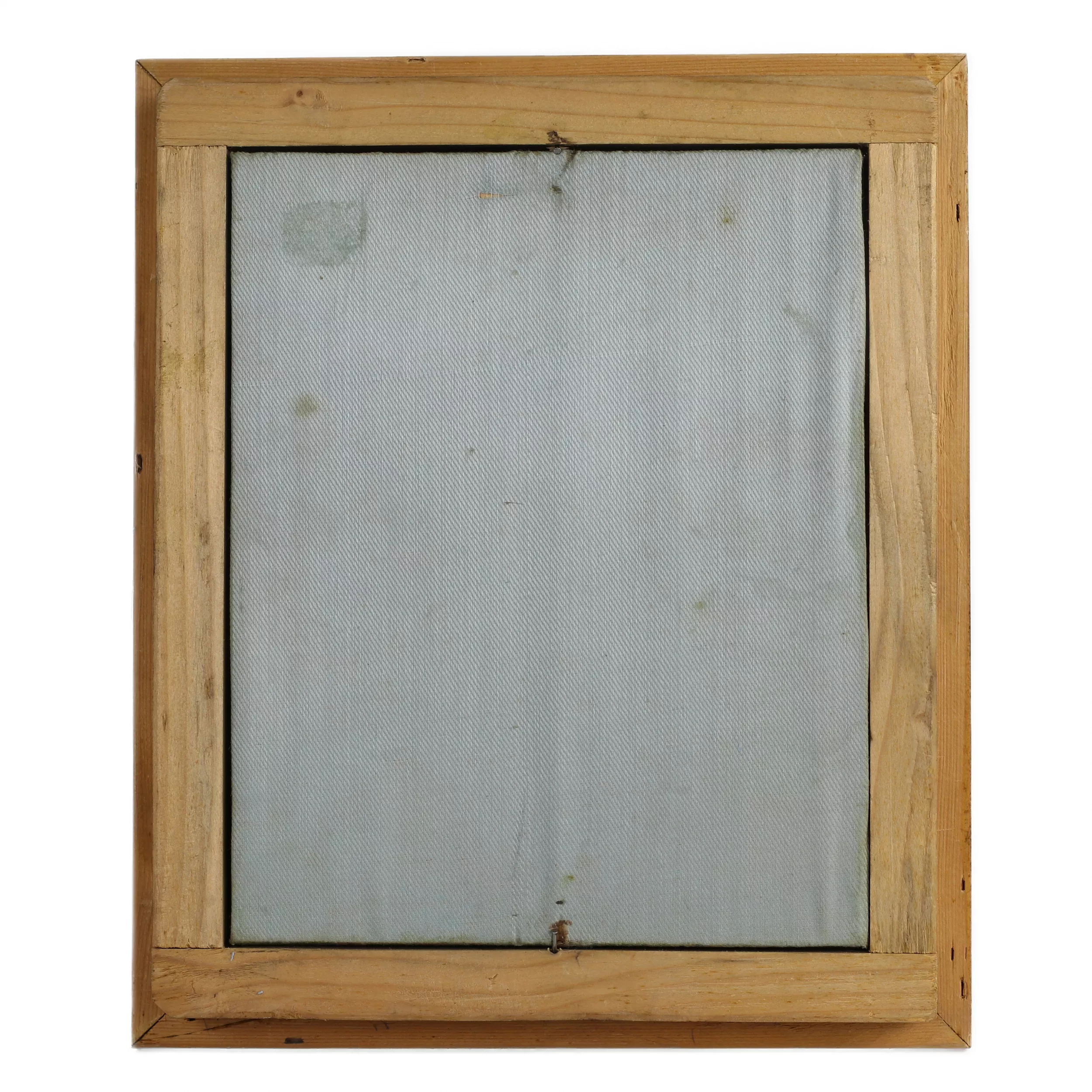
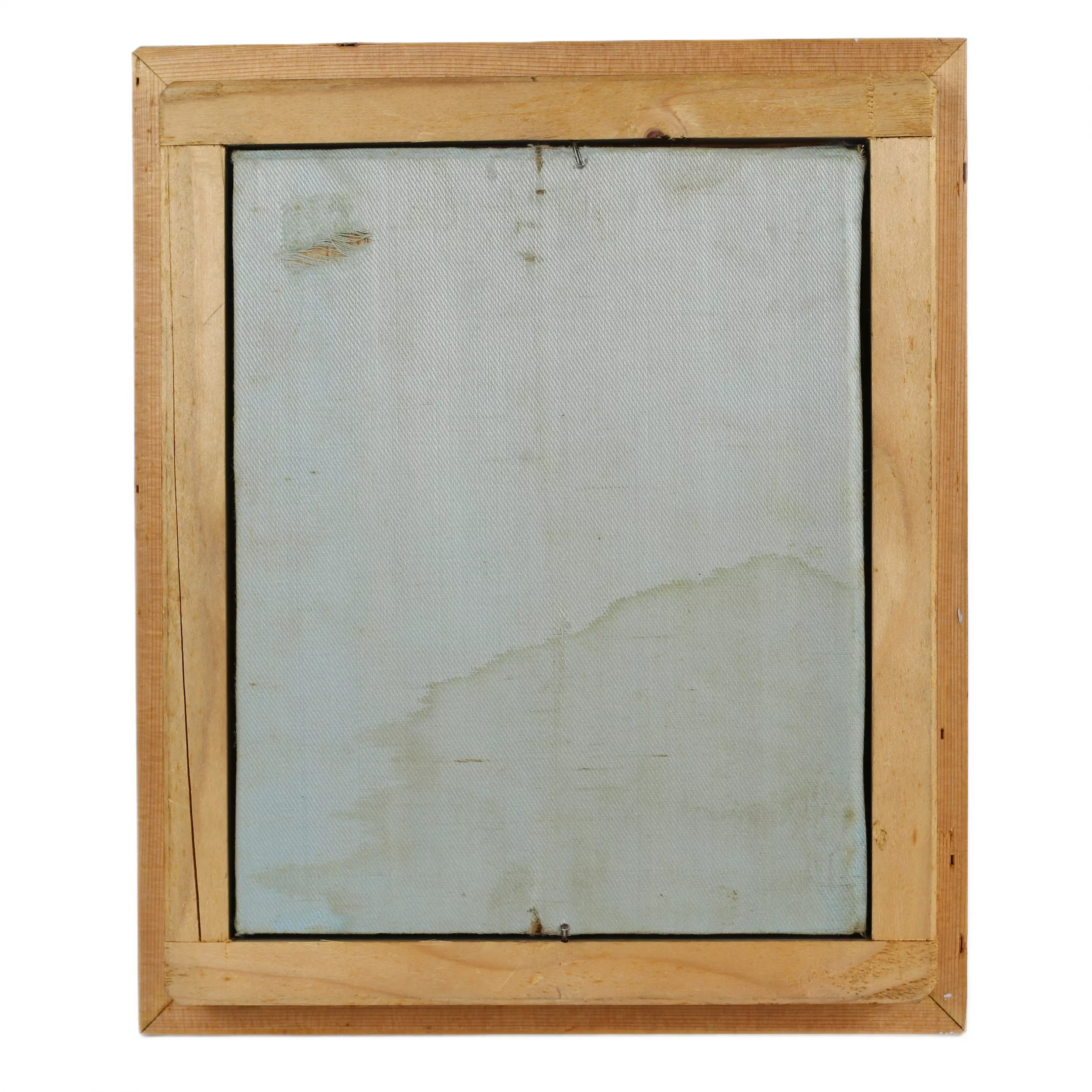
Good condition. The icons and silver-gilt oklads have preserved their integrity and decorative refinement. Natural signs of age consistent with the period of creation are present. The original kiots are preserved.
The condition report is provided for informational purposes only.
It is not comprehensive and may not reflect all defects, restorations, alterations, or adaptations, as Antiqon does not perform professional conservation-level assessments. The information is based on a qualified, yet subjective, evaluation by our specialists.Before purchasing, we recommend consultation with an independent expert.Please also consult our Terms and conditions and Glossary A-Z, which contain important information on lot characteristics and sale conditions.