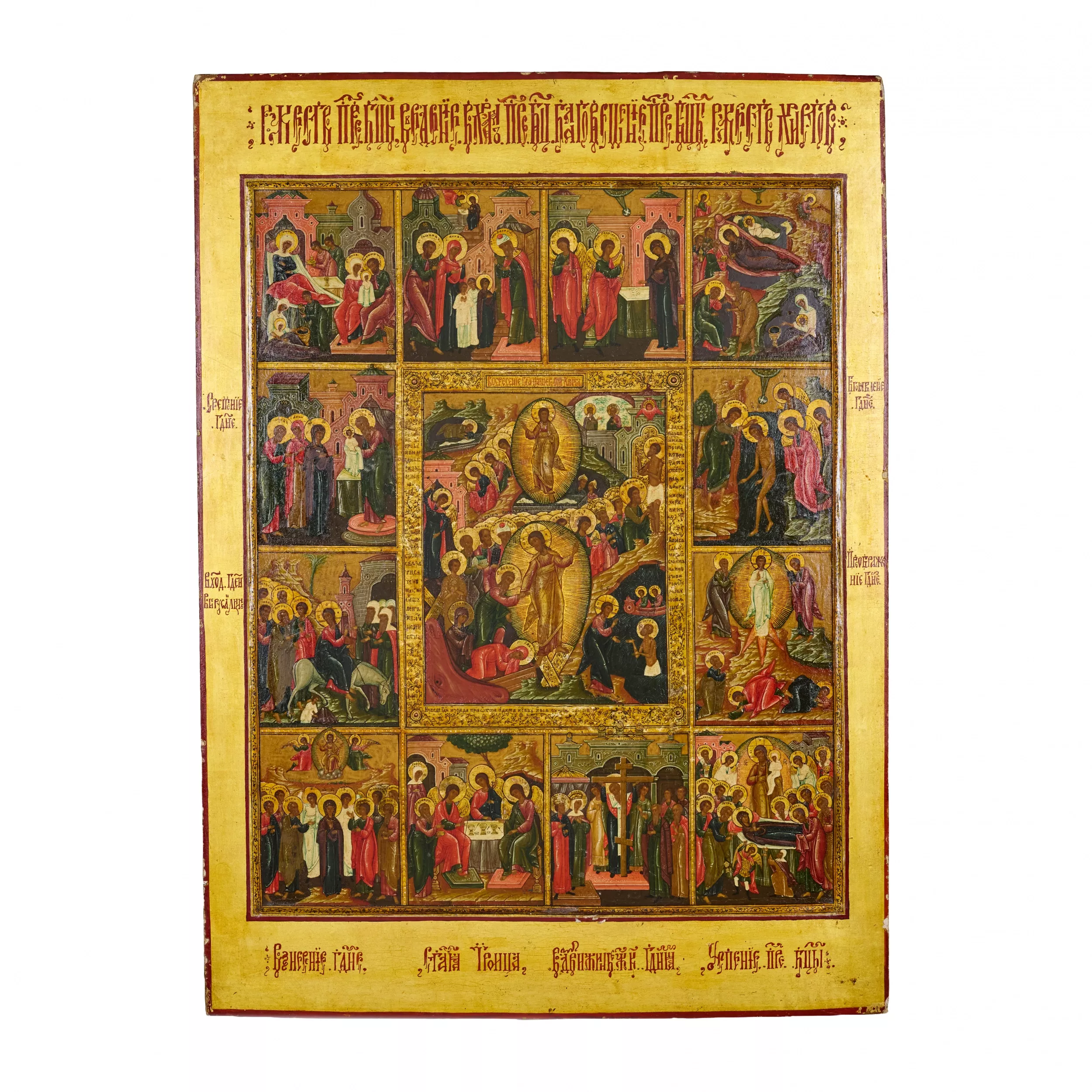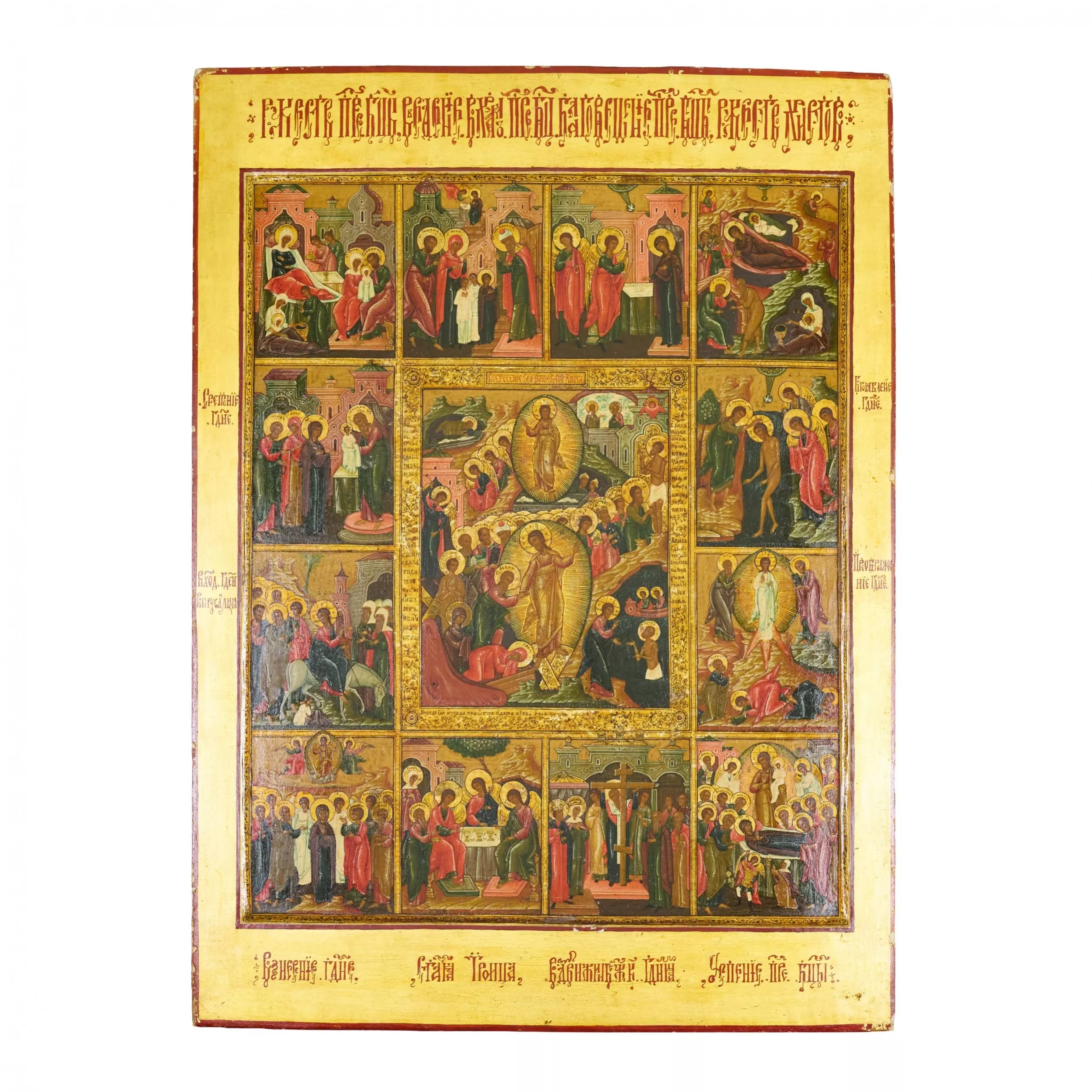




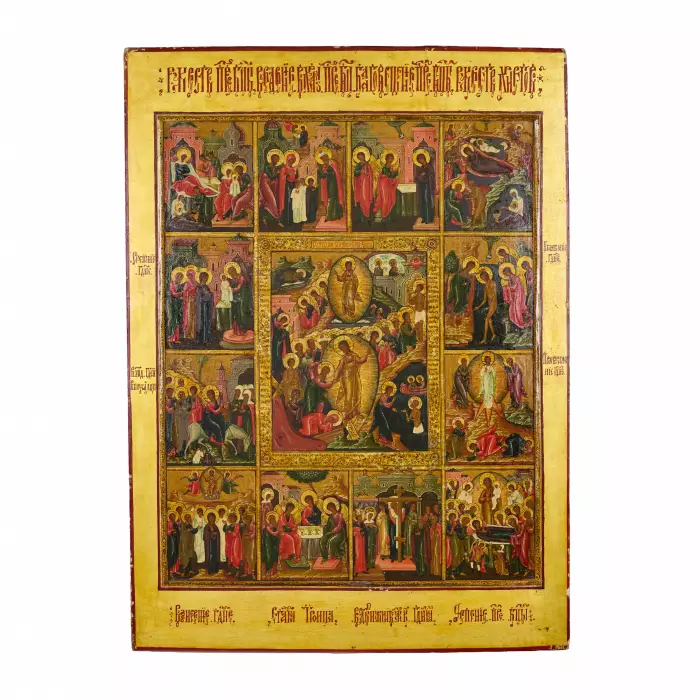
ICON OF THE RESURRECTION OF CHRIST AND THE DESCENT INTO HELL WITH THE TWELVE GREAT FEASTS. RUSSIA, MID-19TH CENTURY
Antiqon consultant will contact you within one business day after receiving your request.
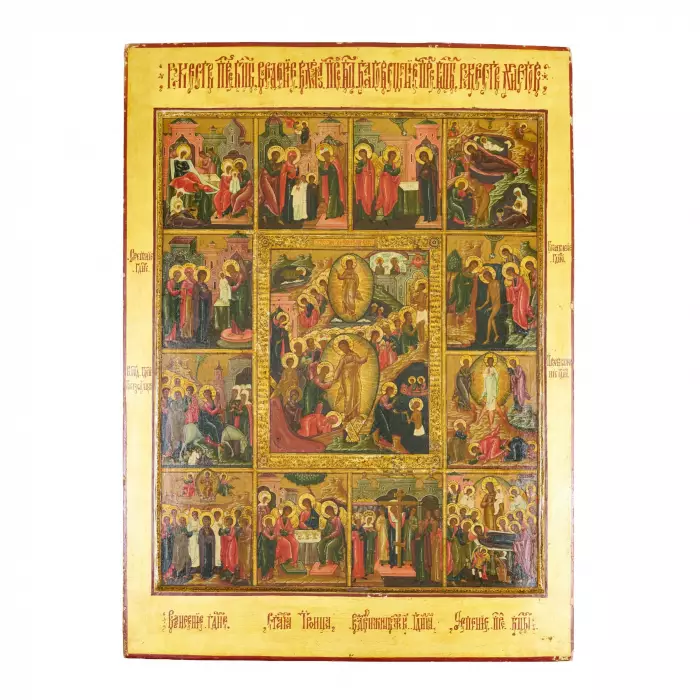
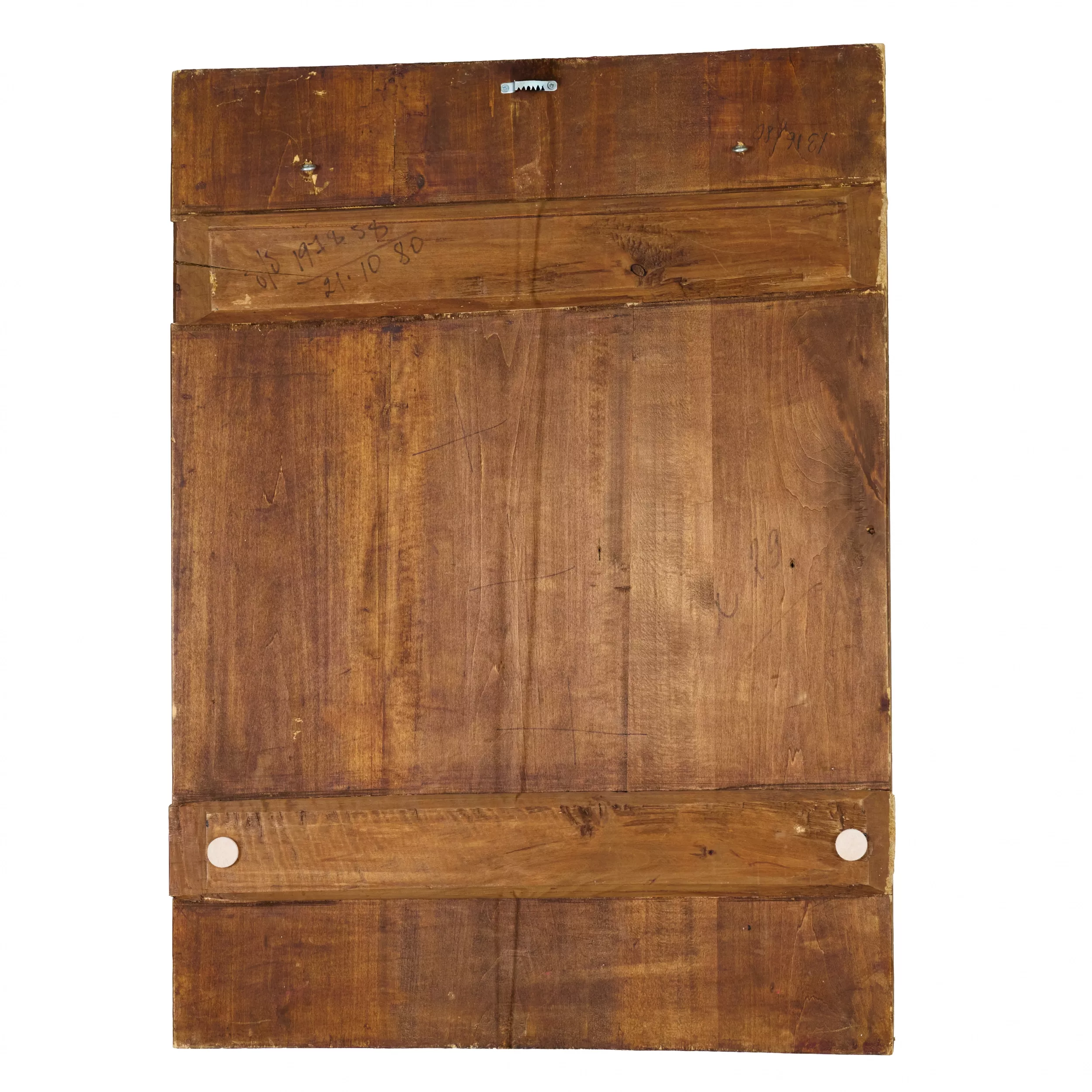
An impressive multi-register Russian icon dating from the mid-19th century, combining the central Paschal composition of the Resurrection of Christ and the Descent into Hell with a cycle of the Twelve Great Feasts. Painted in tempera on gesso on a wooden panel with a recessed central field, the icon is framed by broad gold-ground borders bearing inscriptions in cinnabar, lending the work a solemn and monumental character.
At the centre is an elaborate representation of the Resurrection of Christ incorporating two interconnected iconographic subjects. In the upper section, Christ is shown risen from the tomb within a radiant mandorla, while below He is depicted descending into Hell, trampling the gates of Hades and raising the Forefathers. The composition is populated by numerous prophets, righteous figures, angels and saints arranged within a complex, multi-tiered narrative structure.
The central image is surrounded by twelve feast scenes depicting the principal events of the Gospel and liturgical calendar: the Nativity of the Mother of God, the Presentation of the Mother of God in the Temple, the Annunciation, the Nativity of Christ, the Presentation of Christ in the Temple, the Baptism of Christ, the Entry into Jerusalem, the Transfiguration, the Ascension, the Holy Trinity, the Exaltation of the True Cross and the Dormition of the Mother of God.
The finely detailed miniature painting is distinguished by the careful rendering of architectural settings, stylised rocky landscapes, garments and numerous figures. The palette is composed of saturated reds, greens, ochres and browns, enriched by extensive use of gold. The architecturally ordered arrangement of the individual scenes, delicate draughtsmanship and abundance of explanatory inscriptions create a coherent theological and pictorial cycle.
Material: Wood, gesso, tempera, gilding.
Dimensions: 72 × 52 cm.
Condition: Very good. Unrestored. The painted surface, gilding and inscriptions retain a high degree of preservation. Minor natural traces of age are consistent with the period of the work.
The iconographic type of the Resurrection of Christ and the Descent into Hell occupies a central place in the tradition of Russian Orthodox icon painting. Its theological programme expresses Christ`s victory over death and the liberation of the righteous from Hades. For centuries in Russian iconography, the Descent into Hell served as the principal pictorial representation of the Resurrection, developing into increasingly elaborate compositions during the 18th and 19th centuries.
By the 19th century, the subject was frequently expanded into a complex multi-figured cycle incorporating several episodes of the Paschal narrative. The central image could be supplemented by representations of angelic hosts, Old Testament Forefathers, prophets, apostles and saints, while independent feast scenes were arranged around it. This structure enabled the principal events of Christian sacred history to be brought together within a single icon, creating a comprehensive visual programme of the liturgical year.
The present icon belongs to this developed type. Its central Paschal composition is surrounded by the Twelve Great Feasts, giving the work the character of a condensed iconographic calendar. The combination of a complex multi-part composition, finely executed miniature painting, gold-ground borders, recessed central field and numerous Church Slavonic inscriptions is characteristic of Russian icon painting of the mid-19th century.
Of particular artistic significance is the relationship between the densely populated narrative centre and the broad gold-ground borders. Gold serves not merely as a decorative element, but as a visual expression of sacred space, separating the earthly realm from the spiritual dimension of the composition. The icon of the Resurrection of Christ and the Descent into Hell with the Twelve Great Feasts is an expressive example of 19th-century Russian religious painting, combining traditional Orthodox iconography, elaborate narrative structure and the ceremonial splendour of gold-ground icon painting.
Very good state of preservation. Unrestored. Minor rubbing and natural age-related traces, principally to the borders, are consistent with the age of the icon.
The condition report is provided for informational purposes only.
It is not comprehensive and may not reflect all defects, restorations, alterations, or adaptations, as Antiqon does not perform professional conservation-level assessments. The information is based on a qualified, yet subjective, evaluation by our specialists.Before purchasing, we recommend consultation with an independent expert.Please also consult our Terms and conditions and Glossary A-Z, which contain important information on lot characteristics and sale conditions.