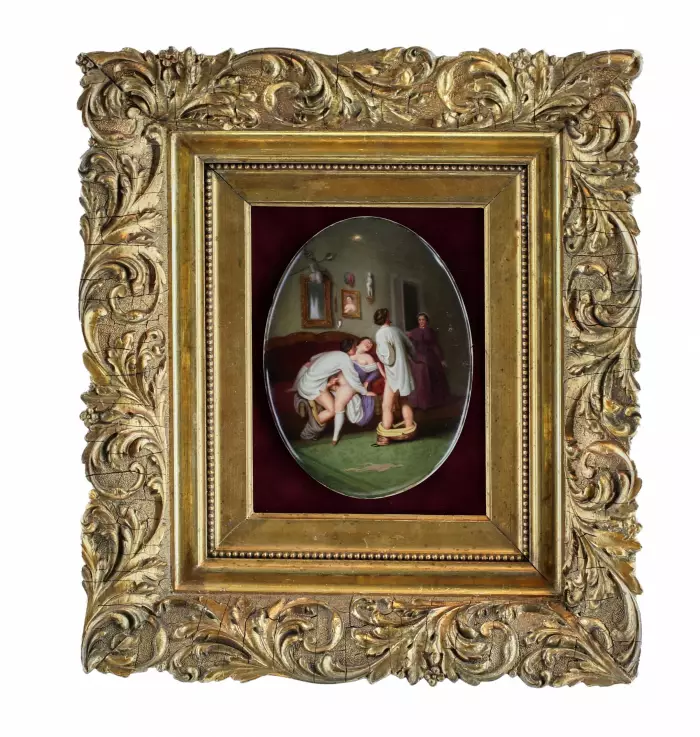
PORCELAIN PLAQUE “THE GAME OF LOVE”. KPM BERLIN. CIRCA 1830
Antiqon consultant will contact you within one business day after receiving your request.
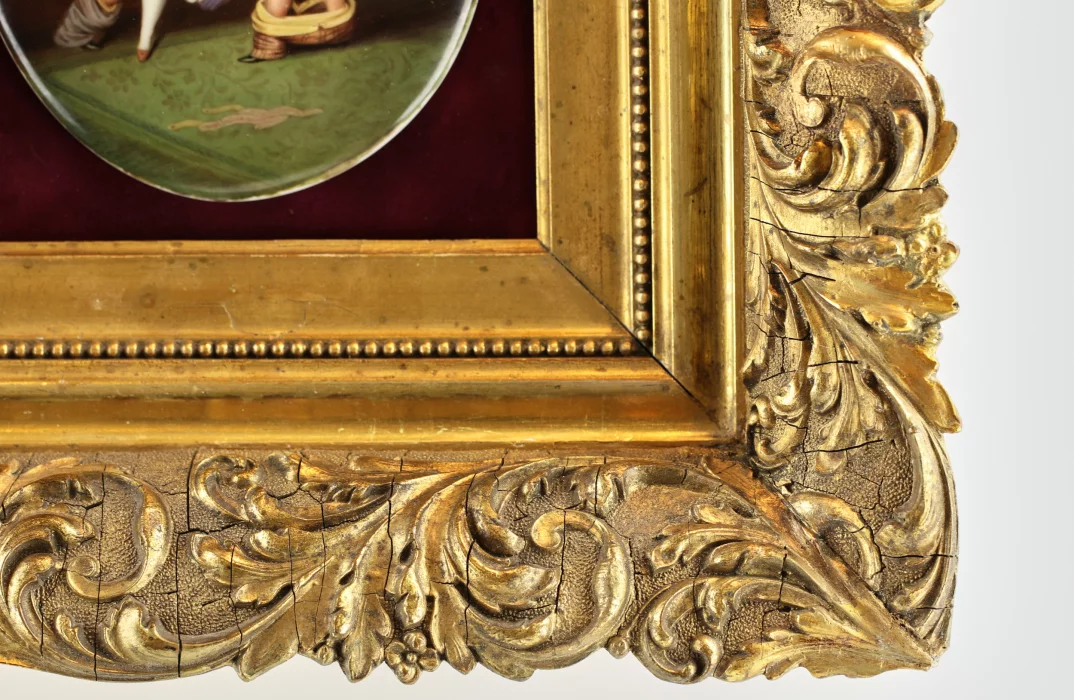
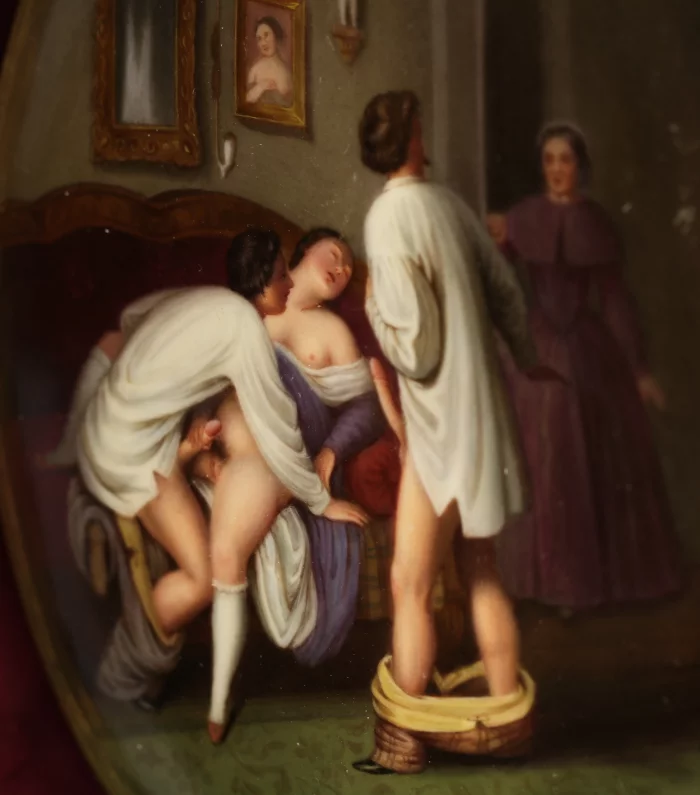
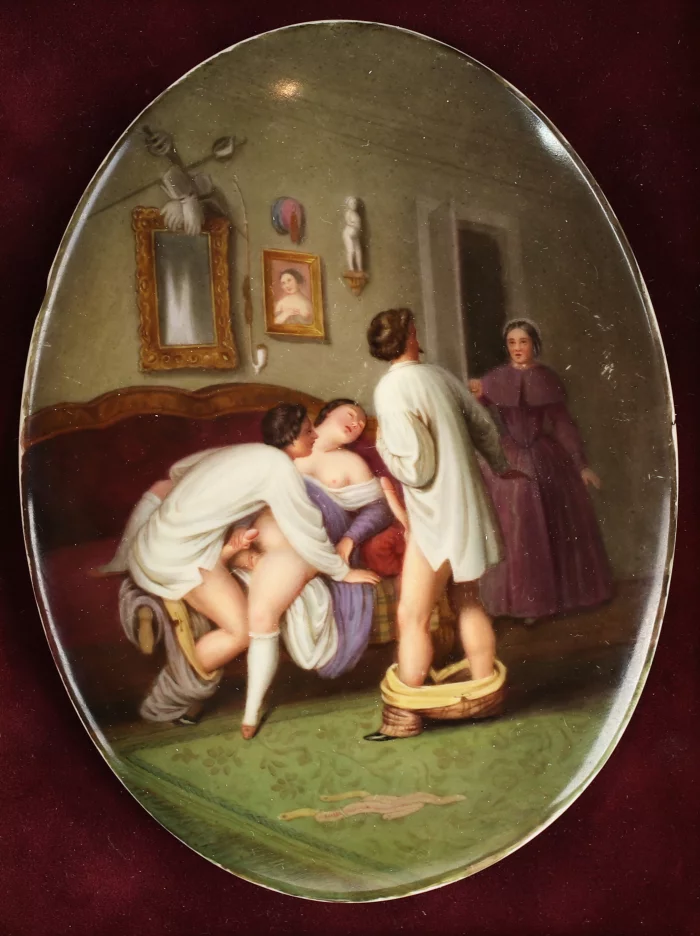
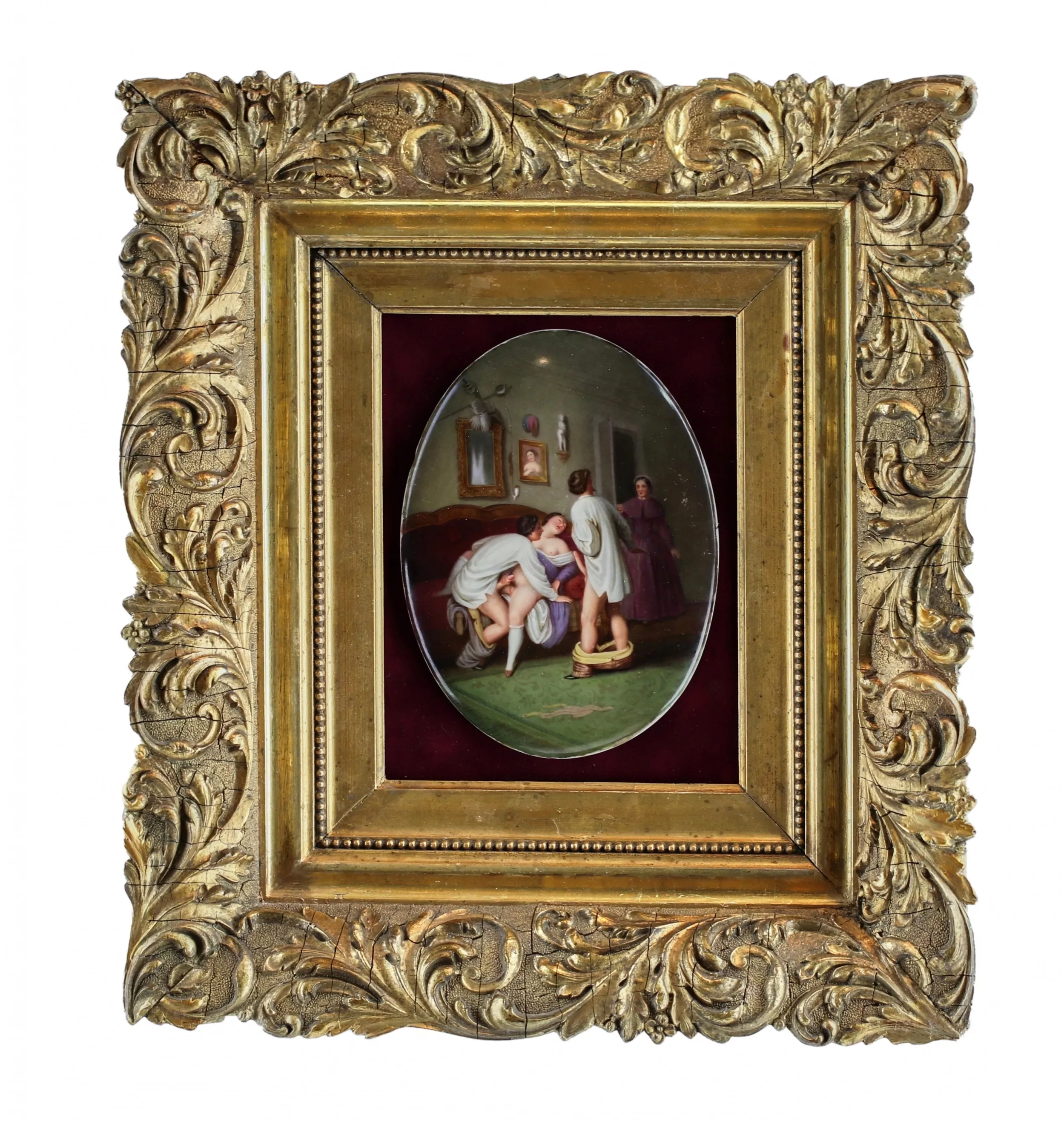
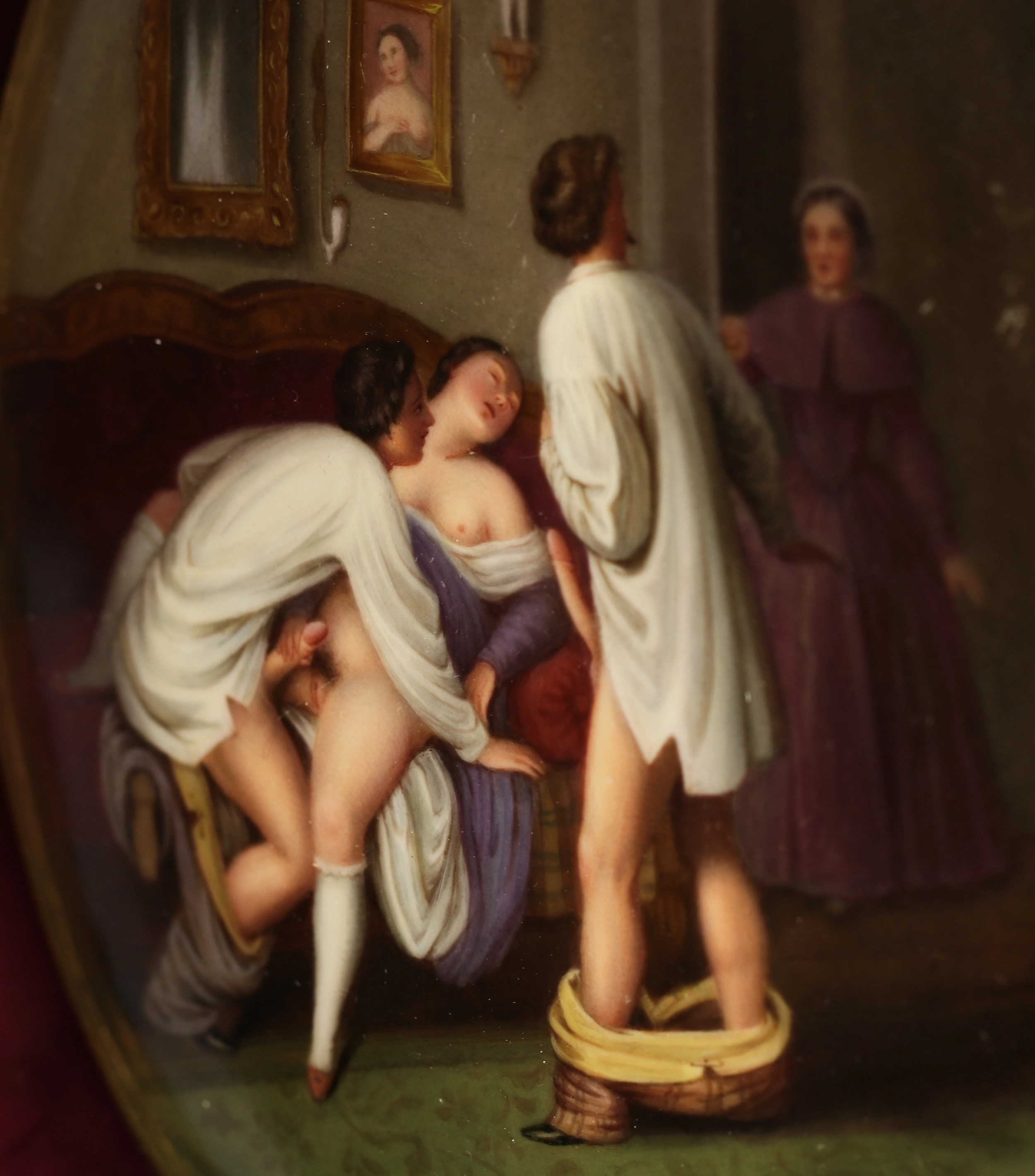
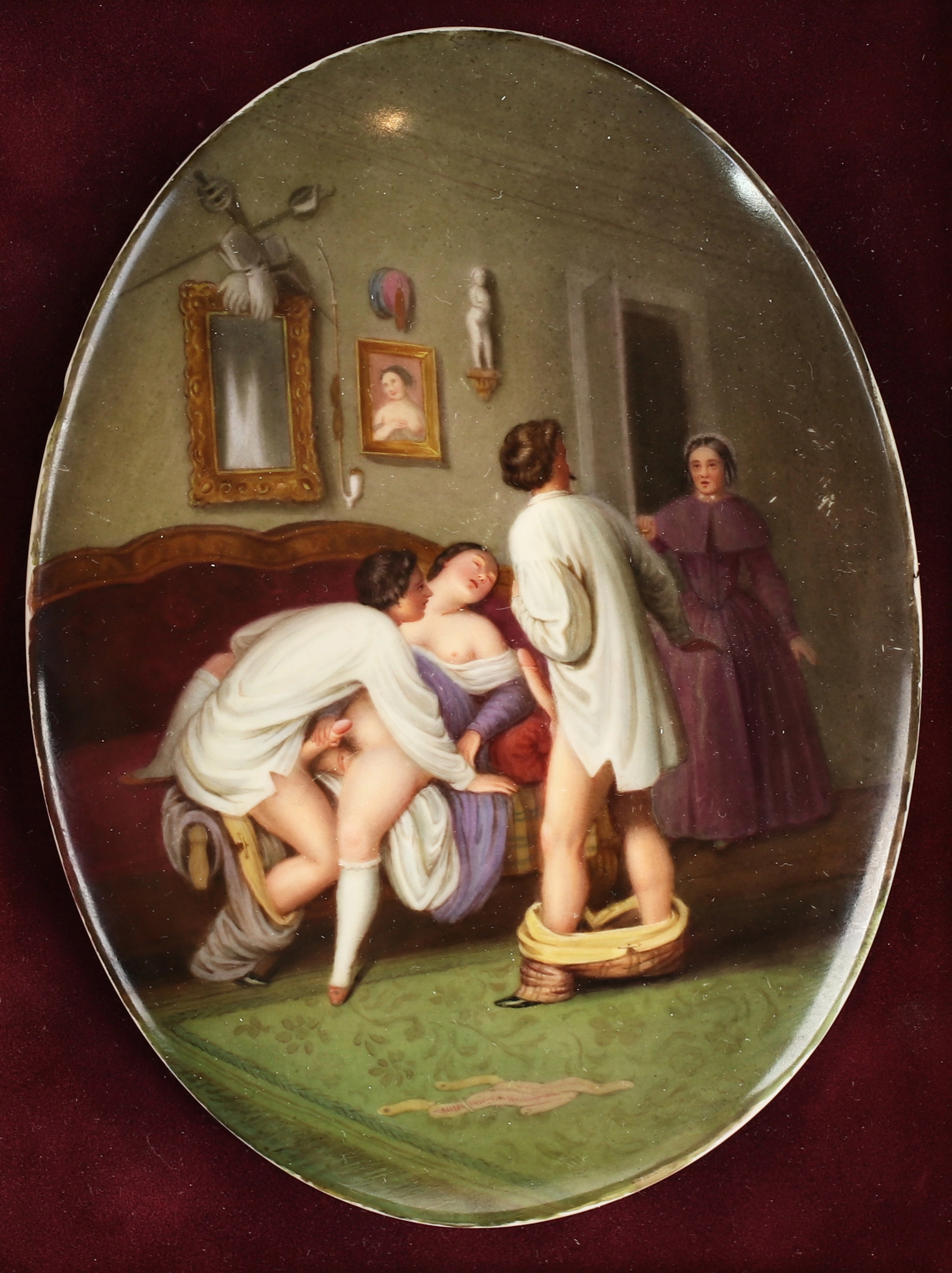
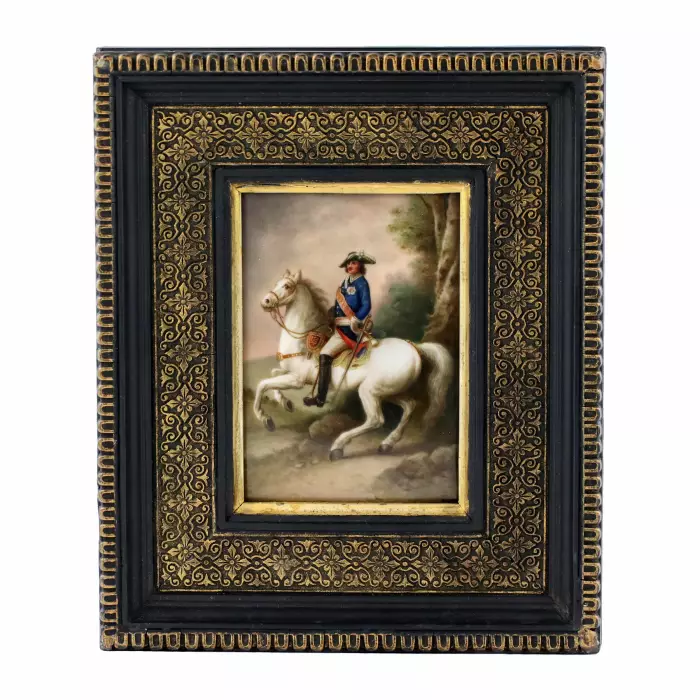
A rare oval porcelain plaque produced by the Royal Porcelain Manufactory, Berlin, KPM, circa 1830, and set within an opulent 19th-century carved and giltwood frame.
The composition depicts a gallant interior scene of pronounced genre and satirical character. A young woman is discovered in a compromising situation in the company of two gentlemen, while an elderly woman appearing in the doorway, possibly her mother or a servant, unexpectedly witnesses the scene.
The subject belongs to the tradition of erotic and gallant painting that enjoyed particular popularity during the first half of the 19th century and drew inspiration from 18th-century French art, in which light irony, theatricality and the play of human emotions were combined with refined academic execution. The miniature composition is distinguished by the high quality of its hand-painted decoration: delicate glazes, subtle modelling of flesh tones, an accomplished rendering of the interior space and meticulously observed details of furniture, costume and decoration attest to the skill of the painters employed by KPM Berlin.
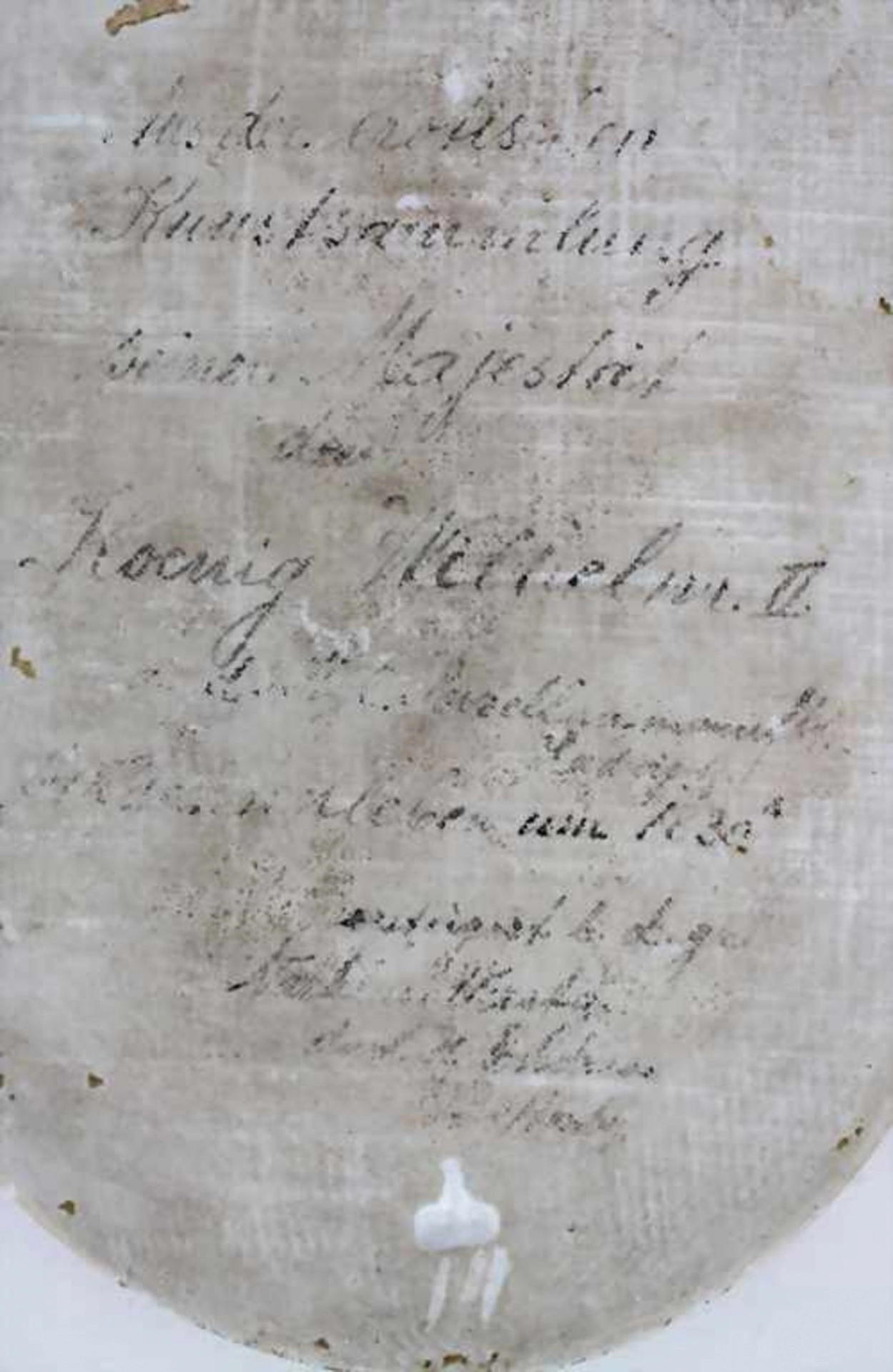
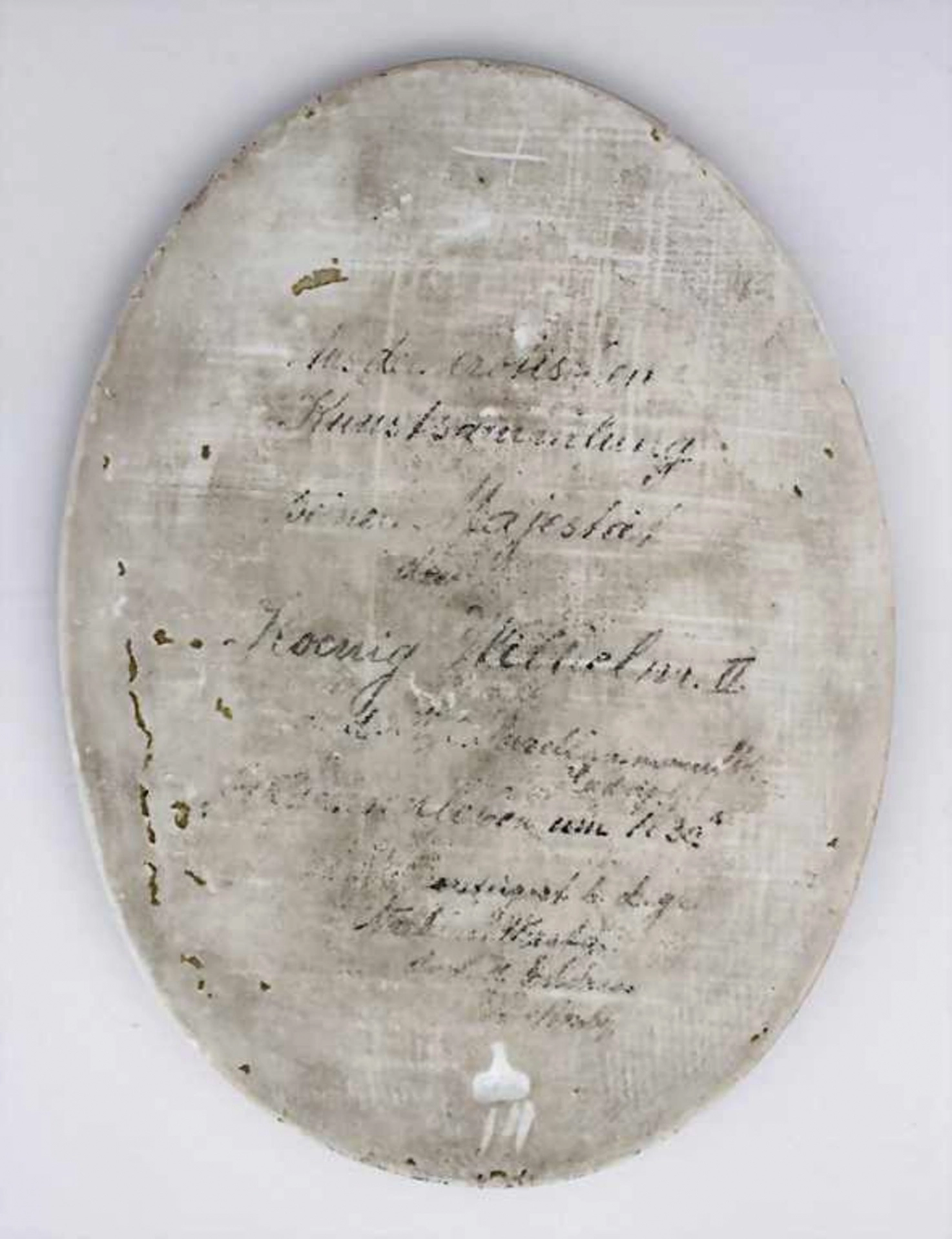
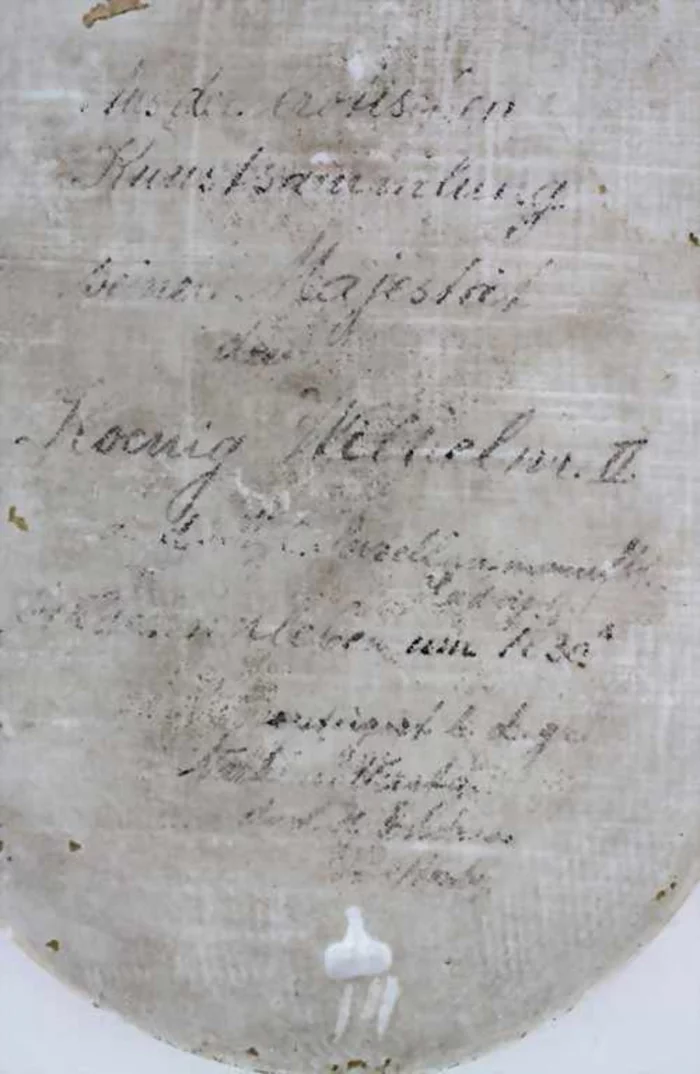
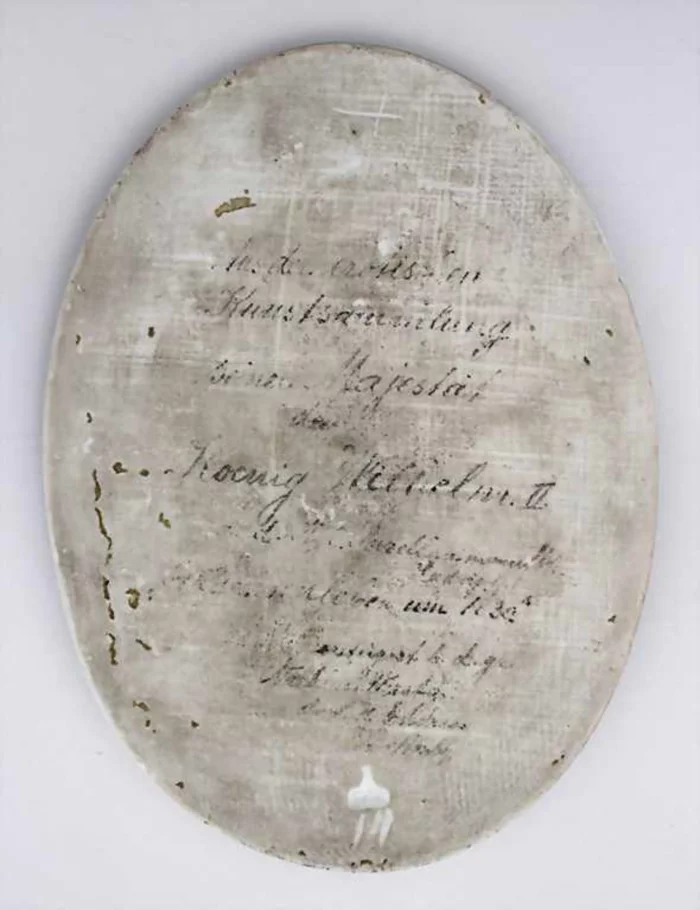
The history of the work is of particular interest. According to an old handwritten inscription on the reverse, the plaque formerly belonged to the collection of erotic art of Kaiser Wilhelm II. Such an ownership inscription forms an important part of the object’s history and lends it additional historical and collecting significance.
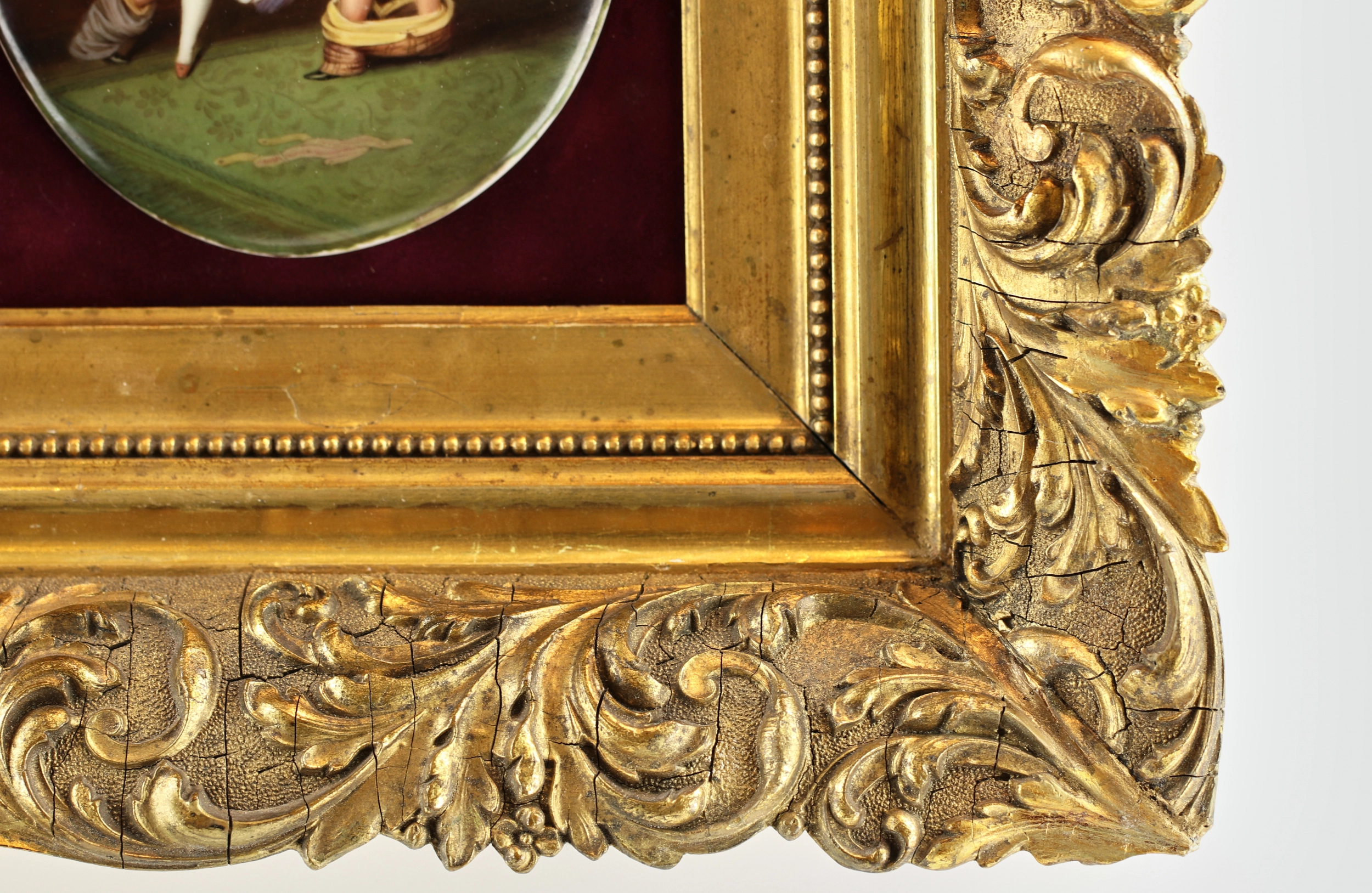
The plaque is presented in a substantial 19th-century carved and giltwood frame richly decorated with foliate ornament, harmoniously complementing the character of the composition.
Marks: Manufactory mark of the Royal Porcelain Manufactory, Berlin, KPM, with sceptre. The reverse bears a handwritten ownership inscription referring to the collection of erotic art of His Majesty Kaiser Wilhelm II.
Dimensions: Plaque: 17.5 × 13 cm. Frame: 38 × 34 cm.
Condition: Good condition.
Provenance: Private collection, Southern Germany. Formerly from the collection of erotic art of Kaiser Wilhelm II, as recorded by the historical handwritten ownership inscription on the reverse.
The Royal Porcelain Manufactory, Berlin, Königliche Porzellan-Manufaktur Berlin, founded in 1763 by Frederick II the Great, ranks among the most prestigious European producers of artistic porcelain. By the late 18th and early 19th centuries, the manufactory had achieved international renown for the exceptional quality of its painted porcelain plaques, intended both as independent collector’s objects and as elements of princely and aristocratic interiors.
The production of such works required the combined expertise of painters, modellers and specialists in high-temperature firing. The porcelain surface allowed for unusual depth and luminosity of colour, yet demanded complete technical mastery, since each firing stage could alter the tonal balance or damage the work irreparably.
Painted plaques occupied a particularly distinguished place within the output of KPM Berlin. They reproduced celebrated works by European masters as well as original compositions conceived in the idiom of Neoclassicism, late Rococo and Biedermeier. Through layered painting, delicately modulated light and the exceptional purity of the porcelain ground, KPM artists achieved effects approaching those of easel painting.
During the first half of the 19th century, gallant and genre scenes inspired by 18th-century French art enjoyed considerable popularity. Their artistic origins may be traced to the work of François Boucher, Jean-Honoré Fragonard and Nicolas Lancret. Artists of the 19th century reinterpreted such subjects in a more intimate, theatrical and psychological manner. Light erotic intrigue, unexpected narrative turns and subtle irony made such works particularly desirable for private cabinets and sophisticated salon collections.
The historical ownership inscription on the reverse, associating the plaque with the collection of erotic art of Kaiser Wilhelm II, lends the present work further importance. Inscriptions of this nature constitute significant evidence in the study of provenance and the history of ownership. Painted porcelain plaques by KPM Berlin are today preserved in leading museum collections and are regarded as among the finest achievements of 19th-century European porcelain painting.
Good condition. The painted decoration is well preserved, with no visible losses to the painted surface. Minor signs of age. The carved giltwood frame shows age-related rubbing and local areas of exposed wood.
The condition report is provided for informational purposes only.
It is not comprehensive and may not reflect all defects, restorations, alterations, or adaptations, as Antiqon does not perform professional conservation-level assessments. The information is based on a qualified, yet subjective, evaluation by our specialists.Before purchasing, we recommend consultation with an independent expert.Please also consult our Terms and conditions and Glossary A-Z, which contain important information on lot characteristics and sale conditions.