×
Create account and receive
15% DISCOUNT
your first acquisition
or
THE HOUSE OF CARL FABERGÉ
The name of Carl Fabergé occupies a singular place in the history of the world's decorative arts. For more than a century, the creations of the House of Fabergé have been regarded as the ultimate expression of artistic refinement, technical ingenuity, and impeccable craftsmanship. Yet behind the celebrated name stood not a single master jeweller, but a highly sophisticated organisation that united dozens of gifted goldsmiths, silversmiths, enamellers, lapidaries, and craftsmen under the artistic direction of Carl Fabergé himself. This unique structure enabled the firm to produce thousands of works that today rank among the finest achievements of Russian decorative art at the turn of the nineteenth and twentieth centuries.
The history of the firm began in 1842, when Gustav Fabergé established a jewellery workshop and retail establishment in St Petersburg. The true flourishing of the business, however, came under the leadership of his son, Carl Fabergé (1846–1920), who transformed the family enterprise into the foremost artistic jewellery house of the Russian Empire.
International acclaim followed in 1885 with the creation of the first Imperial Easter Egg for Emperor Alexander III. From that moment onward, the name Fabergé became inseparably associated with the Russian Imperial Court and the aristocratic circles of Europe.
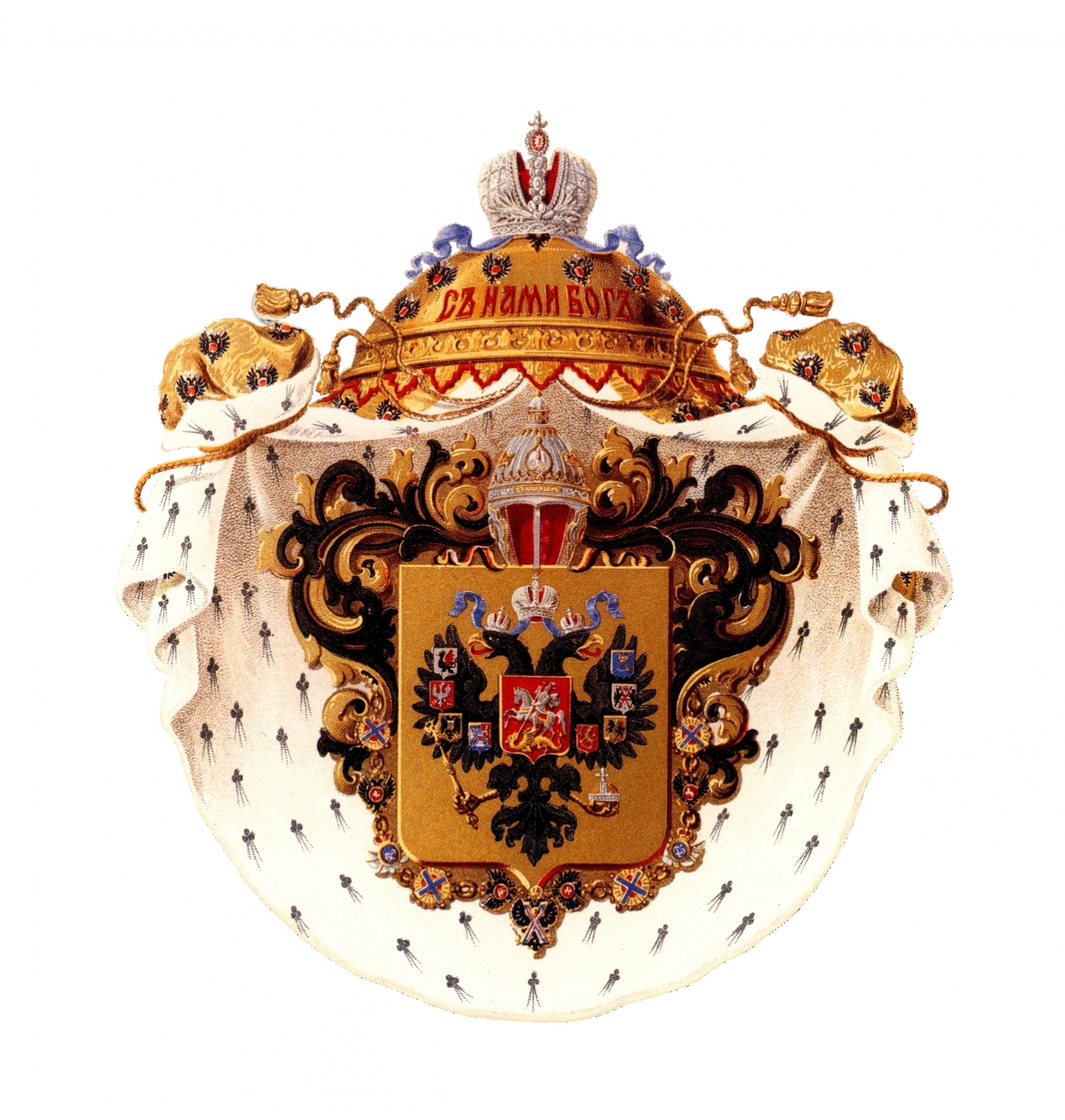
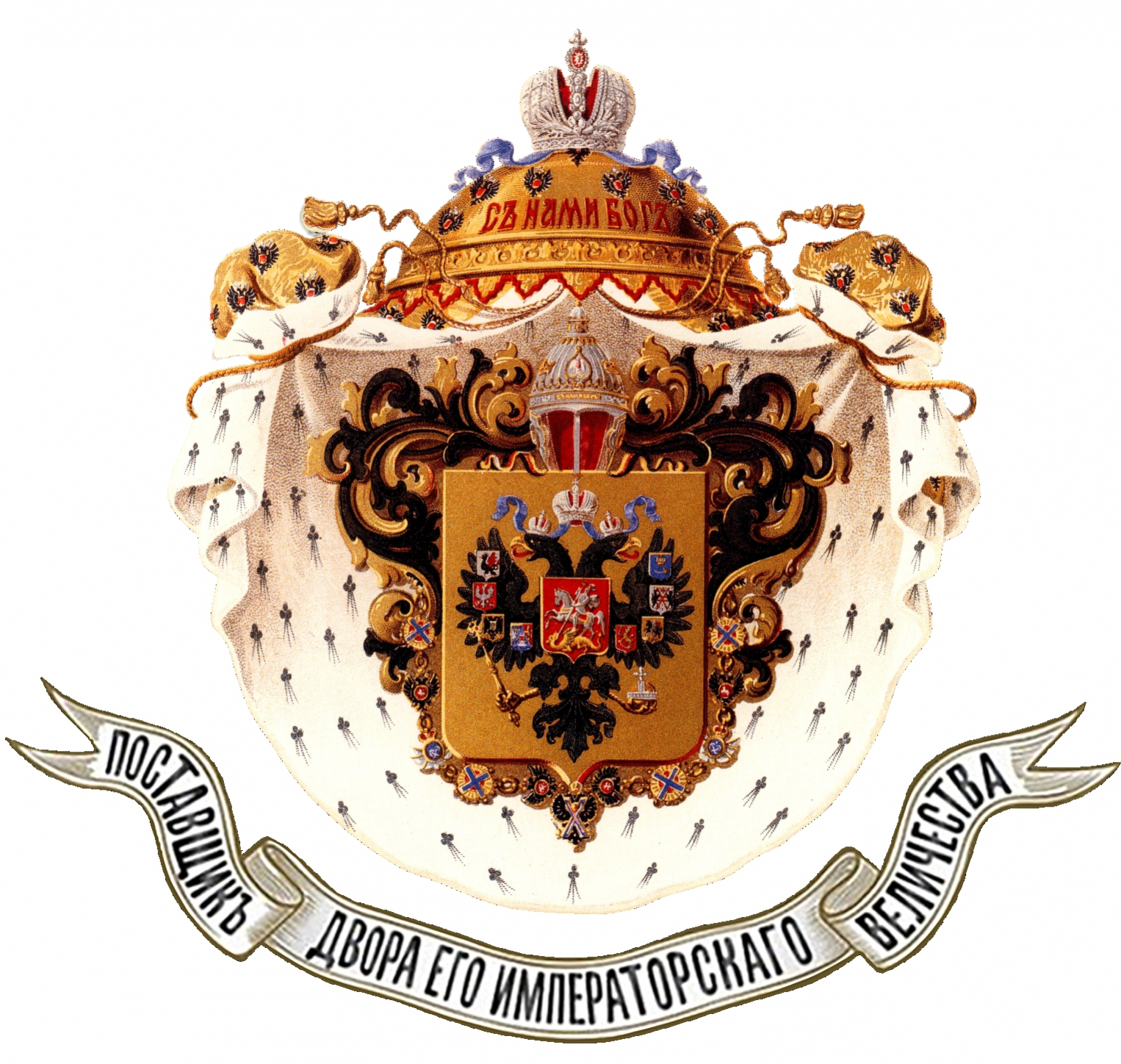
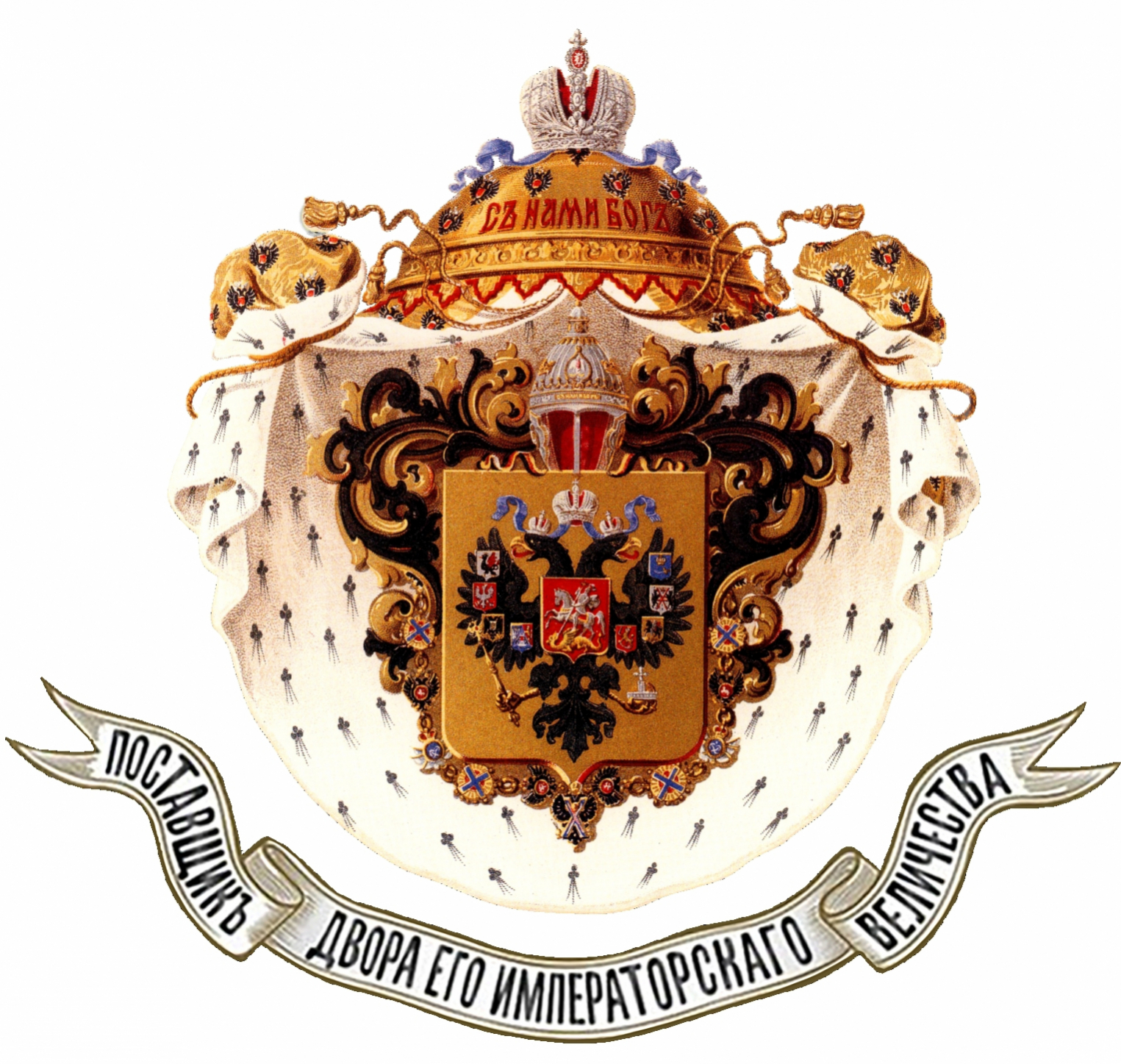
In 1890 Carl Fabergé was appointed Appraiser to the Cabinet of His Imperial Majesty, and in 1910 the firm received the distinguished title of Court Jeweller, an honour regarded as even more prestigious than the traditional designation of Purveyor to the Court of His Imperial Majesty.
Unlike most European jewellery houses of its era, the House of Fabergé was not a single workshop but an extensive network of specialised ateliers.
Following a major reorganisation in 1882, independent workshops were established, each devoted to a particular discipline jewellery, silverwork, enamelling, hardstone carving, or luxury objects. These ateliers were directed by the firm's most accomplished workmasters, who operated with financial independence while producing exclusively for Fabergé under his artistic supervision.
This innovative structure ensured a remarkable balance between exceptional quality, stylistic consistency, and the capacity to fulfil an extraordinary number of bespoke commissions.
It is estimated that between 1882 and 1917 the firm's workshops produced approximately 150,000 to 200,000 objects.
The principal headquarters of the House of Fabergé remained in St Petersburg, where the most prestigious commissions for the Imperial Court were conceived, new designs developed, and artistic and technical standards rigorously maintained.
In 1887 an independent Moscow branch was established. While the St Petersburg workshops concentrated on unique masterpieces and Imperial commissions, the Moscow branch primarily served the wealthy nobility, merchant class, and provincial clientele.
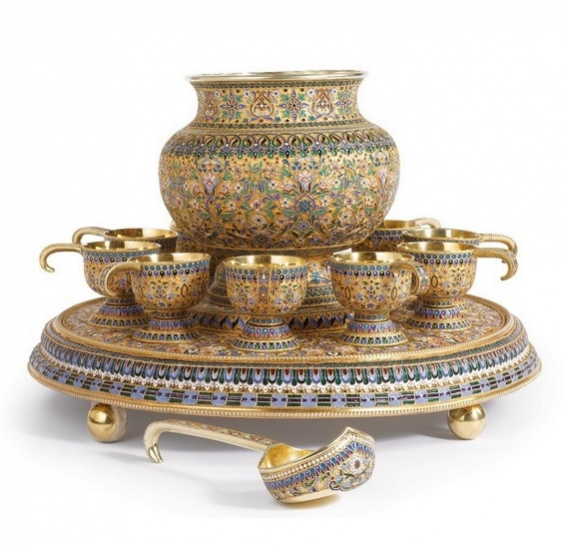
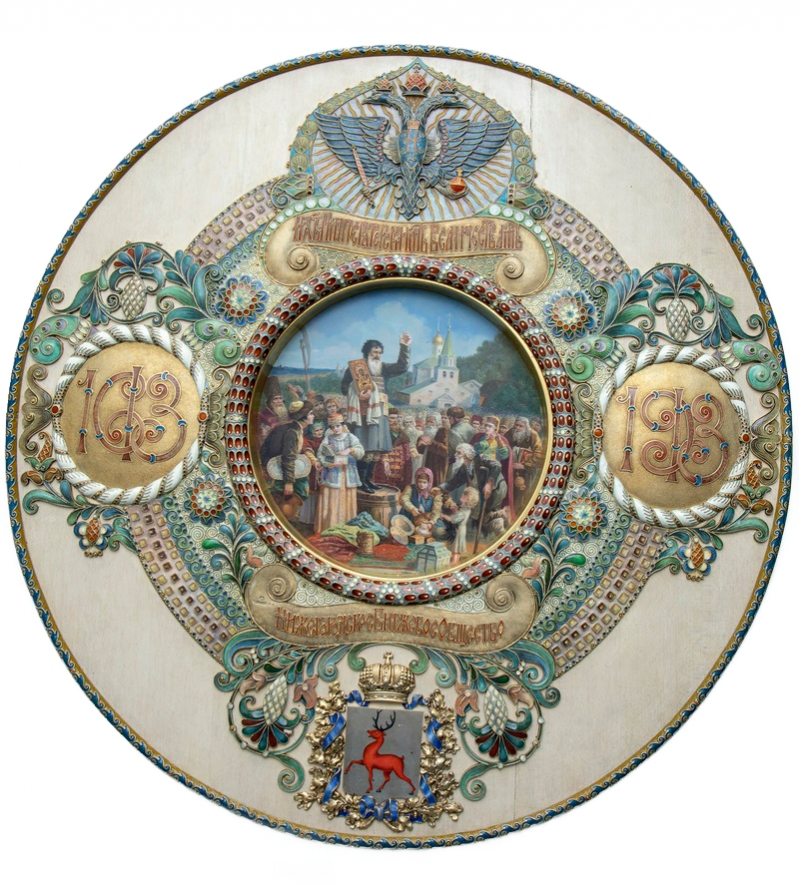
The Moscow workshops became renowned for their production of monumental silver: tea and coffee services, presentation vessels, desk garnitures, decorative kovshi and bratinas, as well as numerous luxury objects inspired by traditional Russian forms. Certain successful models were also manufactured in limited series.
By the beginning of the twentieth century the House of Fabergé had evolved into an international enterprise.
In addition to its establishments in St Petersburg and Moscow, the firm maintained branches in Odessa, Kyiv, London, and Bangkok.
The London branch, opened in 1903, played a particularly significant role, introducing Fabergé's creations to the British Royal Family, the European aristocracy, diplomats, and prominent international collectors.
Carl Fabergé himself rarely worked at the jeweller's bench. His primary responsibility lay in directing the artistic vision of the entire enterprise.
Throughout the firm's history approximately forty senior workmasters were entrusted with the execution of its creations. Among the most celebrated were Michael Perkhin, Henrik Wigström, Julius Rappoport, Erik Kollin, August Holmström, Anders Nevalainen, and Stephen Wakeva.
Today, the workmasters' initials remain among the most important elements in the scholarly attribution and dating of Fabergé objects.
Fabergé consistently collaborated with the finest specialist workshops throughout the Russian Empire.
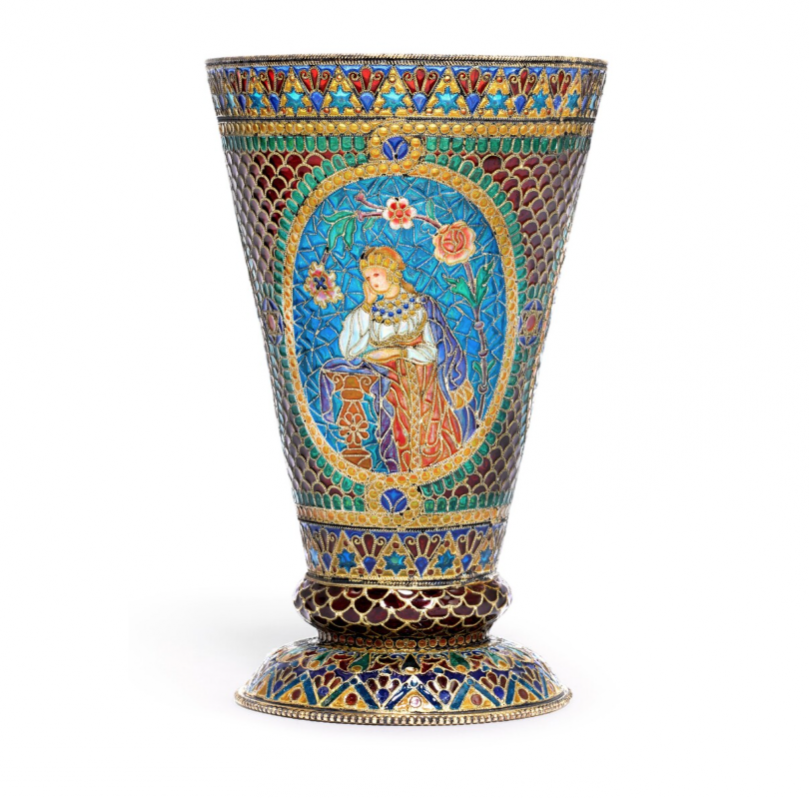
Among the most distinguished partnerships was that with the Moscow enameller Fyodor Ruckert, celebrated for his masterly cloisonné enamels executed in the Neo-Russian style. Many of Rückert's works were retailed through Fabergé's salons and are now regarded among the masterpieces of Russian decorative arts of the early twentieth century.
The firm also collaborated extensively with the renowned lapidary establishment of Carl Woerffel, one of Russia's foremost producers of hardstone carvings and ornamental objects.
Exceptional craftsmanship became one of the defining characteristics of every Fabergé creation.
Complex objects were engineered as fully dismountable constructions. Concealed hinges, miniature screws, precision catches, and invisible fastening systems eliminated visible soldering and allowed objects to be serviced without compromising their integrity.
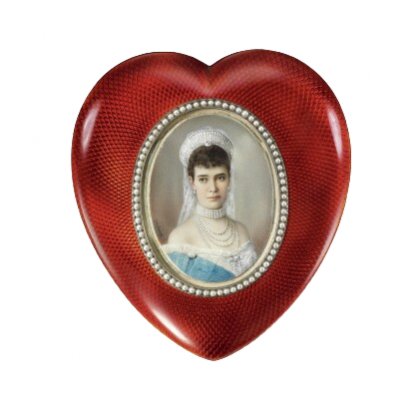
Cigarette cases, caskets, snuff boxes, and photograph frames are distinguished by perfectly fitted lids that open with remarkable smoothness and precision.
Every aspect of an object was carefully considered. Sharp edges were avoided, catches operated flawlessly, and gilding and polishing were executed to standards rarely equalled by contemporary European manufacturers.
The House of Fabergé achieved international distinction through its extraordinary mastery of vitreous enamelling.
Engine-turned (guilloché) enamels were applied over finely engraved geometric patterns created on specially designed rose engines. Particularly prized were the firm's translucent enamels, celebrated for their remarkable luminosity and subtle colour palette, including the celebrated opalescent white enamel with its characteristic pearlescent sheen.
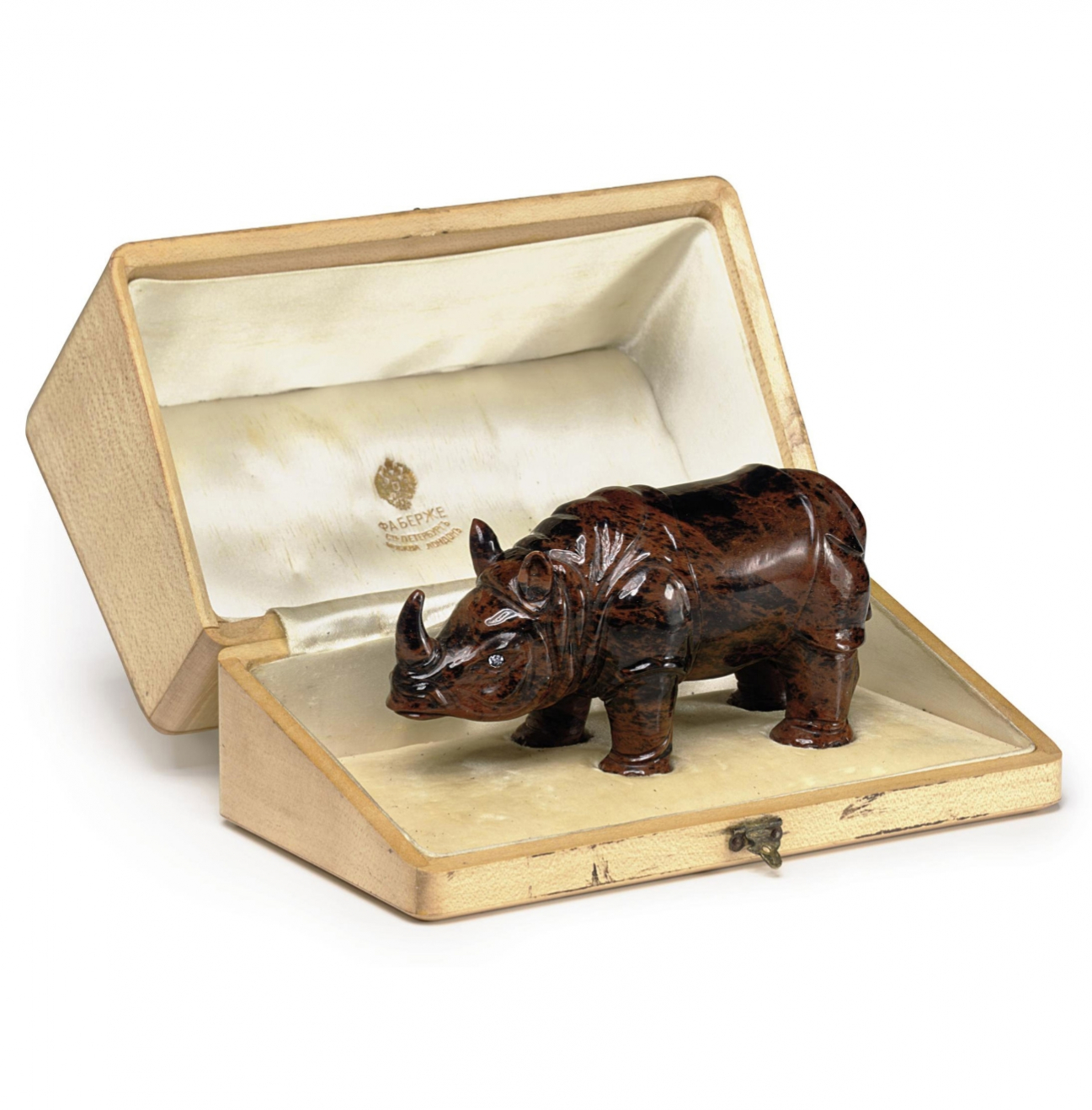
Rather than relying solely upon precious gemstones, Carl Fabergé demonstrated an exceptional appreciation for the beauty of ornamental hardstones. Nephrite, jasper, agate, carnelian, chalcedony, rock crystal, and quartz became essential materials in the creation of flowers, animals, and sculptural compositions.
One distinctive feature of Fabergé hardstone animals is the absence of bases: the figures invariably stand directly upon their own feet, a characteristic widely recognised by scholars and specialists.
The hallmarking system employed by the House of Fabergé is among the most sophisticated in Russian goldsmiths' work.
Objects produced by the Moscow branch generally bear the firm's hallmark incorporating the Imperial double-headed eagle together with the inscription "K. FABERGÉ", struck as a single punch.
St Petersburg objects were typically marked differently. The firm's name and the Imperial eagle were usually struck separately, accompanied by assay marks and, in many instances, the initials of the supervising workmaster.
The careful study of these combined hallmarks remains one of the fundamental methods used today in the authentication and attribution of Fabergé works.
Among the firm's most celebrated artistic achievements is its hardstone sculpture.
Miniature animals, floral studies, and ornamental compositions were carved from Russian ornamental stones with extraordinary sensitivity to the natural character of each material. Nephrite, chalcedony, agate, and carnelian enabled the lapidaries to achieve remarkable naturalism and subtle modelling.
Following the establishment of Fabergé's own hardstone workshop in 1908, production expanded significantly, and these sculptures are now among the most sought-after categories of Fabergé collecting.
Following the Russian Revolution of 1917, the firm's operations within Russia came to an end. Its artistic legacy, however, has continued to flourish in the world's leading museum and private collections.
Today, masterpieces by the House of Fabergé are preserved in institutions including the State Hermitage Museum, the Armoury Chamber of the Moscow Kremlin, the Victoria and Albert Museum, the Royal Collection, the Metropolitan Museum of Art, and numerous other distinguished collections worldwide.
For Maison ANTIQON, the House of Fabergé represents the pinnacle of Russian jewellery and one of the defining achievements of European decorative arts. Every Fabergé masterpiece embodies not only extraordinary artistic excellence, but also a unique synthesis of craftsmanship, engineering innovation, and organisational vision that established Carl Fabergé as one of the greatest jewellers in history.
We will only share latest what our month on the PURVEYORS TO THE RUSSIAN IMPERIAL COURT. THE HOUSE OF CARL FABERGÉ.