×
Create account and receive
15% DISCOUNT
your first acquisition
or
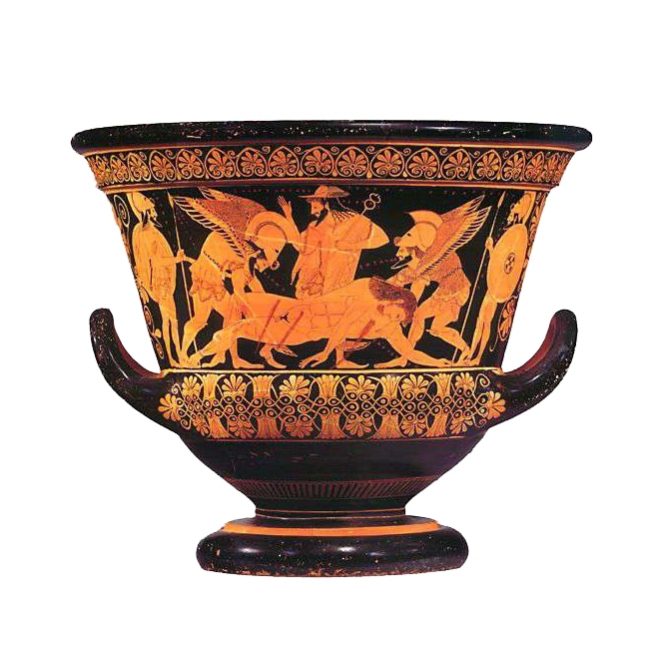
Antique Art is an artistic period associated with the civilizations of Ancient Greece and Ancient Rome from the 8th century BC to the 5th century AD. It established the foundations of the European artistic tradition through the development of harmony, proportion, realism, the idealized representation of the human figure, and the relationship between art, philosophy, mythology, and civic life.
We will only share latest what our month on the ANCIENT ART.
ORIGIN AND DEVELOPMENT
Antique Art developed within the cultures of Ancient Greece and Ancient Rome and represents one of the fundamental periods in the history of world art. Its origins are connected with the artistic traditions of the Aegean civilizations, including Minoan and Mycenaean cultures, as well as with the formation of the city-states of Ancient Greece.
Greek art from the 8th to the 1st century BC evolved through several major historical phases: the Geometric, Archaic, Classical, and Hellenistic periods. The human figure became the central subject of artistic exploration, reflecting ideas of physical perfection, movement, inner expression, and humanity’s place within the order of the world.
The Classical period of the 5th and 4th centuries BC established the principles of harmony, balance, and mathematically defined proportions. Architectural order systems were developed, while sculpture introduced a new artistic canon for the representation of the human body.
Following the conquests of Alexander the Great, Hellenistic art spread throughout the Eastern Mediterranean world and acquired a more expressive, dynamic, and emotionally complex character.
Ancient Roman art absorbed the legacy of Greek artistic traditions while developing its own achievements in architecture, engineering, portrait sculpture, monumental painting, and decorative arts. Roman artistic culture became a bridge between the heritage of classical antiquity and the later artistic development of Europe.
ARTISTIC CHARACTERISTICS
Antique Art is based on the search for a harmonious relationship between form, proportion, and meaning. Its central principle was the pursuit of an ideal order in which artistic representation reflected concepts of beauty, reason, and the structure of the universe.
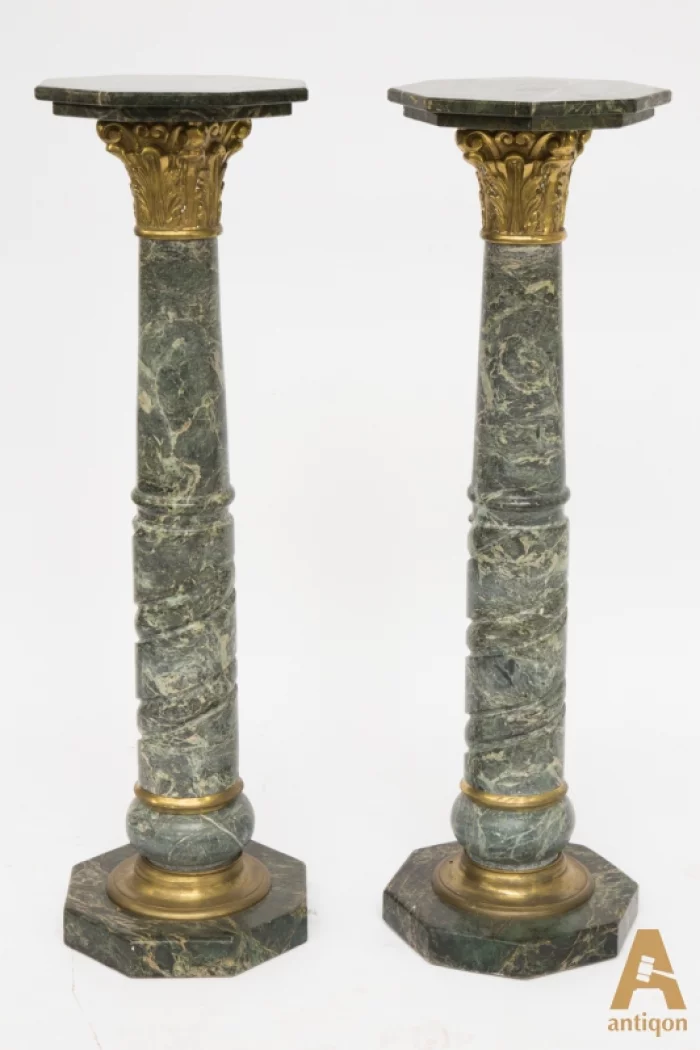
In architecture, antiquity developed the Doric, Ionic, and Corinthian orders, based on precise mathematical relationships between architectural elements. Temples, theatres, forums, and public buildings expressed the religious, political, and civic values of ancient society.
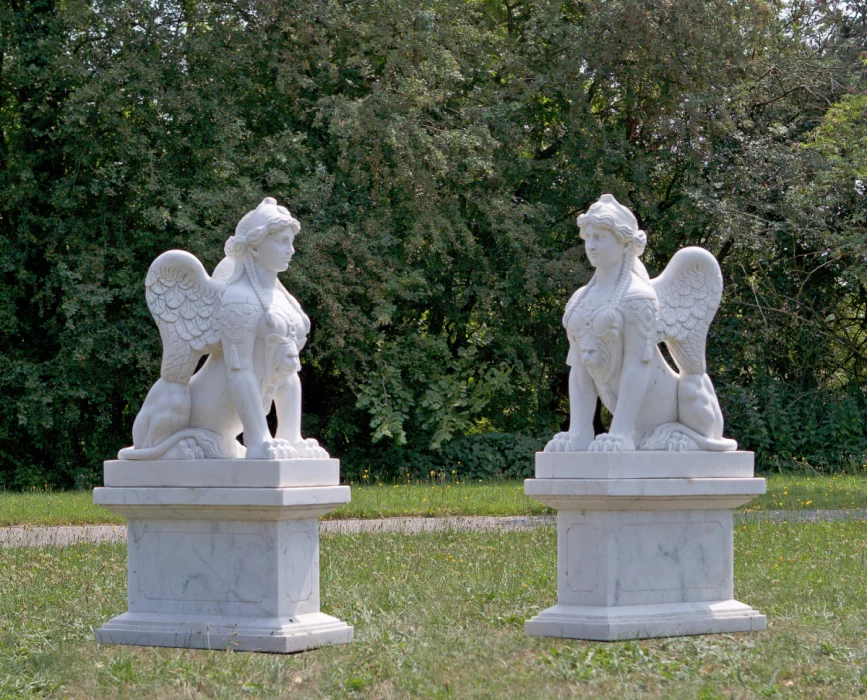
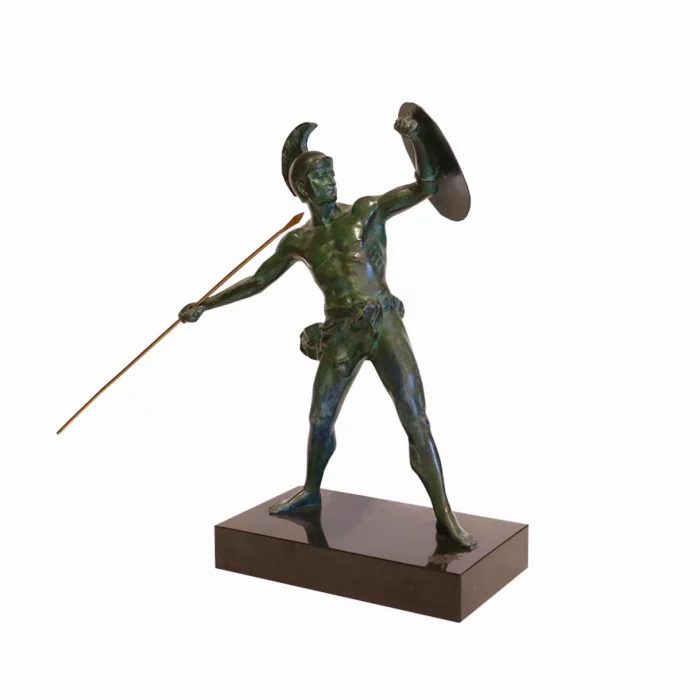
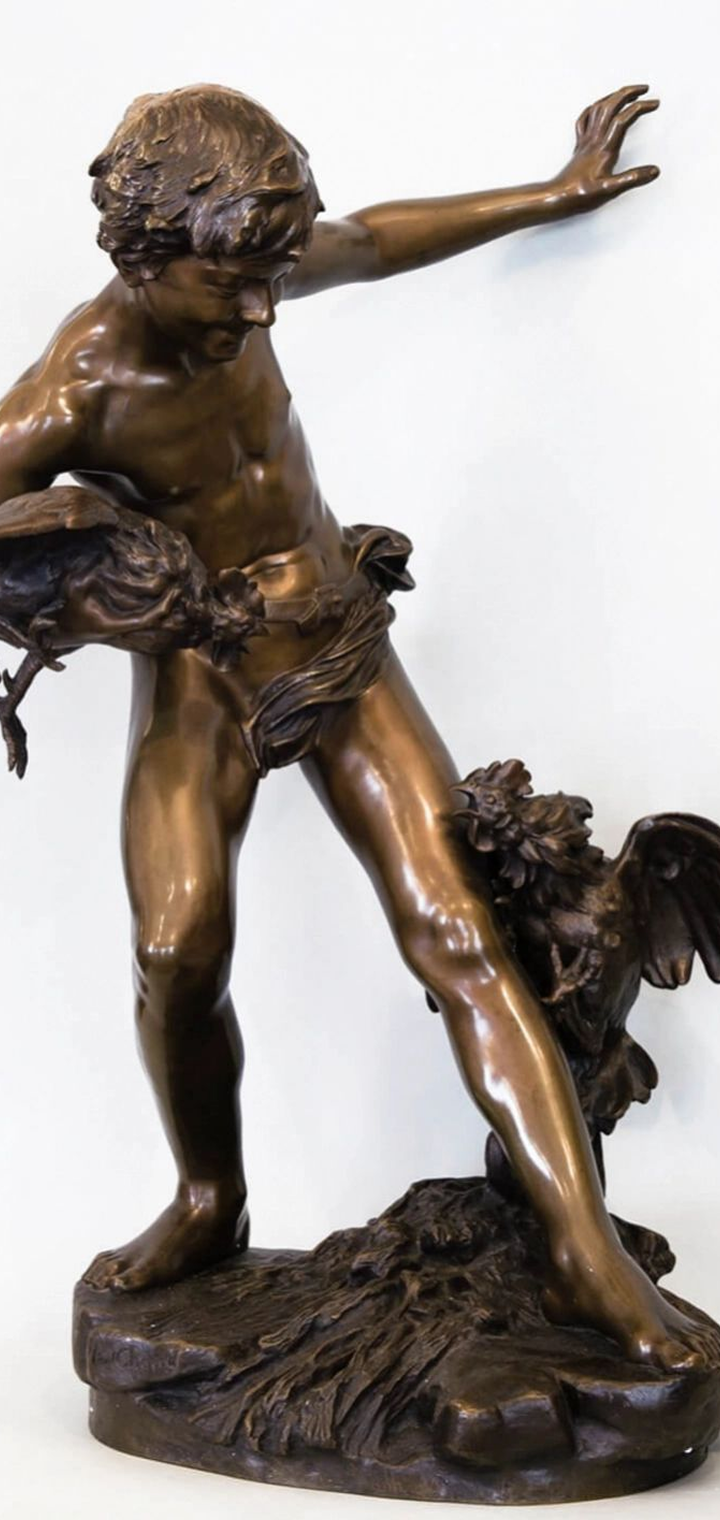
Sculpture occupied a central position in Antique Art. Greek masters focused on the study of anatomy, the depiction of movement, the development of contrapposto, and the creation of an idealized image of the human body. Roman sculpture made a major contribution to the development of realistic portraiture and historical relief.
Decorative arts flourished through ceramics, bronze casting, jewellery, mosaics, fresco painting, and stone carving. Classical ornamental motifs, including acanthus leaves, meanders, laurel wreaths, and mythological compositions, became a lasting part of the European artistic tradition.
IMPORTANT SCHOOLS AND ARTISTIC MOVEMENTS
Geometric Art of Ancient Greece - an early stage of Greek artistic development during the 8th century BC, associated with vase painting and the creation of a structured ornamental system.
Archaic Art of Ancient Greece - an artistic phase of the 7th and 6th centuries BC characterized by the development of monumental sculpture, temple architecture, and the study of human proportions.
Classical Art of Ancient Greece - the period of the 5th and 4th centuries BC associated with the establishment of ideals of harmony, perfect form, and architectural balance.
Hellenistic Art - the artistic culture from the late 4th to the 1st century BC, distinguished by dynamic compositions, emotional expression, and an expanded range of subjects.
Ancient Roman Art - an artistic tradition from the 2nd century BC to the 5th century AD that combined Greek heritage with innovations in architecture, engineering, portraiture, and monumental art.
KEY ARTISTS AND WORKS
Ancient masters established artistic principles that shaped the development of European sculpture, architecture, and decorative arts. Their works became the foundation of the classical canon studied by artists throughout later centuries.
PHIDIAS - Athena Parthenos (c. 438 BC);
POLYKLEITOS - Doryphoros (c. 440 BC);
MYRON - Discobolus (c. 460-450 BC);
PRAXITELES - Aphrodite of Knidos (c. 350 BC);
LYSIPPOS - Apoxyomenos (c. 330 BC);
AGESANDER, ATHENODOROS AND POLYDOROS OF RHODES - Laocoön and His Sons (1st century BC);
APOLLODORUS OF DAMASCUS - Trajan’s Column (113 AD).
INFLUENCE AND LEGACY
Antique Art had a defining influence on the development of European culture and became the foundation for the artistic principles of the Renaissance, Classicism, Neoclassicism, and Academic art.
Ancient concepts of proportion, composition, and harmony formed the basis of European architectural systems, artistic education, and museum traditions. The imagery and ideals of Ancient Greek and Roman culture were continually reinterpreted in painting, sculpture, architecture, and decorative arts.
The legacy of antiquity remains a central subject in modern art history as one of the key stages in the formation of Western artistic civilization.