


SILVER-GILT SALT THRONE, IVAN KHLEBNIKOV FIRM, MOSCOW, 1875
Antiqon consultant will contact you within one business day after receiving your request.
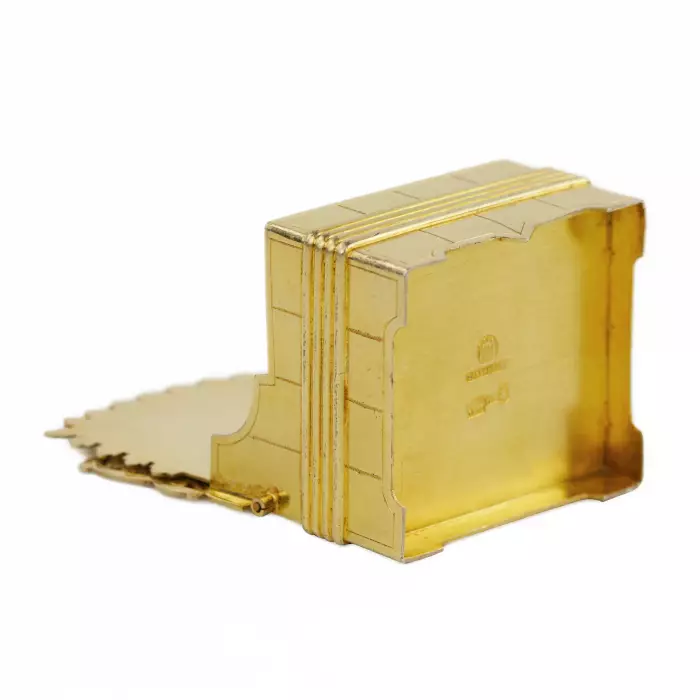
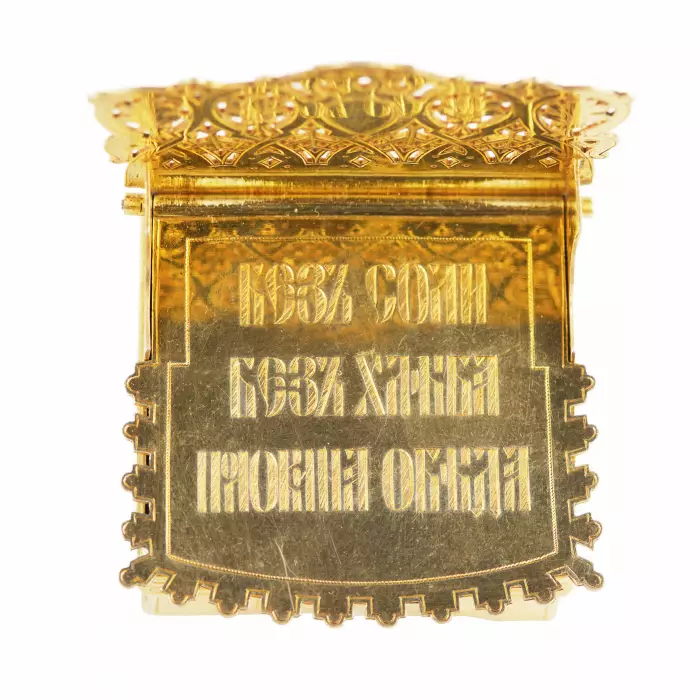
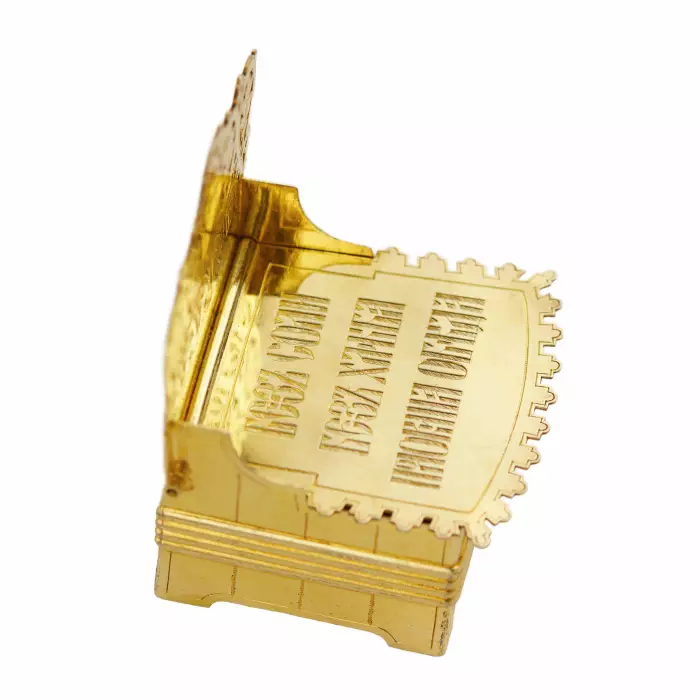
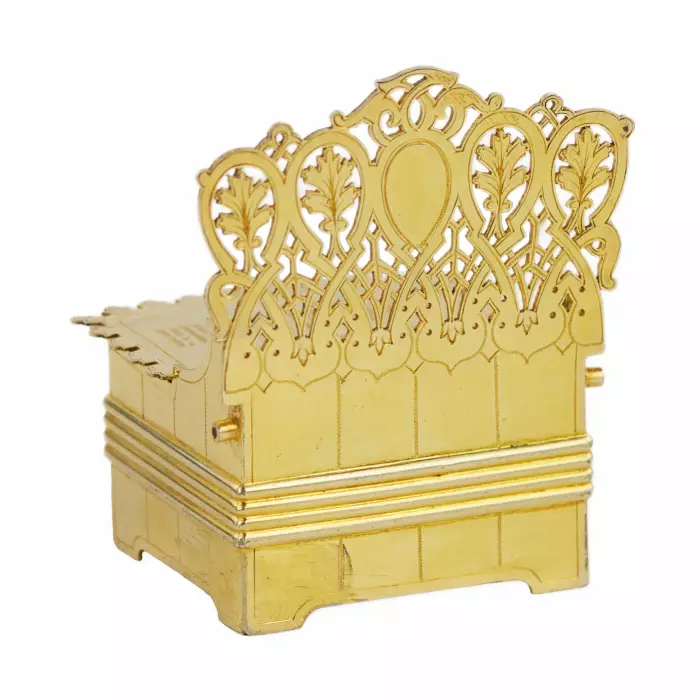
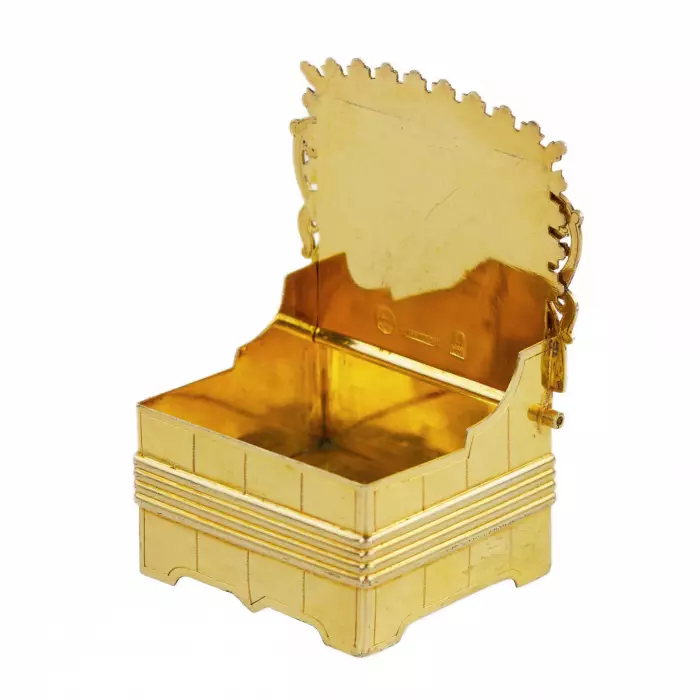
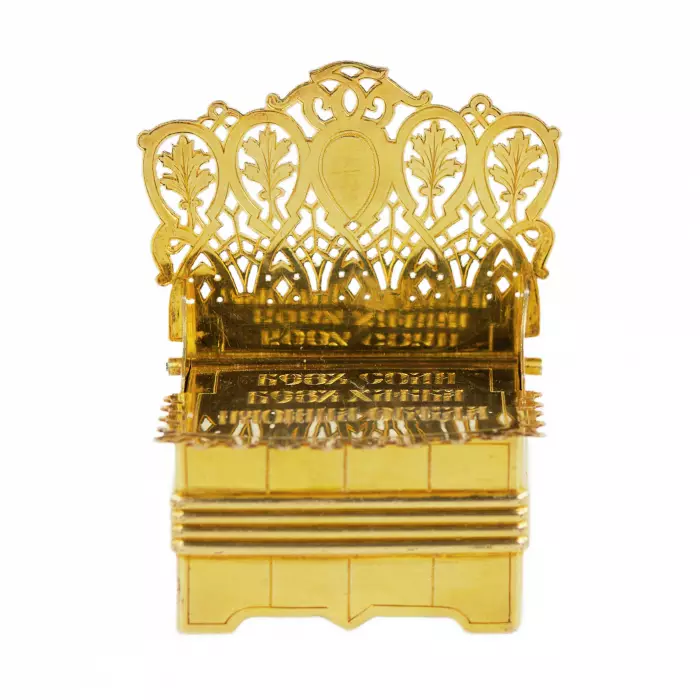
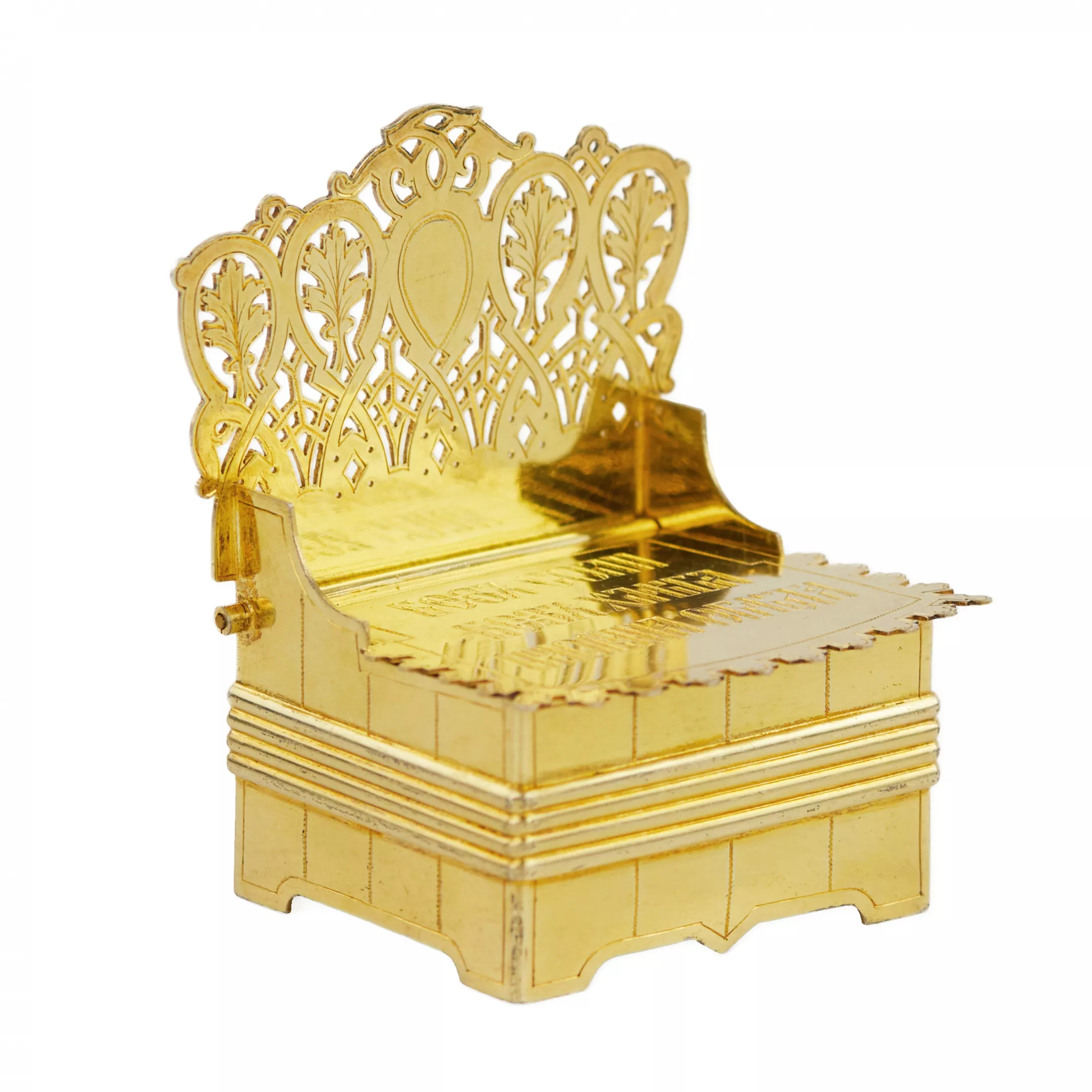
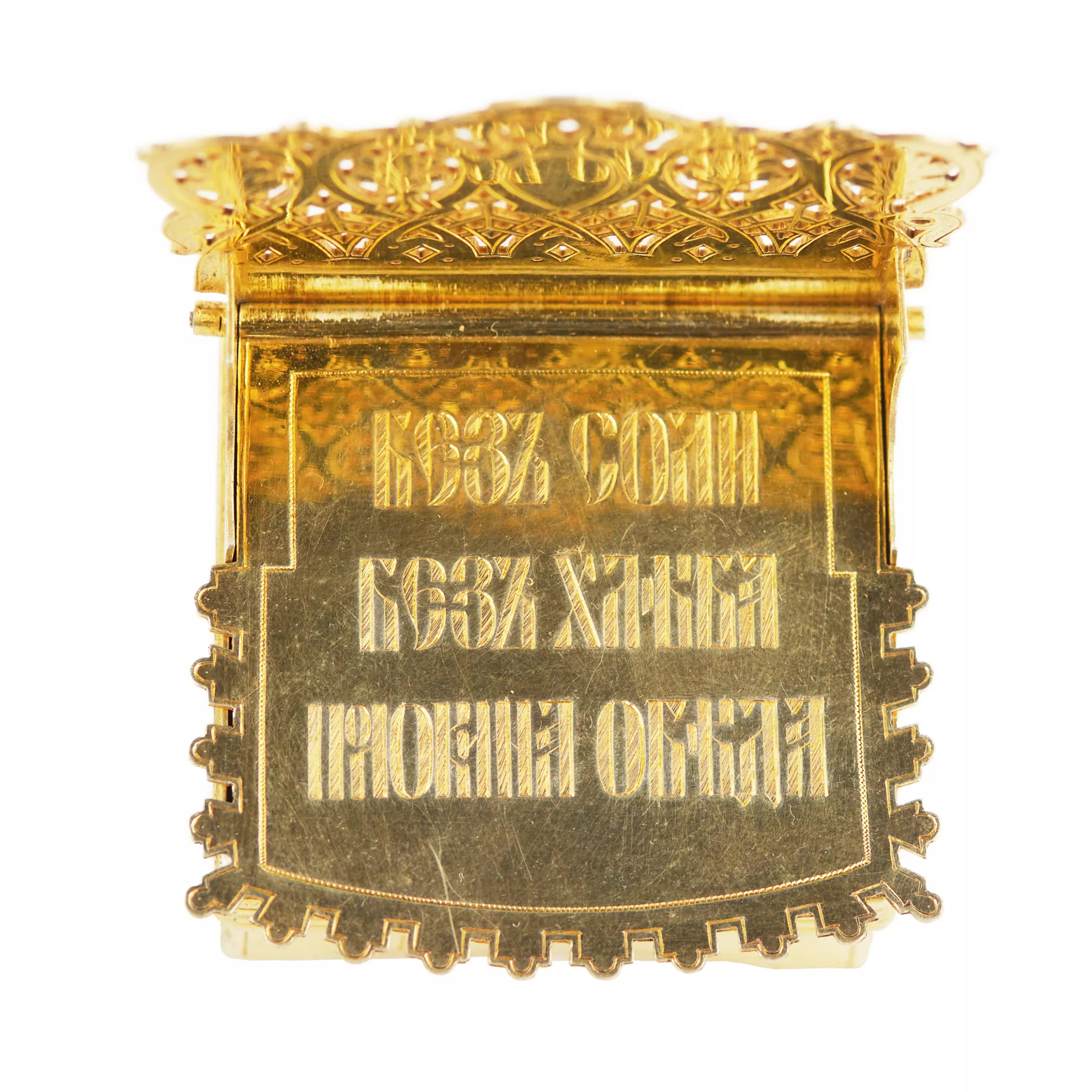
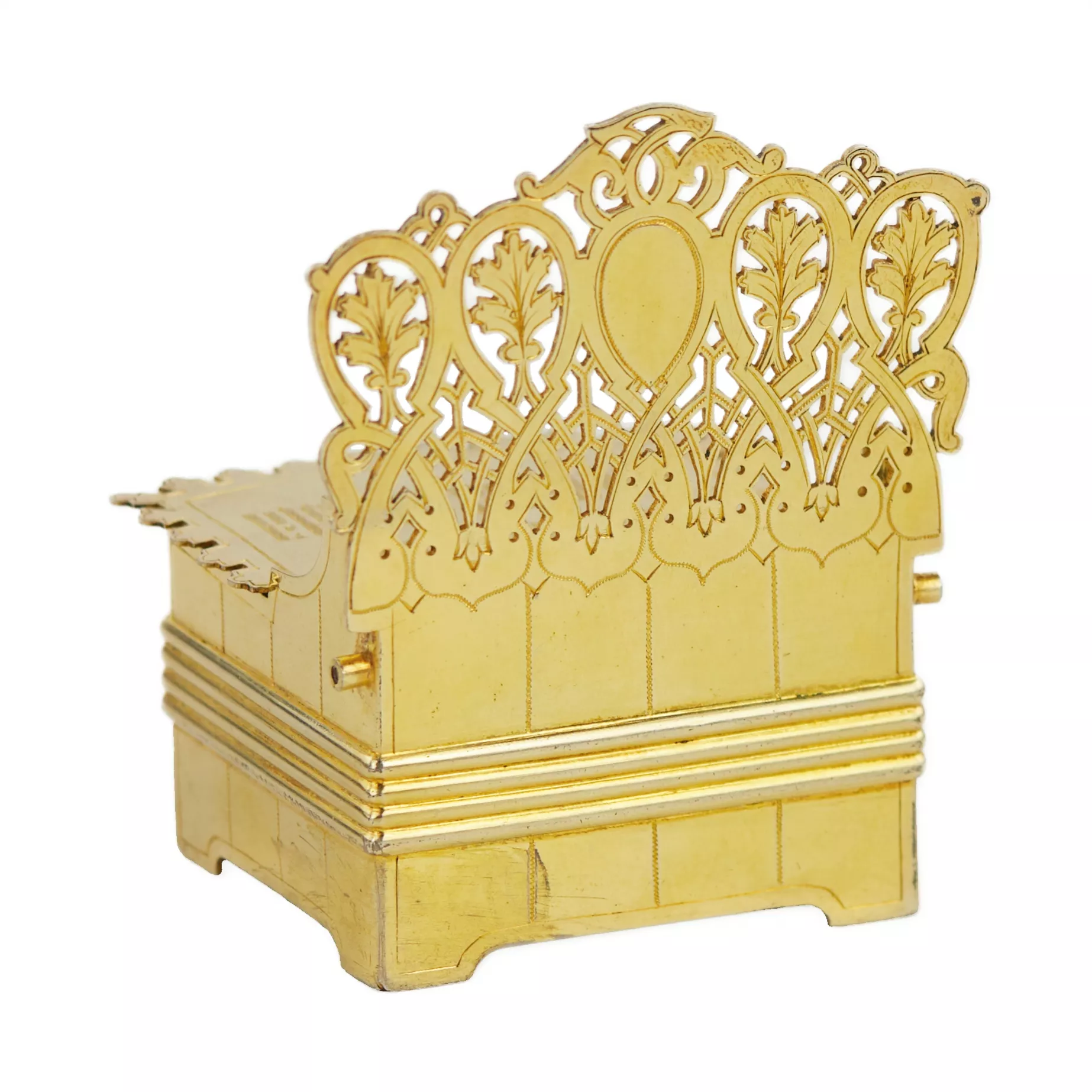
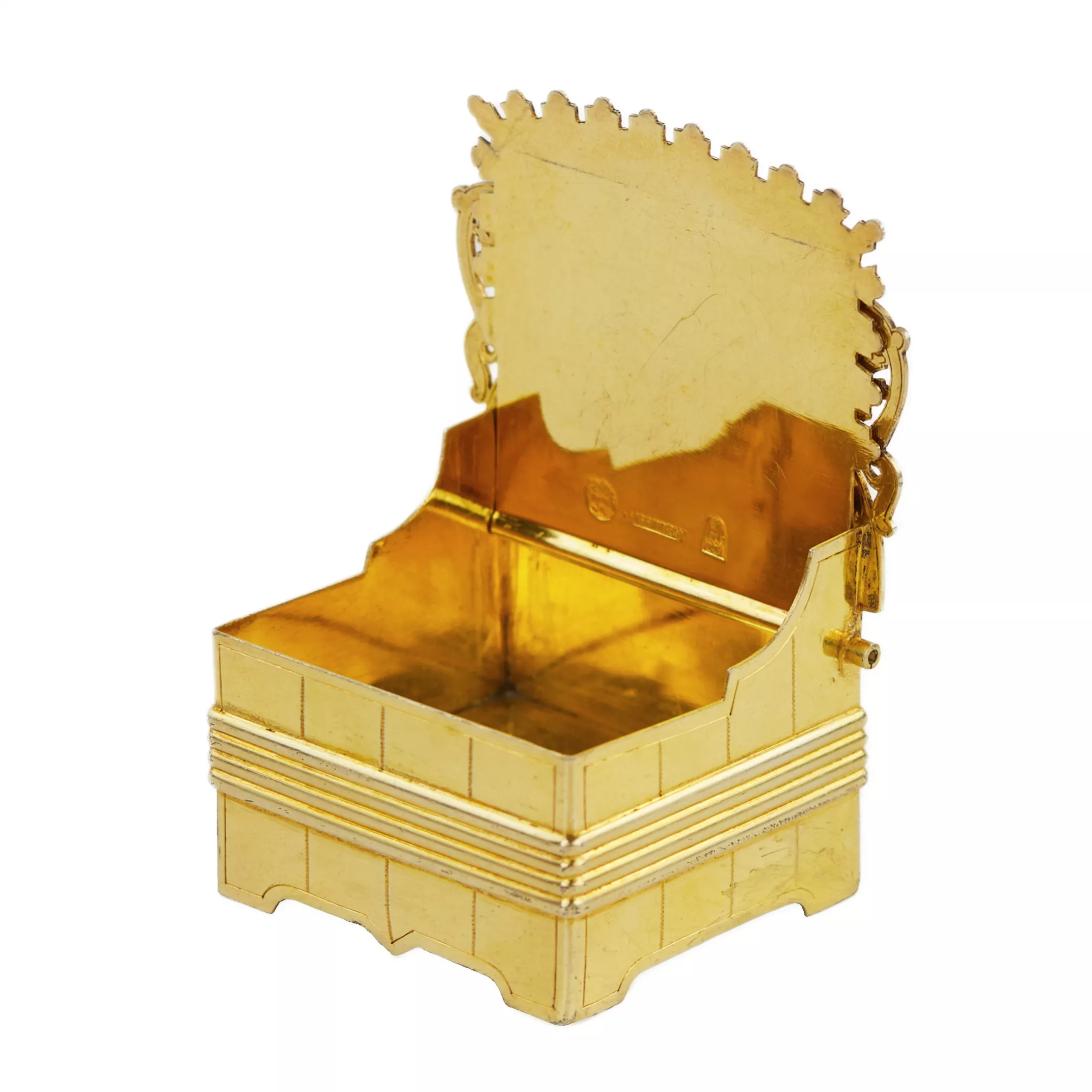
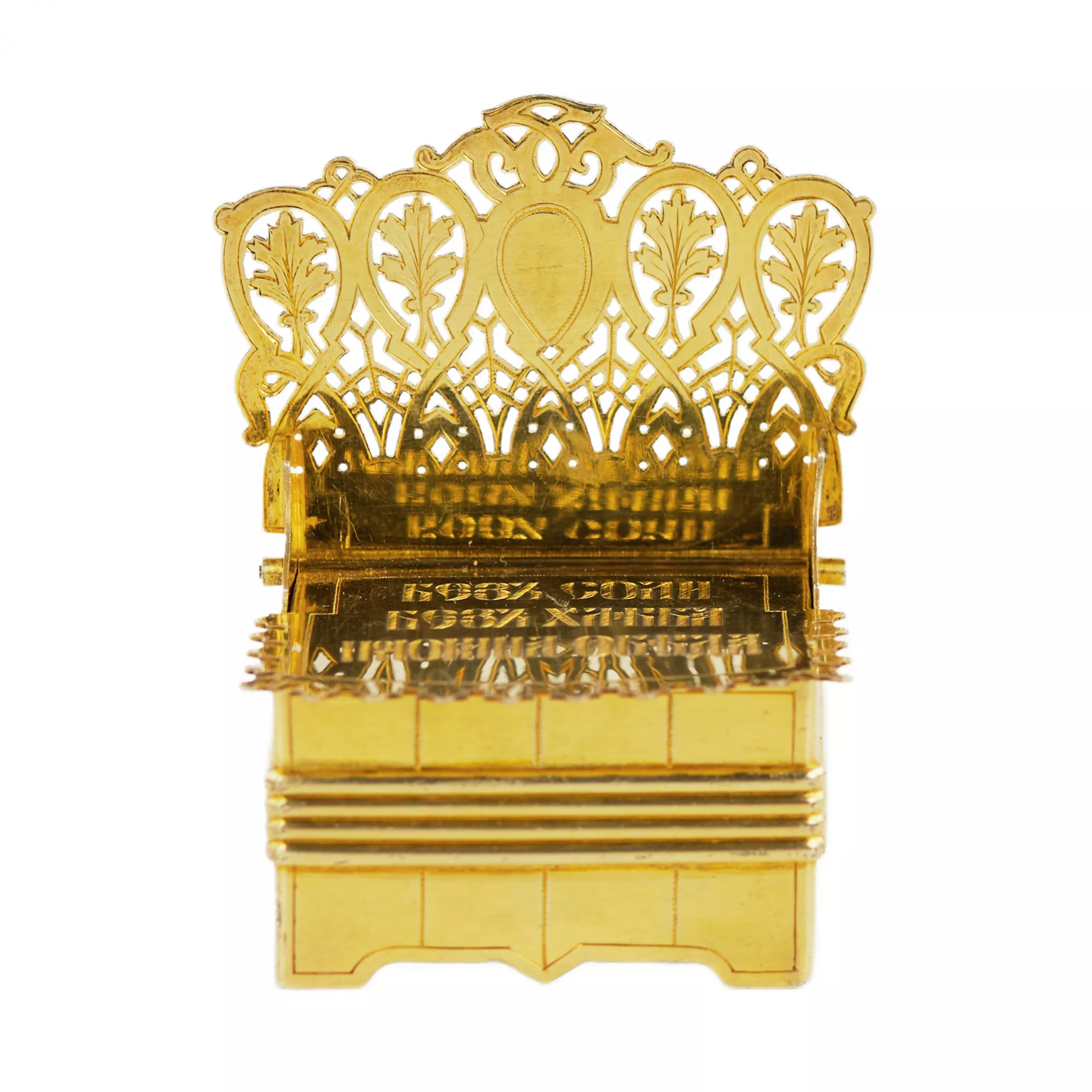
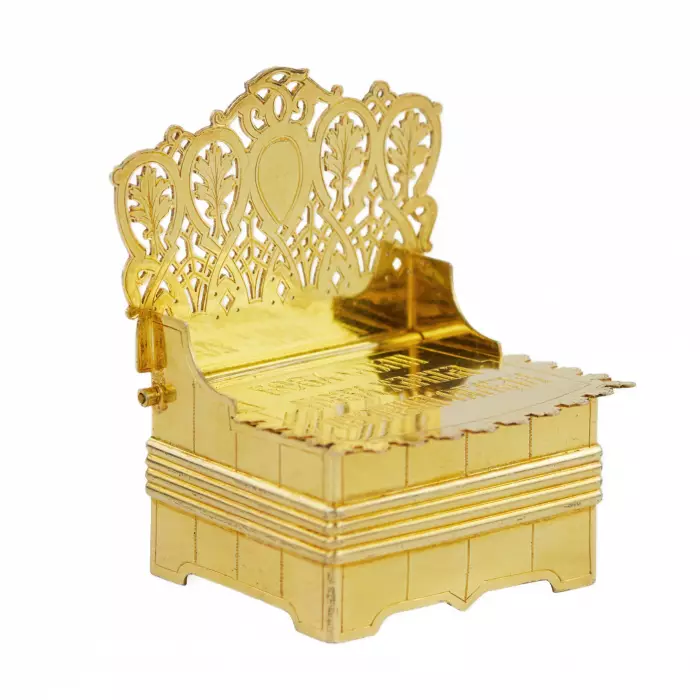
An exquisite silver-gilt salt cellar in the form of a throne represents a remarkable example of Russian decorative art, crafted in 1875 in the workshop of one of the most renowned Moscow jewellers of his time Ivan Khlebnikov, supplier to the Imperial Court. The body is shaped as a miniature throne with a high openwork back, adorned with pierced patterns of intertwined ribbons and stylized oak leaves. The seat bears an inscription in Old Slavonic style: “Without salt, without bread half a meal,” a traditional proverb often used to decorate festive tableware.
Finely executed engraving, a masterful interplay of polished and matte surfaces, and an even layer of gilding highlight the superior craftsmanship typical of Khlebnikov’s workshop. Beyond its functional purpose, this salt cellar embodies a symbolic and artistic object a token of hospitality and abundance, characteristic of Moscow’s interpretation of late 19th-century decorative modernity and the national revival style.
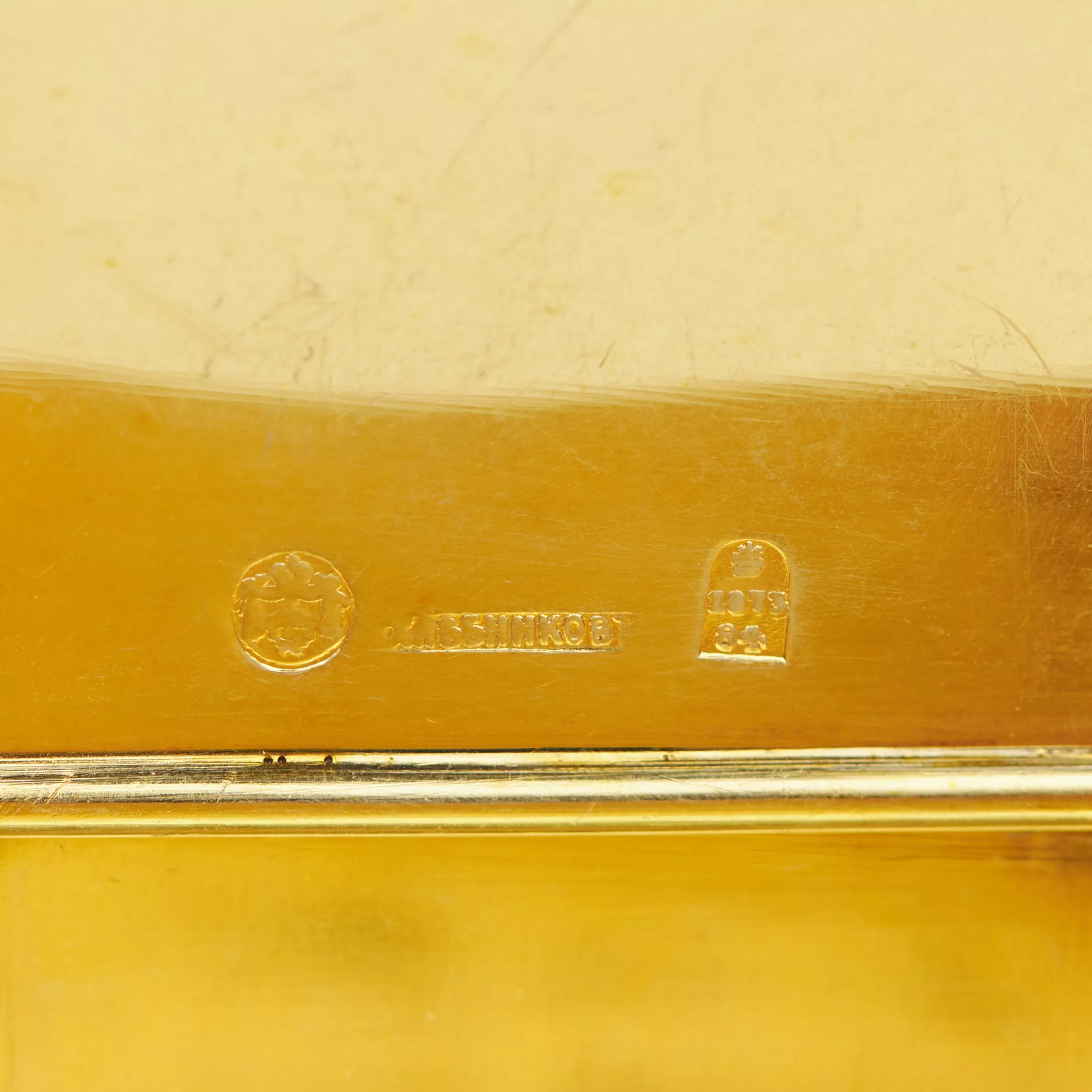
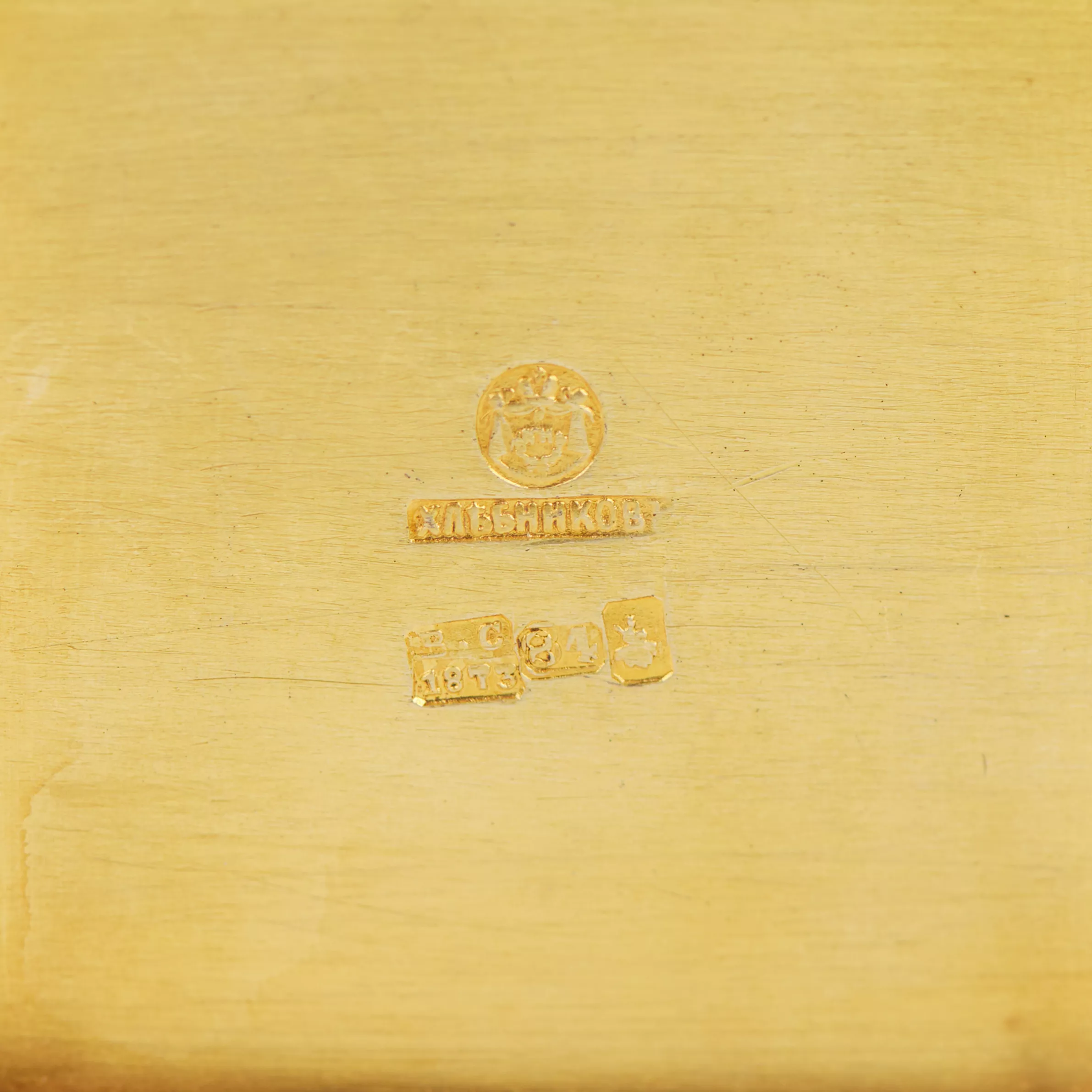
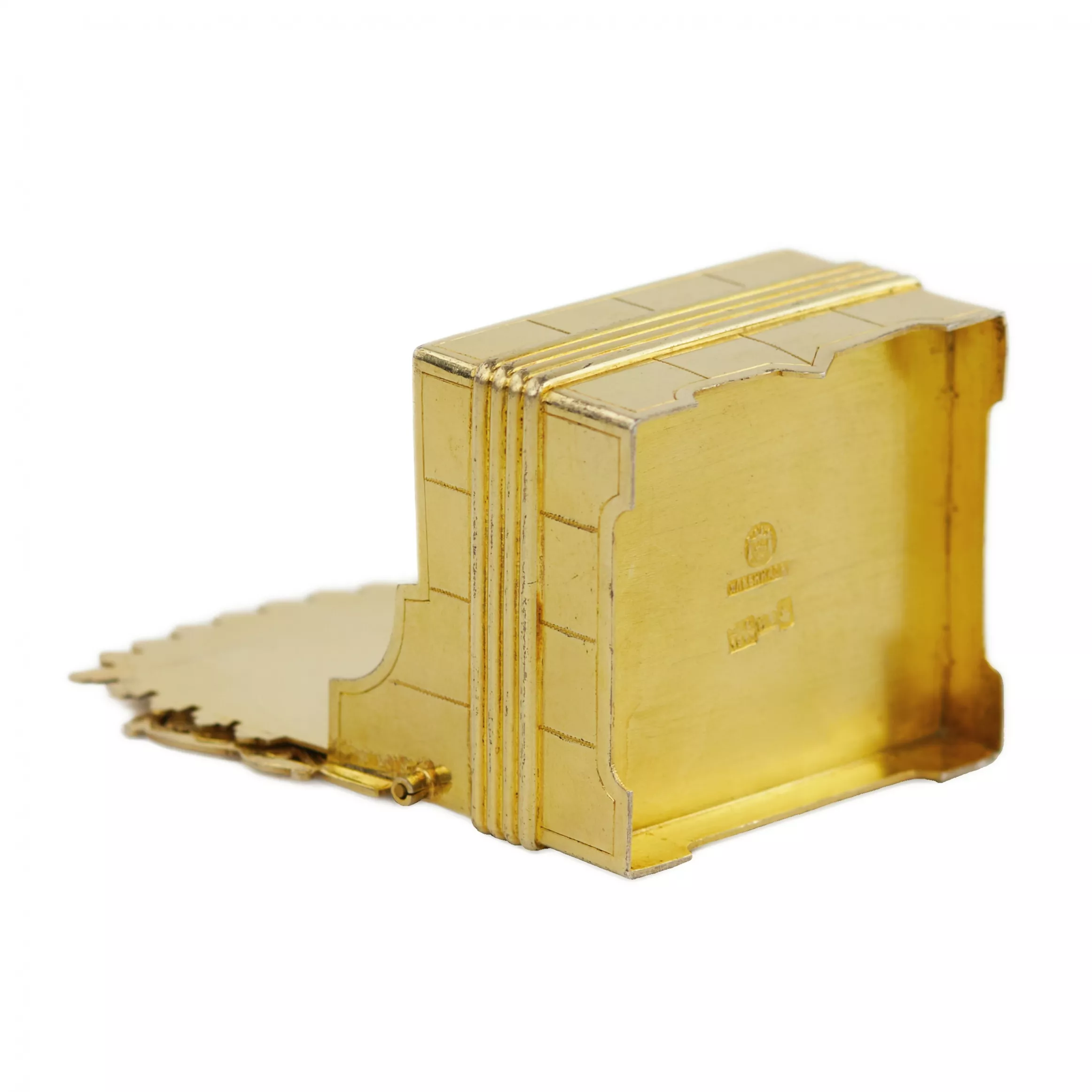
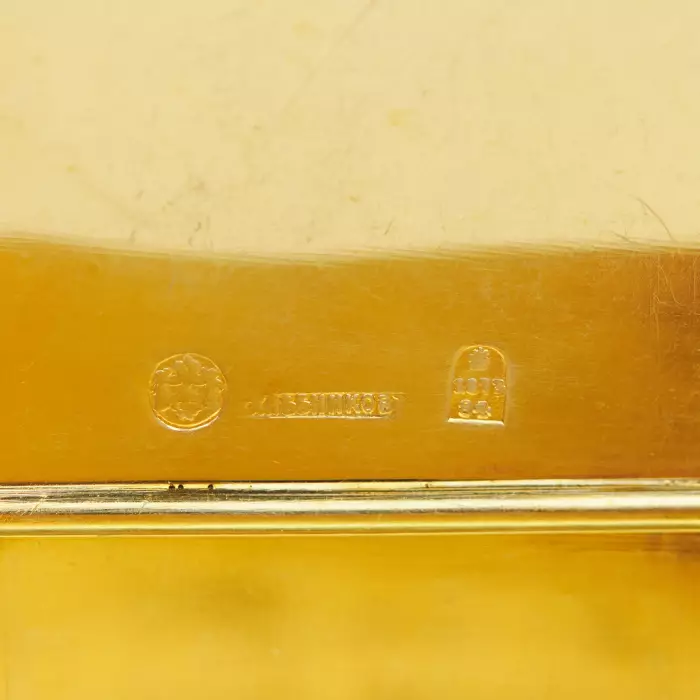
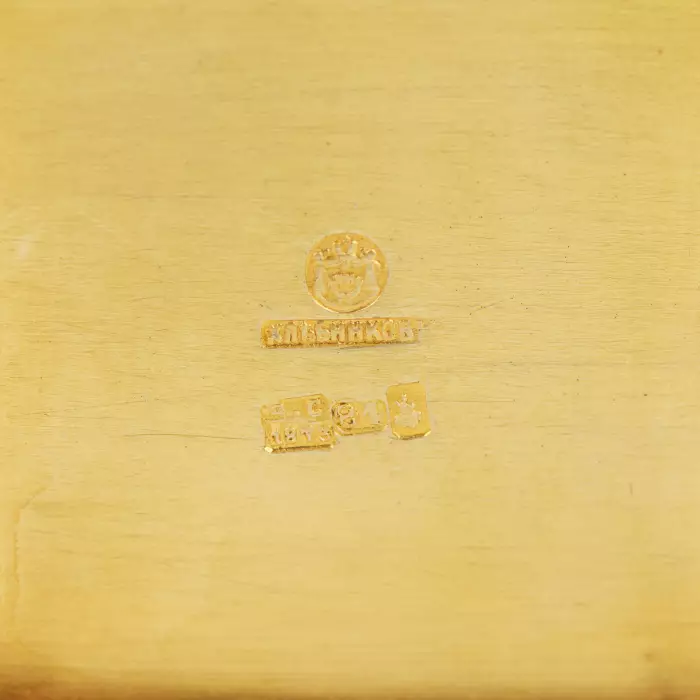
Marks: Maker’s mark beneath the coat of arms of the Grand Duke “KHLEBNIKOV”; assay mark “V.S” above the line with date “1875” (Vasily Semyonov, Moscow assay master); State hallmark with St. George slaying the dragon and silver standard “84”.
Dimensions: Height 8.5 cm; width 7 cm; depth 6 cm.
Weight: 130 g.
Condition: Good. Even gilding with light patina, no deformations or restorations. Minor age-consistent wear.
Provenance: Private collection, Europe.
Founded in 1867, the firm of Ivan Khlebnikov became one of Moscow’s leading jewellery workshops of the late 19th century. As supplier to the Imperial Court, Khlebnikov gained fame for his exceptional quality, refined taste, and profound engagement with national Russian decorative traditions. Unlike the academic restraint of St. Petersburg, the Moscow style was noted for its ornamental richness, freedom of composition, and artistic individuality.
Salt cellars in the form of thrones were a traditional symbol of Russian hospitality, often commissioned for celebratory occasions and placed at the centre of the festive table. Combining folk motifs with the virtuosity of precious metalwork, such pieces bridged the world of everyday ritual and fine art.
Khlebnikov’s production was distinguished by its delicate openwork ornamentation, use of Old Russian scripts, and architectural motifs inspired by ancient Rus’. During the 1870s–1880s, the firm participated in major international exhibitions (Vienna 1873, Moscow 1882, Nuremberg 1885), earning top awards and critical acclaim. The 1875 salt throne exemplifies this artistic maturity merging symbolism, technical mastery, and national identity into a single refined object.
Comparable examples are preserved in the collections of the State Historical Museum (Moscow), the State Hermitage Museum (St. Petersburg), and the Victoria and Albert Museum (London), attesting to Khlebnikov’s enduring contribution to Russian decorative art of the 19th century.
Excellent collection condition. Even gilding with soft patina, free of restorations or structural wear. Minor surface traces consistent with age and authenticity.
The condition report is provided for informational purposes only.
It is not comprehensive and may not reflect all defects, restorations, alterations, or adaptations, as Antiqon does not perform professional conservation-level assessments. The information is based on a qualified, yet subjective, evaluation by our specialists.Before purchasing, we recommend consultation with an independent expert.Please also consult our Terms and conditions and Glossary A-Z, which contain important information on lot characteristics and sale conditions.