



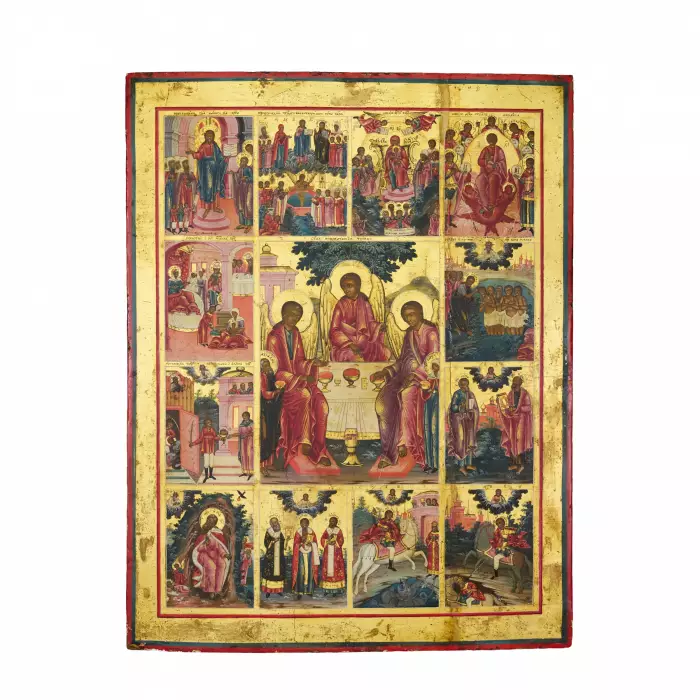
ICON OF THE HOLY LIFE-GIVING TRINITY WITH TWELVE BORDER SCENES. VETKA REGION, EARLY 19TH CENTURY
Antiqon consultant will contact you within one business day after receiving your request.
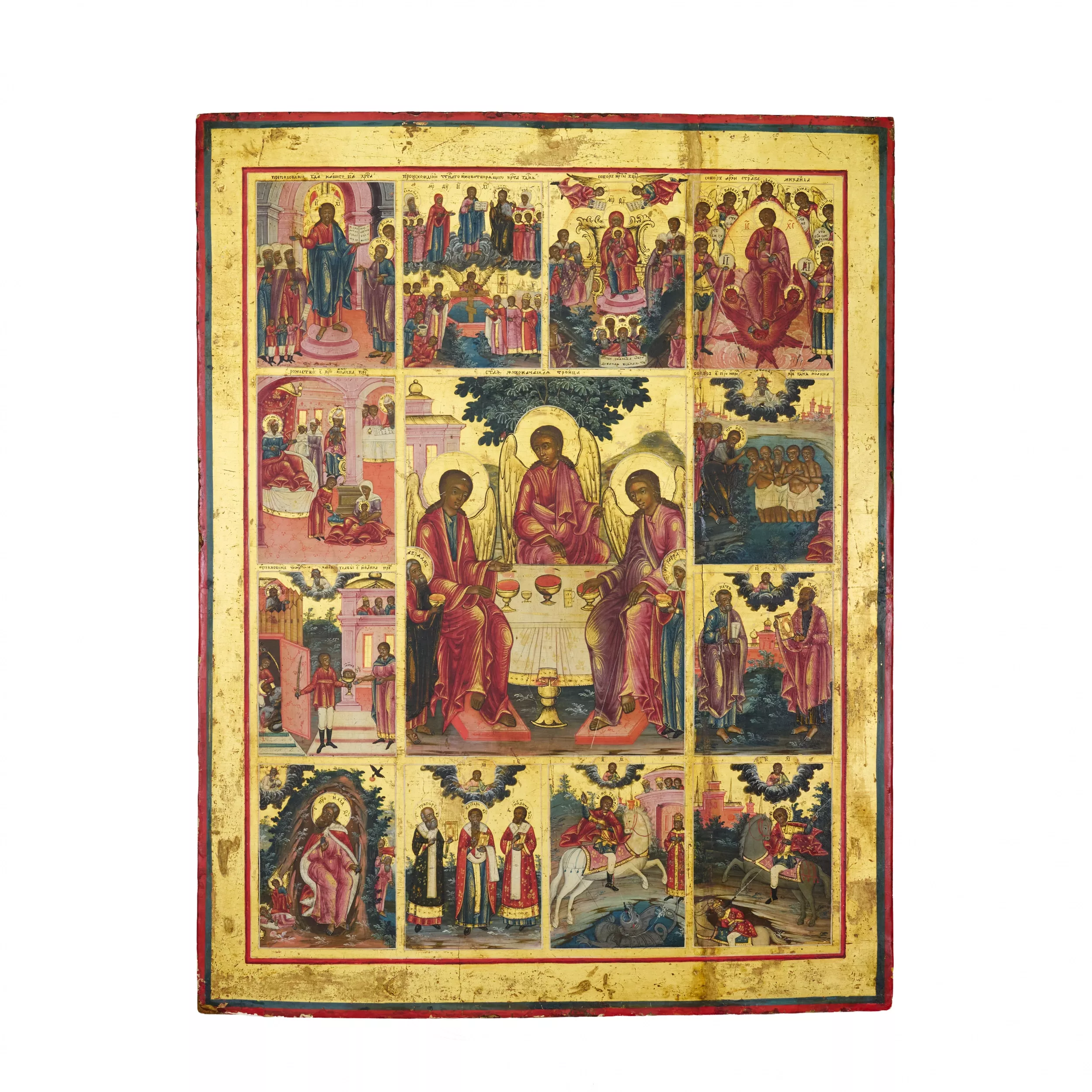
A rare multi-scene icon of the Holy Life-Giving Trinity, painted in the Vetka region in the early 19th century and exemplifying the local tradition of complex theological compositions surrounded by an extensive cycle of narrative border scenes.
The central panel is dominated by a large representation of the Holy Life-Giving Trinity. Three angels are seated at a table beneath the spreading branches of the Oak of Mamre. Their figures form a solemn and carefully balanced composition, articulated through the rhythm of inclined heads, flowing wings and richly coloured red and ochre garments. Abraham and Sarah appear to either side. The gold ground heightens the sacred character of the image and visually unifies the central scene with the surrounding painted cycle.
The central composition is enclosed by twelve rectangular border scenes of varying formats, depicting multi-figural Christological, Marian and hagiographic subjects, together with selected saints and warrior saints. Each scene is conceived as an independent miniature composition, incorporating architectural settings, landscape elements, heavenly segments and numerous figures. This sophisticated arrangement transforms the icon into an extended visual theological programme, conceptually related to a domestic iconostasis.
The work is distinguished by features characteristic of the Vetka icon-painting tradition: a resonant palette combining cinnabar red, pink, green and ochre tones, finely articulated graphic detail, extensive use of gold and the decorative richness of the individual scenes. The composition is enclosed by a fine red border, while the broad gilded margins enhance the monumental and ceremonial character of the icon.
Material: Wood panel, gesso, tempera, gilding.
Dimensions: 62 × 48 cm.
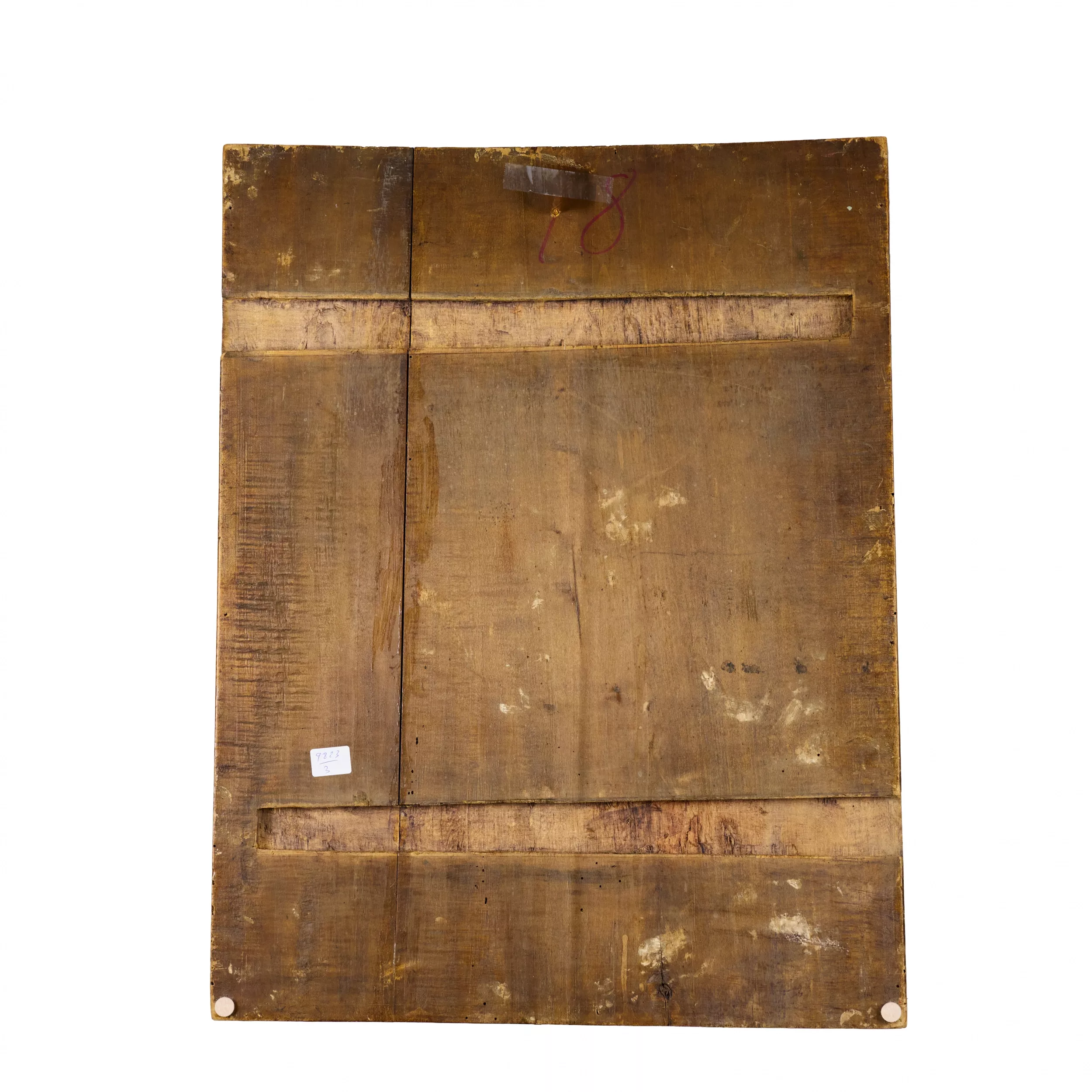
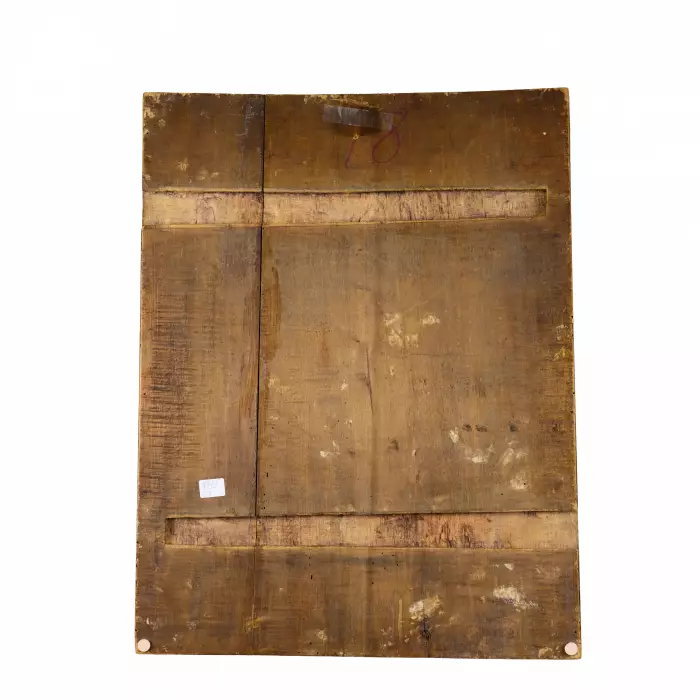
Condition: Preserved without restoration. Natural signs of age are present, including localised rubbing and minor losses to the paint layer and gilding, principally along the margins and edges. The overall pictorial and compositional integrity remains intact.
Vetka and the neighbouring Starodub region developed into one of the most distinctive centres of Old Believer artistic culture. Research undertaken by the Vetka Museum of Old Belief and Belarusian Traditions demonstrates that local icon painting evolved as a coherent regional school in which the principles of ancient Russian sacred art were preserved while simultaneously incorporating aspects of the artistic language of the modern era.
Vetka painters were particularly distinguished by their decorative sensibility, close attention to architectural settings, highly developed narrative structures and an ability to combine several levels of theological meaning within a single composition. Multi-scene icons organised around a principal central image occupied a particularly important place within this tradition. Scholars of the Vetka Museum have interpreted such works as a distinct form of icon-iconostasis, in which individual episodes form an integrated theological programme and reflect the profound engagement of both patron and painter with Orthodox doctrine and Old Believer religious culture.
This compositional principle is clearly embodied in the present icon. The monumental central image is surrounded by twelve narrative scenes, transforming an object of personal devotion into a miniature iconostasis of exceptional visual and theological complexity.
The image of the Holy Trinity represented by three angels belongs to the fundamental iconographic themes of Russian Orthodox art. The three angels constitute the theological and compositional core of the Old Testament Trinity iconography, a type whose development is closely associated with the traditions of medieval Russian icon painting. In Vetka icons of the early 19th century, this ancient iconographic canon acquired an especially decorative interpretation. The gilded ground, intense colour harmonies, elaborate system of border scenes and detailed narrative episodes create the richly articulated visual language that is today recognised as characteristic of the artistic culture of Vetka and Starodub.
The icon remains unrestored. Natural age-related rubbing, localised losses to the painted surface and gilding are present. The principal paint layer and overall composition remain clearly legible and well preserved.
The condition report is provided for informational purposes only.
It is not comprehensive and may not reflect all defects, restorations, alterations, or adaptations, as Antiqon does not perform professional conservation-level assessments. The information is based on a qualified, yet subjective, evaluation by our specialists.Before purchasing, we recommend consultation with an independent expert.Please also consult our Terms and conditions and Glossary A-Z, which contain important information on lot characteristics and sale conditions.