×
Create account and receive
15% DISCOUNT
your first acquisition
or
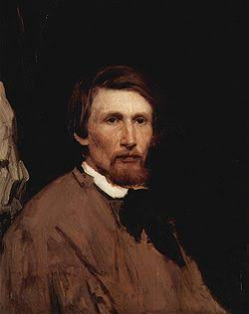
Viktor Vasnetsov was a Russian painter, monumental artist and architect, and one of the leading figures of the National Romantic movement of the late 19th and early 20th centuries. Drawing on Russian epic poetry, fairy tales and medieval culture, he developed a new visual language for historical and folkloric painting and significantly influenced the Neo-Russian style.
We will only share latest what our month on the VIKTOR VASNETSOV.
Viktor Mikhailovich Vasnetsov was born on 15 May 1848 in the village of Lopyal, Vyatka Governorate. He studied at the Vyatka Theological Seminary before moving to St Petersburg in 1867, where he continued his artistic education at the Imperial Academy of Arts.
Beginning with genre painting and establishing close ties with the Peredvizhniki movement, Vasnetsov gradually turned towards Russian history, epic poetry, fairy tales and the artistic heritage of medieval Rus'. The Abramtsevo artistic circle founded around the patron Savva Mamontov played an important role in the development of his mature artistic vision.
Vasnetsov worked as a painter, monumental artist, graphic artist, illustrator and architect. He died in Moscow on 23 July 1926.
A decisive stage in Vasnetsov's career was his turn towards historical and epic subjects. After the Battle of Igor Svyatoslavich with the Polovtsians (1880), inspired by The Tale of Igor's Campaign, established a new direction that he subsequently developed in his fairy-tale and epic compositions.
In 1885, Vasnetsov began work on the murals of St Volodymyr's Cathedral in Kyiv. The project occupied him for approximately eleven years and became one of the major achievements of Russian monumental painting of the late 19th century.
Vasnetsov also worked in architecture and decorative design. He created projects for Abramtsevo and designed his own house and studio in Moscow. The façade of the State Tretyakov Gallery was developed from his design and became one of the best-known architectural expressions of the Neo-Russian style.
Viktor Vasnetsov's art is associated with Realism, National Romanticism and the emergence of the Neo-Russian style. His academic training was combined with a sustained interest in medieval Russian architecture, icon painting, historical costume, arms, ornament and folk art.
In his historical and folkloric painting, Vasnetsov sought not merely to reconstruct the past but to create a broader visual interpretation of Russian history and epic tradition. His engagement with the forms and artistic heritage of medieval Rus' influenced the development of the Neo-Russian movement across painting, architecture and the decorative arts.
Oil painting was Vasnetsov's principal medium. He also worked in monumental painting, watercolour and graphic art, producing drawings, compositional and architectural studies, interior designs and projects for the decorative arts.
After the Battle of Igor Svyatoslavich with the Polovtsians (1880) became one of the defining works of Vasnetsov's historical and epic period.
Alyonushka (1881) combines a folkloric subject with a psychologically developed figure and a landscape that contributes directly to the emotional character of the composition.
Ivan Tsarevich Riding the Grey Wolf (1889) demonstrates Vasnetsov's characteristic combination of fairy-tale narrative, historical detail and decorative composition.
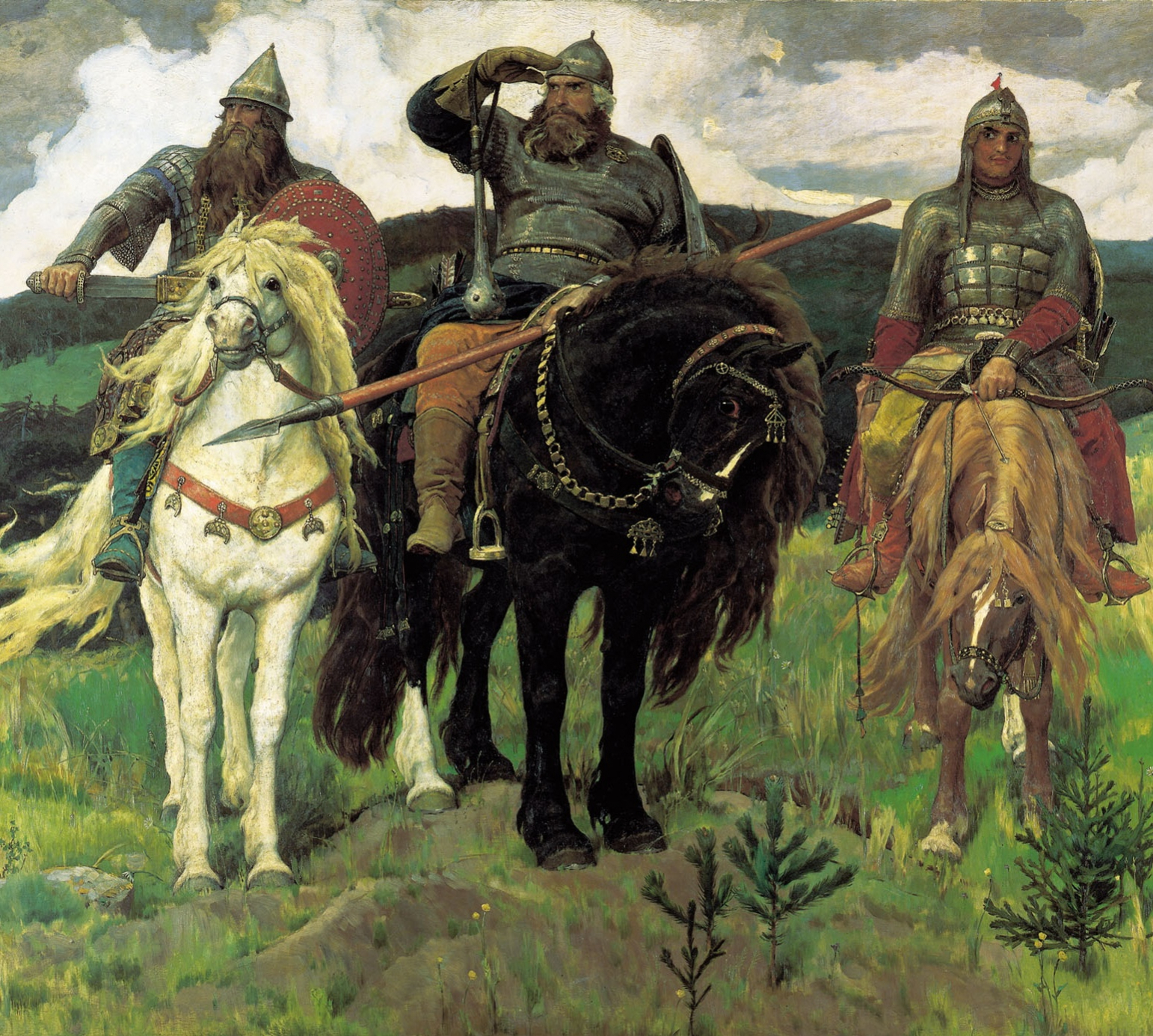
The Bogatyrs (1898) is the principal work of his epic cycle. The figures of Ilya Muromets, Dobrynya Nikitich and Alyosha Popovich are treated on a monumental scale, and the painting became one of the most recognisable works of 19th-century Russian art.
Works by Viktor Vasnetsov are held in the State Tretyakov Gallery, the State Russian Museum and the Viktor Vasnetsov House Museum in Moscow. The murals of St Volodymyr's Cathedral in Kyiv constitute a major part of his monumental legacy.
His paintings, works on paper, architectural designs and decorative projects place Vasnetsov within a broader history of Russian art and design of the late 19th and early 20th centuries.
Viktor Vasnetsov played a central role in the development of historical and folkloric painting in Russia and in the emergence of the Neo-Russian style. He transformed subjects drawn from Russian history, epic poetry and fairy tales into a distinctive visual system that influenced painting, book illustration, monumental and decorative art, and architecture.
The Bogatyrs, Alyonushka and Ivan Tsarevich Riding the Grey Wolf remain among the most recognisable works of Russian art, while Vasnetsov's wider oeuvre occupies an important place in the history of National Romanticism and Russian visual culture at the turn of the 20th century.