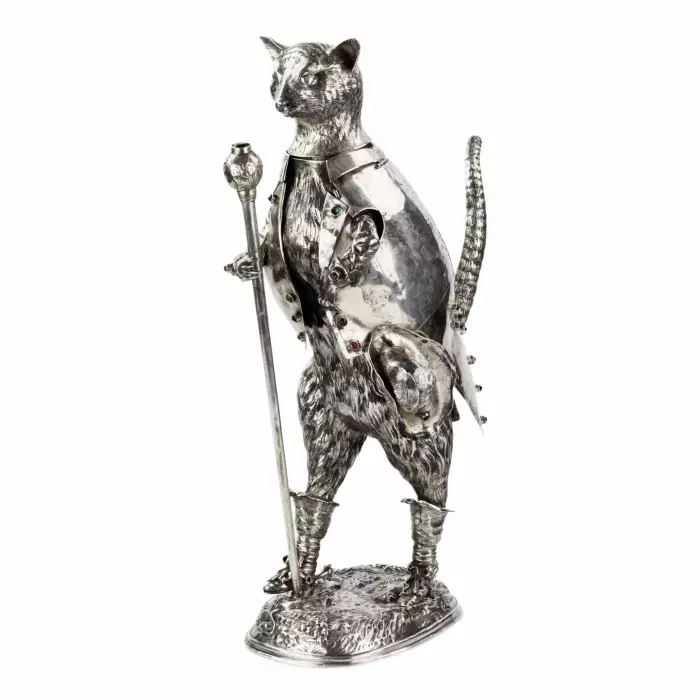
LE CHAT BOTTE. FIGURE EN ARGENT À TÊTE MOBILE, GÜNTHER GRANGESSEL ALLEMAGNE, HANAU, 1883
Antiqon consultant will contact you within one business day after receiving your request.
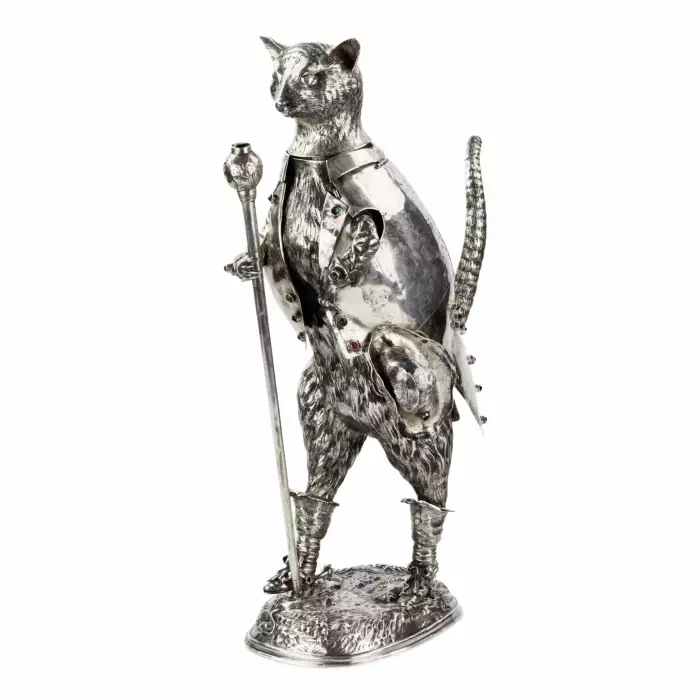
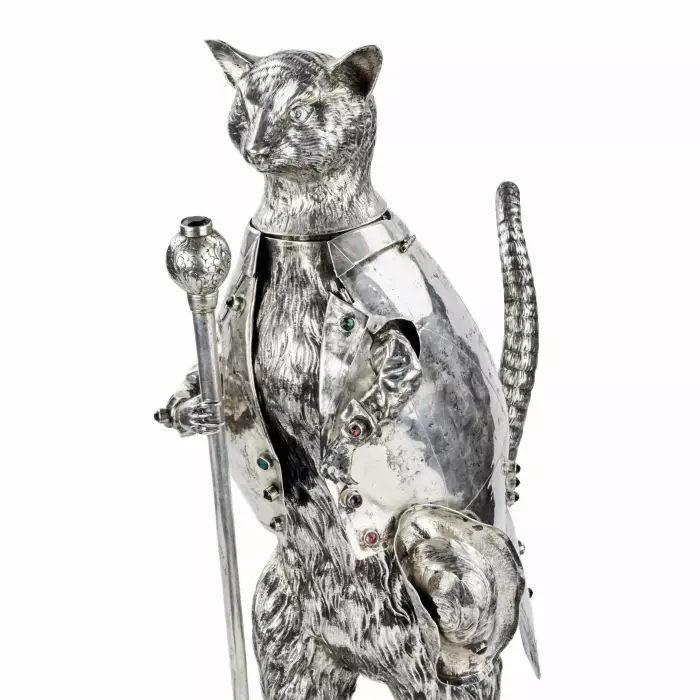
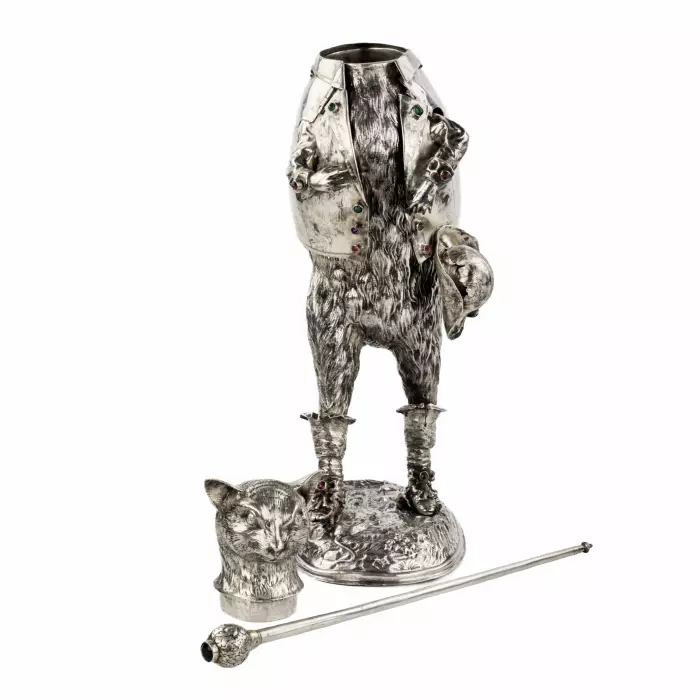
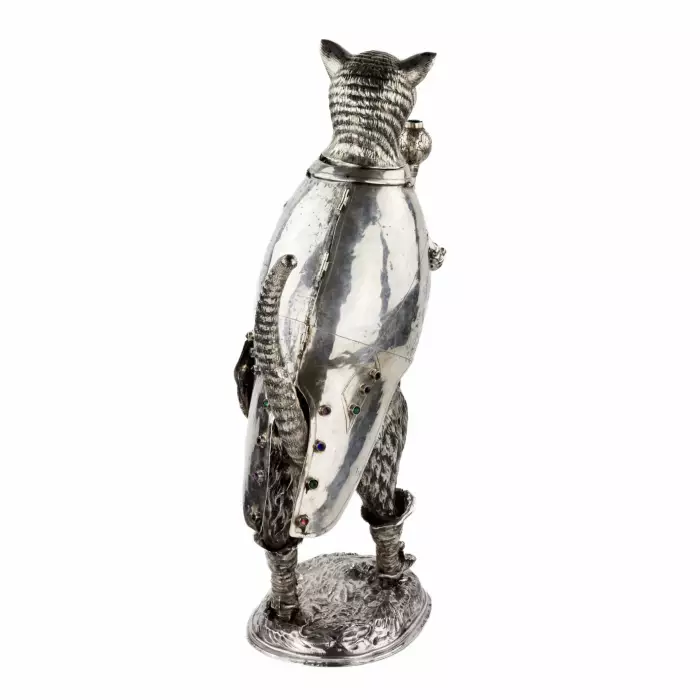
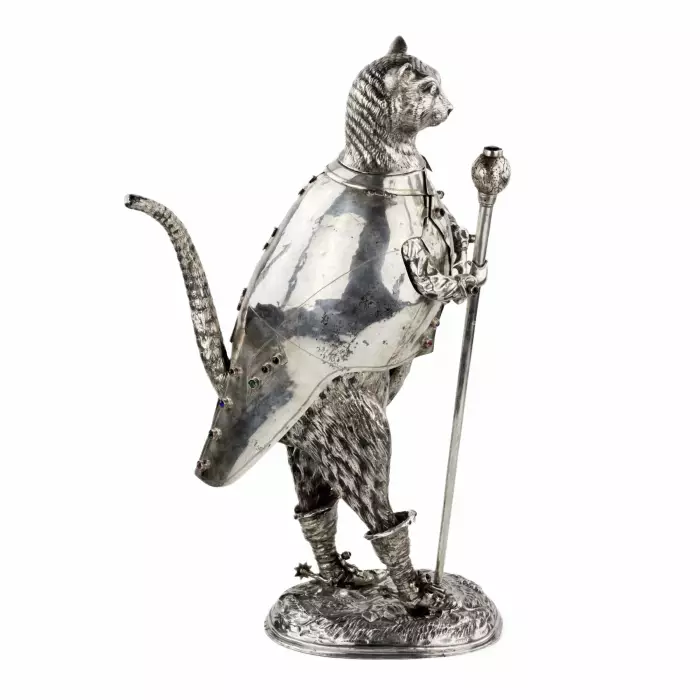
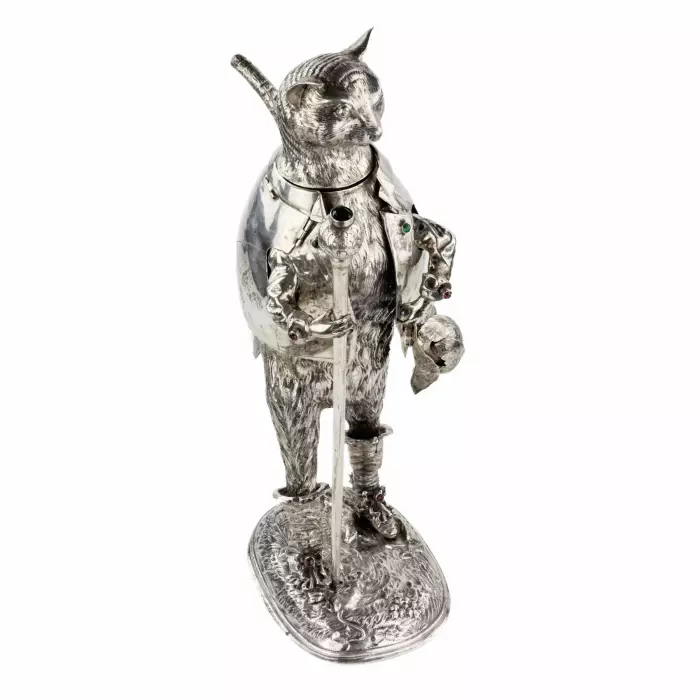
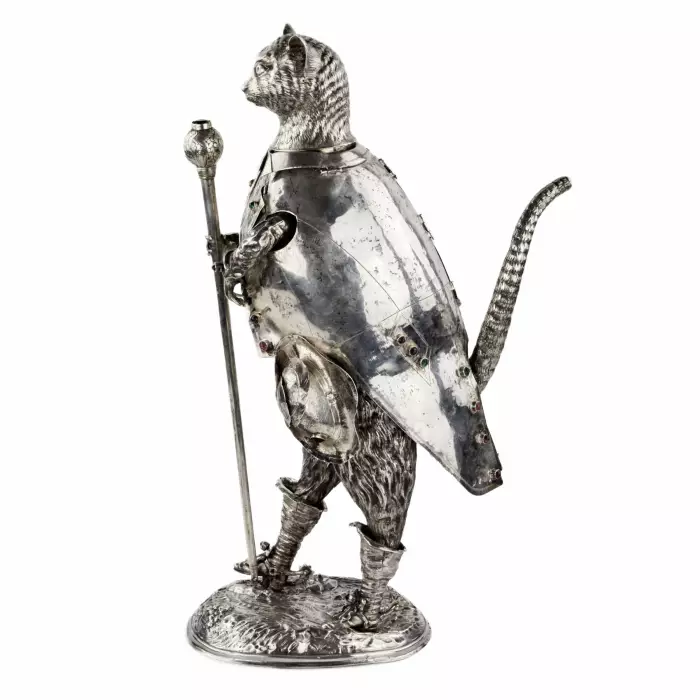
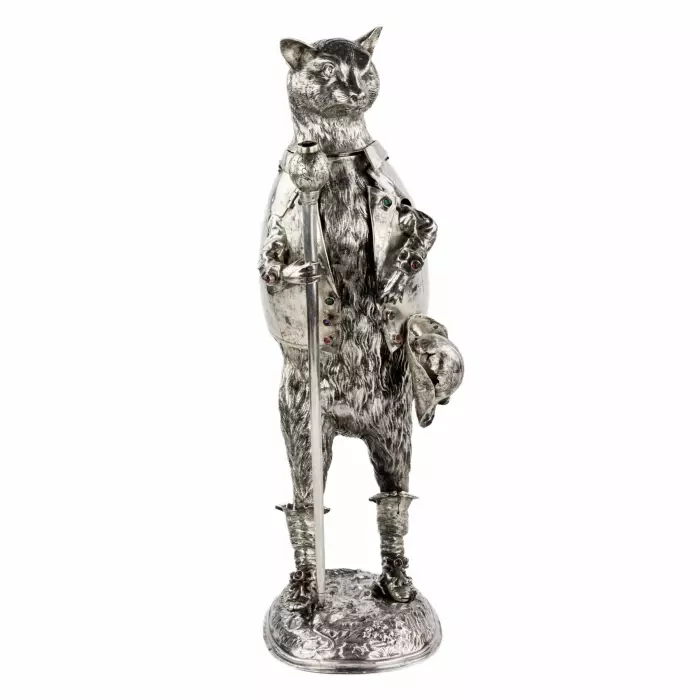
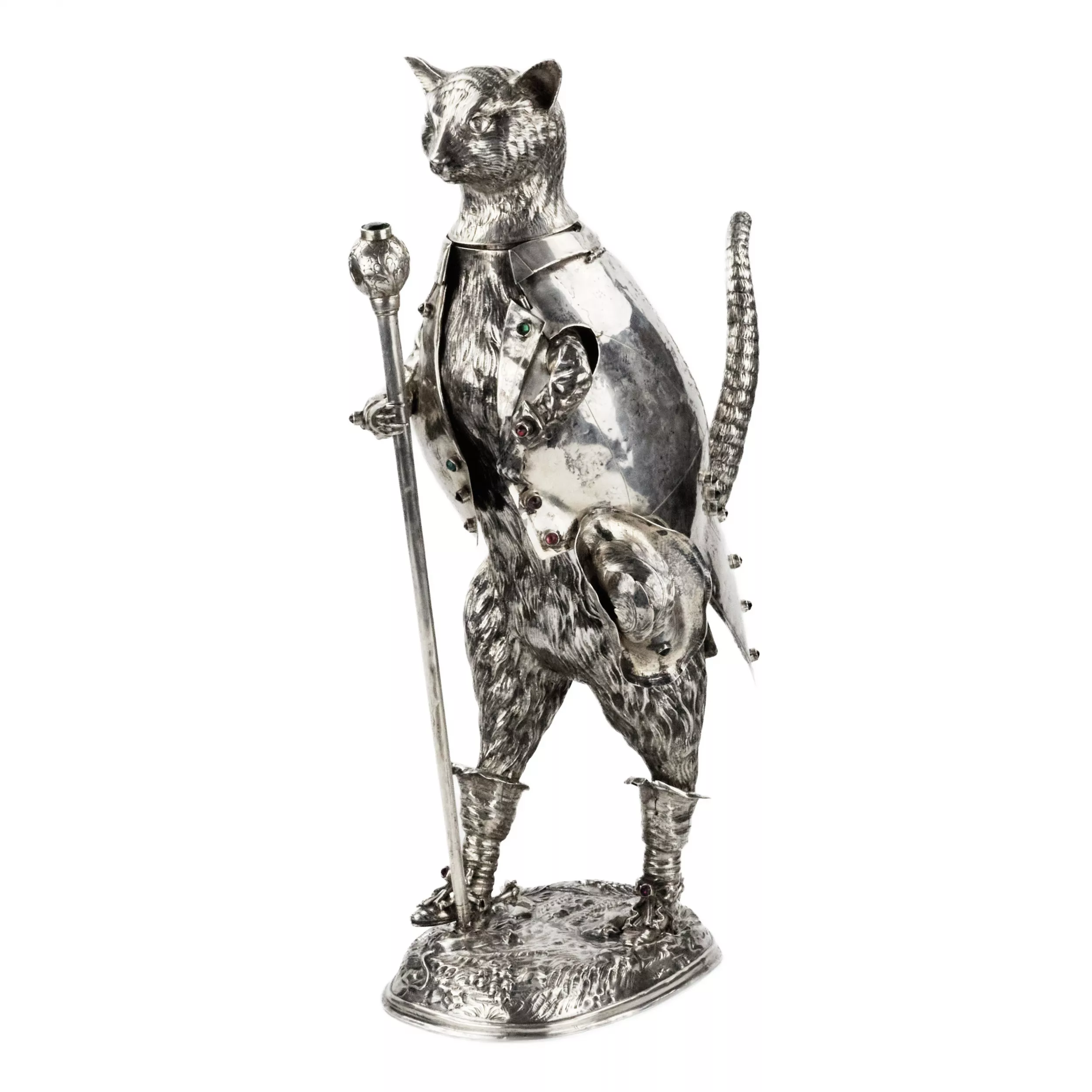
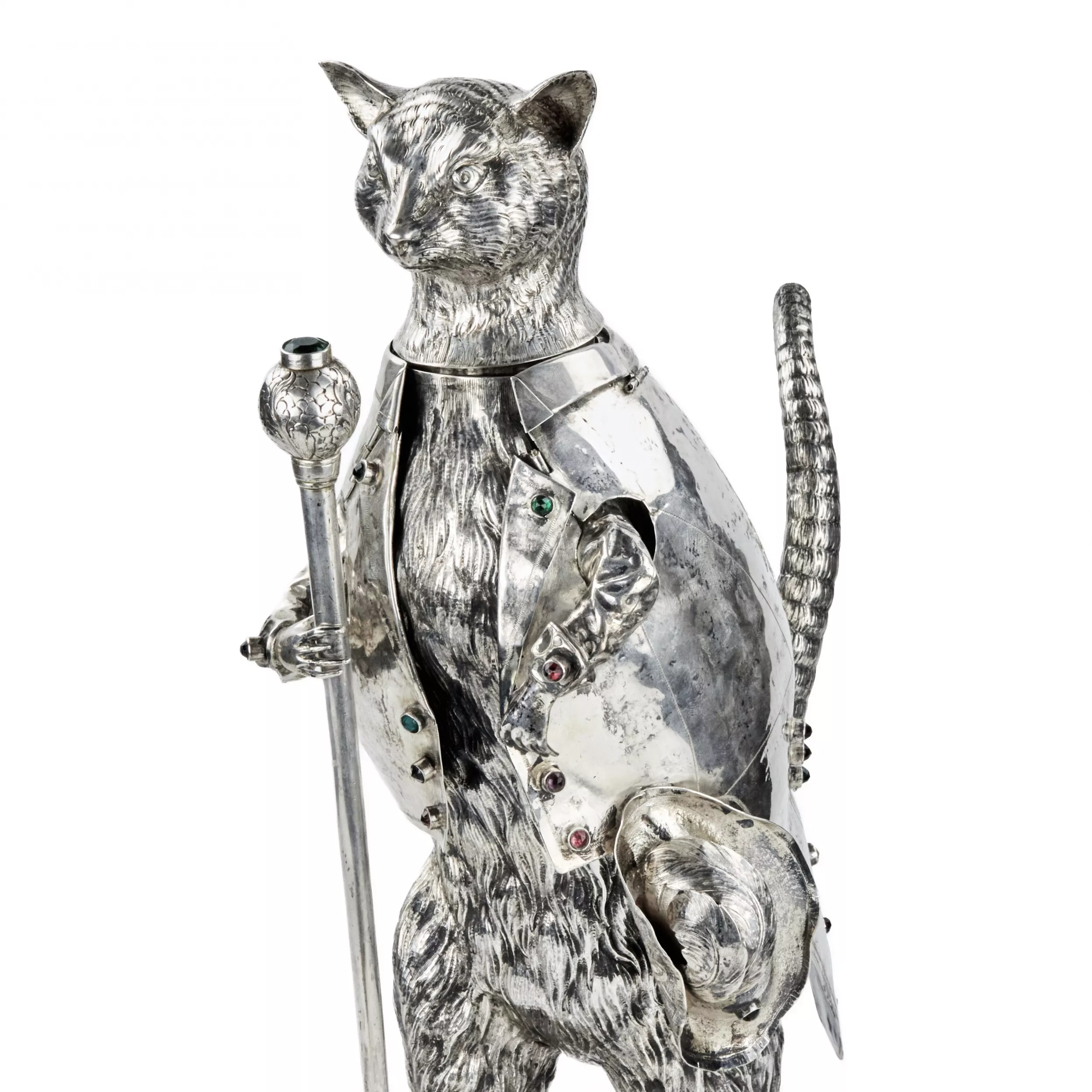
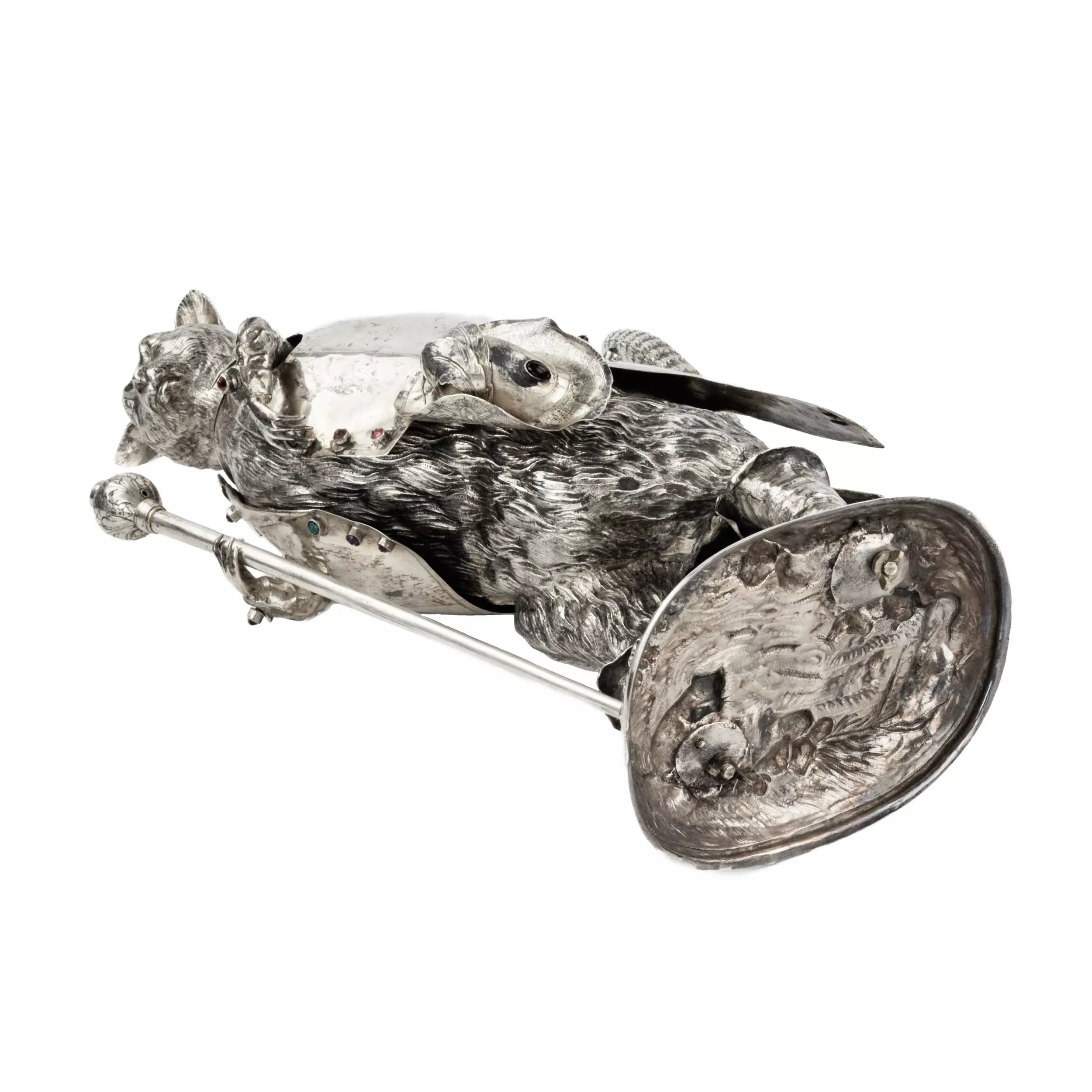
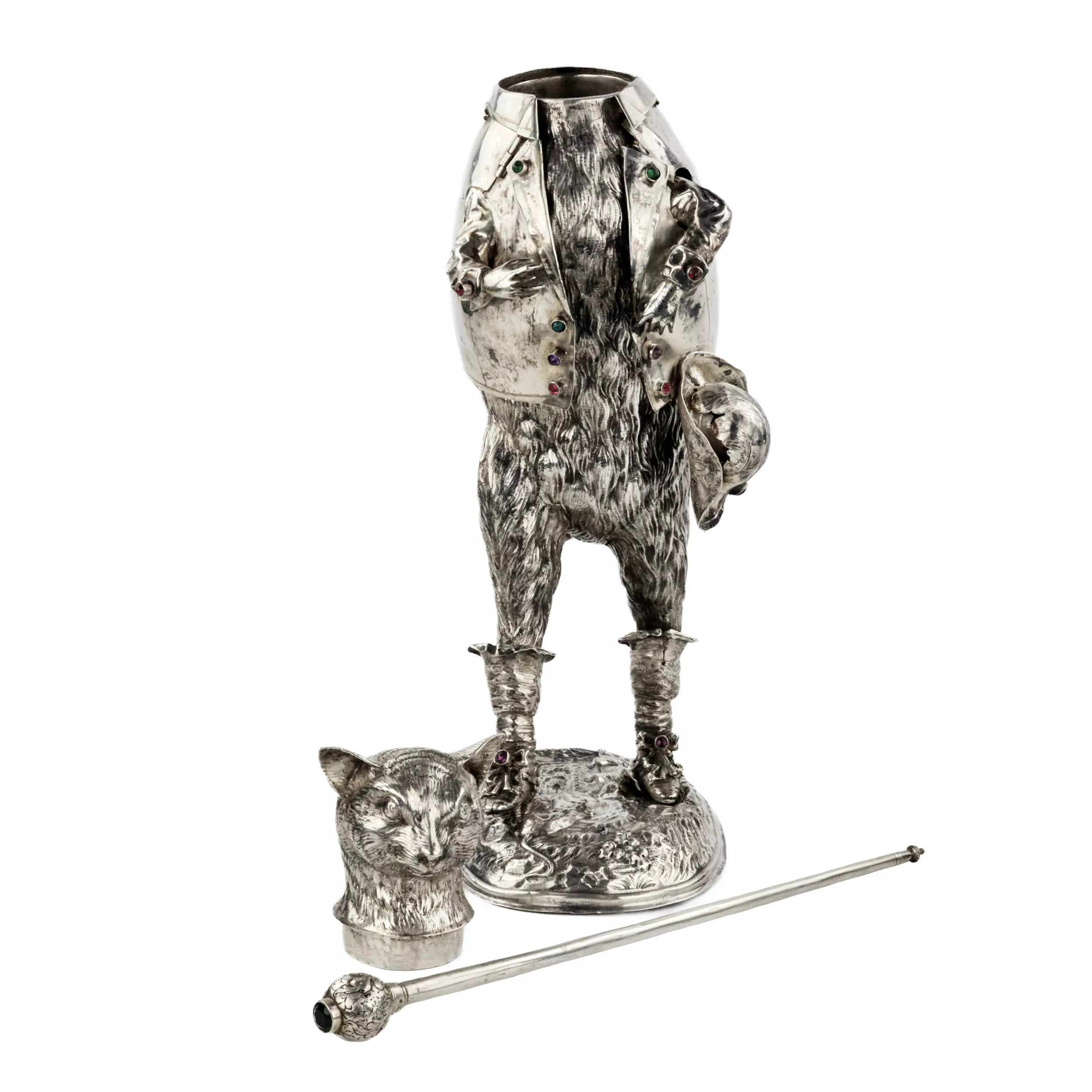
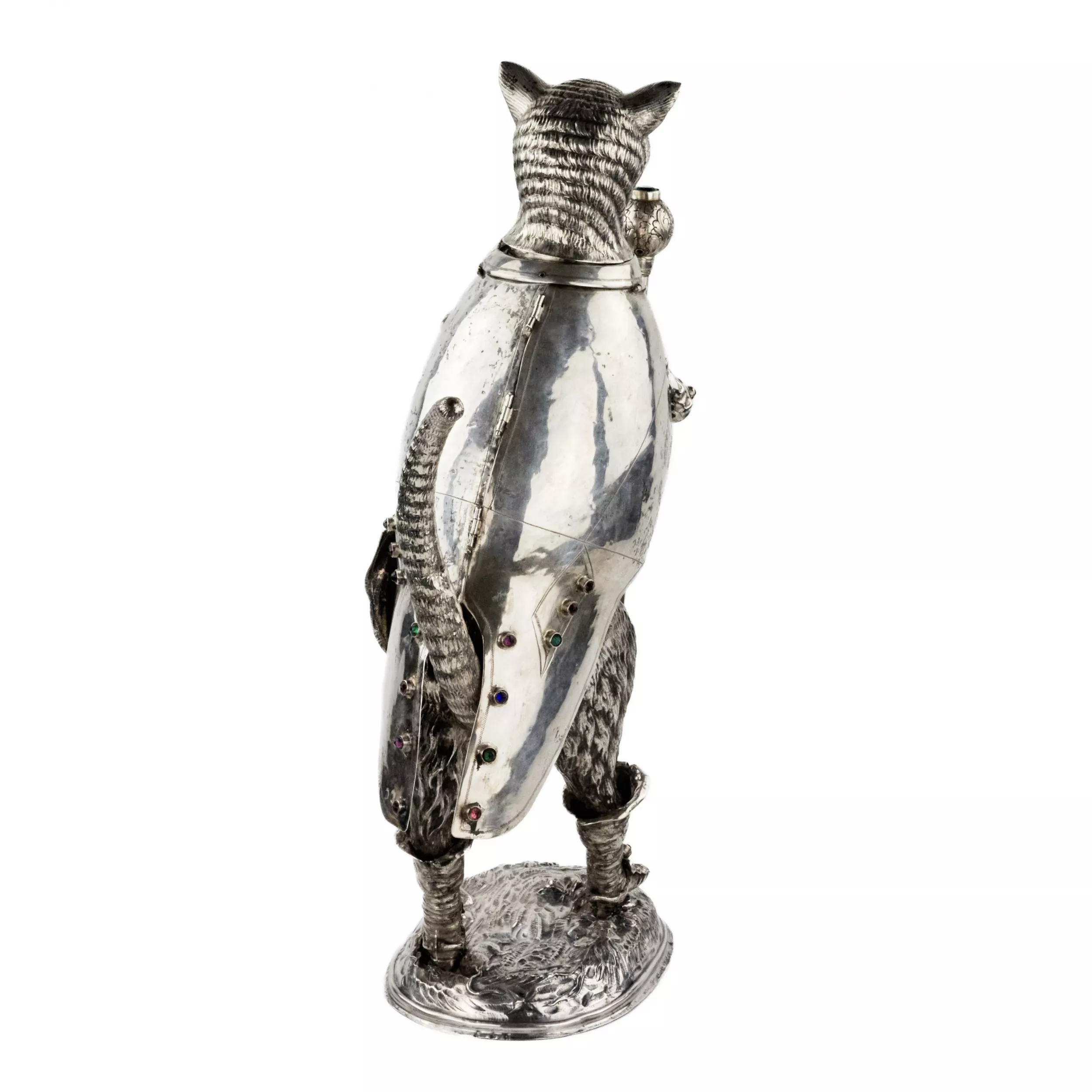
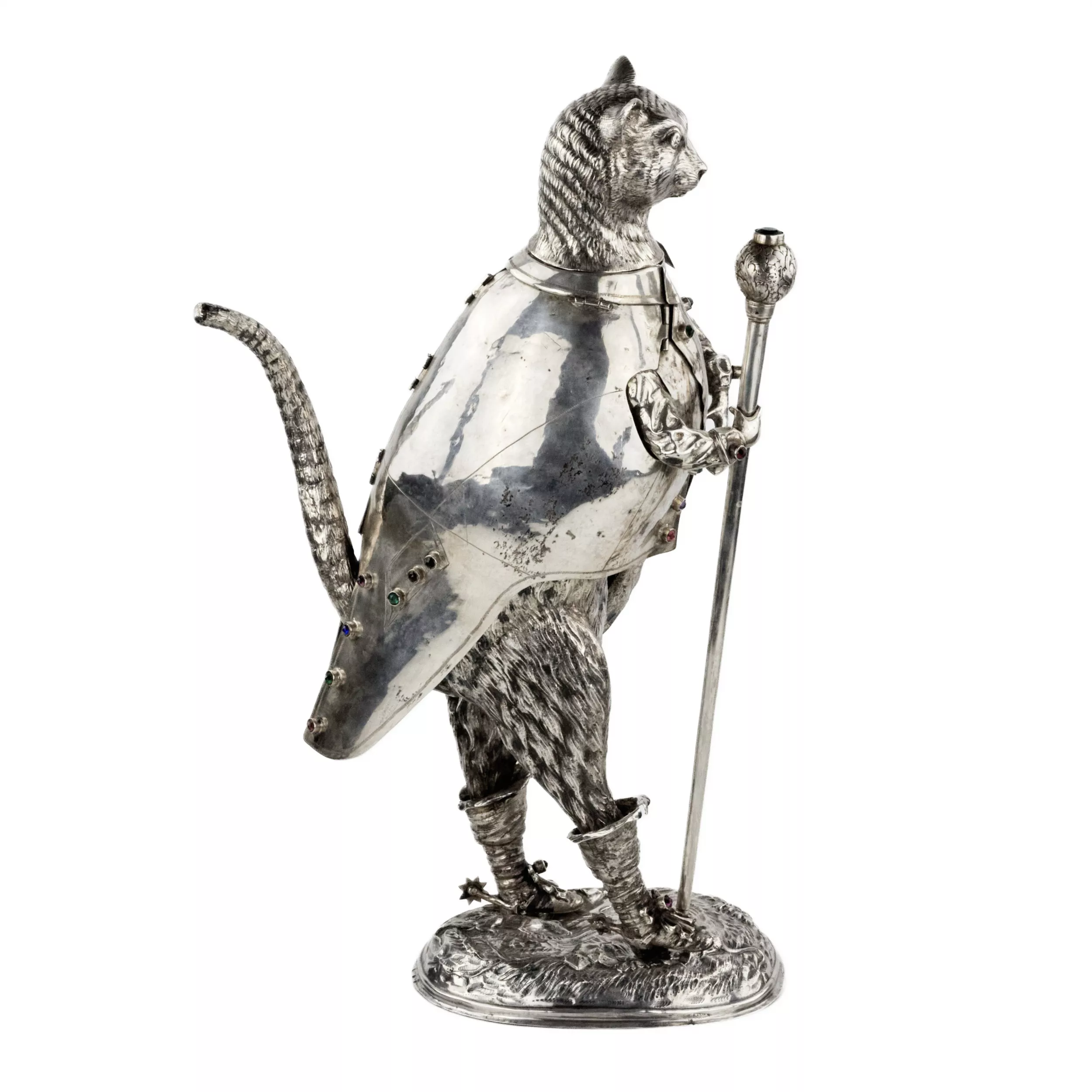
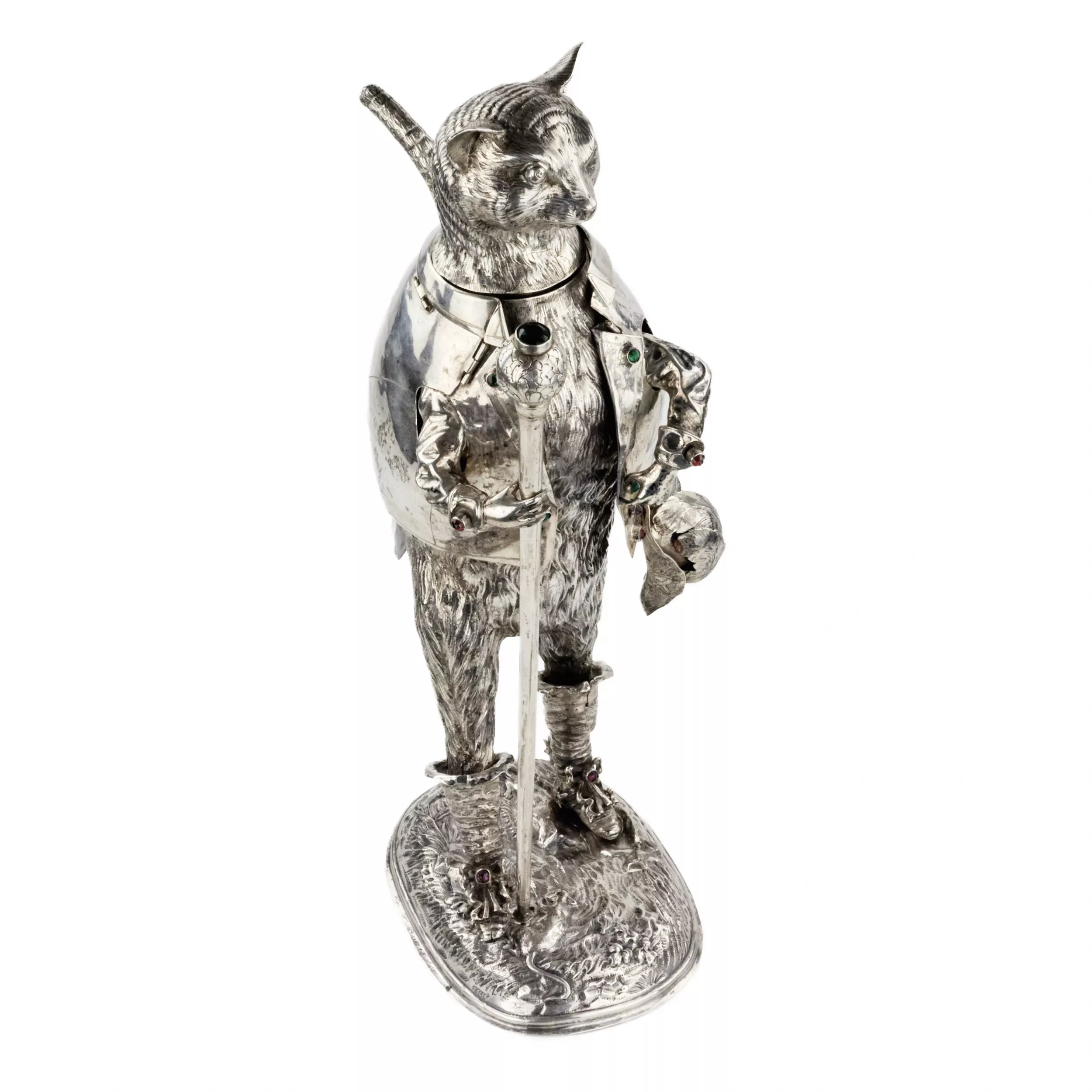
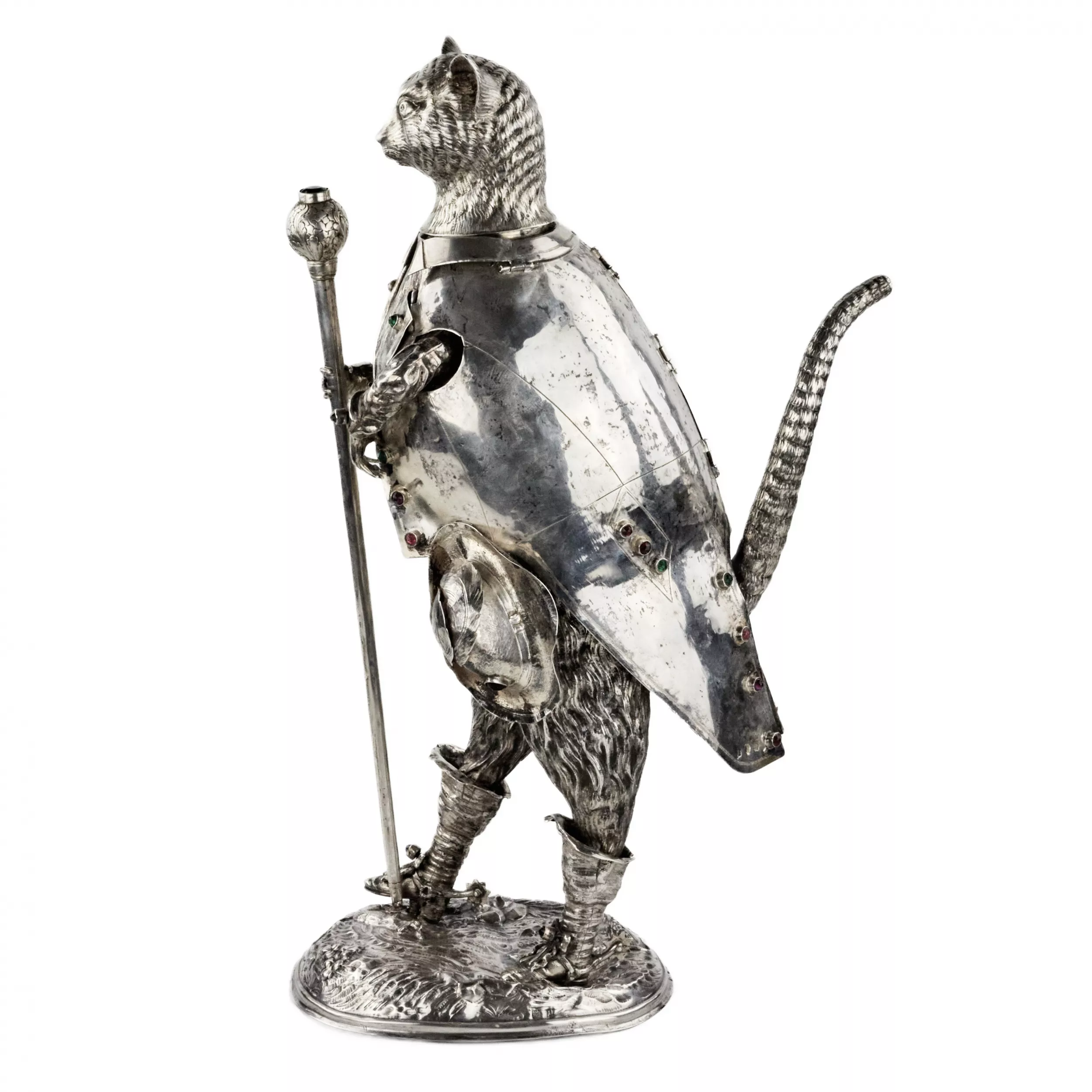
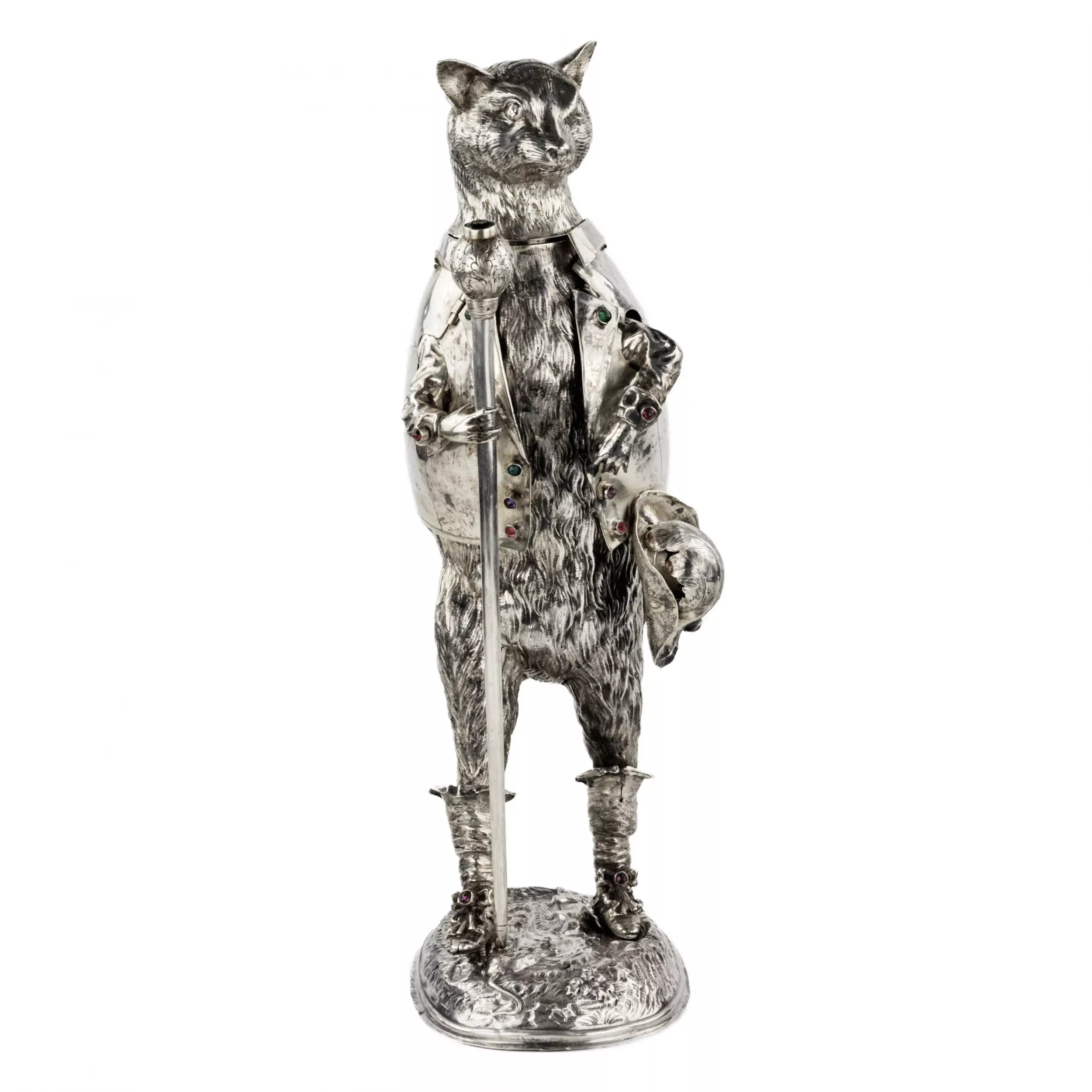
Imposante et ironique figure en argent de grande taille représentant le personnage de conte Le Chat Botté, réalisée en 1883 par le maître orfèvre Günther Grangessel, dans le style caractéristique de l’école de Hanau et de sa sculpture d’orfèvrerie de haut niveau. Le chat est figuré en majordome de cour, accueillant les invités dans un demi-salut cérémonieux. La tête mobile accentue l’impression d’animation et souligne la qualité exceptionnelle de l’exécution.
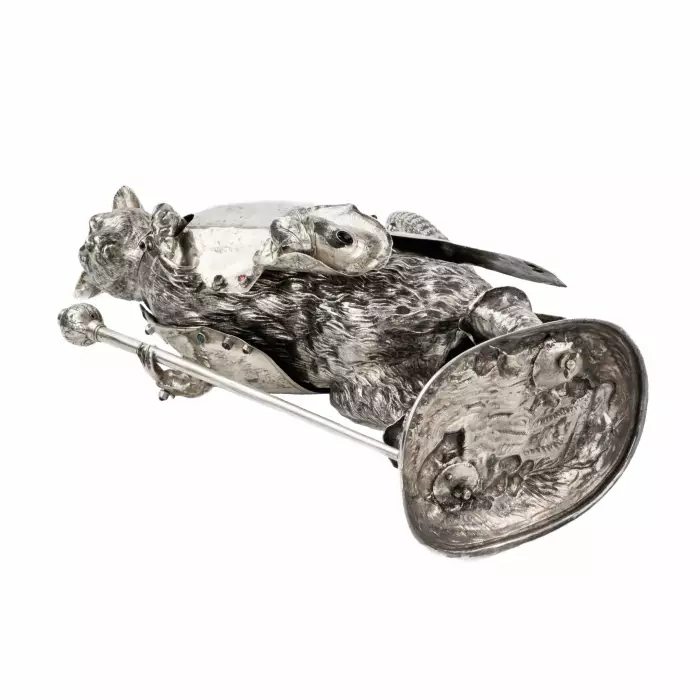
La figure tient un bâton, symbole d’autorité et de contrôle, tandis que le geste de l’autre patte met en valeur le frac élégant, richement orné d’incrustations colorées imitant boutons et éléments décoratifs sur les manchettes, revers, nœuds et pans. Le contraste entre la fourrure finement modelée et les surfaces lisses du costume crée un jeu de matières expressif. La dimension ironique est renforcée par la présence de rongeurs vaincus à la base, désamorçant l’importance ostentatoire du personnage. L’expression du museau, marquée par un léger strabisme et une symétrie accentuée des oreilles, confère à l’ensemble une solennité grotesque, presque caricaturale.
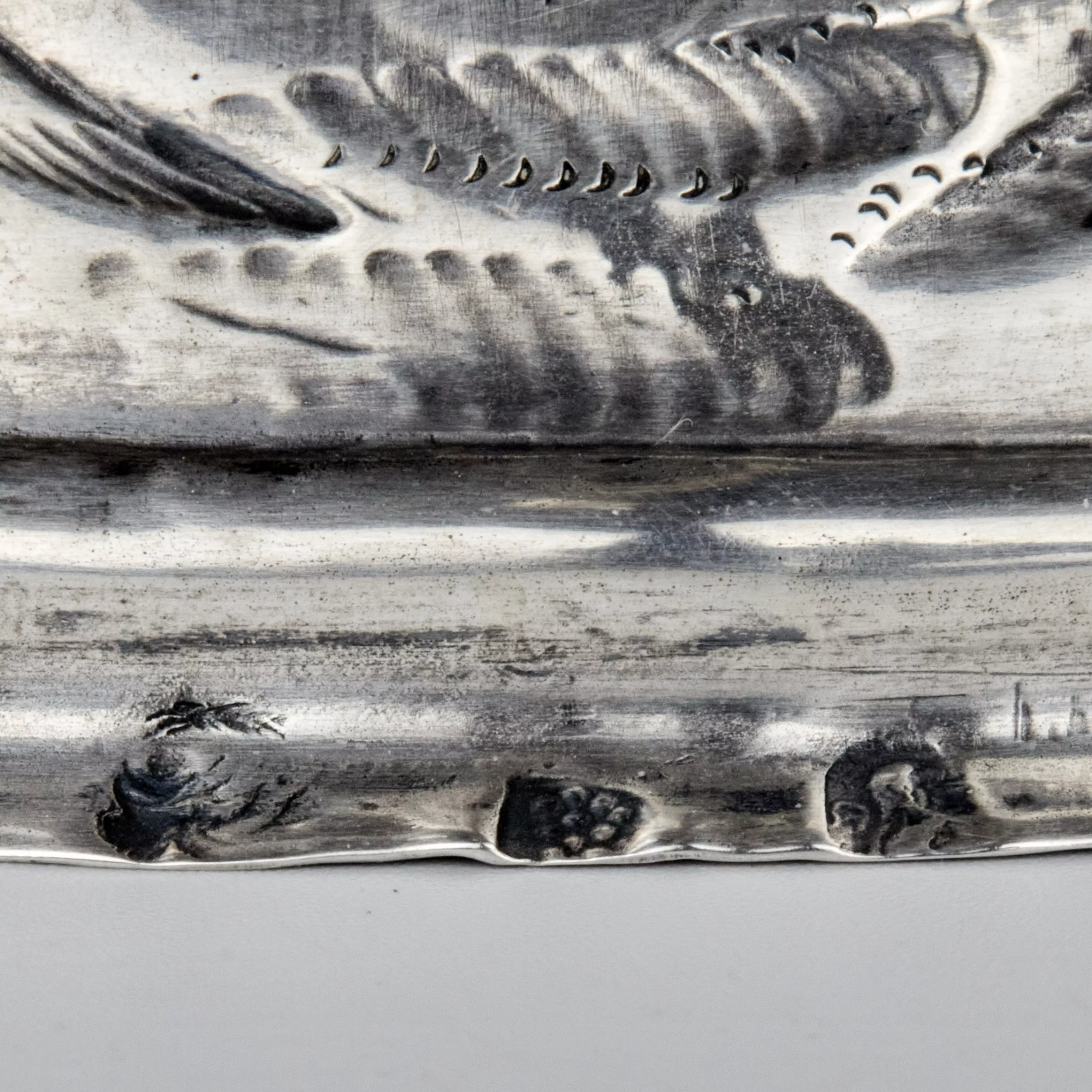
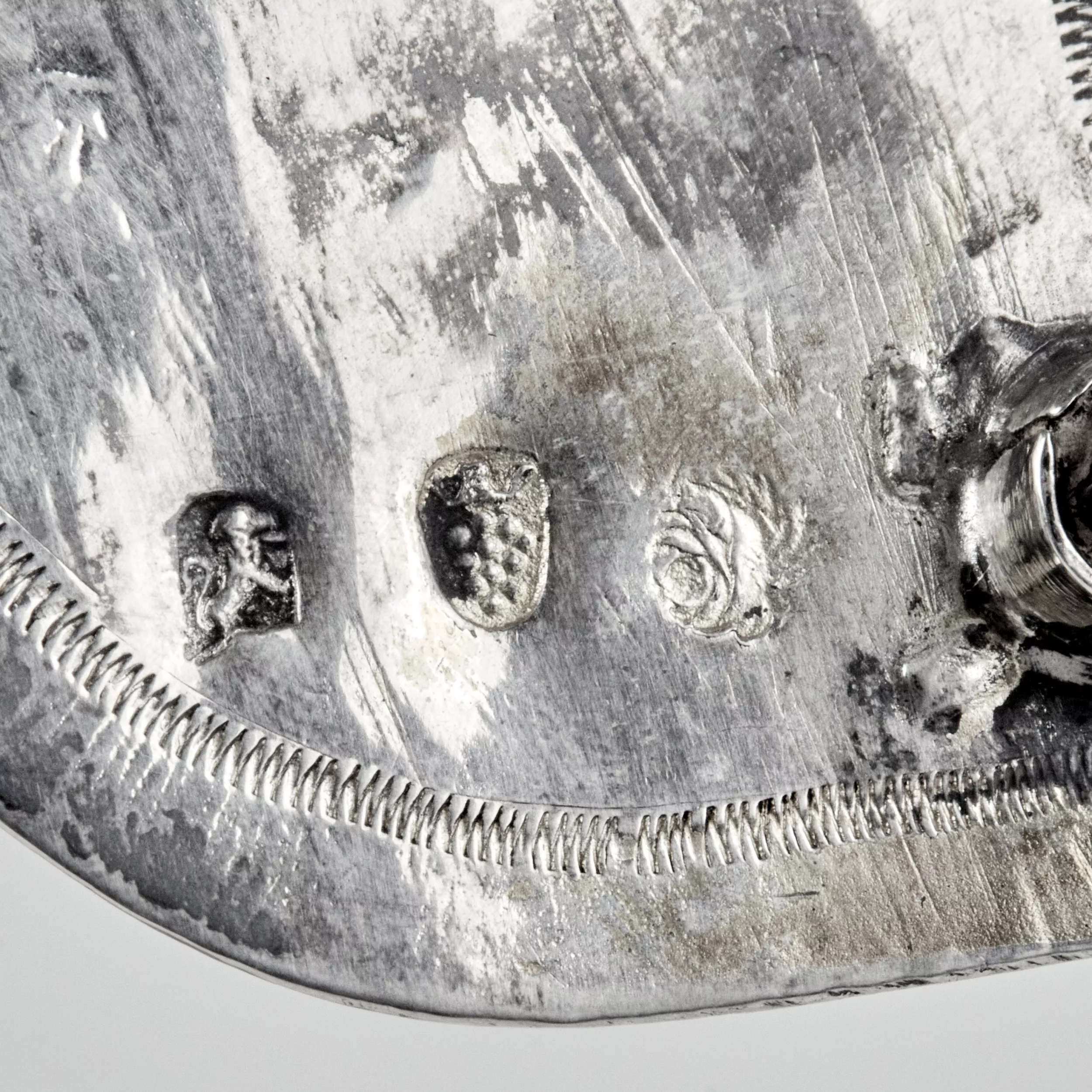
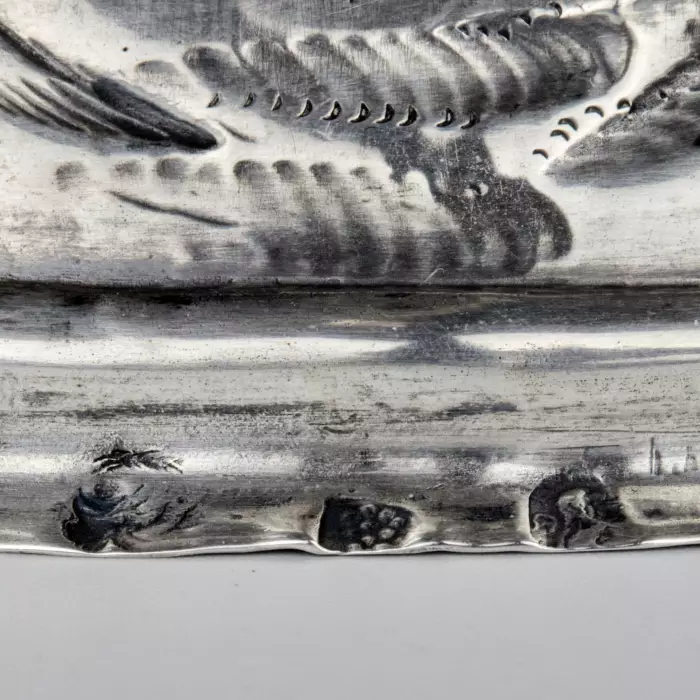
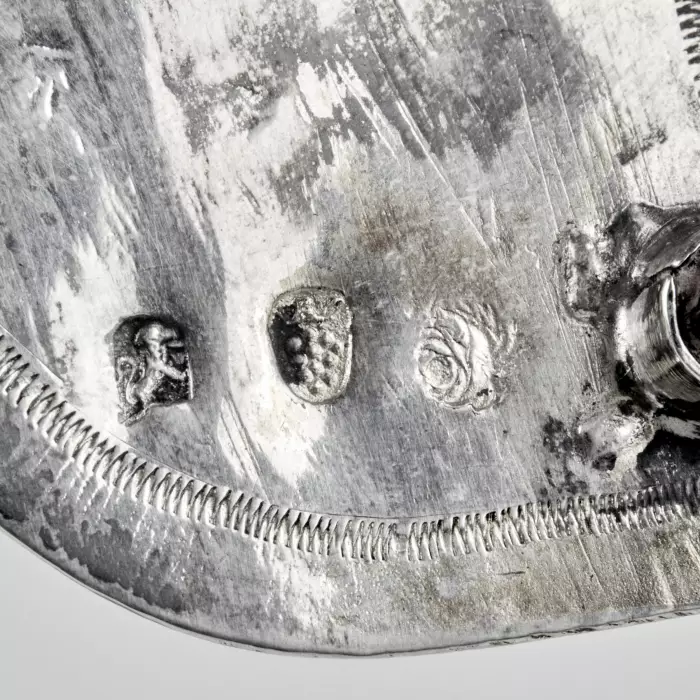
Poinçons: Poinçon du maître Günther Grangessel (Günther Grangessel), Hanau, actif dans les années 1880 – bouton de rose épanouie, daté 1883; autres poinçons non identifiés.
Dimensions: Hauteur: 47 cm; Largeur: 30 cm; Profondeur: 15 cm.
Poids: 2137 g.
État: Bon. Patine ancienne homogène. Légères traces d’usage conformes à l’âge. Éléments structurels intacts, tête mobile fonctionnelle. Sans déformations ni manques.
Provenance: Collection privée européenne.
The Hanau school of silverwork emerged in the second half of the nineteenth century as one of the most distinctive and influential centres of artistic silver in Europe. The workshops of this region combined virtuoso chasing and casting techniques with a pronounced interest in literary, allegorical and satirical subjects, producing figural compositions characterised by rich narrative content and a strong sense of theatricality. During the period of Historicism, such works became an integral element of representative interiors, reflecting the owners’ taste for intellectual play, symbolism and refined grotesque imagery.
Günther Grangessel (circa 1845–after 1900) belongs among the most characteristic representatives of the Hanau school of silversmithing. Actively working in the 1880s, he specialised in cabinet-scale genre silver sculpture distinguished by complex multi-part construction, expressive modelling and close attention to the psychological characterisation of his figures. His works demonstrate a high level of technical mastery and artistic invention typical of Hanau masters, whose creations often drew inspiration from earlier historical styles while retaining the irony, wit and theatrical expressiveness characteristic of the late nineteenth century.
In the Hanau interpretation, the figure of Puss in Boots functions as an allegory of social ingenuity, courtly mimicry and theatrical self-assertion. The character embodies both the triumph of cleverness and a subtle satire on ostentatious authority and vanity. The use of movable elements, contrasting surface textures and deliberately grotesque expressiveness enhances the illusion of an “animated” figure and corresponds fully to the tastes of collectors of the 1880s, who sought striking, memorable cabinet objects capable of engaging both visually and intellectually.
Today, works by the masters of the Hanau school, including those by Günther Grangessel, are highly valued on the international art market as rare examples of the synthesis of sculpture, silversmithing and literary allegory. Such objects occupy an important place in museum collections and distinguished private holdings, where they are appreciated not only for their technical virtuosity but also for their refined iconography and cultural resonance within the artistic context of late nineteenth-century Europe.
Argent avec patine ancienne régulière. Légères marques de surface. Éléments mobiles conservés et fonctionnels. État général bon, sans traces de restauration.
Le rapport de condition est fourni à titre informatif uniquement.
Il n'est pas exhaustif et peut ne pas refléter l'ensemble des défauts, restaurations, modifications ou adaptations, Antiqon ne procédant pas à des expertises de conservation à caractère professionnel. Ces informations reposent sur une évaluation qualifiée, mais subjective, réalisée par nos spécialistes. Avant tout achat, nous recommandons de consulter un expert indépendant. Nous vous invitons également à consulter nos conditions générales et notre glossaire A-Z, qui contiennent des informations importantes sur les caractéristiques des lots et les conditions de vente.