 AUCTION OF RUSSIAN AND EUROPEAN ART No. 15 · Part I

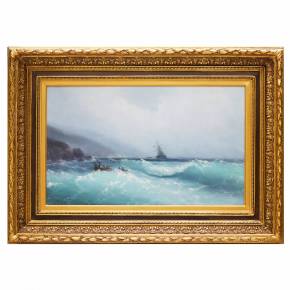
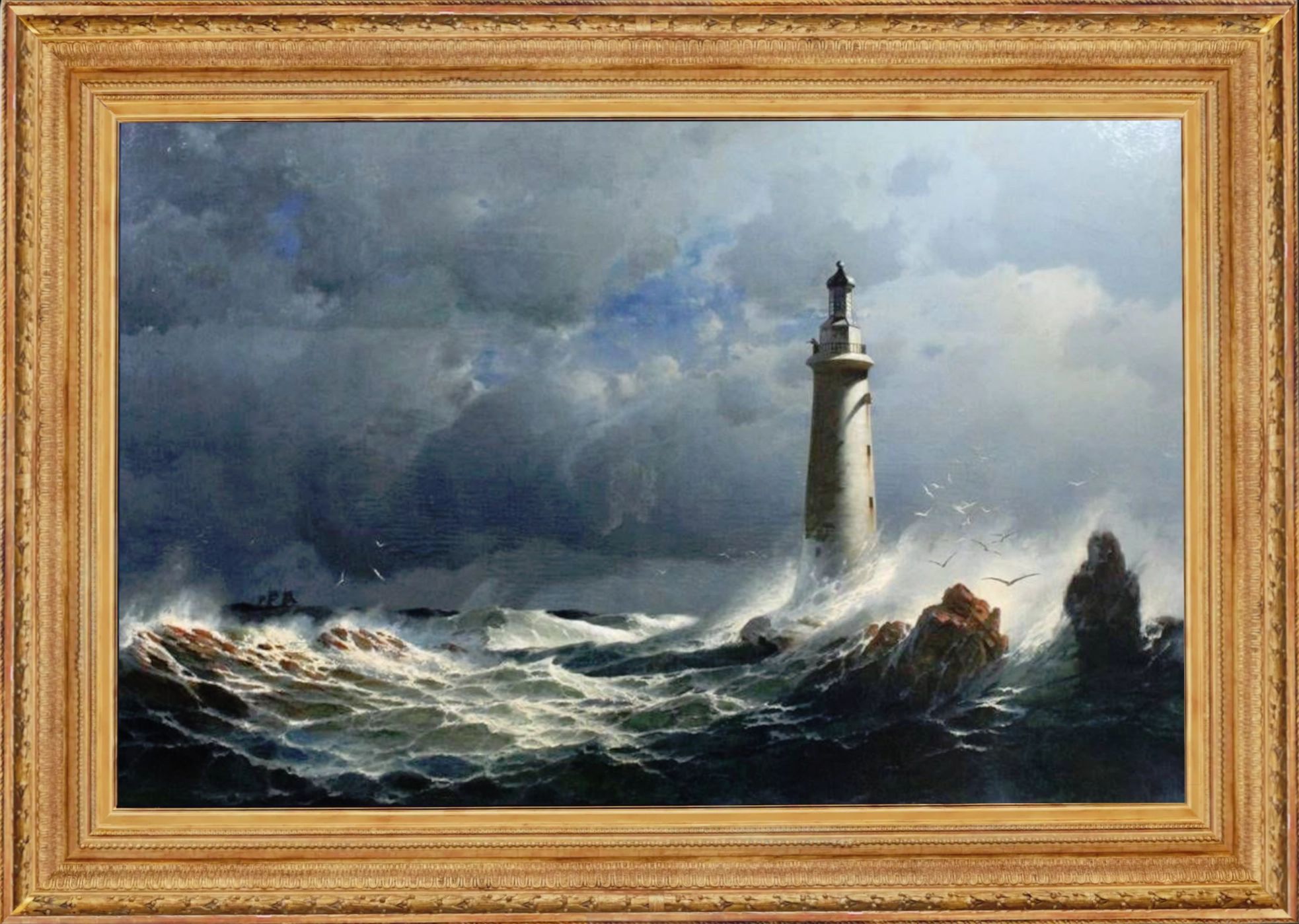
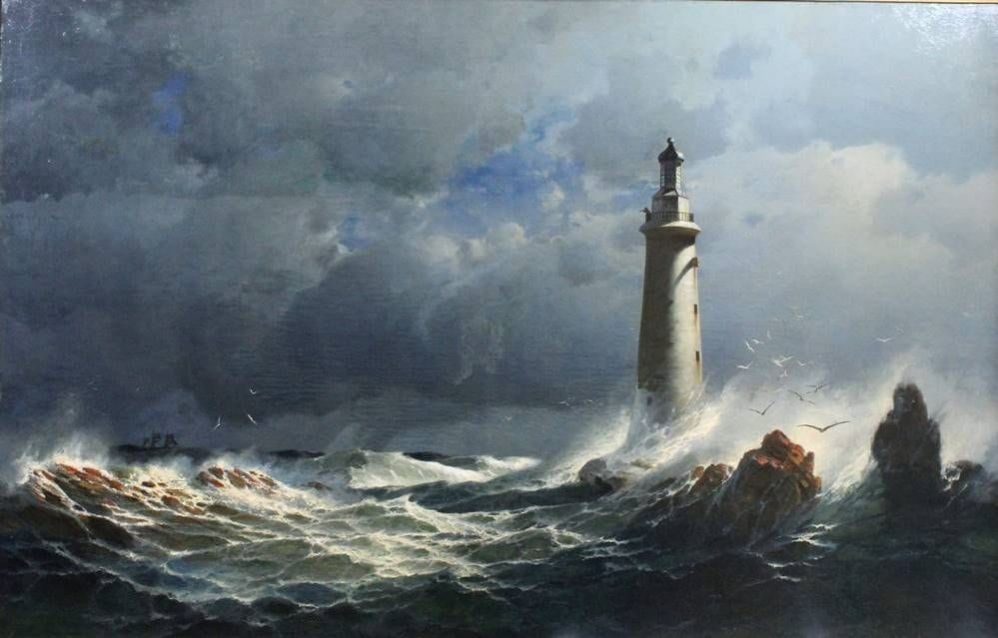
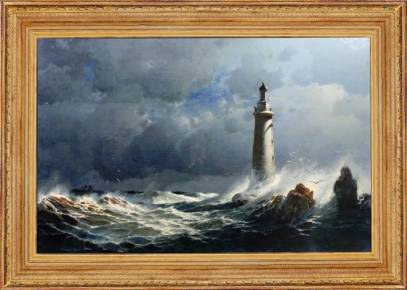
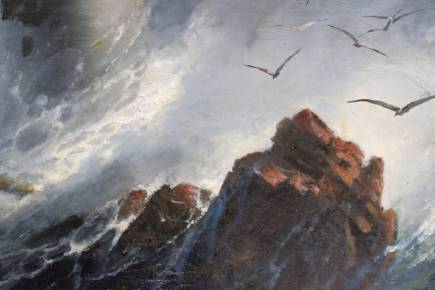
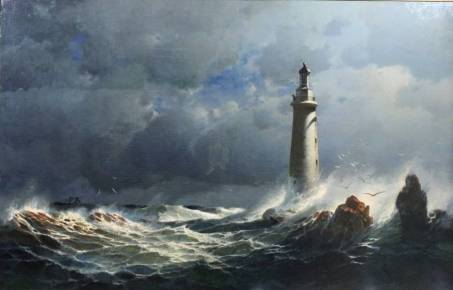
This monumental marine painting, attributed to the greatest Russian seascape master Ivan Konstantinovich Aivazovsky, belongs to the mature period of his artistic career, when the image of the sea acquired philosophical depth and symbolic intensity. The element is depicted in a state of heightened tension: heavy clouds gather above the horizon, and waves, shimmering in cold silvery and steel tones, crash forcefully against the coastal rocks.
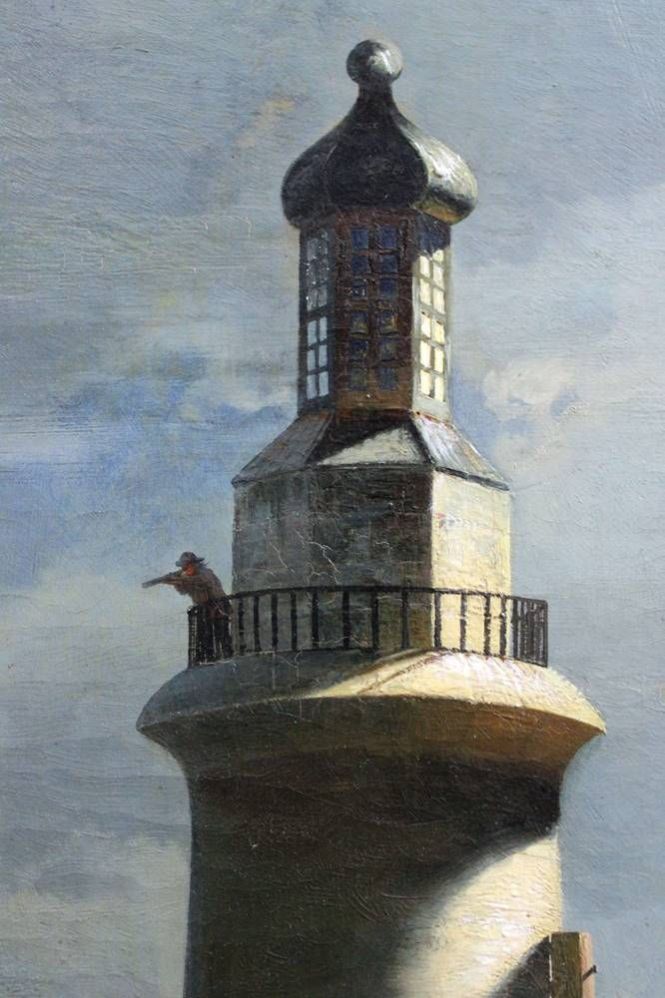
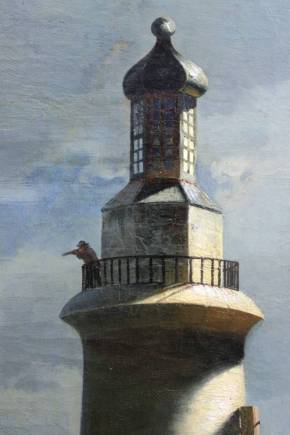
The compositional centre is occupied by the tall lighthouse, whose strict verticality stands in contrast to the dynamic mass of water. The lighthouse functions not only as a navigational landmark, but also as a metaphor for stability, reason, and spiritual resilience. Light breaking through the clouds illuminates the crests of the waves, creating a dramatic contrast between darkness and radiance. The beam of light becomes the semantic core of the painting, expressing the idea of salvation and hope.
The spatial structure is built through the diagonal movement of the waves, directing the viewer’s gaze toward the illuminated tower. The foreground retains a denser tonal structure, while the distant light accent enhances the sensation of depth and atmospheric perspective. The sky actively participates in shaping the emotional atmosphere, intensifying the tension and the sense of an approaching storm.
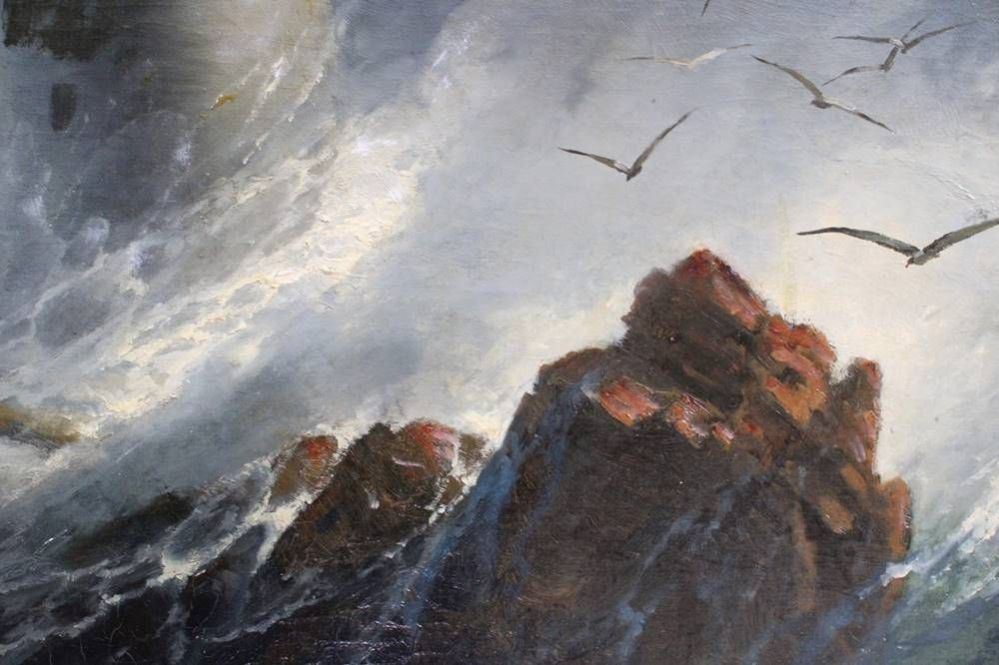
The water is rendered in multilayered glazes characteristic of Aivazovsky’s late manner. Transparent paint layers create the effect of inner luminosity and plastic movement. Light appears to emerge from the very substance of the sea. The artist achieves harmony between material reality and metaphysical meaning, a quality that distinguishes his works of the 1880-1890s.
In this painting, the master’s philosophy is clearly expressed: the sea appears as a spiritualised force of nature, while the lighthouse becomes an image of human steadfastness amidst worldly chaos. The painting is presented in a richly decorated gilded frame, corresponding to the scale and representative character of the work.
Dimensions: 136.5 × 212 cm sight size; 184 × 261 cm framed
Medium: Oil on canvas
Condition: The condition of the work is assessed as good and structurally stable.
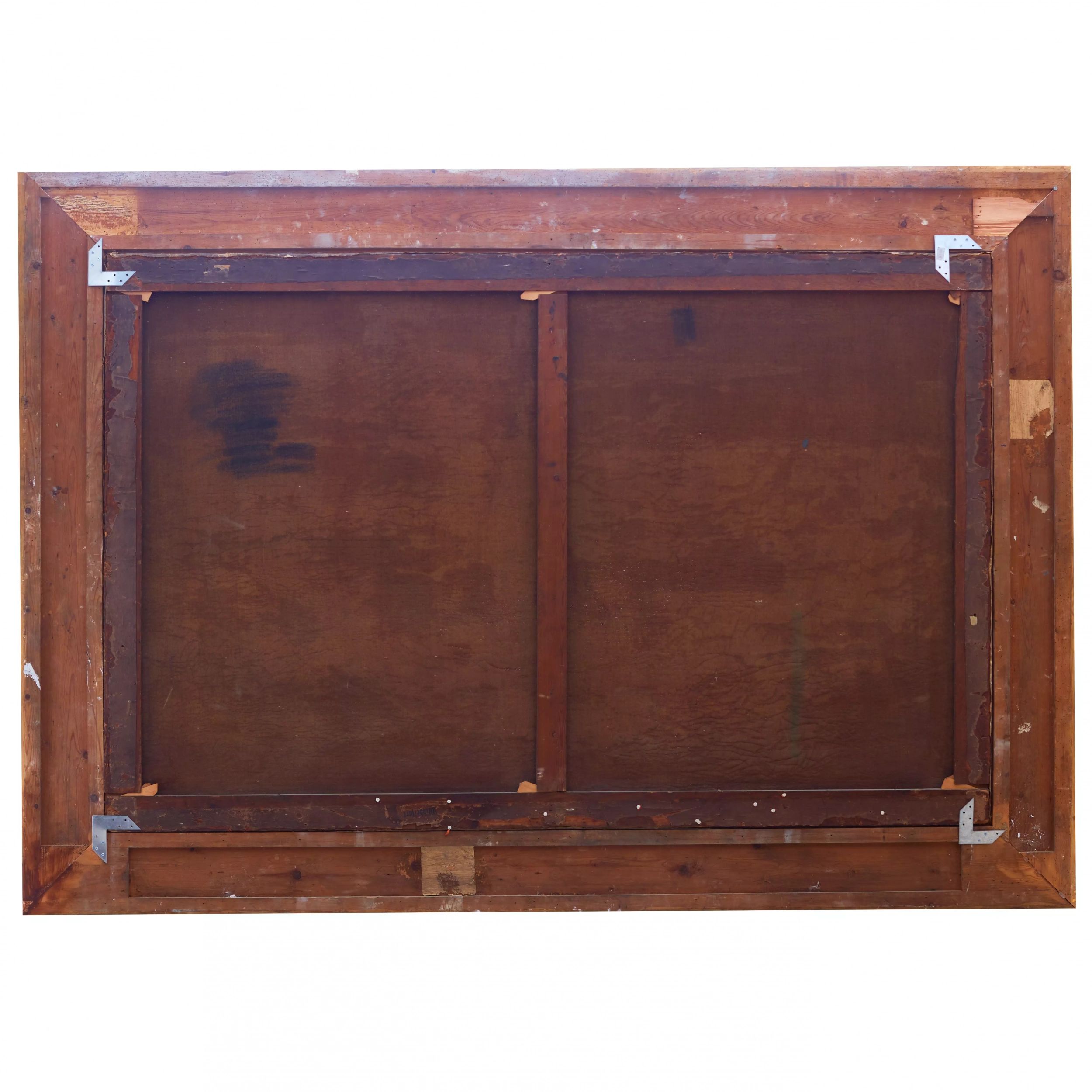
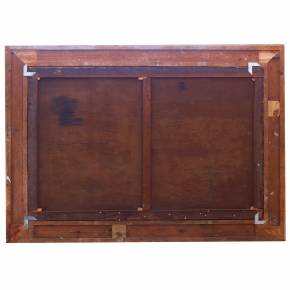
Provenance: Kunstsalon bei Mozarts Geburtshaus, Salzburg; letter of attestation dated 28 June 1970, authored by Dr. Franz Menzel and addressed to Mr. Hellmut Kaelin. Old paper labels and the inscription Middelfart appear on the reverse, likely referring to an early European collection of the painting.
Expert Certificate: Dr. Franz Menzel 1903-1983, Doctor of the University of Vienna, art historian and consultant to museums in Salzburg, Vienna, and Munich, was a recognised specialist in 18th-19th century painting. His certificates, Gutachten, issued for Kunstsalon bei Mozarts Geburtshaus, were distinguished by academic precision, detailed documentation of provenance, and profound knowledge of European artistic schools.
Монументальное морское полотно, атрибутированное как работа величайшего русского мариниста Ивана Константиновича Айвазовского, относится к зрелому периоду его творчества, когда образ моря приобретает философскую глубину и символическую насыщенность. Стихия представлена в состоянии напряжённого движения: тяжёлые облака сгущаются над горизонтом, волны, переливаясь холодными серебристыми и стальными оттенками, с силой обрушиваются на прибрежные скалы.
Композиционный центр занимает высокая башня маяка, строгая вертикаль которой противопоставлена динамике водной массы. Маяк выступает не только навигационным ориентиром, но и метафорой устойчивости, разума и духовной опоры. Свет, прорывающийся сквозь облака, озаряет гребни волн и формирует драматический контраст между мраком и сиянием. Луч света становится смысловым ядром произведения, выражением идеи спасения и надежды.
Пространство выстроено через диагональное движение волн, направляющее взгляд к освещённой башне. Передний план сохраняет более плотную тональность, тогда как дальний световой акцент усиливает ощущение глубины и атмосферной перспективы. Небо активно участвует в формировании эмоционального строя, усиливая напряжение и ощущение надвигающейся бури.
Вода написана многослойными лессировками, характерными для поздней манеры Айвазовского. Прозрачные красочные слои создают эффект внутреннего свечения и пластичности. Свет словно рождается из самой материи моря. Художник достигает гармонии между материальной реальностью и метафизическим содержанием, что отличает его произведения 1880-1890-х годов.
В этом полотне выражена философия мастера: море предстает одухотворённой стихией, а маяк становится образом человеческой стойкости среди хаоса мира. Картина представлена в богато декорированной золочёной раме, соответствующей масштабу и репрезентативному характеру произведения.
Размеры: 136,5 × 212 см в свету; 184 × 261 см в раме
Материал: Масло на холсте
Состояние: Состояние произведения оценивается как хорошее и конструктивно стабильное.
Происхождение: Kunstsalon bei Mozarts Geburtshaus, Salzburg; письмо-аттестация от 28 июня 1970 года, автор Dr. Franz Menzel, адресовано господину Хельмуту Келину Hellmut Kaelin. На обороте старые бумажные этикетки и надпись Middelfart, относящаяся, вероятно, к раннему европейскому собранию картины.
Экспертное заключение: Dr. Franz Menzel 1903-1983, доктор Венского университета, искусствовед, консультант музеев Зальцбурга, Вены и Мюнхена, признанный специалист по живописи XVIII-XIX веков. Его аттестации Gutachten, выполненные для Kunstsalon bei Mozarts Geburtshaus, отличались академической точностью, детальной фиксацией провенанса и глубоким знанием европейских художественных школ.